
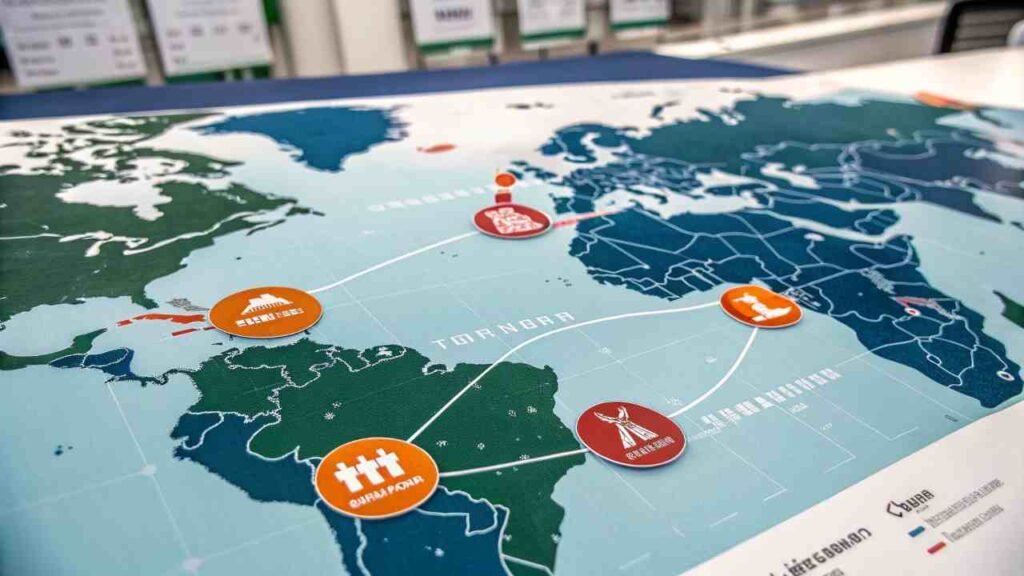
Are you treating Vitamin A like any other ingredient? An unexpected shortage could halt your production and destroy your budget. Understanding its unique supply chain is not optional.
Vitamin A supply is critically important because its production is highly concentrated in a few global factories. This makes the supply chain fragile and prone to severe disruptions, which can lead to extreme price volatility and global shortages, directly impacting your business.
I often tell my clients that some ingredients carry more risk than others. Vitamin A is at the top of that list. It is a high-tech chemical with a fragile and unpredictable supply chain. Understanding the unique nature of this market is the first step to protecting your business from its inherent risks.
Which countries supply Vitamin A?
Do you assume Vitamin A is produced all over the world? This common misconception can lead to a flawed sourcing strategy.
Vitamin A is predominantly supplied by a small number of companies in a few key countries. China and Germany are the dominant global producers, with Switzerland also being a major player. This highly concentrated market structure is a critical feature of the supply chain.

The global supply of Vitamin A is controlled by a handful of large companies. The key players are in China (Zhejiang NHU, XMC), Germany (BASF), and Switzerland (dsm-firmenich). This market is so concentrated because building a Vitamin A factory is incredibly complex and expensive, creating a very high barrier to entry. This means the world's supply depends on the smooth operation of just these few producers.
Key Vitamin A Producers:
| Country/Region | Key Companies | Market Strength |
|---|---|---|
| China | Zhejiang NHU, XMC | Massive scale, cost-efficiency, high technology. |
| Germany | BASF | Long-standing expertise, large capacity. |
| Switzerland | dsm-firmenich (DSM) | High-quality formulations, strong R&D. |
How stable is Vitamin A production?
Do you assume your Vitamin A supply will always be there? A single factory fire in 2017 proved just how fragile this market is.
Vitamin A production is notoriously unstable. Because the global supply comes from very few factories, the market is extremely vulnerable to single-point failures. An accident or major shutdown at just one plant can remove a huge portion of global capacity overnight.
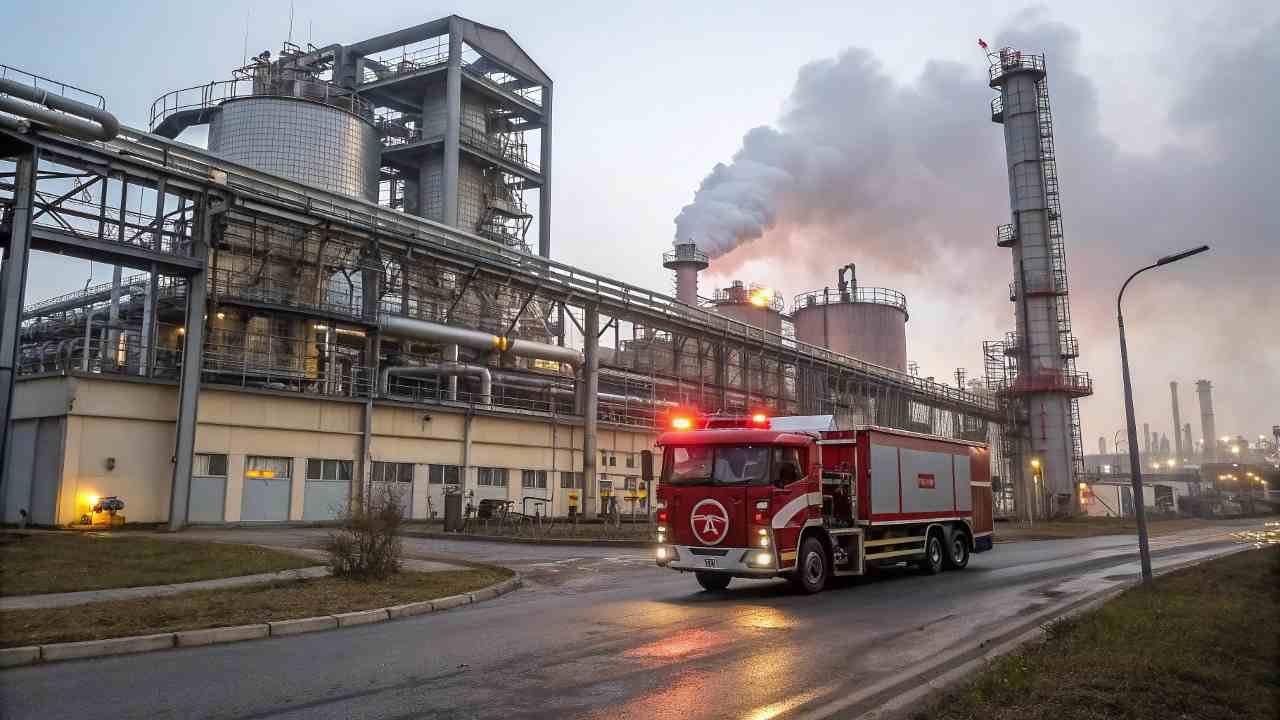
The Vitamin A supply chain is extremely fragile due to the risk of single-point failure1. The fire at BASF's German plant in 2017 is the perfect example. That single incident halted a huge portion of global production2, creating a severe shortage and causing prices to skyrocket by over 400%. The lesson is clear: the entire global market depends on the flawless operation of just a handful of factories. An accident at any one of them can create a global crisis.
Vitamin A Production Stability Risks:
| Risk Factor | Description | Impact on Global Supply |
|---|---|---|
| Single-Point Failure | An accident (e.g., fire, explosion) at a major factory. | Catastrophic. Can cause severe shortages and extreme price spikes. |
| Planned Maintenance | Scheduled factory shutdowns for upkeep. | Temporary supply tightness, moderate price increases. |
What affects Vitamin A availability?
You see the price of Vitamin A rising, but the main factories seem to be fine. What is happening? The problem often lies one step back in the supply chain.
Vitamin A availability is critically dependent on the supply of a few key precursor chemicals, especially citral. A shortage of citral, which is also produced by very few companies, creates an immediate and severe bottleneck that halts Vitamin A production.

The availability of Vitamin A depends entirely on its key raw materials. The most important is a chemical called citral3. If there is no citral, there is no Vitamin A. The problem is that citral production is also highly concentrated. The 2017 BASF fire was at their citral plant, which created a domino effect, starving the entire industry of its most essential ingredient. This "citral bottleneck4" is the weakest link in the entire supply chain.
Key Availability Factors for Vitamin A:
| Factor | Description | Impact on Vitamin A Supply |
|---|---|---|
| Citral Supply | The key raw material building block. | The most critical bottleneck. No citral, no Vitamin A. |
| Other Precursors | Other specialized chemicals needed for synthesis. | A shortage can cause production delays or slowdowns. |
How do seasons change Vitamin A supply?
Are you waiting for the "harvest season" to buy Vitamin A at a better price? This is a common mistake for buyers used to agricultural products.
Unlike agricultural goods, Vitamin A production is a year-round industrial chemical process and is not affected by seasons. There is no "harvest season" or predictable seasonal price cycle. Market movements are driven by industrial events, not the calendar.
Vitamin A is a chemical, not a crop. It is made in a factory that runs 24/7, all year long. There is no harvest. This means there is no seasonal price cycle5. The price does not automatically fall in the autumn like it does for agricultural products like tomato paste. Instead of the calendar, you should watch for industrial signals: announcements of factory maintenance, raw material price trends, and regulatory news.
Industrial vs. Agricultural Supply Cycles:
| Feature | Vitamin A (Industrial) | Tomato Paste (Agricultural) |
|---|---|---|
| Supply Cycle | Continuous, year-round. | Seasonal, based on an annual harvest. |
| Price Pattern | Volatile, based on industrial events. | Predictable seasonal cycle (lowest price after harvest). |
| Key Driver | Factory operations, raw material costs. | Weather, crop size. |
How does China influence Vitamin A exports?
Do you think of China as just one of many suppliers? In the Vitamin A market, China's actions can create waves that are felt around the globe.
China exerts a massive influence on Vitamin A exports as a dominant global producer. The country's strict environmental policies can halt factory production, causing immediate global supply shocks. Furthermore, the pricing strategies of top Chinese manufacturers often act as a benchmark for the world market.
China's role in the Vitamin A market is dominant. Its environmental regulations6 are a major factor; the government can and will shut down factories that do not comply, creating an immediate global supply shock. With some of the world's largest and most advanced factories, China's production scale7 directly impacts global availability. Finally, the pricing decisions made by top Chinese producers are watched closely by everyone and often set the trend for the entire global market.
China's Influence on the Global Market:
| Influence Factor | Description | Impact on Global Buyers |
|---|---|---|
| Production Scale | Home to some of the world's largest Vitamin A factories. | China's output levels directly affect global supply and demand balance. |
| Environmental Policy | Strict government regulations can force factory shutdowns. | A major source of unpredictable supply disruptions. |
| Pricing Strategy | Prices from top Chinese producers act as a market benchmark. | A price increase in China often leads to a global price increase. |
Conclusion
Vitamin A's fragile and concentrated supply chain makes it a high-risk ingredient. Understanding these unique market dynamics is essential for any buyer to ensure supply and manage costs.
-
Understanding single-point failure can help you grasp the vulnerabilities in supply chains and how to mitigate risks. ↩
-
Exploring global production insights can reveal the interconnectedness of markets and the importance of diverse manufacturing sources. ↩
-
Understanding citral's significance can provide insights into Vitamin A production and its supply chain vulnerabilities. ↩
-
Exploring the citral bottleneck reveals critical challenges in the Vitamin A industry and its impact on availability. ↩
-
Understanding seasonal price cycles can help you grasp market trends and pricing strategies for various products. ↩
-
Understanding these regulations can provide insights into market stability and global supply dynamics. ↩
-
Exploring this topic reveals the significance of China's manufacturing capabilities on worldwide Vitamin A availability. ↩