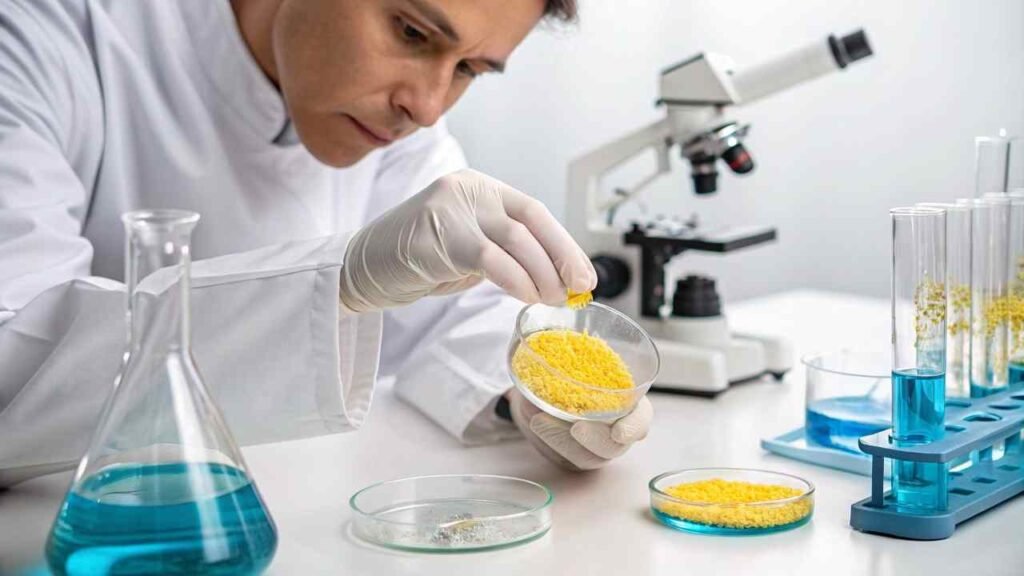
Worried about receiving off-spec Vitamin A? Poor quality can ruin your product, damage your brand reputation, and create huge financial losses. This is a risk you cannot afford.
You ensure Vitamin A quality by working with suppliers who meet strict standards (USP/FCC) and provide a batch-specific Certificate of Analysis (COA). Independent pre-shipment inspections and third-party lab testing provide the ultimate verification of quality before shipment.
A professional buyer knows the real cost of a bad batch is a potential product recall. A robust quality assurance process is not optional—it is the foundation of protecting your brand and your business. Let's look at the steps to guarantee the quality of every shipment.
What are the quality standards for Vitamin A?
You see terms like USP and FCC on spec sheets. Are they all the same? Using a product that meets the wrong standard can be a major compliance failure.
The main quality standards are pharmacopeias like the United States Pharmacopeia (USP) for pharma-grade, and the Food Chemicals Codex (FCC) for food-grade. These standards define the exact requirements for purity, potency (IU), and acceptable limits for impurities.
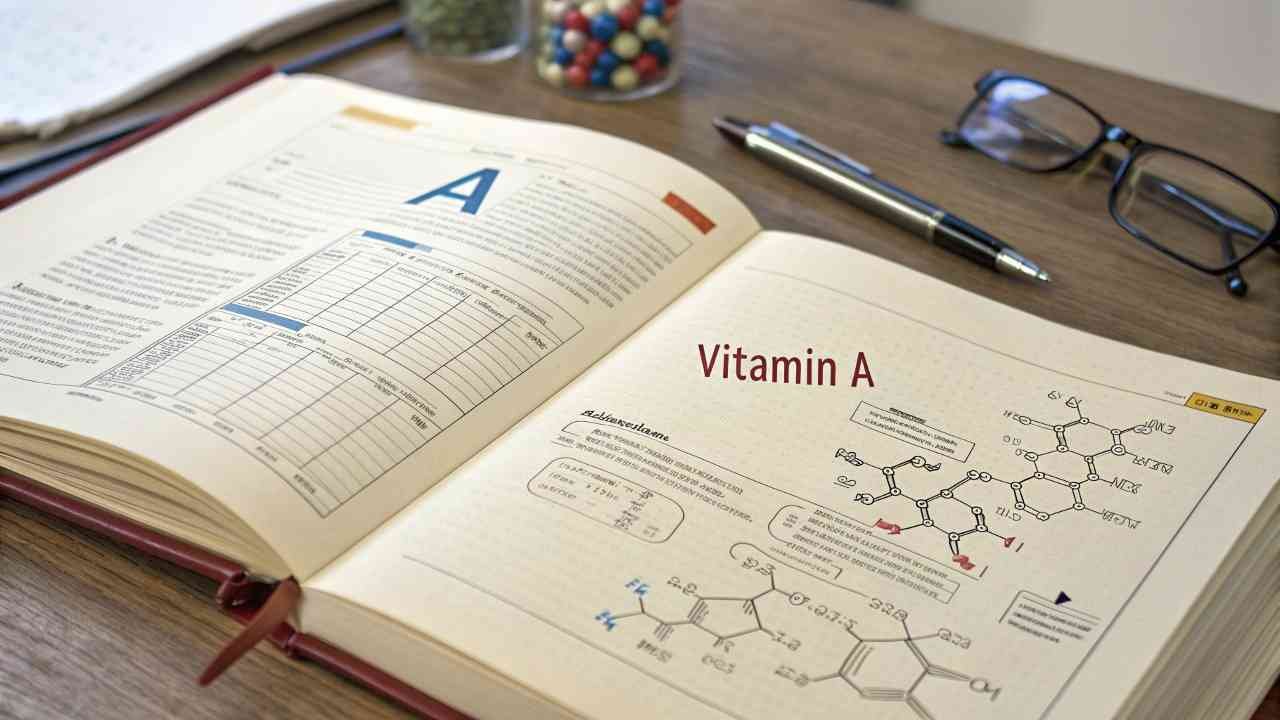
Quality standards provide a clear benchmark. Pharmacopeias (USP/EP)1 are the highest standard, often required for pharmaceutical use. The Food Chemicals Codex (FCC)2 is the global benchmark for food and feed ingredients. The most important specification on any standard is the potency, measured in International Units (IU) per gram. This number defines the product's biological activity and is what you are paying for.
Key Quality Standards Compared:
| Standard | Primary Application | Key Focus |
|---|---|---|
| USP / EP | Pharmaceuticals, high-end supplements | Highest purity, strict safety limits for drug use. |
| FCC | Food, Beverage, Animal Feed | Purity, potency, and safety for food consumption. |
How do suppliers keep Vitamin A pure?
Purity does not happen by accident. How does a factory turn complex chemicals into the pure, high-potency vitamin you need? It is a process of precision control.
Suppliers keep Vitamin A pure through a highly controlled synthesis process, a rigorous purification step (usually crystallization) to isolate the pure vitamin, and by operating in a clean, GMP (Good Manufacturing Practices) compliant environment.

High purity is achieved through three pillars. First, a controlled synthesis3 uses advanced process controls to minimize the creation of impurities. Second, a purification process4 like crystallization removes any remaining impurities, resulting in a pure product. Third, the entire process takes place in a GMP-compliant environment with clean rooms and strict protocols to prevent any contamination from the outside.
Purity Control Measures:
| Control Pillar | Action | Purpose |
|---|---|---|
| Controlled Synthesis | Precise management of reaction conditions. | To minimize the formation of impurities. |
| Purification | Crystallization to separate the pure vitamin. | To remove any remaining impurities. |
| GMP Environment | Clean rooms, dedicated equipment, strict protocols. | To prevent contamination from the outside. |
What certificates show Vitamin A quality?
A supplier makes many promises. How do you get proof on paper? The right certificates are your best tool for verification.
The most important document is the batch-specific Certificate of Analysis (COA), which shows actual test results. Broader quality is proven by management system certifications like ISO 9001 for quality control and ISO 22000 or HACCP for food safety.
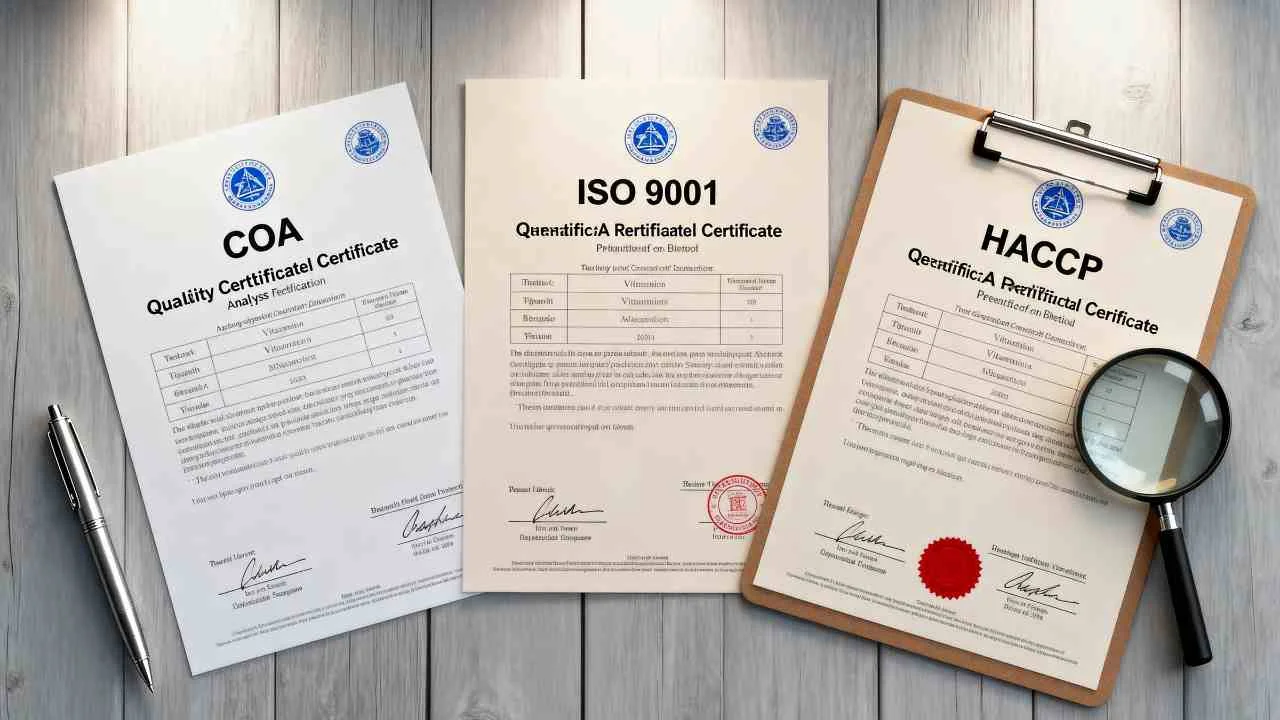
Certificates provide standardized proof of quality. The Certificate of Analysis (COA) is the most important; it is the test report for your specific batch, showing its potency and purity. It must be provided with every order. ISO 9001 proves the factory has a quality management system. ISO 22000 or HACCP proves the factory has a food safety system. These system certificates show the supplier is reliable and professional.
Key Certificates and Their Meaning:
| Certificate | What it Guarantees | Frequency |
|---|---|---|
| COA | The quality of your specific batch. | With every order. |
| ISO 9001 | The factory has a consistent quality system. | Annual renewal |
| ISO 22000 / HACCP | The factory has a robust food safety system. | Annual renewal |
How do inspections protect Vitamin A buyers?
You have seen the certificates, but you still have doubts. How can you be 100% sure? An independent inspection is your eyes and ears inside the factory.
Independent pre-shipment inspections (PSI) protect buyers by having a neutral third party physically verify the product before it is paid for and shipped. They check the quantity, packaging, labeling, and most importantly, draw an impartial sample for testing.

A pre-shipment inspection5 is your best insurance policy. An inspector from a neutral company like SGS acts as your representative. They go to the factory to verify that the quantity is correct, the packaging is undamaged, and the labeling matches your order. Most importantly, they will draw a random, representative sample and seal it. This impartial sample is then sent to you or an independent lab for testing, giving you a true picture of the shipment's quality.
The Pre-Shipment Inspection Process:
| Step | Action | Outcome for the Buyer |
|---|---|---|
| 1. Booking | Buyer hires an independent inspection company. | An impartial expert represents your interests. |
| 2. On-Site Check | Inspector verifies quantity, packaging, and labels. | Confirmation that the physical shipment matches the order. |
| 3. Sampling | Inspector draws a random, representative sample. | You receive an impartial sample for testing. |
Why test Vitamin A before shipment?
The factory COA looks perfect. Why spend more money on another lab test? Because an independent test is the ultimate proof of quality.
Pre-shipment testing by an independent lab is essential to provide an unbiased verification of the supplier's Certificate of Analysis. It confirms the product's critical potency (IU) and purity before you release final payment and the goods leave the country of origin.
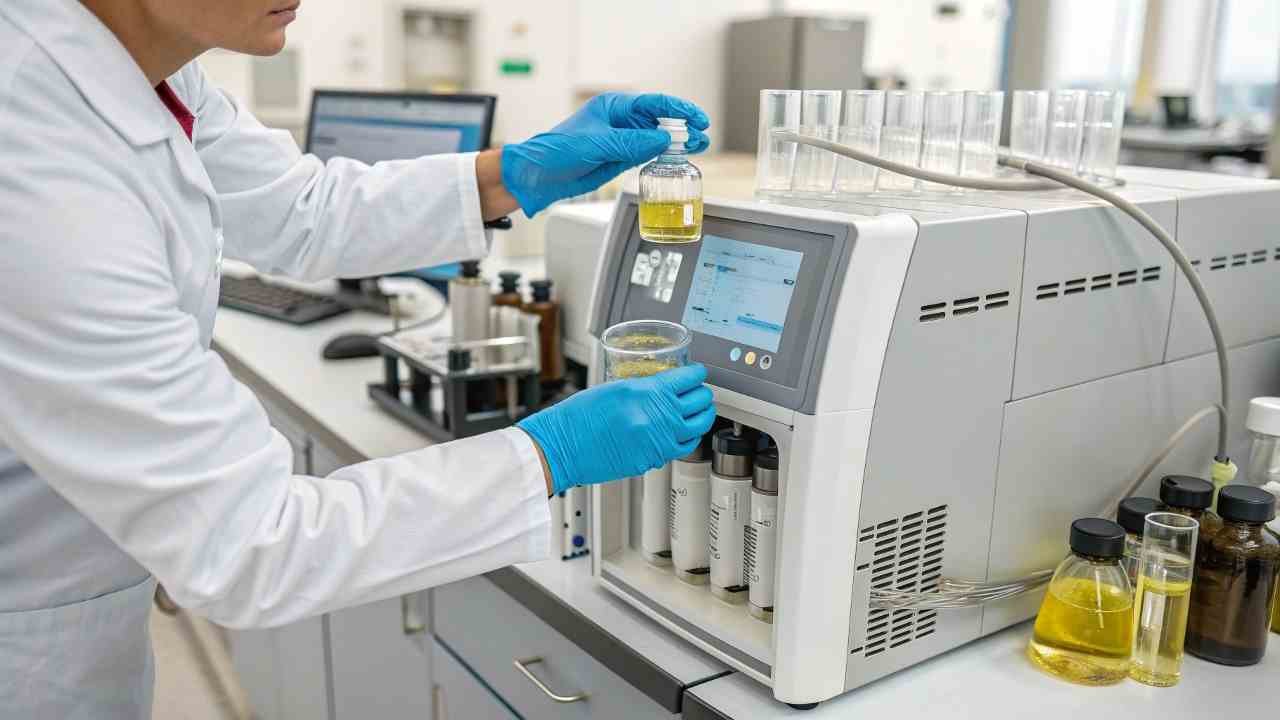
The principle is "trust, but verify." A third-party lab test provides a completely unbiased scientific confirmation of the product's quality. The most important test is for potency (IU)6. A lab can use advanced equipment (like HPLC) to precisely measure the vitamin's activity, confirming you are getting exactly what you paid for. The key is that this happens before shipment. If the test reveals a problem, you can resolve it with the supplier before the goods are on a ship, saving you from a much bigger problem later.
Factory COA vs. Third-Party Test:
| Feature | Factory COA | Independent Third-Party Test |
|---|---|---|
| Source | Seller's internal QC lab. | Accredited, independent laboratory. |
| Purpose | To show the product meets specification. | To verify the seller's claims. |
| Credibility | Good, but there is a commercial interest. | Highest, completely unbiased. |
Conclusion
Ensuring Vitamin A quality requires a proactive, multi-step process. By demanding clear standards, verifying with certificates, and confirming with independent inspections and testing, you protect your investment.
-
Explore this link to understand the critical role Pharmacopeias play in ensuring pharmaceutical quality and safety. ↩
-
Discover how the FCC sets global standards for food and feed ingredients, ensuring safety and quality. ↩
-
Understanding controlled synthesis is crucial for achieving high purity in products, making this resource invaluable for your research. ↩
-
Exploring various purification processes can enhance your knowledge and application of techniques to achieve purity in chemical products. ↩
-
Understanding pre-shipment inspections can help you ensure product quality and avoid costly mistakes. ↩
-
Understanding potency (IU) is crucial for ensuring product quality and effectiveness. Explore this link to learn more. ↩