
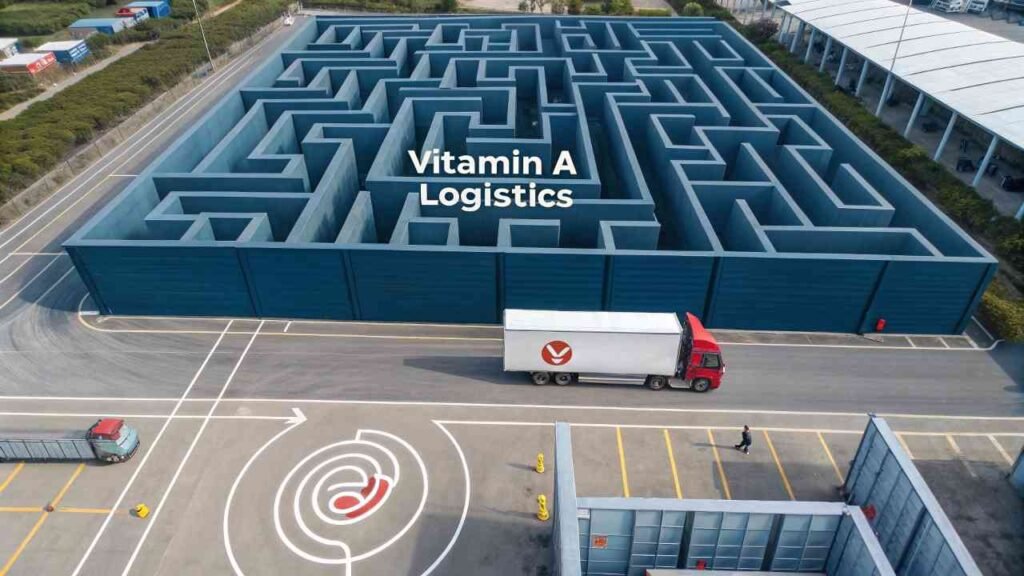
Is your high-value shipment stuck at a port? Worried about product damage during transit? Navigating global logistics is a minefield of potential delays and costly errors.
The main challenges in Vitamin A logistics are managing unpredictable shipping delays, navigating complex cross-border customs regulations, and protecting the sensitive product from temperature and physical damage. Choosing reliable carriers and securing proper insurance are essential to overcome these hurdles.
Logistics is where a perfect product can turn into a costly problem. For buyers, a logistics failure is a business failure. A professional supplier doesn’t just sell a product — they manage the entire journey from our factory to your warehouse to ensure your investment arrives safely and on time. Let’s break down the biggest challenges.
How do shipping delays affect Vitamin A?
Your production is scheduled, but your container is nowhere to be found. What is the true business cost of a shipping delay?
Shipping delays have a severe domino effect. They cause immediate production shutdowns, leading to direct financial losses from idle machinery and labor. This in turn causes you to miss your own customer deadlines, damaging your business reputation and potentially losing future sales.

A delay is a direct attack on your business. The first impact is the operational cost1 of a production shutdown—you are paying for idle machinery and labor. The second, more serious impact is the reputational damage2. When your production stops, you cannot deliver to your own customers. This lost trust can be far more costly than the downtime, as a customer you fail to supply may never come back.
The Cascade of Costs from a Single Delay:
| Cost Type | Description | Impact on Your Business |
|---|---|---|
| Operational | Production line shutdown, idle labor costs. | Direct and immediate financial loss. |
| Reputational | Being seen as an unreliable supplier by your market. | Long-term damage to brand trust and loyalty. |
How do cross-border rules affect Vitamin A?
Your shipment has arrived at the port, but it is being held by customs. The reason? A tiny mistake on a single form.
Inconsistent and strict cross-border rules are a primary cause of delays. Each country has unique documentation requirements. A small error on the commercial invoice, packing list, or Bill of Lading can trigger a lengthy customs inspection or even rejection of the cargo.
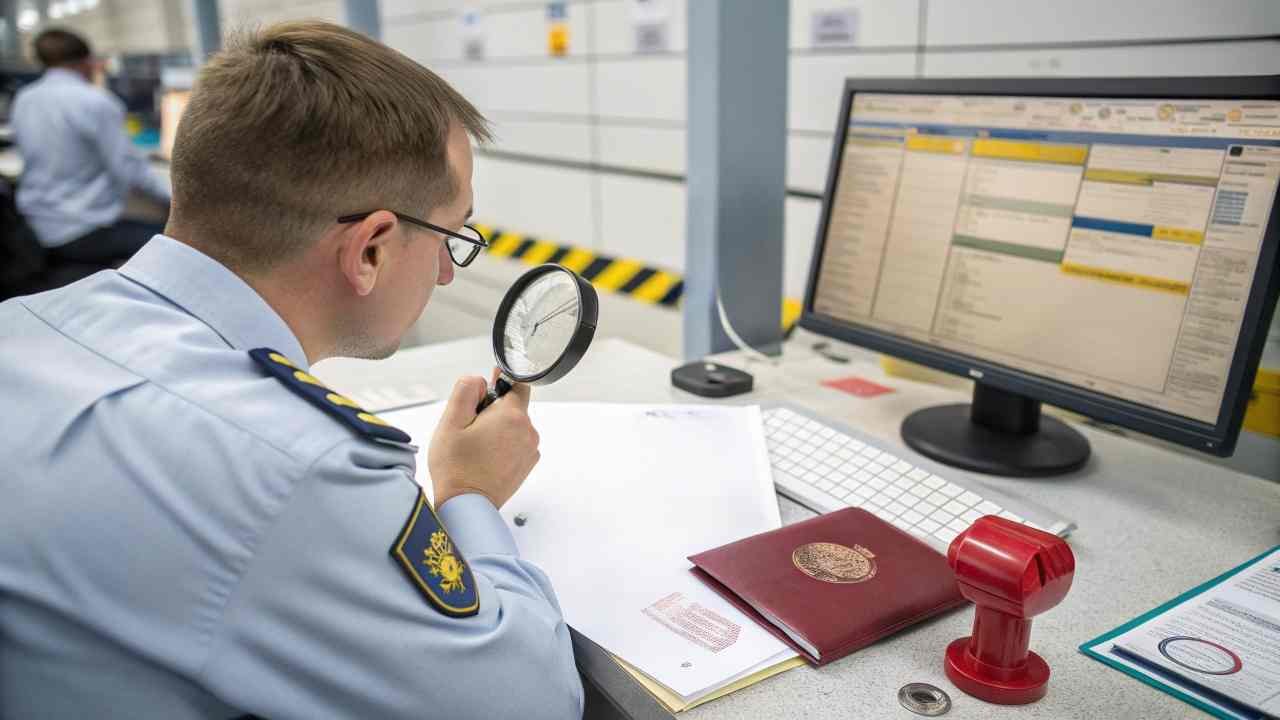
Customs clearance demands perfection. Every country has different rules, but they all require flawless documentation. A tiny error—a typo in a name, a wrong HS code, or a weight that does not match across all documents—is a huge red flag for a customs officer. This is the single most common and avoidable cause of shipping delays. A professional supplier must be an expert in the specific documentation requirements3 for your country.
Critical Document Checklist:
| Document | Common Error to Avoid | Consequence of Error |
|---|---|---|
| Commercial Invoice | Incorrect HS Code, price not matching the contract. | Fines, delays, accusations of duty evasion. |
| Packing List | Net/gross weight does not match Bill of Lading. | Triggers a physical cargo inspection. |
| Bill of Lading | Typo in the consignee's name or address. | Inability to claim the cargo at the port. |
How to protect Vitamin A during shipping?
Your Vitamin A is inside a metal box for a month, crossing a hot ocean. How can you be sure it will arrive with its quality intact?
You protect Vitamin A by using a multi-layered approach: robust physical packaging (strong cartons, secure pallets), a high-tech chemical barrier (sealed aluminum bags), and by monitoring the in-transit conditions with temperature data loggers.
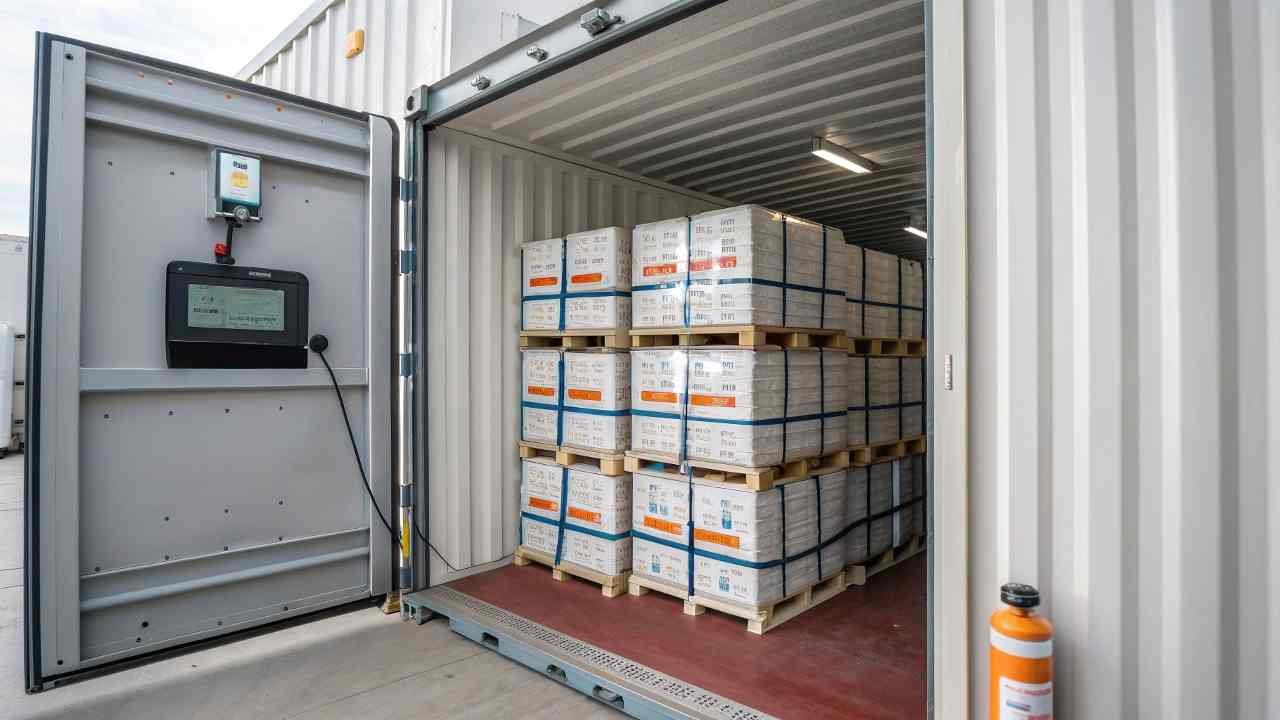
Protecting a sensitive product requires a three-layer defense system. First is physical protection4: strong cartons stacked securely on stretch-wrapped pallets to prevent crushing. Second is environmental protection: the sealed, nitrogen-flushed aluminum bag that acts as a fortress against heat, oxygen, and moisture. Third is verification: using a temperature data logger5 to provide a complete record of the transit conditions, giving you proof that the quality was maintained.
Layers of Protection:
| Protection Layer | Method | Purpose |
|---|---|---|
| Physical | Strong cartons, secure palletization. | Prevents crushing and impact damage. |
| Chemical/Environmental | Sealed, nitrogen-flushed aluminum bag. | Blocks heat, oxygen, and moisture. |
| Verification | Temperature data logger. | Provides a verifiable record of transit conditions. |
Which carriers are best for Vitamin A?
Does it matter which shipping company moves your container? Absolutely. A cheap, unreliable carrier is a fast way to introduce delays and risk.
The best carriers are the major, top-tier global shipping lines (e.g., Maersk, MSC). They offer more reliable sailing schedules, have a higher percentage of direct routes that avoid risky transshipments, and provide better customer service and tracking.
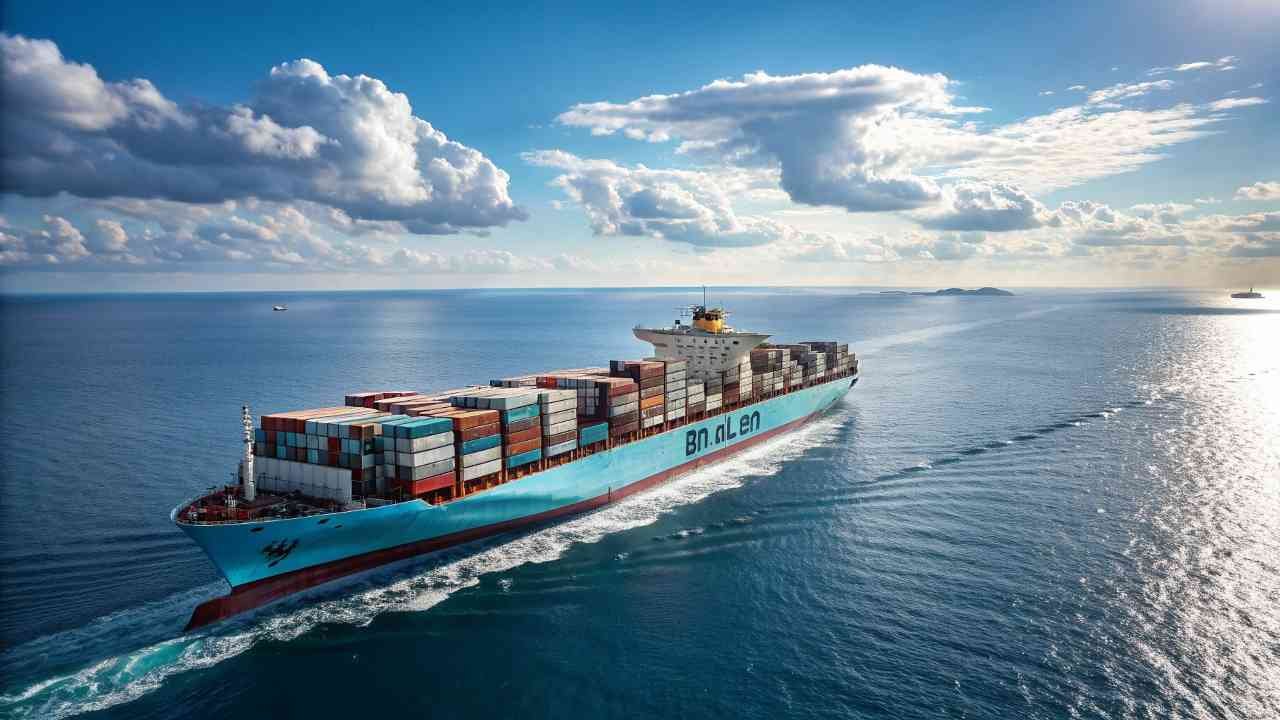
The shipping line you choose is an investment in reliability. Top-tier carriers have more accurate schedules and are less likely to cancel sailings. Most importantly, they offer more direct routes6. A direct sailing, where your container stays on one ship, is always the safest option. Cheaper routes often involve transshipments—moving your container between ships at an intermediate port—which is the biggest source of delays and risk in ocean freight.
Carrier Type Comparison:
| Feature | Top-Tier Carriers (Maersk, MSC, etc.) | Budget Carriers |
|---|---|---|
| Schedule Reliability | High | Low to Medium |
| Direct Routes | More options available. | Fewer options, more transshipments. |
| Risk Profile | Low | High |
How does insurance protect Vitamin A shipments?
What happens if the worst occurs? The ship has an accident, or your container is lost in a storm. Without insurance, your entire investment is gone.
Cargo insurance is an essential risk management tool that provides financial protection against the loss or damage of your goods during transit. For a small premium, it transfers the risk of a catastrophic financial loss from you to the insurance company.
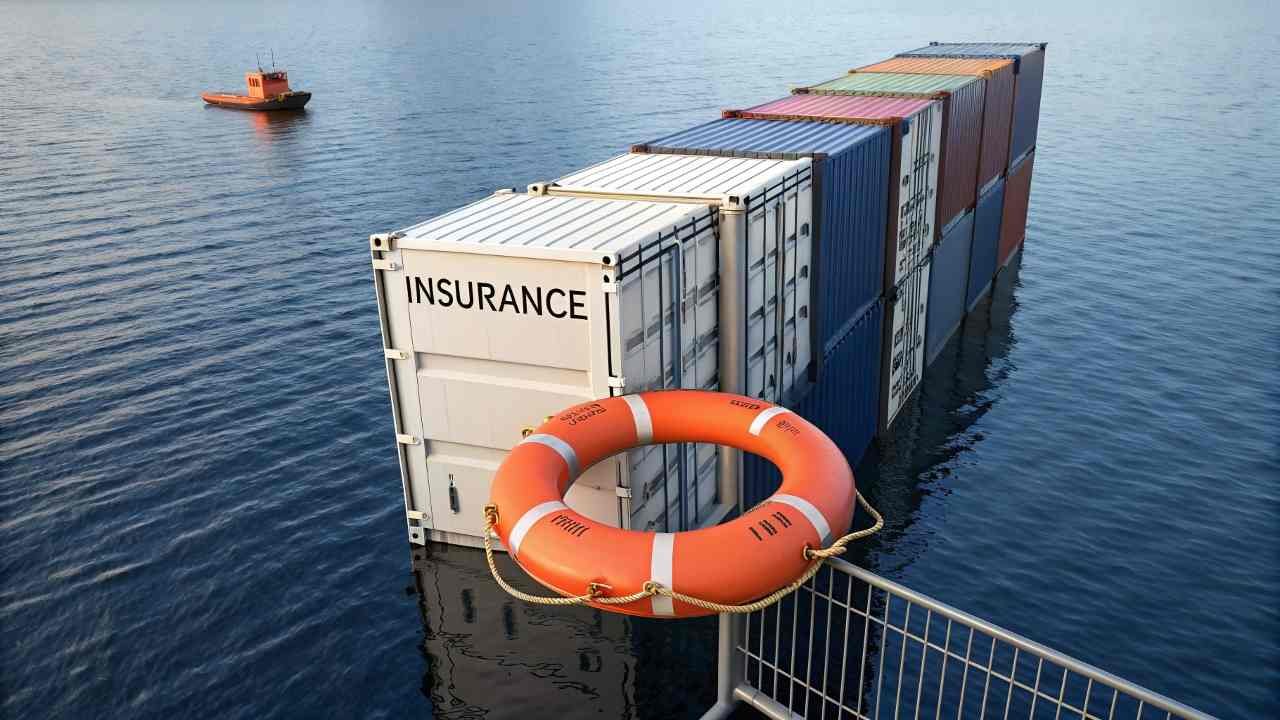
Insurance is your financial safety net. While major disasters are rare, risks like cargo damage, theft, or fire are real. For a small premium—typically less than 0.5% of the cargo's value—you get complete financial protection7. For a $100,000 shipment, this means paying a few hundred dollars to protect yourself from a $100,000 loss. The decision is simple. I always insist that every shipment is fully insured, whether I arrange it (CIF) or my client does (FOB).
Financial Risk Analysis:
| Scenario | Without Insurance | With Insurance |
|---|---|---|
| Shipment arrives safely | You save a few hundred dollars. | You paid a small premium. |
| Shipment is a total loss | You lose the entire value of the goods. | You are reimbursed for the full value. |
Conclusion
Overcoming logistics challenges requires a proactive, professional approach. It is about perfect documentation, robust product protection, choosing reliable partners, and having a strong insurance safety net.
-
Understanding operational costs can help you manage expenses effectively and improve your business's bottom line. ↩
-
Exploring the impact of reputational damage can provide insights into maintaining customer loyalty and brand integrity. ↩
-
Exploring documentation requirements will help you prepare accurate paperwork and prevent shipping issues. ↩
-
Explore this link to learn effective strategies for safeguarding sensitive products through physical protection. ↩
-
Discover how temperature data loggers ensure product quality during shipping and provide essential verification. ↩
-
This resource will explain the advantages of direct routes, emphasizing their role in reducing delays and risks. ↩
-
Understanding financial protection can help you make informed decisions about your insurance needs. ↩