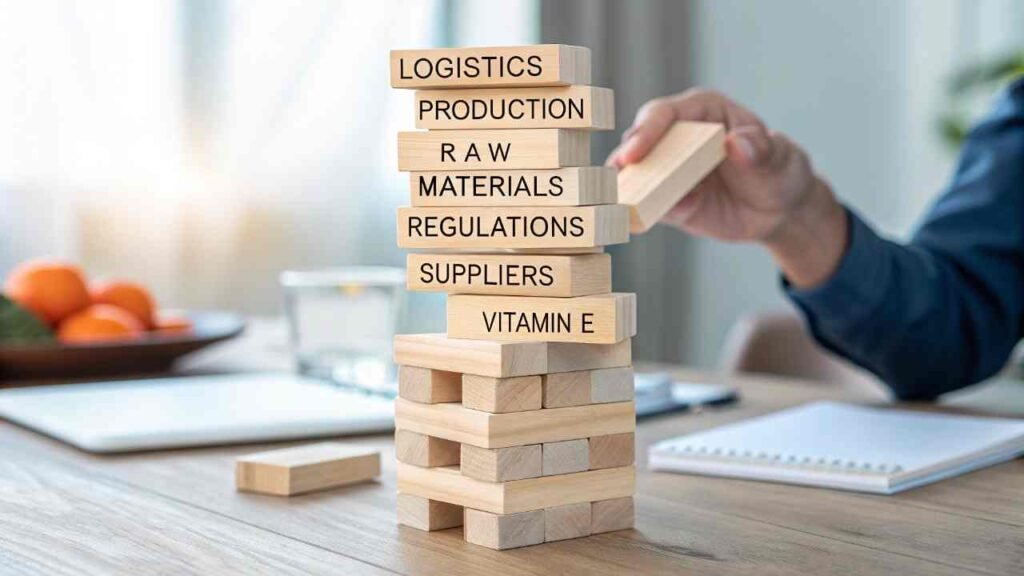
Is your business prepared for the next supply chain shock? A "buy-and-hope" strategy for a critical ingredient like Vitamin E is a high-stakes gamble.
The main risks are supply disruptions from a highly concentrated market, price volatility driven by raw materials, and the vulnerability of single-source dependency. These risks threaten production continuity, making a proactive risk management plan essential for any serious buyer.
Risk management is a topic I discuss every day with my clients. A seasoned buyer knows his job is to protect his company from disruption. The Vitamin E market has specific, known risks. A professional buyer must identify these risks and build a resilient sourcing strategy to counter them.
What supply risks affect Vitamin E availability?
Are you assuming Vitamin E will always be available? The entire global supply chain rests on the smooth operation of just a few key factories.
The primary supply risk is market concentration. The global supply is an oligopoly, dominated by a handful of large producers. A production shutdown—planned or unplanned—at any of these major players can instantly tighten global supply and impact availability for everyone.
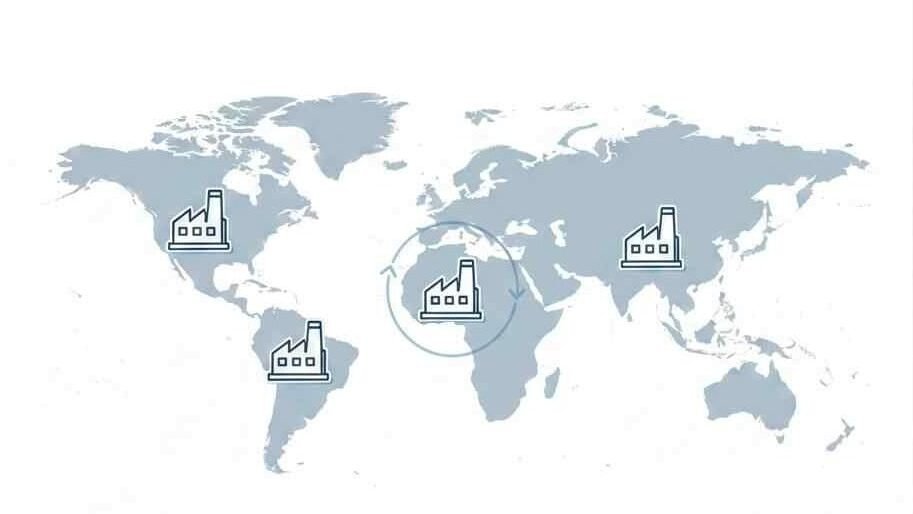
The Vitamin E market is an oligopoly, meaning a few large firms (ZMC, NHU, BASF, DSM) control the supply. This is the biggest risk. A production problem at just one of these key factories—whether from a planned maintenance, an accident, or a sudden regulatory shutdown—can have an immediate and significant impact on global availability1 and price. The market is stable, until it is not.
Supply Disruption Triggers:
| Disruption Type | Predictability | Potential Impact on Availability |
|---|---|---|
| Planned Maintenance | High | Temporary, moderate tightening of supply. |
| Accident / Failure | Low | Sudden, severe, and potentially long-lasting shortage. |
| Regulatory Shutdown | Very Low | Sudden and unpredictable disruption of unknown duration. |
How do price fluctuations impact Vitamin E procurement?
Are sudden price increases destroying your product margins? This volatility makes accurate budgeting feel impossible and puts constant pressure on your profitability.
Price fluctuations directly impact procurement by making budget planning extremely difficult and eroding profit margins. These fluctuations are driven by volatile raw material costs (linked to oil) and by supply-demand imbalances, creating significant financial risk.

Price volatility directly attacks your budget. When the price of Vitamin E jumps unexpectedly, it comes straight out of your profit margin2. It also makes accurate budgeting3 for the year incredibly difficult. This volatility is driven by two main forces: a "cost-push" from rising raw material prices linked to crude oil, and a "supply squeeze" caused by the sudden factory shutdowns we discussed earlier.
Price Volatility Drivers:
| Driver | Cause | Impact on Price |
|---|---|---|
| Cost-Push | Rising cost of raw materials (linked to crude oil). | Slower, more gradual increase. |
| Supply Squeeze | A sudden factory shutdown or disruption. | Fast, sharp price increase. |
How can supplier diversification reduce Vitamin E risk?
Is your entire supply of Vitamin E dependent on a single company? What happens to your business if that one supplier has a major failure?
Supplier diversification is a core risk management strategy. Qualifying at least two suppliers, preferably in different geographic regions, provides a vital backup plan. This prevents a catastrophic failure if one supplier fails and also increases your commercial negotiating leverage.

"Don't put all your eggs in one basket" is the foundation of supply chain security. Having a second, fully qualified supplier is your insurance policy. If your main supplier fails, you can immediately shift orders to your backup and maintain production. A smart strategy is to also diversify geographically4 (e.g., one supplier in China, one in Europe) to protect against region-specific risks. Finally, having a credible alternative gives you powerful commercial leverage during price negotiations.
Single Sourcing vs. Diversified Sourcing:
| Risk Factor | Single Sourcing | Diversified Sourcing (2+ Suppliers) |
|---|---|---|
| Supply Security | Very High Risk (single point of failure). | High (provides a backup plan). |
| Price Leverage | Low (supplier has all the power). | High (buyer can leverage competition). |
How can contracts secure Vitamin E supply?
Are you constantly at the mercy of the spot market, vulnerable to every price spike and supply rumor? This reactive buying is stressful and costly.
Long-term contracts are the most powerful tool for securing supply and managing risk. A contract locks in a fixed price, making you immune to market volatility. It also guarantees a specific volume, ensuring you are a top priority for allocation during any market shortage.

A long-term contract is a strategic action that provides two critical layers of protection. First, it fixes your price, removing all volatility from your budget. If the spot market price doubles, your price does not change. Second, it guarantees your supply5. In a crisis, suppliers are obligated to serve their contract customers first. A contract moves you from the back of the line to the front, ensuring business continuity.
Spot Buying vs. Long-Term Contract:
| Risk Factor | Spot Buying (Order-by-Order) | Long-Term Contract |
|---|---|---|
| Price Risk | Very High. Fully exposed to volatility. | Zero. Price is fixed and predictable. |
| Supply Risk | High. Last priority during a shortage. | Very Low. You are the first priority for allocation. |
How to plan for emergencies in Vitamin E procurement?
A major factory has an accident, and the market is in a full-blown panic. What is your plan? Having no plan is planning to fail.
A robust emergency plan has two essential components. First, a strategic safety stock (inventory) to provide an immediate buffer. Second, a strong partnership with a loyal supplier who will act as your advocate and prioritize your needs during the crisis.
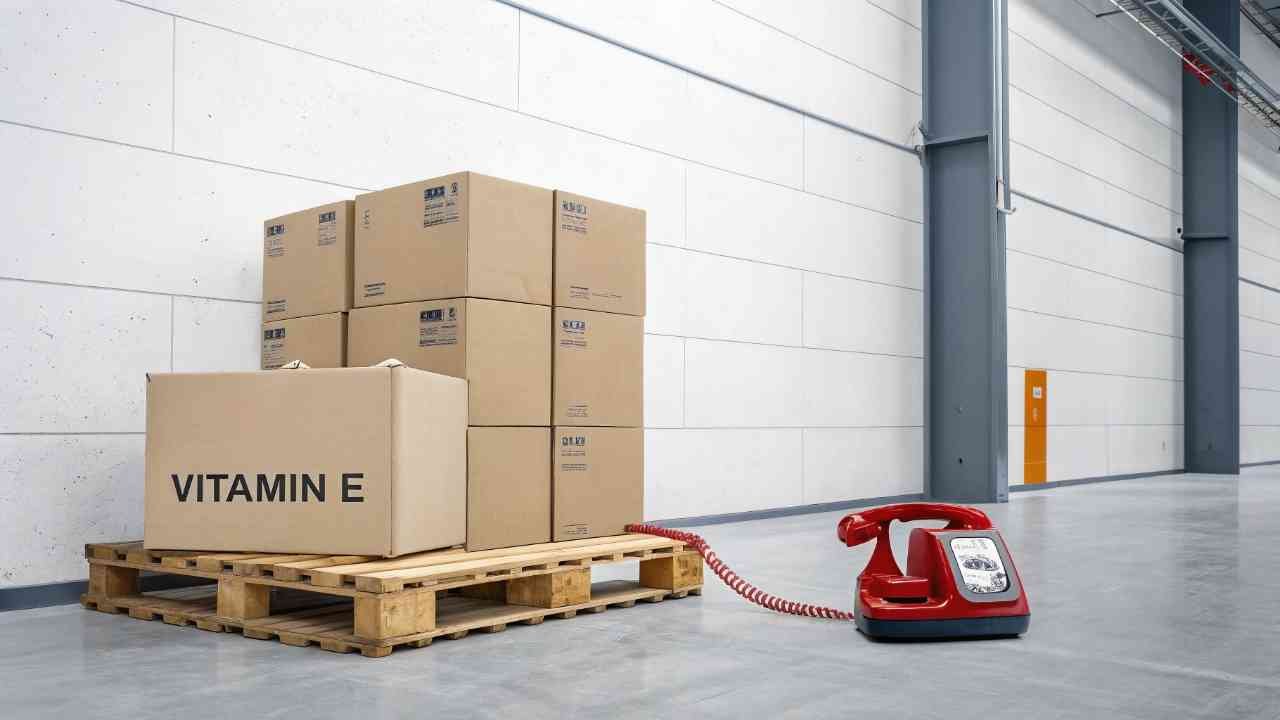
You must prepare for a crisis before it hits. Your plan needs two parts. Your first line of defense is a safety stock. Holding 1-3 months of inventory allows you to continue production while you wait for the market panic to subside. Your second line of defense is a strong partnership6. In a crisis, suppliers will always prioritize their loyal, long-term partners. This relationship is often the difference between getting supply and getting nothing.
Emergency Preparedness Level:
| Preparedness Level | Strategy Employed | Likely Outcome During a Supply Crisis |
|---|---|---|
| Unprepared | Just-in-Time, transactional relationships. | Production shutdown, forced to pay extreme spot prices. |
| Very Prepared | Safety Stock + Strong Partnership | Maintains production and gets priority access to new supply. |
Conclusion
The risks in Vitamin E procurement are significant, but they are manageable. A professional strategy based on diversification, contracts, and true partnerships can build a truly resilient supply chain.
-
Exploring this topic reveals the interconnectedness of supply chains and pricing strategies. ↩
-
Understanding profit margin is crucial for managing your finances effectively and ensuring business sustainability. ↩
-
Exploring budgeting best practices can help you create a more accurate financial plan and improve your overall financial health. ↩
-
Exploring geographic diversification can help you mitigate risks and improve supply chain resilience. ↩
-
Exploring this can reveal how to ensure business continuity in uncertain times. ↩
-
Discover how building strong partnerships can secure your supply chain in tough times. This resource offers valuable insights. ↩