
Are you struggling to get your foot in the door of a new market? Your product is excellent, but your message is not connecting. This is a common and frustrating challenge.
Suppliers expand into new markets by first identifying high-growth regions and conducting deep research on their needs and regulations. They then partner with local distributors, overcome challenges, and build long-term trust through consistency and becoming a true strategic partner.
Entering a new market is a serious undertaking. A professional buyer is not looking for just another supplier; he is looking for a reliable, long-term partner who understands his market. A successful expansion requires a strategy, deep respect for the new market, and a commitment to building relationships from the ground up.
Which regions show rising Vitamin E demand?
Are you still focused on the traditional markets of Europe and North America? The real growth story is happening elsewhere, and you might be missing the biggest opportunities.
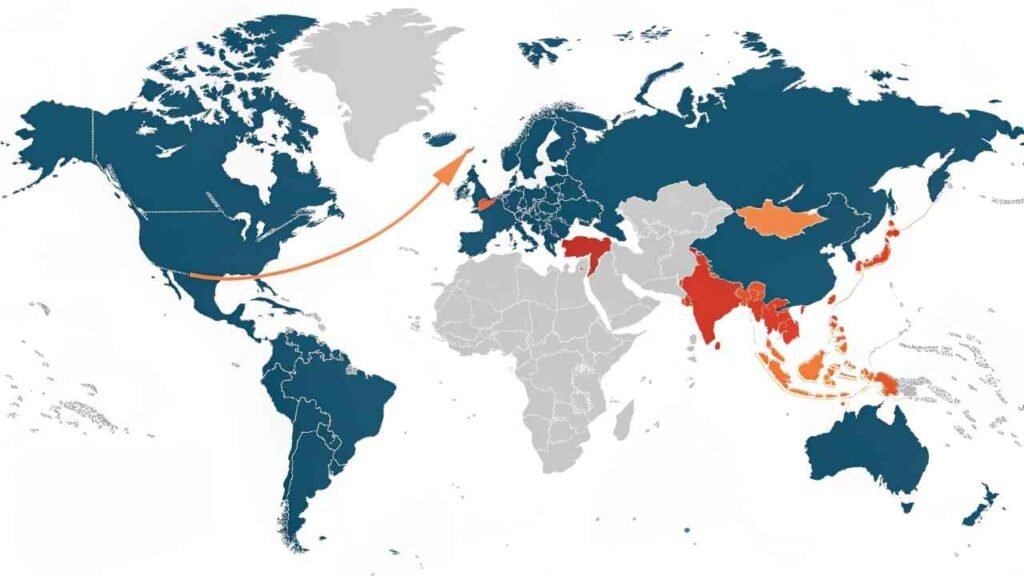
The most significant rising demand for Vitamin E comes from emerging markets. Southeast Asia, particularly countries like Vietnam and Indonesia, and Latin America, led by Brazil, are the primary growth engines, driven by their booming animal feed industries.

While traditional markets are mature, the explosive growth is in the developing world. Southeast Asia1 and Latin America2 are the new centers of gravity for demand. Their rapidly growing middle class is consuming more meat, which has fueled a massive expansion of their industrial animal feed industries. These regions are no longer "secondary" markets; they are a central and critical part of global Vitamin E trade.
Regional Demand Drivers:
| Region | Key Growth Driver | Primary Vitamin E Application | Market Status |
|---|---|---|---|
| Southeast Asia | Rapid growth in aquaculture and poultry farming. | Feed Grade | High Growth |
| Latin America | Massive scale of poultry and beef export industries. | Feed Grade | High Growth |
| Europe | High-end supplements, "clean label" food trends. | Food Grade, Natural E, Pharma Grade | Mature, Stable |
How to approach new Vitamin E distributors?
Are you sending countless emails to potential distributors but getting no response? A generic approach is a fast track to being ignored.
To approach a new distributor successfully, you must be professional and prepared. Start with a clear introduction that highlights your value, immediately provide proof of your credibility with key certificates, and make it easy for them to start a relationship with a small trial order.

A distributor in a new market is busy and skeptical. To get their attention, you must immediately prove you are a professional partner. Start with a clear, concise introduction that focuses on how you can help them. Proactively provide proof of your quality by attaching key documents like your ISO certificates and a sample Certificate of Analysis (COA) to your very first email. Finally, make it easy for them to say yes by offering a low-risk, small trial order.
Distributor Pain Points and Supplier Solutions:
| Distributor's Fear / Pain Point | How a Professional Supplier Solves It |
|---|---|
| "Is this supplier a real company?" | Proactively provide business license and ISO certificates. |
| "Is their quality good?" | Proactively provide a sample COA and welcome third-party inspections. |
| "Is this a big risk for me?" | Offer a low MOQ for a first trial order. |
Why is research important before selling Vitamin E in new markets?
Are you trying to enter a new country without understanding its rules? This is like sailing into a new port without a map and is a recipe for failure.
Thorough research is essential to avoid costly mistakes. It is critical to understand the new market's specific import regulations and taxes, the existing competitive landscape, and the precise needs and quality standards of the local customers before you even begin.

Entering a market blindly is the most common mistake. Before you even make contact, you must do your homework. Research the regulatory landscape3 to understand import duties, taxes, and required documentation to avoid customs disasters. Map the competitive landscape4 to develop a realistic pricing strategy. Most importantly, identify the customer's true needs to ensure you are offering the right product for that specific market.
Market Entry Research Checklist:
| Research Area | Key Questions to Answer | Why It's Important |
|---|---|---|
| Regulations | What are the import duties, taxes, and required documents? | To avoid customs delays, fines, and shipment rejection. |
| Competition | Who are the key local players? What are their prices? | To develop a realistic and competitive pricing strategy. |
| Customer Needs | Which grade of Vitamin E is most in demand? Who are the biggest end-users? | To ensure you are offering the right product to the right people. |
How to overcome challenges in Vitamin E market expansion?
You have done your research and found a partner. Now the real work begins. How do you navigate the inevitable challenges of logistics, language, and trust?
You overcome expansion challenges with a focus on problem-solving. Use experienced freight forwarders to manage complex logistics. Bridge cultural gaps with clear communication and patience. Build trust through absolute transparency, consistency, and a willingness to prove your quality.

Expansion is a series of challenges to be solved. To solve logistics, partner with an experienced freight forwarder who specializes in that route. To bridge cultural gaps, use simple, clear communication and be patient in building the relationship. To overcome the biggest challenge—building trust5—be completely transparent, welcome inspections, and prove your reliability with a flawless trial order.
Effective vs. Ineffective Approach:
| Challenge | Ineffective (Reactive) Approach | Effective (Proactive) Solution |
|---|---|---|
| Complex Logistics | Use the cheapest, unknown forwarder. | Partner with an experienced freight forwarder who knows the route. |
| Building Trust | "Trust me, our quality is good." | "Let us prove our quality with a small trial order and an inspection." |
How to build long-term Vitamin E customer relationships?
You have made your first sale in a new market. Now, how do you turn that transaction into a loyal, multi-year partnership?
You build long-term relationships by moving beyond the sale. This means delivering on your promises with absolute consistency, communicating proactively, and evolving from a simple supplier into a valued strategic partner who provides market intelligence and flexible support.

The first order is just the start. A long-term partnership is built on absolute consistency6. The quality and delivery must be perfect every single time. It is built on proactive communication, where you share market intelligence to help your partner's business. Ultimately, you must evolve from a simple supplier into a strategic partner who is flexible, supportive, and focused on your customer's long-term success.
Transactional Supplier vs. Long-Term Partner:
| Aspect | Transactional Supplier | Long-Term Partner |
|---|---|---|
| Focus | The current sale. | The customer's long-term success. |
| Communication | Reactive (waits for customer to ask). | Proactive (provides updates and market intelligence). |
| Relationship | Simple buyer-seller. | Collaborative and strategic. |
Conclusion
Expanding Vitamin E into new markets is a strategic process. It requires research, professionalism, and a genuine commitment to building long-term partnerships based on trust and consistent performance.
-
Explore this link to understand how Southeast Asia's growing middle class is reshaping global markets. ↩
-
Discover insights on Latin America's role in the Vitamin E market and its impact on global trade dynamics. ↩
-
Understanding the regulatory landscape is crucial for navigating import duties and taxes effectively. ↩
-
Analyzing the competitive landscape helps in crafting a successful pricing strategy and positioning your product. ↩
-
This resource will offer valuable insights into fostering trust, crucial for successful partnerships. ↩
-
Understanding absolute consistency can enhance your approach to building reliable business relationships. ↩