
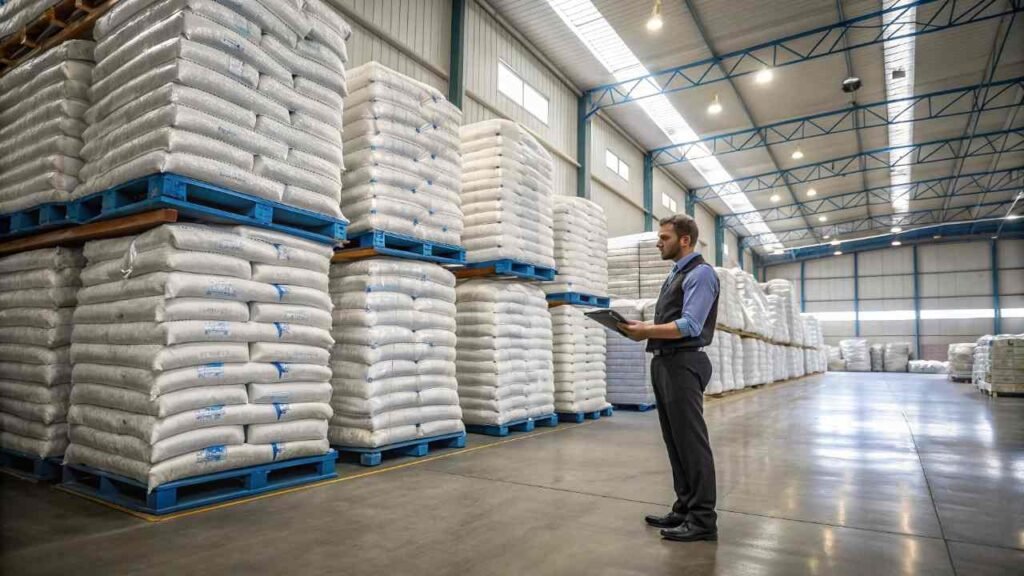
Are you thinking about buying Sucralose in bulk to get a better price? But what about the risks of tying up cash, storage problems, and market drops?
Distributors must consider the significant cost savings from bulk pricing and reduced freight, the strict storage requirements to prevent caking, potential supply chain risks from the supplier, and effective inventory management strategies to control holding costs. A full analysis is essential.
As a distributor, your business is built on margin. Bulk buying is a powerful tool to improve that margin, but it is a trade-off. You gain significant cost advantages, but you also take on new responsibilities. Let's break down the key considerations for a successful bulk purchasing strategy.
How does bulk buying affect Sucralose prices?
Are high per-kilogram freight costs on small orders eating into your profit margins? This makes it difficult to compete. There is a much more efficient way to purchase.
Bulk buying dramatically lowers your total landed cost. It achieves this by slashing per-kilogram shipping costs through Full Container Load (FCL) shipments and by unlocking better per-unit pricing from suppliers who benefit from their own operational efficiencies.
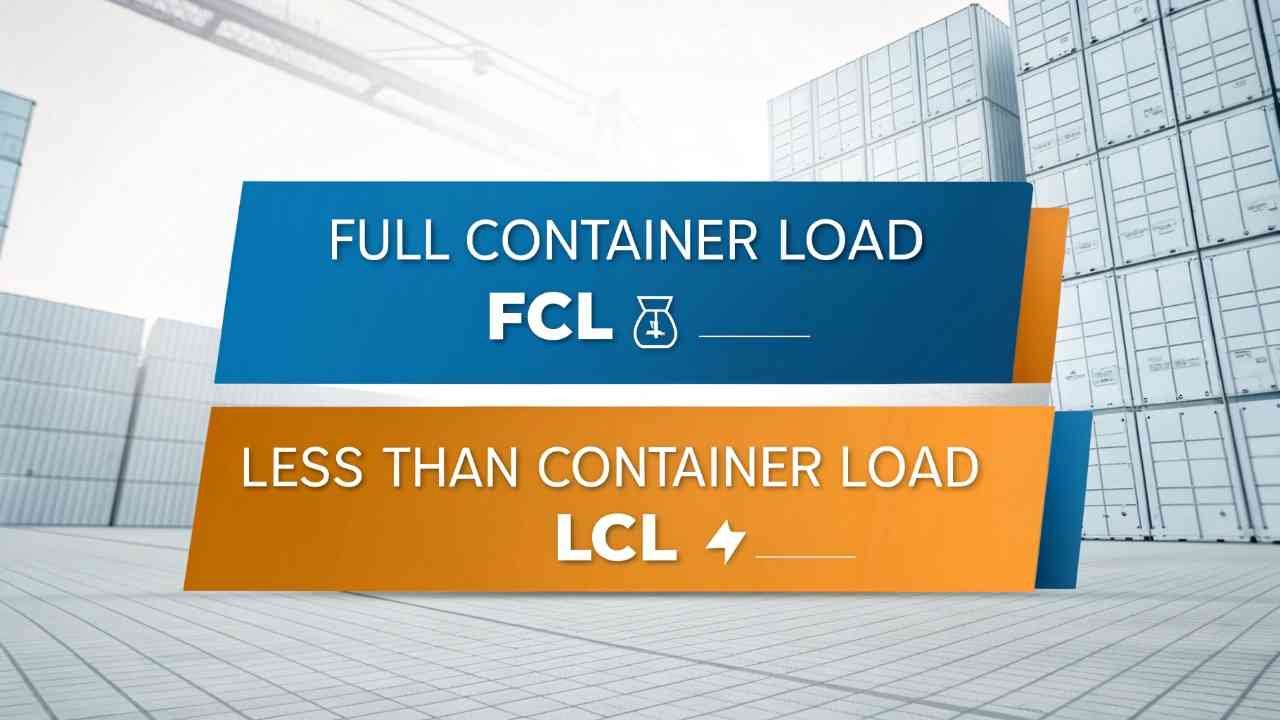
The biggest lever you can pull to reduce your cost is volume. The most dramatic saving comes from Full Container Load (FCL) shipping. A full 20-ton container can have a freight cost per kilogram that is 50% lower than a small LCL shipment. I can also offer a better product price on a bulk order1 because it makes my own operation more efficient, with lower production and administrative costs per unit. I pass these savings on to my bulk-buying partners.
Landed Cost Comparison: LCL vs. FCL Shipment:
| Cost Component | 1-ton LCL Shipment | 20-ton FCL Shipment | Comments |
|---|---|---|---|
| Price per kg (from factory) | $28.00 | $27.50 | Volume discount due to production efficiency. |
| Freight Cost per kg | $0.30 | $0.15 | Freight cost per kg is cut in half. |
| Final Landed Cost per kg | $28.30 | $27.65 | A huge saving that directly improves your margin. |
How should bulk Sucralose be stored safely?
You have just received 20 tons of Sucralose. This is a major asset. But if you store it incorrectly, it can quickly turn into a worthless liability.
Bulk Sucralose must be stored in a cool, dry, and dark warehouse. It must be kept on pallets off the floor. Implementing a strict First-In, First-Out (FIFO) inventory system is essential to prevent caking and manage the product's shelf life effectively.
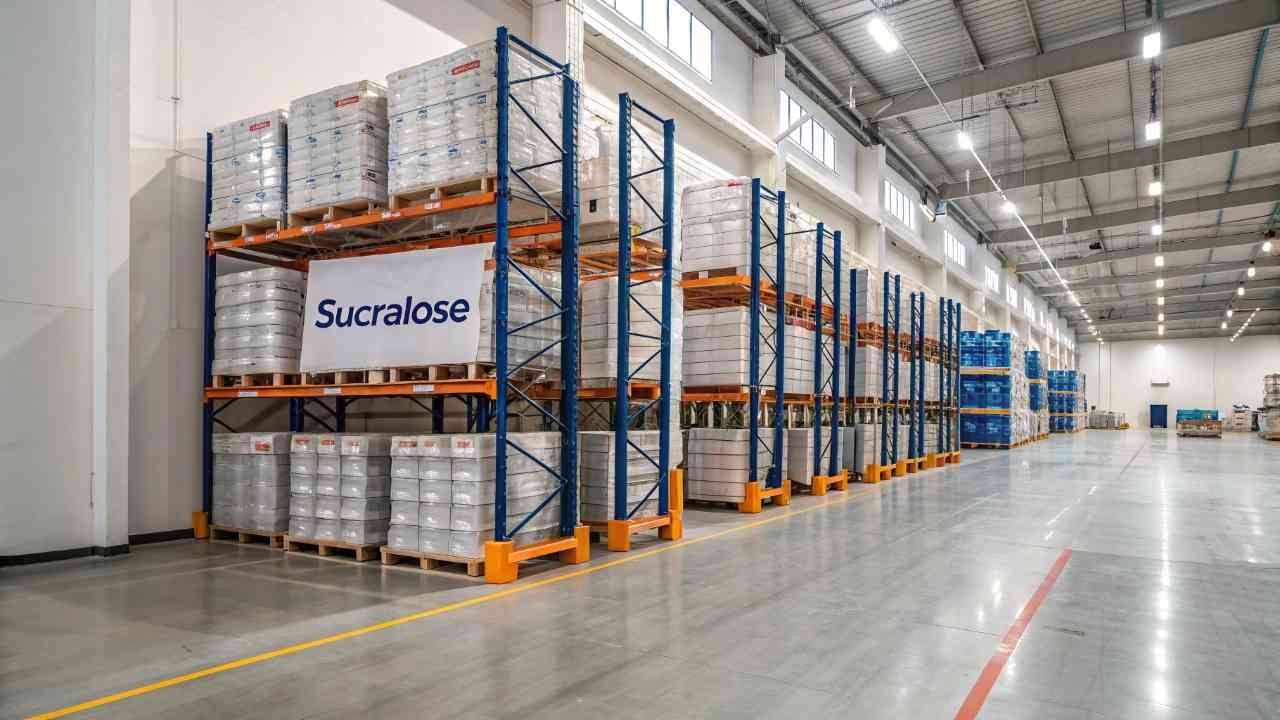
As a distributor, proper warehousing is a core competency. Sucralose's number one enemy is moisture2. The powder is hygroscopic and will absorb water from the air, causing it to form hard, unusable clumps (caking). To prevent this, your warehouse must be cool and dry, and all bags must be stored on pallets, never on the floor. Most importantly, you must implement a strict First-In, First-Out (FIFO)3 system to always sell your oldest stock first, ensuring proper rotation and preventing waste from expired product.
Simple Checklist for Safe Sucralose Storage:
| Condition | Requirement | Why It Is Important |
|---|---|---|
| Humidity | Low (Dry Environment) | Prevents moisture absorption and caking. |
| Position | On pallets, off the floor | Protects from ground moisture and damage. |
| Inventory System | Strict First-In, First-Out (FIFO) | Ensures proper stock rotation, prevents waste from expiry. |
How do suppliers ensure stable Sucralose supply?
You are about to commit a large amount of capital to a bulk order. What if your supplier suddenly has a production problem, leaving you unable to serve your customers?
Professional suppliers ensure a stable supply by managing their entire supply chain. They secure long-term contracts for their own raw materials, maintain a safety stock of finished goods, and operate under robust, certified quality systems like ISO 9001.
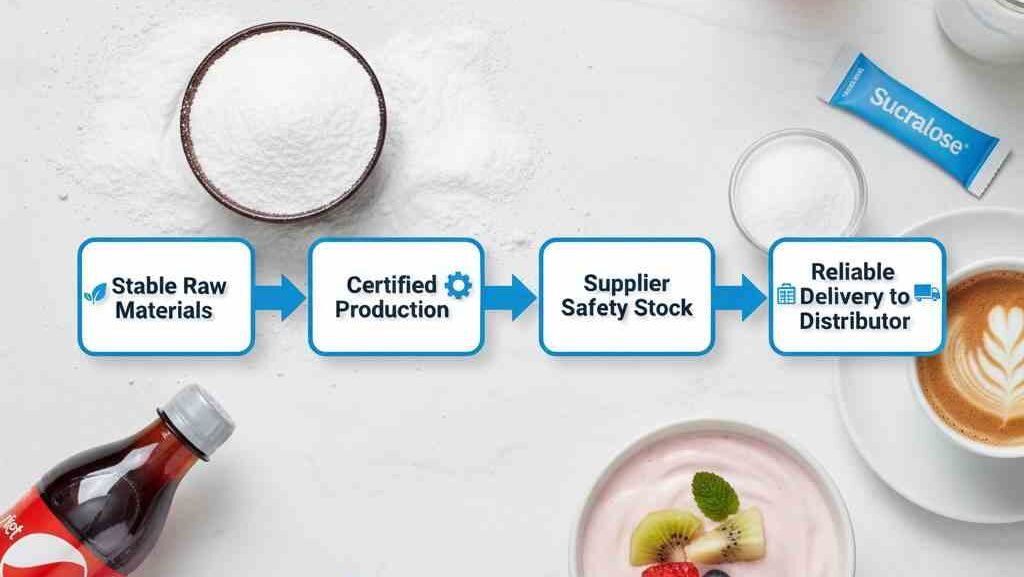
When you place a bulk order, you are buying a promise of reliability. I ensure this promise by managing the entire supply chain. I work with factories that have long-term contracts for their raw materials and are certified to ISO 9001. This guarantees a consistent production process. Furthermore, I maintain a supplier safety stock4 of finished goods. This buffer protects my distributor partners from any minor disruptions, ensuring a stable and predictable supply.
Pillars of a Stable Supply Chain:
| Pillar | Supplier Action | Benefit for the Distributor |
|---|---|---|
| Upstream Management | Long-term contracts for raw materials. | Reduces risk of price volatility and input shortages. |
| Safety Stock | Maintains a buffer inventory of finished goods. | Protects you from minor production or demand disruptions. |
| Certified Systems | Works only with ISO 9001 certified producers. | Guarantees a consistent and reliable production process. |
What risks come with bulk Sucralose orders?
The cost savings of buying in bulk are attractive. But a smart distributor also understands the risks. What if the market price falls, or you cannot sell the product as fast as you expect?
The primary risks of bulk buying are the significant upfront capital investment that ties up your cash flow, the ongoing inventory holding costs, and the market risk of the price dropping after your purchase, leaving you with over-priced stock.

A professional distributor manages risks. The biggest is cash flow strain5 from the large upfront payment. You must also account for inventory holding costs6—the cost of storage, insurance, and the capital tied up in the stock. Finally, there is market price risk: if the price falls after you buy, your stock is worth less. These risks are managed through careful financial planning and by working with your supplier on long-term contracts to lock in a stable price.
Risk Mitigation Strategies:
| Risk | Description | Mitigation Strategy |
|---|---|---|
| Cash Flow Strain | Large upfront payment ties up capital. | Ensure proper financial planning and credit lines. |
| Inventory Holding Costs | Cost of storage, insurance, and capital. | Implement efficient inventory control to maximize turnover. |
| Market Price Drop | Being stuck with high-priced stock. | Negotiate long-term contracts to lock in a stable, competitive annual price. |
How can distributors control inventory costs for Sucralose?
You have a warehouse full of Sucralose, a major investment. But every day that product sits on your shelves, it is costing you money. How do you turn that stock into profit efficiently?
Distributors control inventory costs by implementing a strict First-In, First-Out (FIFO) system to prevent spoilage, using inventory management software to optimize reorder points, and working with their supplier on advanced strategies like staggered delivery schedules.

Effective inventory management is key to your profitability. The core discipline is FIFO (First-In, First-Out) to prevent any losses from expired stock. Using inventory management software7 helps you set data-driven reorder points to minimize excess stock. For my largest partners, we use an advanced strategy of staggered deliveries. They commit to a large annual volume to get the best price, but I ship it in smaller, regular intervals. This gives them bulk pricing with manageable cash flow and inventory.
Inventory Control Methods:
| Method | Description | Benefit |
|---|---|---|
| FIFO | Systematically selling the oldest stock first. | Prevents losses from expired product. |
| Reorder Point Planning | Using sales data to determine the optimal time to reorder. | Minimizes holding costs while preventing stockouts. |
| Staggered Deliveries | Scheduling regular shipments against a large annual contract. | Provides bulk pricing with manageable cash flow and inventory. |
Conclusion
Bulk Sucralose buying is a powerful strategy. For distributors who master storage, manage risks, and control inventory, it provides a significant and sustainable competitive advantage in the market.
-
Learn how bulk orders can lead to better pricing and operational efficiency, benefiting your business's bottom line. ↩
-
Understanding how moisture affects hygroscopic substances like sucralose can help you implement better storage practices. ↩
-
Learning about the FIFO method can enhance your inventory management, ensuring product freshness and reducing waste. ↩
-
Exploring supplier safety stock will reveal how it mitigates risks and ensures a steady supply chain. ↩
-
Understanding how to manage cash flow strain is crucial for distributors to maintain financial stability and ensure smooth operations. ↩
-
Exploring ways to reduce inventory holding costs can significantly improve a distributor's profitability and operational efficiency. ↩
-
Exploring the benefits of inventory management software can enhance your efficiency and profitability through data-driven decisions. ↩