
Developing a new product is a major challenge. Using the wrong ingredient or a slow, unsupportive supplier can waste months of time, effort, and money.
Suppliers support new product development by providing fast, high-quality samples, comprehensive technical documents, consistent high-purity product, and expert application guidance. This partnership approach helps innovators solve formulation challenges and dramatically speeds up the time to market.
During the R&D phase, my role is not just to be a seller of ingredients. I must become a true development partner. A Purchasing Director needs the R&D team to be supported with the tools and information required for success. A professional supplier understands that your success is our success. Let's look at the key ways we can support your innovation journey.
How can samples speed up Sucralose formulation testing?
Your R&D team is ready to start, but they are waiting for a sample. Or the sample finally arrives, but it is low quality. These delays can kill a project's momentum.
Samples speed up testing by allowing R&D teams to immediately conduct real-world trials on taste, solubility, and stability. Fast, reliable delivery of a high-quality, representative sample from a supplier is the critical first step in the entire development cycle.
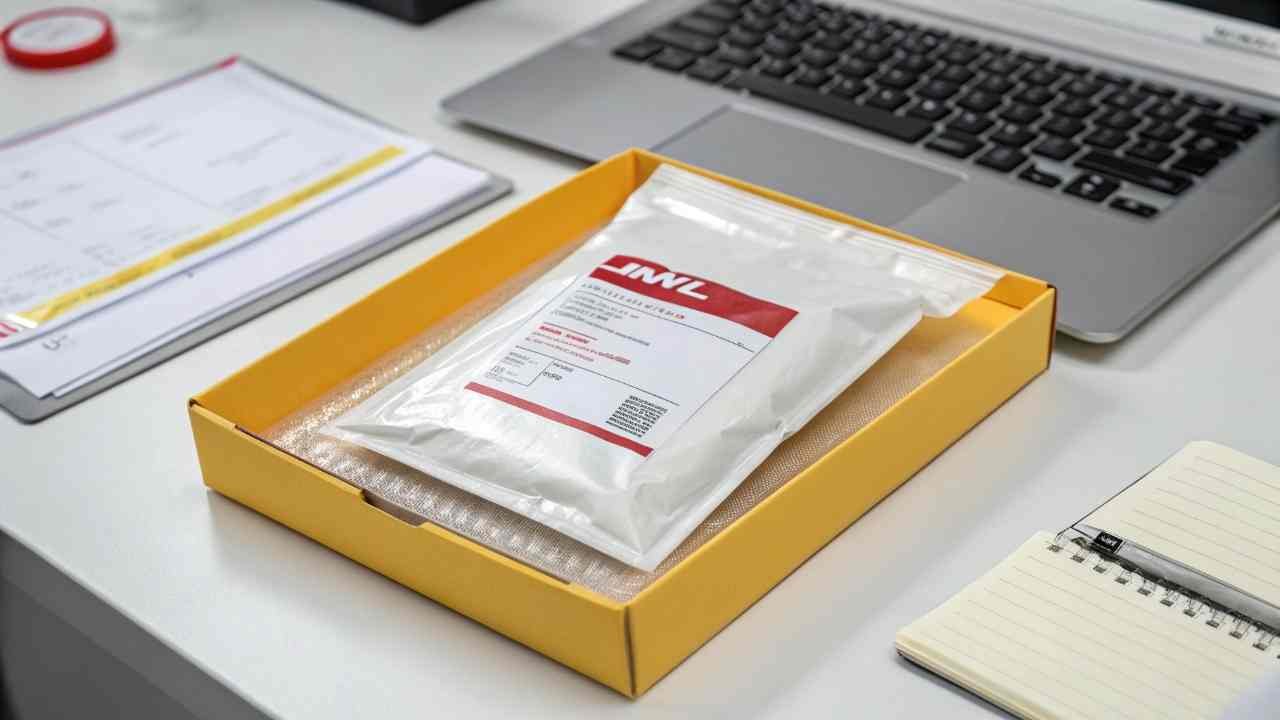
The first sample is the "golden sample" for your R&D team; it must be perfectly representative of the bulk material you will eventually buy. A professional supplier understands the urgency of R&D. We treat every sample request as a priority, shipping it immediately via express courier like DHL. Crucially, the sample must be accompanied by its key technical documents, the Technical Data Sheet (TDS)1 and the batch-specific Certificate of Analysis (COA), to be truly useful.
Good Supplier vs. Poor Supplier (Sample Process):
| Feature | Good Supplier | Poor Supplier |
|---|---|---|
| Speed | Ships immediately via express courier. | Ships slowly, takes weeks to arrive. |
| Quality | Representative of bulk production. | May be a "special" non-standard batch. |
| Documentation | Includes TDS and batch-specific COA. | No documents, or only a generic TDS. |
| Communication | Proactively provides tracking and support. | Little to no communication. |
How does Sucralose purity influence product results?
Your new sugar-free drink tastes great one day, but the next test batch has a slight bitter aftertaste. This inconsistency can ruin a product launch.
Sucralose purity directly influences the taste profile of the final product. Higher purity levels (e.g., USP grade) minimize the risk of off-notes or bitter aftertastes caused by trace impurities, ensuring a clean, consistent sweetness in every single batch.
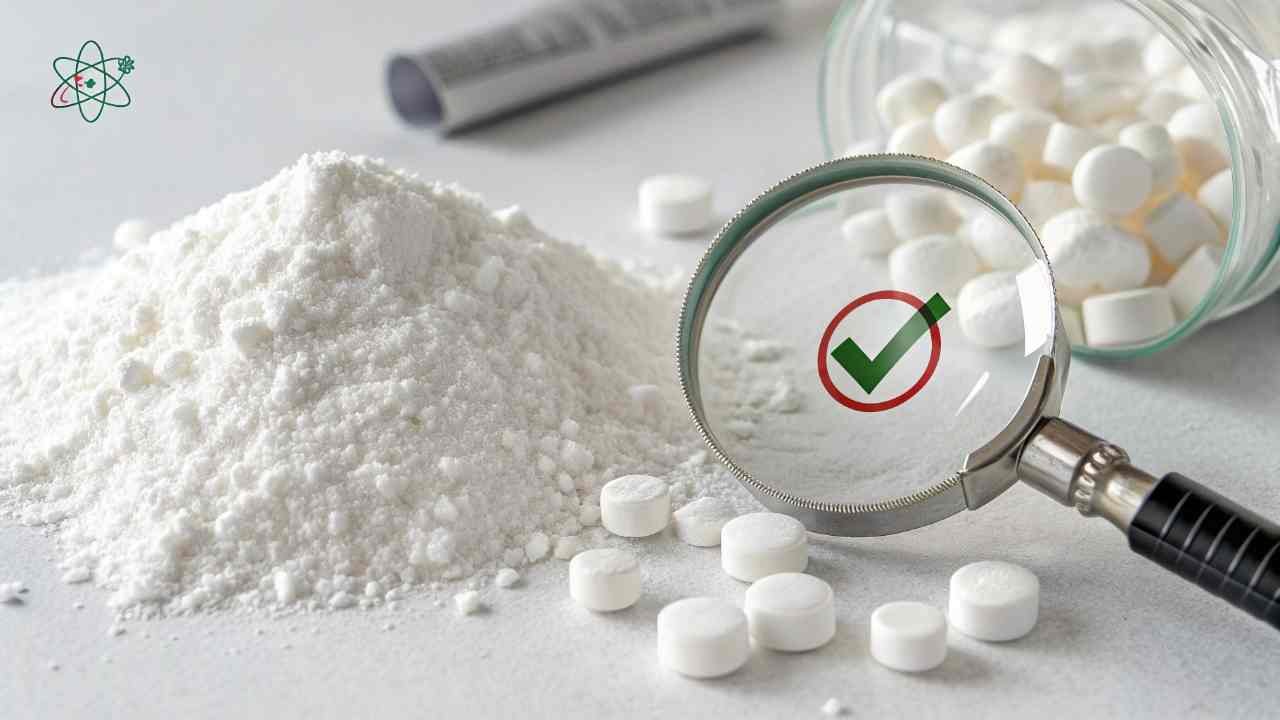
For a high-intensity sweetener, purity is critical. A higher purity level means fewer trace "related compounds," which are the source of potential aftertastes. This results in a cleaner, more sugar-like taste. More importantly, batch-to-batch consistency2 in purity is essential. Your brand's reputation depends on your product tasting exactly the same every time. A professional supplier uses tight process controls to deliver the same high purity in every single shipment, guaranteeing a consistent taste profile for your customers.
Purity Grade and Its Impact on Applications:
| Application | Standard Grade (FCC) | High Purity (USP Grade) |
|---|---|---|
| Carbonated Soft Drinks | Good (strong flavors can mask minor notes). | Better (ensures a very clean taste profile). |
| Flavored Water / Dairy | May have slight aftertaste. | Recommended for the cleanest possible taste. |
| Dietary Supplements | Good | Often required for "pharmaceutical grade" claims. |
How do technical documents help Sucralose developers?
Your R&D team is asking for documents like a TDS or MSDS, but you do not have them. Your supplier is slow to respond, and now your project is stalled.
Technical documents like the Technical Data Sheet (TDS), Certificate of Analysis (COA), and Material Safety Data Sheet (MSDS) provide the essential, standardized data R&D teams need for formulation, safety handling, and quality control, saving significant development time.
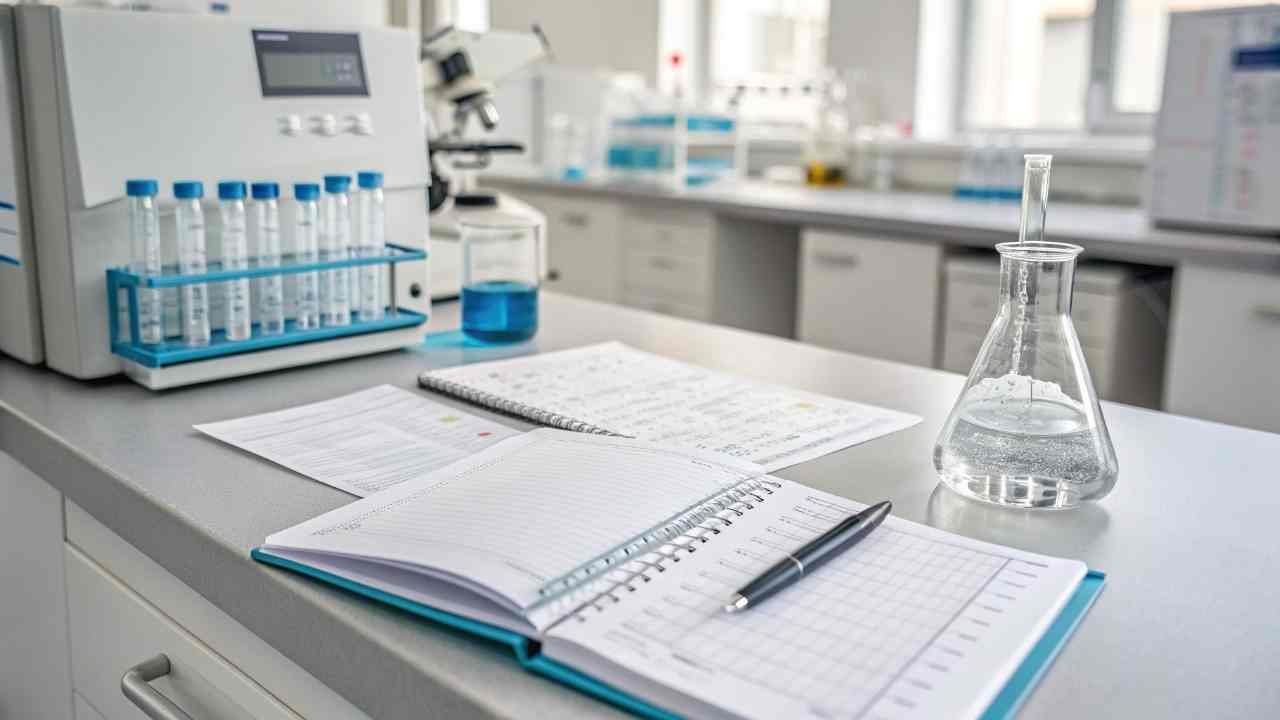
A professional supplier provides clear and complete documentation with every sample. These documents are essential tools for your R&D team. The Technical Data Sheet (TDS) is the ingredient's "blueprint," detailing its properties. The Certificate of Analysis (COA) is the "quality report card" for the specific batch you received. The Material Safety Data Sheet (MSDS/SDS) is the "safety manual" for proper handling. Providing these documents promptly is a core part of a supplier's job.
Key Documents for R&D:
| Document | Purpose | What It Answers for a Developer |
|---|---|---|
| TDS | Product Specifications & Properties. | "What is this ingredient and how will it behave?" |
| COA | Quality results for a specific batch. | "Does this sample meet the promised quality standards?" |
| MSDS / SDS | Safety, Handling, and Storage info. | "How do we handle this ingredient safely in our facility?" |
Why is stability testing important for Sucralose use?
Your new zero-sugar fruit preserve tastes fantastic on the day it is made. But after a few weeks on the shelf, it has lost a significant amount of its sweetness.
Stability testing is critical because it verifies that Sucralose will maintain its sweetness and integrity throughout your product's entire shelf life. This is especially important when the product is exposed to processing conditions like high heat (baking) or low pH (acidic beverages).
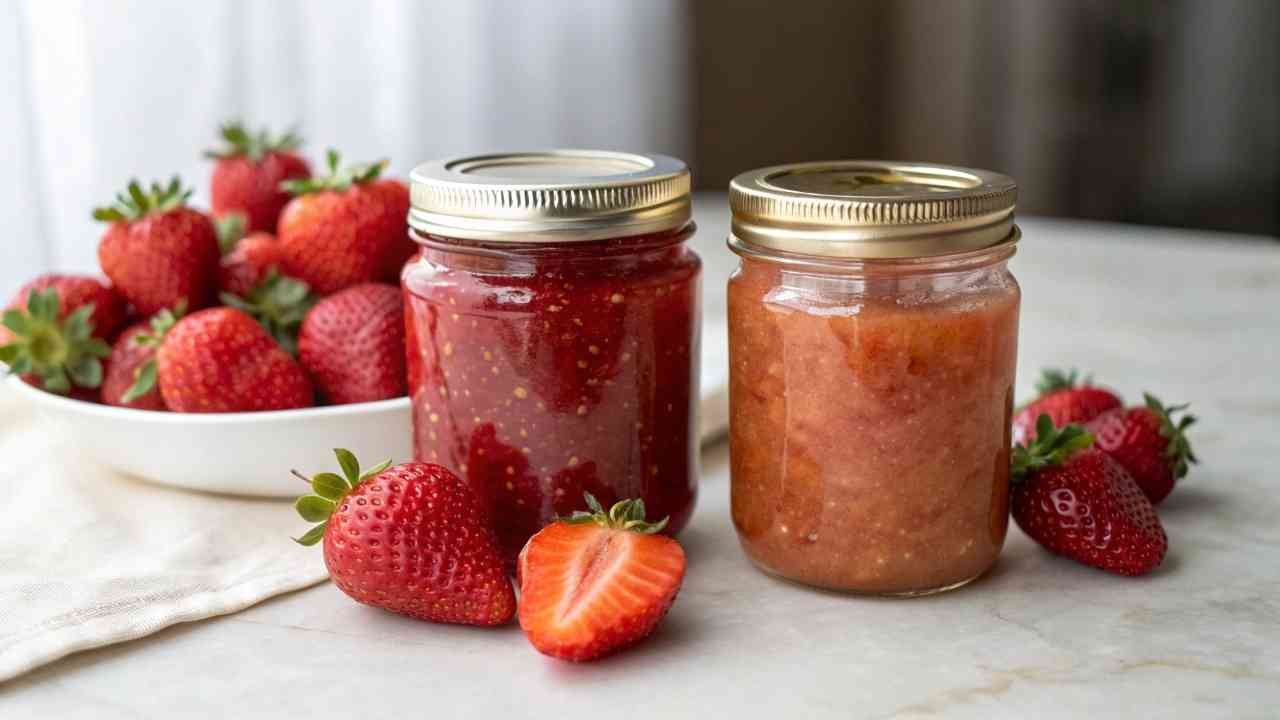
Sucralose's key advantages for developers are its exceptional heat and pH stability3. Unlike other sweeteners like Aspartame, Sucralose does not break down or lose its sweetness when exposed to high heat. This makes it perfect for baking and pasteurized products4. It is also extremely stable in low pH (acidic) environments, which is crucial for beverages. This ensures your product will taste just as sweet on the last day of its shelf life as it did on the first.
Stability Comparison: Sucralose vs. Aspartame
| Condition | Sucralose Stability | Aspartame Stability |
|---|---|---|
| Heat (Baking/Pasteurization) | Excellent. No loss of sweetness. | Poor. Breaks down and loses sweetness. |
| Low pH (Acidic Drinks) | Excellent. Stable over a long shelf life. | Fair. Can degrade and lose sweetness over time. |
| Ideal Applications | Beverages, Bakery, Dairy, Jams. | Beverages with neutral pH, tabletop sweeteners. |
How can application support improve Sucralose innovation?
Your product development team is stuck on a technical challenge. Perhaps they are trying to mask a bitter off-note, or the mouthfeel of their new drink is too thin.
Application support, where a supplier shares formulation knowledge and experience, helps innovators solve specific challenges faster. This guidance on dosage rates, sweetener blending, and interaction with other ingredients can dramatically shorten the development cycle.
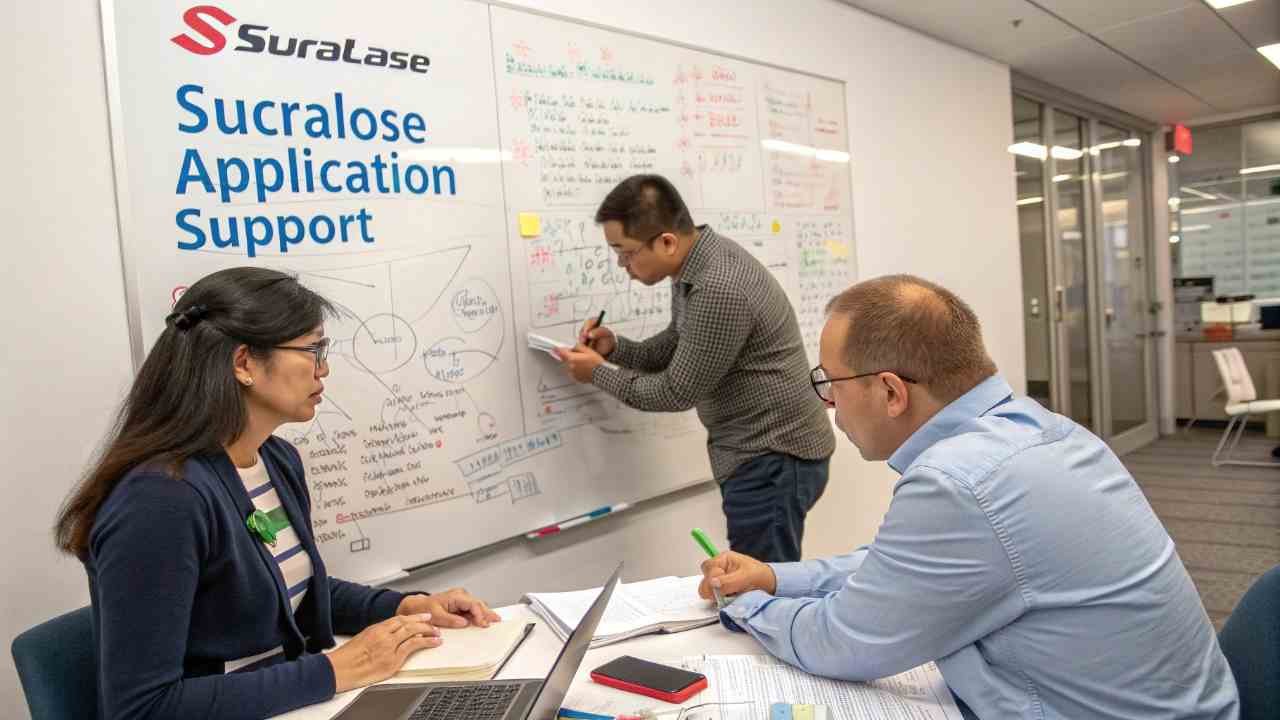
A great supplier is a source of knowledge. With experience across hundreds of applications, I can provide guidance that saves you weeks of trial-and-error. I can help with common challenges, like improving the mouthfeel of a zero-sugar drink with a hydrocolloid like Xanthan Gum. I can also advise on advanced techniques like sweetener blending5. Combining Sucralose with another sweetener like Ace-K can create a synergistic, more sugar-like taste. This is the value of a true development partnership.
Common Formulation Challenges & Supplier Advice:
| Challenge | Potential Solution / Advice from Supplier |
|---|---|
| Thin mouthfeel in a zero-sugar drink. | "Consider adding a small amount of a hydrocolloid like Xanthan Gum or CMC to improve the body." |
| Slight bitter aftertaste from vitamins. | "Try slightly increasing the Sucralose dosage, as its clean sweetness can be very effective at masking off-notes." |
| Sweetness profile is not "sugar-like". | "Experiment with a blend of Sucralose and Ace-K. A 90/10 blend is a common starting point for beverages." |
Conclusion
A professional supplier is a development partner. We provide samples, technical data, and expert support to help you innovate faster and create a successful final product.
-
Understanding TDS is crucial for ensuring product quality and compliance. Explore this link to learn more about its significance. ↩
-
Understanding batch-to-batch consistency can help ensure product quality and customer satisfaction, crucial for any brand. ↩
-
Understanding heat and pH stability can help you choose the right sweetener for your products. ↩
-
Explore how Sucralose enhances the quality of baked goods and beverages. ↩
-
Explore this link to understand sweetener blending, a technique that can enhance flavor profiles in food and beverages. ↩