
Are you trying to budget for Potassium Sorbate, but the price is always a moving target? This volatility makes financial planning difficult and puts your profit margins at risk.
Potassium Sorbate price changes are driven by the costs of its chemical raw materials, predictable seasonal demand cycles, and fluctuations in global currency exchange rates. Understanding these three key drivers allows buyers to anticipate market movements and control procurement costs effectively.
“Why did the price change?” This is the most important question a professional buyer can ask. Price movements are never random; they are the result of clear economic forces. My job is to help you understand the "why" behind those movements. This knowledge transforms you from a reactive price-taker into a strategic buyer who can anticipate the market. Let’s look at the key drivers.
How Do Raw Material Costs Influence Potassium Sorbate Prices?
Does it seem like Potassium Sorbate prices move for no reason? The price you pay is directly connected to the volatile global markets for its underlying chemical ingredients.
The price of Potassium Sorbate is heavily influenced by the cost of its primary raw material, Sorbic Acid. The price of Sorbic Acid itself is tied to the cost of precursor chemicals from the petrochemical market, making it sensitive to crude oil prices.
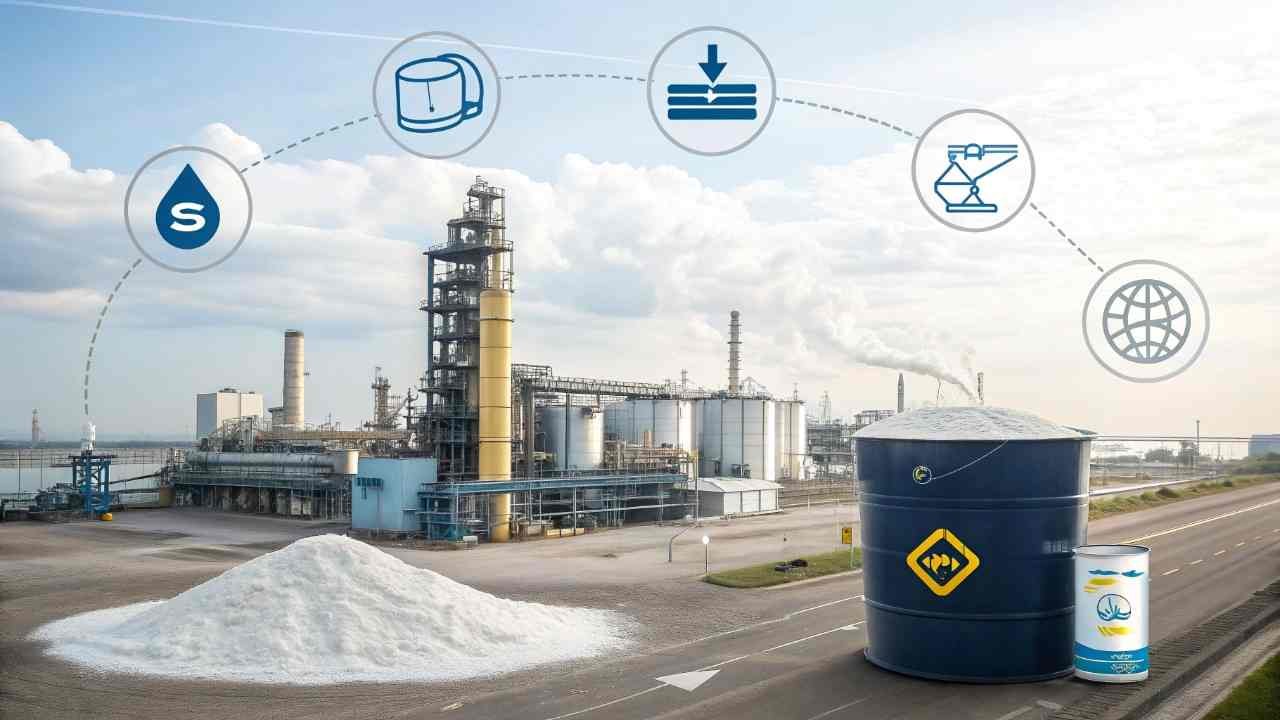
To understand the price, you have to look back in the supply chain. Potassium Sorbate is made from Sorbic Acid1, so the price of Sorbic Acid is the most direct influence. Sorbic Acid, in turn, is made from precursor chemicals derived from the petrochemical industry2. This creates an indirect but real link to the price of crude oil. When the costs of these inputs or the energy to produce them rise, the final price of Potassium Sorbate will follow.
Key Raw Material Price Influences:
| Input | Market Driver | Impact on Potassium Sorbate Price |
|---|---|---|
| Sorbic Acid | Its own supply/demand and production cost. | Direct and Immediate. This is the most important factor. |
| Precursor Chemicals | Crude Oil Prices, petrochemical markets. | Indirect but significant. |
| Energy | Local industrial electricity & gas prices. | Direct. High energy prices increase conversion costs. |
Why Do Potassium Sorbate Prices Change During the Year?
Have you noticed that it is always harder to get vessel space and a good price in the last few months of the year? This is not a coincidence; it is a predictable seasonal cycle.
Potassium Sorbate prices follow a clear seasonal pattern, driven by global food production cycles. Demand peaks in Q3 and Q4 as companies ramp up for holiday seasons, while a supply-side rush occurs just before the Chinese New Year shutdown in Q1.
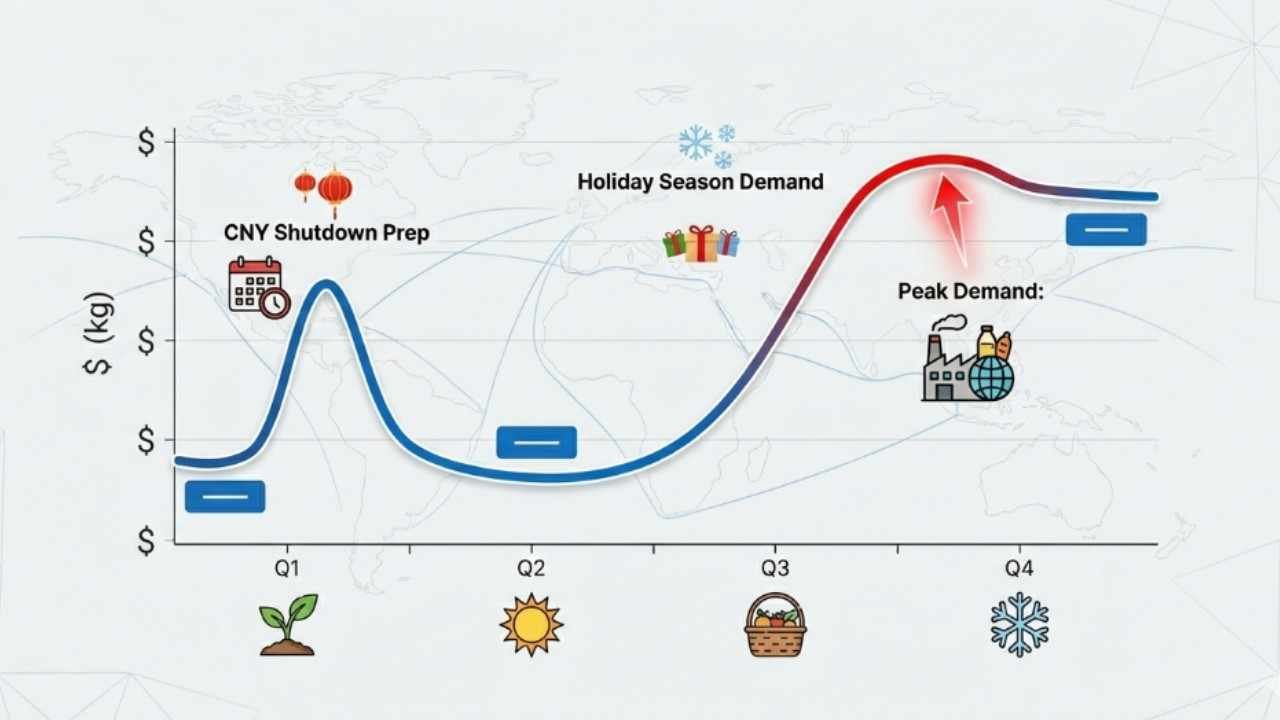
The market follows a predictable calendar. The second half of the year (Q3 and Q4) is the peak season. Food manufacturers are busy preparing for the holidays, which increases demand for preservatives. This is also the peak shipping season, which drives up freight costs. A buying rush also occurs before the Chinese New Year3 shutdown in Q1. In contrast, the market is usually quietest in Q2 (March-June), making it the most competitive time to buy.
Seasonal Price & Demand Cycle:
| Quarter | Demand Trend (Global Food Production) | Supply-Side Event (China) | Typical Price Environment |
|---|---|---|---|
| Q1 | Low (Post-Holiday) | Chinese New Year Shutdown | Stable to Firm |
| Q2 | Moderate | Normal Production | Competitive / Softer |
| Q3 | Increasing | Normal Production | Firming |
| Q4 | Peak | Pre-CNY Buying Rush | Highest / Firmest |
How Do Exchange Rates Affect Potassium Sorbate Pricing?
You agreed on a price with your Chinese supplier in USD. But when you paid the invoice, the final cost in your local currency was higher. Why did this happen?
Because Potassium Sorbate is traded internationally in US Dollars (USD), changes in the exchange rate between the USD and the buyer's local currency directly affect the final cost. A stronger USD makes the product more expensive for the buyer.
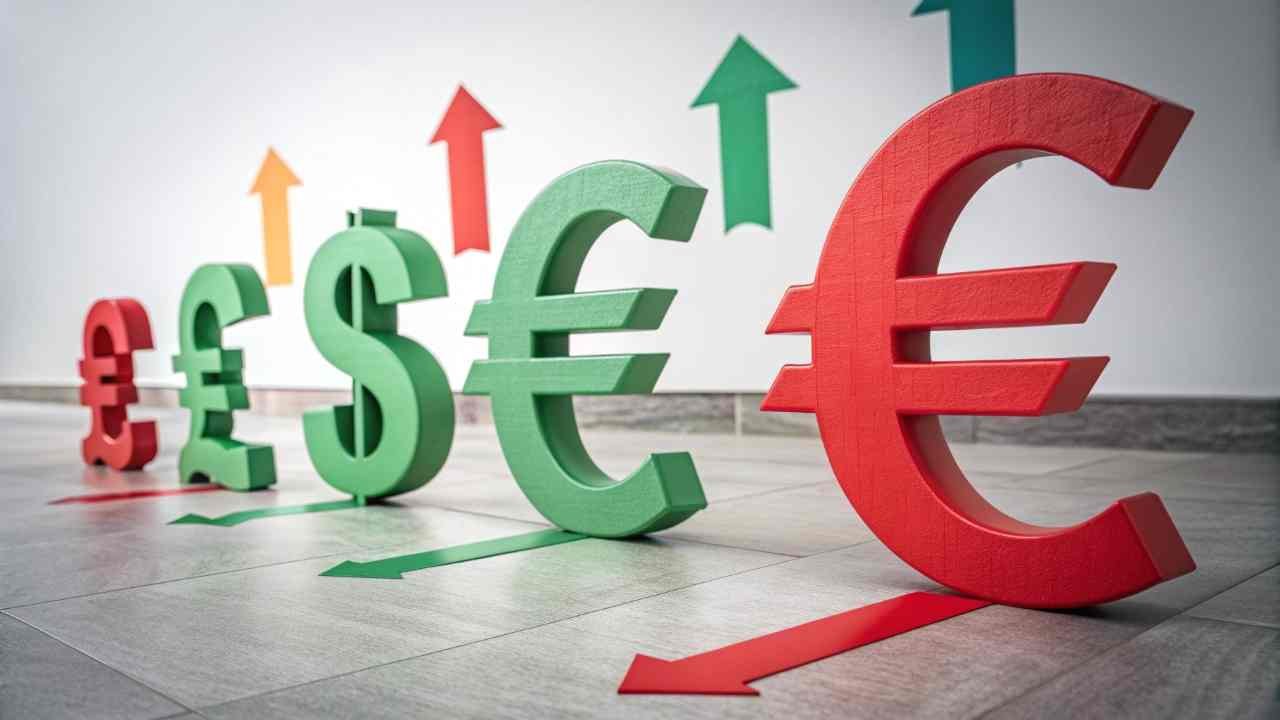
This is a hidden cost driver you must watch. All international trade for this product is done in US Dollars (USD)4. You agree to a USD price and pay the invoice in USD. This means you must exchange your local currency5 to make the payment. If the USD has strengthened against your local currency, the same product will cost you more, even if my price has not changed. This is a real risk that must be managed in your financial planning.
Impact of a Stronger US Dollar on Buyer's Cost:
| Your Local Currency | USD/Local Rate (Jan 1) | USD/Local Rate (July 1) | Impact on Your Final Cost |
|---|---|---|---|
| Saudi Riyal (SAR) | 1 USD = 3.75 SAR | 1 USD = 3.80 SAR | The same product now costs 1.3% more in SAR. |
| Euro (EUR) | 1 USD = 0.92 EUR | 1 USD = 0.95 EUR | The same product now costs 3.2% more in EUR. |
When Is the Best Time to Purchase Potassium Sorbate?
Are you always buying during the peak season, when prices are high and shipping is difficult? Timing the market correctly can lead to significant cost savings.
For spot market purchases, the best time to buy is typically during the market lull in Q2 (March-June). However, for a large buyer, the best strategy is to negotiate a long-term contract, which removes the need to time the market altogether.
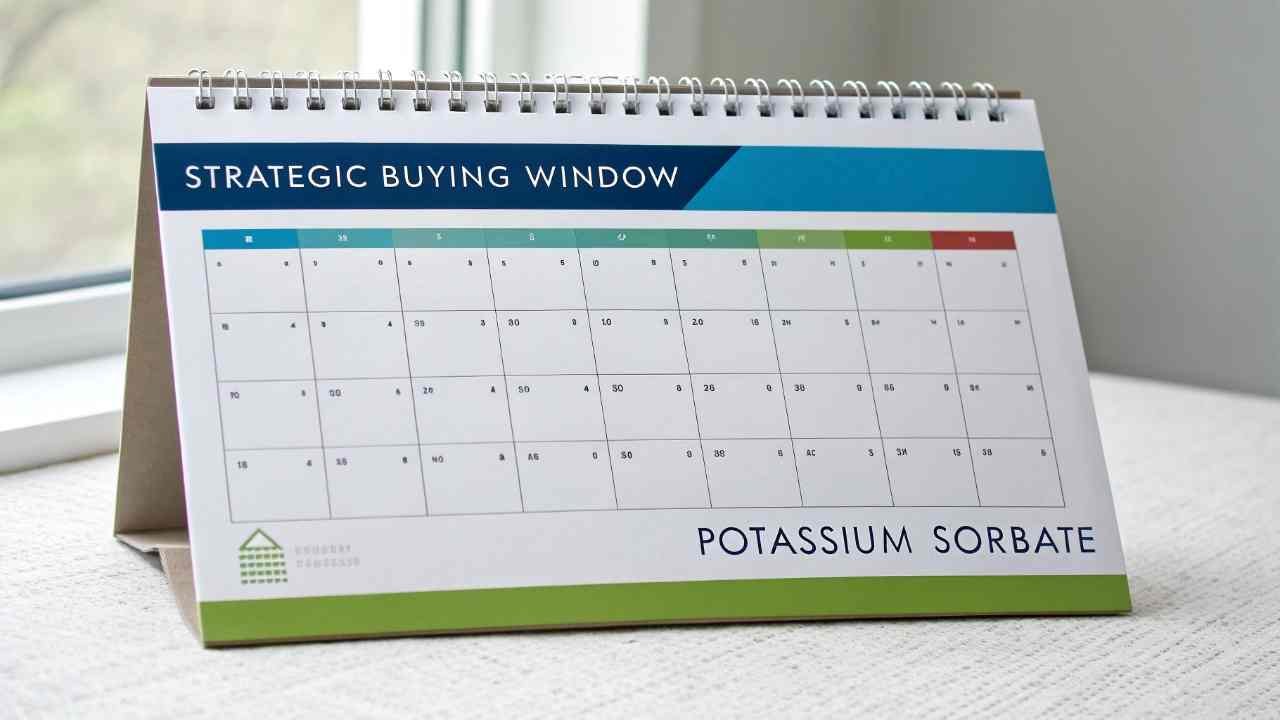
There are two strategies. The tactical spot buyer6 should aim for the off-season, which is Q2 (March-June). During this period, demand is lower, and prices are at their most competitive. The strategic buyer, however, stops trying to time the market. They negotiate a long-term annual contract. This locks in a competitive price and guarantees supply, taking them completely off the seasonal rollercoaster and allowing them to focus on their core business.
Buying Strategy Comparison:
| Buying Strategy | Best Time to Buy | Risk Profile | Effort Required |
|---|---|---|---|
| Spot Market Timing | Q2 (March-June) | High | High |
| Strategic Contracting | Negotiate once per year, anytime. | Low | Low |
How Can Buyers Control Potassium Sorbate Procurement Costs?
Do you feel like your business is a victim of market price swings, with no power to control your costs? There are powerful, proactive strategies you can use to take control.
Buyers can control costs by leveraging their volume through bulk FCL shipments, eliminating volatility with long-term fixed-price contracts, and building a strong supplier partnership to gain valuable market insights and advice. These strategies provide stability and a competitive edge.
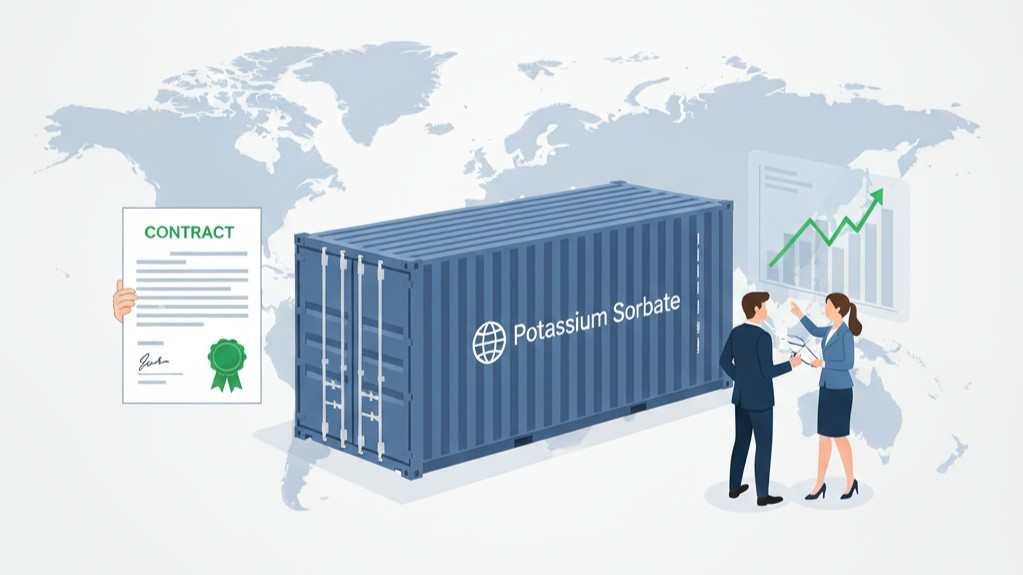
Cost control is about making smart structural decisions. First, leverage your volume by buying in Full Container Loads (FCL) to dramatically lower your per-kilogram freight cost. Second, eliminate volatility with a long-term contract. This transforms a variable expense into a predictable, budgeted cost. Third, build a supplier partnership. Use your supplier as a source of market intelligence to help you make smarter, more proactive buying decisions.
Cost Control Strategies:
| Strategy | Action | Primary Benefit |
|---|---|---|
| Bulk Purchasing | Shift from LCL to FCL shipments. | Dramatically lowers per-kilogram freight cost. |
| Long-Term Contracts | Negotiate a fixed annual price for your total volume. | Eliminates price volatility and provides budget certainty. |
| Supplier Partnership | Work with a supplier who provides market intelligence. | Helps you make smarter, more proactive buying decisions. |
Conclusion
Potassium Sorbate prices are driven by predictable forces. Understanding raw materials, seasonal cycles, and using contracts empowers buyers to manage costs and ensure a stable supply.
-
Understanding the price of Sorbic Acid is crucial as it directly influences the cost of Potassium Sorbate. ↩
-
Exploring this link will provide insights into how fluctuations in the petrochemical industry impact various chemical prices. ↩
-
Exploring this link will provide insights into how holiday seasons impact market dynamics and logistics. ↩
-
Understanding the implications of using USD in trade can help you manage currency risks effectively. ↩
-
Learning about currency exchange strategies can save you money and mitigate risks in international transactions. ↩
-
Understanding the role of a tactical spot buyer can help you make informed purchasing decisions during off-peak seasons. ↩