
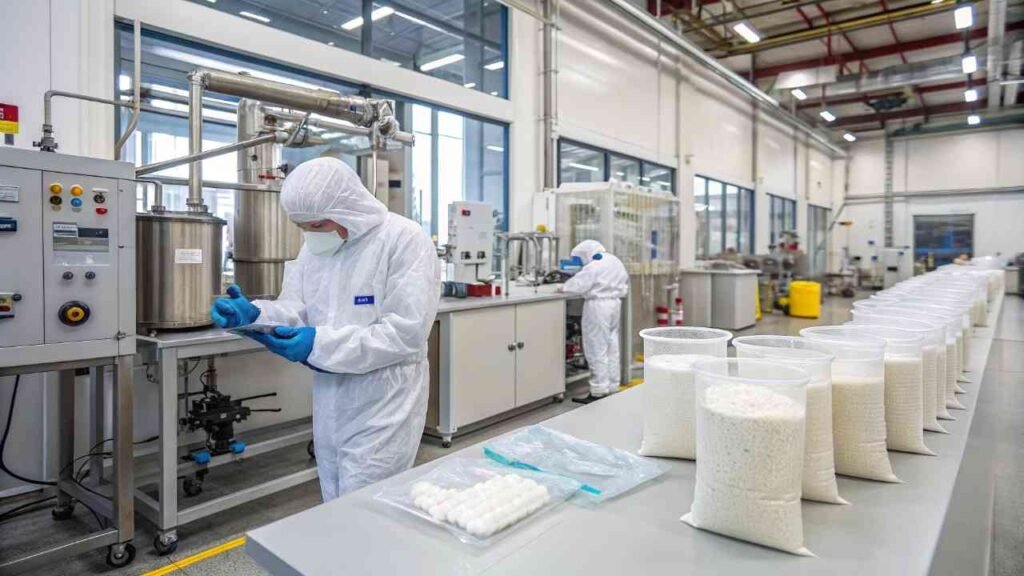
Poor CMC quality causes unstable viscosity, failed formulations, and customer claims. I see buyers lose time and money because they trust unclear specs and weak quality control.
Carboxymethyl Cellulose (CMC) quality for export is controlled through clear specifications, strict viscosity management, full COA testing, stable batch control, and buyer-side risk prevention across production and shipment.
If you are sourcing CMC for food or industrial use, quality control is not just a factory issue. It is a system. I will break down each key point based on real export experience.
What Quality Specifications Apply to Carboxymethyl Cellulose (CMC)?
Unclear specifications lead to disputes, rejected cargo, and re-testing costs. Many buyers only check viscosity and miss other critical limits.
CMC quality specifications define acceptable ranges for purity, substitution, viscosity, moisture, and safety to ensure stable use and legal compliance in destination markets.

Core Specification Items Buyers Must Check
When I work with overseas buyers, the first problem I see is incomplete specs. A single viscosity value is never enough. Export-grade CMC must follow a full set of parameters.
Key items usually include degree of substitution1, viscosity at a defined concentration, purity, sodium content, moisture, pH value, and particle size. Each item controls how CMC performs in real applications.
If the degree of substitution is too low, solubility drops. If it is too high, cost rises and texture changes. Moisture affects flow and shelf life. pH affects compatibility with other ingredients.
Typical Specification Ranges for Export CMC
| Item | Typical Export Range | Why It Matters |
|---|---|---|
| Degree of Substitution | 0.6 – 0.9 | Controls solubility and stability |
| Viscosity (2% solution) | 100 – 10,000 mPa·s | Defines thickness |
| Moisture | ≤ 10% | Prevents caking |
| Purity | ≥ 99.5% | Required for food use |
| pH (2% solution) | 6.5 – 8.5 | Protects formulations |
Food Grade vs Industrial Grade
Food-grade CMC2 must meet FCC or E466 standards. Limits are tighter. Industrial-grade CMC allows wider ranges but still needs internal consistency.
I always ask buyers to confirm written specifications3 before sampling. Clear specs reduce risk on both sides and make later claims easier to judge.
How Is Viscosity Controlled in Carboxymethyl Cellulose (CMC)?
Unstable viscosity causes production delays and customer complaints. Many factories fail to control viscosity at scale.
CMC viscosity is controlled through raw material selection, etherification reaction control, drying, milling, and final blending before packing.

Raw Material Control
Viscosity control starts with cellulose pulp. Different pulp purity creates different molecular chains. I only approve factories that lock pulp suppliers and test each incoming batch.
Reaction Process Control
The etherification step defines molecular length4. Small changes cause big viscosity shifts. Temperature, alkali ratio, and reaction time must stay stable.
Factories using manual control often show wide variation. Automated systems reduce deviation and improve repeatability.
Post-Processing and Blending
After drying and milling, viscosity is tested. If results are close to target, controlled blending adjusts the final grade.
| Step | Purpose |
|---|---|
| Milling | Improves dispersion |
| Batch blending | Stabilizes viscosity |
| Retesting | Confirms range |
I always require final viscosity testing after blending. This ensures shipment matches the promised grade.
What Testing Items Appear on Carboxymethyl Cellulose (CMC) COA?
Incomplete COA causes customs delays and quality disputes. Many buyers accept COAs without review.
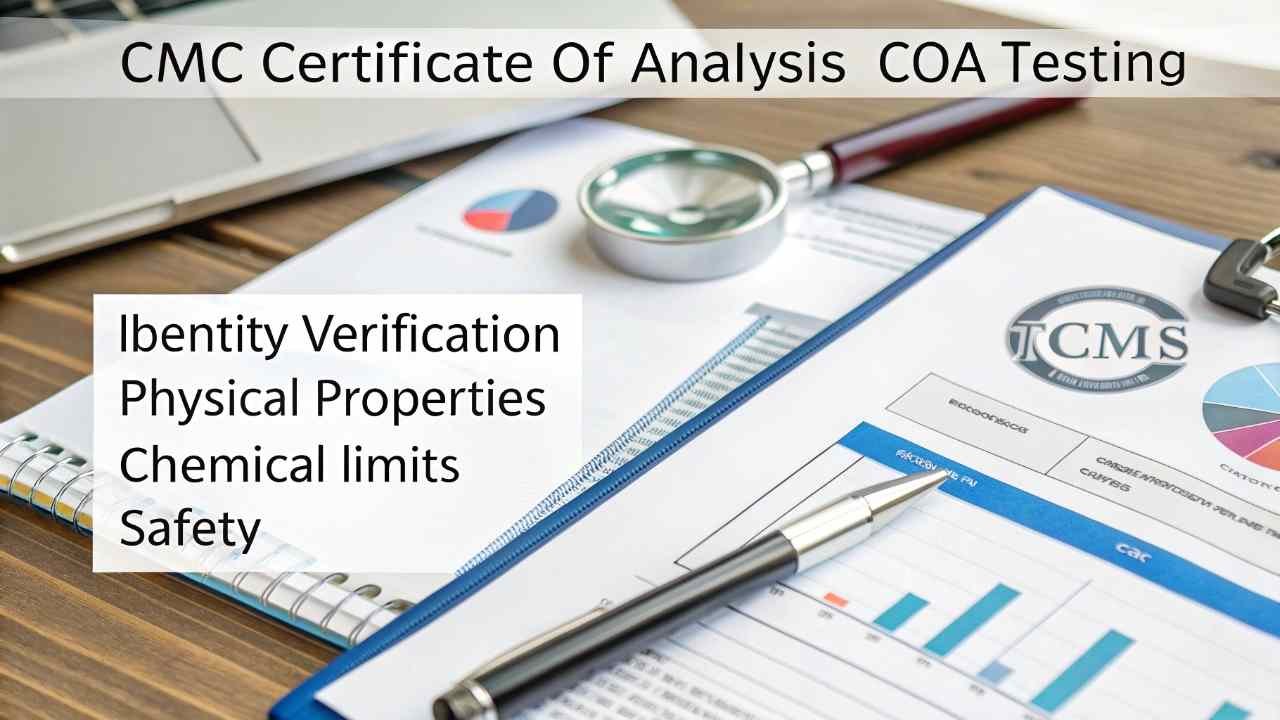
A proper CMC COA lists identity, physical properties, chemical limits, and safety items for each production batch.
Mandatory COA Items
Each export batch must have its own COA. Generic documents are risky.
Standard items include appearance, viscosity, degree of substitution, moisture, pH, purity, sodium content, and heavy metals.
Typical COA Structure
| Test Item | Result | Specification |
|---|---|---|
| Viscosity | 3,200 mPa·s | 3,000–4,000 |
| Moisture | 8.2% | ≤10% |
| DS | 0.75 | 0.65–0.85 |
| Purity | 99.7% | ≥99.5% |
Matching COA to Shipment
I once handled a claim caused by a reused COA. The batch number did not match production. The issue took months to resolve.
Now I require COA batch numbers, production dates, and packing lists to align. This simple rule prevents most disputes.
Why Is Batch Consistency Important for Carboxymethyl Cellulose (CMC)?
Even high-quality CMC fails if batches vary. Buyers suffer when each shipment behaves differently.
Batch consistency ensures every shipment performs the same in customer formulations and reduces reformulation and operational risk.
Risks of Poor Consistency
Inconsistent batches create re-testing costs, production delays, and customer complaints. For large buyers, stability matters more than peak performance.
How Consistency Is Built
Consistency comes from systems. It does not come from promises.
Key controls include fixed raw material sources, standard recipes, identical equipment for each grade, and statistical tracking.
Internal Tracking
| Control Area | Method |
|---|---|
| Raw materials | Supplier locking |
| Process | SOP enforcement |
| Final product | Batch trend analysis |
I always request retained samples for at least one year. They help resolve disputes with facts, not opinions.
How Can Buyers Avoid Quality Claims for Carboxymethyl Cellulose (CMC)?
Many claims start before shipment. Buyers miss early alignment steps.
Buyers avoid CMC quality claims by fixing specifications, approving samples, verifying COA, and aligning testing methods before shipment.

Align Testing Methods
Different labs use different viscosity methods. Results vary.
I always confirm solution concentration5, water quality, temperature, and spindle speed before shipment.
Pre-Shipment Controls
Buyers should approve sealed reference samples, receive batch-specific COA, confirm labeling, and request loading photos.
| Step | Purpose |
|---|---|
| Sample approval | Sets baseline |
| COA review | Confirms compliance |
| Lab alignment | Avoids false failure |
| Documentation | Supports claims |
From my experience, most claims disappear when buyers follow these steps.
Conclusion
CMC export quality relies on systems, not luck. Clear specs, stable viscosity, full COA, and batch control protect long-term business.
-
Understanding the degree of substitution is crucial for ensuring optimal CMC performance in various applications. ↩
-
Understanding the standards for Food-grade CMC is crucial for ensuring product quality and compliance. ↩
-
Exploring the importance of written specifications can help buyers minimize risks and ensure clarity in transactions. ↩
-
Understanding molecular length is crucial for optimizing chemical reactions and improving product quality. ↩
-
Learning how to accurately confirm solution concentration is crucial for ensuring reliable experimental results. ↩