
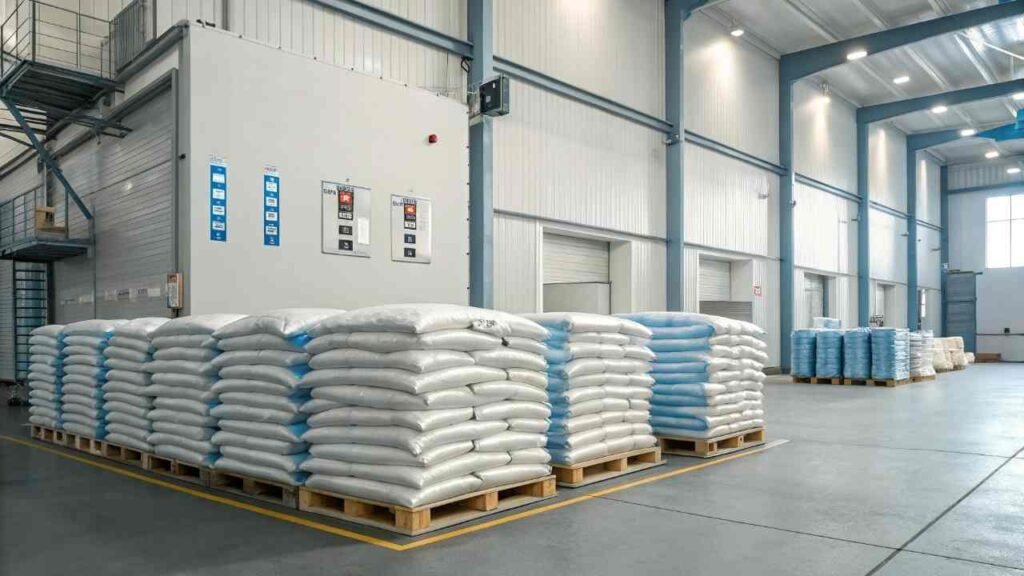
Improper storage ruins Sodium Erythorbate and wastes your money. Oxidation makes it useless for food curing. Follow these storage rules to protect your investment and production quality.
Sodium Erythorbate must be stored in a cool, dry, and dark area with temperatures below 25°C. Keep bags airtight and away from direct sunlight. Maintaining relative humidity under 50% prevents clumping and preserves the 99% purity required for effective food antioxidant performance.
Let me explain the technical facts you need to know about storing this sensitive additive.
What Is the Recommended Storage Temperature for Sodium Erythorbate?
Heat speeds up chemical breakdown and turns your powder yellow. This makes the antioxidant weak. Control your warehouse temperature to ensure consistent product performance in every batch.
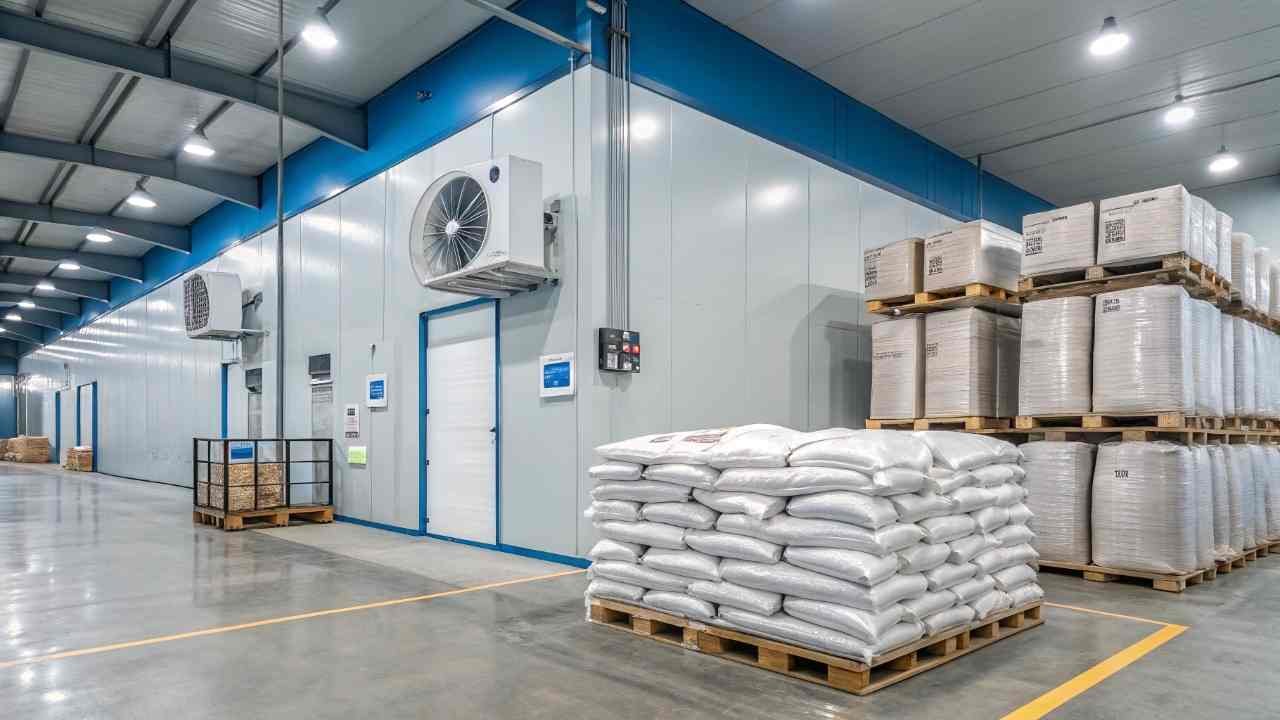
The ideal storage temperature for Sodium Erythorbate is 15°C to 25°C. Temperatures above 30°C accelerate oxidation, reducing the active assay level. Climate-controlled storage prevents premature yellowing and ensures the material remains effective for the full 24-month shelf life.
The Impact of Thermal Stress on Chemical Purity
I observe that temperature control1 is the most critical factor for Sodium Erythorbate stability. As an antioxidant, this chemical is designed to react with oxygen. Heat provides energy that speeds up this reaction. If the warehouse temperature stays above 30°C for a long time, the active assay level begins to drop. This is a major concern for my clients in the Middle East and Southeast Asia. In countries like Saudi Arabia or Indonesia, the outside heat can quickly damage the product if the warehouse is not insulated.
I suggest keeping the product away from direct sunlight and heat-generating equipment. Do not store pallets near heaters or industrial boilers. I monitor the cooling systems in our partner factories in China to ensure the product is cool before it enters the shipping container. High temperatures also change the physical state of the crystals. Overheated Sodium Erythorbate can lose its crystalline luster. This makes the product look unprofessional to your customers. Maintaining a steady temperature between 15°C and 25°C is the best way to guarantee the 24-month shelf life. Different seasons require different storage strategies. In the summer, you must use ventilation. In the winter, you must ensure the product does not freeze. While cold is generally better than heat, extreme temperature changes can cause condensation inside the bags. I recommend a chemical storage safety guideline2 that allows your team to track the environment daily.
| Temperature Range | Impact on Quality | Storage Action |
|---|---|---|
| Below 10°C | Very stable | Monitor for condensation |
| 15°C - 25°C | Ideal range | Standard ventilated storage |
| 25°C - 35°C | Faster oxidation | Increase airflow and cooling |
| Above 35°C | Rapid degradation | Immediate relocation |
How Does Moisture Affect Sodium Erythorbate Stability?
High humidity leads to hard clumping in your bags. This makes measuring difficult and slows down production. Dry storage is essential to keep the powder free-flowing and easy to use.
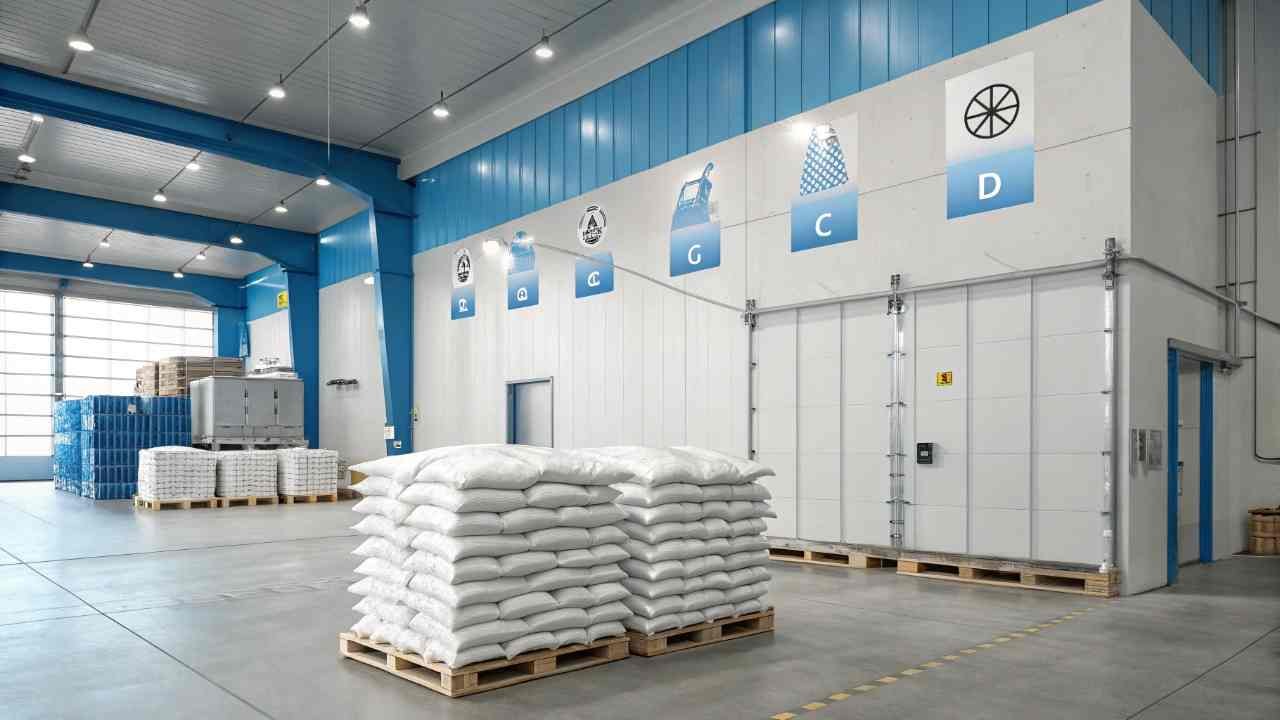
Sodium Erythorbate is hygroscopic and absorbs water when relative humidity exceeds 50%. This leads to caking and chemical degradation. Store pallets in a well-ventilated, dry area to prevent moisture ingress and maintain the crystalline stability of the powder.
Hygroscopic Properties and Caking Risks
I manage many shipments to humid regions. I know that water is a primary enemy of this product. Sodium Erythorbate is hygroscopic. This means it pulls water from the air. When the powder absorbs moisture, the surface of the crystals becomes sticky. This leads to "caking" or clumping. Once the product cakes, it becomes a hard block inside the bag. This makes it impossible to use in automated feeding systems. You would have to break the clumps by hand. This increases labor costs and risks food safety issues3.
Moisture also triggers the oxidation process faster than heat. Water acts as a medium for oxygen to react with the Sodium Erythorbate molecule. If the moisture content in the powder rises above 0.25%, the antioxidant power decreases. I ensure that our packaging uses thick polyethylene (PE) liners. These liners are heat-sealed to provide a moisture barrier. However, if you leave a bag open in a humid room, the product will degrade within hours. You must seal the bags immediately after each use. I recommend a warehouse layout best practices4 that promote airflow and keep pallets at least 10 centimeters above the ground to prevent ground moisture entry. In Southeast Asia, I advise my clients to use dehumidifiers. If the relative humidity stays below 50%, the powder remains free-flowing.
| Humidity Level | Risk to Product | Recommended Action |
|---|---|---|
| Below 40% | Very low risk | Standard sealed storage |
| 40% - 60% | Moderate risk | Use pallets and sealed liners |
| 60% - 80% | High risk of caking | Use dehumidifiers |
| Above 80% | Immediate failure | Airtight storage required |
What Packaging Extends Sodium Erythorbate Shelf Life?
Light and air are the primary enemies of Sodium Erythorbate. Basic bags often fail to provide a barrier. You need professional packaging to stop these elements from damaging your stock.
Effective Sodium Erythorbate packaging requires double-layer PE internal liners and an opaque outer carton. These layers block UV light and oxygen, which trigger oxidation. Heat-sealed liners are necessary to provide an airtight environment that preserves purity for long-distance international shipping.

The Importance of Oxygen and UV Barriers
I oversee the packaging process to ensure it meets international export standards. Sodium Erythorbate is sensitive to ultraviolet (UV) light. If you store the powder in a transparent bag, it will turn yellow within a few days of light exposure. This is why we use opaque 25kg cartons or multi-layer kraft paper bags. These materials block 100% of light. I also use double-layer PE liners inside every box. One layer provides a moisture barrier. The second layer provides an oxygen barrier. This redundancy is essential for long voyages to Europe or the Middle East.
Air contains 21% oxygen. This is enough to oxidize Sodium Erythorbate if the seal is weak. I ensure the inner liners are heat-sealed. A heat seal creates a permanent airtight environment. Even if the outer carton is damaged, the inner liner protects the chemical purity. I have seen many traders use cheap single-layer bags to save money. This is a mistake. The cost of a ruined batch is much higher than the cost of premium packaging. I prioritize high-quality packaging materials5 to guarantee the product arrives in perfect condition. Cartons are best for stacking and protection during transport. Kraft bags are more flexible and reduce the weight of the shipment. For large industrial users, I offer jumbo bags. However, jumbo bags are harder to seal perfectly. For the best shelf life, the 25kg carton remains the industry standard. It provides the best physical protection and the most effective light barrier.
| Packaging Component | Material | Barrier Function |
|---|---|---|
| Inner Liner 1 | High-Density PE | Moisture resistance |
| Inner Liner 2 | Low-Density PE | Oxygen barrier |
| Outer Layer | Corrugated Carton | UV light and physical protection |
| Pallet Wrap | LLDPE Stretch Film | Dust and moisture protection |
How Do Storage Conditions Affect Sodium Erythorbate Performance?
Degraded Sodium Erythorbate fails to prevent meat discoloration. This leads to grey products and customer complaints. Performance depends entirely on the integrity of your storage conditions and environment.
Poor storage conditions reduce the reducing capacity of Sodium Erythorbate. Exposure to heat or air decreases the active assay level. This results in weak color stabilization in meat and flavor loss in beverages, leading to inconsistent batches and potential product waste.
Impact on Meat Curing and Color Stability
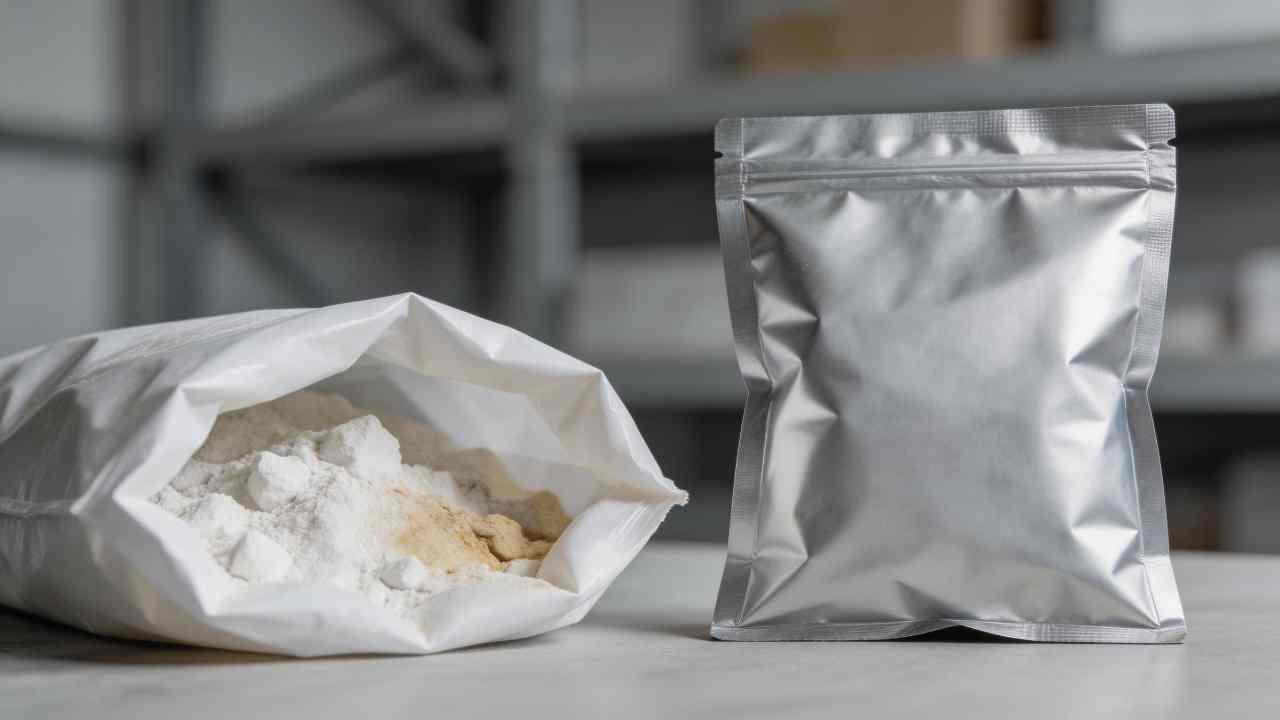
I observe that Sodium Erythorbate is used mainly to speed up the curing process. It fixes the red color of meat. If the product has been stored in a hot or humid warehouse, its reducing power is weakened. When you add this degraded powder to your meat recipe, the chemical reaction is slower. The meat might not turn the correct shade of pink. Worse, it might turn grey or brown quickly after packaging. This ruins the visual appeal of your deli meats. You cannot fix a performance issue by adding more powder if the chemical is already oxidized.This is a critical insight for meat processors6.
In the beverage industry, Sodium Erythorbate prevents the loss of flavor and color in fruit juices. If the storage was poor, the antioxidant will not be able to stop the juice from turning brown. I manage the supply to ensure that you receive fresh batches with a high assay level. This ensures that your finished food products stay fresh on the retail shelf. If you use Sodium Erythorbate that has started to turn yellow, it can actually introduce off-flavors to your juice. High-quality performance requires a white, high-purity powder. When Sodium Erythorbate oxidizes, it turns into dehydroerythorbic acid. This new form has no antioxidant properties. I use laboratory tests to measure the "Reducing Capacity" of stored batches. A fresh batch has near 100% capacity. After 12 months in poor storage, this can drop significantly. This means you are paying for an ingredient that works at low efficiency.
| Performance Marker | Fresh Target | Failure Result |
|---|---|---|
| Color | Pure White | Yellow / Brown |
| Assay Level | Min 98.5% | Below 95% |
| Solubility | Fast and Clear | Slow / Cloudy |
| Odor | Odorless | Musty / Sour |
How Can Buyers Monitor Sodium Erythorbate Quality Over Time?
Ignoring your stock leads to using degraded material. This causes production failures and waste. Regular quality monitoring ensures you always use top-quality ingredients in your food and beverage recipes.
Buyers should perform monthly visual checks for yellowing and caking. Laboratory tests for moisture and assay levels provide technical confirmation of stability. Implementing a First-In, First-Out (FIFO) system ensures that the oldest production dates are used before chemical degradation begins.

Routine Visual and Physical Checks
I recommend that my buyers establish a monthly inspection routine. Your warehouse team should open one or two cartons from each batch. Look at the color of the powder. If you see any yellow tint, the product is beginning to oxidize. You should also feel the bag to check for clumps. If the bag is hard, moisture has entered the packaging. These simple checks are the first line of defense against quality issues. I also suggest checking the integrity of the seals. A broken seal means the product will degrade quickly.
I provide a Certificate of Analysis (COA) with every shipment. But I also encourage large buyers to perform their own lab tests. Test the "Loss on Drying" to check the moisture level. Test the "Assay" to confirm the purity. If you see the assay level dropping over six months, check your warehouse cooling. I keep retainer samples of every batch in our lab in China for two years. If you find a problem, I can test our retainer sample. This helps us see if the issue is with the batch or with your storage. The "First-In, First-Out" (FIFO) method is the best management practice. I label every carton with the production date. You should always use the oldest production date first. This ensures that no material sits in your warehouse for the full 24 months. I manage the logistics to ensure you receive the freshest batches possible.
| Monitoring Task | Frequency | Tool Used |
|---|---|---|
| Visual Inspection | Monthly | Eye / Flashlight |
| Moisture Test | Quarterly | Moisture balance |
| Assay Test | Every 6 Months | HPLC / Titration |
| Temp/Humidity Log | Daily | Digital Logger |
Conclusion
Store Sodium Erythorbate in a cool, dry, dark place to maintain its purity. I ensure our packaging protects your order from factory to warehouse.
-
Atlas Food Additives – temperature control guidance for Sodium Erythorbate. ↩
-
Kent State University – chemical storage safety guideline. ↩
-
U.S. Government – food safety risk prevention. ↩
-
Stock & Ship – warehouse layout and material handling best practices. ↩
-
Sastrageek – high-quality warehouse packaging materials guide. ↩
-
Meat & Poultry – information for industrial meat processors. ↩