
Buying Sodium Erythorbate involves quality, logistics, and market risks. These issues can waste your money and stop your factory production. You need a clear plan to protect your business and investment.
Buyers minimize risks by using third-party quality audits, fixed-price contracts, and comprehensive cargo insurance. Partnering with experienced exporters ensures compliance with food safety standards. These steps reduce financial loss and maintain a stable supply chain for food additive wholesalers and manufacturers.
I want to explain the technical facts about risk management to help you secure a safe supply.
What Are Common Risks in Sodium Erythorbate Importing?
Customs delays, poor quality, and payment fraud can hurt your business. These risks create high costs and unwanted stress. Identifying these hurdles early is the first step to safe international trade.
The most common risks include receiving off-spec products, facing documentation errors at customs, and sudden shipping delays. Payment risks and fluctuating raw material costs also impact profitability. Understanding these factors allows buyers to create effective mitigation strategies before placing wholesale orders.
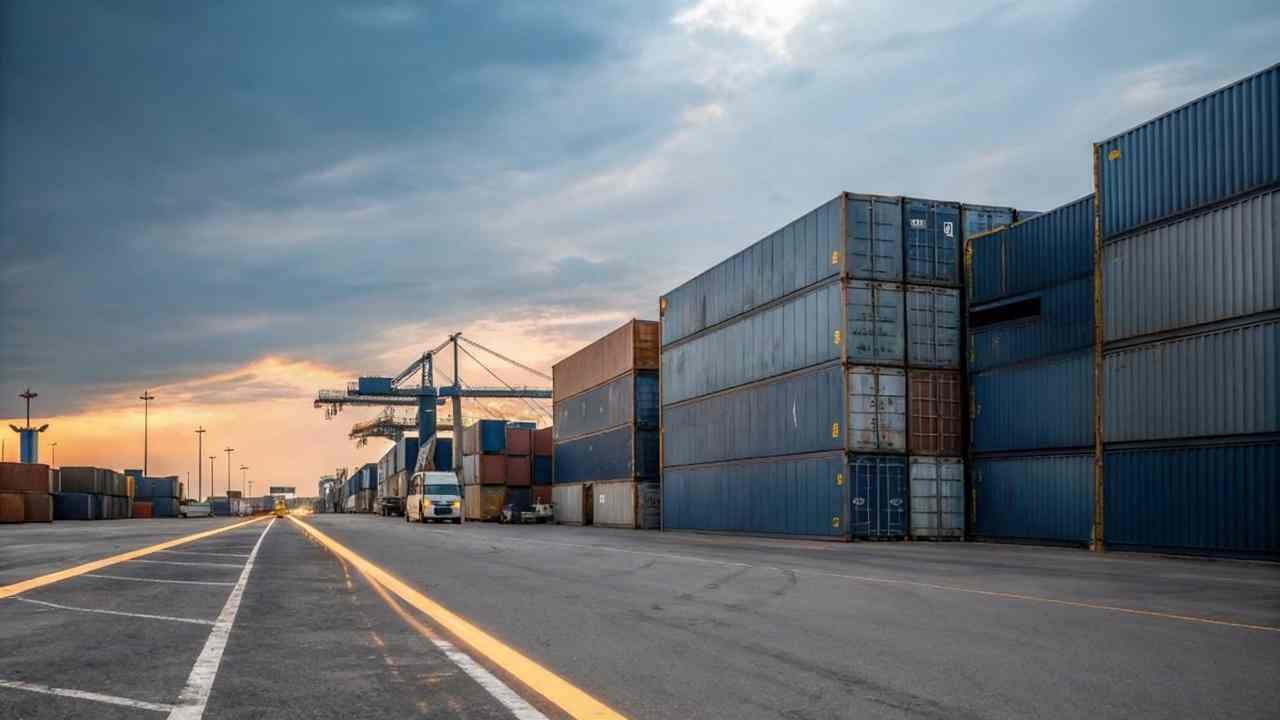
Technical, Logistics, and Financial Hurdles
The biggest risk in our industry is receiving product that does not meet the Certificate of Analysis (COA). Sodium Erythorbate is an antioxidant. If the purity is low, it will not protect your meat products from oxidation. I often see products with high moisture content. High moisture causes the powder to clump. Clumped powder is hard to use in automated factory lines. There is also the risk of heavy metal contamination. Lead and arsenic must be below strict limits. If the factory has poor filtration, the product becomes a health hazard. This can lead to a total product recall in your home country.
Global shipping is unpredictable. Port congestion in China or the Middle East can delay your cargo for weeks. I also see risks related to packaging. If the bags are not strong, they can break during the long sea voyage. Sodium Erythorbate is sensitive to air. A punctured bag means the product will turn yellow and lose its power. Documentation errors are another common logistics risk. If the HS code is wrong or the Health Certificate is missing, customs will hold the container. This leads to high daily storage fees at the port. The price of Sodium Erythorbate also changes based on the corn market in China. If you buy at the wrong time, you might pay much more than your competitors. Currency fluctuations also add risk. If the US dollar gets stronger, your local cost goes up. You must plan your budget carefully to handle these price changes.
| Risk Category | Specific Example | Business Impact |
|---|---|---|
| Quality | Heavy metal contamination | Product recall, legal fines |
| Logistics | Port congestion and delays | Production shutdown |
| Documentation | Incorrect HS code | Customs fines, storage fees |
| Financial | Raw material price spikes | Lower profit margins |
| Physical | Moisture ingress and clumping | Processing delays and waste |
How Can Quality Testing Reduce Sodium Erythorbate Risk?
Receiving a bad batch of antioxidants ruins your final food product. This leads to customer complaints and lost contracts. Rigorous quality testing ensures you only receive the best material for your manufacturing.
Quality testing reduces risk by verifying the active assay level and heavy metal content before shipment. Using independent labs like SGS provides unbiased proof of quality. This prevents contaminated or weak material from entering your production line and avoids expensive recalls.

Laboratory Analysis and Third-Party Verification
I prioritize the assay test for every batch. The assay measures the percentage of active Sodium Erythorbate. It must be between 98.0% and 100.5% to meet FCC standards. We use High-Performance Liquid Chromatography (HPLC)1 for this. This machine separates the chemicals and identifies impurities. If the assay is too low, the product is weak. We also test for specific rotation. This confirms the chemical structure is correct. I personally review these lab reports before any bags are packed. This oversight ensures the technical data on the COA is honest.
Food safety depends on testing for things you cannot see. We use Atomic Absorption Spectroscopy (AAS) to check for lead and arsenic. These toxic metals must be at very low levels. I also check the pH value. For a 5% solution, the pH should be between 5.5 and 8.0. If the pH is outside this range, it can change the taste of your food. Moisture testing is also vital. We use the "Loss on Drying" method. If moisture is above 0.25%, the shelf life will be shorter. For large wholesalers, I recommend a Pre-Shipment Inspection. You can hire a third party like SGS2. They go to the factory and pull samples from the actual pallets. They test the color, the smell, and the chemical specs. They also check the weight of the bags. This provides a final layer of safety. It proves that the goods in the container match the goods in the lab report. I welcome these inspections because they show the buyer we have nothing to hide.
| Test Parameter | Standard Method | Required Limit |
|---|---|---|
| Assay (Purity) | HPLC / Titration | 98.0% - 100.5% |
| Heavy Metals (Pb) | AAS | Max 2 mg/kg |
| Arsenic (As) | AAS | Max 3 mg/kg |
| Loss on Drying | Oven drying | Max 0.25% |
| pH Value | pH Meter | 5.5 - 8.0 |
How Do Market Fluctuations Affect Sodium Erythorbate Prices?
Unpredictable price swings for corn and energy make your budget planning difficult. These spikes can suddenly wipe out your margins. Monitoring market signals helps you time your purchases to save money.
Market fluctuations affect pricing through changes in raw material costs and production policies in China. Seasonal demand in the meat industry also drives price cycles. Monitoring these trends allows buyers to stock up during lows and avoid overpaying during supply shortages or price peaks.

Raw Materials and Production Costs
Sodium Erythorbate is produced through fermentation3. This process uses glucose made from corn. This means the price of corn in China is the most important data point. I watch the harvest reports every year. If there is a drought or a bad harvest, the price of corn goes up. Within a few weeks, the price of Sodium Erythorbate usually follows. I tell my clients to buy extra stock if we see corn prices rising. This is a simple way to protect your budget from agricultural market cycles. Fermentation also requires a lot of electricity and steam. The Chinese government has strict energy policies. In some seasons, they limit power for heavy industry. This reduces the factory output. When the supply goes down, the price goes up. Also, environmental inspections are common. If a large factory has to stop for a week, the market supply drops.
The demand for antioxidants follows the food industry calendar. Meat consumption goes up during the summer BBQ season and the Christmas holidays. Many meat processing plants buy their Sodium Erythorbate three months before these peaks. This causes a surge in demand and higher prices in Q2 and Q4. Wholesalers who buy during the quiet periods in Q1 or Q3 often get a better deal. I help my regular partners create a procurement schedule that avoids these high-demand months. This data-driven approach keeps their costs low and stable. By monitoring these signals, you can protect your profit margins from global market volatility.
| Factor | Change Direction | Effect on Price |
|---|---|---|
| Corn Harvest | Poor harvest | Price increases |
| Electricity Rate | Higher cost | Price increases |
| Factory Supply | Production stop | Price increases |
| Meat Demand | Seasonal peak | Price increases |
| USD Exchange | Weaker USD | Price increases |
What Contract Terms Protect Sodium Erythorbate Buyers?
Weak contracts leave you vulnerable when a supplier fails to deliver. This can cause production shutdowns and financial disputes. Strong contract terms provide a legal safety net for your wholesale orders.
Contract terms like quality guarantees, clear delivery timelines, and penalty clauses for delays protect buyers. Specifying payment against documents (T/T 30/70) also reduces financial risk. These formal agreements ensure both parties understand their responsibilities and liabilities in international trade.

Defining Quality and Delivery Terms
A good contract must include a detailed specification sheet. Do not just write "Sodium Erythorbate." You must list the assay level, the heavy metal limits, and the mesh size. I suggest including a clause that says the goods must match the pre-shipment sample. If the bulk order is different, the contract should give you the right to a refund or a replacement. I ensure our proforma invoices include these technical details. This protects the buyer if the factory makes a mistake. Clear specs are the best way to avoid quality arguments.
Incoterms4 define who pays for the freight and who is responsible for the risk. I usually use CIF (Cost, Insurance, and Freight) or FOB (Free on Board). In a CIF contract, I handle the insurance for the buyer. This is very convenient for wholesalers in the Middle East. It ensures the cargo is protected until it reaches your port. You must make sure the Incoterm is clearly written in the contract. This prevents confusion about who pays for port fees or local trucking. I help my clients choose the Incoterm that fits their logistics team's capability. I also recommend using a deposit system to balance the risk. A 30% deposit starts the production. The remaining 70% is paid after I send a copy of the Bill of Lading5. This proves that the goods are on the ship. This "T/T against B/L" system is very common in food additive trade. It protects the factory's production cost and ensures the buyer only pays the balance for actual cargo.
| Contract Clause | Function | Buyer Benefit |
|---|---|---|
| Spec Sheet | Lists chemical limits | Prevents off-spec product |
| Delay Penalty | Fines for late shipping | Encourages on-time delivery |
| Retainer Sample | Keeps a sample of the batch | Evidence for quality claims |
| Payment Terms | 30% / 70% vs B/L | Reduces upfront financial risk |
| Dispute Location | Defines where to solve issues | Provides legal clarity |
How Can Insurance Safeguard Sodium Erythorbate Shipments?
Storms at sea or accidents at the port can destroy your cargo. Without insurance, you lose the entire value of your order. Securing the right coverage protects your investment from these unexpected events.
Insurance safeguards shipments by covering losses from physical damage, theft, or moisture ingress during sea transit. Selecting "All Risks" (ICC A) coverage ensures the buyer is reimbursed if the Sodium Erythorbate is compromised. This provides financial peace of mind for high-value wholesale international shipments.
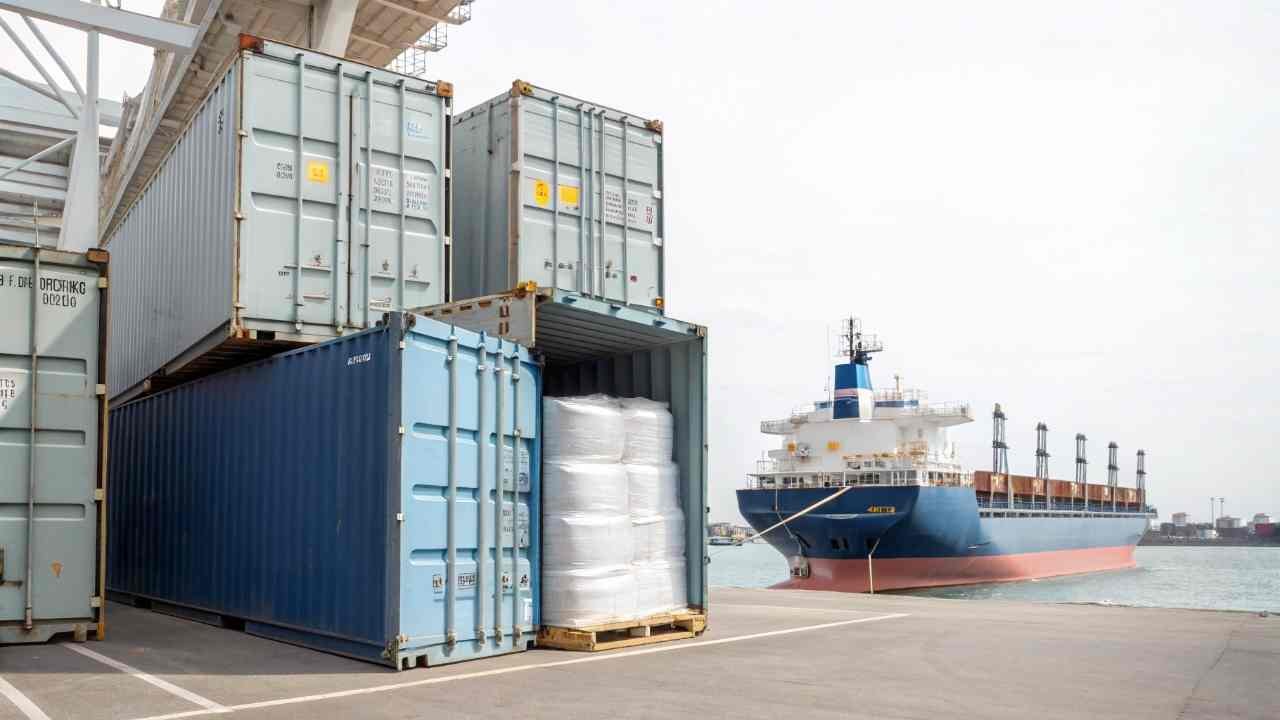
The Risk of Damage and Loss
Sea freight involves moving through humid and salt-rich environments. Even in a good container, there is a risk of moisture damage. If the container seal is weak, salt air can enter. This causes the Sodium Erythorbate to clump or turn yellow. "All Risks" insurance covers this type of environmental damage. I ensure that our CIF shipments include this coverage. If you receive a pallet with wet or discolored bags, you can file a claim. The insurance company will pay for the lost value. This is essential for maintaining your cash flow when accidents happen.
Containers are also handled many times by cranes and forklifts. Sometimes a bag is punctured or a pallet is crushed. If this happens at the port in China or during unloading in your country, insurance pays for the damage. I take photos of the loading process to prove the goods were perfect when they left the factory. This documentation is vital for a successful insurance claim. Without insurance, you would have to negotiate with the shipping line. This is very difficult. A good insurance policy makes the process fast and simple. "General Average" is a maritime law. It says that if a ship has an emergency and some cargo is thrown overboard to save the vessel, all cargo owners share the cost. A comprehensive insurance policy covers these costs for you. This is why I never suggest shipping without insurance. For a small fee, you protect your business from very large losses.
| Coverage Type | What it Covers | Best For |
|---|---|---|
| ICC (A) - All Risks | Damage, theft, moisture, salt | International wholesale |
| ICC (B) | Major accidents, fire, sinking | Lower value goods |
| ICC (C) | Limited risks only | Coastal shipping |
| War Risk | Damage from conflict | Specific high-risk routes |
Conclusion
Minimizing trade risks requires careful testing, strong contracts, and insurance. I help you manage these factors at FINETECH to ensure a safe and stable Sodium Erythorbate supply.
-
Encyclopaedia Britannica explanation of High-Performance Liquid Chromatography (HPLC). ↩
-
SGS official description of pre-shipment inspection services for international trade. ↩
-
Encyclopaedia Britannica overview of fermentation processes used in industrial production. ↩
-
International Chamber of Commerce (ICC) official Incoterms rules and applications. ↩
-
Investopedia explanation of the Bill of Lading as a key trade and transport document. ↩