
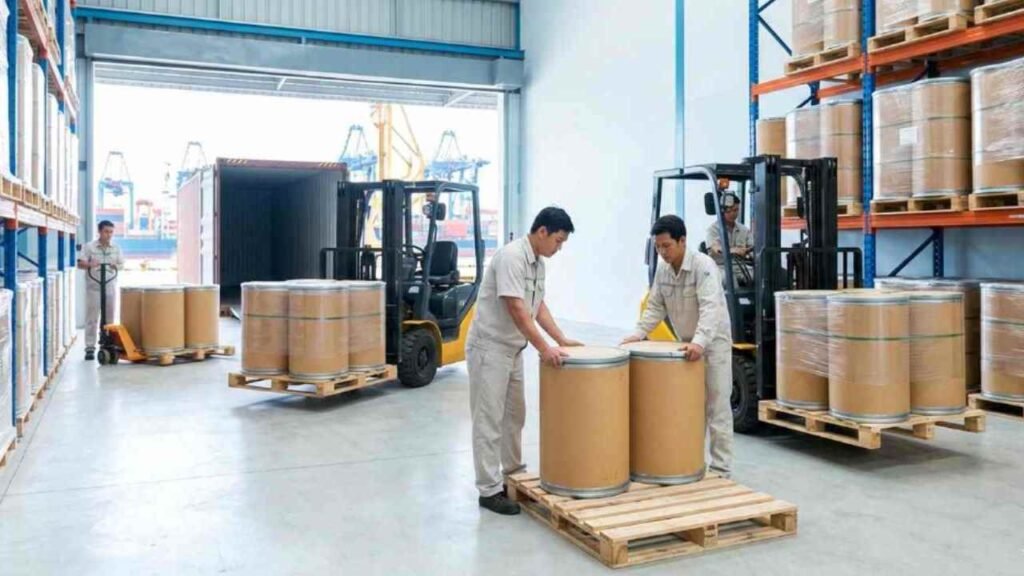
Poor packaging leads to vitamin contamination and financial loss. Protect your bulk investment with the right materials. I provide expert solutions to ensure your Niacin arrives in perfect condition.
Vitamin B3 is usually packaged in 25kg fiber drums or corrugated cartons with double-layer PE liners. This packaging protects the white powder from moisture, oxygen, and physical damage during long-distance export shipping to global markets in Southeast Asia and the Middle East.
Understanding these packaging standards is essential for every wholesale buyer to maintain product integrity during transit.
What Packaging Types Are Used for Vitamin B3 (Niacin)?
Insecure packaging causes spills and waste during shipping. These accidents damage your profit and reputation. Selecting the right container type is vital for safe and professional international delivery.
The most common packaging types are 25kg fiber drums and 25kg corrugated cartons. Both options use food-grade internal polyethylene (PE) liners. Drums offer superior physical protection for long sea voyages, while cartons are more space-efficient for large container shipments.
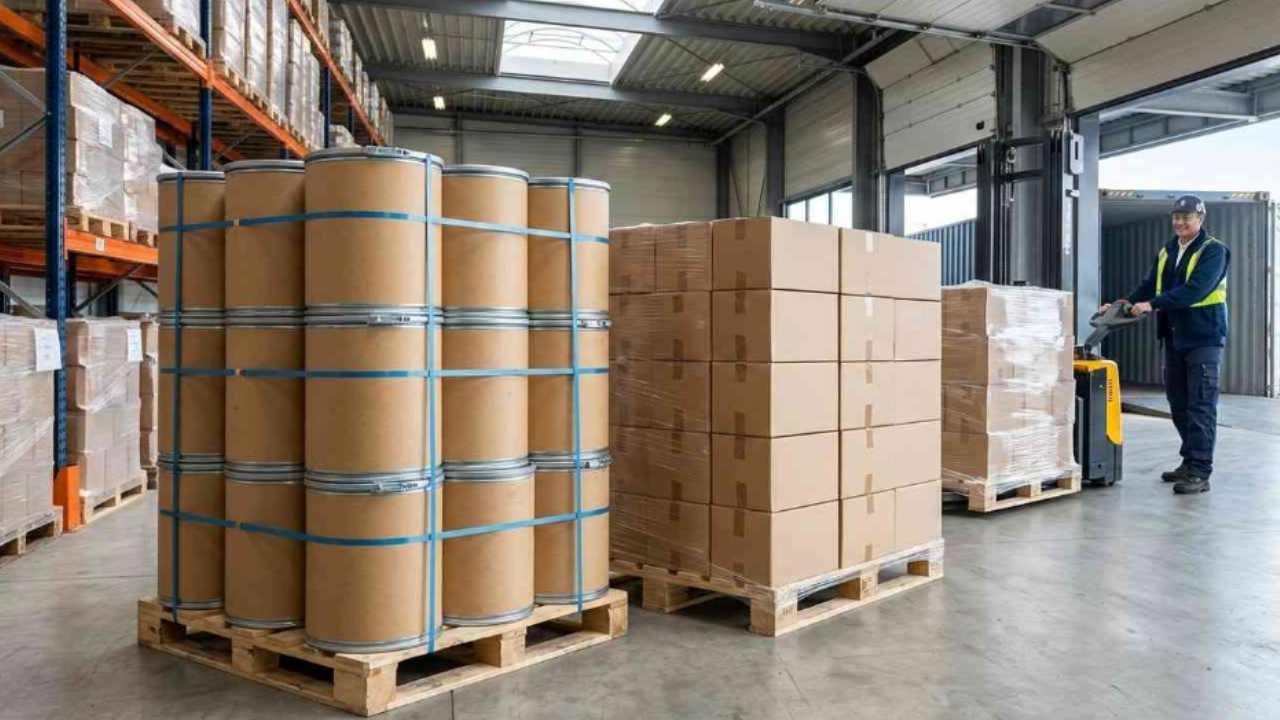
Fiber Drums and Heavy-Duty Protection
I see that most pharmaceutical and high-end food grade buyers prefer fiber drums. These drums are made of high-density paperboard with a metal locking ring. This structure is very strong. It prevents the container from being crushed when other cargo is stacked on top. In my experience with shipments to the Middle East and Europe, drums handle the rough movement of sea freight very well. The hard shell protects the internal liners from punctures. This is a critical technical factor for maintaining the purity of the Niacin powder. Plus, the drums are easy to stack in your warehouse. I check the quality of these drums personally. I ensure they are not recycled or weak.
Corrugated Cartons and Logistics Efficiency
Also, many wholesalers1 in Southeast Asia choose corrugated cartons. These boxes are made of five or seven layers of heavy cardboard. They are lighter than drums. This helps reduce the total gross weight of the shipment. Cartons are square, so they fit together perfectly on a pallet. This removes any empty space in a 20ft or 40ft container. I use these cartons for bulk food grade orders to maximize the loading volume. They are also easier to dispose of after the product is used. I ensure that the cartons are strong enough to withstand high humidity during the sea voyage. I only select factories that use high-burst-strength cardboard for export orders.
Comparison of Packaging Containers
| Feature | Fiber Drum | Corrugated Carton |
|---|---|---|
| Physical Strength | Very High | High |
| Weight of Container | ~2.5 kg | ~1.0 kg |
| Space Efficiency | Moderate (Round) | Very High (Square) |
| Best For | Pharma Grade / Long Transit | Food / Feed Grade / Bulk |
| Reusability | High | Low (Recyclable) |
| Handling | Metal locking ring | Tape and straps |
How Does Packaging Protect Vitamin B3 (Niacin) During Transport?
Rough sea voyages often destroy poorly packed cargo. This leads to moisture damage and lost potency. I oversee every packaging detail to defend your Vitamin B3 from harsh transit conditions.
Packaging protects Vitamin B3 by creating a barrier against moisture, oxygen, and physical impact. The fiber drum prevents crushing, while the double PE liners stop air and water from reaching the crystals. This maintains the 99% purity level during the entire shipping process.

The Barrier System and Moisture Control
I want you to understand that Vitamin B3 is sensitive to humidity. If the powder gets damp, it will form hard clumps. This makes it very difficult to use in your food recipes. My packaging solution uses double-layer PE liners with a high-quality heat seal. This creates an airtight environment. This barrier prevents moisture from the air from entering the bag. In humid climates like Indonesia or Vietnam, this is essential. I ensure the product is packed in a low-humidity room at the factory. This locks the dryness inside the bag. Plus, a good moisture barrier2 prevents the growth of mold. This ensures your product stays safe for human consumption.
Physical Integrity and Impact Resistance
Transport involves many handling steps. The cargo moves from the factory to the port, then onto the ship. Then it moves again at the destination. Each step has a risk of impact. The fiber drum is the first line of defense. It resists punctures from forklift forks. It also protects the vitamin from being squeezed. If the vitamin crystals are crushed too much, the particle size changes. This can affect how the vitamin dissolves in your liquids. I ensure the drum lids are tight. I also check the metal rings for any rust or gaps. This attention to detail prevents contamination from dust or dirt. I oversee the production to ensure the packaging is as top quality as the vitamin itself.
Protection Layers and Their Functions
| Packaging Layer | Material | Function |
|---|---|---|
| Outer Drum / Box | Fiberboard / Cardboard | Physical protection and stacking strength |
| Inner Liner 1 | Food-grade PE (Thick) | Primary moisture and oxygen barrier |
| Inner Liner 2 | Food-grade PE (Thin) | Extra safety against leaks or punctures |
| Sealing Method | Heat Seal / Cable Tie | Ensures an airtight internal environment |
| Outer Seal | Metal Ring / Tape | Prevents tampering and keeps lid secure |
What Are the Standard Package Sizes for Vitamin B3 (Niacin)?
Non-standard package sizes make warehouse management difficult. This causes confusion and labor waste during unloading. Standardized sizes ensure efficient logistics and easy handling for your local warehouse staff.
The industrial standard package size for Vitamin B3 is 25kg. This weight is ideal for manual handling and palletization. Smaller 1kg or 5kg vacuum-sealed aluminum bags are also available for trial orders or specialized pharmaceutical and cosmetic applications.

The 25kg Industry Standard
I see that 25kg is the most popular size for wholesalers and distributors3 globally. This size fits the needs of most food fortification factories. It is not too heavy for one person to move. But it is large enough for bulk production. In my business, I always recommend the 25kg drum or carton. This size is easy to calculate for your inventory. For example, a 20ft container usually holds 10 to 12 tons of Vitamin B3. This means you receive around 400 to 480 units. I manage the labeling for these units so they match your local customs rules in Saudi Arabia or Russia. I ensure the weight is accurate for every single drum.
Small Packs for Specialized Needs
But sometimes, a client needs a smaller amount. For high-purity pharmaceutical Niacinamide, I can provide 1kg or 5kg bags. These are often packed inside small boxes or mini-drums. These sizes are great for lab trials or small-batch manufacturing. I ensure that even these small packs have high-quality liners. This maintains the consistency of the product. When I work with buyers in Korea or Germany, I often see requests for these smaller sizes. Plus, smaller packs are easier to ship via air freight if you have an urgent need. I provide a low MOQ4 to help you start your business without a big investment. This flexibility helps you test the market.
Overview of Vitamin B3 Package Sizes
| Package Size | Net Weight | Gross Weight | Best For |
|---|---|---|---|
| Standard Drum | 25 kg | ~27.5 kg | Bulk wholesale / Food / Feed |
| Standard Carton | 25 kg | ~26.0 kg | Bulk wholesale / Space saving |
| Medium Box | 10 kg | ~11.0 kg | Medium factories |
| Small Bag | 5 kg | ~5.2 kg | Trials / Cosmetics |
| Mini Bag | 1 kg | ~1.1 kg | Laboratory / R&D |
How Is Bulk Vitamin B3 (Niacin) Packed for International Orders?
Loose cargo shifts during sea transport, leading to dented drums and spilled powder. This mess increases your costs significantly. Unitized bulk packing ensures your large orders remain safe and organized.
Bulk Vitamin B3 is palletized for export. We place 18 to 27 drums on a heat-treated pallet, secured with heavy-duty stretch wrap and corner protectors. This prevents movement inside the container and allows for fast forklift handling at the destination port.
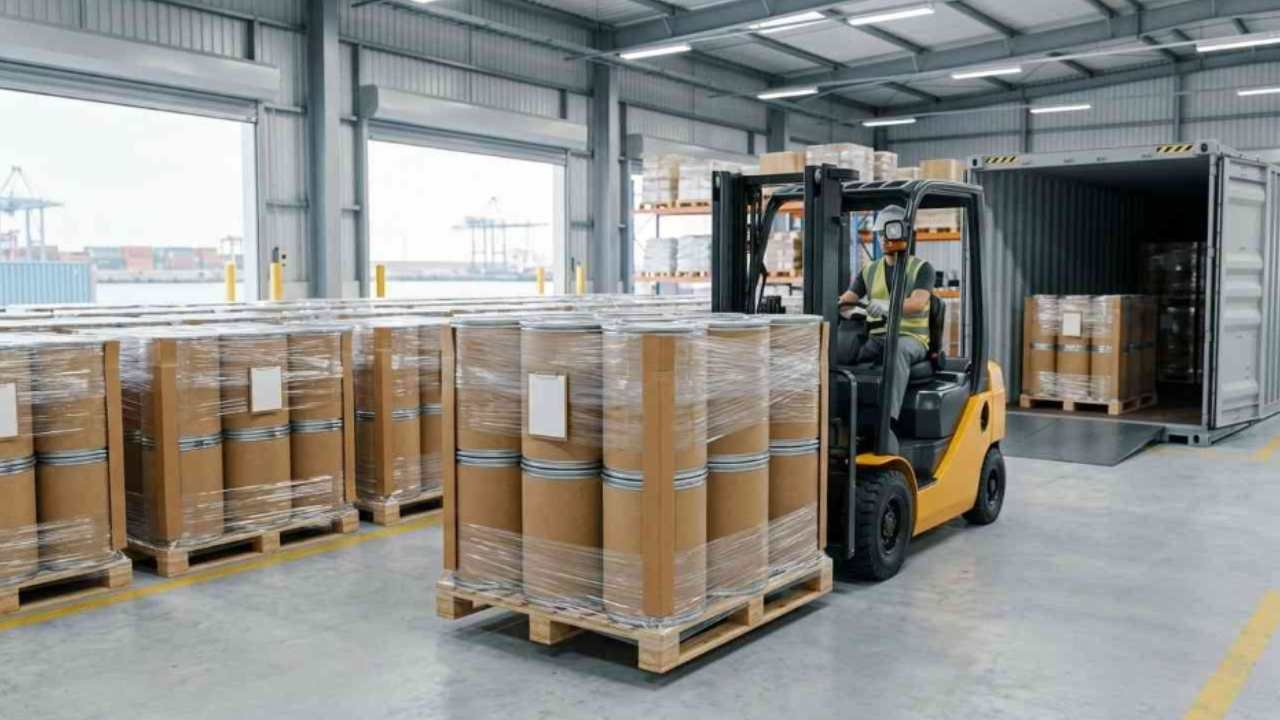
Palletization and Cargo Stability
I always insist on palletization for every container I ship. For fiber drums, we usually put 9 drums per layer and stack them 2 or 3 layers high. This creates a stable unit. For cartons, we can fit more units on a pallet. I ensure that the factory uses heat-treated wooden pallets. These pallets must meet ISPM 15 standards5. This is required for customs in most countries. Then, we use multiple layers of stretch wrap. This wrap binds the drums together. It stops them from sliding or falling when the ship moves on big waves. Plus, it keeps the drums clean and dry. I check the tension of the wrap to ensure it is tight.
Container Loading and Securing
Then, we move the pallets into the container. I manage the loading to ensure the weight is spread evenly. We use air bags or wood bracing to fill any empty spaces. This is a technical step that many exporters skip. If the pallets can move even a few centimeters, they will hit the container walls. This can cause the liners inside the drums to burst. For my clients in Southeast Asia and the Middle East, I provide photos of the loading process. This transparency shows that the cargo is secured correctly. I also use moisture-absorbing bags inside the container. This protects the paper-based drums from getting soft. I secure the container door with a high-security seal.
Bulk Packing Efficiency Table
| Item | Specification | Value |
|---|---|---|
| Pallet Type | Heat-treated Wood | ISPM 15 Compliant |
| Units per Pallet | 25kg Drums / Boxes | 18, 27, or 36 units |
| Pallets per 20ft FCL | Standard Pallets | 10 - 20 pallets |
| Total Net Weight | Vitamin B3 99% | 10 - 15 Tons |
| Securing Method | LLDPE Wrap | 5+ layers |
| Protection | Corner Protectors | Cardboard or Plastic |
How Does Packaging Affect Vitamin B3 (Niacin) Shelf Life?
Moisture and oxygen reduce Vitamin B3 shelf life from years to months. This inventory loss forces you to buy more often at higher prices. High-quality seals preserve freshness and potency effectively for years.
Packaging maintains the 36-month shelf life of Vitamin B3 by creating an airtight environment. Proper seals prevent moisture absorption, which causes caking and degradation. Opaque containers stop oxidation, ensuring the vitamin remains active and meets its 99% purity assay until use.

Moisture Barriers and Caking Prevention
I see that moisture is the biggest enemy of Vitamin B3 shelf life. When Vitamin B3 absorbs water, the chemical stability6 changes. It can also form hard lumps. My packaging solution uses double-layer PE liners. These are heat-sealed. This creates a barrier that moisture cannot cross. In humid climates like Indonesia or Vietnam, this is essential. I ensure the product is packed in a low-humidity room at the factory. This locks the dryness inside the bag. Plus, a good moisture barrier prevents the growth of mold or bacteria. This ensures your product stays safe for human consumption for the full 3 years. I monitor the water content in every lab report.
Oxygen Barriers and Potency Retention
Also, oxygen can slowly react with the vitamin crystals. This process is called oxidation. It reduces the active content of the Niacin. I use thick liners and airtight closures on our drums to stop this. When the oxygen level is low, the chemical stability is much better. I provide a Certificate of Analysis (COA) for every batch to show the initial purity. With our high-quality packaging, the assay level will stay stable during storage. I recommend that you store the drums in a cool and dry place. But even if your warehouse is not perfect, our packaging provides the protection you need. This gives you more flexibility with your inventory management. I manage these details to give you peace of mind.
Shelf Life and Environmental Factors Table
| Factor | Effect on Vitamin | Packaging Solution |
|---|---|---|
| Humidity | Causes clumping / caking | Double PE heat-sealed liners |
| Physical Damage | Leads to contamination | High-density fiber drums |
| Oxygen | Oxidation of crystals | Airtight seals and thick bags |
| Temperature | Speeds up degradation | Drum insulation properties |
| Light | Potential potency loss | Opaque fiber / cardboard walls |
Conclusion
Proper packaging ensures Vitamin B3 stays stable and pure during export. I manage these technical details at FINETECH to protect your business and ensure successful global delivery.
-
Investopedia – Explaining the business model of wholesalers and their role in the distribution of bulk industrial products. ↩
-
Food Safety Magazine – Technical resource on how moisture control and barrier systems ensure the safety of food additives. ↩
-
Food Processing – Industry insights for food distributors managing complex global logistics and fortification supply chains. ↩
-
CIPS – Professional procurement resource for buyers on managing Minimum Order Quantity (MOQ) and supply stability. ↩
-
IPPC – Official portal for ISPM 15 standards, mandatory for international trade orientation involving palletized cargo. ↩
-
PubChem – Detailed chemical profile explaining the stability, shelf life, and storage requirements for Niacin. ↩