Unstable Erythritol supply stops your production and ruins your budget. This uncertainty makes planning impossible. I provide clear market facts to help you secure a stable supply chain for your business.
The Erythritol supply market is currently recovering from a period of oversupply and price volatility. Stability depends on Chinese fermentation capacity, corn starch prices, and anti-dumping policies in the EU and USA. Most global buyers find a steady supply from top Chinese manufacturers in 2024.
I manage factory selection and quality oversight for my B2B clients in China. I want to share the technical facts about the Erythritol supply chain to help you protect your profit margins.
What factors are affecting Erythritol global supply?
Sudden supply shifts leave your warehouse empty and your customers unhappy. This instability hurts your revenue. I track the key factors that move the Erythritol market every day to keep you safe.
Global Erythritol supply is affected by anti-dumping duties, energy costs in China, and sea freight availability. Also, the expansion of sugar-free beverage production in Southeast Asia and the Middle East creates demand spikes that can tighten supply for uncontracted wholesale buyers.
Trade Barriers and Market Dynamics
I see that trade policy1 is the biggest factor right now. The European Union and the USA have started anti-dumping investigations against Erythritol2 from China. This makes some buyers nervous. If the tax goes up, the landed cost in Europe rises. I help my clients manage this by choosing factories with the best compliance records. Some factories have lower tax rates because they cooperate with the government. This is a technical detail that many traders miss. I also monitor the energy prices in China. Erythritol production uses a lot of electricity for fermentation and drying. If the price of coal or gas rises in Shandong province, the factory price follows.
I also track the global demand for sugar-free products. The beverage industry is the main user of Erythritol. When large companies in the UAE or Indonesia launch new diet drinks, the demand spikes. This can cause a temporary shortage in the spot market. I tell my buyers to look at their usage forecasts. Buying only when you are empty is a big risk. I act as your eyes on the ground to spot these demand shifts early. Logistics also play a role. If port congestion happens in Qingdao, your shipment is delayed. I choose shipping lines with the best on-time records. This professional management ensures your supply stays steady even when the global market is volatile.
Supply Chain Factor Impact Table
| Factor Category | Specific Variable | Impact on Supply | FINETECH's Risk Strategy |
|---|---|---|---|
| Trade Policy | Anti-dumping duties | High (Price volatility) | Use compliant factory network |
| Raw Materials | Corn starch price | High (Cost driver) | Monitor harvest cycles |
| Energy | Electricity rates | Moderate | Track Shandong utility caps |
| Logistics | Sea freight rates | Moderate | Secure annual freight deals |
| Demand | Sugar-free trends | High (Volume spikes) | Maintain 30-day safety stock |
| Environment | Waste water rules | Moderate | Audit factory WTP systems |
Which countries dominate Erythritol production?
Relying on an unknown production hub leads to quality risks and logistics delays. This lack of knowledge hurts your procurement. I identify the major hubs to help you choose the best source.
China dominates the global Erythritol market, producing over 80% of the world's supply. Major companies are located in Shandong and other eastern provinces. While the USA and Europe have small facilities, China remains the primary source for large-scale B2B wholesale orders.
China as the Global Hub
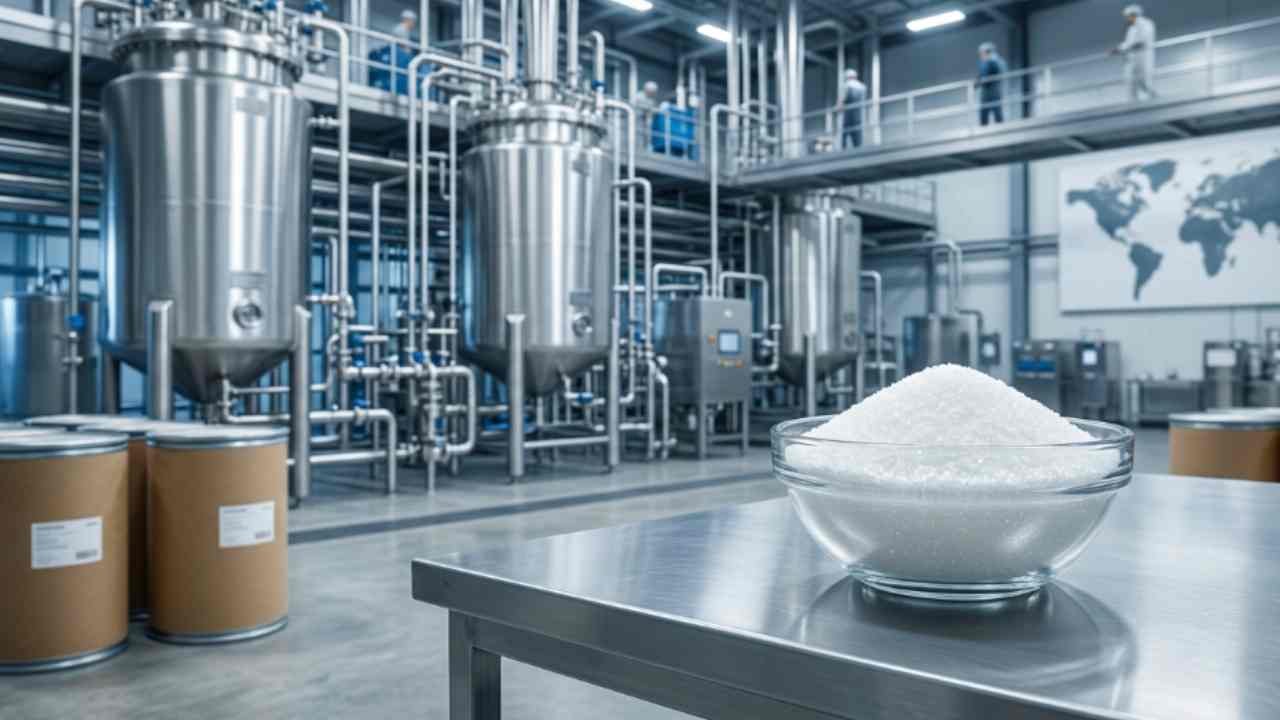
I see that China is the king of Erythritol production. This is because China has a massive supply of corn. Corn is the starting material for the glucose used in fermentation. Most of the top factories are in Shandong province. This region has the best infrastructure for food additives. I visit these factories to check their capacity and technology. They have fermentation tanks that can hold 100,000 liters or more. This scale lowers the production cost for you. I prioritize these large-scale producers for my clients. It ensures that the quality is consistent batch after batch. When a factory is big, they invest more in automation.
Other countries like the USA and some European nations have small plants. But their costs are much higher. They often buy the glucose from other places. This makes their supply chain weaker. For my buyers in the Middle East and Southeast Asia, China is the only logical choice for volume. I help you navigate this massive hub. I select factories that meet international standards like ISO 22000 and HACCP. This is a technical requirement for food safety. Also, Chinese factories are near major ports like Qingdao. This makes the logistics faster. I oversee the loading to ensure the drums are safe. Understanding where the material comes from helps you negotiate better. I act as your strategic partner in the world's biggest production center.
Production Region Comparison Table
| Region | Market Share | Main Advantage | Price Level | Quality Standard |
|---|---|---|---|---|
| China (Shandong) | > 80% | Scale and corn supply | Lowest | High (Export-ready) |
| USA | < 10% | Local supply for US | High | High (Domestic) |
| Europe | < 5% | Zero import duty in EU | High | High (Pharma-grade) |
| Southeast Asia | < 5% | Emerging capacity | Moderate | Variable |
| Other | < 1% | Niche / Organic | Very High | Variable |
How does raw material availability impact Erythritol supply?
High corn prices raise your sweetener costs without warning. This price hike ruins your profit margins. I monitor raw material trends in China to help you time your purchases and save money.
Raw material availability, primarily corn starch, directly impacts Erythritol supply. Corn prices in China fluctuate based on harvest yields and government policy. Since corn makes up a large part of the production cost, any shortage causes a direct increase in wholesale market prices.
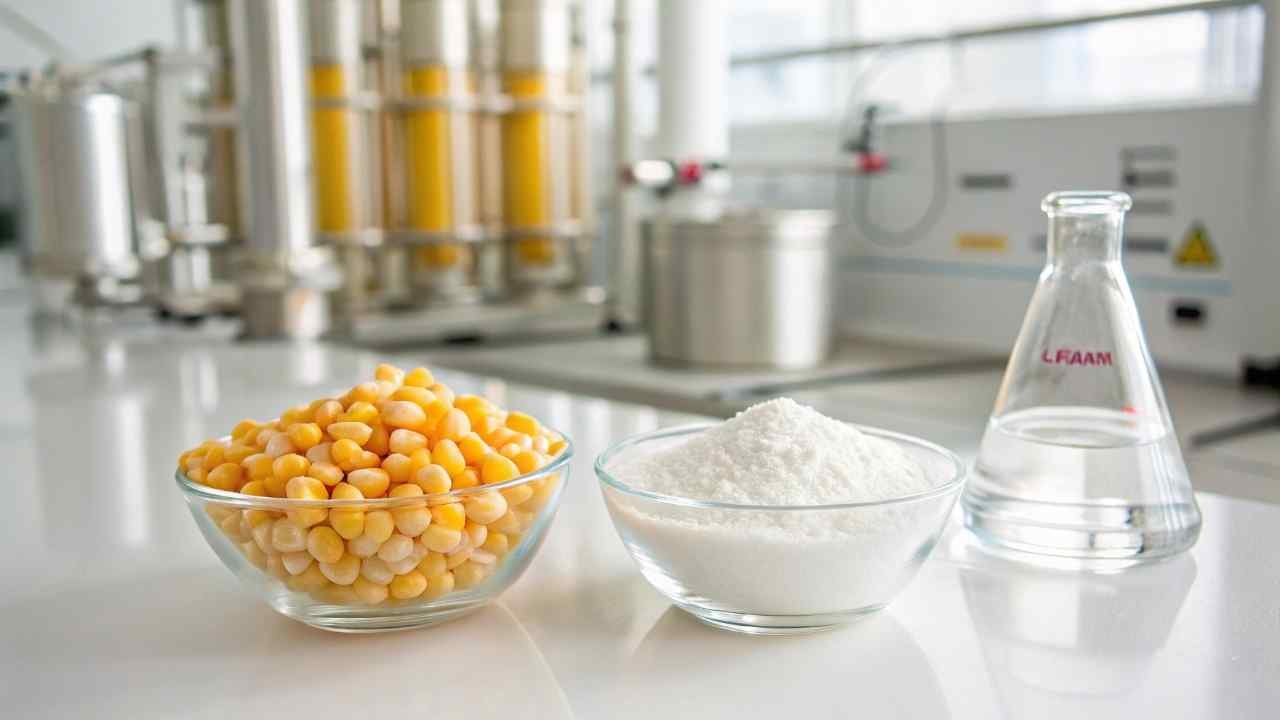
The Corn to Erythritol Technical Link
I see that you cannot understand Erythritol without understanding corn. The factory first turns corn into corn starch. Then they turn the starch into glucose. The yeast then eats the glucose to produce Erythritol. This is a technical fact of fermentation. I monitor the corn harvest in China every autumn. If the harvest is bad, the glucose price goes up. This forces the Erythritol factory to raise their quotes. I also check the supply of non-GMO3 corn. Many of my buyers in Europe want non-GMO Erythritol. This material is more expensive because the corn is harder to find. I ensure that the factory has the correct "Non-GMO Project Verified" certificates.
I also look at the "conversion rate." This is how much Erythritol a factory gets from one ton of glucose. Efficient factories use better yeast strains. They get more product from the same amount of raw material. I visit the factory labs to see their yield data. If a factory is wasteful, their price will always be higher. I help you avoid these inefficient producers. Also, corn policy in China is important. The government sometimes buys corn for safety reserves. This reduces the supply for factories. I act as your market scout to warn you about these policy shifts. By tracking the raw material, I help you see a price rise before it happens. This foresight is how I save my clients thousands of dollars on their annual orders.
Raw Material Technical Specs Table
| Material | Technical Grade | Role in Production | Source Origin | Risk Factor |
|---|---|---|---|---|
| Corn Starch | Food Grade | Precursor for Glucose | China (Domestic) | High (Harvest yield) |
| Glucose Syrup | 95% - 99% DE | Feed for Yeast | In-house / External | Moderate |
| Yeast Strain | Moniliella pollinis | Biological Catalyst | Laboratory | Low |
| Pure Water | Deionized | Reaction Medium | Local Well / River | Low |
| Activated Carbon | Powdered | Purification / Decolor | Chemical Supply | Low |
Why does fermentation capacity matter for Erythritol production?
Inefficient factory lines lead to inconsistent quality and slow delivery. This technical failure delays your production. I select factories with the best fermentation technology to ensure your goods arrive on time.
Fermentation capacity matters because Erythritol is produced by biological fermentation. High-capacity bioreactors allow for economies of scale and more stable batch quality. Factories with modern fermentation technology can control purity levels better, ensuring the final product meets USP or FCC food-grade standards.
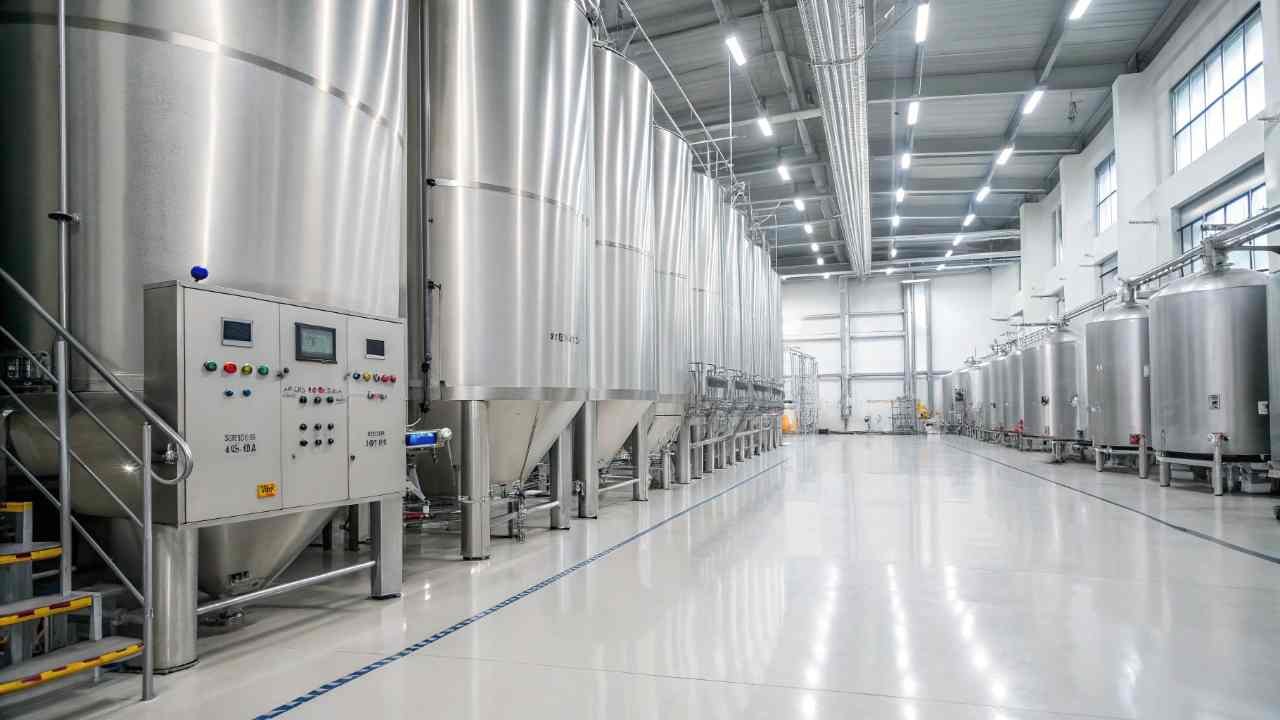
The Technical Heart of Production
I see that fermentation4 is where the quality is made. The yeast must grow in a perfect environment. If the temperature or oxygen level is wrong, the batch is ruined. This is a massive waste. I prioritize factories that use automated DCS systems. These are computers that monitor the fermentation 24 hours a day. They ensure the PH and the stirring speed are always correct. This technology leads to an "Assay" of 99.5% or higher. When the fermentation is stable, the crystals are pure and white. I check the lab results for every batch I ship. If the fermentation capacity is small, the factory must make many batches. This causes the quality to change between drums. Large tanks mean better consistency.
I also look at the "Purification" step after fermentation. The liquid must be filtered and decolorized. I visit the filtration rooms to check their equipment. Modern factories use ceramic filters and multi-stage ion exchange. This removes all the impurities and makes the Erythritol taste clean. If a factory has old technology, the product might have a strange smell or color. I act as your technical gatekeeper to avoid these problems. Also, drying technology is important. To make the 18-60 mesh crystals my buyers want, the factory uses giant spray dryers or fluidized beds. If the drying is not even, the moisture will be too high. I ensure every drum has a moisture level below 0.2%. This prevents the Erythritol from caking during transport.
Fermentation Efficiency Indicators Table
| Technology Area | Standard Method | High-Tech Method | Benefit to Buyer |
|---|---|---|---|
| Fermentation | Manual Valve Control | Full DCS Automation | Stable batch quality |
| Yeast Strain | Natural Selection | Engineered High-Yield | Lower production cost |
| Filtration | Plate and Frame | Ceramic Membrane | Higher purity level |
| Decolorization | Single Carbon Step | Multi-stage Ion Exchange | Better taste / Whiter |
| Drying | Tray Drying | Fluidized Bed Drying | Even mesh / Low moisture |
| Packing | Manual Bagging | Automated Clean Room | Zero contamination |
How can buyers secure stable Erythritol supply contracts?
Panic buying during a shortage results in extremely high costs for your business. This stress is unnecessary. I provide strategies for long-term contracts to stabilize your procurement and protect your profit.
Buyers secure stable Erythritol supply by signing annual volume contracts and using managed exporters for quality oversight. Maintaining a 30-day safety stock and diversifying suppliers across different provinces in China helps mitigate risks from regional power cuts or logistics disruptions at major ports.
Strategic Sourcing for B2B Success
I see that the most successful buyers do not buy on the spot market. They use annual contracts. We agree on a total volume for the year. This makes you a VIP for the factory. Even when supply is tight, the factory will ship your goods first. I negotiate these contracts for my clients in Russia, Germany, and Greece. I ensure the terms are fair and the price is protected. I also suggest using Sinosure5 (China Export & Credit Insurance Corporation). This allows for better payment terms. You do not have to pay 100% upfront. This keeps your cash flow healthy. I manage the relationship between you and the factory to ensure long-term stability.
Diversification is also key. I never rely on just one factory in one province. If Shandong has a power cut, I use a factory in Jiangsu. This is how I protect your supply chain. I also oversee the logistics. I suggest using "Mixed Containers." You can buy Erythritol along with Stevia or Monk Fruit. This lowers your shipping cost and helps you manage inventory. I also manage the "Safety Stock." I suggest my buyers keep at least one container of material in their local warehouse. This covers any shipping delays. I act as your strategic office in China. My goal is to make your procurement silent and steady. Professional planning is the only way to lead your local market with better prices and reliable stock.
Buyer Security Checklist Table
| Security Area | Action Item | Verification Method | Risk if Missing |
|---|---|---|---|
| Volume Security | Sign Annual Contract | Review production slot | No priority in peak |
| Quality Security | Third-party PSI | Check SGS / Intertek logs | Off-spec material |
| Financial Security | Use Sinosure | Verify credit limit | Cash flow strain |
| Logistics Security | Multi-port Routing | Check Qingdao vs Tianjin | Delay at one port |
| Technical Security | Audit Certifications | Verify ISO / BRC / Halal | Customs rejection |
| Information Security | Weekly Market Reports | Track corn and energy | Unseen price hikes |
Conclusion
The Erythritol supply market is stable when you manage raw materials, fermentation technology, and annual contracts. I manage these technical steps at FINETECH to keep your procurement safe, steady, and profitable.
-
European Commission Trade Defence: Explaining anti-dumping investigations and how trade policy affects global market protection. ↩
-
Healthline Nutrition Guide: Scientific overview of Erythritol, its calorie content, and its role as a keto-friendly sweetener. ↩
-
Non-GMO Project: Information on certification standards and the importance of non-genetically modified ingredients in food sourcing. ↩
-
ScienceDirect: Technical breakdown of industrial fermentation processes used in the mass production of organic additives. ↩
-
Sinosure Official Portal: Explaining export credit insurance and how it facilitates credit-based payment terms in international B2B trade. ↩