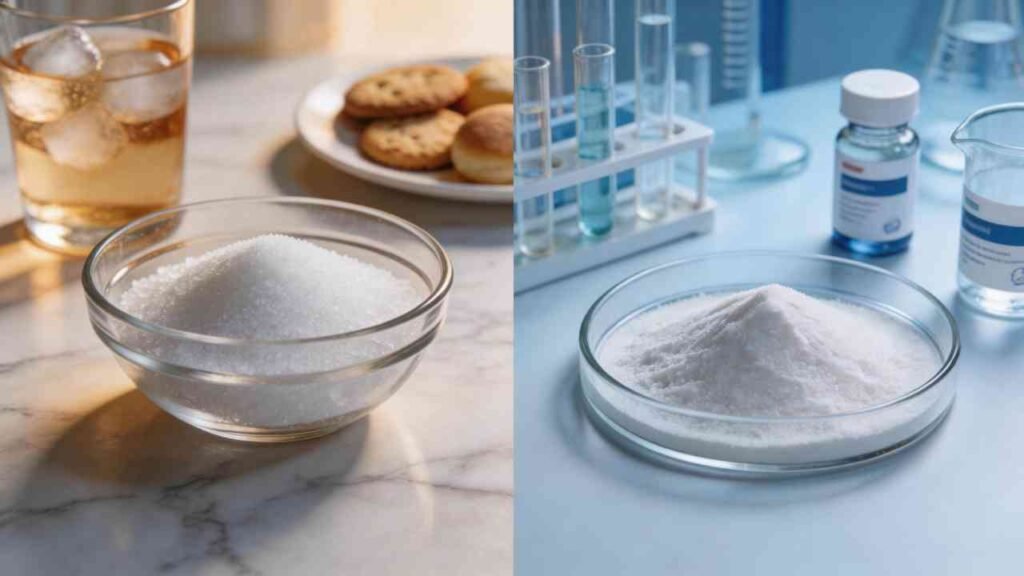
Buying the wrong Erythritol grade causes compliance failures and wasted money. This mistake stops your production. I explain the technical differences to keep your supply safe and cost-effective.
Food-grade Erythritol (FCC/E968) is used in beverages and baking with a 99.5% purity minimum. Pharma-grade Erythritol meets USP or EP standards. It requires higher purity, stricter testing for endotoxins, and production in GMP-certified cleanrooms for clinical or medical applications where safety is the highest priority.
I manage factory selection and quality oversight for my B2B clients in China. I want to share the technical facts about these grades so you can buy the right material for your business.
What purity standards define Erythritol grades?
Vague purity specs lead to product recalls and health risks. This danger ruins your brand. I clarify the technical standards that separate food quality from pharmaceutical quality.
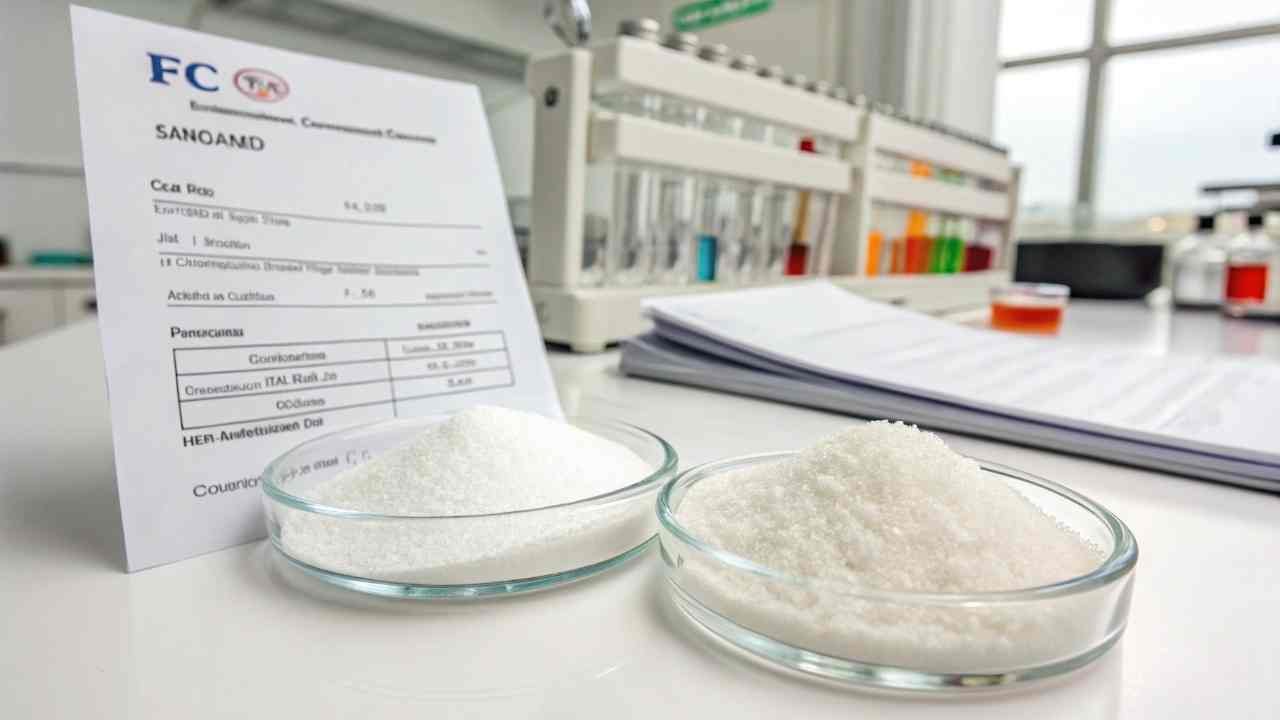
Food grade follows Food Chemicals Codex (FCC) or E968 standards, requiring a minimum of 99.5% purity. Pharma grade must meet United States Pharmacopeia (USP) or European Pharmacopoeia (EP) monographs. These require stricter assay limits and validated testing for heavy metals and specific microbial levels.
Technical Specifications and Monographs
I see that many buyers look only at the assay percentage. This is a mistake. Both grades often show 99.5% or higher on the COA. The real difference is in the "Monograph" details. Food grade is built for the general food industry1. It follows the FCC or the European E968 rules. These rules ensure the sweetener is safe to eat in drinks or snacks. I check these specs for my clients in the Middle East and Southeast Asia. We look at lead levels and moisture. For food grade, lead must be under 0.1 ppm. This is the technical standard for most wholesale orders.
Pharma grade is much more strict. It follows the USP (United States) or EP (Europe) books. These books are called monographs. They require the factory to test for things that food grade ignores. For example, pharma grade must have even lower levels of reducing sugars. It also has a stricter "Loss on Drying" limit. I visit the labs in China to see their HPLC machines. For pharma grade, the lab must use validated methods. This means the machine is checked every day for accuracy. I also check the ash content. Pharma grade allows very little residue after the sample is burned. This ensures the product is clean for clinical use. Using these technical facts, I help you choose the right spec for your factory.
Comparison of Purity Parameters
| Parameter | Food Grade (FCC/E968) | Pharma Grade (USP/EP) | Technical Importance |
|---|---|---|---|
| Assay (Purity) | 99.5% - 100.5% | 99.7% - 100.5% | Ensures sweetener strength |
| Lead (Pb) | < 0.1 ppm | < 0.1 ppm (Strictly Monitored) | Prevents heavy metal toxicity |
| Reducing Sugars | < 0.3% | < 0.2% | Prevents browning in storage |
| Loss on Drying | < 0.2% | < 0.1% | Prevents caking and clumping |
| Ash Content | < 0.1% | < 0.05% | Indicates mineral purity |
| Microbial Count | < 1000 cfu/g | < 100 cfu/g | Ensures safety for medicine |
How do regulations differ for Erythritol applications?
Ignoring regional regulations leads to customs seizures and legal fines. This failure blocks your trade. I explain the regulatory hurdles for different Erythritol applications to protect your shipments.
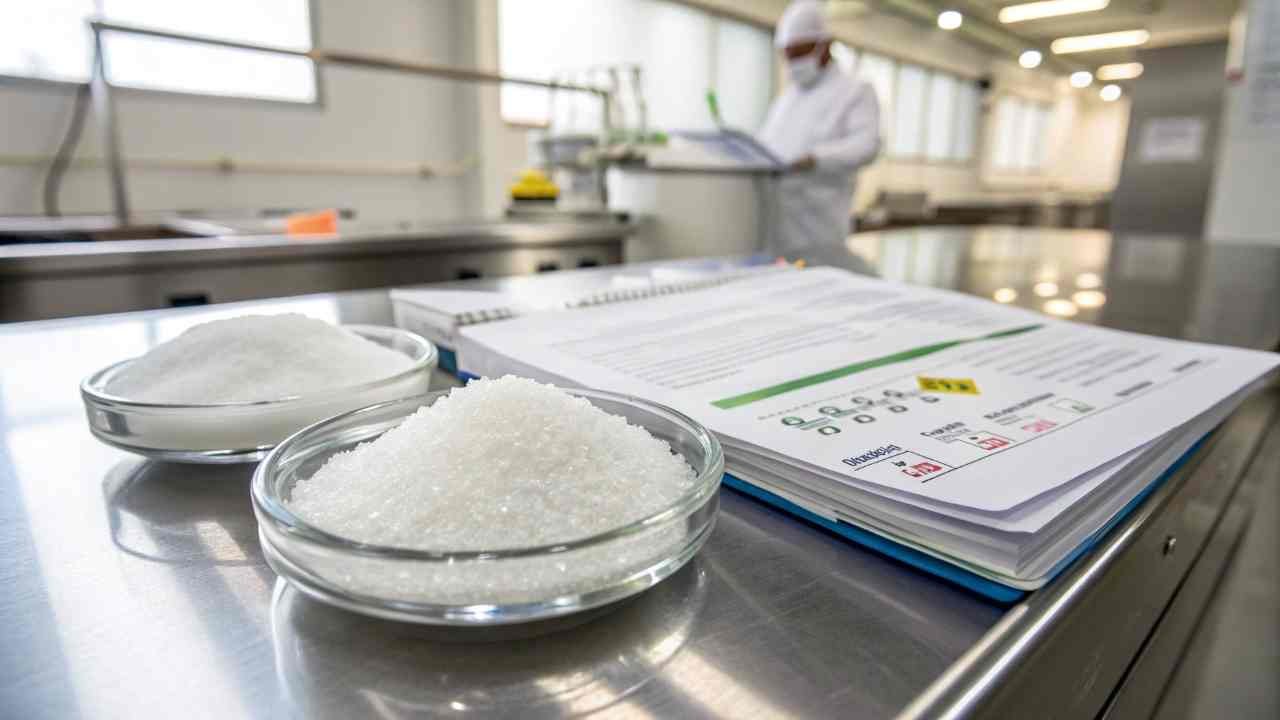
Food-grade regulations focus on safety for general consumption and carry GRAS status. Pharma-grade regulations focus on efficacy and extreme safety for clinical use. This requires GMP certification and documentation like a Drug Master File (DMF) to pass pharmaceutical audits and customs checks.
Navigating the Legal Requirements
I see that "Regulation" is a technical wall in international trade. If you ship food grade to a pharma company, they will reject it. For food grade, the factory must have ISO 22000 or BRC certificates. These show the factory is clean for making food. I audit these certificates for my buyers. In the US, the FDA2 looks for GRAS (Generally Recognized as Safe) status. In Europe, the EFSA looks for the E968 label. This is a technical requirement for every beverage or bakery order I handle. If the label is wrong, the port will hold your container.
Pharma grade needs more paperwork. You need a DMF (Drug Master File). This is a giant document that explains the whole production process. It includes every chemical and every machine used. I manage this document flow for my high-end clients. The factory must also be GMP3 (Good Manufacturing Practice) certified. This is much harder than standard food certificates. The auditors check the air filters and the worker habits. They want to see that no dust or hair can ever touch the Erythritol. I act as your strategic partner to ensure the factory meets these laws. If you are making medicine, you must have the DMF. If you are making juice, the FCC certificate is enough. I help you avoid legal trouble by matching the paper to the product.
Regulatory Bodies and Certificates
| Application Type | Primary Regulator | Mandatory Certificate | Compliance Focus |
|---|---|---|---|
| Beverages | FDA / EFSA | ISO 22000 / BRC | General food safety |
| Bakery | Local Health Dept | HACCP / FCC | No contaminants |
| Medicine (Pills) | FDA / EMA | GMP / DMF | Extreme purity / Efficacy |
| Oral Care | Dental Associations | ISO 9001 / Halal | Plaque fighting claims |
| Clinical Food | Medical Boards | USP / EP Monograph | Safe for sick patients |
Why is pharma grade Erythritol more expensive?
High prices for pharma grade hurt your procurement budget. This cost pressure reduces your margin. I break down the production costs to justify why you pay more for pharma-grade material.
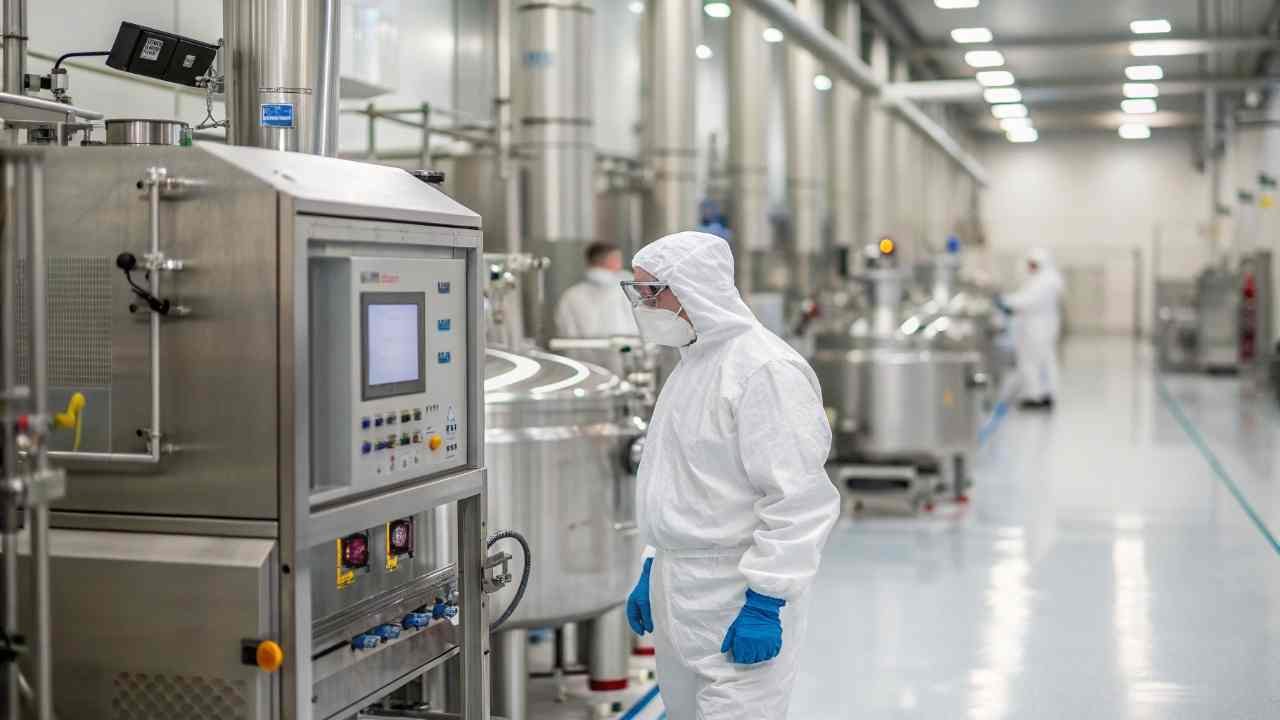
Pharma grade is more expensive because of intensive purification, higher lab testing costs, and GMP compliance. It requires specialized cleanrooms, dedicated production lines, and expensive validation of every batch to ensure zero contamination for medical use and clinical stability.
The Cost of Extreme Quality Control
I see that "Price" is a technical result of the factory process. To make pharma grade, the factory must work harder. After fermentation, the Erythritol is cleaned. Food grade goes through one or two filters. Pharma grade goes through many more. This uses more energy and more expensive materials like activated carbon and ion-exchange resins. I visit the factories in China to check these purification steps. Every extra step raises the price per kilogram. This is a technical fact. Also, pharma grade has more "Waste." If a batch is only 99.4% pure, it cannot be sold as pharma. It must be sold as food grade for a lower price.
Lab testing is the second cost driver. For food grade, we do a few tests per batch. For pharma grade, we do dozens. We must test for endotoxins and residual solvents. These tests require expensive machines and highly trained staff. I oversee these lab costs for my B2B buyers. Also, the cleanroom overhead is huge. The factory must spend millions on HEPA air filters4 and stainless-steel equipment. They must test the air every day for bacteria. These costs are added to your invoice. I act as your office in China to ensure you only pay for the quality you need. If your product does not need this level of safety, I save you money by suggesting food grade.
Price and Cost Drivers Comparison
| Cost Factor | Food Grade Impact | Pharma Grade Impact | Price Increase |
|---|---|---|---|
| Purification | Standard | Multi-stage / Intensive | High |
| Lab Testing | Batch-wise (Basic) | Full Monograph (Extensive) | Moderate |
| Cleanroom Use | Optional / GHP | Mandatory (Class 100,000) | High |
| Audit Fees | Annual | Frequent / Third-party | Low |
| Documentation | COA / Health Cert | DMF / GMP / Validation | Moderate |
| Batch Yield | High | Lower (Due to rejects) | Moderate |
Which industries require high-purity Erythritol?
Using the wrong grade in sensitive products leads to quality complaints. This mismatch hurts your market reputation. I identify the specific industries that must use high-purity pharma material to stay safe.
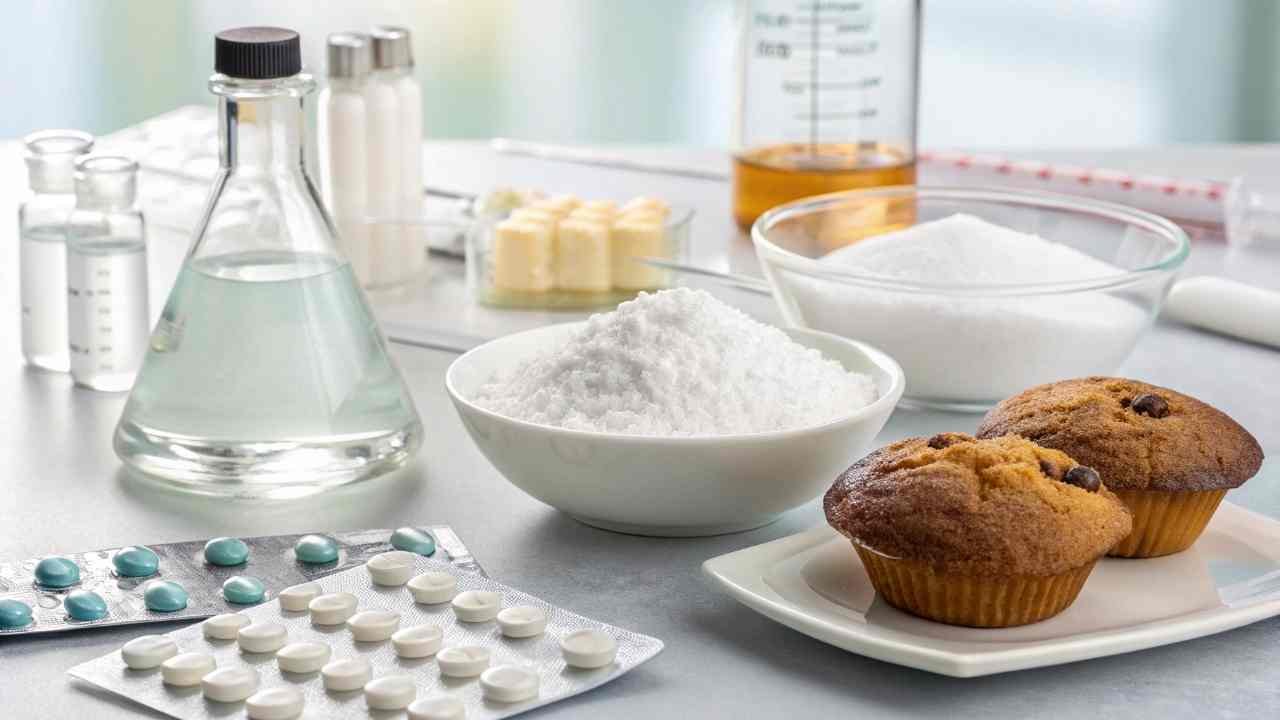
Industries requiring pharma-grade include pharmaceutical manufacturing (tablets and syrups), oral care (medicated toothpaste), and clinical nutrition. Food grade is the standard for the massive beverage, bakery, and confectionery sectors where FCC compliance meets all safety needs for a lower cost.
Identifying High-Risk Applications
I see that some products have zero room for error. If you are making a tablet for a hospital, you cannot have any bacteria. This is why the pharmaceutical industry is the main buyer of pharma-grade Erythritol. They use it as an excipient5. This means it is the "filler" that holds the medicine. It must be chemically stable so it does not react with the drug. I supply this to companies making sugar-free cough syrups and chewable vitamins. These products are sold in pharmacies, so they must follow the USP rules. This is a technical requirement for medical trust.
Another key industry is oral care6. Medicated toothpaste and mouthwash use Erythritol to fight plaque. Since these products are used in the mouth every day, the purity must be very high. I work with oral care distributors in Europe and Korea. They often ask for pharma grade to support their health claims. Clinical nutrition is the third area. This includes food for people in hospitals or people with diabetes. These patients have weak bodies. They need the cleanest possible ingredients. I act as your strategic scout to find factories that specialize in these high-purity markets. For most other uses, like a diet soda or a low-carb cookie, food grade is perfect. It provides the same sweetness without the extra cost of pharma-grade labels.
| Industry | Grade Required | Application | Why? |
|---|---|---|---|
| Pharma | Pharma Grade | Tablet fillers / Syrups | Clinical safety |
| Oral Care | Pharma / High-Purity | Toothpaste / Mints | Plaque prevention |
| Clinical Food | Pharma Grade | Hospital nutrition | High digestive safety |
| Beverages | Food Grade | Soda / Energy drinks | Cost efficiency |
| Bakery | Food Grade | Cookies / Cakes | FCC compliance is enough |
| Confectionery | Food Grade | Hard candies | Bulk sweetness |
How to select the right grade of Erythritol?
Overspending on pharma grade for simple food products wastes your capital. This inefficiency reduces your competitive edge. I provide a guide to help you select the correct grade for your specific production needs.
Select the grade based on your final product’s legal category and label claims. Use food grade (FCC/E968) for general beverages and snacks to maximize profit. Choose pharma grade (USP/EP) only when your product is registered as a drug, medical device, or specialized clinical supplement.

Decision Matrix for Wholesalers
I see that "Choice" is a technical balance between cost and risk. First, look at your local laws. If you are selling to a food factory, they only want the E968 or FCC spec. Buying pharma grade here is a waste of money. I help my clients in Russia and Southeast Asia save 20% on their costs by picking the right food-grade producer. We check the COA to ensure the 99.5% purity is stable. This is enough for 90% of the market. I visit the factories to ensure they have the ISO certificates. This is the professional way to buy for the food industry.
If your client is a drug manufacturer, you have no choice. You must buy pharma grade. I ensure the batch numbers match the DMF and the GMP papers. This is a technical must for the pharmaceutical supply chain. Another factor is the "Sensitive Consumer." If you are making baby food or food for the elderly, I suggest a higher-purity food grade or pharma grade. It gives your brand a "Premium" image. I act as your technical office in China to find the best factory for each need. I compare the prices and the lab results for you. By using this technical logic, I help you grow your business and keep your customers safe.
Selection Criteria Guide
| Selection Factor | Choose Food Grade If... | Choose Pharma Grade If... | Business Impact |
|---|---|---|---|
| Final Product | Juice, Soda, Bread, Candy | Pills, Injections, Medical gel | High safety compliance |
| Target Market | General consumers | Patients / Clinical use | Brand reputation |
| Budget Focus | Cost leadership | Quality leadership | Profit margin |
| Certifications | ISO 22000 / BRC / Halal | GMP / USP / DMF | Legal market access |
| Quality Need | 99.5% Purity | 99.7% + Endotoxin free | Reduced medical risk |
| Testing Scope | Standard safety | Full clinical monograph | Regulatory success |
Conclusion
Food grade Erythritol fits general food uses, while pharma grade is for medical needs. I help you choose and secure the right grade at FINETECH to ensure safety and profit.
-
FoodNavigator – Global news and analysis on the food industry, focusing on ingredients, regulations, and market trends. ↩
-
U.S. FDA – The official food additive status list and safety guidance from the Food and Drug Administration. ↩
-
ISPE – International Society for Pharmaceutical Engineering resource on Good Manufacturing Practice (GMP) standards. ↩
-
U.S. EPA – Technical explanation of HEPA air filter standards for maintaining air quality and contamination control. ↩
-
USP Excipients – United States Pharmacopeia resources on the role and quality standards of pharmaceutical excipients. ↩
-
Dentistry Today – Clinical and market news for the oral care sector, highlighting innovations in toothpaste and oral health products. ↩