Missing the next sweetener trend leaves your warehouse full of stagnant stock. This delay kills your competitive edge. I identify future Erythritol growth to secure your long-term wholesale profits.
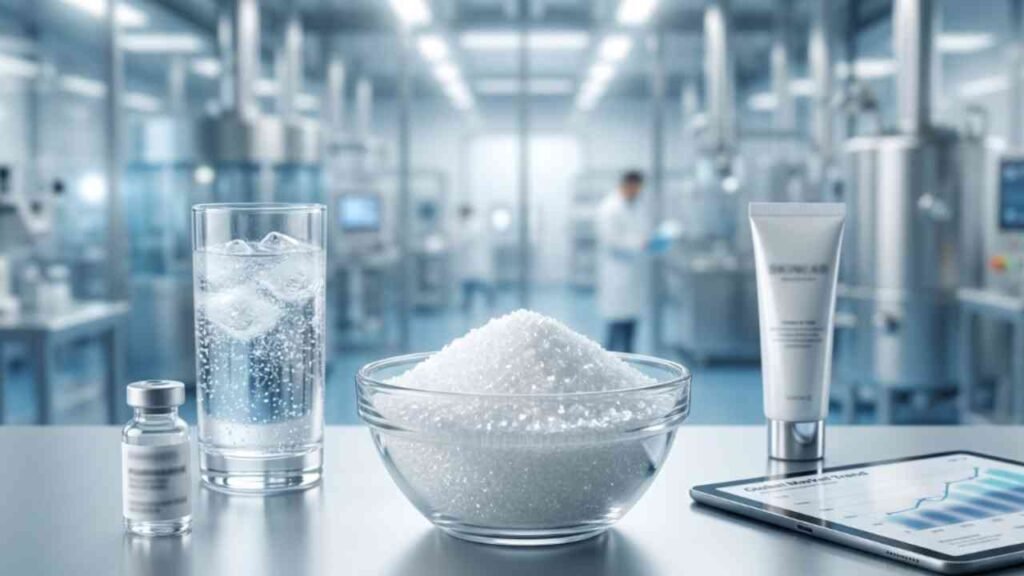
Future Erythritol growth is driven by the beverage, pharmaceutical, and personal care industries. Key opportunities lie in clean-label formulations, plant-based dairy, and emerging markets like Southeast Asia and the Middle East, where sugar taxes and health awareness are accelerating the demand for zero-calorie bulk sweeteners.
I manage the supply chain and factory selection for my B2B clients at FINETECH in China. I want to share the technical shifts and market facts that will define the next decade of Erythritol trade.
Which industries will drive Erythritol demand growth?
Relying only on old markets limits your sales volume. This stagnation blocks your business growth. I show you which new industries are buying bulk Erythritol right now to expand your reach.
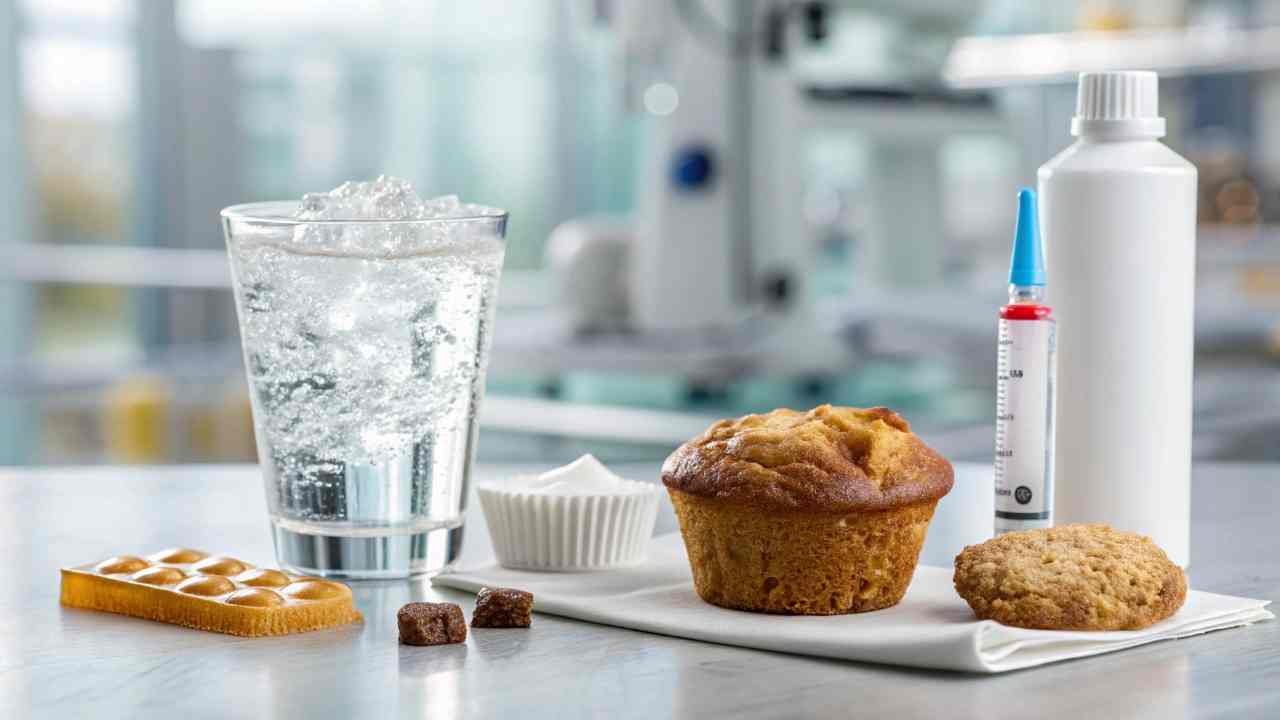
The beverage and bakery sectors remain core drivers, but pharmaceutical excipients and oral care products are the fastest-growing niches. Additionally, the pet food industry is increasingly using Erythritol in low-calorie treats, creating new volume opportunities for global food additive wholesalers.
Expanding the B2B Horizon
I see that the "sugar-free" trend is moving out of the soda aisle and into every part of the supermarket. In my daily work with factories in China, I notice a shift in order types. While soft drink makers still buy the most, the pharmaceutical industry is growing fast. Erythritol is a very stable excipient1. It does not react with other drugs. This makes it a perfect filler for chewable tablets and sugar-free cough syrups. I provide pharma-grade Erythritol to buyers who need ultra-high purity. This sector is less sensitive to price but very sensitive to quality. If you are a wholesaler, adding pharma-grade specs to your inventory is a smart technical move.
The personal care industry is another big winner. Toothpaste brands are switching from Sorbitol to Erythritol. This is because Erythritol is better at stopping plaque. It creates a cooling sensation that consumers love. I supply fine 100-mesh powder for these applications to ensure a smooth texture. Also, look at the pet food market. Dogs and cats have a "sweet tooth" but sugar is bad for them. I see a rise in demand for Erythritol in healthy pet treats. It provides bulk and sweetness with zero calories for pets. This is a technical niche that many traders ignore. I act as your strategic partner to find these high-growth sectors. By diversifying your clients, you protect your business from local market dips.
High-Growth Industry Analysis Table
| Industry Sector | Primary Application | Growth Driver | FINETECH’s Sourcing Advice |
|---|---|---|---|
| Pharmaceutical | Tablet filler / Excipient | Chemical stability | Require USP/EP grades |
| Oral Care | Toothpaste / Mouthwash | Plaque prevention | Focus on 100-mesh powder |
| Pet Food | Healthy dog treats | Weight management | Source food-grade bulk |
| Plant-based Dairy | Nut milks / Yogurts | Sugar-free labeling | Ensure non-GMO status |
| Clinical Nutrition | Hospital tube feeding | Zero glycemic index | High-purity batch testing |
How are new formulations expanding Erythritol applications?
Using Erythritol alone can lead to a metallic taste or a cooling sensation that is too strong. This flavor profile ruins your product reviews. I explain how new blends unlock premium food applications.
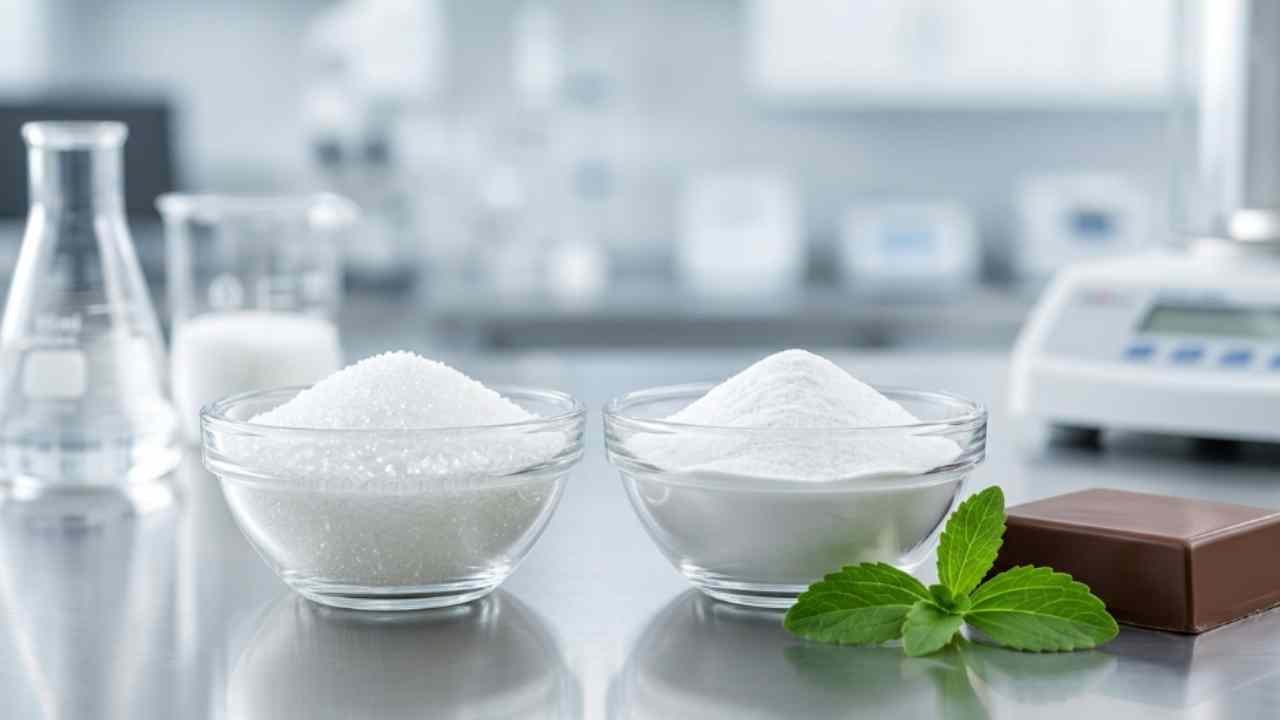
Innovations in co-processed blends with Stevia or Monk Fruit solve flavor issues and sweetness intensity. Furthermore, micronized fine powders (100 mesh) are expanding use in chocolate, frostings, and smooth-texture dairy alternatives where standard 18-60 mesh crystals are too gritty for the mouthfeel.
Technical Blending and Particle Engineering
I see that "Formula Innovation" is the key to winning new contracts. Pure Erythritol is only 70% as sweet as sugar. If a factory uses only Erythritol, they have to use a lot of it. This can cause too much cooling in the mouth. I help my clients solve this by suggesting "Co-crystallized" blends. This is a technical process where we mix Stevia or Monk Fruit2 with Erythritol before it turns into crystals. This makes every grain 1 time, 2 times, or even 5 times as sweet as sugar. This "plug-and-play" solution is very popular in the Middle East and Russia. It lets food makers replace sugar 1:1 without changing their machinery.
Particle size is the other technical factor. Standard Erythritol is like table salt (18-60 mesh). This is fine for drinks. But if you put it in chocolate, the chocolate feels like sand. I provide "Micronized" Erythritol. This is a 100-mesh or even 200-mesh powder. It is as fine as flour. This allows chocolate makers to create smooth, zero-sugar bars. It also works in creamy cake frostings. I visit the factories in China to audit the grinding and sieving process. I want to see that 95% of the powder is within the target mesh. If the powder is inconsistent, your customer's machines will clog. This focus on physical specs is how I ensure your supply is superior to cheap, unvetted material.
Particle Size and Formulation Guide
| Product Form | Particle Size | Best Application | Technical Benefit |
|---|---|---|---|
| Standard Crystal | 18-60 Mesh | Sodas / Juices / Teas | Fast dissolution in water |
| Fine Powder | 80-100 Mesh | Bakery / Confectionery | Mixes evenly into dough |
| Micronized Powder | > 100 Mesh | Chocolate / Frostings | Smooth, non-gritty texture |
| Ery-Stevia Blend | Variable | Tabletop Sweeteners | High sweetness / Sugar-like |
| Ery-Monk Blend | Variable | Natural / Clean Label | Best flavor profile |
What role does low-sugar demand play in Erythritol markets?
High sugar levels trigger government taxes and consumer boycotts. This regulatory risk destroys your brand value and profit. I explain how the global low-sugar trend secures the future of Erythritol sales.
Global "Sugar Taxes" and the rise of the Keto diet make Erythritol a mandatory ingredient for food manufacturers. As consumers prioritize blood sugar management and calorie reduction, Erythritol serves as the primary bulk replacement for traditional sucrose across almost all processed food categories.
The Policy Shift and Consumer Health
I see that "Sugar Taxes" are becoming a technical driver for our B2B business. In countries like Saudi Arabia, the UAE, and many parts of Southeast Asia, the government is making sugar expensive. They want to reduce obesity and diabetes. This is not a temporary trend. It is a permanent change in how food is made. Food manufacturers are forced to remove sugar. But they cannot just remove it and leave a hole. They need a "Bulking Agent." Erythritol is the best technical choice. It provides the weight and texture of sugar with zero calories. I manage these volume orders for distributors who supply the local soda and snack giants.
Consumer health awareness is the second factor. People now check the "Glycemic Index" (GI) of their food. Erythritol has a GI of zero. This is a massive selling point for the "Keto" market. I see a huge demand for "Keto-Certified" Erythritol in North America and Europe. To meet this demand, I ensure all our batches are non-GMO and highly purified. I check the lab results to make sure there are no residual sugars like glucose. If there is leftover sugar, the GI goes up, and the Keto claim is ruined. I act as your technical gatekeeper to ensure your product meets these strict health standards. By providing a "Clean" sweetener, you help your clients win the trust of modern shoppers.
Global Market Drivers Table
| Market Driver | Technical Impact | Business Result |
|---|---|---|
| Sugar Taxes | Manufacturers cut sucrose | Increased bulk Erythritol use |
| Diabetic Needs | Demand for GI 0 ingredients | Growth in pharma/clinical food |
| Keto Diet | Demand for calorie-free bulk | High sales in retail/bakery |
| Clean Label | Shift to fermentation-based | Higher value for non-GMO B12 |
| Obesity Policy | Reduced pack sizes / reformulation | Strategic partnership needs |
How is innovation shaping Erythritol production?
High production costs in inefficient factories drain your procurement budget. This makes your retail pricing uncompetitive. I track the latest fermentation and energy tech to keep your supply costs low and stable.
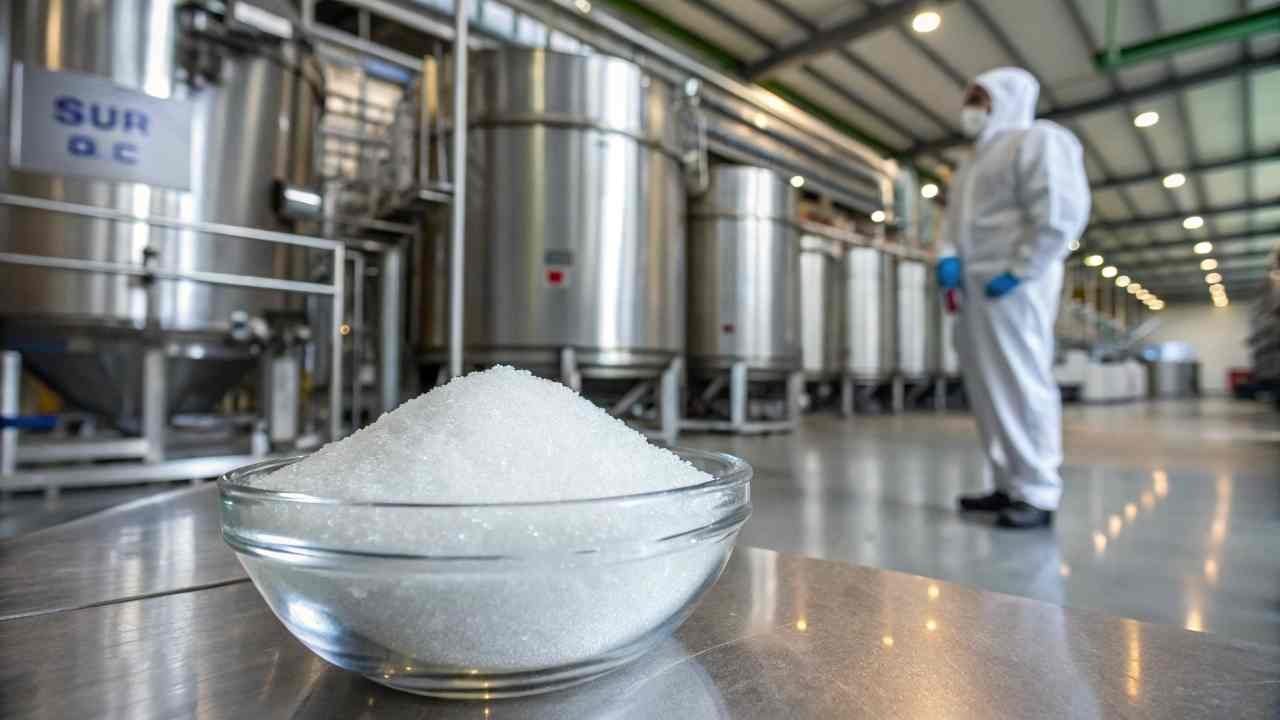
Production innovation is focused on high-yield yeast strains and energy-efficient MVR (Mechanical Vapor Recompression) evaporation systems. These advancements lower the carbon footprint and production costs, allowing Chinese factories to maintain a large-scale supply even during energy crises.
Engineering a Cheaper and Greener Supply
I see that the "Price War" in Erythritol is won in the lab and the engine room. In the past, fermentation3 was slow and the yield was low. Now, Chinese factories use "Next-Generation" yeast strains. These bacteria are much more efficient at turning glucose into Erythritol. This is a technical fact that lowers the price per ton. I prioritize factories that use these high-yield strains. Also, I look for "Continuous Fermentation" setups. Instead of stopping to clean the tanks every week, they keep the process running. This increases the total supply and prevents shortages. I act as your eyes in China to find these technological leaders.
Energy is the other half of the innovation story. Fermentation needs a lot of heat to dry the crystals. Old factories use coal-fired steam, which is dirty and expensive. Now, the best plants use MVR (Mechanical Vapor Recompression) technology. This system recycles the heat from the steam and uses it again. It lowers energy use by up to 50%. This is very important for my buyers in Europe who care about the "Carbon Footprint." If your factory is green, you can sell to high-end brands. I audit these energy systems during my site visits. I want to see a factory that is sustainable. A sustainable factory is less likely to be shut down by the government. This protects your supply security for the long term.
Production Innovation Metrics
| Tech Area | Old Method | Modern Innovation | Benefit to Wholesaler |
|---|---|---|---|
| Fermentation | Batch process | Continuous fermentation | Faster lead times |
| Evaporation | Single-effect steam | MVR Technology | Lower, more stable prices |
| Yeast Strain | Natural wild types | Optimized high-yield | Higher purity / lower assay risk |
| Water Use | Once-through water | Closed-loop recycling | Environmental compliance |
| Automation | Manual valve control | Full DCS Automation | Batch-to-batch consistency |
What trends are influencing global Erythritol trade?
Sudden trade duties and shipping delays freeze your capital for months. This logistics chaos stops your business flow. I identify the trade and policy trends that affect your Erythritol imports so you can plan ahead.
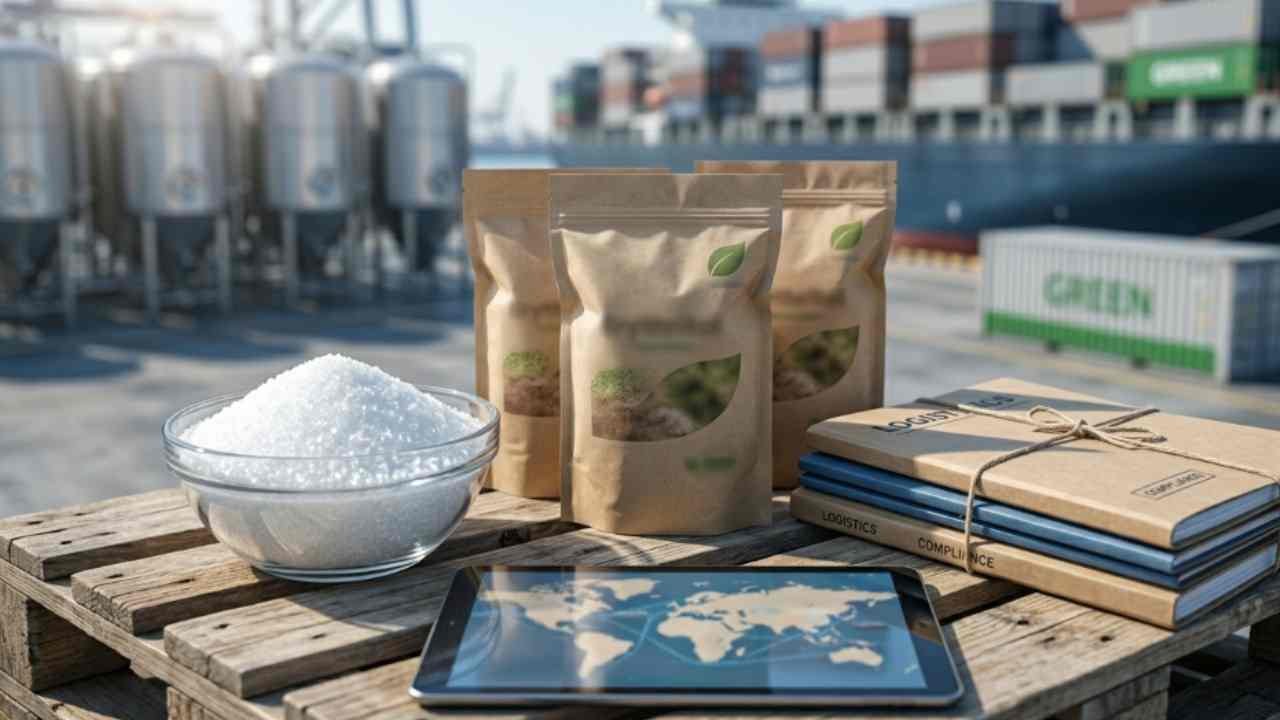
Global trade is influenced by EU and US anti-dumping duties, the move toward sustainable packaging, and regional trade agreements like RCEP. Buyers are shifting toward managed exporters who offer full batch traceability and "Green" logistics to meet strict international compliance standards.
Navigating Trade Barriers and Sustainability
I see that "Trade Policy" is now just as important as "Product Quality." Right now, the European Union and the USA have anti-dumping4 investigations into Chinese Erythritol. This is a technical hurdle for any B2B buyer. If the tax goes up, your cost goes up. I help my clients manage this by choosing factories that have the best compliance records. Some factories have lower tax rates because they cooperate with the government. I act as your strategic partner to save you money on these duties. Also, I look at trade blocks. The RCEP agreement makes shipping between China and Southeast Asia much cheaper. I help my clients in Indonesia and Malaysia take advantage of these lower taxes.
Sustainability is the second major trade trend. My buyers in Germany and Greece now ask for "Plastic-Free" packaging. I suggest switching from plastic woven bags to multi-layer kraft paper bags. These are recyclable and look better on the retail shelf. I also manage the "Carbon Footprint" data for the shipping. I choose vessels that have lower emissions. This is becoming a technical requirement for many large companies. I also provide full "Traceability5." You can see exactly which batch of corn starch was used for your Erythritol. This transparency is what global traders need to avoid scandals. By focusing on these trade trends, I help you build a modern and safe supply chain.
Trade Trend Impact Table
| Trend Factor | Technical Change | FINETECH’s Recommended Strategy |
|---|---|---|
| Anti-Dumping | Increased import taxes | Diversify factory selection / Verify tax rates |
| Green Logistics | Request for low-CO2 shipping | Choose carriers with modern fleets |
| Plastic Reduction | Shift to paper packaging | Use multi-layer kraft bags with PE liners |
| Traceability | Demand for "Seed-to-Bag" data | Request full audit logs from FINETECH |
| Regional Deals | Lower duties (e.g., RCEP) | Optimize sourcing from specific trade zones |
Conclusion
Future Erythritol growth depends on new industries, technical blends, and sustainable production. I manage these global trends at FINETECH to ensure your procurement is safe, profitable, and ready for the future.
-
PharmaExcipients – A specialized platform providing insights into pharmaceutical excipients, their roles, and global innovation. ↩
-
Food Insight – Comprehensive resource on the origins, safety, and health benefits of monk fruit sweeteners. ↩
-
ScienceDirect – An academic and technical overview of industrial fermentation processes used in food production. ↩
-
European Commission – Official site explaining EU trade defense policy and the application of anti-dumping measures. ↩
-
GS1 Standards – Global resource on traceability systems used to ensure transparency and safety in supply chains. ↩