
Unstable MSG supplies stop your production and drain profits. This uncertainty ruins your reputation. I provide market facts and sourcing plans to keep your inventory stable year-round.
The MSG supply market remains relatively stable due to China's dominant production capacity. However, stability is influenced by corn price fluctuations, coal energy costs, and global logistics. Buyers can ensure stability by signing annual contracts and diversifying suppliers across different Chinese provinces.
I manage factory selection and quality oversight for my B2B clients at FINETECH in China. I want to share the technical facts about the Monosodium Glutamate supply chain to help you protect your profit margins.
What factors affect the MSG supply market?
Sudden price spikes and shortages leave your warehouse empty. This lack of stock kills your sales. I track the key factors that move the global MSG market.
Factors affecting the MSG supply market include raw material costs (corn and sugar), energy prices (coal for fermentation), and government environmental regulations. Global logistics costs and trade policies, such as anti-dumping duties, also play a significant role in determining final market stability.
Understanding the Cost Drivers and Policy Impact
I see that the price of MSG starts with the price of corn. MSG is a product of fermentation1. Bacteria eat glucose, which comes from corn starch. When the corn harvest in China is poor, the price of starch goes up. This is a technical fact of the supply chain. In my experience, corn starch makes up a large part of the production cost. If corn prices rise, the factory must raise the MSG price. I monitor the corn market in Shandong and Inner Mongolia to warn my clients. I want them to know when a price hike is coming so they can buy early.
Energy is the second biggest factor. Fermentation tanks must stay at a specific temperature for days. This uses a lot of electricity and steam. In China, most of this energy comes from coal. When coal prices are high, factory overhead increases. Also, the government sometimes limits power use in the winter to reduce pollution. This is the "Blue Sky" policy. It reduces the total supply of MSG. I visit the factories to check their energy contracts and production status. Trade taxes also matter. Some regions have anti-dumping duties2 on Chinese MSG. This tax is added at the border. I help my buyers find factories with the best compliance records to keep their costs low.
MSG Supply Chain Impact Table
| Factor Category | Specific Variable | Impact on Supply | FINETECH's Risk Strategy |
|---|---|---|---|
| Raw Materials | Corn starch price | High (Cost driver) | Monitor harvest cycles |
| Energy | Coal and electricity | High (Overhead) | Track seasonal power rules |
| Environment | "Blue Sky" audits | Moderate (Capacity) | Stock up before winter |
| Logistics | Sea freight rates | Moderate | Secure annual freight deals |
| Trade Policy | Anti-dumping duties | High (Landed cost) | Use vetted factory networks |
| Demand | Food industry growth | Moderate | Sign annual volume contracts |
Which countries lead MSG production and export?
Sourcing from unstable regions leads to delivery delays and quality issues. This risk stops your growth. I identify the leading countries to help you choose the best supply hub.
China is the world's leading producer and exporter of MSG, accounting for over 70% of global supply. Other significant producers include Indonesia, Vietnam, Thailand, and Brazil. China's massive fermentation infrastructure and access to raw materials make it the primary hub for international wholesalers.

The Dominance of Asian Production Hubs
I see that China is the king of MSG production. This is because China has a massive supply of corn and a very strong chemical industry. Most of the top factories are in the northern and eastern provinces. These regions have the best infrastructure3 for food additives. I visit these factories to check their capacity and technology. They have fermentation tanks that can hold hundreds of thousands of liters. This scale lowers the production cost for you. I prioritize these large-scale producers for my clients. It ensures that the quality is consistent batch after batch. When a factory is big, they invest more in automation and quality control.
Southeast Asia is also a major player. Countries like Indonesia and Vietnam have giant plants owned by global brands. They use local sugarcane molasses or starch as raw materials. These countries are important for the Middle East market because they have strong Halal certification systems. I also look at Brazil. They use their massive sugar industry to produce MSG. However, for large-scale wholesale and competitive pricing, China remains the main source. I help you navigate this massive hub. I select factories that meet international standards like ISO 220004 and HACCP. This is a technical requirement for food safety. Understanding where the material comes from helps you negotiate better. I act as your strategic partner in the world's biggest production center.
Producer Country Comparison Table
| Country | Global Share | Main Advantage | Export Focus |
|---|---|---|---|
| China | ~75% | Scale and corn supply | Global / Wholesale |
| Indonesia | ~10% | Sugar molasses supply | Southeast Asia / Middle East |
| Vietnam | ~5% | Regional logistics | Southeast Asia / Europe |
| Thailand | ~5% | Strong local brands | Regional / Retail |
| Brazil | ~3% | Sugar industry integration | Americas / Europe |
| Others | ~2% | Niche markets | Local consumption |
How does raw material supply impact MSG availability?
Rising corn prices hike your costs without warning. This margin squeeze ruins your business profit. I monitor raw material trends in China to help you time your purchases and save money.
MSG availability depends on the supply of glucose from corn starch or sugarcane molasses. In China, corn is the primary feedstock. Harvest yields and government grain reserves directly influence glucose prices, which determines the total production capacity and wholesale pricing of MSG globally.
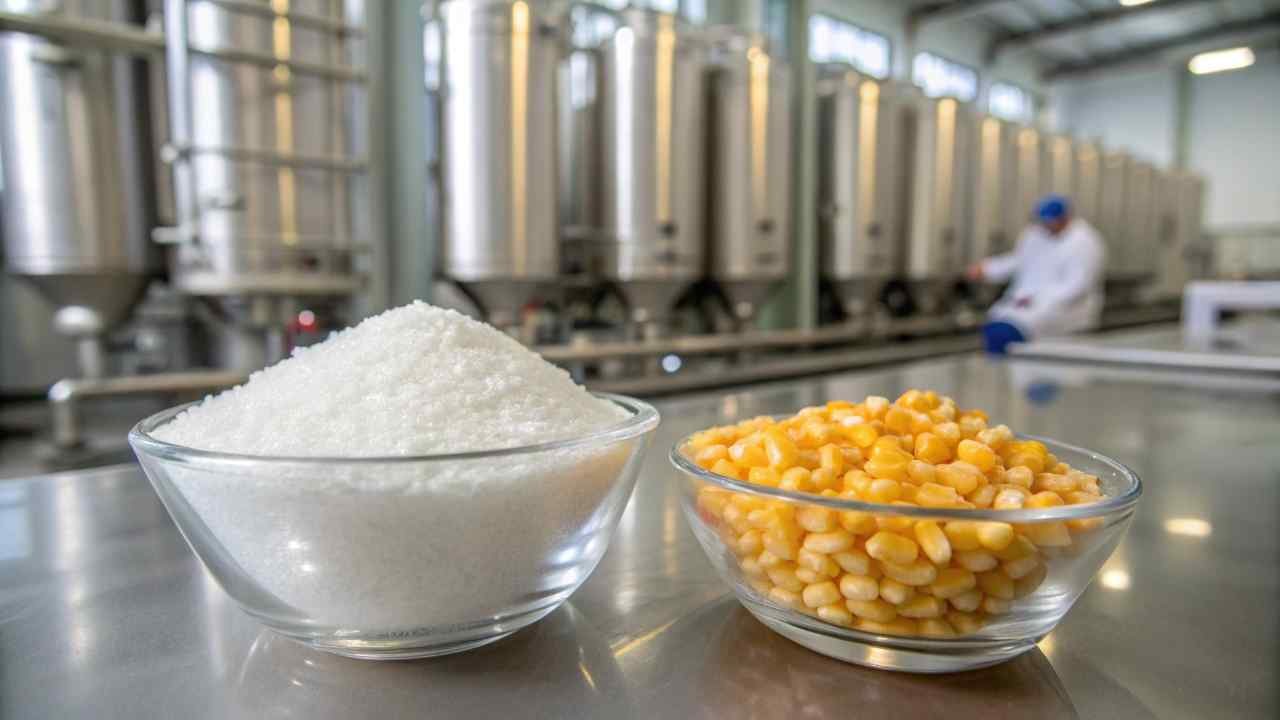
The Link Between Corn and MSG Production
I want you to understand the technical link between corn and the MSG on your shelf. The process starts in the corn fields. Factories turn corn into starch and then into glucose syrup. The bacteria use this glucose as fuel to produce glutamic acid. This is the heart of the fermentation process. If the corn supply is tight, the factory cannot run all its tanks. I monitor the corn harvest in China every autumn. If the harvest is good, the glucose price stays low. This is the best time to buy. I also check the government policy on grain. If they sell from the reserves, the market stays stable.
I also look at the technical yield. Efficient factories get more MSG from one ton of glucose. They use better bacterial strains and modern tanks. I visit the labs to see their yield data. If a factory is wasteful, their price will always be higher. I help you avoid these inefficient producers. Also, the supply of soda ash is important. Soda ash is used to neutralize the glutamic acid to make Monosodium Glutamate5. I track the chemical market to ensure there are no shortages of these auxiliary materials. By tracking all the raw materials, I help you see a price rise before it happens. This foresight is how I save my clients money on their annual orders.
Raw Material Technical Specifications
| Material | Technical Role | Source Origin | Risk Factor |
|---|---|---|---|
| Corn Starch | Main carbon source | China / USA / Brazil | High (Harvest / Policy) |
| Sugar Molasses | Alternative carbon source | Southeast Asia / Brazil | Moderate (Weather) |
| Ammonia | Nitrogen source | Chemical industry | Low |
| Soda Ash | Neutralizing agent | Chemical industry | Moderate (Energy costs) |
| Bacterial Strains | Biological catalyst | Laboratory | Low |
| Process Water | Reaction medium | Local supply | Low (Quality audits) |
Why do buyers face MSG supply fluctuations?
Unexpected shortages disrupt your factory lines and cause customer complaints. This chaos ruins your schedule. I explain the reasons for supply gaps so you can avoid them and keep your inventory full.
Buyers face fluctuations due to seasonal factory maintenance, holiday shutdowns like Chinese New Year, and sudden environmental audits. Market speculation and shipping container shortages also create temporary supply gaps, leading to volatile lead times and price changes in the international market.
Navigating Maintenance and Policy Cycles
I see that many buyers are surprised by supply gaps. These gaps are often predictable if you know the Chinese market. The first reason is "Scheduled Maintenance." Most giant MSG plants stop for two weeks every summer. They must clean the fermentation tanks and check the boilers. This is a technical requirement for high-quality production. If three big factories stop at the same time, the market supply drops. I track these maintenance schedules for my clients. I tell them to buy extra stock in May or June to cover the July gap. This simple step prevents stockouts.
The second reason is government policy. China is very serious about the environment. In the winter, the "Blue Sky" policy can force factories to cut production by 30% or 50%. This happens most often in the northern provinces. I visit our partner factories to see if they have the latest pollution filters. Factories with better technology are less likely to be shut down. Also, the Chinese New Year is a giant factor. For two weeks in January or February, everything stops. Ports are closed and trucks do not move. If you do not plan for this in December, you will run out of MSG in March. I manage this timing for my buyers in the Middle East and Europe. I act as your strategic office in China to look ahead and avoid these gaps.
Common Causes of MSG Supply Gaps
| Event Type | Timing | Impact on Supply | FINETECH's Mitigation Strategy |
|---|---|---|---|
| Chinese New Year | Jan / Feb | Total logistics stop | Ship goods before Jan 10 |
| Summer Maintenance | Jul / Aug | Reduced production | Plan 45 days ahead |
| "Blue Sky" Audits | Nov - Mar | Variable capacity | Maintain 60-day buffer |
| Golden Week | October | 1-week delay | Book ship space in September |
| Corn Harvest | Oct / Nov | Price shifts | Lock in Q4 pricing early |
| Freight Peak | Aug - Dec | High cost / No space | Use annual freight contracts |
How can importers secure stable MSG supply?
Panic buying during a crisis results in extremely high costs for you. This stress is unnecessary. I share strategies for stable procurement to protect your business margins and ensure your MSG always arrives on time.
Importers secure stable MSG supply by signing 6-12 month volume contracts and maintaining a 60-day safety stock. Partnering with managed exporters who oversee multiple factories across different regions minimizes the risk of local disruptions and ensures consistent delivery of top-quality material.

Moving from Spot Buying to Strategic Partnerships
I see that "Spot Buying" is the most expensive way to work. When the market is tight, spot prices rise every day. You have no power to negotiate. I suggest my clients move to "Annual Volume Contracts6." We agree on a total volume for the year. This makes you a VIP for the factory. Even when supply is tight, the factory will ship your goods first. This is a technical requirement for stability. I manage these relationships for my clients in Russia, Saudi Arabia, and Indonesia. We agree on a price formula or a fixed price. This allows you to set your local selling prices with confidence.
Diversity is the second key. I never rely on just one factory. China is huge. If a factory in Shandong has a power cut, I use a factory in Inner Mongolia. This is why I maintain a network of vetted producers. I audit each one to ensure they use the same quality standards. Whether the MSG comes from Factory A or Factory B, the crystal size and purity are the same. I also manage the logistics personally. I choose shipping lines with the best records for on-time delivery. I act as your office in China to handle the documents and the inspections. Proper planning and professional oversight turn a risky supply chain into a stable partnership. This is how I help you lead your local market with steady stock and better prices.
Importer Stability Checklist
| Security Area | Action Item | FINETECH's Verification Method | Risk if Missing |
|---|---|---|---|
| Volume | Sign annual contract | Review production slots | No priority in peak |
| Quality | 3rd party PSI | Check SGS / Intertek logs | Off-spec material |
| Location | Multi-province sourcing | Audit regional factories | Regional shutdowns |
| Logistics | Book 3 weeks early | Track vessel reliability | Delivery delays |
| Storage | 60-day safety stock | Inventory audit | Sudden stockouts |
| Finance | Use Sinosure credit | Verify insurance limits | Cash flow strain |
Conclusion
A stable MSG supply requires annual contracts, safety stock, and diversified sourcing across different Chinese provinces. I manage these technical factors at FINETECH to keep your procurement safe, steady, and profitable.
-
Britannica – A scientific overview of fermentation, the biological process used to produce glutamate from glucose through microbial action. ↩
-
WTO – Official information regarding anti-dumping measures and international trade regulations that affect global export costs. ↩
-
World Bank – Insights into the importance of industrial infrastructure for economic development and supply chain efficiency. ↩
-
ISO – The official standard for food safety management, detailing how organizations control food safety hazards. ↩
-
Healthline – A detailed look at Monosodium Glutamate (MSG), explaining its chemical structure, production, and nutritional context. ↩
-
Investopedia – Explains the mechanics of volume-based contracts and discounts common in large-scale B2B commodity trading. ↩