
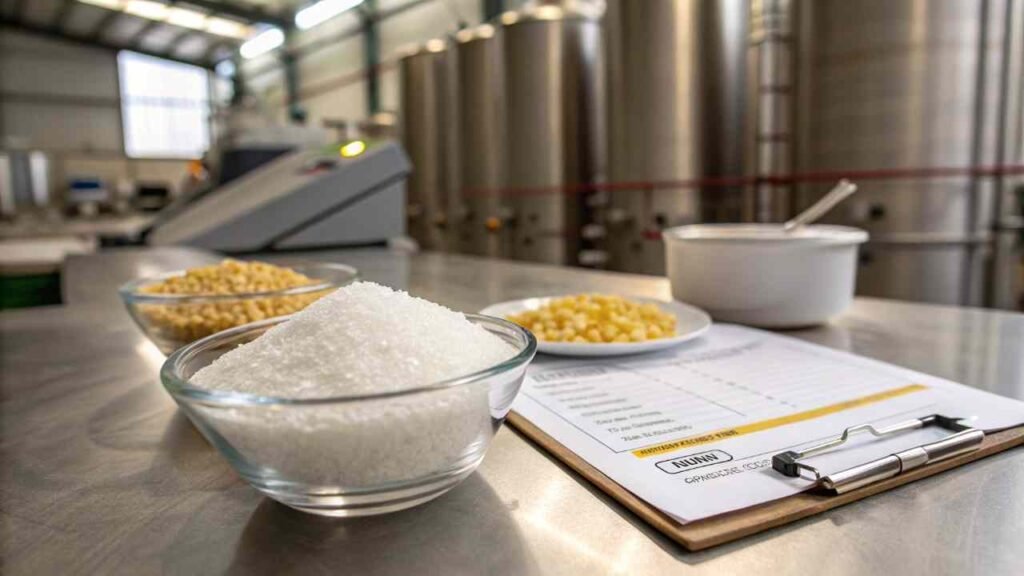
Inconsistent MSG quality ruins your food formulas and leads to customer complaints. This instability puts your wholesale business at risk. I identify the markers of a reliable supplier to protect your reputation.
A reliable MSG supplier must provide consistent purity above 99%, hold international food safety certifications like ISO 22000 or BRC, and demonstrate a stable production capacity. They should offer transparent batch traceability, competitive pricing based on corn market trends, and a proven track record of timely global deliveries.
I manage factory selection and oversee production for my B2B clients at FINETECH. I want to share the technical facts about finding a safe partner so you can secure a stable supply for your business.
What makes a good MSG supplier?
One bad batch of MSG can ruin a whole year of sales for a wholesaler. This quality gap creates a nightmare for your buyers. I show you the traits of a top-tier producer.
A good MSG supplier maintains batch-to-batch consistency in purity and crystal size. They prioritize food safety, offer transparent lab reports (COAs), and communicate clearly about market price shifts. Reliability is defined by their ability to meet delivery deadlines and provide technical support for different mesh sizes.
Technical Consistency and Service
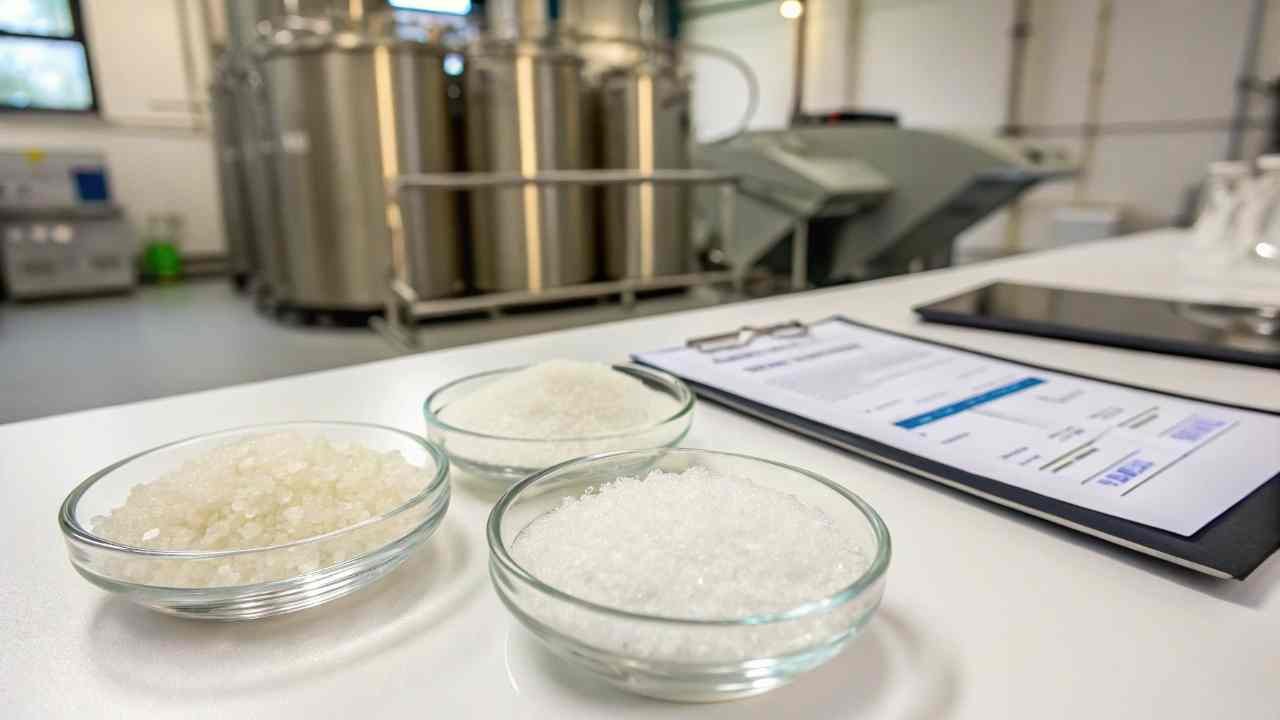
I see that consistency is the most important part of the MSG business. If the crystals are large in one shipment and small in the next, your customer's machinery will fail. I visit the factories to check their sieving equipment. A good supplier uses multi-layer screens to ensure the mesh size is exact. Whether you need 30-mesh or 80-mesh, it must be the same every time. I also look at the moisture content. It must be below 0.5%. If the MSG is too damp, it will cake in the bag. This makes it impossible for food manufacturers to use. I act as your technical partner to verify these small but critical details.
Communication is the other half of a good partnership. The MSG market in China moves fast because corn prices change. A reliable supplier tells you the truth about the market. They do not hide price drops or surprise you with price hikes after you pay a deposit. I prioritize factories that have "Open Book" communication. They should show you their raw material costs and production schedules. This transparency allows you to plan your inventory in the Middle East or Southeast Asia. Also, a good supplier handles the paperwork perfectly. From Health Certificates to Halal papers, every document must be 100% accurate. I manage this document flow at FINETECH to ensure your cargo passes customs without any delays.
Supplier Evaluation Matrix
| Evaluation Area | High-Quality Standard | Red Flag | Impact on Your Business |
|---|---|---|---|
| Purity (Assay) | > 99.0% (Monosodium) | < 98.5% | Weak flavor / Impurities |
| Moisture | < 0.2% | > 0.5% | Caking and clumping |
| Mesh Consistency | 95% within range | Mixed sizes | Poor mouthfeel / Machine clogs |
| Lead Time | 10 - 14 Days | > 30 Days | High inventory costs |
| Documentation | Instant digital copies | Constant typos | Customs rejections / Fines |
| Transparency | Market-linked pricing | Random price hikes | Unstable profit margins |
Which certifications should an MSG supplier have?
Uncertified food additives can lead to heavy fines and blocked shipments at the port. This legal risk stops your business growth. I identify the mandatory certificates you need for global MSG trade.
An MSG supplier should have ISO 22000, HACCP, and BRCGS for food safety. For regional markets, Halal and Kosher certifications are essential. Additionally, an export-ready factory should provide Non-GMO statements and meet specific local requirements like SFDA for Saudi Arabia or FDA for the USA.
Navigating the Certification Landscape
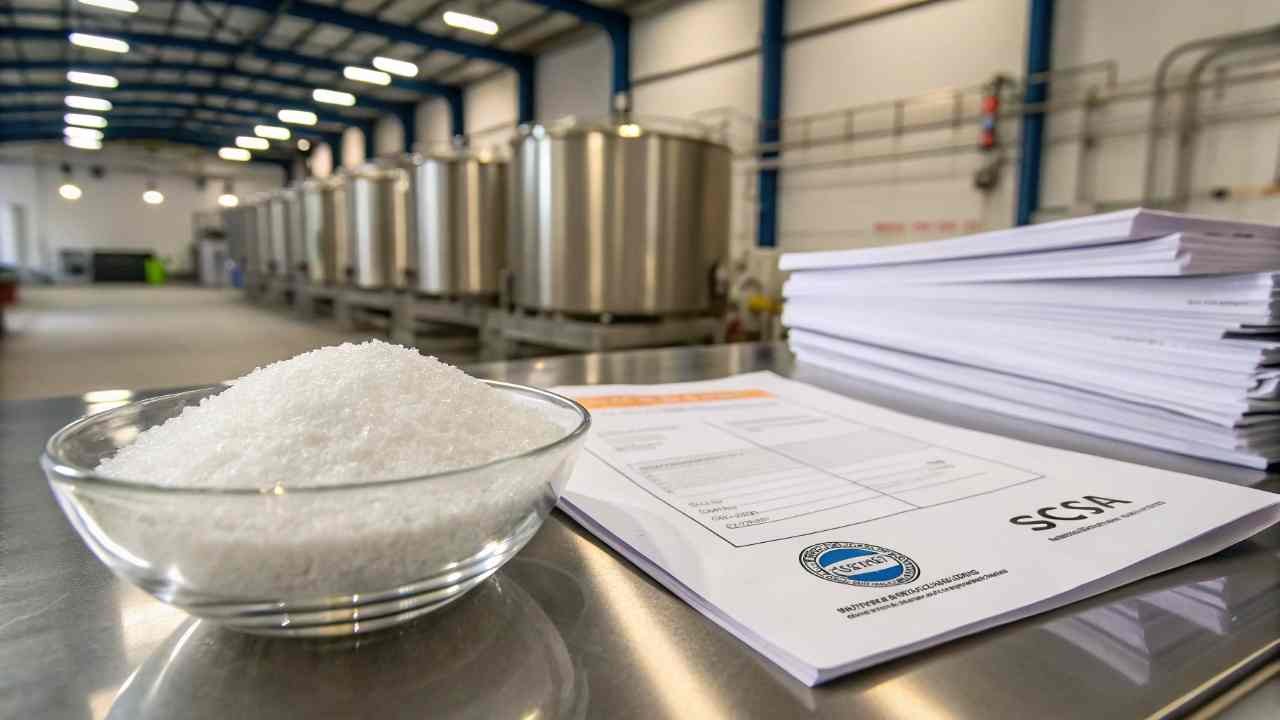
I see that certificates are the "Entry Ticket" for the global market. You cannot sell to a large food company in Europe or Korea without them. ISO 22000 and HACCP1 are the baseline. They prove that the factory has a system to prevent contamination. I audit these certificates to make sure they are not expired. I also look for the BRC (British Retail Consortium) seal. This is a very high standard. If a factory has a BRC "A" grade, it means their hygiene is world-class. I prioritize these producers for my clients because they have the lowest risk of recalls. A recall is the most expensive mistake in the food industry.
For my buyers in the Middle East and Indonesia, Halal2 is the most important paper. Not all Halal certificates are the same. I ensure the certificate is from an organization that your local government recognizes. For example, MUI for Indonesia or JAKIM for Malaysia. I visit the plants to see if they follow the Halal rules in the production line. This includes checking the cleaning chemicals and the nitrogen source used in fermentation. I also manage the "Non-GMO" status. Since MSG comes from corn, many buyers in Europe want to see proof that the corn is traditional. I trace the corn starch back to the source to provide this safety for you. Proper certification is a technical requirement for high-value trade.
Essential Certificates for Global Markets
| Certificate | Scope | Importance | Region Priority |
|---|---|---|---|
| ISO 22000 | Food Safety Management | Essential | Global |
| HACCP | Hazard Analysis | Mandatory | Global |
| BRCGS | Global Food Standard | High | Europe / USA |
| Halal | Islamic Law Compliance | Mandatory | Middle East / SEA |
| Kosher | Jewish Law Compliance | High | USA / Europe |
| SFDA | Saudi Food & Drug Auth | Mandatory | Saudi Arabia |
| Non-GMO | Raw Material Origin | High | Europe / Korea |
How can buyers check MSG supplier credibility?
Scams and low-quality brokers can disappear after they take your deposit. This financial loss ruins your procurement budget. I explain how to verify a Chinese supplier so you can trade with confidence.
Check credibility by verifying the business license, visiting the factory physically or via video call, and requesting third-party audit reports from SGS or Intertek. Also, use trade credit insurance through Sinosure to check the supplier's credit rating and financial health before sending a deposit.
Verification Steps and Risk Management
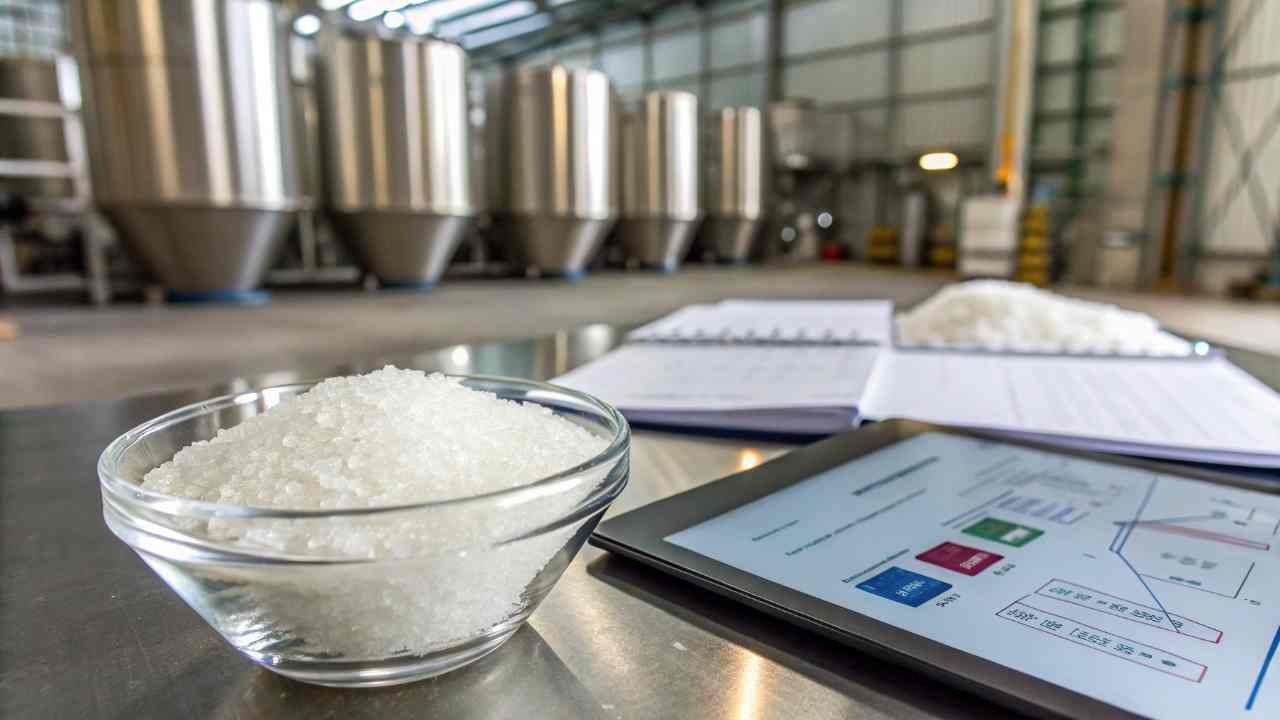
I see that many buyers rely only on a website. This is a mistake. A good website does not mean a good factory. I suggest a "Multi-Step Verification" process. First, ask for the "Business License." Check the "Scope of Business." It must say it can produce or sell food additives. If the license says "Consulting" or "Equipment," they are not a real supplier. Next, look at their export history. I can help you check the customs records to see if they actually ship MSG to your country. If they have no records, they might be new or a scam. I act as your office in China to perform these background checks.
Physical audits are the best way to prove credibility. If you cannot come to China, I go for you. I check the size of the fermentation tanks and the cleanliness of the warehouse. I also check their lab. A real MSG producer must have an HPLC (High-Performance Liquid Chromatography)3 machine to test purity. If they don't have a lab, they are just a trader buying from someone else. I also suggest using Sinosure4. This is the Chinese government's insurance company. If Sinosure gives a supplier a high rating, it means they are financially stable. If Sinosure refuses to cover them, you should not send them any money. I manage these credit checks for my B2B clients to keep their capital safe.
Credibility Checklist for Buyers
| Step | Action | What to Look For | Eric's Role |
|---|---|---|---|
| 1. Paper Check | Review Business License | "Food Additives" in scope | Verify via gov database |
| 2. Audit Report | Ask for SGS / Intertek | Recent date (< 1 year) | Review full report |
| 3. Samples | Request 500g sample | Correct mesh and clarity | Compare with bulk COA |
| 4. Lab Check | Ask for internal COA | Batch number & Signature | Cross-verify with 3rd party |
| 5. Credit Check | Sinosure Rating | A or B rating | Run a Sinosure report |
| 6. Site Visit | Video or Physical | Active production lines | Perform on-site audit |
What production capacity matters for MSG supply?
Small factories cannot handle large orders during the peak season. This capacity limit leads to delivery delays for your business. I look for high-capacity producers to ensure your supply never stops during the holidays.
Production capacity matters because it determines the factory's ability to fulfill bulk orders and offer competitive prices through economies of scale. A reliable partner should have an annual capacity of at least 50,000 tons and multiple production lines to prevent downtime during maintenance.
Scale, Stability, and Lead Times
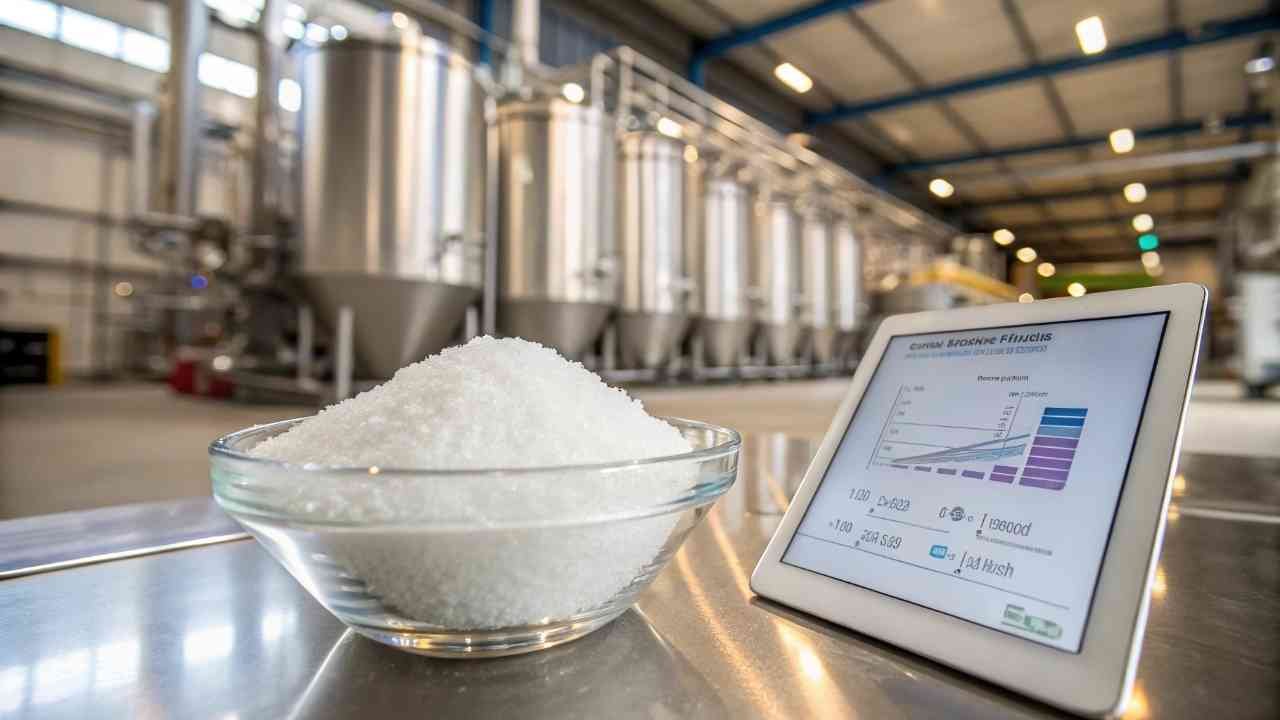
I see that "Size Matters" in the MSG industry. MSG is a commodity. This means the profit margins are small. Only a factory with giant tanks can make it at a low cost. When you buy from a small factory, you pay a premium. Also, small factories have fewer lines. If one machine breaks, your whole order stops. I prioritize factories in provinces like Inner Mongolia and Shandong. These regions have the world's largest fermentation plants. They use tanks that are 5 or 10 stories high. This scale ensures that even if you order 10 containers at once, they can finish it in 7 days. I act as your strategic partner to access these industrial leaders.
Large capacity also helps with "Inventory Security." Big factories always have thousands of tons in their warehouse. This means we can ship your goods even if the corn price spikes suddenly. Small factories buy corn every day. If the price goes up, they might stop production and ask you for more money. A large factory has a 30-day buffer of raw materials. This stability is a technical requirement for a safe supply chain. I audit the "Stock Levels" at the plants I visit. I want to see that they are ready for the peak demand before the Chinese New Year or the summer beverage season. By choosing a high-capacity partner, you protect your business from seasonal shortages.
Capacity and Scaling Metrics
| Metric | Industry Standard | eric's Target | Benefit to Buyer |
|---|---|---|---|
| Annual Output | 10,000 Tons | > 100,000 Tons | Lower price per ton |
| Number of Lines | 1 - 2 Lines | > 4 Lines | No risk from machine failure |
| Storage Area | 2,000 sqm | > 10,000 sqm | Quick shipping from stock |
| Loading Speed | 2 containers / day | > 10 containers / day | Faster port delivery |
| Raw Material Buffer | 7 Days | 21 - 30 Days | Price stability during hikes |
How do you avoid poor-quality MSG suppliers?
Cheap MSG often contains impurities or incorrect crystal sizes that ruin your product. This "bargain" costs you more in the long run. I share red flags to help you spot a poor supplier before you lose your money.
Avoid poor-quality suppliers by ignoring prices that are far below the market corn cost. Check for heavy metal levels like lead and arsenic in the lab reports. A lack of transparent batch traceability and a refusal to allow third-party inspections are major red flags for any B2B buyer.
Spotting Red Flags and Blending Risks
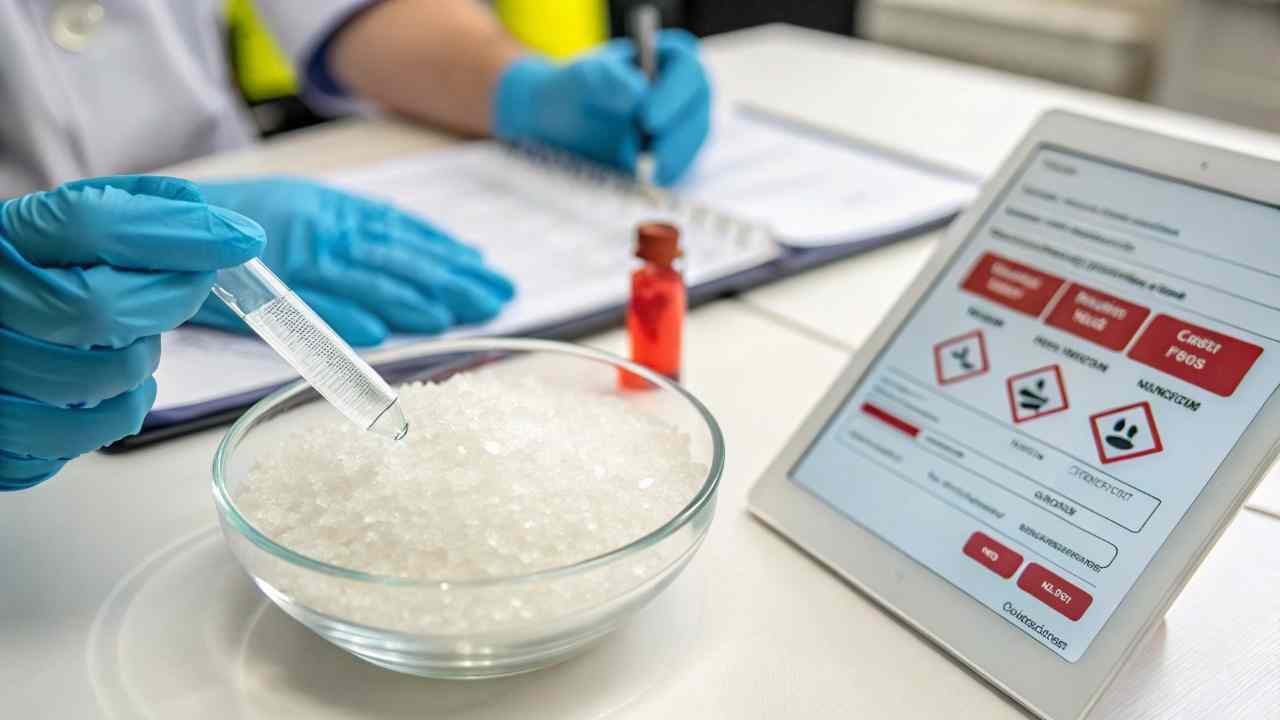
I see that "Too Cheap" is always a warning sign. MSG is made from corn. If the corn price is $300 per ton, the MSG cannot be $400 per ton. Some bad suppliers "Blend" the MSG. They mix it with salt or cheap fillers to lower the price. This is a technical fraud. I prevent this by testing the "Assay" or purity. The standard must be 99% or higher. I also check the crystal clarity. Pure MSG looks like glass. If it looks "milky" or "yellow," it has impurities from the fermentation process. I visit the factories to see their purification systems. They should use multiple filtration and carbon decolorization steps.
Another red flag is a hidden location. If a supplier refuses to show you their factory or gives a vague address, stay away. They are likely a small trader with no control over quality. I also watch for inconsistent lab reports. If the COA (Certificate of Analysis) looks like it was made in Word and has no official stamp, it is fake. I cross-verify the COA with the actual batch in the warehouse. I also check for "Heavy Metals5." MSG must have very low levels of Lead (Pb) and Arsenic (As). Poor factories do not test for these. I hire independent firms like SGS to take samples from the bags. If the supplier refuses this inspection, I cancel the order. This technical oversight is how I protect my clients from poor-quality material.
Poor-Quality Supplier Red Flags
| Red Flag | Technical Reason | The Real Danger | Eric's Advice |
|---|---|---|---|
| Low Price | Blending with salt | Loss of umami flavor | Compare with corn trends |
| Yellow Crystals | Poor purification | Bacterial impurities | Demand high-purity assay |
| No COA Batch # | No traceability | Cannot recall bad goods | Reject untracked batches |
| Refusal of PSI | Hiding defects | Shipping off-spec goods | Always use SGS / Intertek |
| Vague Address | No physical plant | "Ghost" supplier risk | Demand a video walk-through |
| High Moisture | No drying stage | Caking / Mold risk | Check specs for < 0.2% |
Conclusion
A reliable MSG supplier offers high purity, world-class certifications, and stable production capacity. I manage these technical factors at FINETECH to keep your procurement safe, steady, and profitable.
-
FDA – Comprehensive resource on the principles and application guidelines of the Hazard Analysis Critical Control Point (HACCP) system for food safety. ↩
-
Halal Certification – Overview of the religious and technical requirements for Halal certification in the global food supply chain. ↩
-
Waters – Technical explanation of HPLC technology and its critical role in analytical chemistry for verifying substance purity. ↩
-
Sinosure – Official site of the China Export & Credit Insurance Corporation, outlining tools for mitigating international trade and credit risks. ↩
-
WHO – Fact sheet on food safety and chemical contaminants, detailing the global health standards and risks associated with toxic heavy metals. ↩