
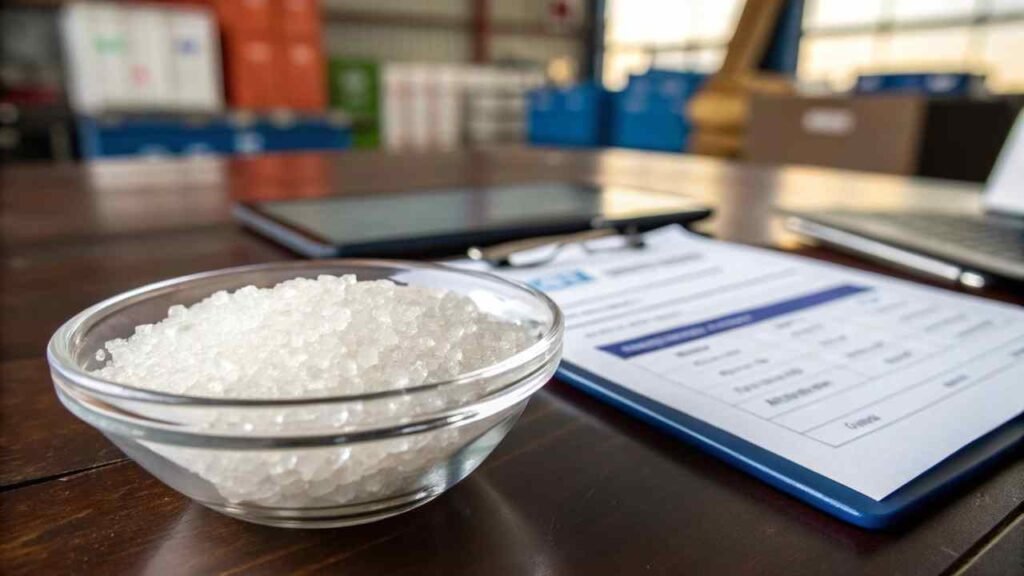
Importing MSG involves high financial and quality risks. One bad batch can ruin your reputation. I provide the technical strategies to eliminate these risks and secure your supply chain.
Buyers can reduce MSG import risks by vetting suppliers through on-site audits, requesting pre-shipment inspections (PSI), and using safe payment terms like T/T 30/70 or L/C. Ensuring all documents, such as COAs and Health Certificates, are accurate and compliant with local laws is also essential for safe trade.
I manage factory selection and oversee production for my B2B clients at FINETECH. I want to share the technical facts about risk reduction so you can protect your capital and your business.
What import documents are needed for MSG?
Missing paperwork stops your cargo at the port. This delay adds huge fines to your bill. I manage the document flow to ensure smooth customs clearance for your business.
Essential MSG import documents include the Bill of Lading (BL), Certificate of Analysis (COA), Commercial Invoice, and Packing List. Depending on the region, a Health Certificate, Certificate of Origin, and Halal or Kosher certificates are also required to meet local food safety and religious standards.

Managing Technical Documentation for Compliance
I see that documents are the "ID Card" of your MSG batch. If the information is wrong, the port will not release the goods. The most important paper is the COA1. It must show the batch number and the exact purity test results. I check that the batch number on the bag matches the batch number on the COA. If they do not match, you cannot prove the quality to your customers. For my clients in Saudi Arabia and the UAE, I also manage the Health Certificate. This is a technical requirement for food-grade products. It proves the factory is clean and safe.
The HS code2 is another critical detail. For MSG, the standard code is 29224220. If the factory uses the wrong code, you might pay the wrong tax. This can lead to a legal audit. I verify the HS code on all export papers before the ship leaves China. I also handle religious certificates like Halal. In Southeast Asia and the Middle East, Halal is a mandatory requirement. I ensure the certificate is from an organization that your local government accepts. For example, it must be recognized by BPJPH in Indonesia or JAKIM in Malaysia. I act as your strategic partner to get these papers perfect. This level of detail keeps your supply chain moving without any legal stops.
Mandatory Document Checklist
| Document Name | Technical Purpose | Why it is Critical | FINETECH's Verification |
|---|---|---|---|
| COA | Batch lab results | Proves 99% purity | Cross-check with bag label |
| Health Cert | Safety proof | Mandatory for food use | Verify gov stamp / CIQ |
| HS Code 29224220 | Customs ID | Sets the correct tax | Audit the Invoice / BL |
| Halal Cert | Religious proof | Mandatory for Muslim markets | Check local gov recognition |
| MSDS | Safety data | Required for transport | Check handling rules |
| Origin Cert | Proof of MFG | Determines trade duties | Verify "Made in China" |
How can buyers avoid counterfeit MSG?
Fake or low-purity MSG ruins your food formulas. This fraud leads to massive financial losses and safety issues. I use lab testing and factory audits to block counterfeit products.
To avoid counterfeit MSG, buyers must purchase directly from reputable factories or vetted traders with transparent batch records. Verifying the manufacturer's whiteness, crystal clarity, and purity through independent lab tests (like HPLC) ensures the product is authentic Monosodium Glutamate and not a salt blend.

Spotting Low-Quality and Fake Material
I see that "Blending" is the most common trick in the MSG market. Some bad suppliers mix MSG with table salt (Sodium Chloride). Salt is much cheaper than MSG. This blend looks like pure MSG but the umami taste is very weak. I prevent this by testing the "Assay" or purity. Pure MSG must be at least 99.0%. If the lab says 95%, you are being cheated. I visit the factories in China to see their inventory. I want to see pure raw materials. I also check the crystal clarity. Pure MSG crystals should be clear and sharp like glass. If they are white and dull, they may contain fillers.
Solubility is a physical way to check for fakes. Pure MSG dissolves quickly in water and stays clear. If the water becomes cloudy, there are impurities. I also check for "Specific Rotation" using a polarimeter. This is a technical test that fakes cannot pass. It proves the molecule is the correct L-glutamic form. For my B2B clients, I also look at the packaging. Fake products often have poor printing on the bags. The batch numbers might be missing or blurry. I act as your technical gatekeeper to catch these red flags. I only work with large plants that have a clean track record. This protects you from buying cheap salt at MSG prices.
Physical vs. Fake MSG Indicators
| Feature | Authentic MSG (Standard) | Fake or Blended MSG | Risk Factor |
|---|---|---|---|
| Clarity | Clear and glass-like | Dull, white, or yellow | Impurities / Fillers |
| Taste | Strong umami | Salty or bitter | High salt content |
| Assay | > 99.0% | < 98.0% | Financial fraud |
| Solubility | Instant and clear | Slow or cloudy | Non-MSG additives |
| Specific Rotation | +24.8° to +25.3° | Out of range | Wrong molecule type |
| Packaging | High-quality print | Blurry or missing data | Untraceable source |
What inspection steps help verify MSG quality?
Trusting a supplier without verification is a gamble. One mistake causes a total loss. I implement strict inspection protocols to guarantee the quality of every shipment I manage.
Key inspection steps include pre-shipment inspection (PSI) by firms like SGS to test for purity, moisture, and heavy metals. Visual checks for bag integrity, weight verification, and mesh size analysis are also critical to ensure the batch matches the approved sample and specifications.
Implementing Third-Party and Physical Audits
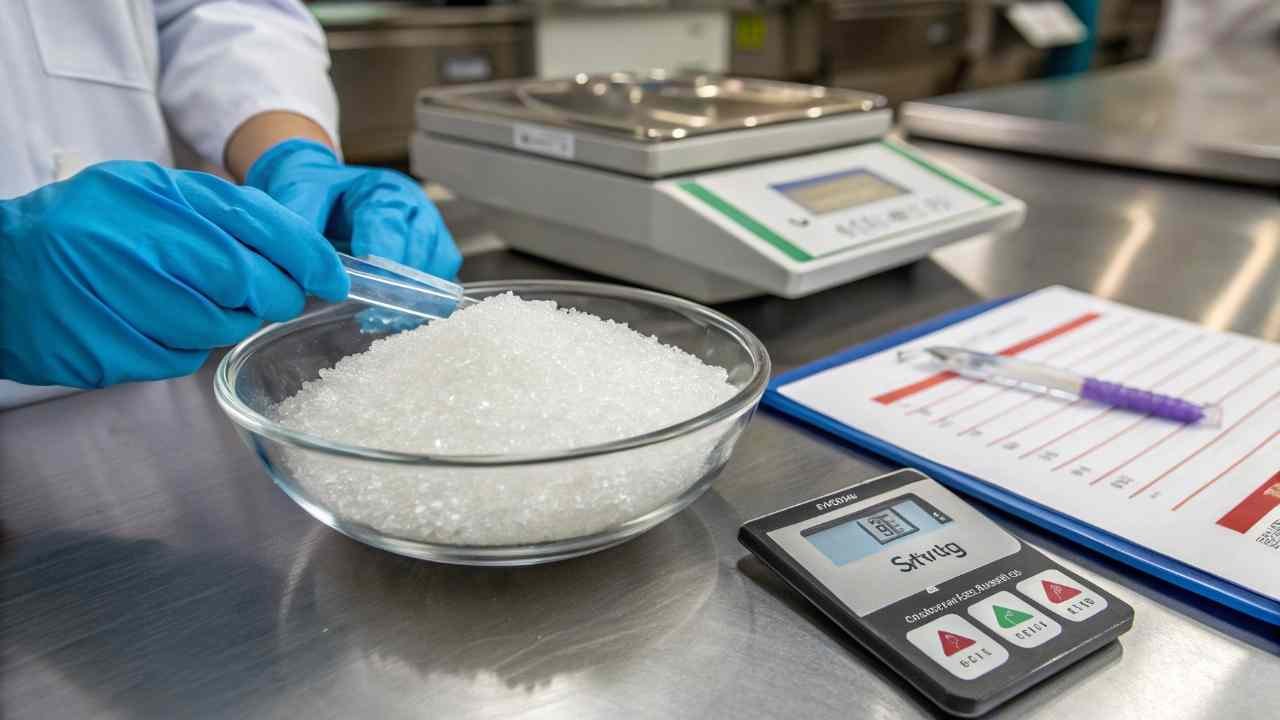
I see that "Verification" is the only way to be 100% safe. I suggest my clients use Pre-Shipment Inspection (PSI)3. I hire firms like SGS or Intertek to go to the factory. They pull random bags from the pallets. They test for "Lead" and "Arsenic" in their own labs. These heavy metals must be very low to pass health laws in Europe and Korea. I also require a "Mesh Analysis." If you ordered 60-mesh powder, the inspector checks that the crystals are not too big or too small. This is a technical requirement for food factories that use automatic machines.
I also supervise the loading process. I want to see the container before the bags go in. I check for holes in the roof and smells on the floor. If a container is dirty, it will ruin the food-grade status of the MSG. I also verify the "Net Weight." Every bag must be 25kg exactly. I check the scales at the factory to make sure they are calibrated. This physical oversight prevents "Short Weight" scams. I act as your strategic office in China to manage these inspectors. I review their reports before you pay the balance. This system ensures you only pay for what you approve. It is the most professional way to handle a bulk purchase.
Inspection Step Breakdown
| Inspection Step | Action | What we verify | Why it matters |
|---|---|---|---|
| Lab Sampling | Random bag selection | Purity and Moisture | Guarantees quality |
| Heavy Metal Test | Lab assay (Pb/As) | < 0.1 ppm levels | Food safety compliance |
| Mesh Check | Sieve analysis | Crystal size | Machine compatibility |
| Weight Audit | Weigh 10 random bags | 25.0kg per bag | Prevents volume loss |
| Container Check | Light and smell test | Dry and odorless | Prevents contamination |
| Loading Supervision | Photo of every layer | Proper stacking | Prevents bag breakage |
What payment terms are safest for MSG trade?
Sending 100% prepay to a new supplier is a high-stakes risk. You lose leverage if quality fails. I suggest safer payment terms to protect your cash flow and ensure delivery.
The safest payment terms for MSG trade are T/T with a 30% deposit and 70% balance against the Bill of Lading (BL) copy. For larger orders, an Irrevocable Letter of Credit (L/C) provides bank-backed security. For long-term partners, Open Account (OA) via Sinosure is ideal.
Managing Capital and Leverage
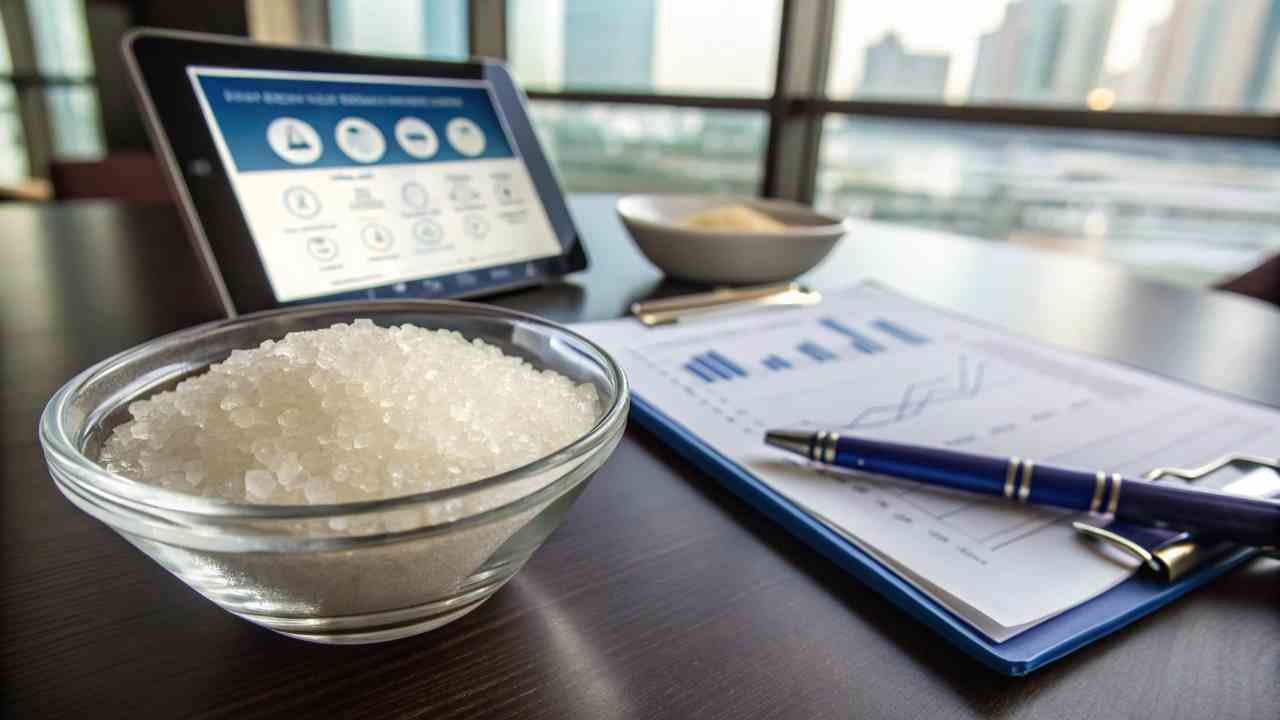
I see that payment is about "Risk Balance." You want the goods, and the factory wants the money. For a first order, I suggest "T/T 30/70." You pay 30% to start production. The factory uses this to buy corn starch. The remaining 70% is paid after the goods are on the ship. I send you the copy of the Bill of Lading to prove the shipment. This gives you leverage. If the quality is wrong during inspection, you do not pay the balance. This protects your capital. For my clients in Russia or Southeast Asia, this is the standard way to trade.
For very large orders, I suggest a "Letter of Credit (L/C)4". This is a technical banking tool. Your bank holds the money and only gives it to the factory if the papers are perfect. If the factory is late or the documents are wrong, the bank stops the payment. This is the safest way for a buyer. Also, I help my long-term partners get "OA" (Open Account) terms. I use Sinosure (China Export & Credit Insurance) to check your credit. If Sinosure agrees, you can pay 30 or 60 days after the goods arrive. This is like a free loan for your business. I act as your financial office to set up these safe paths. Good payment terms help you scale faster.
Payment Term Risk Analysis
| Term | Risk to Buyer | Risk to Seller | Best Scenario |
|---|---|---|---|
| 100% Prepay | Very High | Zero | Samples only |
| T/T 30% / 70% | Moderate | Moderate | Standard wholesale |
| L/C at Sight | Low | Low | New high-value partners |
| D/P (Documents) | Moderate | Moderate | Trusted regular orders |
| OA 30-60 Days | Very Low | Moderate | Long-term VIP partners |
| CAD (Cash) | Moderate | Moderate | Fast shipping routes |
How do importers evaluate MSG supplier risk?
Choosing the wrong partner leads to supply gaps and financial fraud. This uncertainty blocks your expansion. I audit suppliers' capacity and history to minimize your procurement risks in China.
Importers evaluate MSG supplier risk by checking business licenses, factory production capacity, and export history. Verifying financial stability through Sinosure credit reports and reviewing past performance with other international buyers helps identify reliable partners and avoid high-risk entities or low-capacity traders.
Auditing the Producer in China
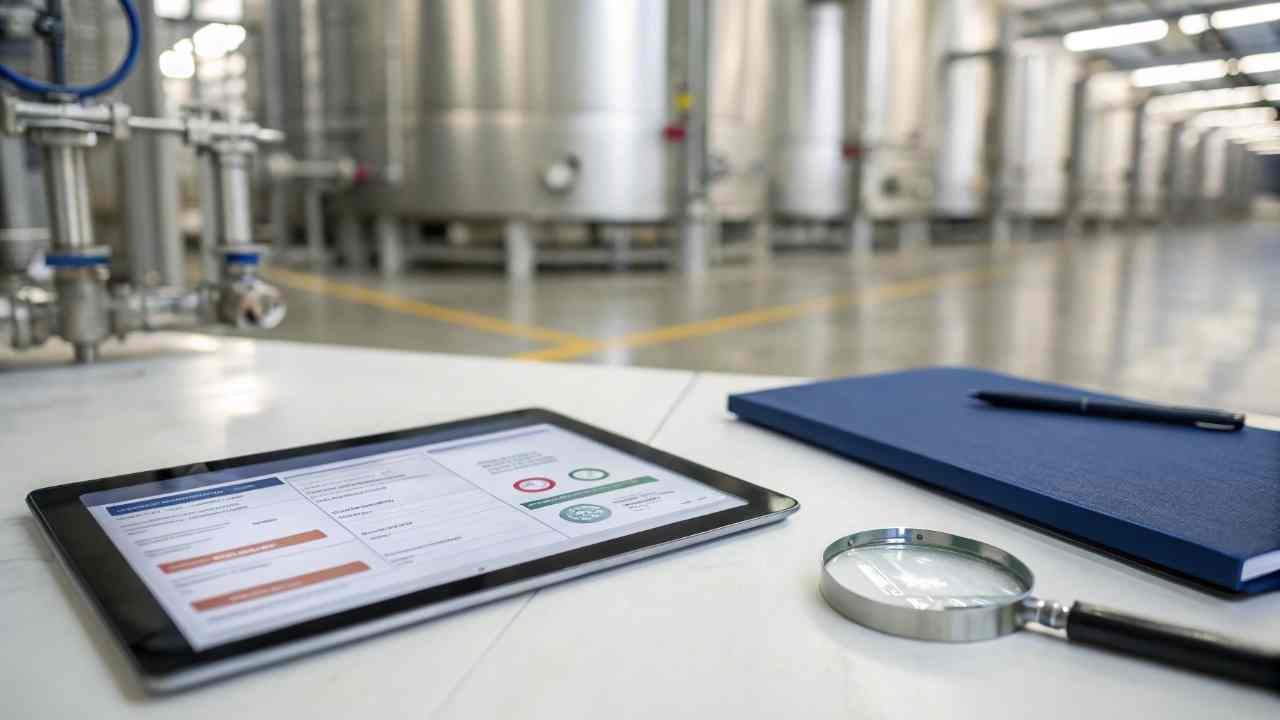
I see that a factory's past is the best way to see your future with them. I check their "Business License" first. I want to see how long they have been in the market. A factory with 20 years of history is safer than a new one. I also look at their "Production Capacity." If you need 10 containers a month, but the factory can only make 2, you have a supply risk. I visit the fermentation halls to see the real output. I also check their "Export History." I can see which countries they ship to. If they already ship to Europe or the USA, they likely meet high quality standards.
Financial risk is the final hurdle. I use "Sinosure Reports" to check the factory's money situation. If a factory has a lot of lawsuits or debts, they might take your deposit and shut down. I also look for "Third-Party Certificates" like ISO 220005 or BRC. These are technical audits of their management. A factory that pays for these audits cares about their long-term reputation. I act as your strategic partner to perform this "Due Diligence." I find the producers who are leaders in the industry. By picking a strong supplier, you ensure your MSG supply stays steady even when the global market is chaotic.
Supplier Risk Indicators
| Risk Indicator | High-Risk Signal | Low-Risk Signal | FINETECH's Action |
|---|---|---|---|
| Market History | < 2 years in business | > 10 years in business | Check gov registration |
| Capacity | Single production line | Multi-line giant plant | On-site tank count |
| Certifications | None or expired | ISO / BRC / Halal | Verify cert numbers |
| Financials | High debt in reports | Sinosure Grade A or B | Run credit check |
| Export Records | Domestic sales only | Global export history | Check customs data |
| Communication | Slow and vague | Technical and fast | Test response speed |
Conclusion
Reducing MSG import risk requires accurate documents, purity testing, and safe payment terms. I manage these technical details at FINETECH to keep your procurement safe, steady, and profitable.
-
Food Safety Magazine – An industry guide explaining the vital role of the Certificate of Analysis (COA) in maintaining traceability and safety in food supply chains. ↩
-
World Customs Organization – Official nomenclature for the Harmonized System (HS) used to classify traded products for duties and taxes worldwide. ↩
-
Intertek Government & Trade – Detailed explanation of Pre-Shipment Inspection (PSI) services and how they ensure global trade compliance and quality assurance. ↩
-
Trade Finance Global – A comprehensive resource on how Letters of Credit function as a primary risk mitigation tool in international bulk trade. ↩
-
ISO Official Standards – Detailed requirements for the ISO 22000 Food Safety Management System, essential for global food factory compliance. ↩