
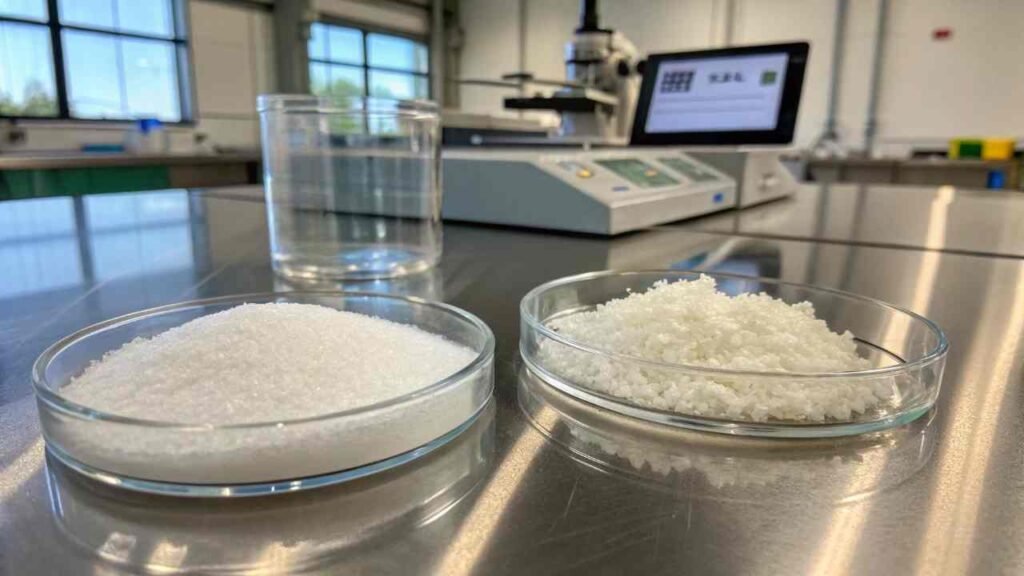
Using the wrong MSG grade ruins food safety or wastes money. This mistake kills your profit. I clarify the differences between food and industrial grades to protect your business.
Food grade MSG has over 99% purity and meets strict food safety standards like FCC or E621. Industrial grade MSG has lower purity and is used in non-food sectors like textiles or detergents. The main differences are purity levels, heavy metal limits, and mandatory food-grade certifications.
I manage factory selection and oversee production for my B2B clients at FINETECH. I want to share the technical facts about MSG grades so you can make safe and profitable buying decisions.
What is food grade MSG used for?
Bland food drives customers to your competitors. This loss of market share is permanent. I explain how food grade MSG boosts savory flavors in industrial food production.
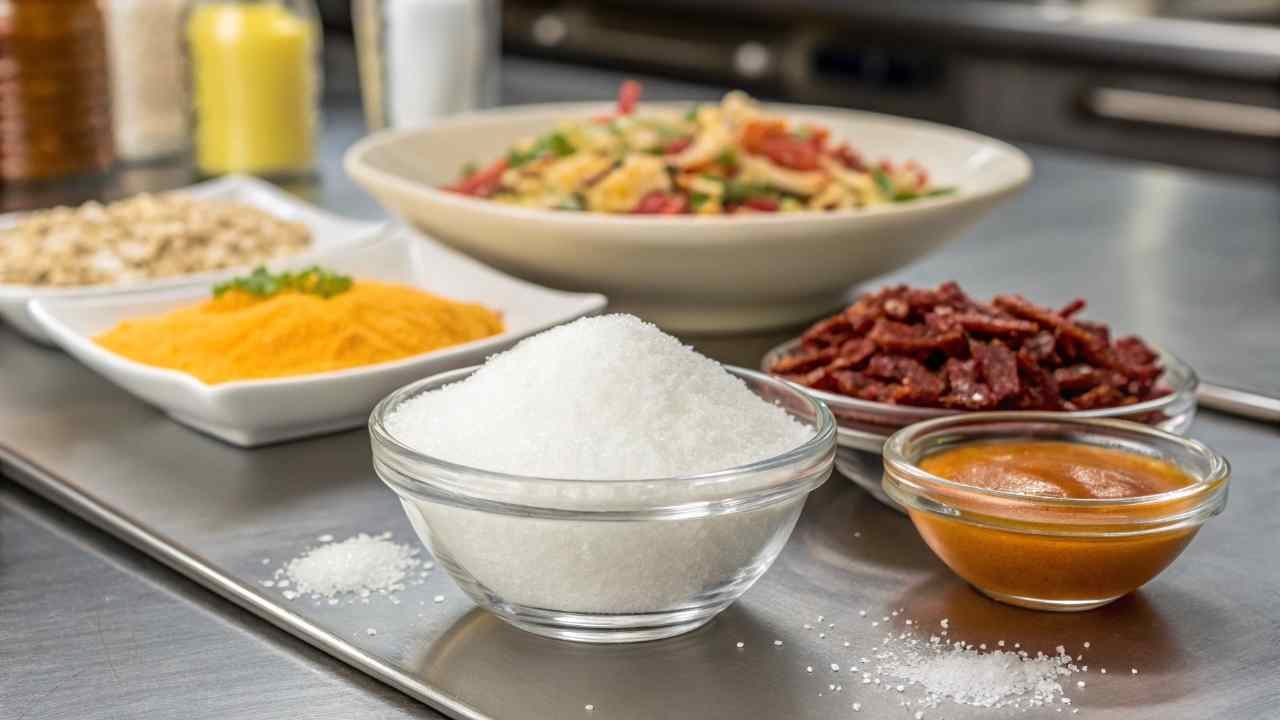
Food grade MSG is used as a flavor enhancer to provide the "umami" taste. It is common in seasonings, snacks, canned soups, processed meats, and instant noodles. It helps balance flavors and allows manufacturers to reduce sodium content without losing taste quality in the final product.
The Technical Logic of Flavor Stability
I see that food grade MSG is the heart of the savory food industry. Most of my clients in the Middle East and Southeast Asia use it for seasonings. It provides a deep umami profile1 that table salt cannot match. In the snack industry, we supply fine 80-mesh powder for coating potato chips. It ensures the flavor sticks to every piece. I visit the factories in China to audit their food safety management systems. This is a technical requirement for food use. For processed meats like sausages or deli meats, MSG acts as a flavor stabilizer. It keeps the meat tasting fresh even after high-heat processing.
I also manage the supply for instant noodle companies. They need high-purity small crystals that dissolve instantly in hot water. If the purity is too low, the broth looks cloudy. I prioritize sourcing from plants with ISO 22000 and HACCP2 certifications. These certificates prove the product is safe for human consumption. In catering and restaurants, food grade MSG is used to round out flavors in soups and sauces. It masks bitterness and balances acidity. I act as your strategic partner to ensure you get the right particle size for your specific food application. This oversight prevents customer complaints and secures your wholesale reputation.
Common Food Applications
| Food Category | Function of MSG | Typical Particle Size |
|---|---|---|
| Seasoning Blends | Base savory taste | 30 - 40 Mesh |
| Savory Snacks | Flavor adhesion | 60 - 80 Mesh |
| Canned Soups | Umami depth | 20 - 30 Mesh |
| Instant Noodles | Quick dissolution | 40 - 60 Mesh |
| Processed Meat | Flavor stabilization | 30 - 40 Mesh |
What is industrial MSG used for?
Paying for food grade MSG in industrial processes wastes your budget. This inefficiency cuts your margins. I identify industrial MSG uses to help you optimize your technical costs.
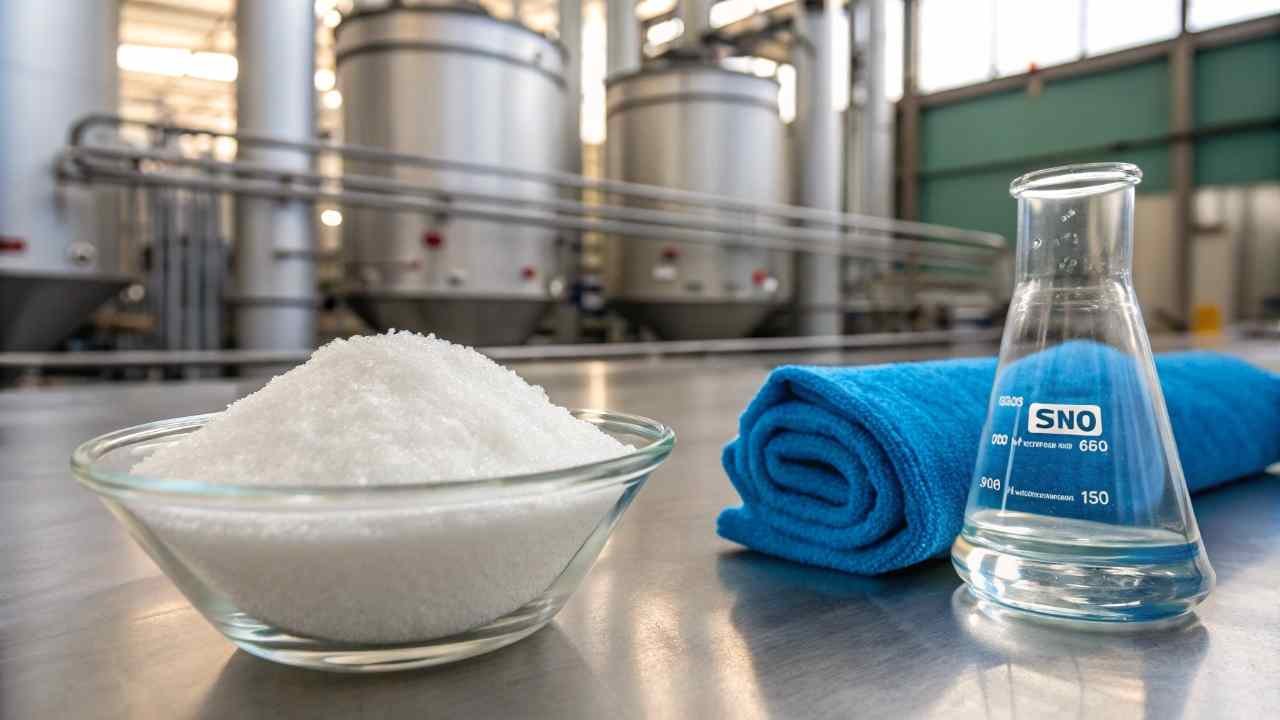
Industrial MSG is used in non-food applications like textile dyeing, leather tanning, and detergent manufacturing. It acts as a chelating agent or a stabilizer. It is not safe for human consumption because it does not meet strict heavy metal and microbial food safety limits.
Industrial Application Areas and Functions
I see that many buyers forget that MSG has chemical properties beyond taste. In the textile industry, industrial MSG helps in the dyeing process. It helps the fabric absorb the color more evenly. This is a technical use of the glutamate molecule. I also see it used in leather tanning. It helps treat the skins to make them soft. Because these products are not for eating, the factory does not need expensive food safety audits. This makes industrial grade cheaper to produce. I visit these chemical plants to check their batch consistency. Even for industrial use, you need a stable product.
Another use is in detergents and cleaning agents. Glutamate derivatives are good chelating agents3. They help soften hard water so the soap works better. I also find industrial MSG used in agriculture. Some fertilizer companies add it to help plants absorb nitrogen more efficiently. This is a specialized market. I manage these bulk orders for my clients in Russia and Southeast Asia. I check the moisture levels carefully even for industrial grades. If the moisture is too high, the powder will cake in the warehouse. I also check the pH level. For chemical reactions, the pH must be exact. I act as your technical gatekeeper to ensure you don't overpay for food-grade when you only need industrial strength.
Industrial Application Areas
| Industry | Technical Function | Requirement |
|---|---|---|
| Textile | Dyeing auxiliary | Stable pH |
| Leather | Tanning agent | Consistent solubility |
| Detergent | Chelating agent | Low impurities |
| Agriculture | Nitrogen absorption | High volume / Low cost |
| Metal Treatment | Surface cleaning | Technical purity |
How do purity levels differ in MSG grades?
Low-purity MSG ruins your food batch with bitter tastes or dark specks. This quality failure causes expensive recalls. I explain purity standards to keep your production safe and clean.
Food grade MSG must have a purity (assay) of 99% or higher. It must have very low levels of heavy metals like lead and arsenic. Industrial MSG may have 92% to 98% purity and higher levels of residual fermentation by-products or salts compared to food-grade standards.
Measuring Technical Purity
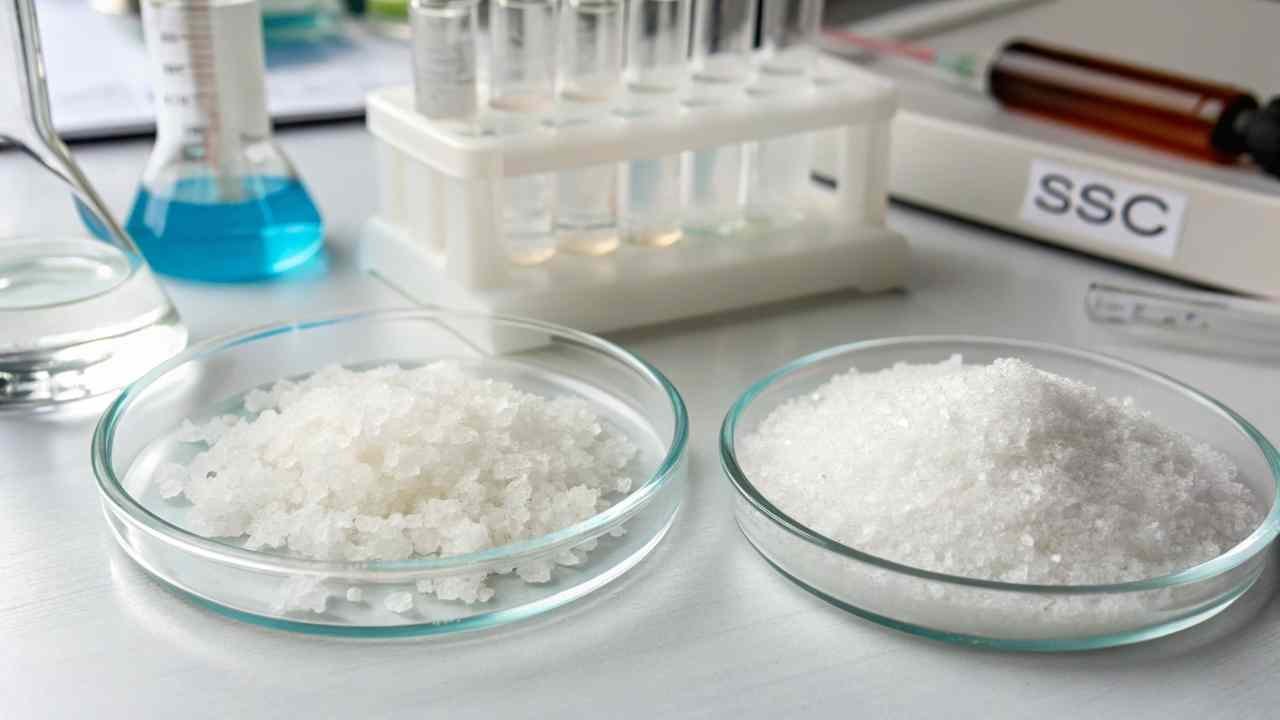
I see that purity is a technical fact that you can measure in a lab. For food grade, we use High-Performance Liquid Chromatography (HPLC)4 to test the assay. It must be at least 99.0% on a dry basis. If the assay is 99.5%, the umami taste is much cleaner. I prioritize these high-purity sources for my B2B clients. Low purity in food grade often means the factory did not filter the fermentation broth well. This leaves behind bacterial proteins or salts. These impurities cause the MSG to turn yellow when heated. I visit the refining sections of the factories to check their active carbon filters. This is where the purity happens.
Industrial MSG purity is different. Some grades are 92% or 95%. These are often "Crude" MSG or "Secondary" crystals. They contain more sodium chloride (table salt) or residual sugar. These are fine for making leather or fertilizer. But they are dangerous for food. I check the heavy metal logs for all my shipments. Food grade must have Lead (Pb) below 1.0 mg/kg and Arsenic (As) below 0.5 mg/kg. Industrial grades often have no limit for these metals. I act as your quality gatekeeper in China. I check the Certificate of Analysis (COA) for every batch. I ensure the "L-Glutamic Acid" content is correct for your specific grade. This prevents the risk of using dangerous chemicals in food production.
Purity Specification Comparison
| Specification | Food Grade MSG | Industrial Grade MSG |
|---|---|---|
| Purity (Assay) | > 99.0% | 92% - 98% |
| Lead (Pb) | < 1.0 mg/kg | No strict limit |
| Arsenic (As) | < 0.5 mg/kg | No strict limit |
| Color | Clear / White | Dull / Yellowish |
| Clarity | Transparent in water | May be cloudy |
| Specific Rotation | +24.8° to +25.3° | Not usually tested |
Why does grade affect MSG pricing?
Overpaying for over-specified MSG drains your procurement budget. This financial waste makes your final product too expensive. I show you how grade affects cost to optimize your buying strategy.
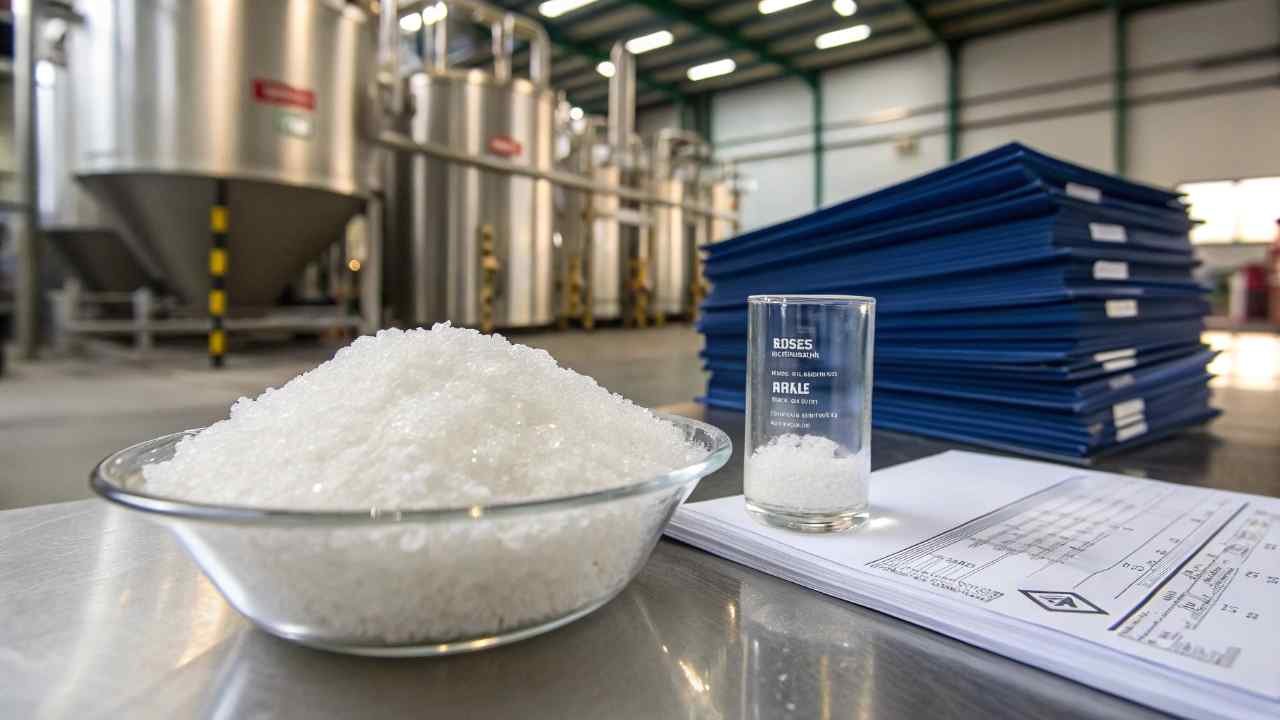
Grade affects pricing because food grade MSG requires expensive purification steps, strict food safety audits, and higher-quality raw materials. Industrial MSG skips many of these refining steps and documentation costs, leading to significantly lower wholesale prices for bulk industrial buyers.
Refinement and Documentation Costs
I see that price is a reflection of the production effort. To make food grade MSG 99% pure, the factory must use many filtration steps. They use active carbon to remove color and impurities. They also use vacuum crystallization to grow perfect crystals. These steps use a lot of energy and expensive materials. I monitor the coal and electricity prices in China. These costs are higher for food grade plants because they run their machines longer for better purity. I visit these plants to check their energy efficiency. This is how I secure competitive prices for my clients.
Safety documentation also adds to the cost of food grade. A food grade factory must pay for ISO 22000, HACCP, and BRC audits. They must test every batch for heavy metals and bacteria in a professional lab. I check these lab costs during my audits. Industrial factories do not have these costs. They can use cheaper corn starch or secondary molasses. They don't have to worry about a few black specks in the bag. I help my clients in Southeast Asia and the Middle East decide which grade they really need. If you buy food grade, you are paying for safety and purity. I act as your strategic partner to ensure you get the best price for the quality you require.
Cost Drivers by Grade
| Cost Factor | Food Grade MSG | Industrial Grade MSG |
|---|---|---|
| Refining Cost | High (Carbon/Filters) | Low (Basic filtration) |
| Testing Cost | High (Heavy Metals) | Low (Basic assay) |
| Certification | ISO / BRC / Halal | None / Basic ISO |
| Raw Materials | High-grade glucose | Secondary molasses |
| Packaging | Food-grade PE liners | Basic bags |
How should buyers choose the right MSG grade?
Buying the wrong grade leads to customs rejections or factory shutdowns. This administrative disaster stops your business flow. I provide a checklist to help you choose the correct MSG grade.
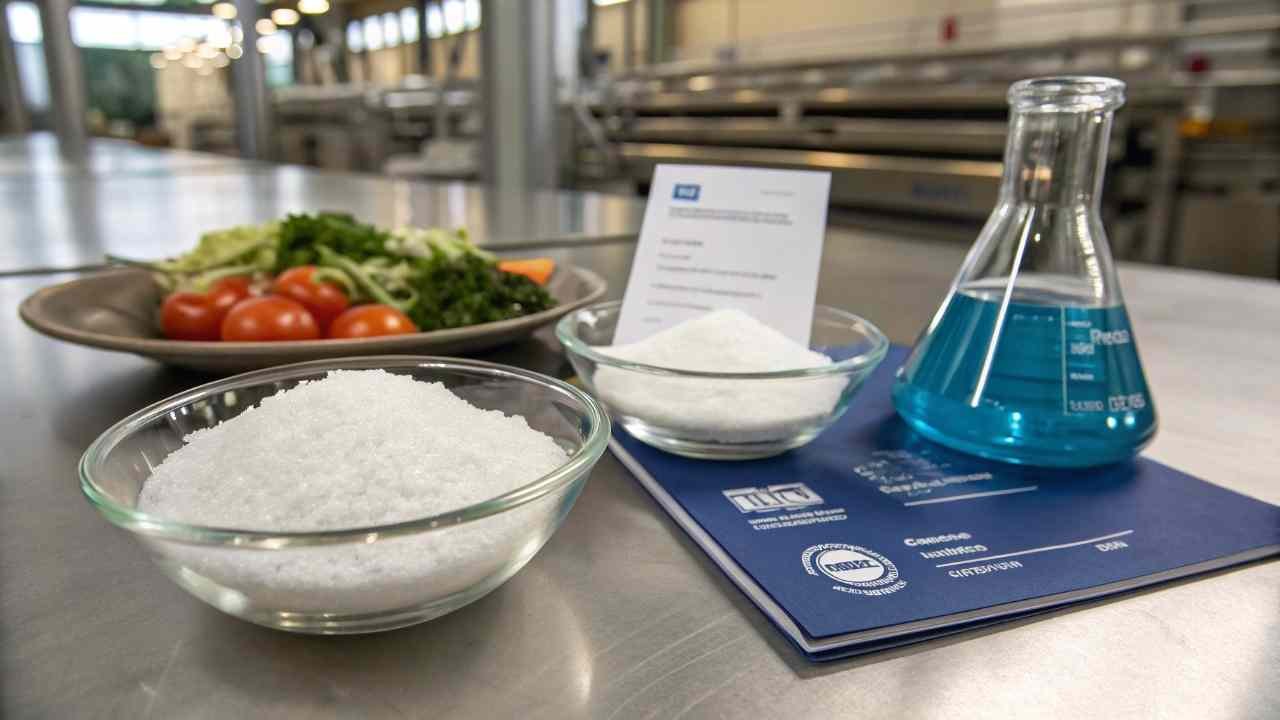
Choose food grade MSG if the product is for human or pet consumption, or if you need specific certifications like Halal. Choose industrial grade for manufacturing chemicals, textiles, or detergents where high purity and food-grade safety are not technical requirements.
Decision Criteria for Importers
I see that the choice depends on your final customer. If you sell to food factories or restaurants, you must buy food grade. There is no compromise here. I check the local food laws in your country, like SFDA in Saudi Arabia or BPJPH in Indonesia. These laws require specific certificates. I ensure the factory I select has these papers. If you are a wholesaler, I suggest always keeping food grade in stock. It has a much wider market. I also check the "Mesh Size5" requirements. Food grade comes in many sizes, from large 20-mesh crystals to fine 100-mesh powder.
If you are a chemical distributor, you can look at industrial grade. It helps you offer a lower price to textile or fertilizer plants. I suggest you ask for a sample first. I manage the sample process for my B2B clients. You should test the industrial grade in your local lab to see if it works for your customer's formula. I also check the "Traceability." Even for industrial use, you should know where the product comes from. I act as your office in China to manage these different sources. I help you balance the risk of quality versus the benefit of price. By picking the right grade, you protect your profit and your reputation.
Grade Selection Decision Matrix
| Your Industry | Recommended Grade | Essential Specs |
|---|---|---|
| Seasoning Factory | Food Grade | > 99% Purity / Mesh size |
| Snack MFG | Food Grade | Fine Powder / Adhesion |
| Textile Dyeing | Industrial Grade | Stable pH / Low cost |
| Leather Tanning | Industrial Grade | High volume / Solubility |
| Restaurant Supply | Food Grade | Purity / Halal / Kosher |
| Pet Treats | Food Grade | Non-GMO / Safety certs |
Conclusion
Food grade MSG offers high purity and safety for eating, while industrial grade provides cost savings for chemicals and textiles. I manage these grades at FINETECH for your success.
-
Umami Information Center – Detailed resource explaining the science behind the umami taste and its role in global cuisine. ↩
-
FDA (U.S. Food & Drug) – Official guidelines on HACCP principles, which are critical for food safety compliance in MSG manufacturing. ↩
-
ScienceDirect – Comprehensive technical overview of chelating agents and their chemical functions in industrial and cleaning applications. ↩
-
Waters Corporation – Professional explanation of HPLC technology used to measure the purity and assay of chemical compounds like MSG. ↩
-
AZoM – A technical materials science guide on mesh size and particle distribution for industrial and food-grade powders. ↩