Choosing the wrong Phosphoric Acid supplier leads to production stops and quality recalls. This failure ruins your brand. I show you how to find a partner you can trust.
A reliable Phosphoric Acid supplier must have ISO 22000 or FSSC 22000 certifications and offer 85% food-grade purity. Look for integrated producers with their own phosphate mines, clear lab reports, and extensive experience in chemical logistics to ensure stable wholesale supply and pricing.
I manage factory selection and oversee production for my B2B clients at FINETECH. I want to share the technical facts about supplier evaluation so you can protect your capital and your business.
What certifications should a Phosphoric Acid supplier have?
Uncertified chemicals put your food safety at risk. You might face legal fines or rejections at the port. I identify the essential papers that prove a supplier is professional.
Essential certifications include ISO 9001 for quality management and ISO 22000 or HACCP for food safety. For exporters from China, a CIQ Health Certificate and a valid Export License are mandatory. Religious certificates like Halal and Kosher are also required for many international markets.
The Technical Importance of Safety Certificates
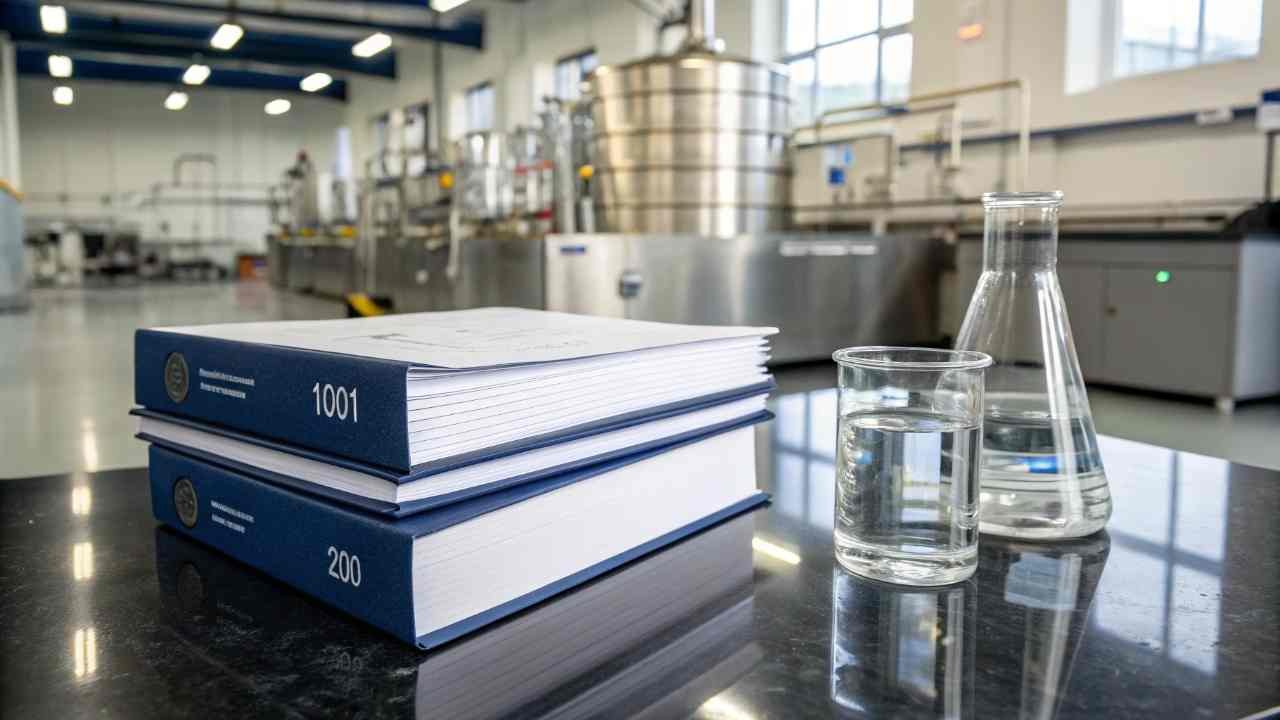
I see that certifications are the "ID Card" of a reliable producer. If a factory does not have ISO 220001, I do not buy from them. This certificate proves the factory has a technical system to prevent contamination. Phosphoric Acid is a corrosive liquid. If the production line is dirty, heavy metals like Lead or Arsenic can get into the acid. This makes it dangerous for food use. I visit the factories in China to check if their certificates are real and updated. A fake certificate is a major red flag that I avoid for my B2B clients.
Religious certifications are also a technical requirement for many regions. If you sell to the Middle East or Southeast Asia, you must have a Halal certificate2. I check that the Halal body is recognized by your local government, like the SFDA in Saudi Arabia. I also check for the CIQ Health Certificate. This is a document issued by the Chinese government. It proves the batch was inspected before it left the factory. Without this paper, your customs agent will have many problems. I act as your strategic partner to collect all these documents. This ensures your supply chain is legally safe and ready for any audit.
Essential Certification Checklist
| Certificate | Technical Purpose | Why it Matters | FINETECH's Verification |
|---|---|---|---|
| ISO 22000 | Food safety management | Prevents contamination | Check valid date/body |
| HACCP | Hazard analysis | Controls production risk | Audit control points |
| Halal | Religious compliance | Mandatory for Muslim markets | Verify local recognition |
| CIQ Health | Export safety proof | Required for customs | Check batch match |
| ISO 9001 | Quality management | Ensures batch consistency | Verify plant procedures |
| MSDS | Safety data sheet | Required for transport | Check DG classification |
How can buyers verify Phosphoric Acid quality?
Relying on a piece of paper without testing is a gamble. One bad batch can kill your food formula. I show you the technical steps to verify actual purity.
Verify quality by requesting a fresh Certificate of Analysis (COA) for every batch. Conduct third-party pre-shipment inspections (PSI) through firms like SGS. Test specifically for P2O5 content, heavy metals (Lead and Arsenic), and liquid clarity to ensure the acid meets food-grade 85% standards.

Purity Analysis and Heavy Metal Limits
I see that purity is the most important spec for Phosphoric Acid. For food grade, the standard is usually 85%. This refers to the concentration of the acid. But you also need to check the "Assay" of the H3PO4. I use a lab to verify that the P2O5 content is correct. If the concentration is even 1% low, your food formula will fail. I also pay close attention to heavy metals. Food safety laws in Europe and Korea are very strict. Lead must be below 0.5 mg/kg. I hire independent inspectors to pull random samples from the IBC tanks before they are loaded.
Physical clarity is another technical indicator. High-quality food-grade acid should be clear and colorless like water. If the acid looks yellow or cloudy, it contains impurities. This usually means the factory did not filter the rock properly during the "Wet Process." I check the "Color" and "Turbidity" in the lab reports. I also suggest my clients do a "Sample Comparison." We compare the new batch to a gold sample from our previous order. This ensures the quality stays the same every month. I act as your quality office in China to manage these tests. This level of oversight is how I guarantee top quality for every ton I ship.
Quality Verification Benchmarks
| Test Parameter | Food Grade Standard | Technical Reason | FINETECH's Role |
|---|---|---|---|
| Assay (H3PO4) | Min 85.0% | Required for formula strength | Verify via titration |
| Lead (Pb) | Max 0.5 mg/kg | Strict food safety limit | Audit via ICP-MS lab |
| Arsenic (As) | Max 0.5 mg/kg | Prevents toxicity | Test every batch |
| Fluoride (F) | Max 10 mg/kg | Prevents chemical taint | Monitor rock source |
| Color (APHA) | Max 20 | Indicates high purity | Visual check on-site |
| Clarity | Clear / Transparent | No residual sediment | Inspect IBC tanks |
What production methods indicate a strong Phosphoric Acid supplier?
Old production methods waste energy and create impurities. You pay the price for their inefficiency. I explain why the production process is a key indicator of supplier strength.
A strong supplier uses the thermal process for high-purity food grade or advanced purified wet-process technology. Integrated producers who own phosphate mines offer better price stability. Modern plants with automated DCS control systems ensure consistent concentration and lower heavy metal levels for bulk orders.
Thermal Process vs. Purified Wet Process
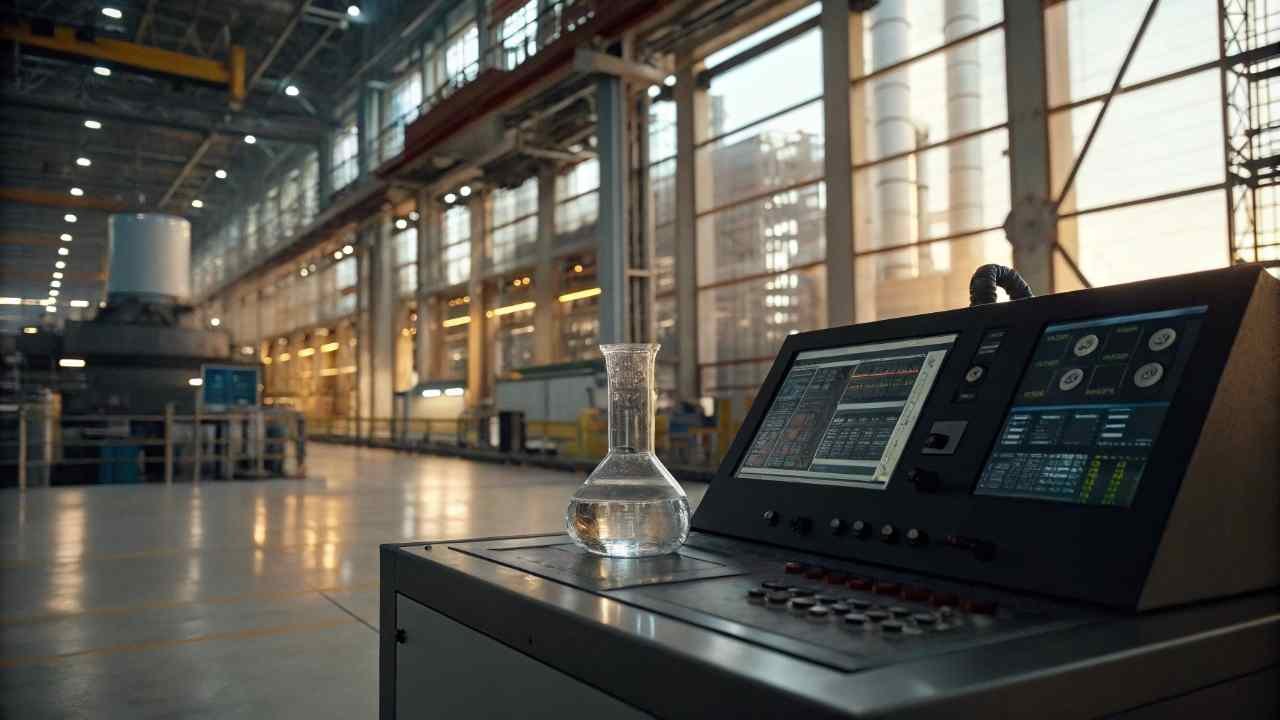
I see that the production method tells you a lot about the factory's strength. The Thermal Process is the "Gold Standard" for purity. It burns yellow phosphorus to create the acid. This method creates very low heavy metals. However, it uses a lot of electricity. I prioritize factories that use this method for my high-end food clients. The second method is the "Purified Wet Process." This treats phosphate rock with sulfuric acid and then purifies it. This is cheaper but requires very advanced filtration. I visit the factories to see their "Purification Towers." If the towers are old, the quality will not be stable.
Another sign of a strong supplier is "Mine Integration." This means the factory owns the phosphate mine. In China, this is a major advantage. If a factory owns the mine, they have a stable supply of raw materials. They also have a lower cost. I look for integrated producers in provinces like Yunnan or Guizhou. These producers are less affected by market price spikes. I also check for "DCS Automation3." This is a computer system that controls the temperature and pH of the reaction. A human can make mistakes, but a DCS system ensures every batch is the same. I act as your technical gatekeeper to find these high-tech, integrated plants. This ensures you get a competitive price and stable quality year-round.
Production Method Comparison
| Feature | Thermal Process | Purified Wet Process | FINETECH's Recommendation |
|---|---|---|---|
| Purity Level | Ultra-High | High (after purification) | Use Thermal for high-end food |
| Cost Level | High (Energy intensive) | Moderate | Use Wet for industrial/bulk |
| Heavy Metals | Very Low | Moderate to Low | Check COA for Wet process |
| Stability | Excellent | Good | Integrated plants are best |
| Environmental | High power use | High waste (Gypsum) | Check for waste permits |
| Scale | Large batches | Very large batches | Buy FCL for better rates |
How important is export experience for Phosphoric Acid suppliers?
Inexperienced exporters make mistakes with dangerous goods paperwork. This causes your cargo to be seized or delayed. I explain why logistics knowledge is as important as the chemical itself.
Export experience is critical because Phosphoric Acid is a corrosive liquid (Class 8). A reliable supplier knows how to handle IMO regulations, dangerous goods (DG) packaging, and specific customs requirements in regions like the Middle East or SE Asia to prevent costly port delays and fines.
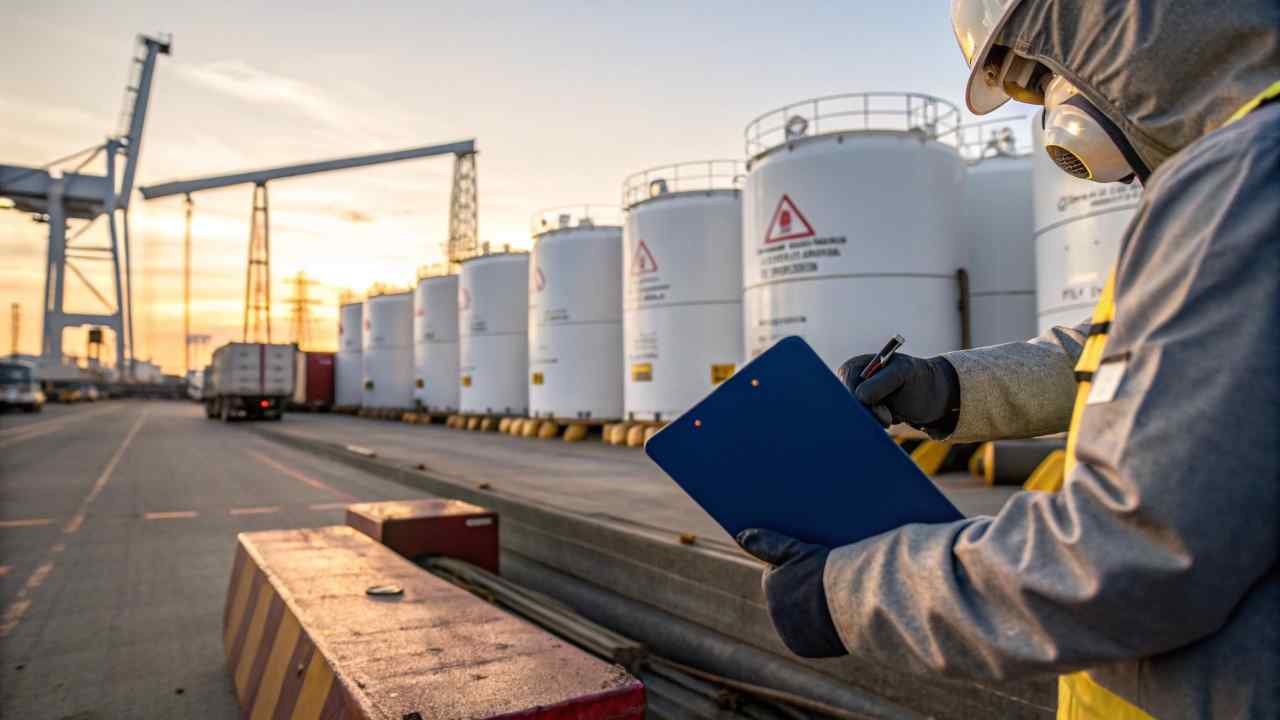
Managing Corrosive Liquid Logistics
I see that Phosphoric Acid is a "Dangerous Good4" (DG). This means you cannot ship it like sugar or salt. You must use UN-approved packaging. For bulk wholesale, we usually use 330kg drums or 1600kg IBC tanks. I check that the IBC tanks are new and strong. If a tank leaks during the 30-day journey to Saudi Arabia or Russia, the port will fine you thousands of dollars. An experienced exporter knows how to secure these tanks inside the container. They use "Lashing" and "Blocking" to make sure nothing moves when the ship hits waves.
The paperwork is the second part of export experience. You need a Dangerous Goods Declaration and an MSDS5 (Material Safety Data Sheet) in the right language. I manage these documents for my clients. I ensure the HS Code (28092011 for food grade) is correct on all papers. If the code is wrong, you will pay the wrong tax. I also have a lot of experience with "Market Specific" rules. For example, some countries in Southeast Asia require a specific "Certificate of Origin" to lower the import tax. I act as your logistics office in China to ensure every step is correct. This technical oversight prevents your cargo from being stuck at the port for weeks.
Export Expertise Checklist
| Export Skill | Technical Requirement | Risk of Failure | FINETECH's Solution |
|---|---|---|---|
| DG Handling | Class 8 UN certification | Cargo rejected by ship | Audit DG licenses |
| Packaging | UN-approved IBC/Drums | Leaks and contamination | Inspect tanks before load |
| Lashing | Proper container securing | Tank damage in transit | Supervise port loading |
| MSDS Prep | Multi-language / GHS | Customs delays | Provide 16-section MSDS |
| Cert of Origin | Form E / Form F | High import duties | Apply for tax benefits |
| Vessel Booking | DG space allocation | Missed shipping dates | Manage freight forwarder |
What risks should buyers avoid when sourcing Phosphoric Acid?
Low prices often hide dangerous shortcuts. You might end up with contaminated acid or a disappearing supplier. I reveal the red flags you must avoid during your procurement.
Avoid suppliers with suspiciously low prices, lack of traceable lab history, or poor packaging standards. Steer clear of middlemen who cannot provide direct factory audit access. Always check for signs of financial instability or lack of environmental compliance to prevent sudden supply chain breaks.

Avoiding the Low-Price Trap and Middlemen
I see many buyers fall into the "Price Trap." If a price is $100 lower than the market, there is always a reason. The factory might be using low-grade rock with high heavy metals. Or they might be skipping the purification steps. This acid will ruin your food product. I act as your eyes in China to avoid these bad actors. I only work with factories that allow me to visit their production lines. If a supplier is a "Secret Middleman," they will not let me see the plant. This is a huge risk. A middleman has no control over quality and can disappear if there is a problem.
Environmental risk is another major factor in China. The government often shuts down factories during "Blue Sky" audits. These audits happen when the air quality is bad. If your supplier is a small, dirty plant, they will be closed first. Your supply will stop instantly. I prioritize factories that have invested in green technology and waste treatment. These factories are safer for long-term supply. I also check the financial health of the producers. I use Sinosure to verify their credit history. If a factory has a lot of debt, they might take your deposit and never ship the goods. I act as your risk manager to block these dangers before you send any money.
| Risk Factor | Warning Sign | Consequence | FINETECH's Solution |
|---|---|---|---|
| Price Trap | Price far below market | Poor quality / Contamination | Market price monitoring |
| Middleman | No factory access | No quality control | Direct factory audits |
| Env. Policy | Small, old factory | Sudden supply stop | Choose green leaders |
| Fake Purity | No batch-specific COA | Product recall | PSI / Third-party testing |
| Financial Risk | Request 100% prepay | Loss of deposit | Sinosure credit check |
| Poor Packing | Recycled IBC tanks | Leaks and damage | Mandatory new packaging |
Conclusion
Choosing a reliable Phosphoric Acid supplier requires checking certifications, verifying production integration, and auditing export experience. I handle these technical tasks at FINETECH to keep your supply chain safe.
-
ISO Official Website – Detailed requirements for the ISO 22000 standard, which integrates HACCP principles for global food safety management. ↩
-
Halal Certification Services – An overview of the standards and verification processes required for food products to comply with Islamic dietary laws. ↩
-
Yokogawa – A professional guide on how Distributed Control Systems (DCS) optimize precision and reliability in large-scale industrial manufacturing. ↩
-
IATA – Guidelines and regulations regarding the classification, handling, and transportation of hazardous materials and dangerous goods. ↩
-
Safe Work Australia – Detailed information on the requirements and importance of Safety Data Sheets (SDS/MSDS) for chemical workplace safety. ↩