
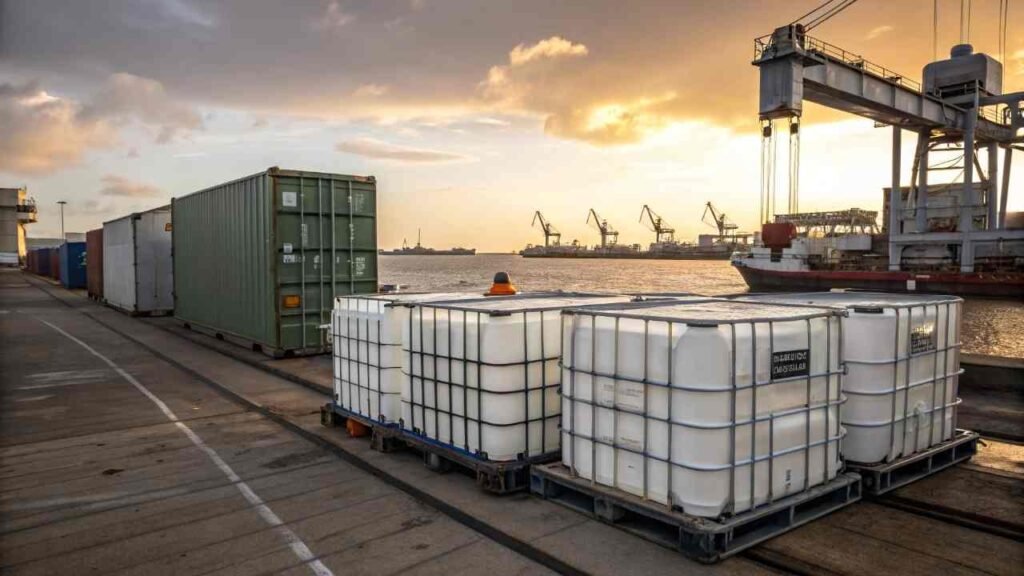
Leaking corrosive acid destroys your shipment and triggers massive port fines. This logistical failure stops your production line. I provide the technical packaging facts to ensure your cargo arrives safely and legally.
Phosphoric Acid for export is packaged in UN-approved materials like 35kg plastic drums, 330kg drums, or 1,600kg IBC tanks. As a Class 8 corrosive liquid (UN1805), it requires acid-resistant, high-density polyethylene (HDPE) containers and secure container lashing to prevent leaks during ocean freight and long-distance transport.
I manage factory selection and oversee production for my B2B clients at FINETECH. I want to share the technical facts about packaging so you can protect your inventory and your profit during the export process.
What packaging options are used for Phosphoric Acid export?
Wrong packaging choices lead to cracked containers and chemical spills. This damage ruins your reputation with your customers. I identify the standard packaging options used in the global wholesale market.
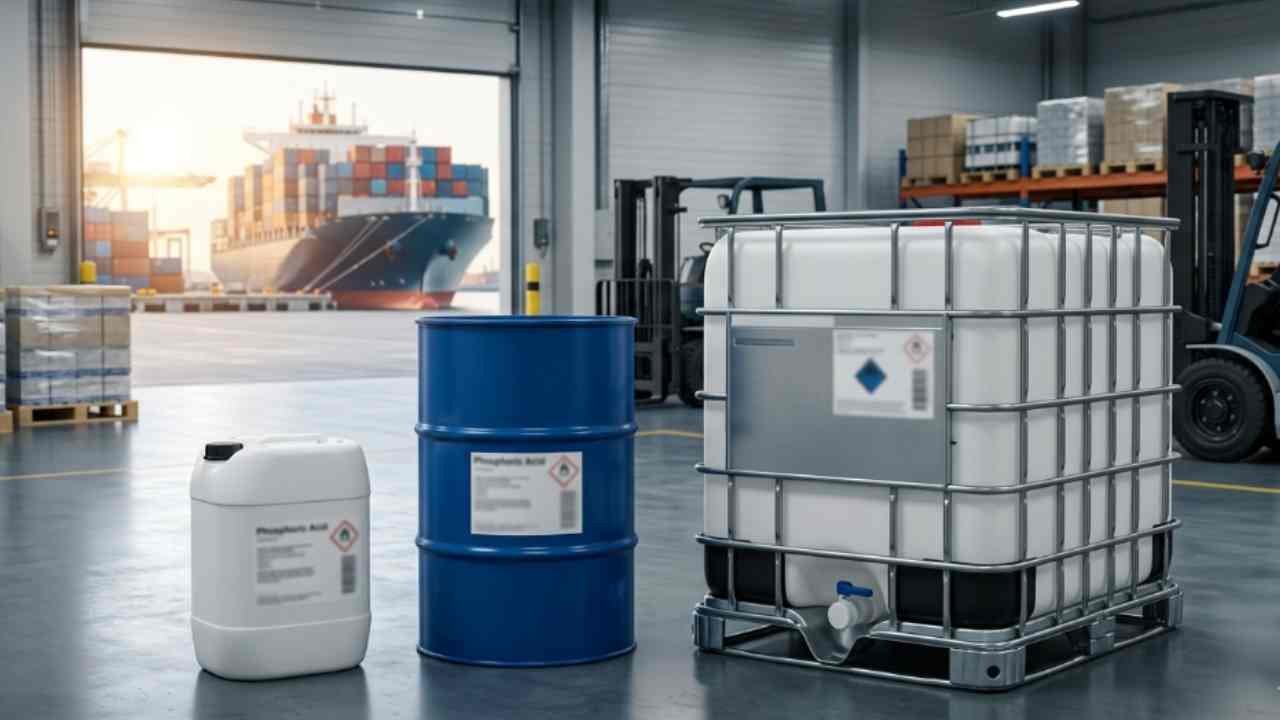
Common packaging options include 35kg small drums for easy handling, 330kg medium drums for mid-sized factories, and 1,600kg IBC tanks for high-volume industrial use. All packaging must be UN-certified and made from corrosive-resistant plastic to withstand long-term storage and maritime transport conditions.
Selecting the Right Container Size
I see that container size depends on your facility and your volume. The 35kg drum is the most flexible option. Small food factories like this size because workers can move them by hand. However, it requires more labor to unload a full container. The 330kg drum is a middle-ground choice. It is common for buyers in Southeast Asia and the Middle East. I check that these drums have strong handles and secure lids. If a lid is loose, the acid will leak during the tilt of the ship. I act as your strategic partner to verify the quality of these plastic materials before they leave the factory.
The 1,600kg IBC tank is the most efficient for large-scale wholesalers. One 20ft container can hold 16 of these tanks. This maximizes the weight limit of the container. I always recommend using IBC tanks for high-volume orders. They are easy to move with a forklift. This reduces the risk of manual handling accidents. I visit the packaging lines in China to ensure the tanks are new. I do not allow the use of recycled IBC tanks for my clients. Recycled plastic can have tiny cracks that fail under pressure. Using new, high-quality HDPE ensures the acid stays inside the tank until it reaches your warehouse.
Packaging Comparison Table
| Packaging Type | Capacity | Primary Use Case | FINETECH’s Logistic Insight |
|---|---|---|---|
| Small Drum | 35 kg | Small food labs / bakeries | High labor / Easy storage |
| Standard Drum | 330 kg | Mid-sized processors | Good balance of cost/size |
| IBC Tank | 1,600 kg | Large wholesalers / plants | Most cost-effective shipping |
| Jerry Can | 20 - 25 kg | Specialty retail / lab use | Highest cost per kg |
| ISO Tank | 20 - 25 tons | Industrial bulk supply | Requires specialized port gear |
| Flexitank | Not Recommended | Low-cost bulk | High risk of corrosive leaks |
How to handle the corrosive nature of Phosphoric Acid?
Acid leaks eat through metal and burn human skin. This safety risk can shut down your entire operation. I explain the technical ways we handle the corrosive nature of this chemical during the export process.
Handling the corrosive nature of Phosphoric Acid requires using UN-rated HDPE containers that do not react with acid. Operators must wear full PPE, and containers must have secure, vented caps to prevent pressure buildup. I oversee factory loading to ensure no metal contact occurs during the process.
Chemical Resistance and Safety Protocols
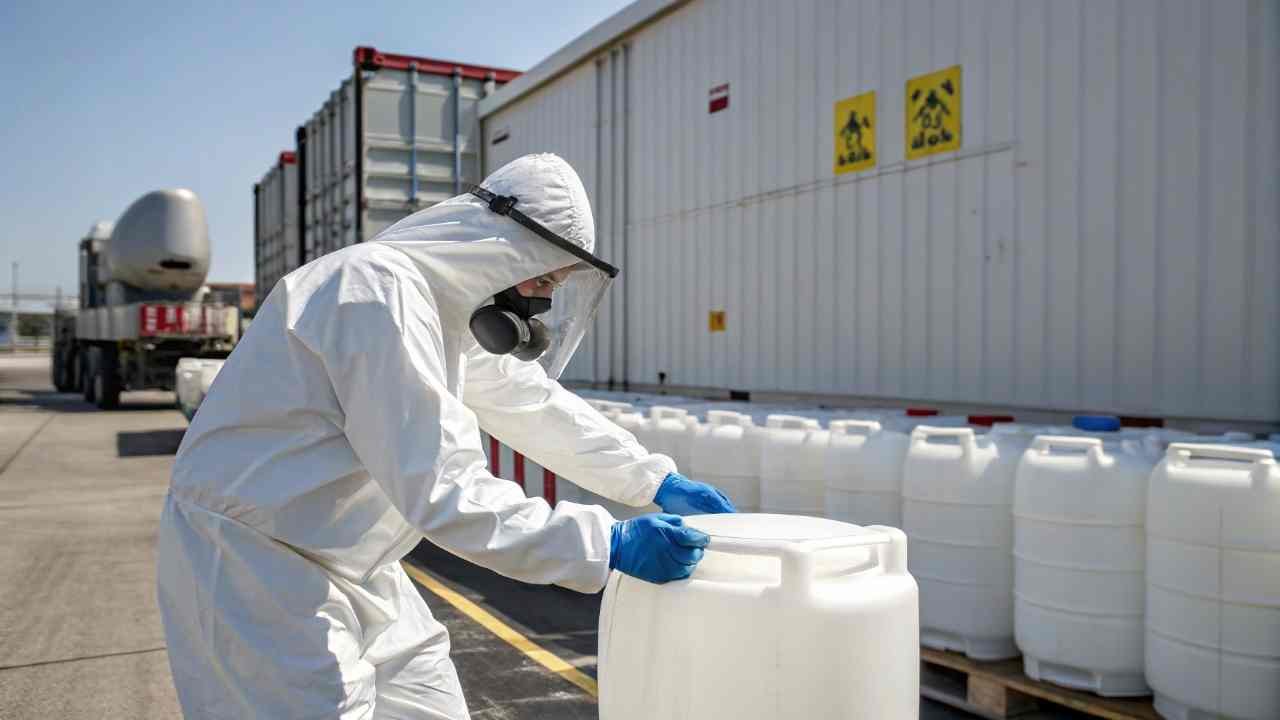
I see that Phosphoric Acid is aggressive toward metals and organic tissues. It is a "Class 8" corrosive liquid1. This means it can destroy carbon steel and aluminum. We only use High-Density Polyethylene (HDPE) for packaging. This plastic is chemically inert to the acid. I check the wall thickness of the drums at our partner factories. If the wall is too thin, the acid can cause the plastic to become brittle over time. I prioritize factories that use high-grade resins for their containers. This technical oversight prevents the "Stress Cracking" that happens during long ocean voyages to Europe or the Middle East.
Safety during loading is the second part of handling. I ensure the factory workers wear acid-resistant gloves, goggles, and aprons. We use specialized pumps made of stainless steel 316 or plastic to fill the containers. I do not allow the use of standard steel pipes. If the acid touches regular steel, it creates hydrogen gas2. This gas can build up pressure inside the drum. I verify that every IBC tank has a pressure-relief vent in the cap. This vent allows gas to escape but prevents the liquid from leaking. I act as your safety manager in China to ensure these technical details are followed. This prevents the "Exploding Drum" syndrome during high-temperature transport.
Material Compatibility and Safety
| Material | Compatibility | Risk Factor | FINETECH's Strategy |
|---|---|---|---|
| HDPE Plastic | Excellent | None (Standard use) | Verify wall thickness |
| SS 316 | Good | Expensive for packaging | Use for pumps and valves |
| Carbon Steel | Very Poor | Rapid corrosion / Leaks | Never use for acid storage |
| Aluminum | Very Poor | Fast reaction / Gas build-up | Keep away from loading area |
| Glass | Excellent | Fragile / Not for bulk | Use for lab samples only |
| Rubber Seals | Moderate | Can swell over time | Use Viton or PTFE seals |
What container types are suitable for bulk Phosphoric Acid?
Shipping bulk liquid is a high-risk logistics task. One mistake in container selection leads to rejected cargo at the port. I show you the most suitable container types for large-scale Phosphoric Acid export.
The most suitable container for bulk export is the 1,600kg IBC (Intermediate Bulk Container). It maximizes 20ft container space and offers high structural strength. For even larger volumes, ISO tank containers are used, though they require specialized cleaning and return logistics, making IBCs more flexible for wholesalers.
Maximizing Bulk Efficiency
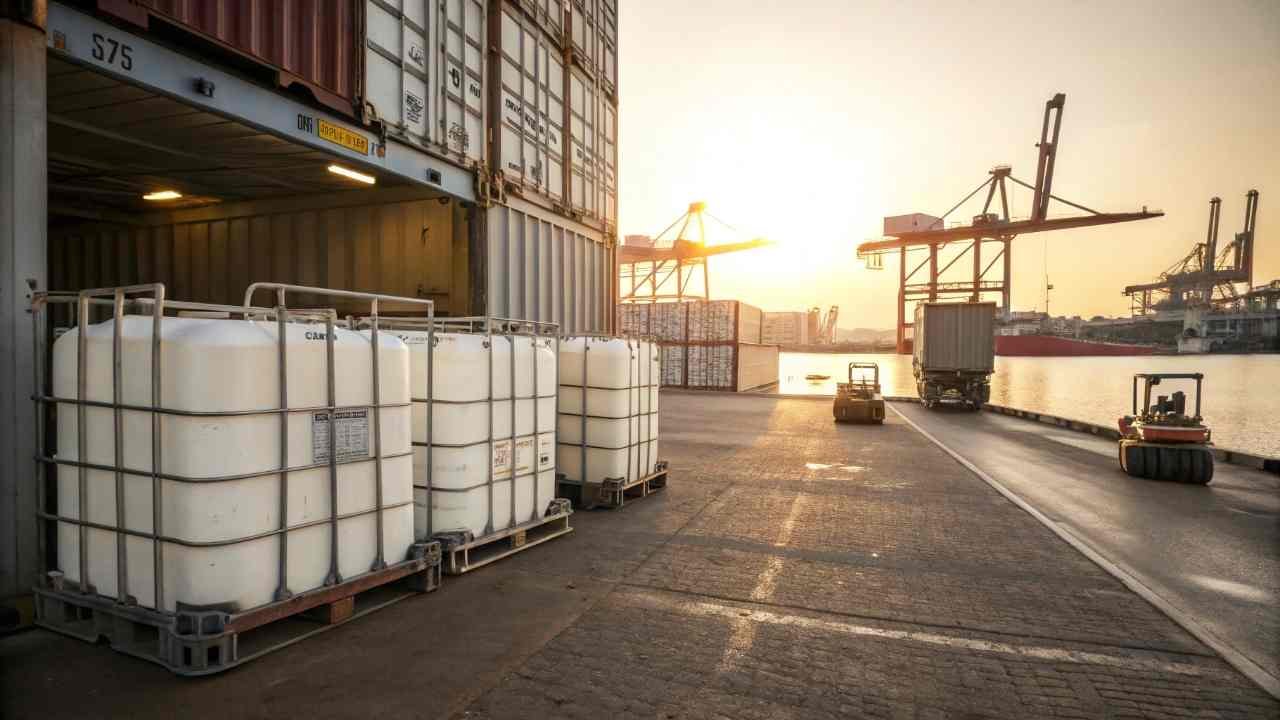
I see that the IBC tank is the "King" of bulk acid logistics. Most of my clients in Russia and Southeast Asia prefer this format. An IBC has a metal cage around the plastic tank. This cage protects the tank from being crushed by other cargo. It also allows us to stack them. I manage the loading plan for every 20ft container. We put 16 IBCs in one container. This total weight is about 25.6 tons of acid. This is the maximum weight most shipping lines allow. I act as your logistics office to negotiate with the shipping lines for these "Heavy Cargo" spots.
ISO tanks are another option for very large buyers. An ISO tank is a giant stainless steel tank inside a standard frame. It can hold up to 25 tons of acid in one single vessel. This is good for factories with their own pumping stations. However, ISO tanks are hard to manage. You must pay for the return of the empty tank. You also need to clean them professionally. For most traders and distributors, the IBC tank is the better choice. It is a "One-Way" package. You can sell the acid and the tank to your customer. I help my clients choose the most profitable bulk method for their specific business model.
Bulk Container Comparison
| Feature | IBC Tank (1.6T) | ISO Tank (25T) | FINETECH's Recommendation |
|---|---|---|---|
| Port Handling | Standard forklift | Heavy crane / Lift | IBC is more flexible |
| Return Cost | Zero (Disposable) | High (Return empty) | IBC for international trade |
| Cleanliness | New tank every time | Requires wash cert | IBC for food-grade safety |
| Loading Speed | Fast (16 units/FCL) | Very Fast (Pumping) | Both are efficient |
| Risk of Spill | Low (Multiple units) | High (Single point) | IBC limits the spill size |
| Storage Needs | Standard warehouse | Chemical tank farm | IBC is easier for traders |
How does packaging affect Phosphoric Acid safety during transport?
Cargo shifting inside a container causes the tanks to burst. This leads to environmental damage and insurance claims. I explain how professional packaging and lashing protect your cargo during the long journey.
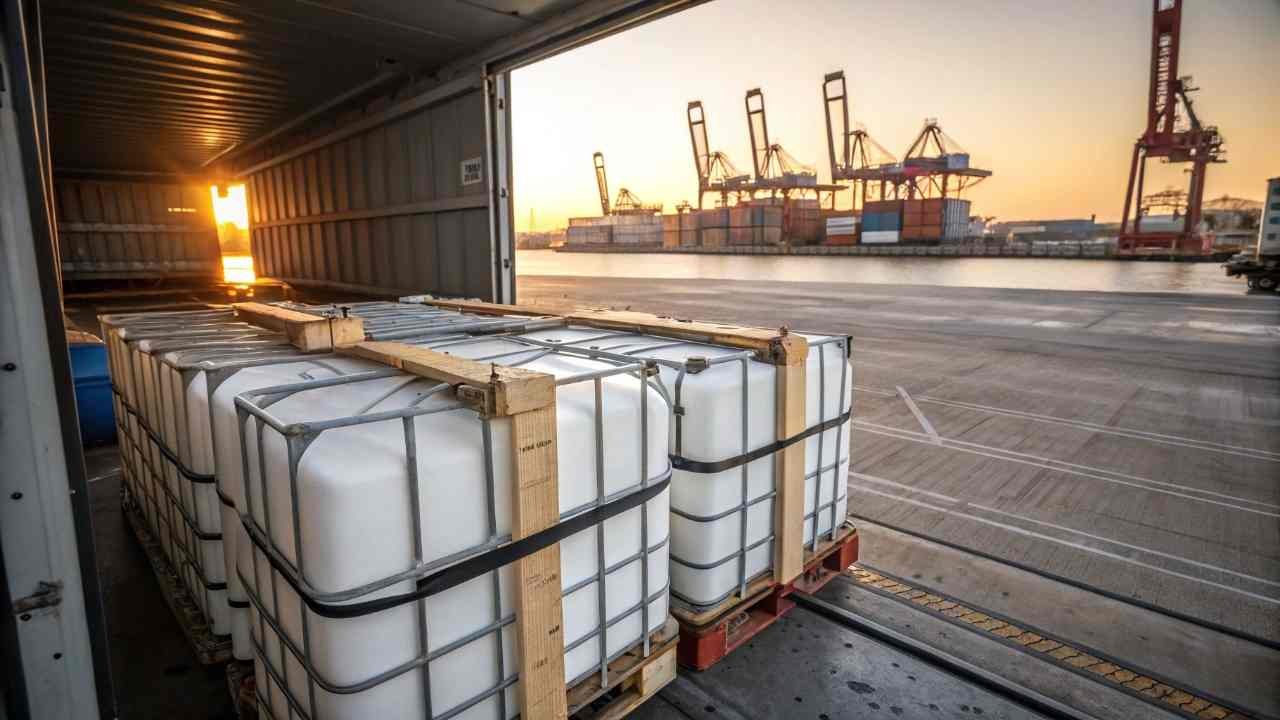
Packaging directly impacts safety by preventing leaks that can damage the ship and surrounding cargo. Proper lashing and blocking inside the container prevent the heavy IBC tanks from shifting. I ensure all packaging meets the IMDG Code standards to avoid port rejections and environmental hazards.
The Technical Logic of Cargo Securing
I see that "Lashing" is the most ignored part of export. Phosphoric Acid is very heavy. If the ship hits a storm, the IBC tanks will try to move. If they hit the walls of the container, they will crack. I oversee the "Stuffing" process at the port or the factory. We use heavy-duty nylon straps and wooden blocks to fix the tanks. This is a technical requirement for "Dangerous Goods" (DG) cargo. I ensure the container is balanced. We put equal weight on the left and right sides. This keeps the container stable on the ship.
The IMDG Code3 (International Maritime Dangerous Goods) is our guidebook. It says we must use "Packing Group III" or higher for Phosphoric Acid. This refers to the strength of the drum or tank. I verify the "UN Mark" on every piece of packaging. This mark proves the tank passed a drop test and a pressure test. If a tank does not have a UN mark, the shipping line will reject it. I act as your strategic partner to ensure 100% compliance with these maritime laws. This oversight protects you from the "Hidden Costs" of port delays and inspection fees. Professional lashing is not an extra cost; it is your insurance for a safe arrival.
| Safety Factor | Technical Risk | Mitigation Strategy | FINETECH's Oversight |
|---|---|---|---|
| Tank Rupture | Drop / Impact | Use UN-certified HDPE | Check UN test marks |
| Cargo Shift | Ship tilt / Waves | Nylon lashing / Blocking | Supervise container loading |
| Pressure Build | High temperature | Vented caps on tanks | Check vent functionality |
| Contamination | Leak from other cargo | Isolate Class 8 goods | Follow segregation rules |
| Chemical Leak | Loose valves | Double-seal lids | Physical check of every lid |
| Port Rejection | Invalid UN marks | Pre-load documentation | Verify DG certificates |
What labeling requirements apply to Phosphoric Acid shipments?
Missing or wrong labels lead to customs seizure and heavy fines. You cannot clear your cargo without the right visual marks. I show you the mandatory labeling requirements for Phosphoric Acid export.
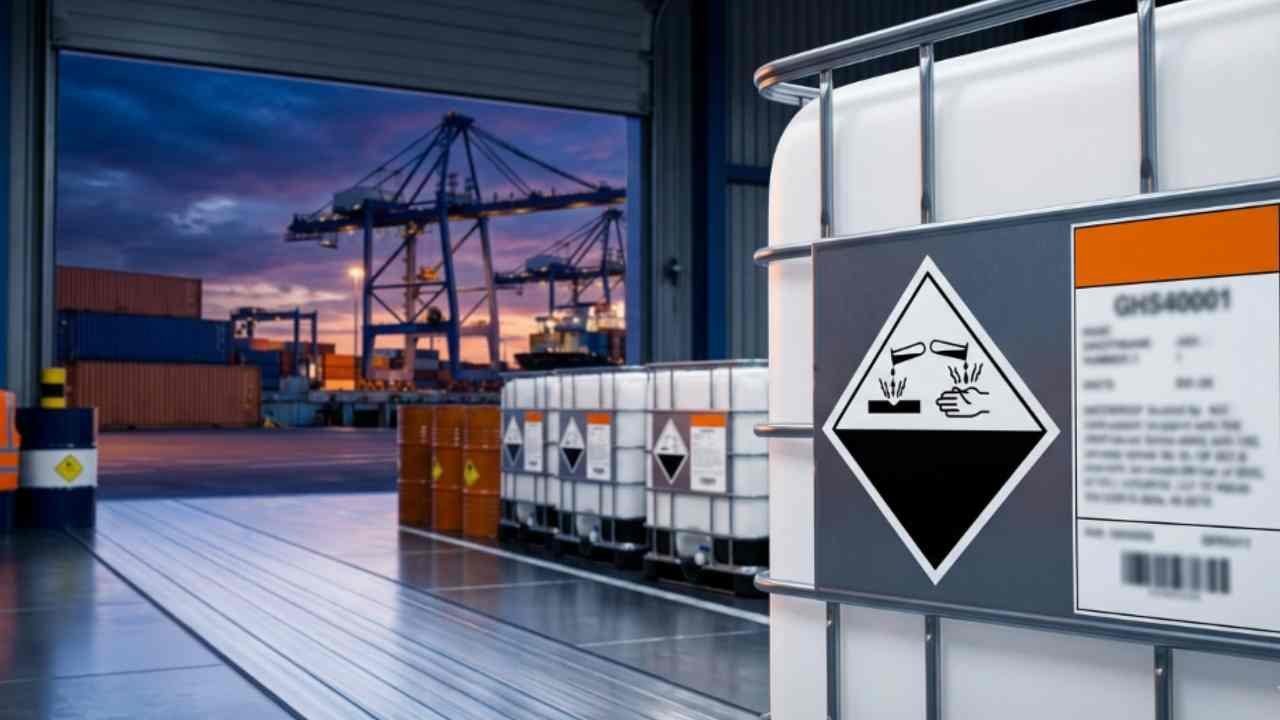
Labeling requirements include the Class 8 Corrosive diamond symbol, the UN1805 identification number, and the proper shipping name "Phosphoric Acid Solution." Labels must be waterproof and visible on at least two sides of each IBC or drum to comply with GHS and international shipping regulations.
GHS Compliance and Traceability
I see that labels are the "Communication Tools" for customs and warehouse workers. We use the Global Harmonized System (GHS4 ). Every IBC must have a GHS label. This label includes "Pictograms" (the corrosive symbol), "Signal Words" (DANGER), and "Precautionary Statements." I ensure these labels are printed on waterproof vinyl. If the label washes off in the rain, the port will consider the cargo "Unknown." This is a major security risk. I also include the batch number and the production date on every label. This provides 100% traceability for your food safety audits.
Documentation must match the labels. I prepare the "Dangerous Goods Declaration" (DGD) and the "MSDS5" (Material Safety Data Sheet). The information on these papers must be identical to the labels on the tanks. For example, the "Proper Shipping Name" must be exactly "PHOSPHORIC ACID SOLUTION." If you miss one word, the customs agent will stop the shipment. I provide these documents in English and the local language of your country if needed. I act as your technical office in China to ensure every sticker and every paper is perfect. This technical accuracy ensures a smooth path through customs in regions like the Middle East or Southeast Asia.
Mandatory Labeling Elements
| Label Element | Technical Specification | Purpose | FINETECH's Role |
|---|---|---|---|
| Corrosive Symbol | Diamond Shape (Class 8) | Visual hazard warning | Check size and color |
| UN Number | UN1805 | Global chemical ID | Verify on all sides |
| Shipping Name | Phosphoric Acid Solution | Legal identification | Match with Bill of Lading |
| GHS Pictogram | Red border / Black symbol | Safety communication | Ensure waterproof print |
| Producer Info | Name / Address / Brand | Traceability / Warranty | Include FINETECH info |
| Batch Number | Unique code | Quality control | Match with COA report |
Conclusion
Safe Phosphoric Acid export depends on UN-approved HDPE packaging and strict adherence to international logistics standards. I manage these details at FINETECH to ensure your cargo arrives in perfect condition.
-
PubChem – Detailed chemical and safety profile of Phosphoric Acid, highlighting its corrosive properties and required handling precautions. ↩
-
OSHA – Occupational safety resource detailing chemical hazards, including the production of reactive gases like hydrogen in industrial processes. ↩
-
International Maritime Organization (IMO) – Official portal for the IMDG Code, governing the safe global maritime transport of dangerous goods. ↩
-
UNECE – Detailed information on the Global Harmonized System for the classification and labeling of chemicals for international safety. ↩
-
Safe Work Australia – A professional resource explaining the regulatory requirements and essential components of Safety Data Sheets (SDS/MSDS). ↩