

Sourcing Phosphoric Acid involves financial and quality risks that can destroy your margins. One bad shipment causes production stops. I help you navigate these dangers to ensure safe, profitable imports.
Buyers reduce import risks by verifying factory certifications like ISO 22000, using third-party inspections from SGS, and requiring comprehensive documents like COA and MSDS. Selecting integrated producers in China and using secure payment terms like L/C or Sinosure-backed T/T further minimizes procurement hazards.
I manage factory selection and oversee production for my B2B clients at FINETECH. I want to share the technical facts about risk reduction so you can protect your capital and your business.
What documents are required for Phosphoric Acid import?
Missing paperwork leads to port delays and heavy storage fees. These administrative errors kill your profit. I ensure all technical documents are perfect before the ship leaves the port.
Mandatory documents include the Bill of Lading, Commercial Invoice, Packing List, Certificate of Analysis (COA), and a 16-section MSDS. For food-grade acid, a CIQ Health Certificate and Halal/Kosher certifications are often required to clear customs in the Middle East and Southeast Asia.

The Technical Role of Specialized Paperwork
I see that many buyers forget how important the Health Certificate is. In China, this is issued by the CIQ (Customs Inspection and Quarantine). It proves that the Phosphoric Acid is actually food-grade. Without this paper, your customs agent in Indonesia or Saudi Arabia cannot clear the goods. I visit the government offices to ensure our batch numbers match the certificates exactly. If there is a mistake in the batch number, the cargo stays at the port. This costs you money every day. I act as your strategic partner to verify these codes before the container is even loaded.
The MSDS1 is the second most important document. Since Phosphoric Acid is a Class 8 corrosive liquid, the MSDS must be updated and accurate. It must show the UN1805 code clearly. I check that the emergency contact information is correct. Shipping lines are very strict about this. If the MSDS is old, they will reject the booking. I provide my clients with multi-language MSDS copies. This helps your warehouse workers stay safe. I also manage the Certificate of Analysis (COA). I do not just copy the factory data. I verify that the titration results for H3PO4 are exactly 85%. I act as your technical gatekeeper to ensure every piece of paper is a tool for smooth customs clearance.
Required Documentation Checklist
| Document Name | Technical Purpose | Why it Matters | FINETECH's Role |
|---|---|---|---|
| Bill of Lading | Title of goods | Required for pickup | Manage with carrier |
| COA | Purity proof | Proves 85% Food Grade | Verify batch assay |
| MSDS | Safety data | Required for DG shipping | Provide UN1805 specs |
| Health Cert | Regulatory proof | Mandatory for food use | Apply via China CIQ |
| Packing List | Volume/Weight | Customs verification | Check IBC tank count |
| Halal/Kosher | Market access | Religious compliance | Audit factory certs |
How to avoid low-quality Phosphoric Acid suppliers?
Low-priced acid often contains high heavy metals or low concentration. This "cheap" deal ruins your food formula and brand. I reveal the technical red flags of unreliable suppliers.
Avoid low-quality suppliers by auditing their production process and mine integration. Check for ISO 22000 and HACCP certifications. Reliable suppliers provide batch-specific lab reports and allow third-party on-site inspections to verify the P2O5 content and impurity levels before shipment.
Mine Integration and Technical Auditing
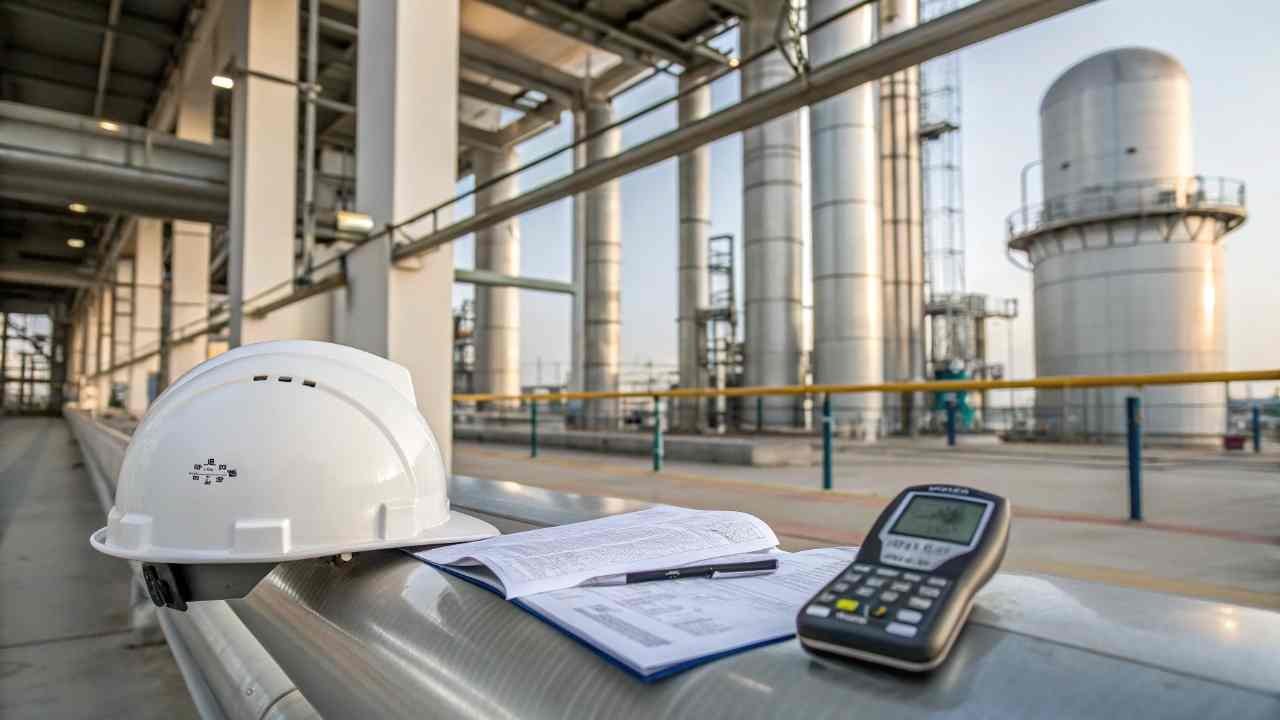
I see that the best way to find a good supplier is to look at their raw materials. In China, the strongest factories own their own phosphate mines. This is called "Mine Integration." I prioritize these factories for my B2B buyers. If a factory owns the mine, they control the quality from the ground up. They have a stable supply of rock. This means the impurities like Arsenic and Lead stay the same in every batch. I visit these mines in Yunnan and Guizhou. I want to see that the rock is high-grade. Small traders often buy acid from different small plants. This makes the quality change every month. I avoid these traders to protect your production stability.
I also look at the factory's automation level. A reliable supplier uses a DCS2 (Distributed Control System). This is a computer system that manages the temperature and chemical flow. If a factory uses manual valves, the acid concentration will fluctuate. I check the control room of every factory I select. I also look for environmental compliance. The Chinese government shuts down dirty factories without warning. If your supplier is closed for an audit, your supply stops. I choose green, modern factories that are safe from these shutdowns. I act as your eyes in China to find the top 10% of producers. This technical selection is the only way to avoid the risks of low-quality acid.
Supplier Evaluation Benchmarks
| Evaluation Factor | High-Quality Supplier | Red Flag Supplier | FINETECH's Strategy |
|---|---|---|---|
| Raw Material | Integrated own mine | Buys rock from market | Choose integrated plants |
| Certifications | ISO 22000 / FSSC | No food-grade certs | Audit valid dates |
| Production | Full DCS automation | Manual operations | Visit control rooms |
| Traceability | Batch-specific COA | Generic COA | Match batch to label |
| Audit Access | Open for on-site visits | Direct factory hidden | Force on-site check |
| Env. Status | Green permit holder | High pollution risk | Verify gov. status |
What inspection steps ensure Phosphoric Acid compliance?
Trusting a factory without verifying the actual liquid is dangerous. You might receive industrial-grade acid instead of food-grade. I explain the technical inspection steps to guarantee full compliance.
Compliance is ensured through three main steps: raw material testing, in-process monitoring via DCS systems, and pre-shipment inspection (PSI). Third-party labs like SGS should test for H3PO4 concentration, lead, arsenic, and fluoride levels to meet FCC or E338 standards.

The Pre-Shipment Inspection (PSI) Process
I see that the Pre-Shipment Inspection is your most powerful tool. I suggest my clients hire an independent firm like SGS or BV. I coordinate these visits at the factory in China. The inspector must pull samples from the IBC tanks randomly. They do not just take the sample the factory gives them. This is a technical step to prevent "Sample Swapping." The lab then tests for the "Assay." This tells us if the acid is actually 85%. For food use, this is a legal requirement. I check these lab results against the Food Chemicals Codex (FCC)3 limits. If the Lead level is above 0.5 ppm, I reject the batch.
I also inspect the physical packaging. Phosphoric Acid is heavy and corrosive. I check that the IBC tanks are new. I do not allow recycled tanks for my wholesale clients. Recycled tanks can have "Stress Cracks." These cracks will open during the 30-day journey to Europe or the Middle East. I also check the pallet lashing. Each IBC must be secured with nylon straps. If the tanks move during a storm at sea, they will leak. I act as your technical supervisor during the loading process. This on-site oversight ensures that what you ordered is exactly what gets on the ship. Inspection is the only way to turn a promise into a fact.
Technical Inspection Checklist
| Inspection Item | Standard / Method | Why it Matters | FINETECH's Oversight |
|---|---|---|---|
| H3PO4 Assay | Titration (85% min) | Correct acidity level | Verify lab results |
| Heavy Metals | ICP-MS (As, Pb) | Food safety safety | Check ppm limits |
| Fluoride | Ion Electrode (<10ppm) | Prevents contamination | Monitor rock source |
| Clarity | APHA Color (<20) | High purity index | Visual check on-site |
| Tank Integrity | Pressure Test / Visual | Prevents DG leaks | Inspect for new tanks |
| Label Accuracy | GHS / UN1805 | Legal transport | Match COA batch # |
What payment terms are safest for Phosphoric Acid trade?
Sending full payment to an unverified factory is a huge financial risk. You might lose your money or receive junk. I manage payment structures to protect your capital.
The safest payment terms include Letter of Credit (L/C) at sight or T/T with a 30% deposit and 70% against the Bill of Lading. Using Sinosure for credit insurance provides an extra layer of protection for buyers dealing with established Chinese exporters like FINETECH.

Managing Financial Risk and Credit
I see that payment is about "Trust and Leverage." I suggest my new B2B buyers use the "30/70 against BL" term. You pay 30% to start the production. You pay the remaining 70% only after I send you a copy of the Bill of Lading (BL). This proves the goods are on the ship. For large wholesale orders, I accept a Letter of Credit (L/C)4. This is a technical bank document. The bank only pays the factory when we provide all the correct documents. This is the safest way for large companies to buy from China. I act as your strategic partner to ensure our bank documents are perfect. This avoids any bank fees or delays in payment.
I also use Sinosure5. This is the China Export & Credit Insurance Corporation. If a buyer has a good credit history, I can offer better payment terms. This helps your cash flow. Sinosure also protects me as the exporter. It means the transaction is monitored by the government. This adds a level of "Official Security" to our trade. I also suggest avoiding "100% Prepayment." This is a major red flag if a supplier asks for it. It gives you zero leverage if the quality is bad. I prioritize payment terms that keep you in control of your money until the technical proof of shipment is ready. This is how we build long-term, safe business relationships.
Payment Term Comparison Table
| Payment Term | Buyer Risk | Seller Risk | Why FINETECH Uses It |
|---|---|---|---|
| L/C at Sight | Very Low | Low | Best for large bulk orders |
| T/T 30/70 BL | Moderate | Moderate | Standard for wholesale |
| T/T 100% Prepay | Very High | Zero | Never used for new deals |
| OA (Open Acct) | Zero | Very High | Only for Sinosure partners |
| DP (Documents) | Moderate | High | Used in specific markets |
| Escrow | Low | Low | Good for trial orders |
How can buyers verify Phosphoric Acid shipment quality?
Quality can change between the factory and your warehouse. Hidden damage or substitution ruins your stock. I show you the technical ways to verify the goods once they arrive.
Verify shipment quality by checking the UN-approved packaging integrity and batch labels upon arrival. Conduct a "Retention Sample" test where you compare the delivered acid against the pre-shipment sample for concentration, color, and clarity using simple lab titration or pH meters.
Post-Arrival Testing and Retention Samples
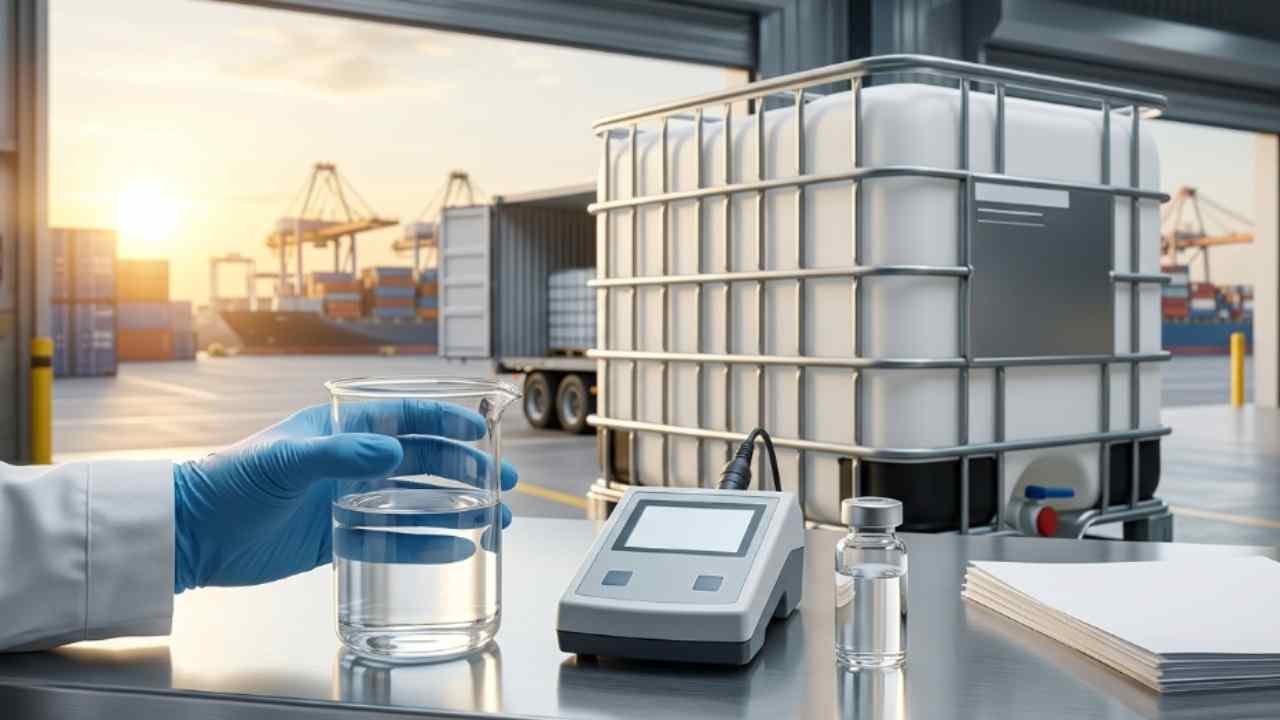
I see that the work does not stop when the container arrives at your port. You must perform an "Arrival Inspection." First, check the seals on the container. The seal number must match the Bill of Lading. If the seal is broken, someone might have opened the container. Then, look at the IBC tanks. Check for "Sweating" or wet spots on the floor. This is a sign of a slow leak. I act as your technical advisor to help you document these issues for insurance claims. I provide my clients with high-resolution photos of the loading process. You can compare these photos to the arrival condition to find any transit damage.
The "Retention Sample" is the final technical check. I always keep a sample from the same batch I shipped to you. If your lab finds a problem, we compare your result to my sample. This is how we find if the problem happened during production or during shipping. You can do a simple titration test in your own lab. This verifies the 85% H3PO4 level. I also suggest checking the "Color" again. If the acid turned yellow, it might have reacted with the tank during a very hot journey. I act as your quality office to manage these disputes. By keeping samples and photos, we create a technical trail that protects your interests.
Arrival Quality Indicators
| Indicator | Good Result | Red Flag | Action Step |
|---|---|---|---|
| Container Seal | Intact / Matches BL | Broken / Different | Stop unloading / Call agent |
| Tank Visual | Clean / Dry | Wet floor / White salt | Check for corrosive leaks |
| Liquid Color | Water clear | Yellow / Cloudy | Run a purity titration |
| Batch Label | Matches COA | Missing / Scratched | Verify with Eric Du |
| Odor | Odorless | Pungent / Chemical | Test for organic impurities |
| Specific Gravity | ~1.685 | Below 1.65 | Check for dilution |
Conclusion
Reducing Phosphoric Acid import risks requires strict documentation, third-party inspections, and reliable supplier selection. I manage these technical details at FINETECH to keep your procurement safe and professional.
-
OSHA – A regulatory guide detailing the 16 sections of a Safety Data Sheet and its role in handling hazardous industrial materials safely. ↩
-
Yokogawa – Technical insights into how Distributed Control Systems (DCS) optimize chemical fermentation and processing precision. ↩
-
USP FCC – The internationally recognized standard for the identity, purity, and quality of food ingredients like Phosphoric Acid. ↩
-
Investopedia – A comprehensive guide to understanding how Letters of Credit function as a secure financial instrument in international B2B trade. ↩
-
Sinosure – Official resource for the China Export & Credit Insurance Corporation, explaining its role in securing global trade financing. ↩