High sugar prices and strict health taxes drain your profit margins. Traditional sweeteners increase your logistics and storage burdens. I provide technical proof that Stevia lowers your total production costs.
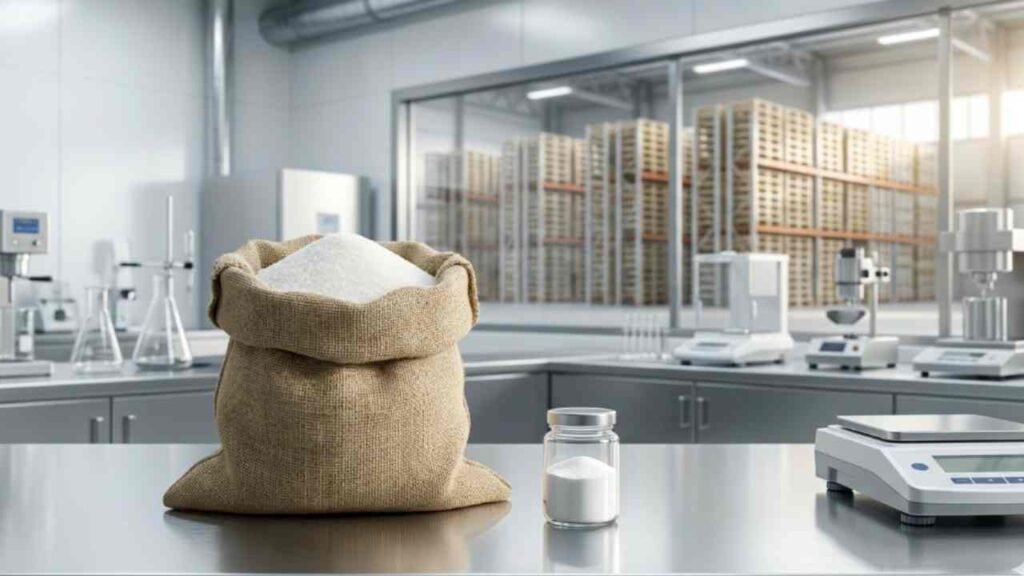
Stevia is highly cost-effective because its sweetness is 200 to 300 times higher than sugar. This high intensity reduces the raw material volume by 99%. Manufacturers save significantly on international shipping, warehouse space, and handling labor while avoiding expensive local sugar taxes.
I manage factory selection and oversee production for my B2B clients at FINETECH. I want to share the technical facts about Stevia economics so you can protect your margins and scale your business.
What factors make Stevia more cost-efficient than sugar in industrial applications?
Using bulk sugar requires massive storage space and high transport fees. These hidden costs eat your budget before production even begins. I explain the technical factors that make Stevia a smarter financial choice.
The main factor is the sweetness-to-weight ratio. One kilogram of high-purity Stevia replaces roughly 250 kilograms of sugar. This reduction slashes freight costs, minimizes warehouse footprint, and simplifies inventory management. Stevia also stays stable at high temperatures, reducing waste during heat processing.
High Sweetness Intensity and Logistics Savings
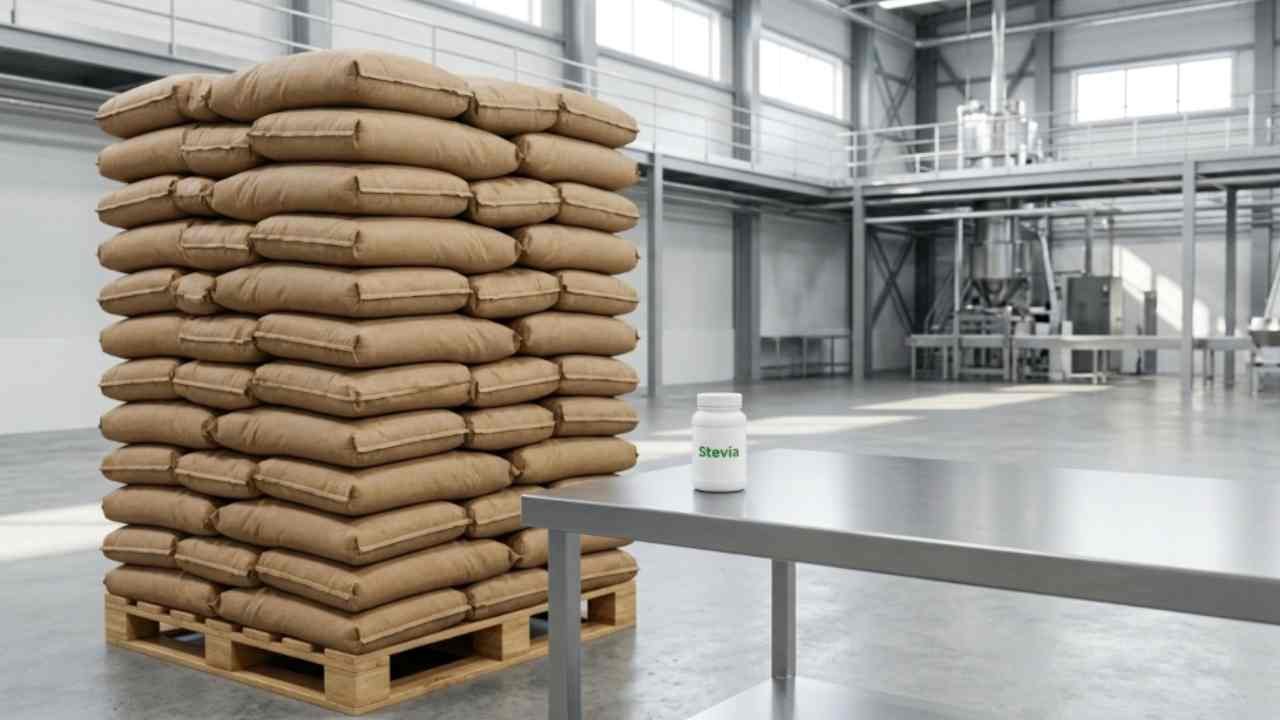
I see that many buyers only look at the price per kilogram. This is a mistake in the chemical trade. High-purity Stevia1, like Rebaudioside A 97% (RA97), is much more expensive than sugar per bag. But you must look at the "sweetness unit cost." Because Stevia is 200 to 300 times sweeter, you use a tiny amount. For my clients in the Middle East and Europe, this means shipping one container of Stevia instead of 200 containers of sugar. The savings on ocean freight alone are massive. I act as your strategic partner to calculate these landed costs accurately. Smaller volumes also mean you need less staff to move pallets and less space in your climate-controlled warehouse.
Stevia also has a very long shelf life. Sugar can clump or attract pests if the warehouse is humid. Stevia powder is very stable and takes up almost no room. This stability reduces "Shrinkage" or product loss. I visit our partner factories in China to verify the moisture content in every batch. Low moisture ensures the powder does not cake during long sea voyages to Southeast Asia. I also check the heat stability. Many food processes require boiling. Stevia does not break down or lose sweetness at high temperatures. Sugar can caramelize or change flavor, which leads to batch failures. By using a stable, high-intensity sweetener, you make your production line more predictable and cheaper to run.
Stevia vs. Sugar Economic Comparison
| Cost Factor | Bulk Sugar (Sucrose) | High-Purity Stevia (RA98) | FINETECH's Technical Insight |
|---|---|---|---|
| Sweetness Ratio | 1 | 200 - 300 | Stevia replaces huge volumes |
| Storage Space | Very High | Very Low | Save 99% of warehouse area |
| Freight Cost | High (Heavy) | Low (Lightweight) | Critical for international trade |
| Shelf Life | 1 - 2 Years | 2 - 3 Years | Stevia is easier to store |
| Heat Stability | Changes flavor | Highly Stable | No waste during processing |
| Labor Cost | High (Heavy lifting) | Low (Small dosage) | Less manual handling needed |
How does Stevia dosage optimization reduce production costs for manufacturers?
Incorrect dosages lead to bitter aftertastes and wasted chemicals. This technical failure forces you to throw away expensive batches. I show you how to optimize your Stevia dosage to save money and improve quality.
Dosage optimization reduces costs by using the exact minimum amount of Stevia to reach target sweetness. Precision blending with bulking agents or other sweeteners prevents over-dosage. Proper formulation avoids the need for expensive flavor maskers, which keeps the total ingredient list short and cheap.
Precision Formulation and Blending Strategies
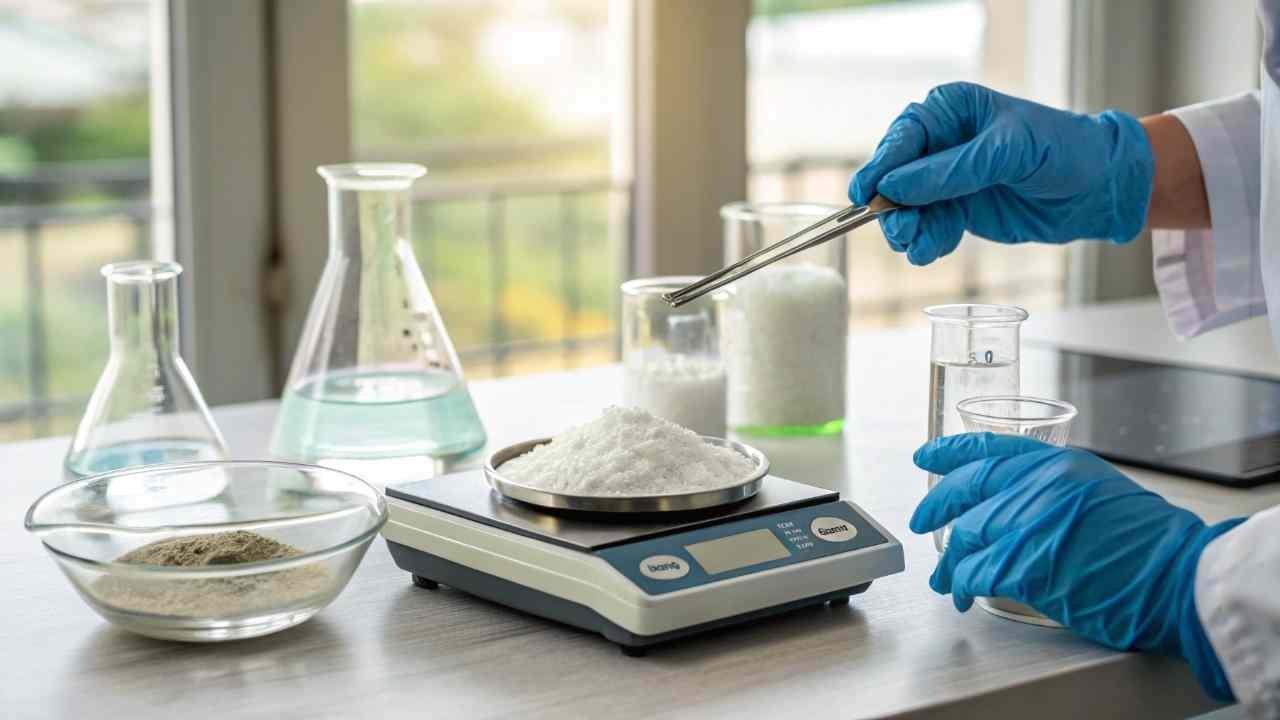
I see that "More is not Better" with Stevia. If a technician adds too much, the product becomes bitter. This is a technical limit of the steviol glycosides2. When this happens, manufacturers often buy expensive "masking agents" to hide the bitterness. This adds a new cost to the recipe. I suggest a better way. I help my B2B clients choose the right Stevia grade from the start. For example, Rebaudioside M (RM) has a cleaner taste than RA. You might pay more for RM, but you use no masking agents. This makes the "Total Recipe Cost" lower. I act as your technical gatekeeper to match the grade to your specific food application.
Another strategy is the use of "Sweetener Blends." I often see the best results when Stevia is used with a small amount of sugar or erythritol3. This is called "Sweetness Synergy." The combination often tastes sweeter than the sum of the parts. This allows you to reduce the total amount of all sweeteners. I manage the sourcing of these different components from reliable Chinese factories. I ensure that the particle size (mesh) is consistent across all ingredients. If the particles are the same size, the blend stays uniform. This prevents "Dosage Spikes" where one part of the batch is too sweet and another is not sweet enough. Uniformity reduces batch rejection and saves your factory money every day.
Dosage Optimization Benefits
| Optimization Goal | Technical Action | Financial Impact | FINETECH's Role |
|---|---|---|---|
| Remove Bitterness | Use high RA or RM grades | Save on flavor maskers | Verify purity levels |
| Synergy Effect | Blend Stevia with Erythritol | Lower total active dosage | Source multiple additives |
| Batch Uniformity | Ensure 80-100 mesh size | Zero batch rejection | Audit factory grinding |
| Clean Label | Use Stevia as sole sweetener | No sugar tax costs | Navigate local food laws |
| Solubility Speed | Use granulated Stevia | Reduced mixing time | Optimize production flow |
| Concentration | Use liquid Stevia extracts | Save on drying energy | Suggest liquid formats |
Why do beverage companies use Stevia to improve profit margins?
Sugar taxes in many countries make traditional sodas very expensive to produce. These government fees directly reduce your net profit. I identify how beverage companies use Stevia to bypass these taxes and increase their margins.
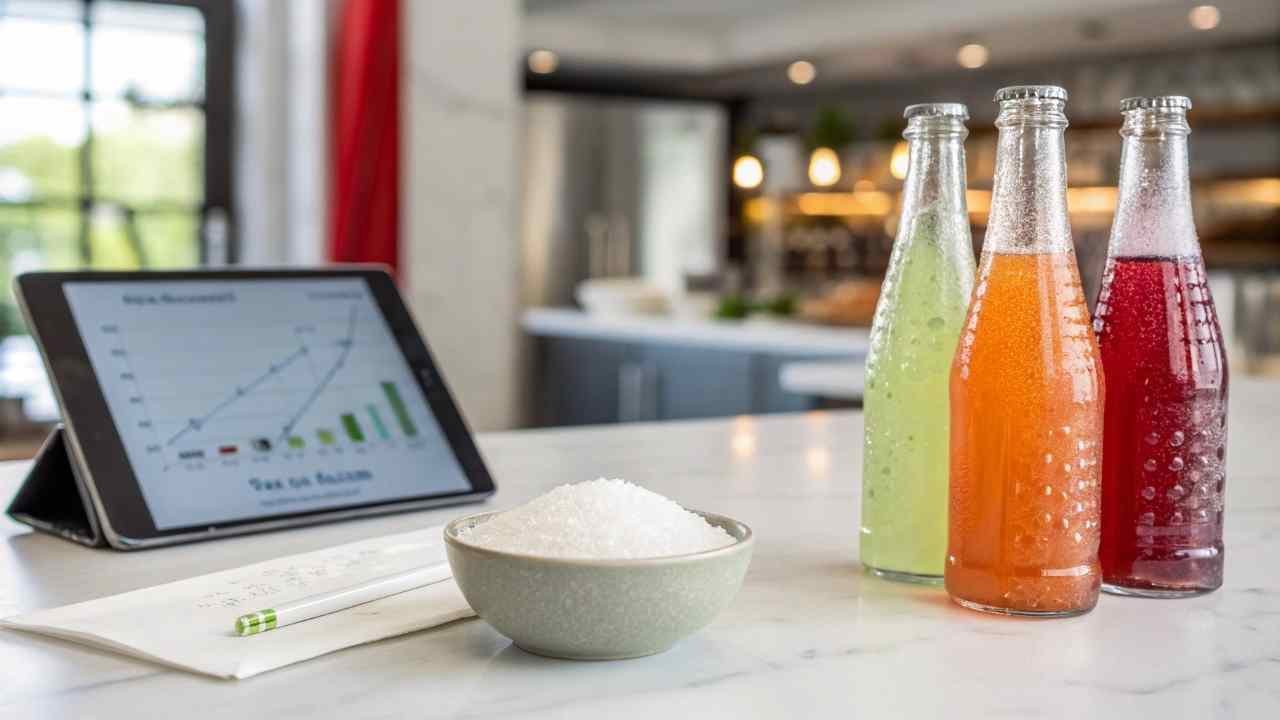
Beverage companies use Stevia to replace sugar and avoid "Sugar Taxes" implemented in over 50 countries. Since Stevia is zero-calorie, it qualifies for tax exemptions. It also satisfies the high consumer demand for "Natural" and "Zero Sugar" products, allowing for premium retail pricing.
Navigating Sugar Taxes and Consumer Trends
I see that the "Sugar Tax" is a major headache for my clients in Southeast Asia and Europe. In some regions, the tax can be as high as $0.20 per liter. For a large distributor, this adds up to millions of dollars. By switching to a Stevia-based formula, you eliminate this tax completely. This money goes straight back into your profit margin. I act as your strategic office to provide the "Zero Sugar" certificates and technical data sheets your local government requires. This documentation ensures you get the tax-free status without delays. It is a simple technical shift that has a massive financial impact on bulk beverage production.
Consumer psychology also helps your margins. People are willing to pay more for "Natural" ingredients. Stevia is a plant-based extract, so it has a much better image than artificial sweeteners like Aspartame. You can market your drink as "Naturally Sweetened" and charge a premium price. This "High Price, Low Cost" model is the secret to high margins in the beverage trade. I visit our partner factories to ensure the Stevia is non-GMO and organic-certified when needed. These labels help you justify the premium price to your customers. I also manage the fast delivery of these ingredients so you can respond quickly to new market trends. In the beverage world, being first with a healthy option means higher profits.
| Market Driver | Impact of Stevia | Margin Result | FINETECH's Strategy |
|---|---|---|---|
| Sugar Tax | 100% Tax Avoidance | Direct Profit Increase | Provide legal compliance docs |
| Health Trend | "Natural" Label appeal | Premium retail price | Source Organic/Non-GMO |
| Calorie Count | Zero-Calorie status | Wider customer base | Focus on high RA purity |
| Transport | 1 drum replaces tons | Lowers overheads | Consolidate shipping |
| Market Entry | Fits "Healthy" niche | Faster sales growth | Offer low MOQ for trials |
| Ingredient List | Fewer ingredients | Lower procurement complexity | Manage total supply chain |
How does Stevia support large-scale low-calorie product formulation?
Formulating for bulk production is difficult when ingredients are bulky or unstable. This complexity leads to slow production cycles and high labor costs. I explain how Stevia's technical properties simplify large-scale manufacturing for your brand.
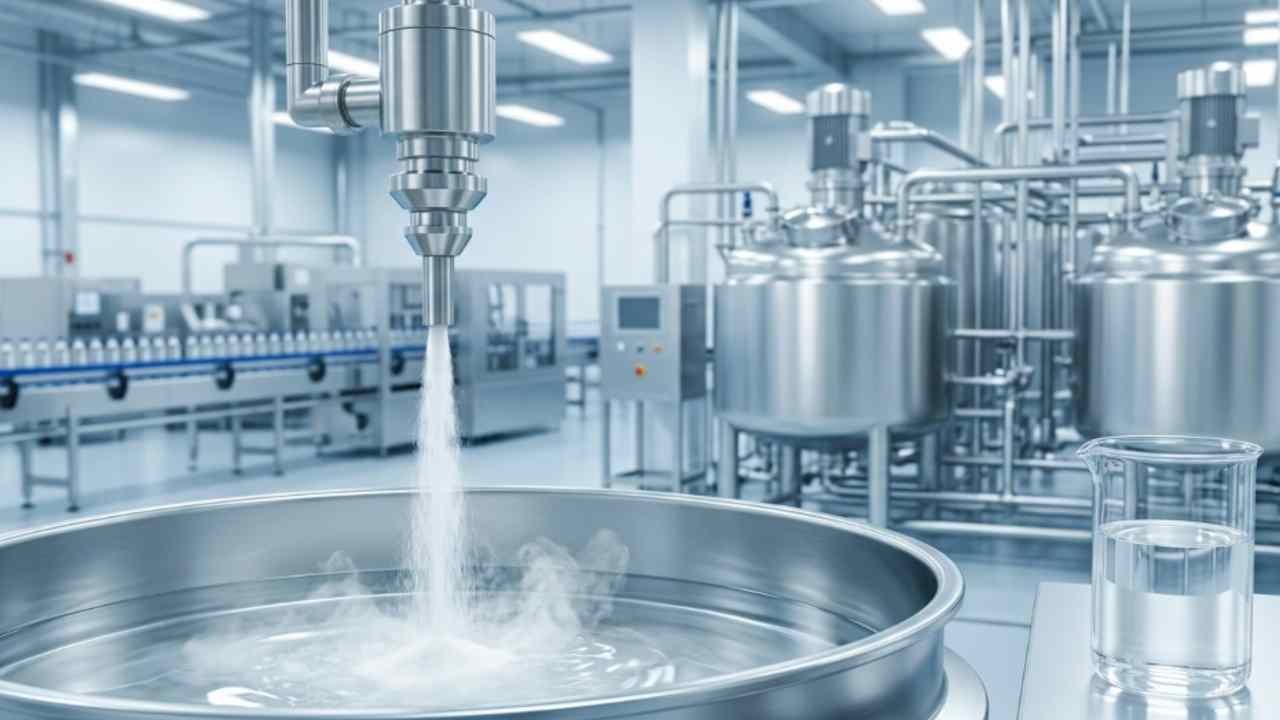
Stevia supports large-scale production through its excellent solubility and high stability in various pH levels. Its concentrated form means smaller dosing equipment is required. This technical simplicity allows for faster production runs, lower energy consumption, and consistent quality across millions of units in a wholesale environment.
Technical Stability in Bulk Manufacturing
I see that "Scale" is where many sweeteners fail. Some sweeteners break down if the pH of the drink is too acidic. Others lose their sweetness during the pasteurization4 process. Stevia is a technical powerhouse. It is stable from pH 3 to pH 9. This means you can use it in acidic fruit juices or neutral dairy drinks. I supply wholesalers who serve diverse food industries because of this flexibility. I act as your technical advisor to ensure the grade of Stevia matches your production equipment. If you use automated liquid dosing, I suggest highly soluble RA98 powder or pre-made liquid extracts. This prevents clogs in your machines and keeps the line moving fast.
Concentration is another big advantage for large plants. In a big factory, moving 20 tons of sugar every day requires a lot of conveyor belts and forklift work. This equipment needs maintenance and electricity. With Stevia, you only move a few boxes. You can set up a small, high-precision dosing station right at the mixing tank. This saves floor space and reduces the "Carbon Footprint" of your factory. I manage the supply chain from China to ensure you always have enough stock for these high-speed lines. We prioritize "Fast Delivery" because I know a large plant cannot stop. My goal is to make your procurement as efficient as your production line.
Bulk Production Benchmarks
| Production Metric | Sugar-Based Line | Stevia-Based Line | FINETECH's Observation |
|---|---|---|---|
| Mixing Time | Long (needs dissolving) | Short (high solubility) | Faster throughput per hour |
| Equipment Size | Large silos / conveyors | Small dosing pumps | Lower capital expenditure |
| Cleaning (CIP) | Difficult (sticky residue) | Easy (low volume) | Less water and chemical use |
| Energy Use | High (pumping/heating) | Low (minimal weight) | Lower utility bills |
| pH Sensitivity | Stable | Highly Stable | Versatile for all recipes |
| Microbial Risk | High (sugar promotes growth) | Low (non-fermentable) | Longer production cycles |
What pricing advantages does Stevia offer compared with artificial sweeteners?
Artificial sweeteners like Aspartame are cheap, but they face growing consumer bans and health warnings. This bad reputation can lead to a sudden drop in your sales. I show you how Stevia offers a more stable and profitable long-term pricing strategy.
Stevia offers a pricing advantage by combining competitive "per-unit sweetness" costs with high consumer acceptance. Unlike artificial sweeteners, Stevia does not require expensive "Warning Labels" in many regions. Its price has stabilized due to massive scale in Chinese farming, making it a low-risk, high-value alternative.
Long-term Price Stability and Value
I see that the price of artificial sweeteners is very volatile. Factories for Sucralose or Aspartame are often affected by environmental audits in China. This causes the price to jump 50% in one week. Stevia is different. It is an agricultural product. China has thousands of hectares of Stevia farms in provinces like Gansu and Anhui. This massive scale creates a very stable price base. I act as your eyes on the ground to monitor the harvest seasons. By buying at the right time, I secure a fixed price for your annual contract. This stability allows you to plan your retail pricing for the whole year without fear of sudden cost increases.
Value is more than just the invoice price. If you use Aspartame, some markets like Korea or parts of Europe might require special labels. These labels scare away health-conscious mothers and young buyers. You lose the "Lifetime Value" of that customer. Stevia is seen as a "Premium Ingredient." Even if the cost per gram is slightly higher than Sucralose, the "Marketing Value" is much higher. I help my clients in Russia and the Middle East switch to Stevia to capture the growing middle-class market. These buyers want safety and nature. I provide the full technical COA and non-GMO5 certifications to prove our Stevia is top quality. Choosing Stevia is a strategic investment in your brand's future.
Sweetener Value Matrix
| Sweetener Category | Unit Cost | Consumer Image | Regulatory Risk | FINETECH's Recommendation |
|---|---|---|---|---|
| Natural (Stevia) | Medium | Excellent | Very Low | Best for long-term growth |
| Artificial (Sucralose) | Low | Poor | Moderate | Use for budget lines only |
| Sugar (Sucrose) | High (Total) | Average | High (Taxes) | Phase out or blend |
| Sugar Alcohols | High | Good | Low | Good for texture blends |
| Rare Sugars (Allulose) | Very High | Excellent | Low | Still too expensive for bulk |
| Blends | Balanced | Good | Low | Best for cost/taste balance |
Conclusion
Stevia is a highly cost-effective sweetener because it slashes logistics costs, avoids sugar taxes, and fits the premium "Natural" health trend. I manage the sourcing and quality of top-tier Stevia at FINETECH to help you maximize your production profit margins.
-
ScienceDirect – Comprehensive overview of Stevia rebaudiana, its chemical composition, and its role as a natural high-intensity sweetener. ↩
-
EFSA – Regulatory resource on the evaluation and safety levels of steviol glycosides as approved food additives. ↩
-
Healthline – A nutritional review of erythritol, exploring its properties as a bulk sweetener often paired with high-intensity extracts. ↩
-
Britannica – A detailed explanation of the pasteurization process used to eliminate pathogens and stabilize liquid food products. ↩
-
Non-GMO Project – Official resource explaining the standards and verification process for non-GMO ingredients in the food supply chain. ↩