
Low-purity Stevia ruins your beverage flavor with bitter notes. This quality failure leads to customer complaints and wasted batches. I help you understand how purity secures your final product quality.
Stevia purity is critical because impurities like stevioside or plant residues cause a bitter aftertaste. High-purity extracts, such as Reb A 97% or Reb M, ensure high sweetness intensity and a clean taste profile. This allows for precise dosing and consistent quality in large-scale industrial manufacturing.
I manage factory selection and oversee production for my B2B clients at FINETECH. I want to share the technical facts about Stevia purity so you can protect your brand and your production standards.
What is the difference between Reb A and Reb M Stevia in production use?
Choosing the wrong glycoside makes your sugar-free formula taste like medicine. This bad flavor kills your sales. I compare the technical traits of Reb A and Reb M for your use.
Rebaudioside A (Reb A) is the most abundant glycoside and is cost-effective for standard sweetness. Rebaudioside M (Reb M) is rarer but offers a taste closer to sugar without the bitterness. Manufacturers choose between them based on cost targets and the level of sugar replacement needed.
Understanding Glycoside Performance
I see that Reb A1 is the "workhorse" of the sweetener industry. Most of my clients in Southeast Asia use Reb A 95% or 97%. It is about 200 times sweeter than sugar. It is easy to find and the price is stable. But Reb A has a technical limit. If you use too much, it leaves a licorice-like aftertaste. This is why it is often used for partial sugar replacement. I audit factories in China to ensure the Reb A purity is exactly what the COA says. This prevents "flavor drift" in your soda or juice. You must know your target sweetness level before you choose this grade.
Reb M is a premium option. It makes up less than 1% of the Stevia leaf. It is 200 to 300 times sweeter than sugar. Its biggest advantage is the clean finish. It does not have the bitter notes of Reb A. This makes it perfect for "Zero Sugar" products. Because it is rare, it is more expensive. I help my clients in Europe and the Middle East source Reb M made from enzymatic conversion. This technology makes Reb M more affordable. I act as your strategic partner to pick the right grade. Using the wrong one can either blow your budget or ruin your taste. I look at your total formula cost to find the best balance between these two.
Comparison of Reb A and Reb M
| Feature | Rebaudioside A (Reb A) | Rebaudioside M (Reb M) | FINETECH's Technical Tip |
|---|---|---|---|
| Sweetness Level | 200x - 250x sugar | 200x - 300x sugar | Both are very potent |
| Taste Profile | Bitter aftertaste at high dose | Clean, sugar-like taste | Reb M is better for zero-sugar |
| Source Abundance | High (in the leaf) | Very Low (trace amounts) | Reb A is cheaper |
| Best Application | Partial sugar replacement | 100% sugar replacement | Mix them for cost savings |
| Price Point | Low to Moderate | High | Reb M requires tech conversion |
| Solubility | Good | Excellent | Both dissolve well in water |
How does Stevia purity level affect sweetness intensity and taste profile?
Impurities in your Stevia cause unpredictable sweetness levels. This inconsistency makes your recipe unstable and unreliable. I explain how high purity levels fix your taste profile problems.
High-purity Stevia removes plant waxes and bitter glycosides like stevioside. This increases sweetness intensity and removes the metallic aftertaste. A 97% pure extract provides a much cleaner, faster sweetness onset compared to a 60% or 90% purity grade, improving the overall sensory experience.
The Link Between Purity and Sensory Quality
I see that "Purity" is a measure of the target glycoside versus other plant materials. In low-purity Stevia, you have more plant residues. These residues have a strong, bitter taste. If you buy 60% purity, 40% of the powder is something else. This "something else" ruins your beverage. High purity means 95% to 99% of the powder is the sweet molecule you want. I manage the sourcing for B2B buyers who need "Clean Label2" results. High-purity Stevia has a higher "Sweetness Potency." This means you use a smaller dose to get the same result. It is more efficient for your manufacturing line.
Taste profile is about "Onset" and "Linger." Low-purity Stevia has a slow onset and a long, bitter linger. This is very bad for soft drinks. High-purity Stevia has a fast onset. It tastes like sugar immediately. The linger is also much shorter. I visit the labs in our partner factories to test these profiles. I look at the "Crystallization" process. Better crystallization removes the bitter impurities. This technical step is why some Stevia is cheap and some is premium. I act as your technical gatekeeper to ensure you do not buy a "bitter" bargain. I always suggest a purity of 95% or higher for industrial food use.
Impact of Purity on Sensory Traits
| Purity Grade | Sweetness Intensity | Bitterness Level | Best For |
|---|---|---|---|
| 60% - 80% | Moderate | High (Linger) | Feed or very cheap retail |
| 90% - 95% | High | Low to Moderate | Bulk food processing |
| 97% (Reb A) | Very High | Very Low | Premium beverages |
| 98% + (Reb A) | Very High | Near Zero | High-end technical use |
| Reb M (Pure) | Extreme | Zero | 100% Sugar replacement |
| Enzymatic | High | Trace | Blending with sugar |
Which industries require high-purity Stevia ingredients?
Using low-grade sweeteners in premium products destroys your market position. You cannot compete if your quality is low. I identify the sectors where high-purity Stevia is a must-have ingredient.
High-purity Stevia is essential for the beverage, dairy, and pharmaceutical industries. It is used in zero-calorie sodas, protein shakes, and yogurt to ensure a sugar-like taste. It also serves as a sweetener for medicines and health supplements where a clean flavor profile is required.
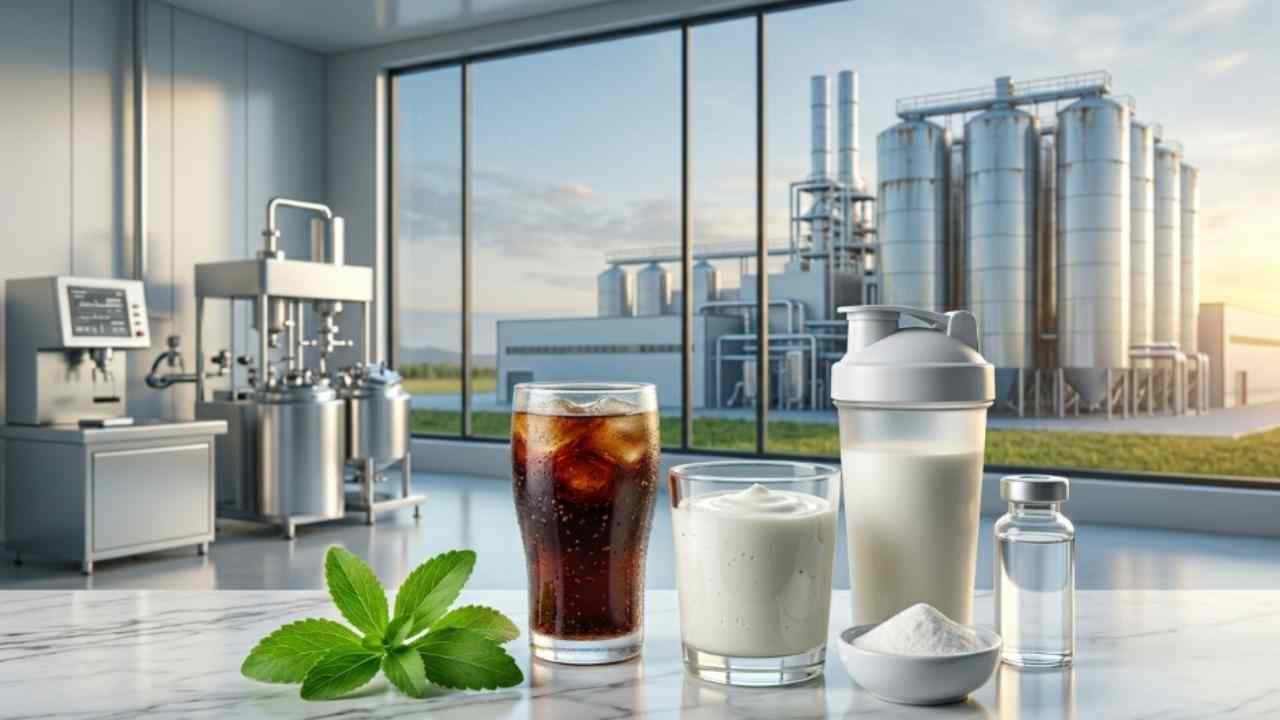
High-Purity Demand in Competitive Markets
I see the beverage industry3 as the biggest user. Companies in the UAE and Saudi Arabia are making more "Zero Sugar" sodas because of sugar taxes. They need Reb A 97% or Reb M. If the purity is low, the soda tastes like chemicals. These companies have very strict quality rules. I provide them with full lab reports and batch samples. Dairy is the second major sector. Yogurt and flavored milk need a very clean sweetness. Milk proteins can make Stevia taste more bitter if the purity is low. I source specialized Stevia for my dairy clients in Korea and Indonesia to prevent this.
The supplement industry4 is also a big buyer. Protein powders often have a strong "protein" taste. You need a very clean sweetener to balance this. High-purity Stevia works well here because it does not add bulk or calories. I also see growth in the pharmaceutical world. They use Stevia in cough syrups and chewable vitamins for kids. Since it is natural, it fits the "Healthy" image of the brand. I act as your strategic office to find the right factory for your specific industry. Each sector has different purity needs. I ensure you do not overpay for purity you do not need, or underbuy and ruin your brand.
Industry Specific Purity Standards
| Industry | Required Grade | Primary Reason | FINETECH's Strategy |
|---|---|---|---|
| Beverage | Reb A 97% / Reb M | Prevent metallic taste | Monitor sweetness onset |
| Dairy | Reb M / Enzymatic | Protein interaction | Audit bitterness profile |
| Pharma | USP/FCC Grade | Strict safety/flavor | Provide safety data sheets |
| Supplement | Reb A 95%+ | Mask protein flavor | Focus on solubility |
| Confectionery | Stevia Blends | Texture and taste | Check heat stability |
| Table-top | Reb A 95% | Cost and bulk | Use with bulking agents |
How do manufacturers test Stevia purity during production control?
Blindly trusting a supplier's Certificate of Analysis (COA) is a huge risk. Fake purity data leads to batch failures and lost money. I show you the technical ways to verify Stevia quality.
Manufacturers test Stevia purity using High-Performance Liquid Chromatography (HPLC). This method separates and measures each glycoside. Other tests include "Loss on Drying" for moisture, "Ash Content" for mineral residues, and sensory evaluation to detect off-flavors or bitterness before the bulk order is released.
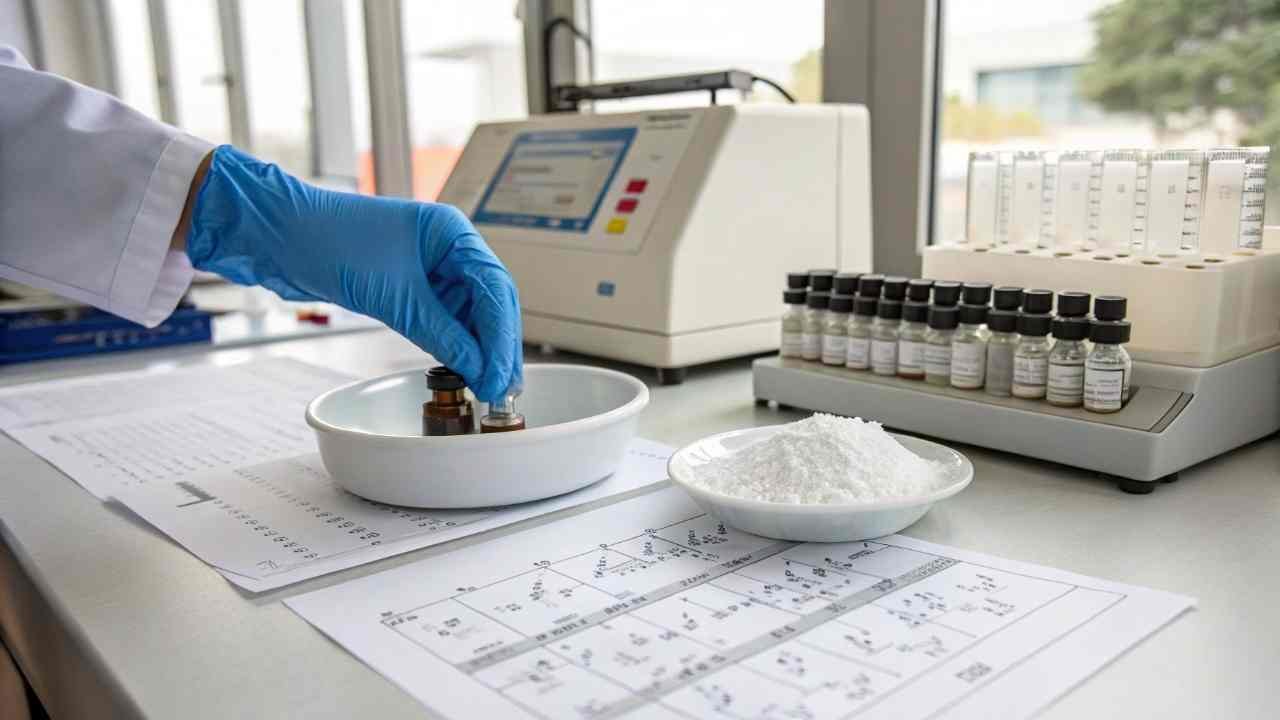
Technical Verification of Purity
I see that HPLC is the "Gold Standard" for Stevia. It gives a technical map of the glycosides. I check these HPLC graphs for every client shipment. I look for the "Peaks." If the peak for Reb A is high and clear, the purity is good. If there are many small peaks, the product has many impurities. This is why I visit the factories in person. I want to see their lab equipment. A factory with old machines cannot give you accurate data. I also look at their "Standard Reference." They must use a certified sample to compare their product. This is how I ensure the COA is honest.
Sensory testing is just as important as the lab. My team and I perform "Blind Taste Tests." We dissolve the Stevia in water at a specific concentration. We look for bitterness, metallic taste, and sweetness speed. This is a simple but effective tool. We also test for "Solubility." High-purity Stevia should dissolve fast and be clear. If the water is cloudy, the purity is low. I also check for "Heavy Metals" like lead and arsenic. These must be below 1 ppm for most global markets. I act as your technical eyes and ears on the ground in China. This testing loop prevents low-quality cargo from ever leaving the port.
Critical Quality Control Tests
| Test Name | Method | Technical Purpose | Pass Criteria |
|---|---|---|---|
| Purity (TSG) | HPLC | Measure total glycosides | 95% or higher |
| Specific Reb | HPLC | Measure Reb A or M | As per contract (97%+) |
| Loss on Drying | Oven | Measure moisture | Below 5% |
| Ash Content | Furnace | Measure minerals | Below 1% |
| Heavy Metals | ICP-MS | Safety check (Pb/As) | Below 1 ppm |
| Microbiology | Plating | Check bacteria/mold | Zero pathogens |
Why is batch-to-batch consistency critical in Stevia supply chains?
Varying sweetness between shipments makes your production line fail. This inconsistency forces you to change your recipe every time. I explain why stable supply is the key to industrial success.
Batch-to-batch consistency is critical to maintain the same flavor profile and sweetness intensity in final products. It prevents production downtime and recipe adjustments. Consistent supply ensures that every container matches the "Golden Sample," allowing for automated dosing and reliable large-scale food and beverage manufacturing.
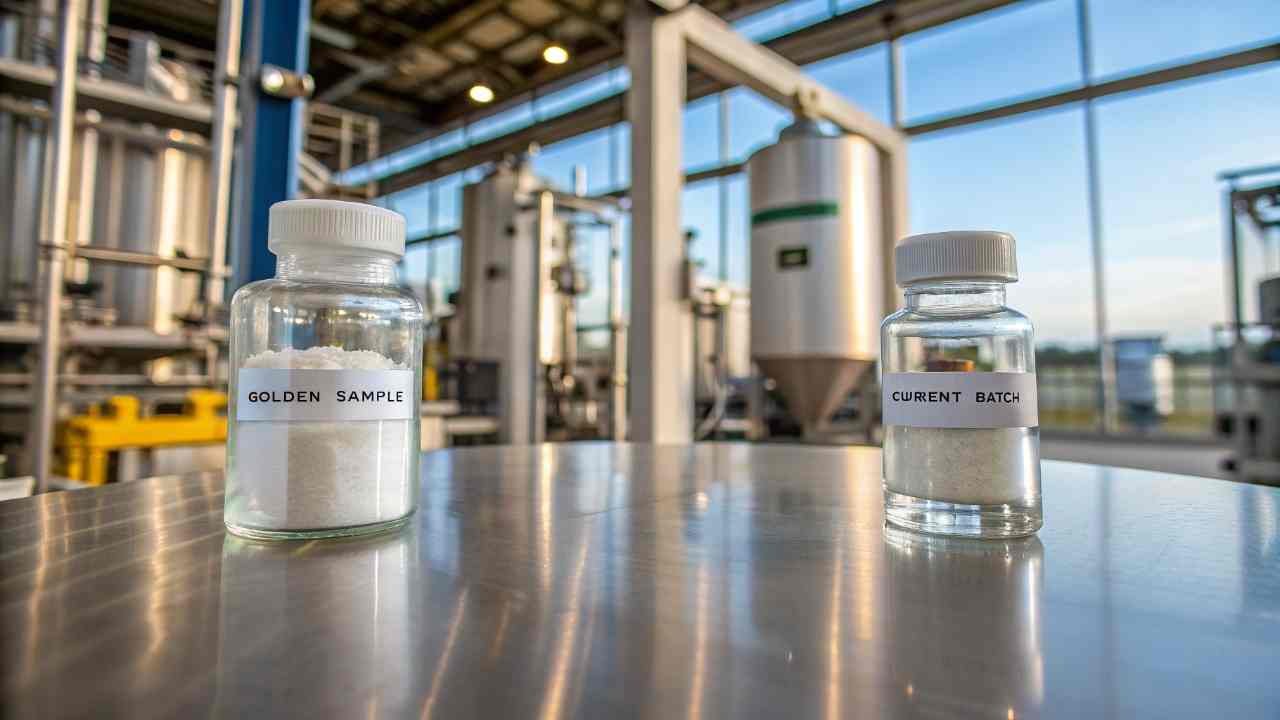
Ensuring Uniformity in Large-Scale Supply
I see that "Consistency" is what separates good factories from bad ones. In a big factory, you use automated machines. These machines are set for a specific sweetness level. If Batch A is 95% and Batch B is 98%, your soda will taste different. Your customers will notice the change. This ruins your brand trust. I act as your quality manager to ensure the factory uses the same "Raw Material Source." Stevia leaves from different provinces in China can taste different. I prioritize factories that have their own farms or long-term contracts with the same farmers. This stabilizes the base quality.
I also look at the "Production Process." A consistent process leads to a consistent product. If the factory changes their filtration or drying method, the texture and taste will change. I track the "Batch History" for my clients. I keep samples of previous shipments to compare with the new ones. If there is a change, I stop the shipment. This "Technical Oversight" is vital for wholesalers and traders. You need to know that every drum in the container is the same. I ensure that the factory uses "Homogenization5" for large orders. This means they mix the whole batch together so it is 100% uniform. This step prevents "Sweetness Gaps" in your final products.
Factors Affecting Supply Consistency
| Factor | Technical Impact | FINETECH's Strategy |
|---|---|---|
| Raw Leaf Source | Glycoside ratios vary | Stick to specific regions |
| Extraction Tech | Impurity removal level | Audit production logs |
| Homogenization | Batch uniformity | Request large-tank mixing |
| Storage Time | Moisture absorption | Ensure FIFO warehouse |
| Lab Standards | Measurement drift | Calibrate HPLC monthly |
| Sample Matching | Baseline sweetness | Retain "Golden Sample" |
Conclusion
Stevia purity and batch consistency are the foundation of high-quality industrial food production. I manage these technical standards at FINETECH to keep your supply chain secure and your brand successful.
-
ScienceDirect – Technical research on the chemical properties and extraction of Rebaudioside A as a high-intensity sweetener. ↩
-
Food Safety Magazine – An overview of the "Clean Label" movement and its impact on consumer demand for natural ingredients. ↩
-
BeverageDaily – A global news platform providing market trends and industrial analysis for the beverage manufacturing sector. ↩
-
Nutritional Outlook – Specialized trade journal providing insights into market trends and ingredient regulations for the supplement sector. ↩
-
Britannica – Scientific resource explaining the industrial process of homogenization used to ensure uniformity in chemical and food batches. ↩