
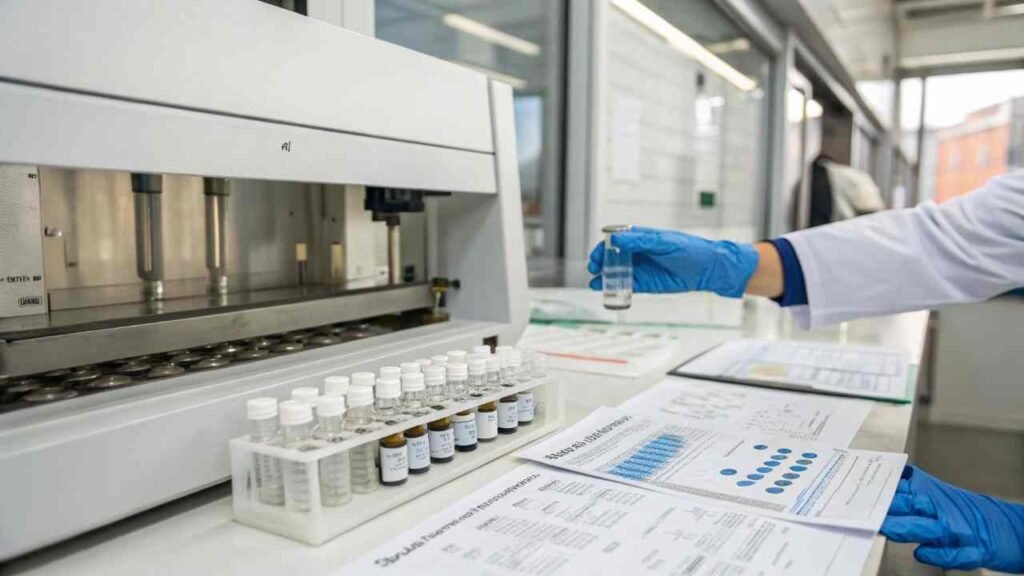
Low-quality Stevia ruins your beverage flavor and harms your customers. This failure leads to expensive recalls and destroys your brand trust. I reveal the technical audits needed to secure your wholesale supply.
Manufacturers ensure Stevia quality by using High-Performance Liquid Chromatography (HPLC) to verify purity and Rebaudioside content. They maintain ISO 22000 and FSSC 22000 certifications. Strict monitoring of heavy metals, pesticide residues, and microbial levels ensures every batch meets international food safety standards for global export.
I manage factory selection and oversee production for my B2B clients at FINETECH. I want to share the technical facts about Stevia quality control so you can protect your brand and your production standards.
What laboratory testing standards are required for Stevia quality control?
Inconsistent sweetness levels stop your production lines. This variability forces you to change your recipe for every batch. I explain the technical lab standards that guarantee consistent Stevia purity.
The standard testing method is HPLC (High-Performance Liquid Chromatography). This separates and measures specific glycosides like Reb A, Reb M, and Reb D. Factories follow JECFA (Joint FAO/WHO Expert Committee on Food Additives) or USP standards to ensure total steviol glycoside content is above 95%.
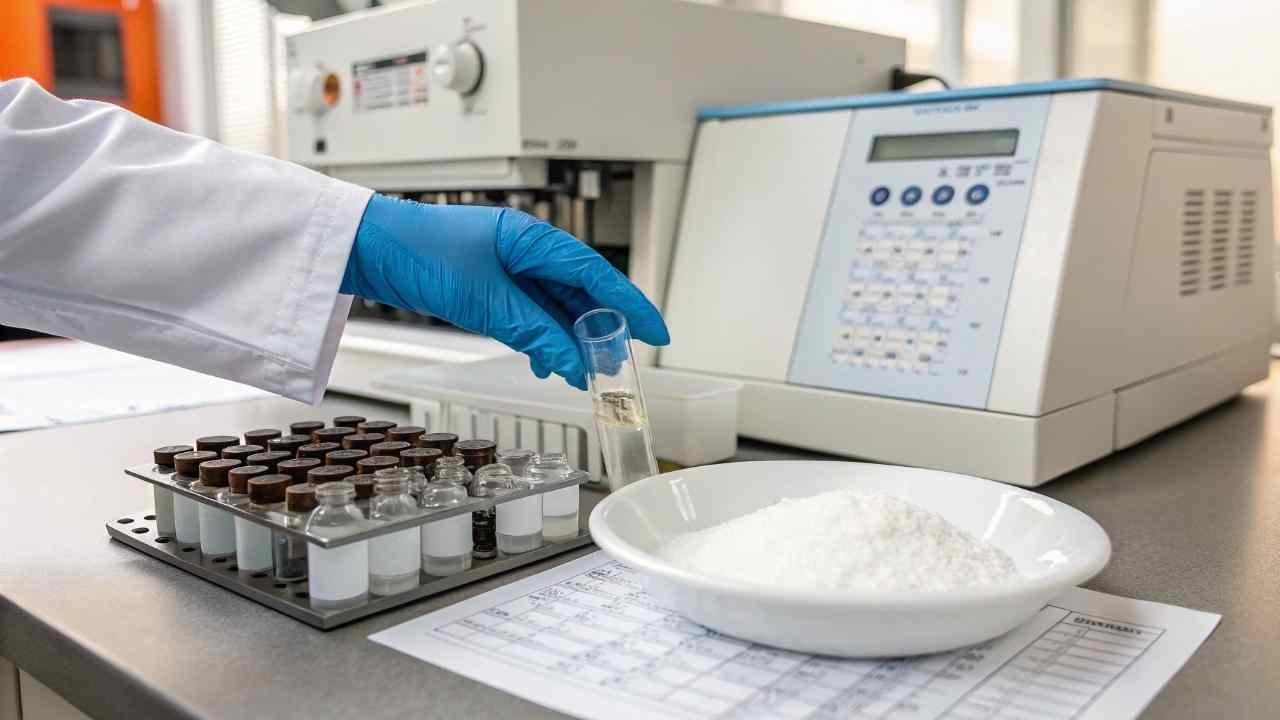
The Science of Purity Testing
I see that HPLC is the most important tool in any Stevia laboratory. This machine allows us to see the "Fingerprint" of the Stevia extract. It tells us the exact percentage of each sweet molecule. For most of my clients, we look for a total steviol glycoside (TSG) content of 95% or higher. I act as your technical gatekeeper to verify these lab reports. I check that the factory uses "External Standards" from verified sources to calibrate their machines. If the machine is not calibrated, the purity number is useless. We also check the "Specific Glycoside" ratios. If you buy Reb A 97%, the HPLC must show exactly 97% for that peak.
Beyond HPLC, we use other technical tests to check physical properties. "Loss on Drying" is a key test. It measures the moisture in the powder. I ensure the moisture is always below 5% to prevent clumping during shipping. We also test "Specific Rotation" and "Ash Content." High ash content means the purification was not done well. I visit the factory labs to see if they follow the USP (United States Pharmacopeia)1 or FCC (Food Chemicals Codex) methods. These international standards ensure that the Stevia you buy in Russia or the Middle East is the same quality as in the USA. I prioritize factories that invest in the latest testing technology. This reduces human error and ensures your production remains stable.
Comparison of International Stevia Standards
| Standard Body | Total Glycosides (TSG) | Moisture Limit | Specific Requirement |
|---|---|---|---|
| JECFA | 95% Minimum | 6.0% Maximum | Focuses on safety for humans |
| USP (USA) | 95% Minimum | 5.0% Maximum | Strict limits on impurities |
| EU (E960) | 95% Minimum | 6.0% Maximum | Specific ratios for Reb A |
| FCC | 95% Minimum | 5.0% Maximum | Standard for food chemicals |
| China GB | 95% Minimum | 5.0% Maximum | Aligned with global rules |
| Japan Standard | 95% Minimum | 6.0% Maximum | Focus on enzymatically modified |
How is Stevia checked for heavy metals and microbial safety?
Contaminated ingredients cause health risks and legal lawsuits. These dangers can end your business overnight. I outline the technical ways we check Stevia to ensure it is 100% safe for human consumption.
Factories use ICP-MS (Inductively Coupled Plasma Mass Spectrometry) to detect trace heavy metals like lead and arsenic. Microbial safety is checked through plating and incubation to ensure zero pathogens. Strict limits are set for total plate count, yeast, mold, and E. coli.
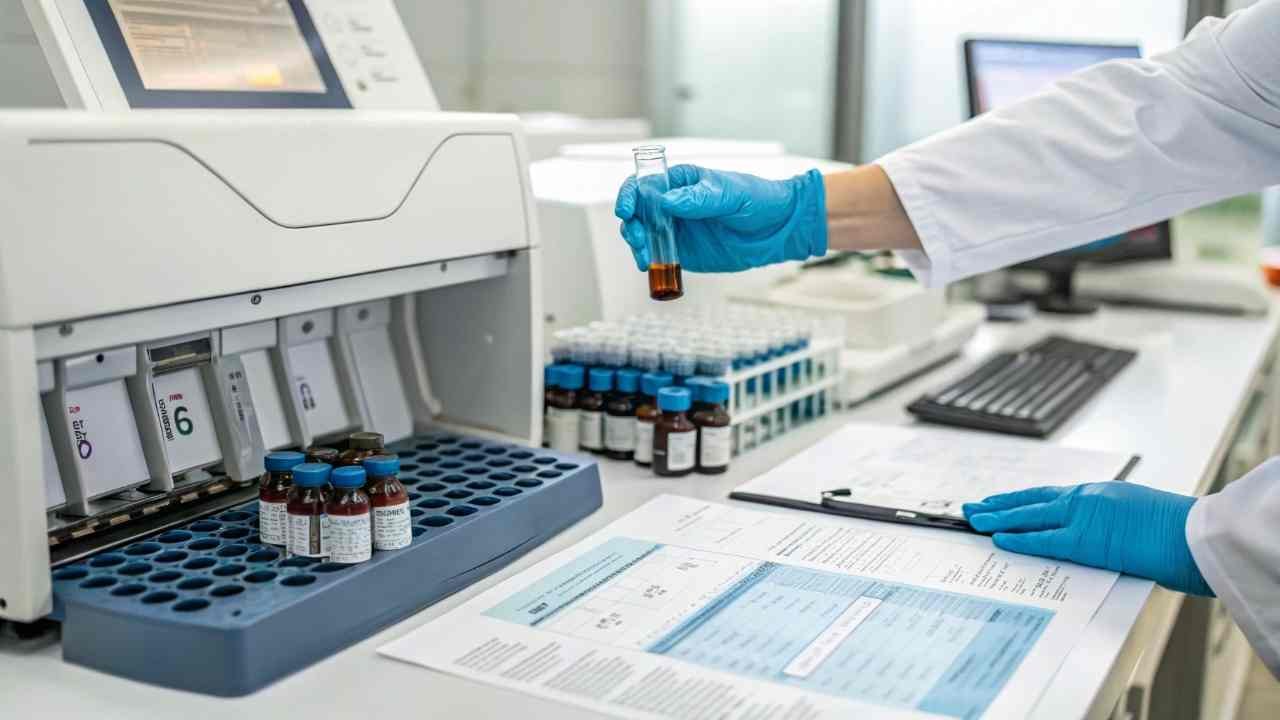
Heavy Metal and Pathogen Control
I see that safety starts in the soil. Stevia leaves can absorb heavy metals2 from the ground. I select factories that source leaves from clean farming zones in provinces like Anhui or Gansu. Once the leaves are processed, we use ICP-MS technology. This is a very sensitive test. It can find one part of lead in a billion parts of Stevia. My European and Middle Eastern clients have very strict rules for lead and arsenic. I ensure these levels are always below 1 ppm (part per million). I act as your risk manager to review these safety logs. If the heavy metal levels are too high, we reject the batch before it ever leaves the warehouse.
Microbial safety3 is the second pillar of quality. Stevia is a natural extract, so it can grow mold or bacteria if handled poorly. I audit the "Clean Rooms" in the factory where the final powder is packed. The staff must wear protective gear to prevent contamination. Every batch is tested in a sterile lab. We look for the "Total Plate Count" (TPC). For food-grade Stevia, the TPC should be very low. We also check for specific dangerous bacteria like Salmonella and E. coli. These must be completely absent. I prioritize factories that use heat-sterilization or steam-treatment for their powder. This technical step ensures the product is safe for sensitive dairy and beverage applications.
Safety Limits for Stevia Export
| Safety Parameter | Industry Standard Limit | FINETECH's High-Quality Target |
|---|---|---|
| Lead (Pb) | < 1.0 ppm | < 0.5 ppm |
| Arsenic (As) | < 1.0 ppm | < 0.5 ppm |
| Cadmium (Cd) | < 1.0 ppm | < 0.5 ppm |
| Mercury (Hg) | < 1.0 ppm | < 0.1 ppm |
| Total Plate Count | < 1000 cfu/g | < 500 cfu/g |
| Yeast & Mold | < 100 cfu/g | < 50 cfu/g |
Why is traceability important in Stevia manufacturing processes?
Losing track of your supply source causes chaos during a quality audit. This lack of data makes you look unprofessional to your customers. I explain why a technical traceability system is the foundation of a reliable supply chain.
Traceability allows manufacturers to track every drum of Stevia back to the specific farm, harvest date, and production batch. This is critical for safety audits and recall management. It ensures that any quality issue is isolated quickly, protecting the rest of your inventory and your reputation.

Farm-to-Fork Technical Tracking
I see that "Transparency" is the goal of modern B2B trade. A professional factory uses a "Batch Management System." Every 25kg drum has a unique QR code or barcode. This code tells us everything. It shows which field the leaves came from. It shows which technician was running the extraction machine. It even shows which lab assistant performed the HPLC test. I act as your strategic partner to verify these systems. If a supplier cannot tell me where their leaves come from, I do not buy from them. Good traceability means we can solve problems in minutes instead of weeks. This speed is vital for large distributors in Southeast Asia and Europe.
Traceability also protects you from "Market Fraud." Some small traders mix high-quality Stevia with low-quality powder to save money. A strict traceability system prevents this. The lot numbers must match the internal production logs. When I visit a plant, I perform a "Traceability Test." I pick a random drum and ask the factory to show me its history. A top-tier plant can provide this data in less than one hour. This technical proof gives my clients confidence. If there is ever a quality complaint from your customer, we can pull the exact lab report for that specific drum. This professional approach is why my B2B partners stay with me for years.
| Traceability Element | Data Collected | Purpose |
|---|---|---|
| Batch Number | Production date / shift | Identifies the unique group |
| Lot Number | Raw material source | Tracks leaf origin |
| QR Code | Digital history | Fast access to COA data |
| Retained Sample | 200g of the batch | Future quality comparison |
| SOP Log | Machine settings | Verifies process consistency |
| Shipping Record | Vessel / Container No | Tracks the path to the port |
How do factories maintain consistent Stevia production quality?
Variation in sweetness intensity makes your final food products inconsistent. This fluctuation ruins the consumer experience and your sales. I reveal the technical methods used to keep every shipment of Stevia exactly the same.
Factories maintain consistency by using automated extraction lines and standardized blending processes. They use "Homogenization" to mix large batches together, ensuring every drum has the same sweetness. Continuous monitoring of temperature, pH, and filtration during production minimizes human error and batch-to-batch drift.

Automation and Batch Homogenization
I see that "Human Error" is the biggest threat to consistency. In old factories, workers manualy add chemicals or change temperatures. Modern factories in China use DCS (Distributed Control Systems)4. A computer controls the whole process. It keeps the temperature and the pH exactly the same for every batch. I prioritize these automated plants for my B2B clients. Automation ensures that the Reb A 98% you buy today is the same as the one you bought last year. I act as your technical office to monitor these production logs. If the computer shows a "Deviation," that batch is flagged for extra testing.
Homogenization is the second secret to consistency. A single extraction might only produce 500kg. But a wholesale order might be 10 tons. To make sure all 10 tons are the same, the factory uses a massive "Blender." They put 20 small batches into one big tank and mix them for several hours. This is called "Batch Homogenization." It ensures that the glycoside ratio and the moisture are identical in every drum of your container. I visit the factories to see these blenders in action. I also check the "Mesh Size" after grinding. If the powder is too fine or too coarse, it will dissolve differently. Standardizing the particle size is a technical step that ensures your automated mixing tanks work perfectly.
Factors for Production Consistency
| Consistency Factor | Technical Control | FINETECH's Observation |
|---|---|---|
| Extraction Temp | Automated sensors | No manual adjustments |
| pH Level | Continuous monitoring | Keeps sweetness stable |
| Filtration | Multi-stage membranes | Removes all plant waxes |
| Mixing Time | Timed homogenization | Ensures batch uniformity |
| Particle Size | Standardized grinding | Consistent solubility |
| Drying Temp | Spray dryer control | Prevents heat damage |
Why is third-party inspection important in Stevia export business?
Relying only on the factory's internal report is a risk for new buyers. You might receive a product that does not match the sample. I explain how independent audits protect your money and your quality standards.
Third-party inspection by companies like SGS or Intertek provides an independent verification of quality and quantity. They collect samples directly from the cargo for lab testing. This prevents fraud, ensures the packaging is secure, and gives the buyer a "Green Light" before sending the final payment.
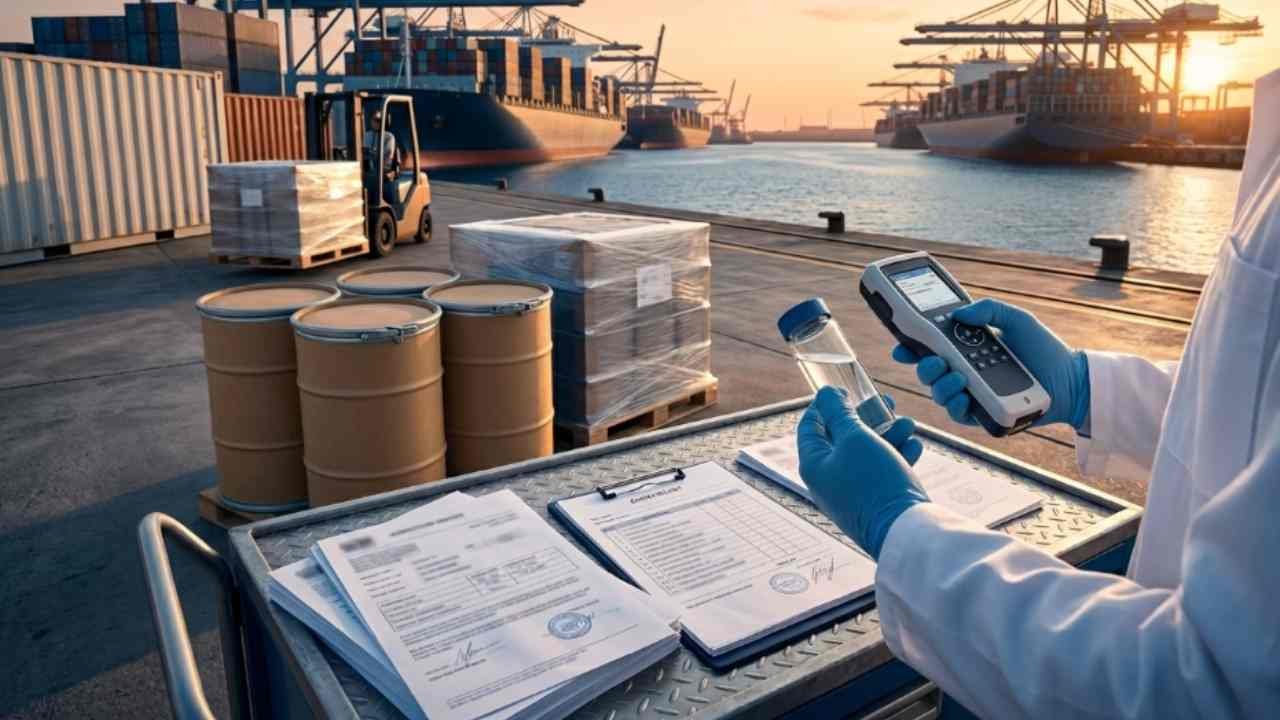
Independent Verification and Fraud Prevention
I see that "Trust" must be verified in international trade. Even with a good factory, mistakes can happen. A third-party inspector5 acts as your representative. They go to the factory when the goods are ready. They pick drums at random and seal them. They send these samples to an independent lab for HPLC testing. This proves that the factory is not just sending a "Golden Sample." I act as your strategic partner to coordinate these inspections. This is especially important for my clients in Russia and the Middle East who are starting new partnerships. It removes the fear of receiving low-purity product.
The inspector also checks the "Physical Condition." They look for broken drums or wet packaging. They count the number of pallets to ensure the quantity is correct. They also watch the "Container Loading." This is very important for Stevia. The container must be clean and dry. The inspector takes photos of the loading process and the "Security Seal" on the door. This report is a technical document you can use for insurance or bank payments. I provide my own oversight as well, but a third-party report is a powerful tool for your finance department. It ensures that you only pay for what was actually shipped. This level of safety is why I can guarantee "Top Quality" for every shipment.
| Inspection Step | What is Verified? | Buyer Benefit |
|---|---|---|
| Random Sampling | Purity / Glycoside count | Prevents "Sample Fraud" |
| Quantity Count | Drum number / Weight | Ensures no missing goods |
| Drum Inspection | Seals / Labeling / Marks | Professional appearance |
| Lab Validation | Independent HPLC | Absolute purity proof |
| Loading Audit | Container health | Prevents transit damage |
| Final Sealing | Security seal number | Prevents theft or swaps |
Conclusion
Manufacturers ensure Stevia quality through advanced HPLC testing, strict safety audits for heavy metals, and full farm-to-factory traceability. I manage these technical steps at FINETECH to keep your wholesale supply secure, consistent, and safe.
-
Food Chemicals Codex (FCC) – Part of the USP standards, this resource provides the internationally recognized criteria for the purity and identity of food ingredients. ↩
-
European Food Safety Authority (EFSA) – Detailed overview of the regulatory limits and health impacts of metal contaminants like lead and arsenic in the food chain. ↩
-
Food Safety Magazine – An in-depth look at microbial control strategies and environmental monitoring within food processing facilities. ↩
-
Emerson – Technical documentation on how Distributed Control Systems (DCS) optimize production consistency in complex manufacturing plants. ↩
-
Intertek – A comprehensive guide to global inspection services that help businesses mitigate risk and verify product specifications during international trade. ↩