
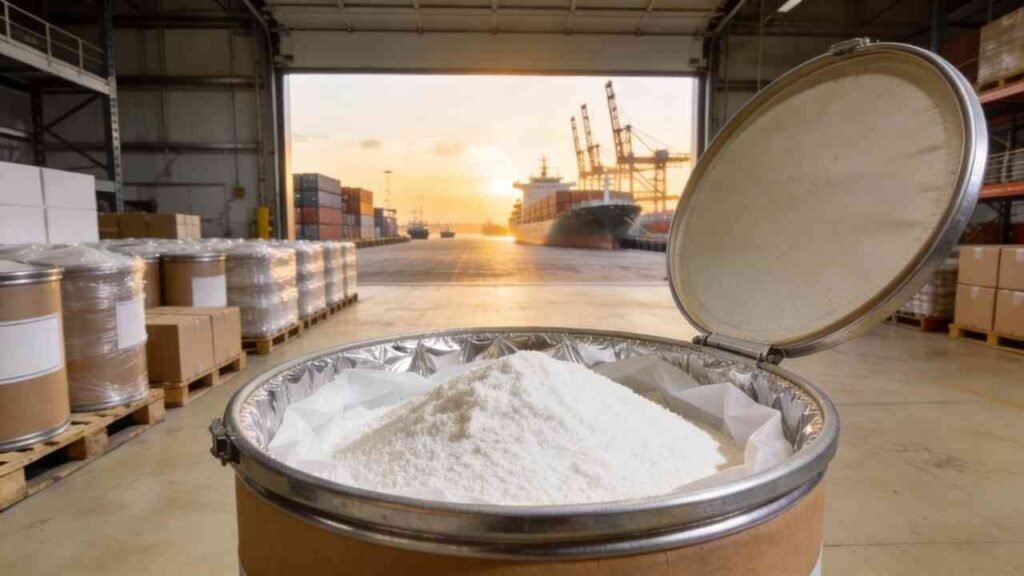
Improper packaging ruins your Stevia powder during sea transit. Caking and clumping cause production delays and financial loss. I provide the technical packaging standards you need for secure global delivery.
Stevia export requires double-layered food-grade PE bags inside high-density fiber drums or cartons. Vacuum-sealed aluminum foil liners are essential for moisture protection. Standard bulk sizes are 20kg or 25kg. These formats ensure product stability and safety during long-distance maritime and land logistics.
I manage factory selection and oversee logistics for my B2B clients at FINETECH. I want to share the technical details of Stevia packaging so you can protect your inventory quality. I see many buyers ignore these details, but good packaging is just as important as the product purity itself.
What packaging formats are commonly used for bulk Stevia export?
Small bags waste your labor and slow your production line. Inefficient bulk sizes increase your shipping costs per kilogram. I guide you toward the most cost-effective industrial packaging formats for your wholesale orders.
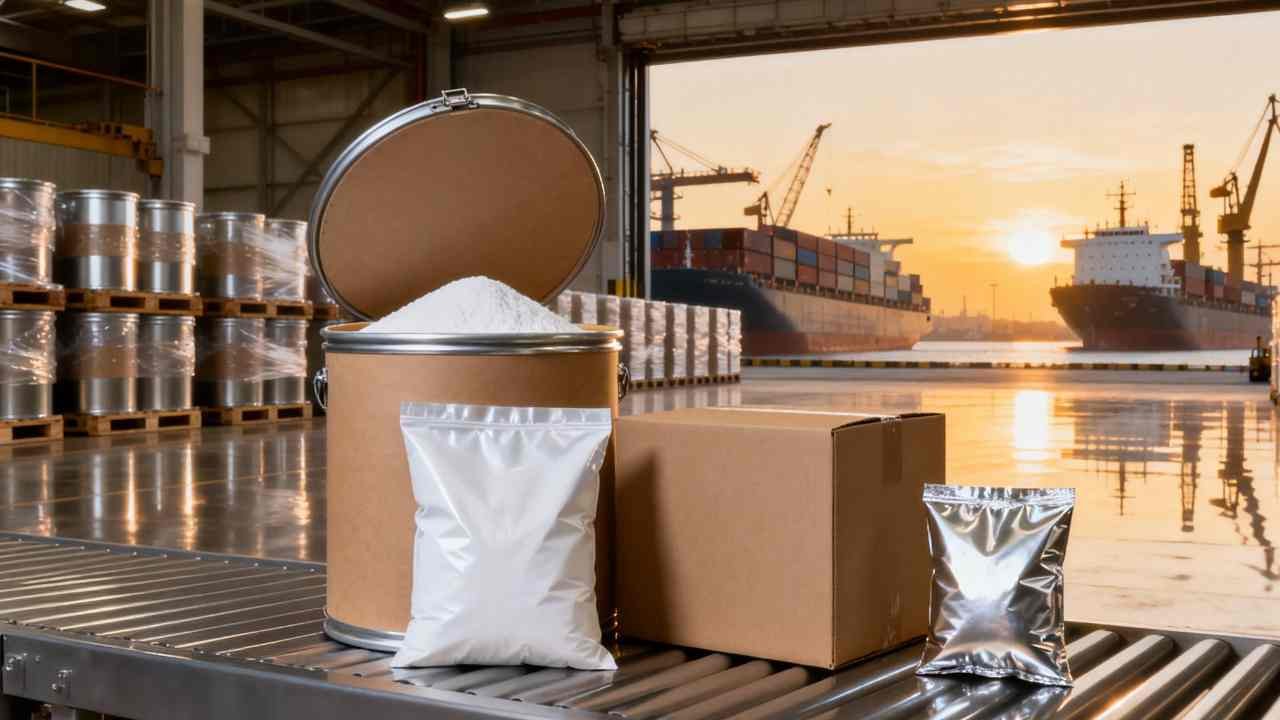
The industrial standard is 25kg fiber drums or 20kg/25kg cardboard cartons. Some premium extracts use 1kg or 5kg vacuum bags inside master cartons. These formats balance handling efficiency with optimal protection for high-purity Reb A and Reb M powders during long trips.
Selecting the Right Container for Your Volume
I see two main choices in the global market: fiber drums1 and cardboard cartons. Fiber drums are the traditional choice for high-purity Stevia. They are very strong and protect the powder from physical pressure. I prefer drums for my clients in the Middle East and Europe because they stack well in containers. The round shape of the drum allows for better air circulation during sea transit. I visit the factories in China to check the "Drum Wall Thickness." A thin drum will collapse if you stack it three layers high. I ensure we use heavy-duty fiber to prevent this risk.
Cardboard cartons are becoming more popular because they save space. A square box leaves no gaps in the container. This allows you to fit more kilograms into a 20ft FCL (Full Container Load). For my clients in Southeast Asia, I often suggest 20kg cartons. They are easier for workers to carry and move. I act as your quality gatekeeper to check the "Burst Strength" of these cartons. They must be double-walled or triple-walled to survive the moisture of the ocean. If you use cheap boxes, the bottom will break when it gets damp. I also suggest using 1kg or 5kg inner bags for smaller traders. This allows you to sell small units without opening the big bulk bag.
Comparison of Bulk Stevia Containers
| Packaging Type | Standard Weight | Main Advantage | Best Application |
|---|---|---|---|
| Fiber Drum | 25kg | Maximum physical strength | Long-distance sea freight |
| Square Carton | 20kg - 25kg | Space efficiency in FCL | Land transport and rail |
| Small Bags | 1kg - 5kg | Retail/Laboratory use | Distribution and sampling |
| Big Bags (FIBC) | 500kg - 1000kg | Lowest unit cost | Large-scale food plants |
| Vacuum Pack | 1kg - 10kg | Zero moisture entry | Ultra-high purity Reb M |
| Plastic Pails | 10kg - 20kg | Reusable and waterproof | Local regional delivery |
Why are moisture-proof liners important in Stevia packaging?
Humidity turns your fine Stevia powder into hard rocks. This makes it impossible to measure or dissolve in your factory. I explain why moisture-proof liners are non-negotiable for all your international Stevia shipments.
Stevia is highly hygroscopic and absorbs water from humid air. Moisture-proof liners, especially aluminum foil or multi-layer PE bags, act as a barrier against humidity. This prevents caking, maintains powder flowability, and protects the chemical purity of the glycosides during the transit period.

The Technical Need for Humidity Barriers
I see that Stevia molecules love water. When the air is humid, the powder pulls moisture inside. This starts a process called "Caking." The powder becomes a solid block. You cannot pump it or mix it accurately. I visit the packing rooms of our partner factories to audit their "Liner Standards." We use two layers of protection. The first layer is a food-grade PE (Polyethylene) bag. This bag is thick and flexible. It prevents the powder from touching the drum. I ensure the factory uses "Heat Sealing" instead of just tying the bag with a string. A string tie always lets some air inside.
The second layer is even more important for ocean shipping. I suggest using an aluminum foil bag for all high-purity extracts like Reb A 97%. Aluminum is a total barrier. It blocks 100% of moisture and light. I act as your technical advisor to check the "Micron Thickness" of these foil bags. If the foil is too thin, it will get tiny holes during the trip. I also suggest "Vacuum Packaging" for very expensive grades. We suck the air out of the bag before sealing it. This removes the humidity that was trapped inside the bag during packing. This technical step is how I guarantee your Stevia stays fresh even if the container sits in a hot, humid port for two weeks.
Liner Performance Comparison
| Liner Material | Moisture Barrier | Light Protection | FINETECH's Technical View |
|---|---|---|---|
| Standard PE Bag | Moderate | Low | Use for short trips only |
| Double PE Bag | High | Low | Minimum for export use |
| Al-Foil Bag | Excellent | Excellent | Best for high-purity Reb A |
| Vacuum Al-Foil | Extreme | Excellent | Required for Reb M/Premium |
| Kraft Paper Bag | Low | Moderate | Avoid for sea shipping |
| Coated PE Bag | High | Moderate | Good for budget orders |
How does packaging design affect Stevia shelf life during transport?
Poor packaging design exposes your Stevia to light and temperature swings. This degrades the sweetener and shortens its shelf life. I show you how proper industrial design preserves your product quality for at least two years.
Packaging design prevents light exposure and oxygen ingress, which can degrade sensitive glycosides. Airtight seals and UV-opaque materials like fiber drums or foil bags maintain a stable internal environment. This ensures the 2-year shelf life remains intact after months of global shipping and storage.
Protecting Chemical Stability with Design
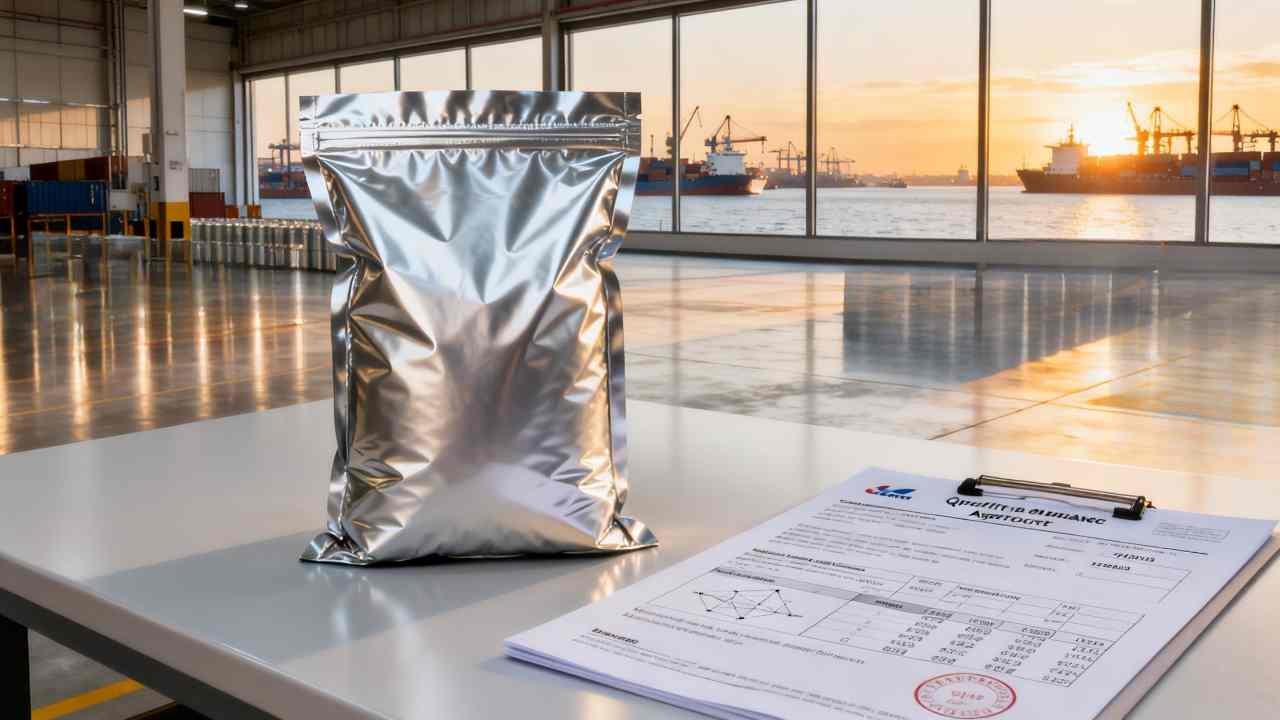
I see that Stevia is a very stable molecule, but it is not immortal. Heat and light can slowly change the flavor profile. If the packaging allows UV light to reach the powder, the sweetness might decrease. This is why we use opaque fiber drums or foil liners. These materials block all light. I act as your strategic partner to audit the "Storage Tests" at the factory. They put the packed drums in a hot room for months to simulate a long trip. We check the HPLC results after the test. If the purity drops, the packaging design is a failure. I only work with factories that pass these "Accelerated Stability2" tests.
The "Airtight Seal" is the most critical design feature. Oxygen can cause very slow oxidation of the minor glycosides. This can lead to a slight "off-flavor" over time. I ensure our drums have a metal ring seal or a high-strength plastic lid. This lid must have a gasket. The gasket creates a rubber seal when the lid is closed. This design keeps the internal environment of the drum completely different from the outside air. I also suggest using "Desiccant Bags" inside the drum. These are small silica gel packs that eat any moisture that gets trapped during packing. By using these technical design features, I ensure your Stevia arrives with its full 24-month shelf life ready for use.
| Design Feature | Technical Function | Shelf Life Impact |
|---|---|---|
| Opaque Exterior | Blocks UV radiation | Prevents flavor degradation |
| Rubber Gasket | Creates airtight seal | Stops oxygen and moisture |
| Metal Locking Ring | Physical security | Prevents lid from popping off |
| Desiccant Packs | Absorbs internal humidity | Prevents caking in the core |
| Multi-layer Foil | Total gas barrier | Maintains chemical purity |
| Pallet Shrink Wrap | External barrier | Protects drums from rain/dust |
What labeling requirements are needed for international Stevia shipments?
Wrong labels cause customs seizures and expensive port storage fees. This administrative failure stops your sales and hurts your reputation. I list the critical label data required for smooth global customs clearance.
International labels must include the product name, purity grade (e.g., Reb A 97%), batch number, net weight, and production/expiry dates. Storage instructions, manufacturer details, and country of origin (China) are mandatory. Proper labeling ensures compliance with EU, Middle East, and US food safety regulations.

Mandatory Data and Regulatory Compliance
I see that customs officers are very strict about food additives. If a label is missing the batch number or the "Food Grade" mark, they might reject the whole container. I act as your documentation manager to ensure every label is perfect. We include the HS Code3 (2938100000) on the paperwork, but some clients like to see it on the drum too. The most important data is the "Purity Level." It must match the Certificate of Analysis (COA) exactly. If the drum says "Stevia Extract" but the COA says "Reb A 98%," customs will ask for a lab test. This delay costs you money every day. I ensure our labels are clear, professional, and printed in English.
For certain regions, we add more technical data. For my clients in the Middle East, we include the "Halal4 Logo" and the "Production Date" in a clear format. For Europe, we ensure the "E-number" (E960) is visible. I also include "Storage Instructions" on every label. This tells the warehouse staff to keep the goods away from heat and water. I use "Weatherproof Labels" that do not fall off if they get wet. If a label falls off, the drum becomes "Unidentified Cargo." This is a huge risk in a large warehouse. I visit the factories to ensure the label adhesive is strong enough for the humidity of the sea. I provide a "Draft Label" for your approval before we start the final packing.
Label Content Checklist
| Label Element | Technical Reason | FINETECH's Quality Check |
|---|---|---|
| Product Name | Clear identification | Must include specific Reb grade |
| Batch Number | Full traceability | Must match the COA and invoice |
| Net Weight | Customs valuation | Verify with calibrated scales |
| MFG/EXP Dates | Shelf life tracking | Minimum 2 years from production |
| Storage Note | Quality preservation | "Store in cool, dry place" |
| Halal/Kosher | Religious compliance | Verify logo is current/valid |
| Country of Origin | Trade regulations | "Made in China" must be clear |
| Warning Icons | Handling safety | "Keep Dry" and "Use No Hooks" |
How should Stevia be stored in warehouses before distribution?
Dirty or hot warehouses spoil your premium Stevia stock. Pests and dampness ruin the product before it reaches your customer. I explain the technical storage rules you must follow in your wholesale distribution centers.
Stevia must be stored in a cool, dry, and well-ventilated area away from direct sunlight. Temperature should stay below 25°C with humidity under 60%. Keep drums on pallets off the floor and away from walls to prevent moisture absorption and pest access during the distribution phase.
Warehouse Environmental Control
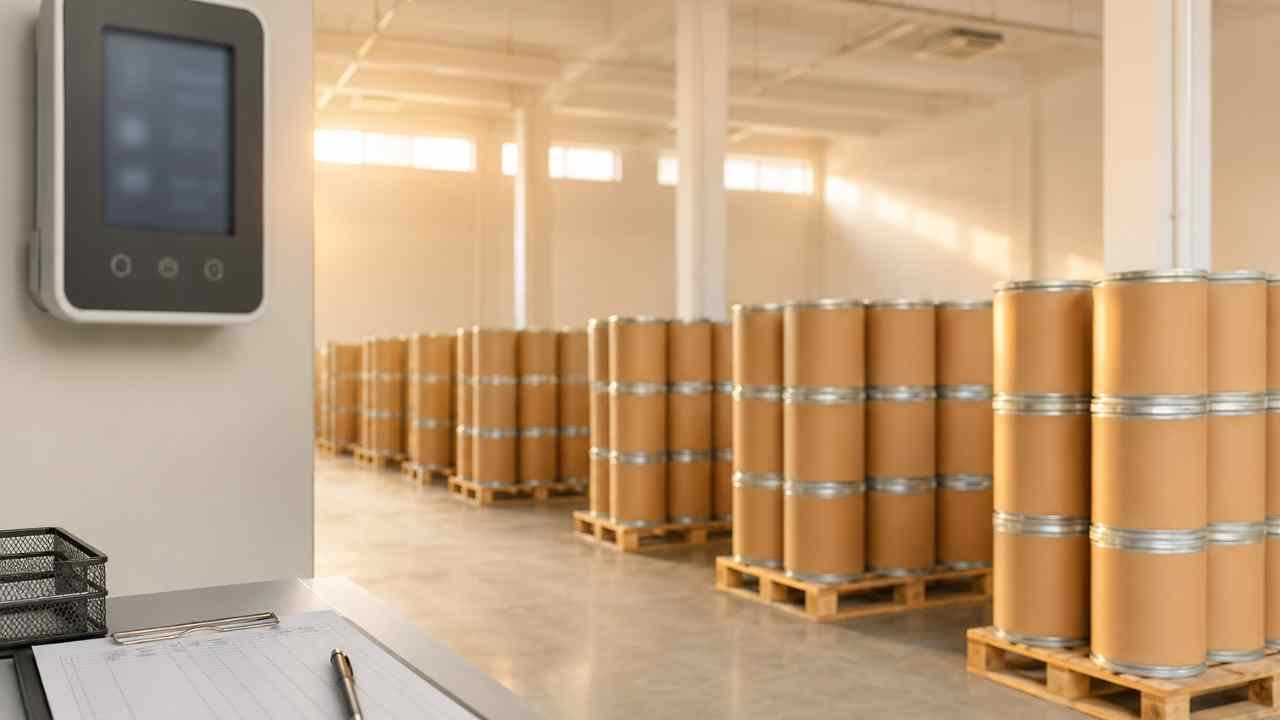
I see that many buyers forget about the product once it arrives at their warehouse. But Stevia needs a controlled environment even after it is packed. The most important factor is the "Floor Gap." You must never put Stevia drums directly on a concrete floor. Concrete "sweats" and moves moisture into the bottom of the drum. I always ship on pallets to ensure there is an air gap. I act as your logistics advisor to suggest "Plastic Pallets" instead of wood if you are in a very humid area like Indonesia or Vietnam. Plastic does not hold moisture or bugs. I also suggest keeping the pallets at least 50cm away from the warehouse walls. This allows for better ventilation and makes it easier to check for pests.
Temperature control is the second pillar of storage. While Stevia is heat-stable during processing, long-term storage in a hot warehouse (above 35°C) is bad. High heat can weaken the PE liners and make them brittle. I suggest a "Cool Storage" area with a maximum temperature of 25°C. You also need to manage "Odors." Stevia powder can absorb smells from the air. You must never store Stevia near strong-smelling chemicals like perfumes, fuels, or other additives like Garlic Powder. I check these warehouse conditions for my clients when I visit their sites. I suggest a "First-In, First-Out (FIFO)5" system. This ensures you always sell the oldest stock first and keep your inventory fresh.
Ideal Storage Parameters Table
| Parameter | Ideal Range | Risk if Violated |
|---|---|---|
| Temperature | 15°C - 25°C | Liner degradation / Off-flavors |
| Humidity | 40% - 60% | Caking and powder clumping |
| Light Level | Dark / Low light | UV degradation of glycosides |
| Floor Status | Palletized (off floor) | Moisture wicking from ground |
| Air Quality | Odor-free zone | Absorption of cross-contamination |
| Stacking Height | Max 3 drums high | Physical crushing of bottom drums |
| Ventilation | High / Continuous | Heat buildup and mold risk |
Conclusion
Technical packaging standards and controlled storage are essential for maintaining Stevia quality during global export. I manage these logistics details at FINETECH to ensure your wholesale supply arrives in perfect condition for your food manufacturing needs.
-
Greif – Technical specifications and industrial applications of high-performance fiber drums for dry and powdered goods. ↩
-
ICH Guidelines – International standards for stability testing of substances to determine shelf life and storage conditions. ↩
-
World Customs Organization – Official resource explaining the Harmonized System used for the classification of products in global trade. ↩
-
IFANCA – An international authority on Halal standards, providing guidance for food ingredient compliance in global markets. ↩
-
Investopedia – A comprehensive look at the FIFO inventory management method and its benefits for maintaining product quality. ↩