

Unstable Stevia prices and sudden shortages halt your food production lines. These risks drain your profits and cause stress. I show you how long-term contracts secure your supply and lock in costs.
Long-term supply contracts are essential for Stevia buyers because they provide price protection against market volatility and ensure a guaranteed stock allocation. These agreements help manufacturers maintain consistent production schedules and avoid the high costs of urgent spot-market purchases during periods of high demand or leaf shortages.
I manage factory selection and oversee production for my B2B clients at FINETECH. I see the price swings in the Chinese market every week. I want to share the technical facts about supply agreements so you can protect your business and your profit margins.
How do annual contracts stabilize Stevia supply and pricing?
Fluctuating raw material costs create financial uncertainty for your food business. This volatility makes annual budgeting almost impossible. I explain how annual agreements create a stable financial foundation for your sweetener procurement.
Annual contracts stabilize Stevia supply by locking in a fixed price for a specific volume over twelve months. This prevents price hikes during peak demand or raw leaf shortages. It also ensures the factory reserves production capacity exclusively for your scheduled shipments throughout the entire year.

The Mechanics of Market Stability
I see that the price of Stevia leaves changes based on the harvest season1 in China. If the weather is bad, the price of the raw leaves goes up. Without a contract, the price of the final extract will also rise suddenly. When we sign an annual contract, I negotiate with the factory to buy the raw materials in advance. This "hedging" strategy protects you from price jumps. I act as your strategic partner to monitor these harvest trends. We lock in the price when the market is low. This gives you a predictable cost for your beverage or dairy formulations.
Supply stability is just as important as the price. During the summer, demand for Stevia in the beverage industry is very high. Factories often run at full capacity. If you do not have a contract, the factory might prioritize other buyers. I oversee the production schedule to ensure our contracted volume is always the first priority. I visit the plants to check their inventory levels for our long-term clients. This "Guaranteed Allocation" means your container is always ready when you need it. You avoid the risk of a "Stock Out" which could stop your entire factory.
Contract vs. Spot Market Comparison
| Feature | Long-Term Contract | Spot Market Purchase | FINETECH's Technical View |
|---|---|---|---|
| Price Predictability | Fixed for 12 months | Changes daily | Contract prevents budget shocks |
| Stock Priority | Guaranteed allocation | Subject to availability | Contract secures high-demand periods |
| Quality Consistency | Same batch/source | Varies by supplier | Contract ensures flavor uniformity |
| Lead Time | Pre-planned / Stable | Often delayed | Contract allows better planning |
| MOQ Terms | Flexible per shipment | Fixed high MOQs | Contract allows split shipments |
| Risk Management | High protection | High risk of price spikes | Contract is a safety net |
What minimum order quantities are typical in Stevia bulk trade?
High MOQs can block your entry into the natural sweetener market. Low MOQs from unreliable traders often mean poor quality. I define the typical industry standards for bulk Stevia orders so you can plan your logistics.
In the Stevia bulk trade, typical minimum order quantities (MOQs) range from 100kg to 500kg for standard grades like Reb A 95%. For premium or customized grades, MOQs may reach 1,000kg. Small trial orders of 25kg drums are often available for new B2B clients.

Understanding MOQ Logic in Wholesale
I see that MOQ2 depends on the production scale of the factory. Stevia is a very concentrated product. A 25kg drum of Stevia replaces several tons of sugar. Because of this high potency, even large food plants do not always need 10 tons at once. I help my clients in the Middle East and Southeast Asia manage their order sizes. For most of our Reb A products, the MOQ is 100kg. This is exactly four drums. This size is easy to ship and does not tie up too much of your cash. I act as your technical coordinator to group smaller orders into one shipment to save on freight costs.
Customization changes the MOQ rules. If you need a specific blend, like Stevia mixed with Erythritol3, the factory must clean the machines and set a new recipe. This "Changeover Time" is expensive. For these special orders, the MOQ is usually 500kg or 1,000kg. I visit the production lines to see how these blends are made. I ensure the mixing is perfect before we pack the goods. For new traders, I can often negotiate a "Trial MOQ" of just one drum (25kg). This allows you to test the quality in your local lab before you commit to a full container. My goal is to make the entry point easy while maintaining the "Top Quality" you expect.
Typical MOQs by Product Grade
| Stevia Grade | Typical MOQ | Packaging Format | Best For |
|---|---|---|---|
| Reb A 95% / 97% | 100kg | 4 x 25kg Drums | Standard beverages |
| Reb M 95% | 25kg - 100kg | 1kg or 25kg packs | Premium dairy |
| Enzymatic Stevia | 500kg | 20 x 25kg Drums | Bulk food processing |
| Stevia Blends | 500kg - 1000kg | 25kg Cartons/Drums | Retail or bakery use |
| Trial Samples | 1kg - 5kg | Aluminum Bags | Lab testing only |
| Custom Formulas | 1000kg+ | According to spec | Large brand owners |
How do suppliers offer flexible payment terms for Stevia buyers?
Strict payment terms lock up your working capital and slow your growth. This cash flow pressure limits your ability to buy more stock. I describe the financial options available for established B2B partners in the Stevia trade.
Suppliers offer flexible payment terms such as T/T (Telegraphic Transfer) with a deposit, Letters of Credit (L/C), or CAD (Cash Against Documents). For long-term partners with a strong credit history, some suppliers may offer open account terms or deferred payments through credit insurance like Sinosure.

Financial Flexibility and Trust Building
I see that trust is the currency of the food additive world. For the first order, most factories in China ask for a 30% deposit and 70% before shipping. This is the standard for new relationships. I act as your strategic office to manage these payments safely. Once we have a history of 3 or 4 successful shipments, I can negotiate better terms. For my clients in Saudi Arabia and the UAE, we often use Letters of Credit (L/C)4. This protects both the buyer and the seller. The bank only releases the money when the shipping documents are perfect. I check these documents myself to ensure there are no delays at the port.
For very large wholesalers and traders, we use credit insurance tools like Sinosure. This allows us to offer "OA" (Open Account) terms. You can receive the goods first and pay after 30 or 60 days. This is very helpful for your cash flow because you can sell the Stevia to your customers before you pay the factory. I manage the application process for this credit. We look at your company's history and financial strength. My role is to bridge the gap between the factory's need for security and your need for flexibility. By offering these terms, we help you grow your business faster without the stress of upfront cash.
| Payment Method | Risk Level | Cash Flow Impact | Best For |
|---|---|---|---|
| T/T (Advance) | High for Buyer | Negative | Small trial orders |
| T/T (Deposit/Bal) | Moderate | Balanced | Standard wholesale |
| L/C (Sight) | Low for Both | Moderate | Large international deals |
| CAD (Documents) | Moderate | Better | Established traders |
| Open Account (OA) | High for Seller | Excellent | Long-term VIP partners |
| DP (Against Pay) | Moderate | Good | Regional distribution |
Why is inventory planning essential in Stevia procurement strategy?
Poor inventory planning leads to expensive air freight costs or empty factory shelves. These emergencies disrupt your entire supply chain and cost you money. I show you how to align your Stevia stock levels with your production needs.
Inventory planning is essential because Stevia has long lead times for international shipping and specific harvest cycles. It ensures you have enough stock to handle demand spikes while avoiding the extra costs of urgent orders. Proper planning also maintains product freshness within its 2-year shelf life.
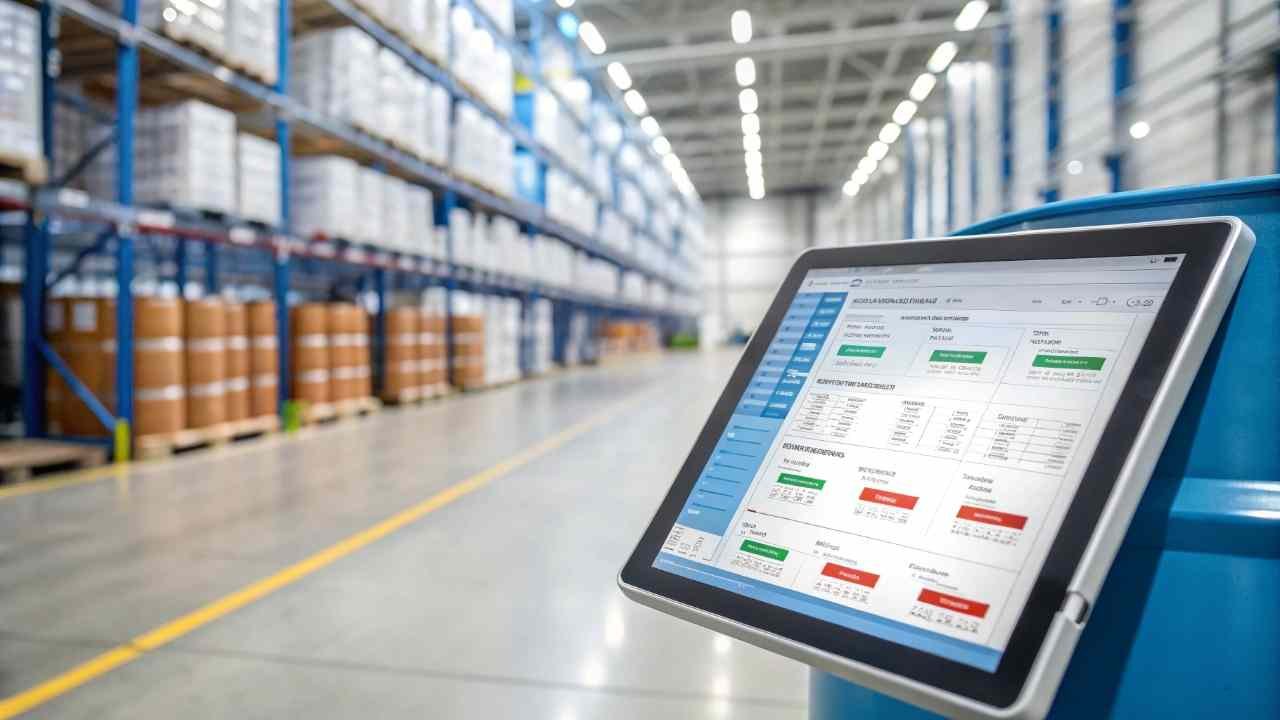
Strategic Stock Management
I see that "Just-in-Time" delivery is very risky for international trade. Ships can be delayed by storms or port strikes. If you only have one week of stock, you are in danger. I suggest keeping at least two months of "Safety Stock5" in your warehouse. I act as your logistics advisor to calculate this level. We look at your monthly usage and add a 20% buffer. Stevia is a high-value product, but it does not take up much space. This makes it easy to store compared to sugar. I ensure our shipments arrive in a steady "Pipeline" so you never have too much or too little at once.
Shelf life is another part of the plan. Stevia lasts for two years if kept in a cool, dry place. I track the production dates for all my clients. I ensure the factory sends you the "Freshest Batch." You should use a "First-In, First-Out" (FIFO) system in your warehouse. This prevents old drums from sitting at the back. I also consider the harvest season. In China, the new leaf crop comes in the autumn. I suggest my clients buy more stock in November and December. This ensures you have the best quality from the new harvest before the Chinese New Year holiday shuts down the factories. This level of planning is how we keep your supply chain smooth and stress-free.
| Planning Factor | Technical Detail | Impact on Business |
|---|---|---|
| Lead Time | 30 - 60 Days (Sea) | Determines re-order point |
| Safety Stock | 2 Months of usage | Protects against ship delays |
| Shelf Life | 24 Months | Requires FIFO warehouse mgmt |
| Harvest Season | October - November | Best time for bulk purchase |
| Holiday Gaps | Chinese New Year | 2-week production stop |
| Demand Spikes | Summer beverages | Requires higher safety stock |
How do long-term agreements benefit Stevia pricing stability?
Rising inflation and energy costs drive up additive prices suddenly. This makes your products more expensive to manufacture and lowers your sales. I explain how long-term agreements act as a technical shield against price inflation.
Long-term agreements benefit pricing stability by protecting buyers from "peak and valley" cycles of raw material costs. They allow for fixed-price bidding on large projects. This helps manufacturers set their own retail prices with confidence, knowing their raw material costs are fixed for the contract duration.
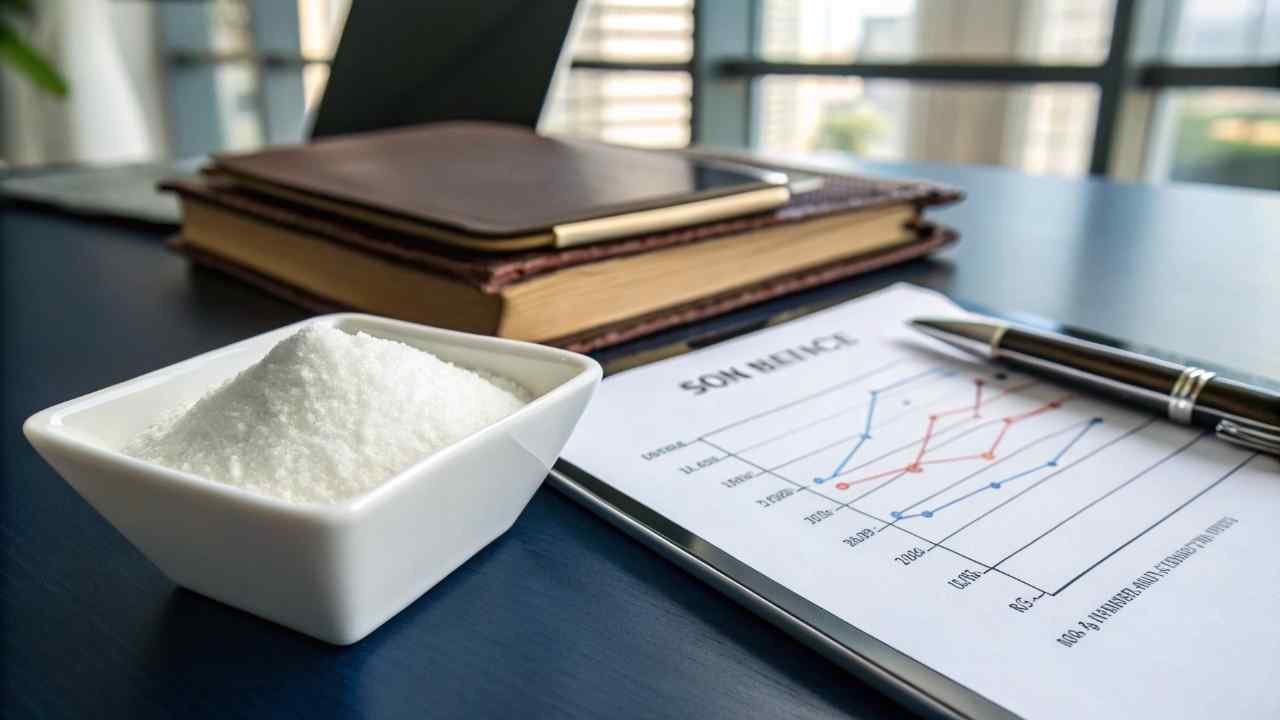
Hedging Against Global Inflation
I see that energy and transport costs are very unstable. When the price of electricity in China goes up, the cost of extracting Stevia also rises. A long-term agreement locks in the price regardless of these changes. I negotiate these contracts with the factory's top management. We agree on a price that works for everyone. This allows you to sign long-term deals with your own customers, like supermarkets or soda brands. You know exactly what your profit margin will be for the next year. I act as your technical gatekeeper to ensure the factory honors the price even if the market goes up by 20%.
These agreements also simplify the "Bidding Process." If you are a wholesaler in Europe or Southeast Asia, you often have to bid for large government or corporate contracts. You need a firm price that will stay valid for 6 or 12 months. Without a long-term agreement from your supplier, your bid is a gamble. I provide the "Price Guarantee" documents you need to win these deals. I visit the factories to ensure they have the financial strength to keep the agreement. This strategic oversight reduces your business risk. By stabilizing the price, we move from a simple buyer-seller relationship to a professional partnership that focuses on long-term growth.
| Benefit | How it Works | Strategic Value |
|---|---|---|
| Cost Control | Fixed price per kg | Protects profit margins |
| Budgeting | Known procurement cost | Easier financial planning |
| Bid Support | Firm price for tenders | Helps win large contracts |
| Market Hedge | Ignores spot price jumps | Safety during inflation |
| Partner Loyalty | Priority in shortages | Stronger supply chain |
| Freight Lock | Coordinated shipping | Lowers total landed cost |
Conclusion
Long-term supply contracts provide essential price stability and guaranteed stock for industrial Stevia buyers. I manage these agreements at FINETECH to ensure your B2B supply chain remains reliable, predictable, and profitable.
-
AgroPages – News and insights on global agriculture and crop protection, focusing on industry trends and harvest updates in China. ↩
-
Shopify – A wholesaler's guide to Minimum Order Quantity (MOQ), explaining its role in inventory and manufacturing efficiency. ↩
-
Healthline – A nutritional review of Erythritol, exploring its properties as a zero-calorie sweetener often blended with high-intensity extracts. ↩
-
Investopedia – A detailed explanation of how Letters of Credit function to secure payments and minimize risk in global commerce. ↩
-
NetSuite – A professional explanation of safety stock management and its importance in maintaining supply chain resilience. ↩