
Choosing a bad supplier leads to bitter products and lost revenue. This mistake ruins your brand reputation. I guide you to find trustworthy partners who guarantee top-quality Stevia every time.
To identify a reliable Stevia supplier, verify their production technology, export experience, and third-party certifications like FSSC 22000. Look for high-purity testing capabilities (HPLC) and transparent batch traceability. A reliable partner offers consistent quality, competitive pricing, and secure, timely delivery for industrial food production.
I manage factory selection and oversee production for my B2B clients at FINETECH. I want to share the technical facts about supplier evaluation so you can protect your brand and your production standards. I see many buyers focus only on price, but a reliable partner provides much more than a low quote.
What qualifications indicate a professional Stevia manufacturer?
Unprofessional factories produce inconsistent batches. This messes up your recipe and causes waste. I show you the technical qualifications that separate top manufacturers from small, risky workshops.
Professional Stevia manufacturers possess advanced extraction technology, large-scale production facilities, and in-house laboratories equipped with HPLC. They have specialized technical teams, a stable raw leaf supply chain, and deep knowledge of global food safety regulations to support international food and beverage buyers.
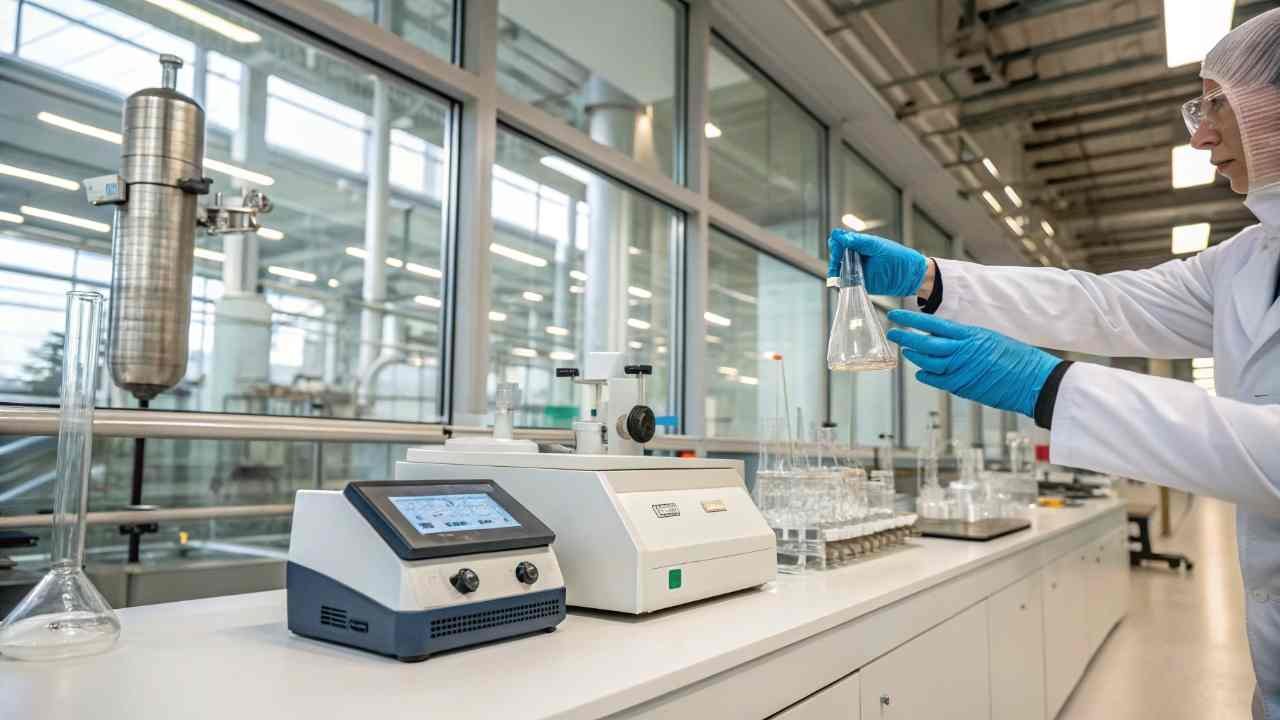
Advanced Technology and Supply Chain Control
I see that the best factories use membrane filtration instead of old chemical resin methods. This technology is expensive, but it produces a cleaner taste. A professional manufacturer will show you their extraction line. I visit these plants to check their "Automation Level." High automation means fewer human mistakes. If the factory has a dedicated R&D team, they can help you with custom blends. This is a sign of a high-level partner. I also look at their raw material source. A reliable supplier has long-term contracts with Stevia farmers. This ensures they have leaves even when the market is short.
In-house testing is another must-have. A factory cannot be professional if they send every sample to an outside lab. They need their own HPLC (High-Performance Liquid Chromatography) machines. This allows them to test every batch during the production process. I act as your technical gatekeeper to verify these lab records. I check if their staff knows how to use the equipment properly. A professional factory will also have a "Clean Room" for final packing. This prevents dust and bacteria from entering the drum. I prioritize factories that invest in these technical details because it protects your final food product quality.
Manufacturer Qualification Checklist
| Qualification | High-Level Supplier | Low-Level Workshop | FINETECH's Technical Tip |
|---|---|---|---|
| Extraction Tech | Membrane filtration | Chemical resin only | Membrane gives better taste |
| Lab Equipment | Multiple HPLC units | No lab or old tools | HPLC ensures purity levels |
| Leaf Sourcing | Direct farm contracts | Buys from open market | Contracts ensure stability |
| Staffing | Expert R&D engineers | Basic laborers only | R&D helps with formulas |
| Packing Zone | ISO Class 8 Clean Room | Standard warehouse | Clean rooms prevent mold |
| Automation | Computer-controlled | Manual valves/scales | Automation reduces drift |
Which certifications ensure reliability in Stevia export supply?
Missing documents cause customs seizures and fines. This delay costs you money and time. I explain the must-have certificates that ensure your cargo moves through borders without any trouble.
Reliability in Stevia export is ensured by food safety certifications like FSSC 22000, ISO 22000, and HACCP. For global markets, Halal, Kosher, and Organic (USDA/EU) certificates are essential. These documents prove the supplier meets international safety, purity, and religious standards for food ingredients.
Global Standards and Compliance
I see that "Paperwork" is the bridge of trust in international trade. If a supplier says they are good but have no certificates, I do not believe them. FSSC 220001 is the most important one for large food companies. It shows the factory has a complete safety management system. I act as your strategic office to check these certificates in the official databases. I make sure they are not expired or fake. For my clients in the Middle East, Halal certification2 is a "hard" requirement. The certificate must be from an approved body like MUI or HMC. I verify these religious links to keep your sales legal in Saudi Arabia or the UAE.
Organic certifications are even more strict. If you want to sell "Organic Stevia," the factory must have USDA or EU Organic papers. These certs require a full audit every year. They track everything from the soil to the shipping drum. I also check for "Social Audits" like Sedex3. Many big buyers in Europe now require this to prove fair labor. I prioritize suppliers who hold multiple certificates. It shows they are serious about the global market. These documents are your insurance policy. If a customs officer asks for proof of safety, you can provide it in minutes. This technical readiness is what makes a supplier truly reliable.
Essential Export Certificates Table
| Certificate | Required Region | Technical Purpose | Why It Matters |
|---|---|---|---|
| FSSC 22000 | Global / Large Corps | Food safety systems | Proves industrial quality |
| Halal | Middle East / SE Asia | Religious compliance | Essential for Muslim markets |
| Kosher | USA / Europe / Israel | Religious compliance | Expands your buyer reach |
| USDA Organic | United States | Chemical-free farming | Required for "Organic" label |
| ISO 9001 | Global | Quality management | Ensures process consistency |
| HACCP | Global | Hazard control | Prevents contamination |
How can buyers evaluate Stevia production capacity and consistency?
A supplier who cannot meet your volume causes stockouts. Sudden quality drops ruin your customer trust. I teach you how to check if a factory can handle your long-term growth.
Evaluate Stevia capacity by checking annual output figures and warehouse stock levels. Consistency is verified through historical batch records, COA (Certificate of Analysis) comparisons, and on-site factory audits. High-tech homogenization tanks and automated production lines are indicators of a supplier who can maintain uniform quality.
Measuring Scale and Uniformity
I see that "Capacity" is not just a number on a website. It is the ability to ship a full container every week. I visit the factories to see their "Stock Area." A reliable supplier keeps a safety stock of standard grades like Reb A 97%. If their warehouse is empty, they are living "hand to mouth." This is dangerous for your supply chain. I also check the size of their extraction tanks. If they only have small tanks, they cannot produce a large uniform batch. I act as your technical advisor to check their annual production logs. We want to see that they can grow with you as your sales increase in Southeast Asia or Russia.
Consistency is about "Batch-to-Batch" drift. I compare the COAs4 of the last ten batches. The numbers for Reb A and total glycosides should be almost identical. If the purity jumps from 95% to 98% and then back to 96%, the factory has poor control. I look for "Homogenization Tanks." These are huge blenders that mix 5 or 10 small batches into one giant batch. This ensures every drum in your 10-ton order tastes exactly the same. I visit the plants to ensure they use these tanks. I also look for "In-process Control" charts. These are papers on the wall where workers record the pH and temperature every hour. This technical data proves they care about consistency.
| Evaluation Metric | High Performance | Low Performance | FINETECH's Checklist |
|---|---|---|---|
| Annual Output | > 1000 Tons | < 100 Tons | Large output means stable stock |
| Homogenization | Large mixing tanks | Pack directly from dryer | Blending ensures uniformity |
| COA History | < 1% variation | > 5% variation | Look for stable purity gaps |
| Safety Stock | 20 - 50 Tons | Zero stock | Safety stock prevents delays |
| Control Charts | Digital/Hourly logs | No records found | Logs prove process control |
| Lead Time | 7 - 14 Days | 30+ Days | Faster lead time shows health |
What evaluation steps should be taken before placing Stevia orders?
Ordering bulk without testing is a gamble. You might receive bitter, low-grade powder. I share my checklist for evaluating suppliers so you never waste a single dollar on bad stock.
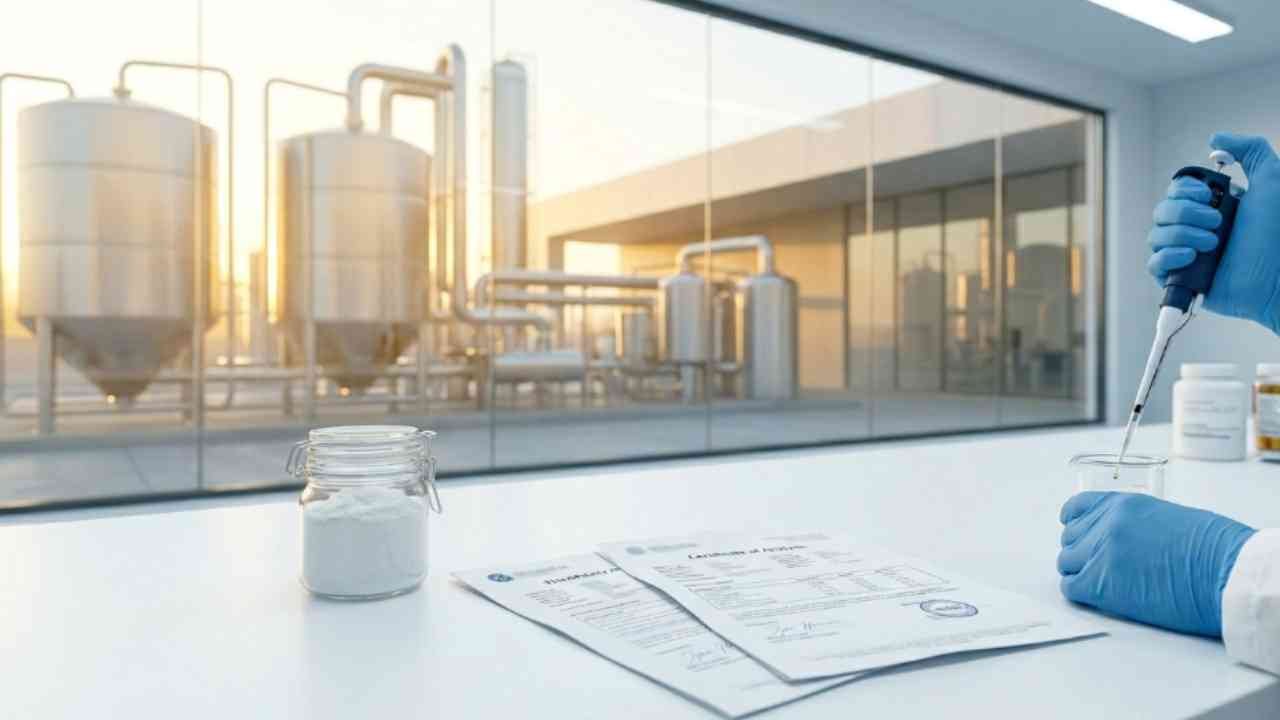
Before ordering, request a 200g-500g sample for laboratory and sensory testing. Verify the supplier’s business license, bank details, and third-party audit reports (SGS/BV). Request a detailed COA from a recent batch and confirm lead times and shipping terms (Incoterms) to minimize procurement risks.
Pre-Order Checklist and Risk Management
I see that the "Sample Phase" is the most important step. You must never skip this. I suggest you ask for two samples from different batches. This allows you to check for consistency before you pay. I act as your technical partner to arrange these samples. Once you have the sample, you should test it in your own lab. Check the HPLC and also do a "Taste Test" in your actual food recipe. Sometimes a sample looks good on paper but has a bitter linger in yogurt or soda. I also suggest checking the "Solubility." The powder should dissolve quickly without leaving any sediment.
Legal verification is the next step. I check the supplier's "Business Scope" on their Chinese license. Some companies are just traders and not factories. While traders are okay, you need to know who is actually making your food ingredient. I also check their "Export History." A reliable supplier should have experience shipping to your region. I look for references or past Bill of Lading (B/L) copies. This proves they know how to handle the logistics for the Middle East or Europe. I also confirm the "Payment Terms." A professional supplier will offer secure ways to pay, like a Letter of Credit (L/C). By following these steps, we remove 90% of the risk from your procurement.
| Evaluation Step | Action to Take | Technical Goal |
|---|---|---|
| Sample Testing | Lab HPLC & Sensory | Verify purity and flavor |
| Solubility Check | Dissolve in cold water | Ensure no clumping or residue |
| License Audit | Check business scope | Confirm manufacturer status |
| COA Review | Request recent batch | Verify glycoside profiles |
| Reference Check | Ask for B/L copies | Confirm regional export skill |
| Third-Party Lab | Use SGS/Intertek | Independent quality proof |
Why is after-sales support important in Stevia trading relationships?
Problems occur even with good suppliers. No response from a supplier during a crisis leaves you alone. I explain why technical support is the key to a long-term partnership.
After-sales support is vital for resolving batch quality issues, providing technical formulation help, and managing logistics claims. A reliable supplier offers fast communication, handles shipping disputes, and provides documentation updates. This support protects your production schedule and builds a stable, long-term B2B business partnership.

Problem Solving and Technical Partnership
I see that "Support" is what you need when things go wrong. For example, if a drum is damaged during shipping, a bad supplier will blame the ship. A good supplier will help you file a claim and send a replacement fast. I act as your strategic office to manage these disputes. I also provide "Formulation Support." If your new soda batch tastes too bitter, I talk to the factory engineers. We might suggest a different grade of Stevia or a masking agent. This technical help is worth more than a small price discount. It saves your whole production batch from being thrown away.
Communication speed is the final sign of reliability. I respond to my clients in hours, not days. If a supplier goes silent after they get the money, they are not a partner. I prioritize suppliers who have a dedicated "Quality Department." This team should be able to provide "Root Cause Analysis5" if there is a quality complaint. They should tell us exactly what went wrong and how they fixed it. This level of honesty builds trust. I also ensure they provide "Doc Updates." If a regulation changes in Europe (like new E-number rules), the supplier should tell you immediately. By providing this after-sales care, we keep your business moving without any stress.
| Support Type | Supplier Action | Buyer Benefit |
|---|---|---|
| Quality Claims | Fast investigation/Refund | Reduces financial loss |
| Technical Advice | Formulation help | Improves product taste |
| Logistics Help | Cargo tracking/Insurance | Safer, faster delivery |
| Doc Updates | New COAs/Regulations | Ensures legal compliance |
| Samples for R&D | Provides new grades | Supports product innovation |
| Market Intelligence | Price/Harvest trends | Better inventory planning |
Conclusion
Finding a reliable Stevia supplier requires technical audits, verified certifications, and a commitment to after-sales support. I manage these details at FINETECH to provide your business with secure, high-quality, and cost-effective sweetener solutions.
-
FSSC 22000 – Official overview of the food safety management system certification required for international ingredient manufacturing. ↩
-
IFANCA – An international authority on Halal standards, providing guidance for food ingredient compliance in global markets. ↩
-
Sedex – Global resource for ethical trade and social audits, ensuring supply chain transparency and fair labor practices. ↩
-
LabCE – An educational resource detailing the standard components and regulatory importance of a Certificate of Analysis (COA) in professional laboratory testing. ↩
-
American Society for Quality (ASQ) – A professional guide to Root Cause Analysis (RCA) methods used to identify and prevent quality deviations in manufacturing. ↩