
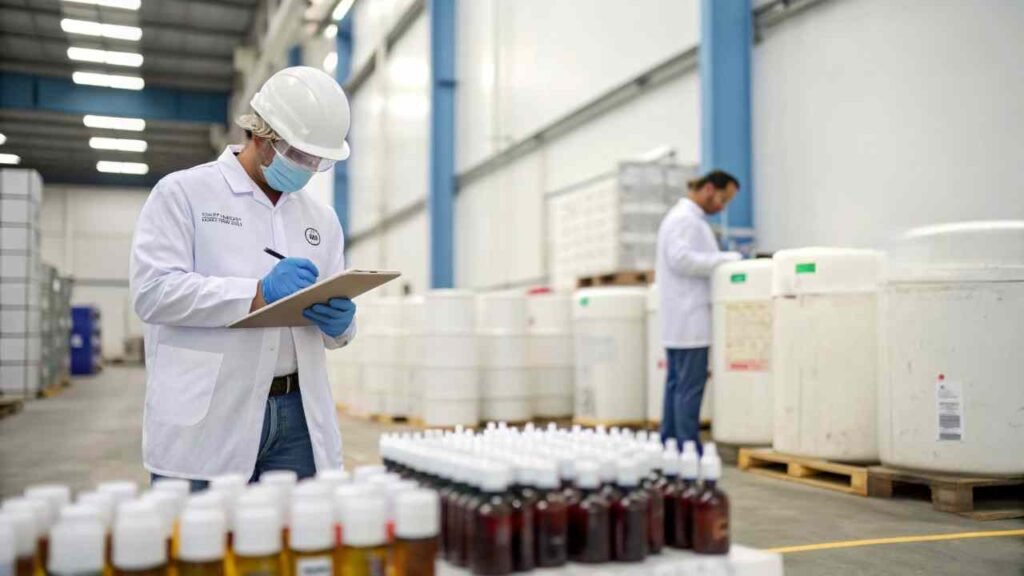
Importing low-quality Inositol leads to product recalls and legal fines. This ruins your brand reputation and wastes capital. I show you the essential checks to secure your bulk imports.
Before importing Inositol in bulk, check purity (minimum 98%), heavy metal limits (Pb < 2ppm), and compliance with NF/USP standards. Verify factory certifications like ISO or GMP. Ensure all shipping documents, including COA and Health Certificates, are accurate to avoid customs delays and cargo rejection.
I manage factory selection and oversee production for my B2B clients at FINETECH. I see these technical gaps every day. I want to share the technical facts about Inositol importing so you can protect your brand.
What specifications are commonly required for bulk Inositol imports?
Unclear specs lead to receiving the wrong grade for your recipe. This ruins your food or supplement production. I define the technical benchmarks for high-quality bulk Inositol.
Standard bulk Inositol specifications require an assay of 98.0% to 101.0%. Key parameters include loss on drying (< 0.5%), residue on ignition (< 0.1%), and heavy metals (< 10ppm). Meeting USP or NF standards ensures the ingredient is safe for food, pharma, and infant formula applications.

Understanding Purity and Physical Standards
Purity is the most important number in your Certificate of Analysis (COA). I see that most buyers in Southeast Asia and the Middle East look for the NF12 or USP standard. This means the Inositol is high quality. I visit the labs in our partner factories in China. I check their HPLC reports to ensure the assay is not just 98% but stays consistent batch after batch. If the purity is low, your final product might fail its own quality tests. This causes a lot of stress for your production team.
You must also look at physical properties. The color should be white and the taste should be sweet. If the powder is yellow, it means the refining process was poor. I check the particle size too. For most drinks, a fine powder is better because it dissolves fast. For tablets, you might need a different granulation. I act as your strategic office to match the factory output with your technical needs. This oversight prevents you from buying a product that does not work in your machines. I always verify that the "Loss on Drying" is low. If it is high, the powder will clump in your warehouse.
| Specification Parameter | Standard Requirement (NF/USP) | FINETECH's Quality Check |
|---|---|---|
| Assay (Purity) | 98.0% - 101.0% | Verify via HPLC graphs |
| Appearance | White crystalline powder | Check for yellow tint |
| Loss on Drying | ≤ 0.5% | Test for clumping risk |
| Residue on Ignition | ≤ 0.1% | Check refining purity |
| Heavy Metals | ≤ 10 ppm | Audit ICP-MS reports |
| Lead (Pb) | ≤ 2 ppm | Critical for baby food |
Which export documents are necessary for Inositol shipments?
Missing paperwork stops your cargo at the port for weeks. High storage fees and missed deadlines will kill your profit margins. I list the documents you need for smooth trade.
Necessary documents for Inositol export include the Bill of Lading, Commercial Invoice, Packing List, and Certificate of Analysis (COA). Many markets also require a Health Certificate, Non-GMO Statement, and Certificate of Origin. These papers prove safety, quality, and origin to local customs authorities worldwide.

Documentation Compliance for Global Trade
I see that documentation is the biggest reason for delays in the Middle East and Russia. Each country has different rules. For example, some buyers in Saudi Arabia need a specific Halal certificate1 from an approved body. I act as your technical coordinator to prepare these papers before the ship leaves the port. I double-check every number on the COA against the actual batch. If the batch number on the drum does not match the paper, customs will seize the cargo. This is a very expensive mistake that I help you avoid.
In Europe, a Non-GMO statement2 is a must. Consumers there are very sensitive about raw materials. I visit the factories to ensure they use corn steep liquor that is certified non-GMO. I also manage the Certificate of Origin. This document can help you save on import taxes in certain regions. I oversee the application process for all these certificates. This ensures that when your cargo arrives in Jakarta or Dubai, it moves through customs in just a few days. My goal is to make your procurement process as easy as a local purchase. I keep digital copies of all previous shipments. This helps you repeat orders without filling out new forms every time.
| Document Type | Technical Purpose | Why It Matters |
|---|---|---|
| COA | Lists purity and lab results | Proves product quality |
| Health Certificate | Confirms food safety status | Required for customs entry |
| Packing List | Details weights and drums | Used for cargo tally |
| Certificate of Origin | Proves manufacturing country | Determines import taxes |
| Non-GMO Statement | Confirms plant source | Essential for EU markets |
| MSDS | Safety and handling data | Required for sea logistics |
How can buyers verify the authenticity of Inositol products?
Fake or diluted Inositol destroys your product's nutritional value. You pay a high price but receive a cheap substitute. I show you how to detect fraud and verify quality.
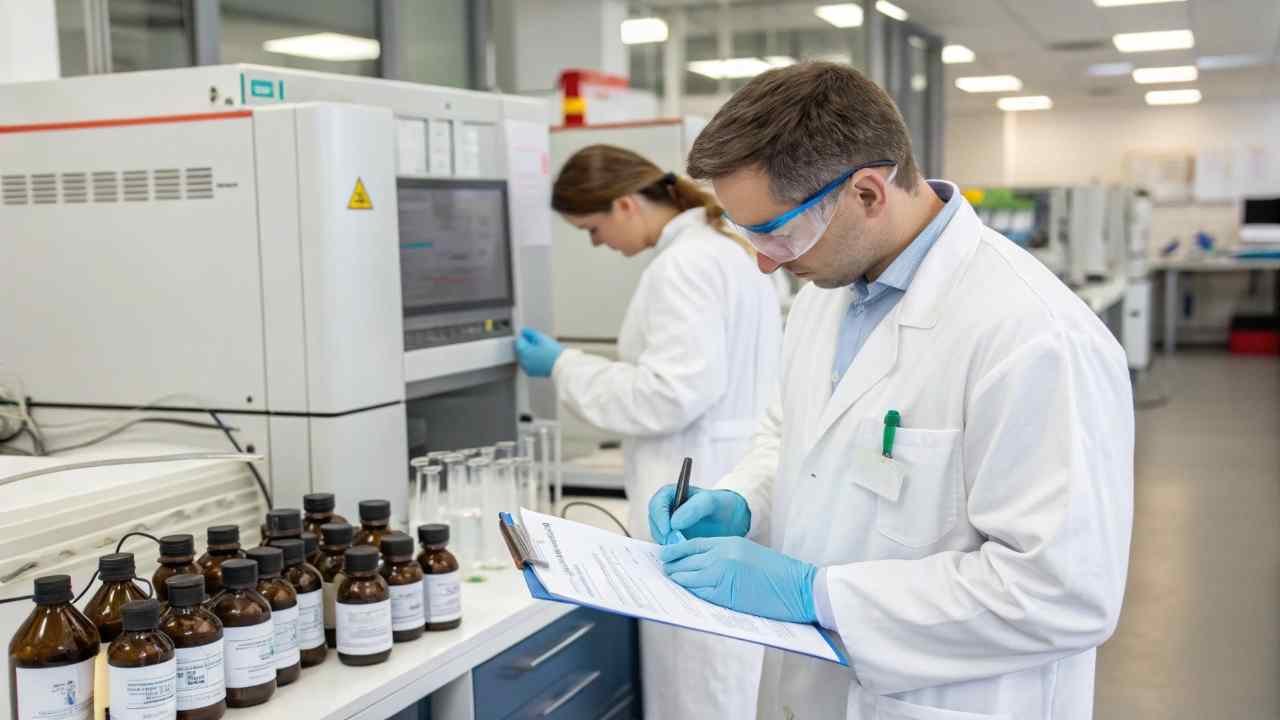
Verify Inositol authenticity by requesting third-party lab tests from SGS or Intertek. Use High-Performance Liquid Chromatography (HPLC) to check purity. Cross-reference batch numbers on the drum with the factory's internal logs. Checking melting points and solubility in water also provides quick physical verification of the product.
Detecting Fraud and Ensuring Purity
I see that "Market Fraud" happens when prices are high. Some traders mix Inositol with cheap fillers like maltodextrin. This ruins your formula. I act as your technical gatekeeper to prevent this. I suggest using the melting point test as a first check. Pure Inositol melts at 224°C to 227°C. If it melts lower, it is not pure. I also look at the "Specific Rotation" in the lab. This is a technical way to prove the molecule structure is correct. I visit our partner plants to see their HPLC machines in action. This is the only way to be 100% sure.
You should also check the factory's reputation. A factory that has a GMP3 or FSSC 22000 certificate is much safer. These auditors check the factory every year. I look at their internal logs for you. I want to see that they track every batch from the raw material to the drum. If a supplier cannot show you their production log, they are likely a small trader with no control. I prioritize factories that allow third-party inspections. This allows you to hire a pro to check the goods before you send the final payment. This oversight secures your capital and your brand quality. I always compare the sample I received with the actual bulk shipment.
| Verification Method | Technical Action | Detection Capability |
|---|---|---|
| HPLC Analysis | Chemical fingerprinting | Detects dilution/purity |
| Melting Point | Thermal testing | Identifies cheap fillers |
| Water Solubility | Clarity test | Detects insoluble residues |
| Batch Log Audit | Traceability check | Confirms factory origin |
| SGS Inspection | Independent sampling | Prevents "sample swapping" |
| IR Spectroscopy | Molecular mapping | Proves chemical identity |
What packaging standards should exported Inositol meet?
Torn bags and damp drums lead to mold and waste. You lose money on every kilogram that you cannot use. I define the packaging standards that protect your bulk Inositol.
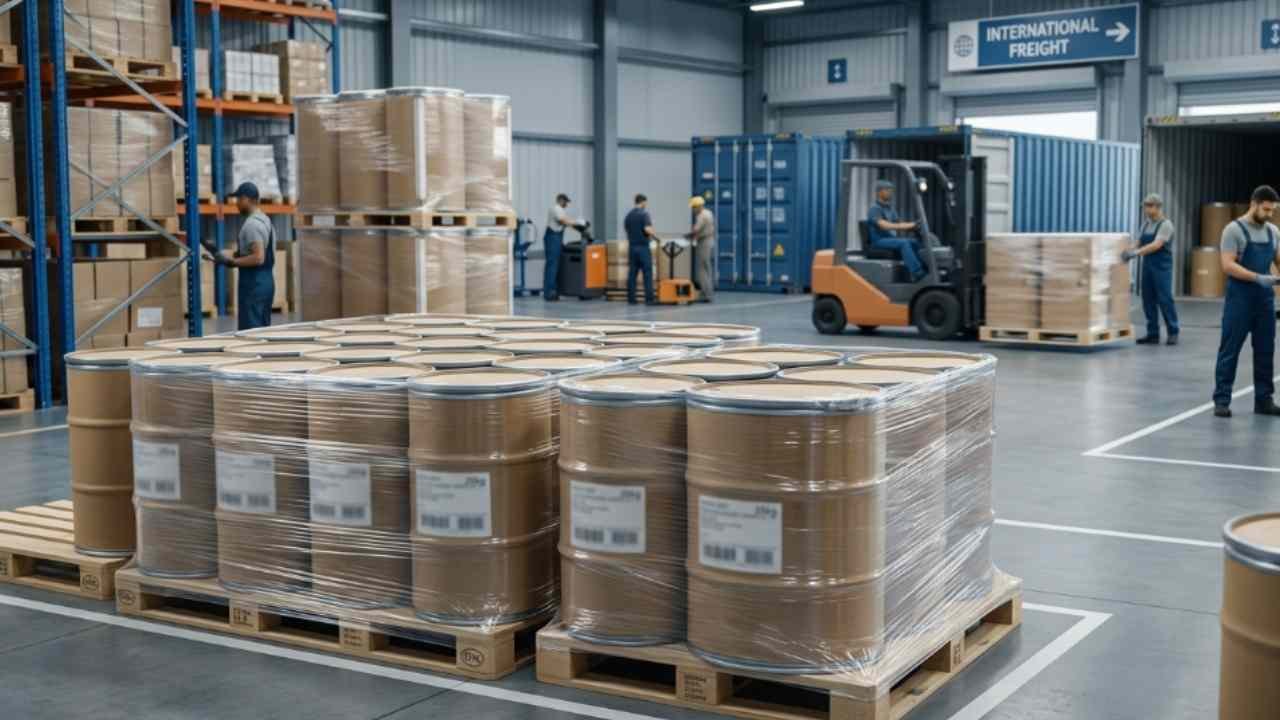
Exported Inositol should be packed in 25kg fiber drums with double-layered PE liners. The liners must be moisture-proof and heat-sealed. Drums should be palletized and shrink-wrapped to prevent shifting during transit. Proper labeling with batch numbers and storage instructions is required for all international shipments.
Protecting Powder Integrity During Transit
I see that moisture is the enemy of Inositol. It is a powder, so it absorbs water from the air. This causes clumping and blocks your production line. I visit the packing area of our partner factories to check the liner quality. We use two bags. The first bag is a food-grade PE bag. The second bag is a thicker barrier bag. This "Double Protection" keeps the powder dry during the long sea voyage. For my clients in humid places like Indonesia or Vietnam, this is a technical requirement. I act as your strategic partner to ensure the drums are not just "standard" but "export-grade."
Palletization is another key factor. If you just throw drums into a container, they will break. I ensure that every pallet is wrapped in at least five layers of plastic film. This keeps the drums stable. I also check the labels. The label must be in English and very clear. It should show the "Production Date" and "Expiry Date." I oversee the loading process too. I want to see that the container is clean and dry. If there is a hole in the container roof, your cargo is at risk. By following these packaging steps, we ensure your Inositol arrives in the same condition it left the factory. Also, I ensure that the pallets are fumigated4 if they are made of wood.
| Packaging Component | Standard Requirement | FINETECH's Technical Tip |
|---|---|---|
| Outer Drum | 25kg Fiber Drum | Check for high wall strength |
| Inner Liner | Double-layer PE bags | Must be heat-sealed |
| Seal | Tamper-evident lock | Prevents powder theft |
| Pallet Type | Plastic or Fumigated Wood | Prevents pest entry |
| Wrapping | Multi-layer shrink film | Improves stack stability |
| Labeling | UV-resistant ink | Must show batch and expiry |
How can importers avoid customs clearance problems with Inositol?
Sudden customs inspections and seizures stop your sales for months. You pay high fees while your goods sit in a hot port. I explain how to avoid these logistics risks.
Avoid customs problems by using the correct HS Code (290613) for Inositol. Ensure all document descriptions match the labels exactly. Prepare health certificates and non-GMO statements in advance. Working with a reliable supplier like FINETECH ensures that your paperwork meets the specific regulatory requirements of your destination country.

Navigating Logistics and Regulations
I see that HS codes5 are a common source of trouble. If you use the wrong code, customs will think you are trying to pay less tax. This leads to a big fine. I act as your logistics office to verify the HS code 290613 for my clients. I also check the "Trade Terms." Using CIF or DAP makes it clear who is responsible for the insurance. This is very important if the ship has an accident. I visit the logistics companies to ensure they have experience with food additives. They know which ports are the fastest and which ones have strict inspectors.
Communication is the second secret. You should send the draft documents to your customs broker before the ship arrives. This allows them to find any errors early. I oversee this process for my B2B clients in the Middle East and Russia. I make sure the "Description of Goods" on the invoice matches the Packing List. If one says "Inositol" and the other says "Myo-Inositol," customs might ask for a lab test. This simple check saves you several days of waiting. By managing these small details, I help you keep your supply chain moving without any unexpected costs. I also track the ship daily to give you an accurate arrival time.
| Risk Category | Potential Problem | FINETECH's Solution |
|---|---|---|
| HS Code | Tax fines or seizures | Use 290613 specifically |
| Naming | Document mismatch | Exact matching on all papers |
| Regulations | Missing local certificates | Pre-apply for Health Certs |
| Insurance | Loss during transit | Use CIF with 110% coverage |
| Logistics | Demurrage fees | Send docs to broker early |
| Labeling | Incorrect local language | Add multi-language stickers |
Conclusion
Bulk Inositol importing requires strict specification checks, accurate documentation, and export-grade packaging. I manage these technical steps at FINETECH to ensure your international supply chain is secure and profitable.
-
Halal Certification Authority – Explains the standards and requirements for Halal certification in the food and ingredient industry. ↩
-
Non-GMO Project – Detailed information on GMO risks and the verification process for non-GMO agricultural products and derivatives. ↩
-
World Health Organization (WHO) – Comprehensive overview of Good Manufacturing Practice (GMP) standards for ensuring product quality and safety. ↩
-
IPPC (International Plant Protection Convention) – Global standards for phytosanitary measures, including the ISPM 15 requirements for wood packaging. ↩
-
World Customs Organization – Official overview of the Harmonized System (HS) used to classify traded products for international customs and trade statistics. ↩