

Missing Inositol shipments stop your food production lines. This supply gap causes high financial losses and kills your brand reputation. I show you how to secure reliable global delivery schedules.
Inositol suppliers ensure reliable delivery through strategic inventory buffering, moisture-proof multi-layer packaging, and partnerships with first-tier freight forwarders. Consistent export performance relies on pre-booked vessel space and accurate documentation to clear customs in the Middle East, Southeast Asia, and Europe without any delays.
I manage factory selection and oversee production for my B2B clients at FINETECH. I see how logistics failures can hurt a business. My goal is to ensure your cargo arrives on time and in perfect condition. I want to share the technical facts about Inositol shipping so you can plan your inventory with total confidence.
What is the standard lead time for Inositol export orders?
Slow shipping ruins your inventory planning. Waiting months for a container destroys your cash flow and stops your sales. I explain the technical factors that determine your Inositol delivery schedule.
The standard lead time for Inositol export orders is typically 7 to 14 days for production and processing. Sea freight to Southeast Asia takes 10 to 15 days, while shipments to the Middle East or Europe require 25 to 45 days, depending on port congestion and routes.

Understanding Production and Transit Cycles
I see that many buyers confuse production time with transit time. For a standard bulk order of Inositol, the factory needs about one week to prepare the batch. This includes the final lab testing and the application for the Health Certificate1. I act as your technical coordinator to ensure the factory starts the "Booking" process early. If you wait until the product is finished to book a ship, you lose another week. I prefer to book the vessel space as soon as the raw materials enter the refining line. This "Parallel Processing" is how I keep our delivery dates stable for my clients in Saudi Arabia and the UAE.
Transit time is the second part of the lead time. Shipping from China to ports like Jakarta or Ho Chi Minh City is very fast. But shipping to Europe or Russia takes much longer. I monitor the "Vessel Reliability" reports every month. I avoid shipping lines that have a history of skipping ports. I act as your logistics office to pick the fastest direct routes. By choosing a direct ship instead of a transshipment, we can save 7 to 10 days of travel time. I also track the "Port Congestion2" levels in China. If the port of Shanghai is busy, I might suggest shipping from Qingdao to save time. This technical oversight prevents your production line from running out of stock.
Regional Lead Time Benchmarks
| Destination Region | Production Time | Average Sea Freight | Total Door-to-Port |
|---|---|---|---|
| Southeast Asia | 7 - 10 Days | 10 - 15 Days | 20 - 25 Days |
| Middle East | 7 - 14 Days | 20 - 28 Days | 30 - 42 Days |
| Europe (Main) | 10 - 14 Days | 35 - 45 Days | 45 - 60 Days |
| Russia | 10 - 14 Days | 30 - 40 Days | 40 - 55 Days |
| Korea / Japan | 7 - 10 Days | 5 - 7 Days | 12 - 17 Days |
| South America | 10 - 14 Days | 40 - 50 Days | 50 - 65 Days |
Which packaging methods best protect Inositol during shipping?
Humidity turns your fine Inositol powder into hard rocks. Caked or moldy product is a total financial loss for your business. I identify the packaging standards that protect your bulk investment during long voyages.
The best packaging for Inositol includes 25kg fiber drums with double-layered food-grade PE liners. Heat-sealed bags and moisture-proof outer containers prevent clumping. Palletization with multi-layer shrink wrap ensures physical stability and safety during long-distance maritime transport and warehouse handling.
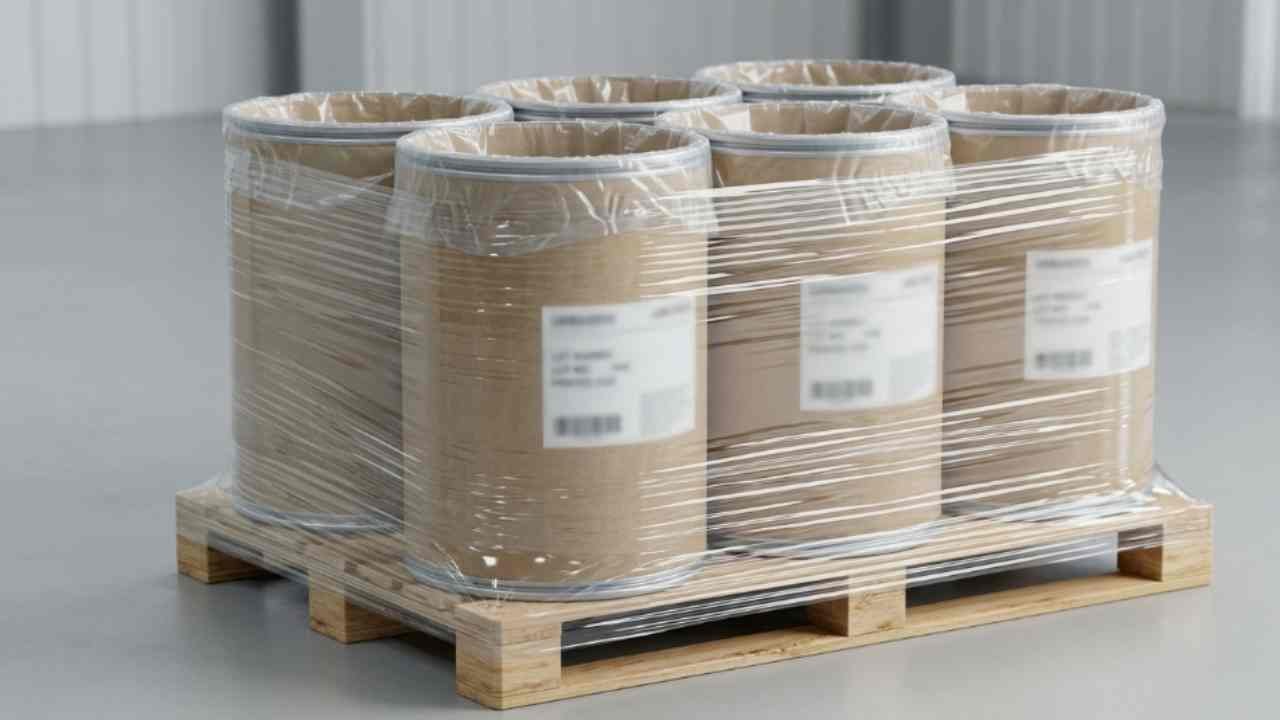
Technical Defense Against Humidity
I see that moisture is the biggest enemy of Inositol. It is a very fine crystalline powder. It loves to absorb water from the air. If the drum is not sealed perfectly, the powder will clump. This is a nightmare for your production team. I use a "Three-Layer" protection strategy for all my B2B exports. First, the powder goes into a food-grade PE bag. Second, we put that bag inside a thicker moisture-barrier bag. Third, everything is placed in a heavy-duty fiber drum. I check the seal on every drum before it goes on the pallet. This technical rigor ensures the product stays dry even in humid tropical ports.
Temperature changes during sea transit are another risk. A container sitting in a port can reach 60 degrees Celsius. This "Thermal Shock3" can cause condensation inside the drum. I suggest using "Vacuum Sealing" for high-purity pharmaceutical-grade Inositol. This removes the air and the moisture. I also ensure that the drums are palletized and shrink-wrapped with at least five layers of plastic film. This keeps the drums stable and adds one more layer of water protection. I act as your quality manager to verify these packaging steps at the factory. Good packaging is a technical requirement, not just a suggestion. It protects your brand and your money.
Comparison of Packaging Efficiency
| Packaging Layer | Material Used | Technical Purpose | FINETECH's Quality Check |
|---|---|---|---|
| Inner Liner | Food-grade PE | Direct food contact safety | Check for heat-seal strength |
| Moisture Barrier | Thick PE or Al-Foil | Blocks humidity entry | Verify bag thickness (micron) |
| Outer Container | Fiber Drum | Physical protection | Check for "UN" strength mark |
| Pallet Wrap | Stretch Film | Stability and dust proof | Minimum 5 layers of wrap |
| Desiccant | Silica Gel Bags | Absorbs internal moisture | Place 2 bags per drum |
| Security Seal | Plastic / Wire | Prevents tampering | Verify batch-link on seal |
How do suppliers manage urgent Inositol delivery requests?
Sudden demand spikes leave you with zero stock. Missing these sales opportunities stops your business growth. I explain how we use fast-track protocols to ship your Inositol in record time when emergencies happen.
Suppliers manage urgent Inositol requests by keeping safety stock in port warehouses and using air freight for smaller batches. Priority production scheduling and "green channel" customs documentation help reduce lead times to 3-5 days for critical B2B needs and avoid production downtime.
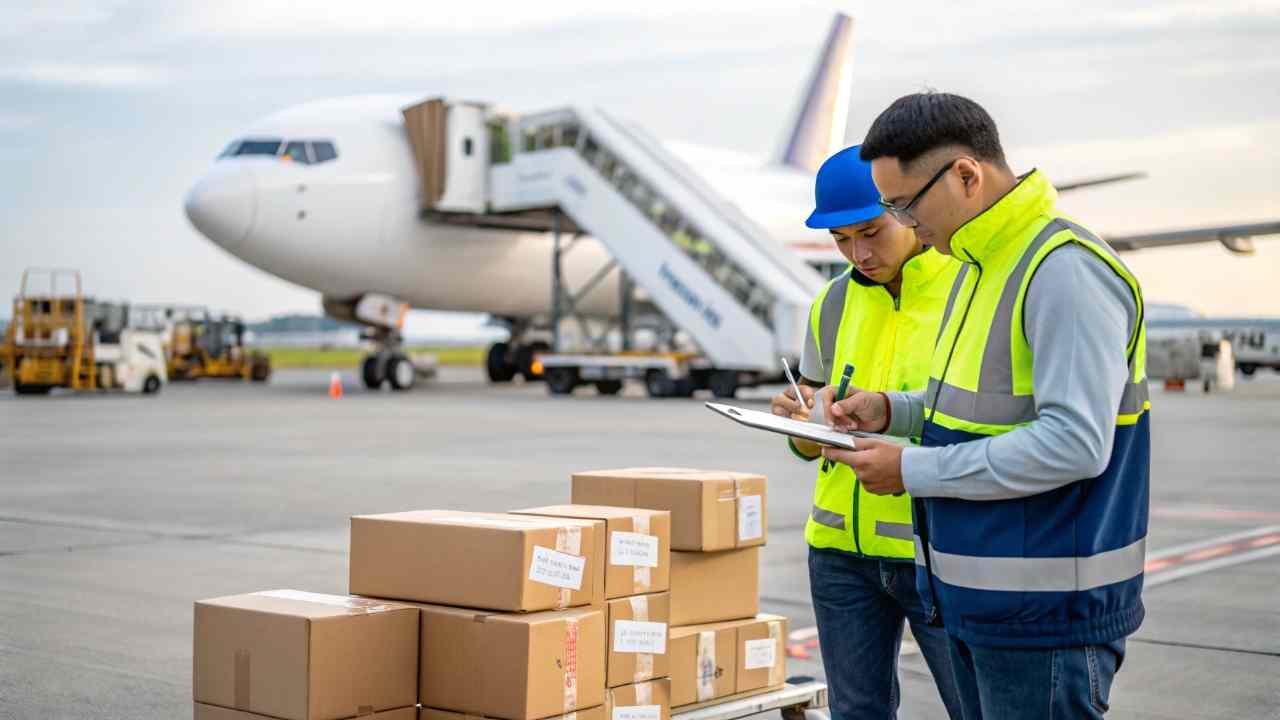
Fast-Track Protocols and Buffer Stocks
I see that "Out of Stock" crises happen because of sudden market shifts. To solve this, I keep a "Buffer Stock" of standard food-grade Inositol in our warehouse near the port. This means we do not have to wait for the factory to produce a new batch. We can load a container or a plane in 48 hours. I act as your strategic office to manage this inventory level. This buffer is your insurance policy against market volatility. For very urgent needs, I suggest "Air Freight." Inositol is a high-value product. This makes air freight a logical choice for urgent gaps, even if it costs more than the sea.
Air Freight4 can deliver Inositol from China to the Middle East or Europe in 3 to 5 days. I manage the "General Chemical" classification for these flights. Since Inositol is a non-hazardous food extract, it is easy to put on a plane. I also use "Pre-Clearance" documentation. I send the COA and Health Certificates to your customs broker electronically as soon as the plane takes off. This allows them to start the paperwork while the goods are in the air. This "Digital Fast-Track" is the secret to meeting tight deadlines. I also negotiate with the factory for "Priority Production." My long-term relationships with the plants move my orders to the front of the line.
| Urgency Level | Shipping Mode | Delivery Target | FINETECH's Strategy |
|---|---|---|---|
| Critical | Air Freight (Direct) | 3 - 5 Days | Use warehouse safety stock |
| High | Air Freight (Transit) | 5 - 8 Days | Prioritize lab testing speed |
| Moderate | Fast Sea (Direct) | 15 - 25 Days | Book "Express" vessel lines |
| Standard | Sea Freight (FCL) | 25 - 45 Days | Follow annual ship plan |
| Bulk Fill | Sea Freight (LCL) | 35 - 55 Days | Consolidate for lower cost |
| Special | Rail Freight (to EU) | 18 - 22 Days | Best for land-locked zones |
What transportation methods are most efficient for bulk Inositol exports?
High freight costs eat your profit margins every month. Inefficient shipping routes add unnecessary delays to your supply chain. I show you the most cost-effective logistics models for large-scale Inositol export.
FCL (Full Container Load) is the most efficient logistics option for bulk Inositol to minimize unit costs. Using major ports like Shanghai or Qingdao ensures more vessel options. Multi-modal transport, including rail to Russia or Central Asia, also improves delivery speed and reliability compared to sea freight.
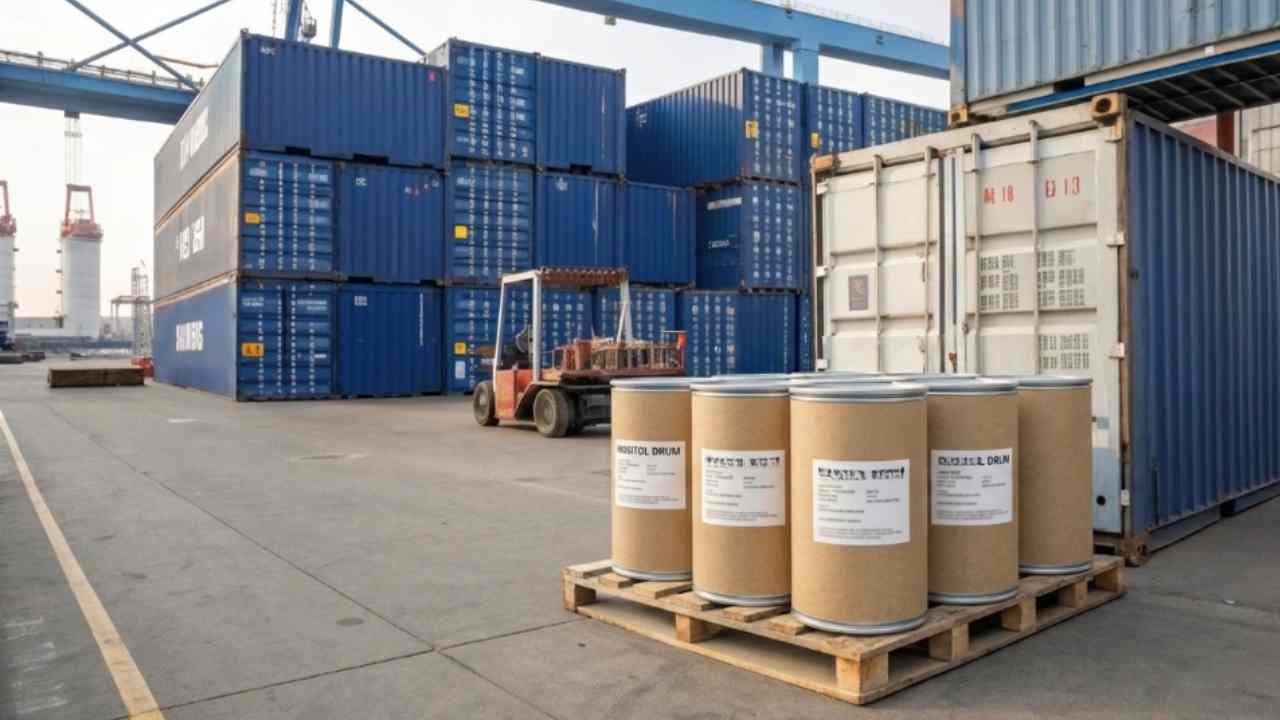
Maximizing Efficiency Through Scale
I see that "Unit Cost" is the key to wholesale success. If you ship 10 drums, your freight cost per kilogram is very high. If you ship a Full Container Load (FCL), the price drops. A 20-foot container can hold about 10 to 12 tons of Inositol on pallets. I help my clients calculate the exact "Load Plan" to maximize the container space. This reduces the carbon footprint and the shipping bill. I act as your logistics office to compare the prices of different shipping lines. Some lines are cheaper but slower. I find the balance that fits your cash flow and your warehouse needs in Malaysia or Korea.
Port selection in China is the second factor for efficiency. Most Inositol factories are in the north. I use the port of Qingdao for these shipments. It is closer to the factories, so the truck cost is lower. For the Middle East and Southeast Asia, Qingdao has many direct ships. I also look at "Multi-Modal" options. For my clients in Russia or Central Asia, the "China-Europe Railway" is a great choice. It is faster than the sea and cheaper than air. I manage the rail booking and the container tracking to ensure your Inositol stays safe. By picking the right transport mode, I keep your "Landed Cost" as low as possible.
Logistics Mode Comparison Table
| Logistics Mode | Cost Per KG | Delivery Speed | Best For |
|---|---|---|---|
| Sea Freight (FCL) | Lowest | Slow | Large wholesale stock |
| Sea Freight (LCL) | Moderate | Slow | Small test orders / MOQ |
| Rail Freight | Moderate | Moderate | Land-locked Russia/Asia |
| Truck Freight | High | Fast | Short-distance SE Asia |
| Air Freight | Highest | Very Fast | Urgent samples / Stockouts |
| Courier (DHL/UPS) | Extreme | Very Fast | Small lab samples only |
How can buyers reduce logistics risks when importing Inositol?
Cargo damage or customs seizures ruin your procurement budget. These risks create high stress and operational friction for your team. I provide a technical checklist to minimize shipping risks for every Inositol import.
Buyers reduce logistics risks by using clear Incoterms like CIF or DAP and purchasing 110% cargo insurance. Verifying HS Code 290613 and using third-party pre-shipment inspections (SGS) ensures document accuracy and product quality before the container leaves the factory or port.

Strategic Risk Mitigation Steps
I see that "Risk" is usually caused by a lack of data. If you do not know the HS Code, your goods get stuck. If you do not have insurance, a fire on the ship destroys your money. I use a "Safety First" approach for every shipment. I ensure that we have a "Marine Cargo Insurance" policy that covers 110% of the invoice value. This is a small cost for a big peace of mind. I act as your strategic partner to review the insurance clauses. We want "All Risks" coverage. This includes damage from water, theft, and rough handling. I also suggest using a third-party inspection company like SGS. They verify the quality and quantity before the container is sealed.
Documentation is the second layer of risk management. I always use the correct HS Code5 (290613) for Inositol. This is the code for "Inositols." If you use a general "Food Additive" code, the customs officer might get suspicious. I also prepare the "Health Certificate" and the "Certificate of Origin" with 100% accuracy. I double-check the spelling of your company name and the batch numbers. Even a small typo can cause a 5-day delay at the port. I send the draft documents to you for approval before we print the originals. This "Double-Check" system is how I prevent customs problems. I manage these details so you can focus on your sales.
Shipping Risk Checklist
| Risk Category | Preventive Action | FINETECH's Role |
|---|---|---|
| Cargo Damage | Use 110% Marine Insurance | Buy and verify policy |
| Humidity Decay | Double PE liners + Sealing | Inspect factory packing |
| Customs Delay | Verify HS Code 290613 | Confirm code with broker |
| Quality Fraud | Pre-shipment inspection | Coordinate SGS/Intertek |
| Logistics Loss | GPS container tracking | Provide daily ship status |
| Legal Issues | Valid Health Certificate | Manage CIQ application |
Conclusion
Reliable international delivery of Inositol depends on technical packaging, pre-planned lead times, and risk management. I handle these logistics details at FINETECH to keep your global supply chain stable and profitable.
-
Codex Alimentarius - Official guidelines on the design and issuance of official certificates for international trade in food products. ↩
-
UNCTAD - Global analysis of maritime transport and trade logistics, covering the causes and impacts of port congestion on global supply chains. ↩
-
ScienceDirect Engineering - Scientific overview of thermal shock and its impact on the structural integrity and moisture stability of industrial materials. ↩
-
IATA - Global association providing standards and regulations for air cargo safety, security, and efficiency in international logistics. ↩
-
World Customs Organization - Official portal for the Harmonized System (HS) nomenclature, used worldwide to classify products for customs and trade. ↩