
Unstable Inositol purity ruins your food formula and results in product recalls. This failure destroys customer trust and your profit margins. I show you how strict quality standards protect your business.
Manufacturers maintain Inositol quality through HPLC purity tests, heavy metal ICP-MS analysis, and microbiological screening. They follow USP, NF, or FCC standards and use ISO/GMP-certified facilities. Strict batch traceability and third-party inspections further ensure every export batch meets global food and pharma safety requirements for international buyers.
I manage factory selection and oversee production for my B2B clients at FINETECH. I visit Chinese plants to audit their labs because your brand safety depends on technical accuracy. I want to share the technical facts about Inositol quality control so you can secure your supply chain.
What laboratory tests are required for Inositol quality control?
Inconsistent assay levels cause dosage errors in your supplements or energy drinks. This puts your customers at risk and invites legal trouble. I explain the essential lab tests that verify Inositol purity.
Essential Inositol tests include HPLC for assay purity (target 98.0%-101.0%), melting point analysis (224°C-227°C), and loss on drying (≤0.5%). Tests also check residue on ignition, color, and solubility to ensure the product matches USP, NF, or FCC specifications before the batch is released for export.
Dive Deeper into Lab Protocols
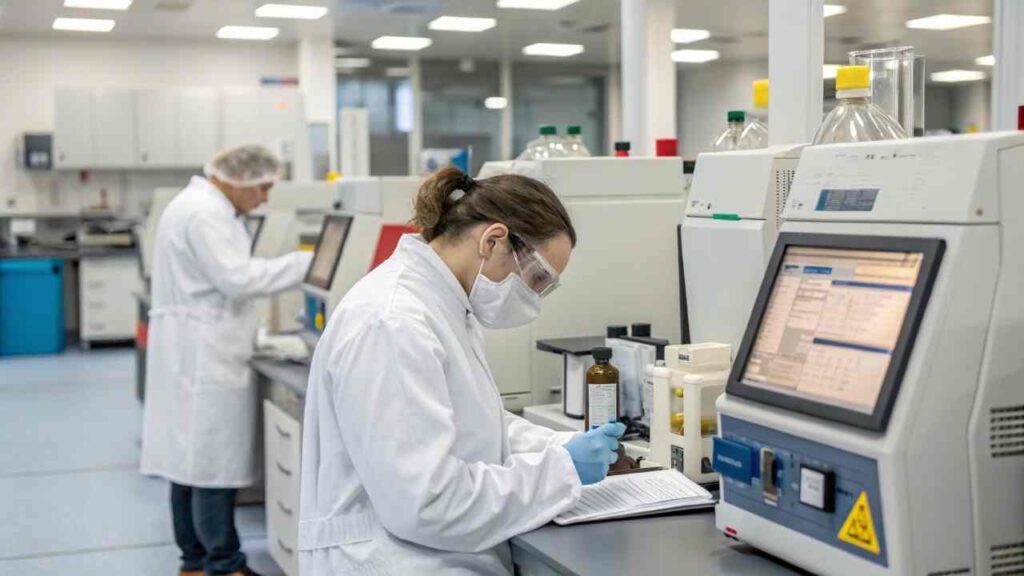
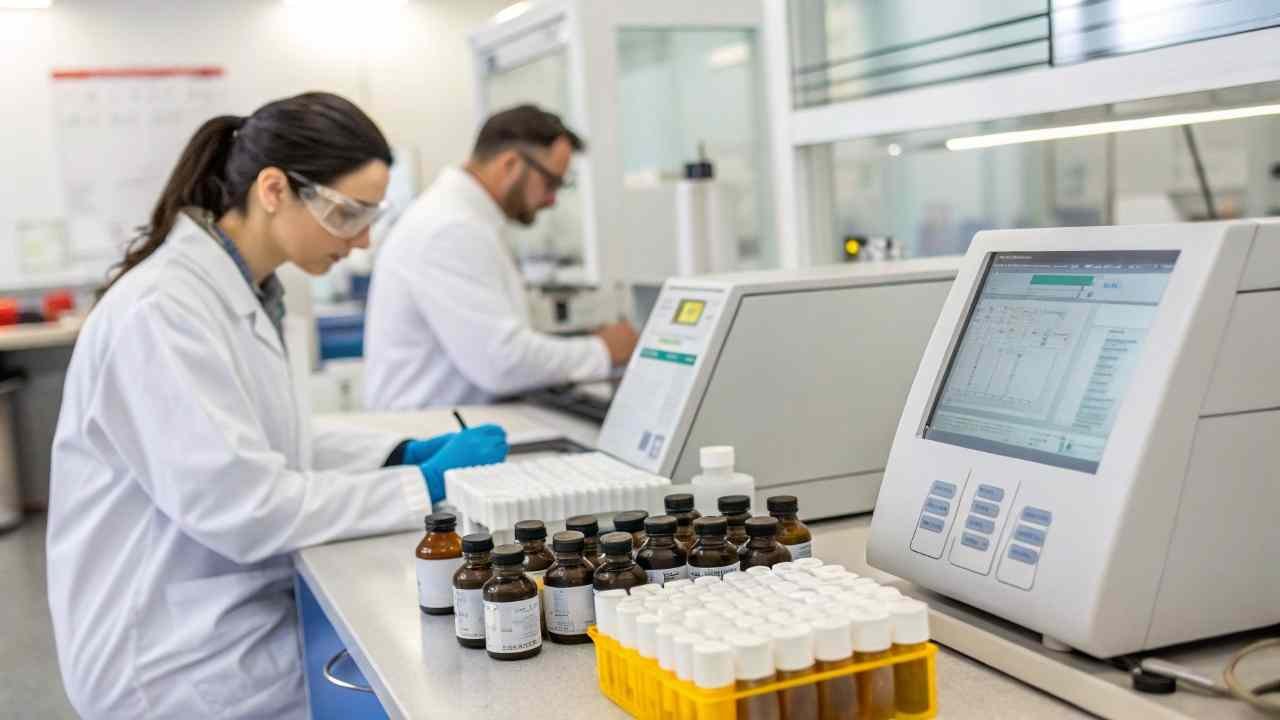
I see that "Purity" is the most important word in my business. We use High-Performance Liquid Chromatography (HPLC) to get the exact chemical fingerprint of the Inositol. This machine separates the Inositol from any impurities or fillers. A standard food-grade batch must show at least 98% purity. But many of my clients in the pharmaceutical sector require 99% or higher. I check the HPLC graphs for every batch I oversee. I look for a clean, sharp peak. If the peak is wide or has "shoulders," it means the product is not pure. I act as your technical eyes in the lab to prevent these bad batches from leaving the factory.
Melting point analysis is another critical check. Pure Inositol has a very specific melting range1 between 224 and 227 degrees Celsius. If the powder melts at a lower temperature, it means there are impurities or moisture inside. I also monitor the "Loss on Drying" test. Inositol is a powder, so it can absorb water from the air. If the moisture is above 0.5%, the powder will clump in your warehouse. This makes it hard for your machines to mix it into your recipe. I ensure the factory uses vacuum drying technology to keep the moisture low. I also check the color and clarity. When you dissolve Inositol in water, it must be clear. If the liquid is yellow or cloudy, the refining process failed. I use these technical markers to pick the best factories for my wholesale clients.
Standard Lab Specifications
| Test Parameter | USP / NF Standard | Quality Check | Technical Purpose |
|---|---|---|---|
| Assay (Purity) | 98.0% - 101.0% | Verify via HPLC graphs | Confirms chemical potency |
| Melting Point | 224°C - 227°C | Check for narrow range | Identifies purity levels |
| Loss on Drying | ≤ 0.5% | Test at 105°C | Prevents clumping in storage |
| Residue on Ignition | ≤ 0.1% | Furnace at 600°C | Measures mineral impurities |
| Solubility | Clear and Colorless | 10% water solution | Ensures performance in drinks |
| Appearance | White Crystalline | Visual inspection | Confirms high refining grade |
How is Inositol tested for heavy metals and microbiological safety?
Toxic metals or bacteria in your additives lead to government bans and health hazards. This destroys your market access and brand value. I show you how we verify safety before shipping your cargo.
Heavy metals like lead and arsenic are tested using ICP-MS to ensure levels stay below 10ppm (total) or 1ppm (lead). Microbiological safety is verified through plating tests for Total Plate Count, Yeast, Mold, and E. coli, ensuring zero pathogens in every 25kg drum of Inositol.
Advanced Safety Audits
I see that heavy metal contamination is a major risk for buyers in Europe and the Middle East. Stevia and Inositol come from plant sources, so they can absorb lead or arsenic from the soil. I prioritize factories that use Inductively Coupled Plasma Mass Spectrometry (ICP-MS). This is a very sensitive technology. It can find trace amounts of metals at the "parts per billion" level. I check the lab logs for Lead (Pb), Arsenic (As), Cadmium (Cd), and Mercury (Hg). My goal is to keep these levels as low as possible. For infant formula or high-end supplements, the lead must be below 1 ppm. I act as your strategic office to verify these safety reports before you pay for the goods.
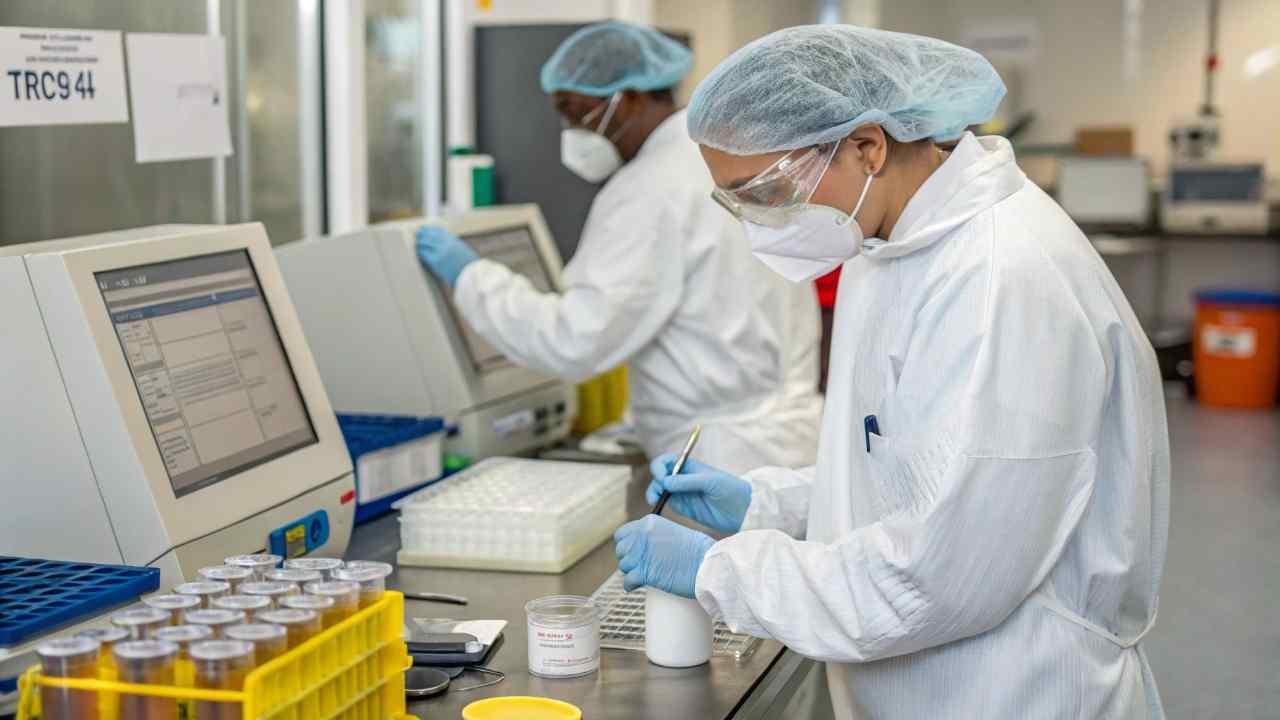
Microbiological safety is just as vital. Inositol is used in many liquid drinks where bacteria can grow fast. I audit the factory's "Clean Rooms" where the final powder is packed. These rooms must have HEPA filters and strict clothing rules for workers. Every batch undergoes a "Plate Count" test. We look for aerobic bacteria, yeast, and mold. I ensure that dangerous pathogens like Salmonella and E. coli are 100% absent. I also check the "Incubation Logs" to see how long they tested the samples. A professional factory will wait for 3 to 5 days to see if anything grows. I prioritize factories with FSSC 220002 or GMP certifications. These documents prove they follow the highest safety rules in the world. This oversight protects your customers and keeps your business safe.
Heavy Metal and Micro Safety Limits
| Safety Parameter | Standard Food Grade | High-Quality Target | Why It Matters |
|---|---|---|---|
| Total Heavy Metals | ≤ 10 ppm | ≤ 5 ppm | Protects against toxicity |
| Lead (Pb) | ≤ 2 ppm | ≤ 1 ppm | Critical for baby food |
| Arsenic (As) | ≤ 2 ppm | ≤ 1 ppm | Strict limit for EU imports |
| Total Plate Count | ≤ 1000 cfu/g | ≤ 500 cfu/g | Prevents drink spoilage |
| Yeast and Mold | ≤ 100 cfu/g | ≤ 50 cfu/g | Ensures long shelf life |
| E. coli / Salmonella | Negative | Negative | Prevents food poisoning |
Why is traceability important in Inositol manufacturing?
An untraced batch makes quality recalls impossible to manage if a problem occurs. This leads to total business failure and legal lawsuits. I explain why farm-to-drum tracking is a mandatory technical requirement for modern trade.
Traceability allows manufacturers to link every drum of Inositol to a specific production date and raw material lot. It ensures accountability during safety audits. By using batch numbers and QR codes, factories can isolate quality issues quickly, protecting the entire global supply chain and the buyer’s reputation.
Strategic Traceability Systems
I see that "Transparency" is the core of a reliable B2B relationship. Inositol is made from phytin3, which comes from corn. I look for factories that track the raw corn source. If there is a pesticide problem on a farm in Heilongjiang, the factory must know which drums are affected. I act as your technical coordinator to check these traceability logs. Every drum we ship has a unique batch number. This number is the key to the product's history. It tells us when it was refined, who was the lab technician, and which machines were used. This data is essential for my clients in Southeast Asia and Europe who must follow strict food safety laws.
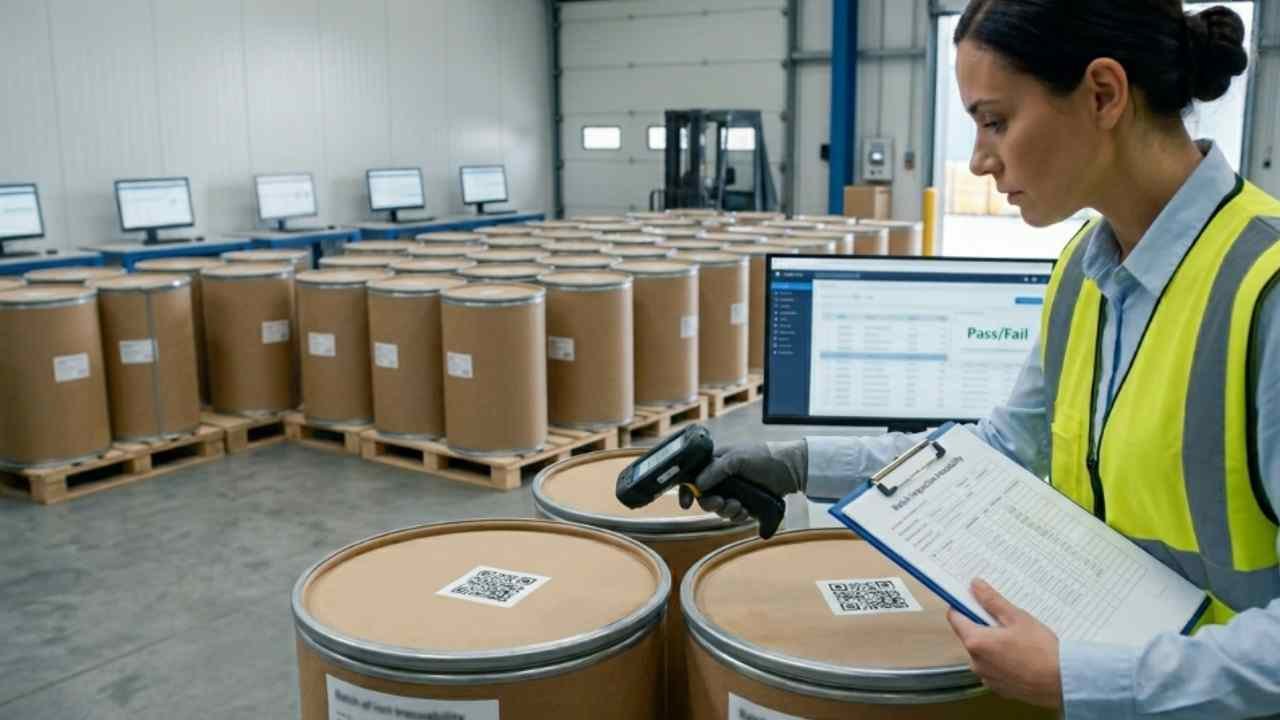
Digital traceability4 is the new trend. Many of my partner factories now use QR codes on every pallet. I can scan a code with my phone and see the full lab report and the production date instantly. This "Real-Time" data reduces the risk of human error in documentation. I also oversee the "Retention Sample" system. The factory must keep a small sample of every batch for two years. If you have a quality complaint after 6 months, we can test the original sample to find the root cause. This professional approach is why I spend so much time at the plants. I want to ensure that every drum of Inositol can be traced back to its origin. This level of detail keeps your supply chain secure and your brand safe from scandals.
| Traceability Component | Data Recorded | FINETECH's Verification Role |
|---|---|---|
| Batch Number | Production date and shift | Verify against COA and Invoice |
| Raw Material Lot | Phytin source and farm location | Check the leaf/grain origin |
| Operator Log | Personnel on the line | Ensure staff follow SOPs |
| Lab Sample | Retained for 2 years | Use for future quality claims |
| Packaging Date | Time of final seal | Monitor shelf life start |
| Digital Tracking | QR codes / Barcodes | Scan for instant lab data |
How do factories maintain stable Inositol production quality?
Batch-to-batch variation ruins your production efficiency and changes your final product taste. This forces you to change your recipe constantly and wastes your time. I describe the automation steps that keep Inositol quality identical every time.
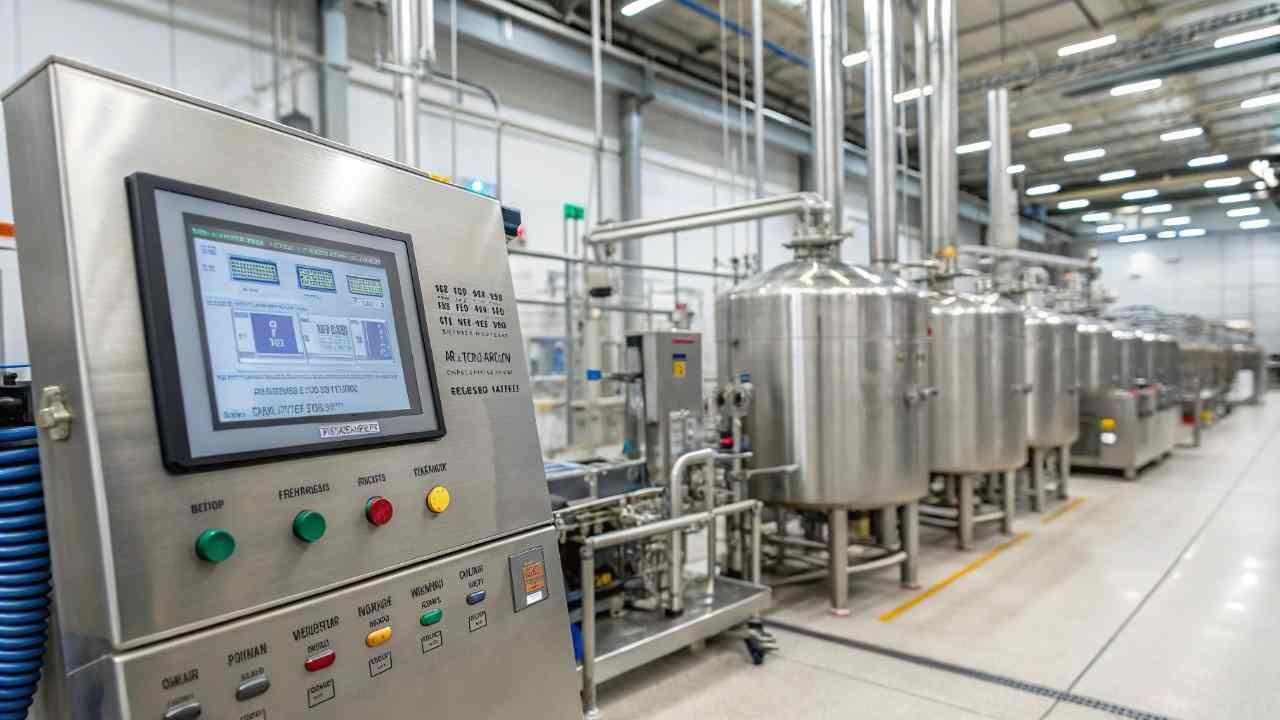
Factories maintain stability through automated hydrolysis and crystallization processes that control temperature and pH. They use large-scale homogenization blenders to mix small batches into one uniform lot. Continuous monitoring and ISO-certified quality management systems (QMS) minimize human error during the refining process.
Automation and Batch Stability
I see that "Consistency" is what my wholesale clients value most. You want the Inositol you buy today to be exactly like the Inositol you bought six months ago. I select factories that use Distributed Control Systems (DCS)5. A computer controls the temperature and the pressure in the hydrolysis tanks. This prevents human mistakes. If the temperature is too high, the Inositol might turn yellow. If the pH is wrong, the purity will drop. I visit the control rooms to see these systems in action. I act as your technical partner to ensure the factory follows a strict "Standard Operating Procedure" (SOP). This automation is the only way to achieve stable results in large-scale production.
Batch homogenization is the second secret to stability. A single extraction might only produce 500 kilograms. But an international buyer needs 20 tons. If you just pack the small batches, the quality will vary between drums. I prioritize factories that use massive 5-ton or 10-ton blenders. They put several batches into one tank and mix them for several hours. This is called "Homogenization." It ensures that every drum in your container has the same purity and the same particle size. I oversee this process to ensure the factory does not take shortcuts. I also check the "In-Process Quality Control" (IPQC) logs. This shows me that they test the product during every step, not just at the end. This technical rigor ensures your production line runs smoothly every time.
| Stability Factor | Technical Method | FINETECH's Observation |
|---|---|---|
| Temperature Control | Automated DCS Sensors | Prevents color and purity drift |
| pH Monitoring | Continuous probes | Ensures efficient refining |
| Filtration | Multi-stage membranes | Removes all plant impurities |
| Homogenization | Large-scale blenders | Ensures drum-to-drum uniformity |
| Environment | Controlled humidity | Prevents clumping in the drum |
| Staff Training | Annual SOP Audits | Minimizes human error risk |
Why is third-party inspection important for exported Inositol?
Trusting a supplier blindly often results in receiving off-spec cargo or missing quantities. This wastes your money and causes long delays in your sales. I explain why independent audits are the best safety net for your international business.
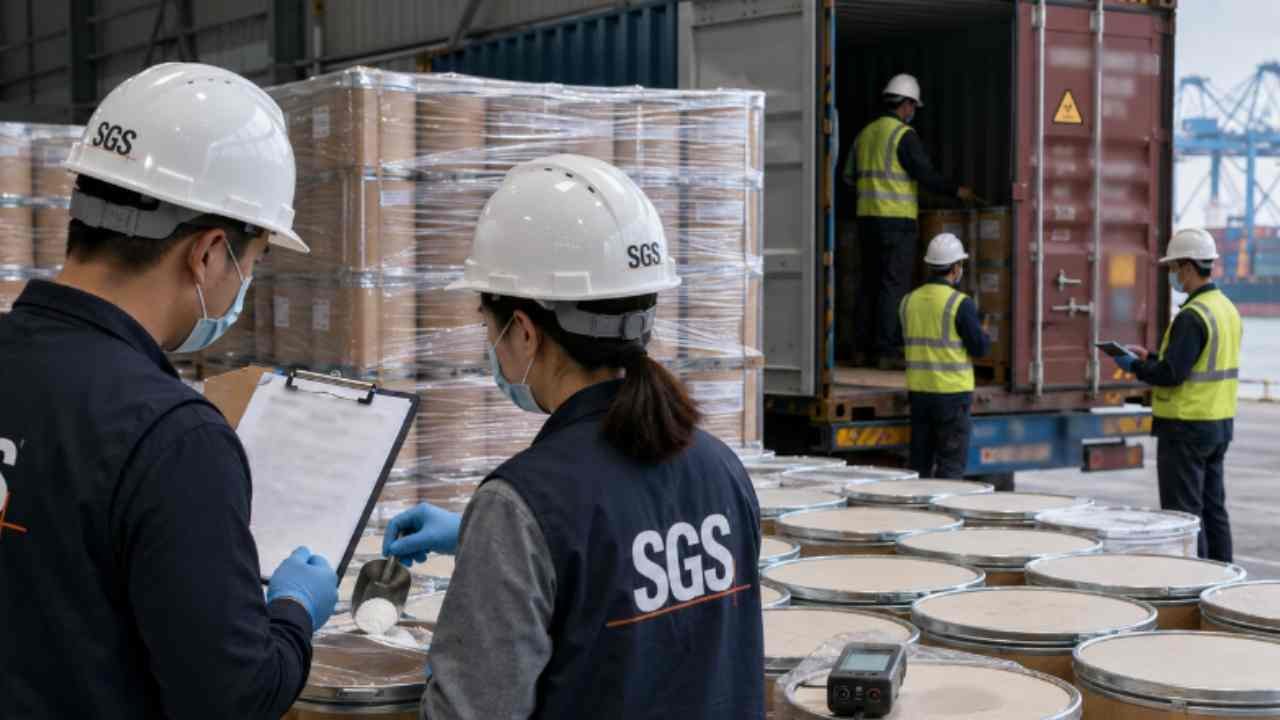
Third-party inspections from SGS or Intertek provide unbiased verification of quality and quantity before payment. They perform random sampling and lab testing. This prevents fraud, ensures packaging integrity, and confirms that the COA matches the actual physical cargo in the container before it is shipped.
The Value of Independent Verification
I see that "Risk Management" is a key part of my job. Even with a good factory, things can go wrong during the busy export season. I always suggest a third-party inspection for new clients or large orders. Companies like SGS or Intertek act as an independent judge. They go to the factory after the production is finished. They pick drums at random from the whole lot. They do not let the factory choose the samples. They send these samples to their own labs to test the assay and the heavy metals. This "Blind Testing" is the best way to prove the product is real. I act as your coordinator to manage these inspections. I ensure the inspector checks the "Tamper-Evident" seals on every drum.
The inspection also covers the "Loading Process." The inspector watches the workers put the drums onto the pallets and into the container. They check for broken drums or wet pallets. They also verify the "Security Seal" number on the container door. This report gives you a "Green Light" to send the final payment. It is a technical document you can use for your own bank or insurance company. I provide my own oversight as well, but a third-party report adds an extra layer of professional safety. It prevents "Sample Swapping" fraud where a factory sends a good sample but ships a bad product. By using these audits, I ensure you only receive top-quality Inositol that meets all your specifications.
| Inspection Step | What Is Verified? | Why It Protects You |
|---|---|---|
| Random Sampling | Assay / Purity / Impurities | Prevents "Golden Sample" fraud |
| Quantity Tally | Drum count / Net weight | Ensures you get what you pay for |
| Labeling Audit | Batch No / Expiry / Language | Avoids customs clearance delays |
| Packaging Check | Drum condition / PE liners | Prevents moisture damage |
| Loading Supervision | Container health / Sealing | Ensures safe arrival at port |
| Lab Validation | Independent Lab Testing | Unbiased proof of quality |
Conclusion
Quality control in Inositol manufacturing requires strict lab testing, safety audits, and full batch traceability. I manage these technical standards at FINETECH to keep your global supply chain secure, consistent, and profitable.
-
Amrita Virtual Lab – Technical explanation of how melting point and melting range are used to determine the purity of chemical compounds. ↩
-
FSSC 22000 Official Site – Information on the globally recognized food safety certification scheme required for high-end food and ingredient manufacturing. ↩
-
PubChem (NIH) – Comprehensive chemical profile of Phytic acid (Phytin), describing its natural occurrence in corn and its role as a precursor to Inositol. ↩
-
FAO (United Nations) – Technical standards and global importance of traceability in the food supply chain to ensure safety and accountability. ↩
-
ScienceDirect – Engineering overview of Distributed Control Systems (DCS) used to automate industrial processes for production consistency. ↩