
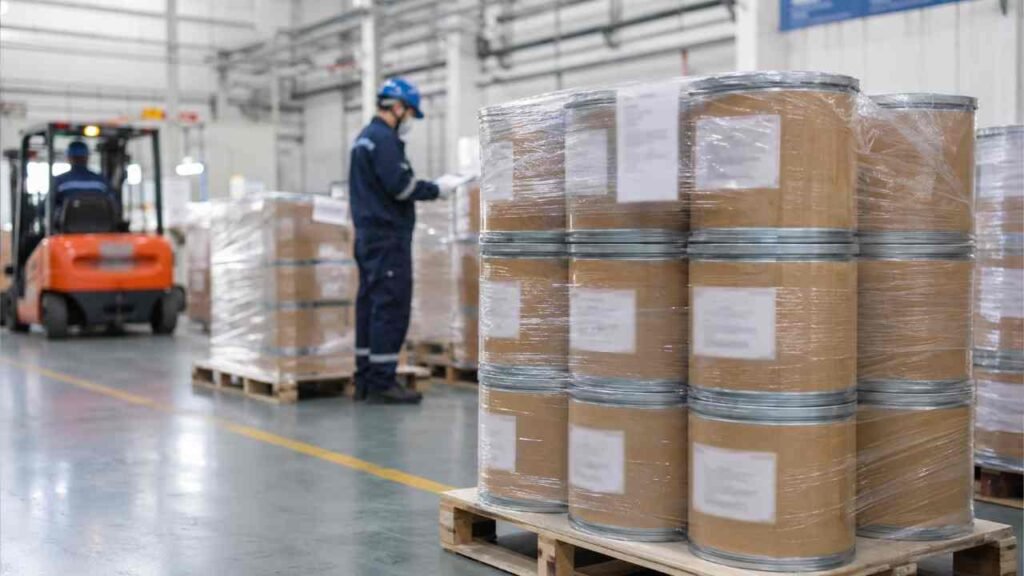
Poor packaging ruins Inositol during shipping. Damp powder causes clumping and financial loss. I provide the best packaging solutions to protect your bulk orders and brand quality.
The best packaging for Inositol export is 25kg fiber drums with double-layer PE liners. These moisture-proof solutions prevent clumping and contamination. Proper palletization and shrink-wrapping ensure physical stability and maintain the 2-year shelf life of the product in international markets.
I manage factory selection and oversee logistics at FINETECH. I see the technical risks of long-distance trade every day. I want to share the technical facts about Inositol packaging to secure your supply chain and protect your profit margins.
What packaging sizes are commonly used for bulk Inositol shipments?
Small bags increase labor and handling risks. Wrong sizes make logistics expensive. I show you the industrial standard sizes that optimize your shipping costs and warehouse efficiency.
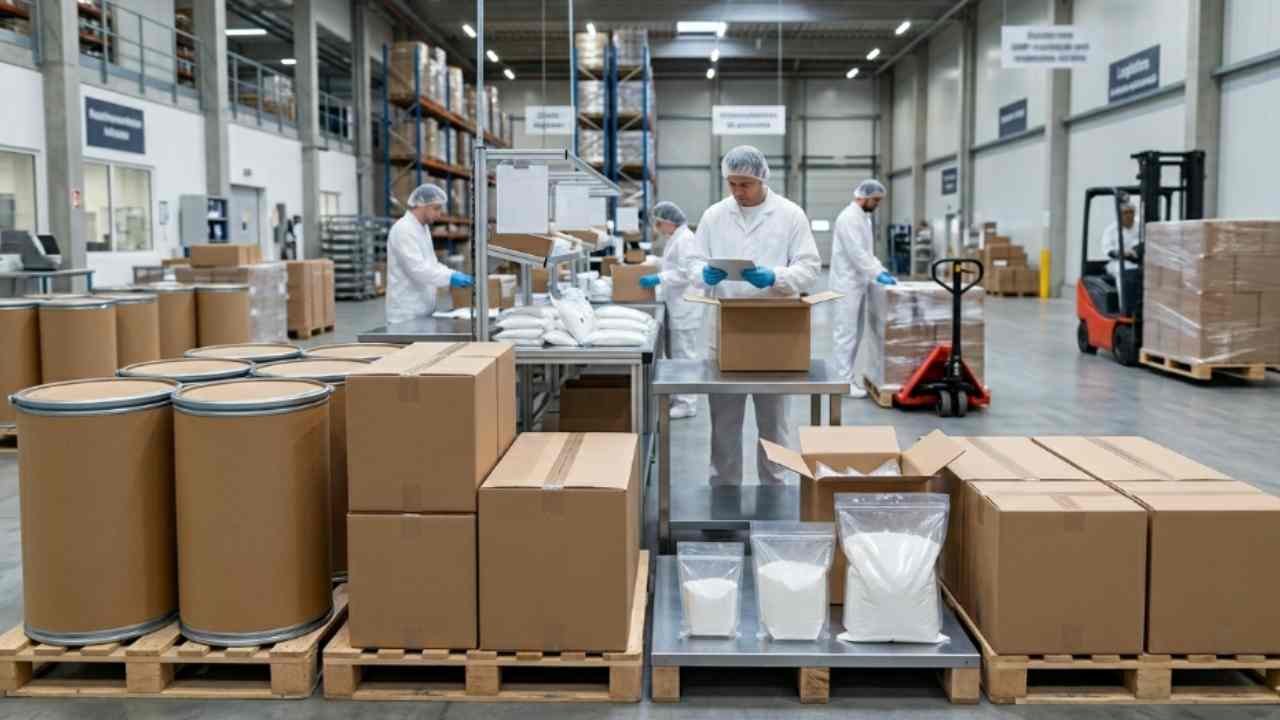
Inositol is primarily exported in 25kg fiber drums. Some wholesalers use 20kg or 25kg cartons for specific rail routes. Small trial orders or pharmaceutical grades may use 1kg or 5kg vacuum bags within a master carton to ensure high purity.
Standardizing for Industrial Efficiency
I see that the 25kg fiber drum is the "gold standard" for our industry. Most food and pharma factories in the Middle East and Southeast Asia have machines designed for this size. I visit the factories in China to check the drum quality. We look for high-density fiberboard. This material is strong and does not crush when you stack it three layers high in a container. I act as your strategic office to ensure the drums are new and clean. A used drum can carry odors or bacteria. This ruins the white, sweet profile of pure Inositol.
Cartons are a good choice for land or rail transport to Russia and Europe. Square boxes fit together with no gaps. This maximizes the space in a 20ft container. I oversee the "Burst Strength" tests for these boxes. They must be double-walled. If the box is too thin, the bottom will break during lifting. I also manage the sourcing of small 1kg or 5kg bags. These are great for high-purity Myo-Inositol1 used in labs. We put these small bags inside a larger carton for double protection. I check the heat-seal on every bag. A bad seal leads to leaks and waste. My goal is to match the packaging size to your specific production line needs. This saves you time and reduces product loss during the unpacking stage.
Comparison of Industrial Packaging Formats
| Packaging Type | Standard Weight | Main Advantage | Best For |
|---|---|---|---|
| Fiber Drum | 25 kg | High physical strength | Sea freight and long storage |
| Square Carton | 20 - 25 kg | Space efficiency | Rail and land transport |
| Small Bags | 1 - 5 kg | Easy handling for labs | High-purity pharma use |
| Big Bags (FIBC) | 500 - 1000 kg | Lowest unit cost | Large-scale beverage plants |
| Plastic Pails | 10 - 20 kg | Waterproof | Regional distribution |
| Vacuum Packs | 1 kg | Zero air exposure | Research and development |
Why are moisture-proof liners important in Inositol packaging?
Humidity turns fine Inositol powder into hard blocks. This makes it impossible to mix in your factory. I identify the liner technologies that keep your powder free-flowing and dry.
Moisture-proof liners are critical because Inositol is hygroscopic. Double-layer PE (polyethylene) bags or aluminum foil liners prevent water vapor from reaching the crystals. This stops caking and protects chemical purity in beverage or pharmaceutical applications.
Technical Defense Against Humidity
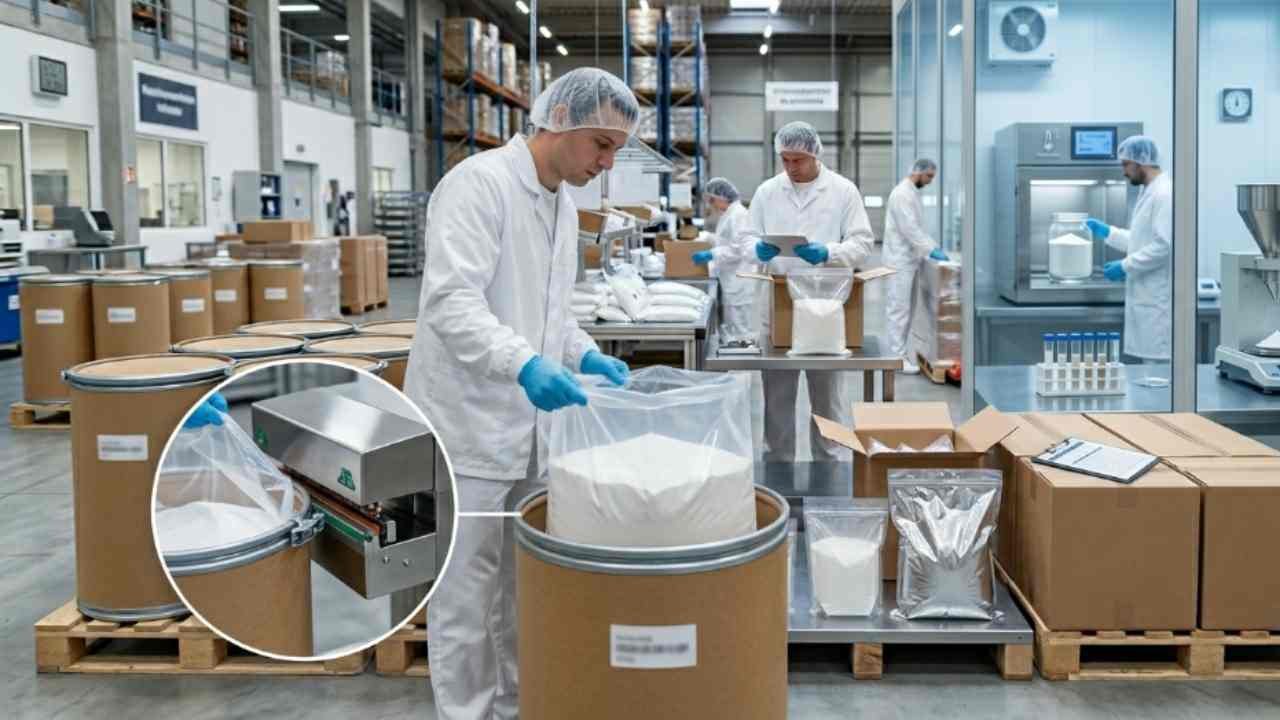
I see that moisture is the silent enemy of powder additives. Inositol crystals love to absorb water from the air. When they get wet, they stick together. This is called "caking." I visit the packing rooms in Chinese factories to audit the liner standards. We use two layers of PE bags. The first layer is a food-grade liner. The second layer is a thicker barrier bag. I check the "Micron Thickness" of these bags. If the plastic is too thin, it will have tiny holes. These holes allow the humid ocean air to enter the drum during the 30-day trip to your port.
I also suggest aluminum foil liners for premium orders. Aluminum is a total barrier. It blocks 100% of moisture and light. I act as your technical gatekeeper to ensure these bags are vacuum-sealed. When we remove the air, we also remove the humidity inside the bag. I oversee the "Sealing Method" at the plant. We use industrial heat-sealers. Some factories just tie the bag with a string. A string tie is not enough for international export. It always leaks. I ensure your Inositol arrives as a fine, dry powder. This allows your production team to pour it directly into the mixing tanks without grinding it first. Proper liners save you money by preventing batch failures in your own factory.
Performance of Different Liner Materials
| Liner Type | Moisture Resistance | Light Protection | FINETECH's Technical View |
|---|---|---|---|
| Single PE Bag | Low | Low | Avoid for international sea trade |
| Double PE Bag | Moderate | Low | Standard for bulk wholesale |
| Aluminum Foil | Excellent | Excellent | Best for high-purity pharma |
| Vacuum Sealed | High | Depends on material | Prevents internal oxidation |
| Anti-Static PE | Moderate | Low | Good for automated filling lines |
| Kraft Paper | Very Low | Moderate | Only for local land delivery |
How does packaging affect the shelf life of Inositol products?
Light and oxygen degrade your additives over time. Poor design shortens the shelf life and wastes your money. I explain how professional packaging design preserves Inositol for 24 months.
Professional packaging blocks UV light and oxygen ingress. Opaque fiber drums and airtight liners maintain a stable environment. This protection ensures the Inositol stays within its 98% to 101% assay range throughout its entire two-year shelf life.
Preserving Chemical Integrity
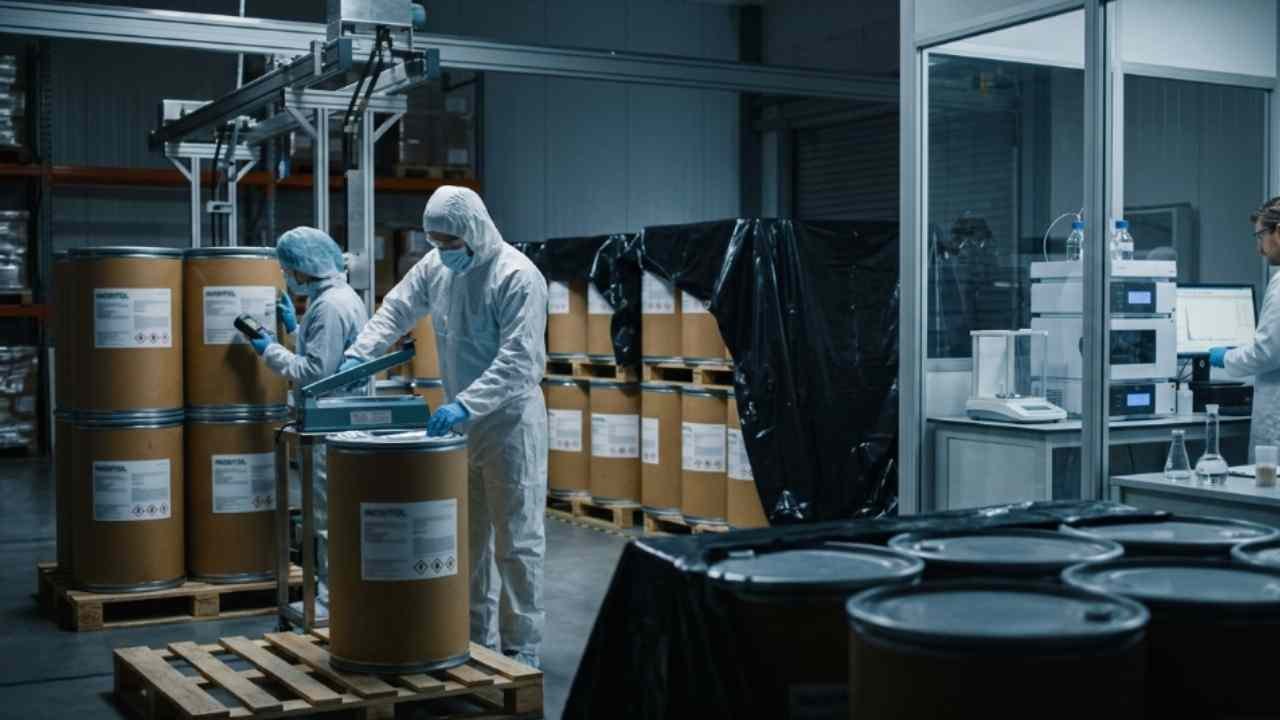
I see that Inositol is a stable molecule, but it is not immortal. If you leave it in a transparent bag in the sun, it will turn yellow. This "Yellowing" is a sign of chemical drift. I prioritize factories that use UV-opaque drums. Fiber drums are perfect because they are thick and dark. They keep the powder in total darkness. I act as your strategic partner to audit the "Stability Test2" reports from the manufacturer. They put the packed drums in a hot, humid room for six months. We check the HPLC results after this test. If the purity drops, we change the packaging design.
Oxygen is another risk. While Inositol does not oxidize as fast as vitamins, air exposure can still change its taste. I ensure the drum lids have a rubber gasket or a metal locking ring. This creates an airtight seal. I visit the warehouses to check these seals. If a drum is not closed properly, the shelf life is reduced by half. I also manage the "Production Date" to "Shipping Date" gap. I ensure you get the newest batch. By using airtight and light-proof packaging, we guarantee a full 2-year shelf life. This allows you to buy in bulk and store the product without worrying about quality loss.
| Feature | Protection Target | Impact on Shelf Life |
|---|---|---|
| Opaque Fiber | UV Light / Radiation | Prevents color change (yellowing) |
| Heat Seal Bag | Oxygen Ingress | Maintains chemical assay stability |
| Double Layer | Physical Puncture | Prevents contamination entry |
| Rubber Gasket | Air Exchange | Stops internal humidity rise |
| Metal Ring | Tamper Evidence | Ensures product remains pure |
| Pallet Wrap | Dust / Insects | Keeps the drum clean for use |
What labeling information is required for Inositol exports?
Incorrect labels trigger customs seizures and expensive fines. One missing batch number can halt your entire container. I list the mandatory labeling data you need for smooth international clearance.
Inositol labels must include the Product Name, Purity Grade (NF12/USP), Batch Number, and Net Weight. Manufacturers must also list the Production and Expiry dates, Country of Origin, and Storage Instructions. Markets like the Middle East often require Halal logos.

Compliance and Data Accuracy
I see that "Data Drift" is a common problem in logistics. The Certificate of Analysis (COA) must match the label on the drum exactly. If the COA says Batch 202401 but the drum says 202402, customs will seize the cargo. I act as your technical coordinator to check every label before the container is sealed. We verify the HS Code3 2906130000. This is the global code for Inositols. If the label uses a different code, you might pay the wrong tax or get a fine. I visit the shipping offices to ensure the labels are printed with water-proof ink.
Regional requirements are also very important. For my clients in Saudi Arabia or the UAE, I ensure the production and expiry dates are in a clear format. We also add the Halal and Kosher logos. For the European market, we check the "Net Weight" accuracy. I prioritize factories that use automated weighing and labeling machines. This removes human error. I also manage the "Storage Instruction" section. It must say "Store in a cool, dry place." This protects you if a customer handles the product poorly. By following these strict labeling rules, I ensure your cargo clears customs in days, not weeks.
| Label Item | Importance | FINETECH's Quality Check |
|---|---|---|
| Product Name | High | Must match invoice exactly |
| Batch Number | Extreme | Vital for traceability and safety |
| Assay / Grade | High | Shows NF or USP standard |
| Net Weight | Moderate | Check against packing list |
| Dates (Mfg/Exp) | High | Verify 24-month gap |
| Origin (China) | High | Required for trade compliance |
| Halal / Kosher | High | Required for specific regions |
| Storage Info | Moderate | Protects the final quality |
How should Inositol be stored before international distribution?
Dirty or hot warehouses spoil your premium stock before it even ships. Bad storage leads to mold and contamination. I provide the technical storage standards for your distribution hubs.
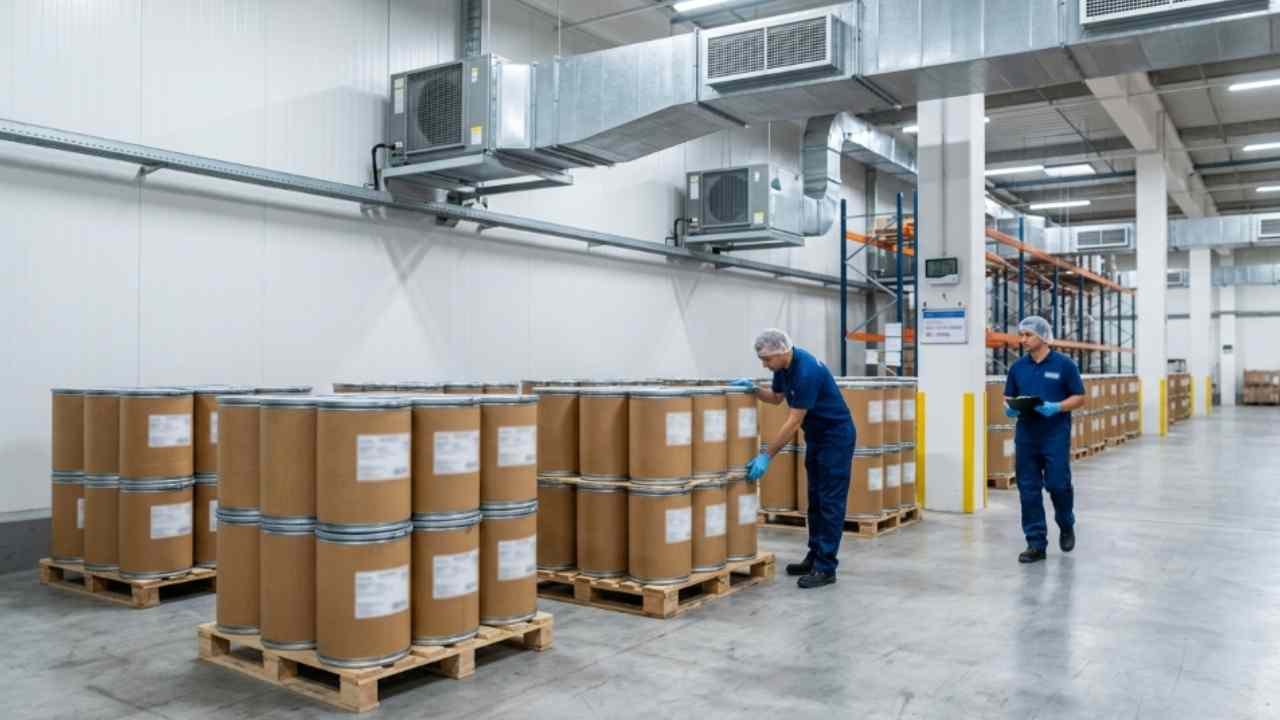
Inositol should be stored in a cool, dry, and well-ventilated warehouse. Keep temperatures below 25°C and relative humidity under 60%. Drums must sit on pallets off the ground and away from walls to prevent moisture wicking and ensure proper air circulation.
Managing the Warehouse Environment
I see that the time between production and shipping is a "risk window." If the factory warehouse is damp, the product is already ruined before it reaches the port. I visit our partner warehouses in China to check their HVAC systems4. We look for continuous ventilation. This prevents heat from building up inside the drums. I also ensure the floor is clean and dry. We use a "Pallet System." No drum ever touches the concrete. This prevents "Capillary Action" where water moves from the ground into the fiber drum.
Pest control is another technical detail. Inositol is sweet, so it can attract insects if the area is not clean. I audit the "Pest Management" logs at the factory. They must have regular inspections. I also check the "Odor Control." Inositol should not be stored near strong chemicals like garlic or onions. It can absorb these smells through the plastic liners. I act as your logistics advisor to suggest a "First-In, First-Out (FIFO)5" system. This ensures you always get the freshest stock. By following these storage rules, we keep the Inositol in "Top Quality" until it is loaded onto the ship.
| Parameter | Ideal Range | FINETECH's Threshold |
|---|---|---|
| Temperature | 15°C - 25°C | Max 30°C for short peaks |
| Relative Humidity | 40% - 60% | Max 65% to avoid caking |
| Light Exposure | Total Darkness | No direct sunlight allowed |
| Floor Gap | 10 cm (Pallet) | Mandatory for moisture safety |
| Wall Gap | 50 cm | Required for air flow |
| Odor Status | Neutral | No chemical storage nearby |
Conclusion
The best Inositol export solutions combine 25kg fiber drums, double PE liners, and climate-controlled storage. I manage these technical packaging details at FINETECH to ensure your bulk orders arrive safe and consistent.
-
DrugBank Online – Detailed pharmaceutical resource providing chemical structure, molecular properties, and professional usage data for Myo-Inositol. ↩
-
ICH Guidelines – International standards for stability testing (Q1A) of pharmaceutical substances to determine appropriate shelf life and storage conditions. ↩
-
US Census Bureau Trade Tool – Official resource for classifying international trade goods under the Harmonized System (HS) to ensure customs compliance. ↩
-
PharmaGuideline – Technical explanation of the role of HVAC systems in pharmaceutical and cleanroom environments to maintain air quality and moisture control. ↩
-
Investopedia – Business guide to the FIFO inventory management system, explaining its role in maintaining product freshness and reducing spoilage risk. ↩