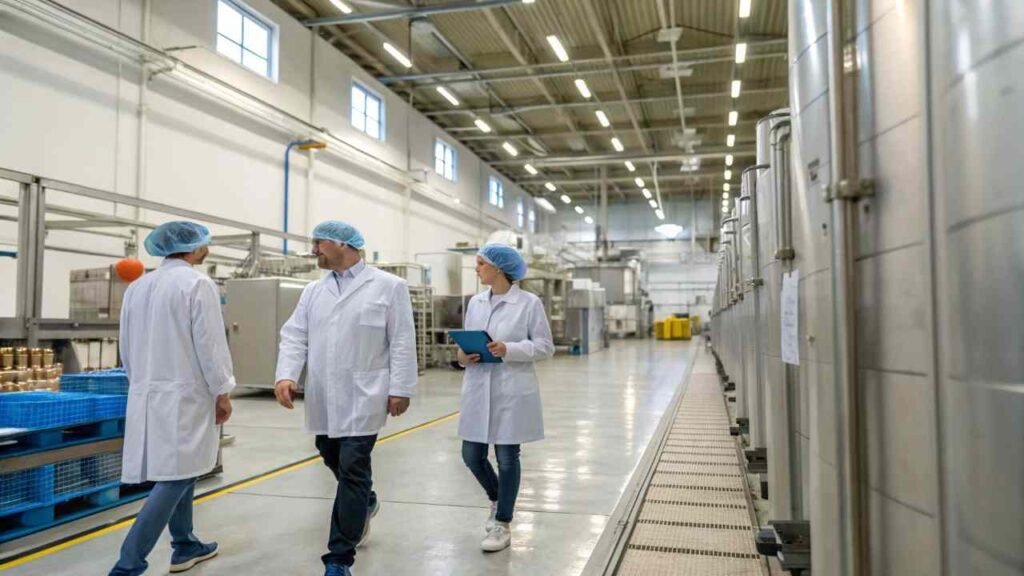
Unreliable suppliers cause production delays and quality failures. These mistakes drain your budget and damage your reputation. I show you how to find a partner you can trust today.
To identify a reliable Isolated Soy Protein (ISP) supplier, verify their ISO, BRC, or FSSC 22000 certifications and Non-GMO status. Check their annual production capacity and laboratory testing capabilities. A professional supplier must provide batch consistency, transparent documentation, and strong technical support to ensure safe and stable exports.
I manage factory selection and oversee production for my B2B clients at FINETECH. I visit Chinese plants to audit their labs because your brand safety depends on technical accuracy. I want to share the technical facts about Isolated Soy Protein (ISP) so you can secure your supply chain and protect your profit margins.
What qualifications should a professional Isolated soy protein manufacturer have??
Choosing a supplier without proper credentials leads to regulatory fines. This risk stops your market entry and wastes your capital. I explain the technical qualifications needed for professional manufacturing.
A professional manufacturer must have a business license showing "food additive production" and a history of exports. They should operate dedicated spray-drying towers and maintain a clean-room environment. Technical expertise in protein functionality, such as gelling and emulsification, is a mandatory requirement for high-quality production.
Dive Deeper into Factory Qualifications
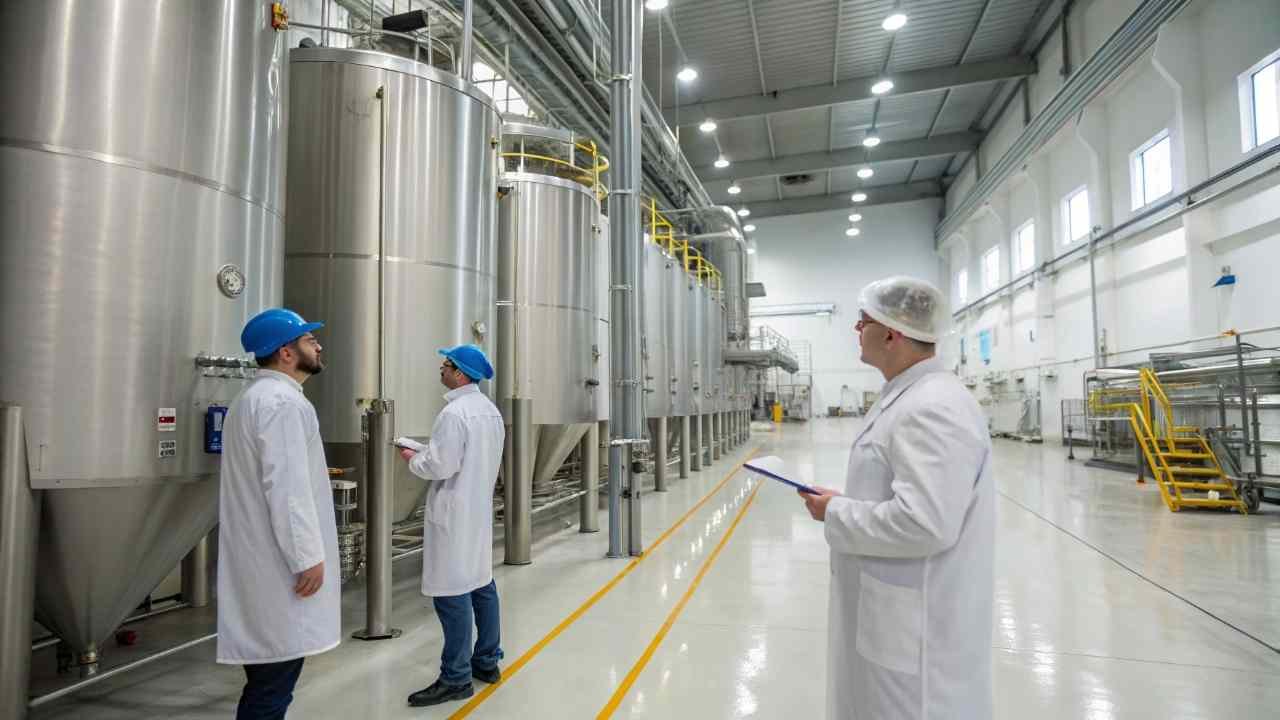
I visit many plants in China every year. I see that many factories try to make everything. A professional Isolated Soy Protein (ISP)1 manufacturer focuses on soy. They must have modern spray-drying equipment. This is the heart of the process. If the tower is old, the protein powder will have a burnt smell or poor solubility. I look at their laboratory equipment. A good factory has its own HPLC and Kjeldahl machines2. They test every batch before it goes to the warehouse. I act as your technical eyes to check these machines. I want to see that they calibrate them every month.
Experience in your specific region is also vital. A factory that only sells in China might not understand the rules in Saudi Arabia or Germany. I prioritize manufacturers who have a dedicated export department. They must understand the "Health Certificate" and "Non-GMO" requirements. I also check their clean-room standards. ISP is a protein, so it can grow bacteria fast. The packing area must be isolated. Workers must wear suits and masks. I audit these hygiene logs to ensure your cargo is safe. If the factory looks dirty, I walk away. I only pick the top 5% of factories for my wholesale clients. This technical rigor ensures you receive a product that meets global food safety laws.
Critical Evaluation Metrics
| Qualification Metric | Standard Requirement | FINETECH's Quality Check | Why It Matters |
|---|---|---|---|
| Production Focus | Dedicated soy lines | Inspect spray-dry towers | Prevents cross-contamination |
| Lab Capability | In-house protein testing | Check Kjeldahl equipment | Ensures 90% protein assay |
| Facility Hygiene | GMP Clean-room | Audit sanitation logs | Prevents bacterial growth |
| Export History | 5+ years experience | Review past BOL records | Ensures document accuracy |
| Tech Support | R&D Application lab | Check meat/drink test kits | Matches grade to your recipe |
| Maintenance | Monthly equipment check | Look for maintenance tags | Ensures batch consistency |
Which certifications indicate reliable Isolated soy protein production standards??
Fake certificates are a huge problem in international trade. One bad document can cause customs to seize your cargo. I list the global standards you must verify before buying.
Reliable Isolated Soy Protein production is proven by GFSI-recognized certifications like FSSC 22000, BRC, or IFS. For specific markets, Halal and Kosher certificates are essential. Non-GMO Project Verified or IP (Identity Preservation) certificates ensure the soy source meets international health and safety laws.

Dive Deeper into Certification Standards
I act as your technical gatekeeper for certifications. I do not just look at the logo on the wall. I check the certificate number in the official database. FSSC 220003 is my favorite because it is very strict about food safety systems. It covers everything from raw material sourcing to the final seal on the bag. If a factory has this, they are professional. For my clients in the Middle East, Halal is not optional. It is a legal requirement. I check which body issued the Halal paper. It must be recognized by JAKIM or MUI. I visit the factories to see if they follow the Halal rules on the production line.
Non-GMO status is the next technical hurdle. Most ISP comes from China. I ensure the beans are grown from non-modified seeds. I look for the "IP (Identity Preservation)4" certificate. This tracks the bean from the farm to the factory. If this chain is broken, you cannot sell the protein in Europe or Korea. I also check for "Organic" certifications if you need a premium grade. These papers prove that no chemical solvents were used during extraction. I prioritize factories that undergo third-party audits every year. This constant pressure keeps their quality high. I provide my clients with all these documents to ensure smooth customs clearance.
Essential Certification Benchmarks
| Certificate Type | Global Recognition | Technical Focus | FINETECH's Role |
|---|---|---|---|
| FSSC 22000 | Very High (GFSI) | Total food safety system | Verify database status |
| Non-GMO / IP | High (Regulatory) | Seed and farm tracking | Audit traceability logs |
| Halal (MUI/JAKIM) | Regional (ME/SEA) | Religious and hygiene | Check issuer validity |
| Kosher | High (Global) | Processing purity | Confirm annual renewal |
| ISO 9001 | Basic | Management quality | Baseline requirement |
| HACCP | Moderate | Hazard control points | Check critical limits |
How can buyers evaluate Isolated soy protein factory production capacity??
Small factories often over-promise and then fail to deliver. This creates stockouts and financial loss for your business. I show you how to verify a factory's true output.
Evaluate production capacity by checking the number of spray-drying towers and the daily tonnage output. A reliable large-scale factory usually produces 20,000 to 50,000 tons annually. Verify their storage warehouse size and raw material supply chain to ensure they can handle bulk wholesale orders without delays.
Dive Deeper into Capacity Evaluation
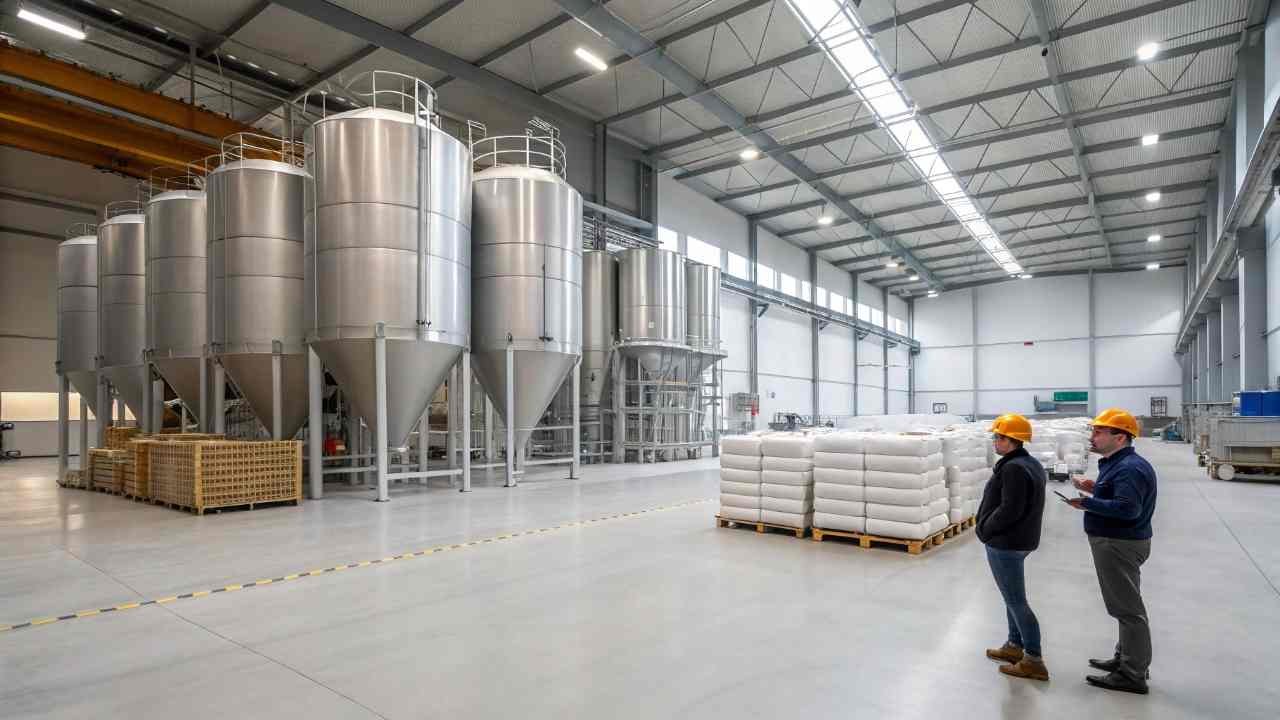
I see many "traders" pretending to be factories. I visit the site to see the smoke from the chimneys. A real factory has a large footprint. They need massive silos to store soybean meal. I ask for their production logs for the last three months. This shows if they are busy or sitting idle. If a factory is only running at 20% capacity, they might have financial trouble. I prioritize plants that have at least two production lines. This is a technical safety net. If one machine breaks, they can still produce your order. I act as your strategic office to confirm these facts.
Warehouse size is also important. ISP is a bulky product. A factory needs a huge, clean space to store the bags before shipping. I check for climate control. If the warehouse is too hot or damp, the protein will clump. I also look at their "Lead Time." A professional factory should be able to produce 20 tons in 10 to 14 days. If they ask for 45 days, it means they are waiting for money to buy raw materials. I oversee the loading process to ensure they have enough trucks and staff. I also check their raw material supply. Do they buy meal from a stable source? I prioritize factories with long-term contracts with soy crushers. This ensures your supply never stops, even when market demand is high.
| Capacity Indicator | High-End Target | FINETECH's Observation | Why It Matters |
|---|---|---|---|
| Annual Output | 30,000+ Tons | Review annual reports | Ensures bulk availability |
| Production Lines | 2 or More | Physical line check | Protects against downtime |
| Warehouse Space | 5,000+ Sqm | Audit storage hygiene | Prevents clumping/mold |
| Staff Count | 100+ Workers | Check shift rotations | Ensures stable delivery |
| Lead Time | 14 Days | Track order history | Facilitates inventory flow |
| Raw Material Silo | 10,000+ Tons | Check storage capacity | Secures supply in shortages |
What questions should buyers ask before ordering Isolated soy protein??
Asking the wrong questions leads to bad purchases. You end up with protein that does not work in your recipe. I share the technical questions you must ask to avoid these mistakes.
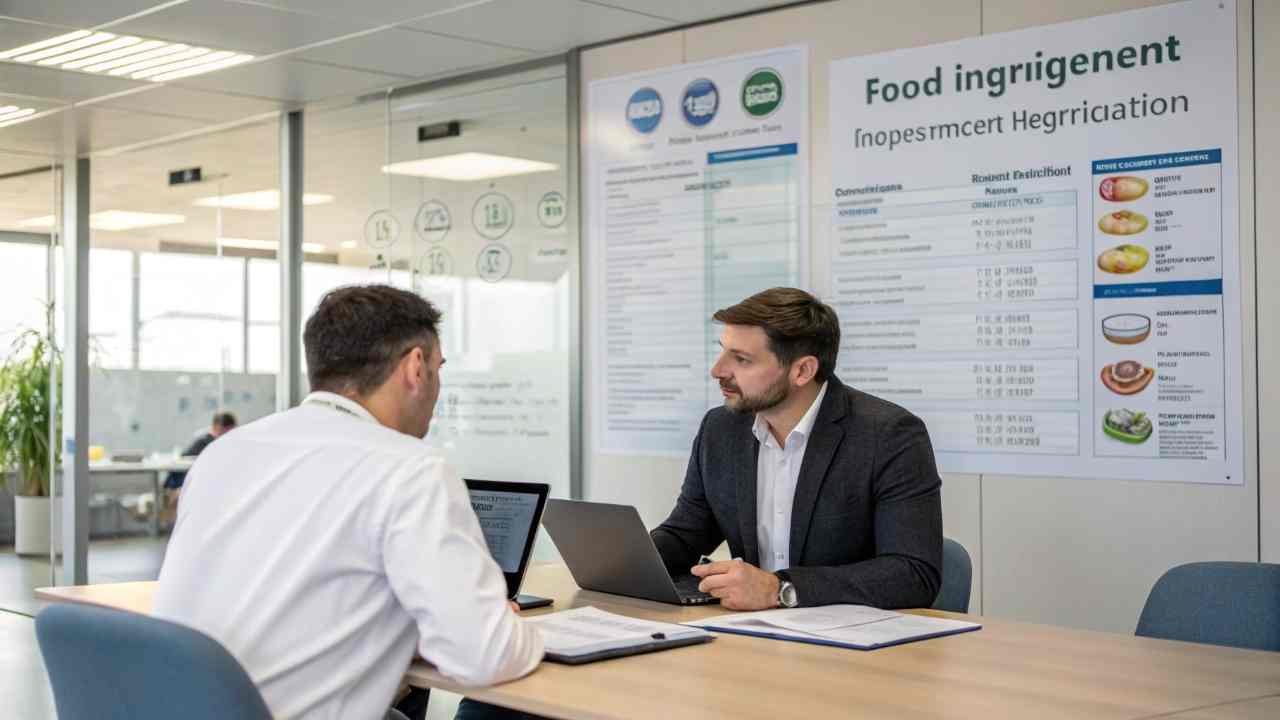
Ask about the Nitrogen-to-Protein factor used (usually 6.25) and the specific functional grade (High-Gel or Injection). Inquire about their Non-GMO testing protocol and the "Loss on Drying" specs. Request a recent Certificate of Analysis (COA) to match their claims against international food additive standards.
Dive Deeper into Technical Questioning
I act as your strategic office during negotiations. I always ask about the "PDCAAS" score. This measures the protein quality for human health. If a supplier does not know this, they are not a professional manufacturer. I also ask about their "Mesh Size." For meat injections, you need a very fine powder (100 mesh or more). For sausages, you need a different texture. If the factory cannot give you a mesh report, their milling machine is poor. I also ask about the "Nitrogen Solubility Index" (NSI). This tells us how much of the protein will dissolve. This is critical for beverage makers.
Another key question is about the "Soybean Source." Is it from Northeast China or imported? Northeast China soy is naturally Non-GMO. I prioritize this source for my European and Southeast Asian clients. I also ask for their "Batch Retain Policy." A reliable factory keeps samples of every batch for two years. If you have a problem later, we can test that sample. I also ask about their "Payment Terms." Professional factories often allow for LC or DP terms once we build a relationship. I negotiate these terms for you. I also ask for the "MSDS5" (Material Safety Data Sheet). This document is needed for shipping and warehouse safety. By asking these deep technical questions, I filter out the weak suppliers.
| Question Topic | Technical Target | FINETECH's Role | Impact on Production |
|---|---|---|---|
| NSI Value | 80% or Higher | Verify lab solubility test | Affects beverage clarity |
| Gel Strength | 500g - 1000g | Check texture analyzer | Controls meat firmness |
| Viscosity | Low vs High | Match to your process | Prevents machine clogging |
| PCR Testing | Negative for GMO | Review DNA lab reports | Vital for EU compliance |
| Ash Level | ≤ 6.0% | Monitor ignition tests | Indicates refining purity |
| pH Level | 6.5 - 7.5 | Check pH meter logs | Affects final food taste |
Why is after-sales service important in Isolated soy protein trade??
Problems often happen after the cargo leaves the port. Without good service, you are stuck with bad product and no refund. I explain why the relationship matters most for your long-term success.
After-sales service is critical for resolving quality disputes, handling shipping damage, and providing technical formulation support. A reliable supplier offers batch retention samples for two years. They assist with customs documentation and provide guidance if the protein behaves unexpectedly in your manufacturing process.

Dive Deeper into After-Sales Support
I see that the deal is not done when you pay. The deal is done when the protein is in your recipe and your customers are happy. If a drum arrives broken, you need a partner who says "I will fix this." I manage these claims for my B2B clients. I keep samples of every batch we ship. If you have a problem after 6 months, we test our sample to find the truth. A professional supplier will never hide. They will help you find the root cause. Sometimes the problem is not the protein. It might be the storage in your own country. I act as your technical advisor to solve these puzzles.
Document support is another part of service. Sometimes customs in Russia or Malaysia ask for a new certificate. A bad supplier will ignore your emails. A good supplier will get the paper in 24 hours. I visit the logistics offices to ensure this happens. I also provide "Application Support." If your ham is too soft, I talk to the factory's food scientist. They can suggest a different mixing speed or a different grade of ISP. This technical help is free when you work with a reliable partner. I prioritize factories that value long-term wholesale over a quick profit. This professional approach protects your profit margins and ensures your brand stays strong in the market.
| Service Component | Standard Offering | FINETECH's Added Value | Benefit to Buyer |
|---|---|---|---|
| Sample Retention | 2 Years | We store double samples | Resolves future disputes |
| Document Help | 24-hour response | Direct CIQ liaison | Fast customs clearance |
| Claim Handling | Refund or Replace | We negotiate with factory | Reduces financial loss |
| Tech Guidance | Formulation help | Food scientist access | Improves your final product |
| Market News | Monthly updates | Price trend alerts | Better procurement timing |
| Logistics Track | Daily updates | Real-time vessel monitoring | Better inventory planning |
Conclusion
Identifying a reliable Isolated Soy Protein supplier requires verifying certifications, capacity, and technical after-sales support. I manage these audits at FINETECH to ensure your supply chain remains safe, stable, and profitable.
-
ScienceDirect – Comprehensive overview of Isolated Soy Protein production, nutritional profile, and industrial applications. ↩
-
ScienceDirect – Technical entry explaining the Kjeldahl method, the standard laboratory procedure for determining nitrogen and protein content in organic substances. ↩
-
FSSC – Official website for the Food Safety System Certification, explaining its global standards and auditing requirements. ↩
-
Wikipedia – Explanation of Identity Preservation (IP) systems used to maintain the integrity of non-GMO crops from farm to final product. ↩
-
Occupational Safety and Health Administration (OSHA) – Official government resource explaining the transition and requirements for Safety Data Sheets (formerly MSDS) in hazard communication. ↩