
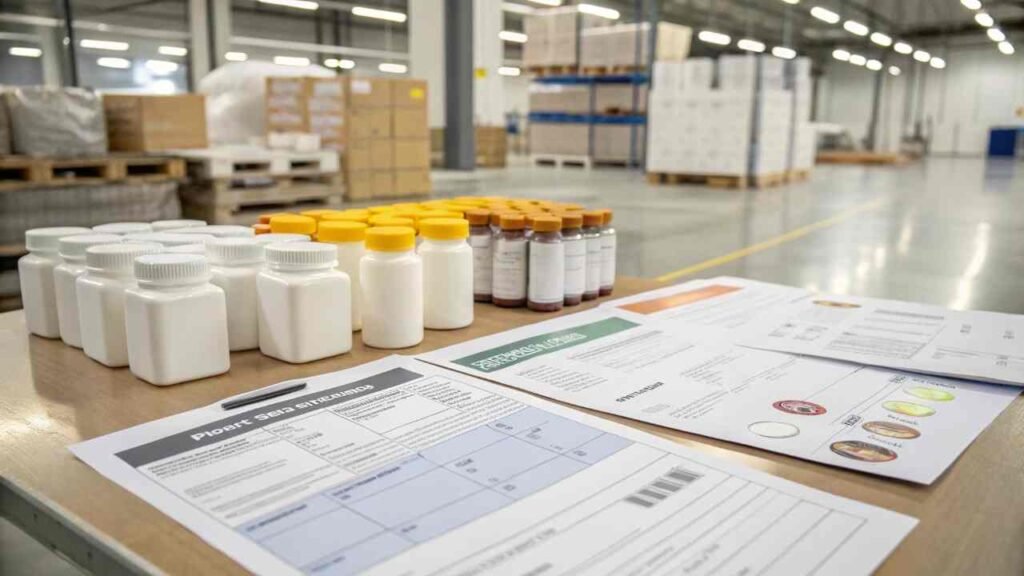
Working with unverified chemical suppliers leads to late shipments, failed lab tests, and customs clearance blocks. Selecting high-grade vitamins requires a proven sourcing framework. Establishing clear screening criteria prevents losses.
Importers can source high-quality Vitamin B series products by conducting thorough pre-purchase checks on chemical parameters, evaluating supplier quality systems, verifying mandatory shipping documentation, utilizing third-party pre-shipment inspections, and contracting with certified manufacturers that control raw precursor supplies.
Successful global import operations require systematic factory evaluation and production oversight. Importers must look beyond basic commercial pricing to verify regulatory and technical alignment. Sourcing partners like FINETECH simplify this process by choosing qualified factories, managing strict production checks, and organizing secure delivery schedules. This comprehensive guide outlines the strategic steps to source the Vitamin B series reliably.
What Should Buyers Check Before Purchasing Vitamin B Series?
Relying entirely on low FOB quotes can result in buying oxidized vitamin powders or batches with incorrect chemical assays. Ignoring analytical details causes production failures. Checking specifications minimizes buying errors.
Before purchasing, buyers must check active assay percentages, verify chemical isomer ratios, evaluate storage indicators such as peroxide and free acid values, confirm heavy metal concentrations, and inspect the physical properties like solubility and flowability of the powder grades.
Dive Deeper into Technical Specifications and Analytical Indicators
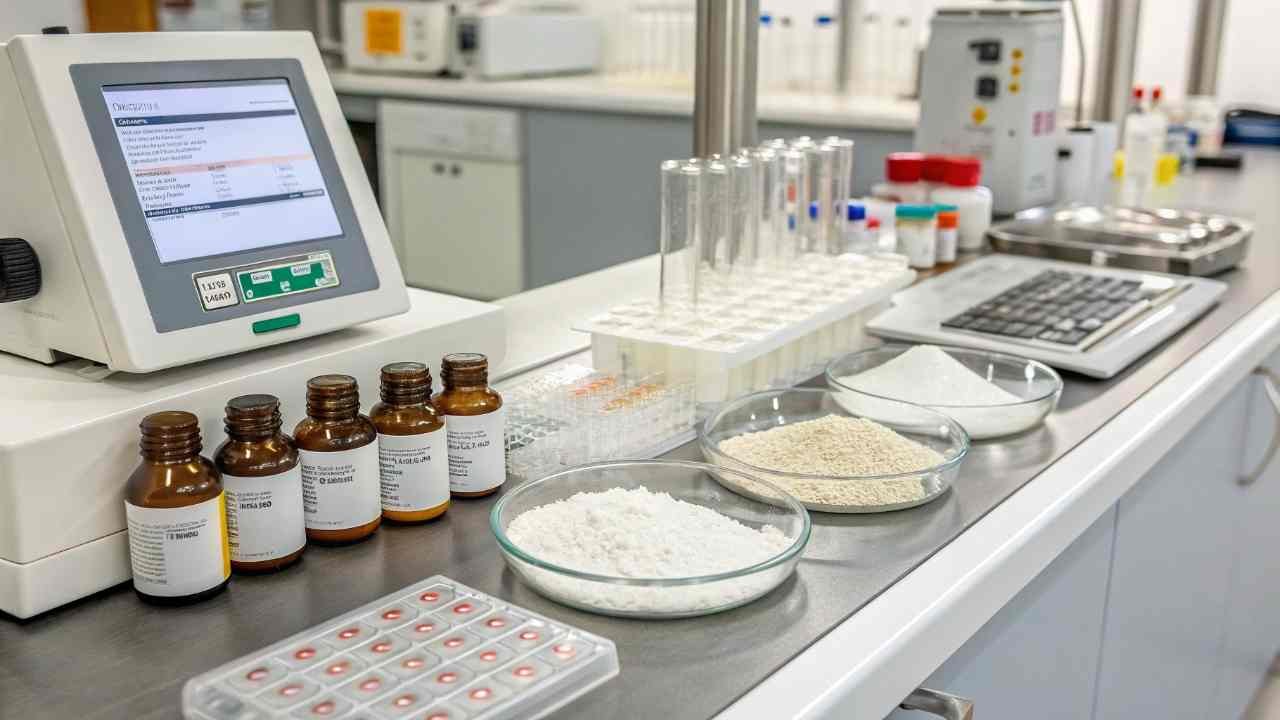
Procuring Vitamin B series raw materials requires a deep review of chemical parameters. Sourcing managers must examine the Certificates of Analysis (COAs) of target batches before signing procurement contracts. The first parameter to check is the active assay. For instance, Vitamin B1 (thiamine) or Vitamin B6 (pyridoxine) must meet the exact minimum percentage defined by pharmacopeias like USP1 or EP. The second critical parameter is isomer composition. For bio-fermented grades like Vitamin B12, verifying the active cobalamin2 ratio is necessary to ensure biological potency.
Additionally, buyers must check stability indicators. High peroxide values or elevated free acid levels indicate that the vitamin has already begun to oxidize, which will severely shorten its shelf life. For powder formulations, physical properties require close attention. Buyers of vitamins like D-Calcium Pantothenate (B5) must check the moisture content and flowability. These vitamins are highly hygroscopic and can easily absorb moisture, causing clumping and poor mixing in dry formulas. Sourcing partners like FINETECH inspect these analytical indicators directly at the factory lab, ensuring that international buyers receive materials that are completely potent and physically stable.
| Checked Parameter | Standard Requirement | Quality Sourcing Risk | Verification Action |
|---|---|---|---|
| Active Assay (%) | Complies with USP / EP monographs | Weak dosage, low efficacy | Request HPLC chromatogram logs |
| Isomer Composition | High active isomer ratio | Inactive biological formulation | Verify active peaks in testing reports |
| Moisture Content | Below specified maximum limit | Powder caking, micro-growth | Perform Karl Fischer titration checks |
| Heavy Metals | Safely below regulated ppm limits | Toxicological contamination | Conduct ICP-MS trace element audits |
How Can You Evaluate a Vitamin B Series Supplier?
Buying from unverified traders can lead to receiving mismatched material grades or experiencing sudden contract cancellations. Unvetted suppliers compromise business operations. Implementing a thorough supplier evaluation plan prevents these problems.
Evaluate a Vitamin B series supplier by auditing their manufacturing facility certifications, assessing their domestic and international logistical history, evaluating their technical customer support capabilities, and testing representative batch samples through an independent third-party testing laboratory.

Dive Deeper into Supplier Capability Auditing
Identifying a professional supplier involves evaluating both their operational capabilities and their quality control systems. First, buyers must request active, verified copies of international facility certifications. For food-grade additives, the facility must hold FSSC 22000 or ISO 220003 registration. For feed-grade vitamins, certifications like FAMI-QS are mandatory. These systems prove that the factory maintains standardized hazard control programs. Second, buyers must evaluate the supplier's logistical capabilities. Vitamin B series ingredients are sensitive to environmental stress. A qualified exporter must demonstrate extensive experience in shipping to target destinations like Europe, the Middle East, or Southeast Asia. They must know how to select carriers with direct routes to minimize transport times.
Third, the supplier's communication and technical transparency require close inspection. A reliable partner does not just quote prices. They share current market insights, such as upcoming factory maintenance schedules or raw precursor updates. This transparency helps buyers optimize their procurement timing. Sourcing partners like FINETECH handle this complex evaluation by visiting manufacturing plants in person, checking cleanroom facilities, auditing laboratory equipment calibration, and checking warehouse storage practices. This thorough background checking protects B2B buyers from working with low-performing suppliers.
| Evaluation Category | Specific Requirement | Why It Matters | Best Assessment Action |
|---|---|---|---|
| Quality Certification | FSSC 22000, GMP, or FAMI-QS | Proves standardized plant safety | Verify database registry numbers |
| Logistical History | Experience in target sea ports | Prevents shipping delay damage | Request past bills of lading for review |
| Technical Support | Complete regulatory dossier access | Facilitates customs import clearances | Request allergen and GMO-free statements |
| On-Site Inspection | Audit of factory testing equipment | Confirms real analytical capabilities | Inspect laboratory calibration logs |
What Documents Should Accompany Vitamin B Series Shipments?
Missing or incorrect shipping documents can cause international customs to block your cargo, resulting in high storage fees. Unprepared importers face regulatory penalties. Ensuring complete document packs prevents delays.
Vitamin B series shipments must be accompanied by a commercial invoice, detailed packing list, bill of lading, Certificate of Analysis (COA) matching the specific batch, health or sanitary certificate, and relevant region-specific compliance documents such as REACH or Halal certifications.

Dive Deeper into Import Documentation Requirements
Navigating customs clearance successfully requires preparing a comprehensive and compliant documentation package before the vessel arrives at the port of destination. The foundational documents are the Bill of Lading, Commercial Invoice, and Packing List. These documents must list matching details, such as the exact gross weight, net weight, batch numbers, and Harmonized System4 (HS) codes. For the Vitamin B series, importing customs authorities will inspect the Certificate of Analysis (COA) to confirm that the imported chemical compounds match national food or feed ingredient specifications.
In addition, health and sanitary certificates issued by the exporting country's agricultural or customs authorities are often required to prove that the raw materials are free from microbiological contamination. For imports into the European Union, a valid REACH5 registration or tonnage coverage statement is mandatory for chemical substances imported in volumes exceeding one ton annually. For markets in the Middle East, verified Halal certificates issued by accredited Islamic bodies are necessary. Sourcing partners like FINETECH eliminate documentation risks by compiling and verifying all technical dossiers, allergen statements, non-GMO declarations, and customs documents ahead of the shipping schedule.
| Mandatory Document | Target Information | Sourcing Purpose | Compliance Check Action |
|---|---|---|---|
| Batch-Specific COA | Active assay, metals, solvents | Proves batch purity and safety | Compare results with USP/EP standards |
| Health Certificate | Hygiene and microbial assays | Confirms food-grade import safety | Verify government authority stamps |
| REACH Registration | Chemical registration numbers | Mandatory for European Union trade | Request active registration certificates |
| Halal / Kosher Certificate | Cultural dietary compliance | Access to specialized retail markets | Confirm issuer is locally accredited |
How Can Buyers Reduce Procurement Risks for Vitamin B Series?
Relying on a single supplier during sudden market rallies leaves your manufacturing lines exposed to shortages and price spikes. Buying blindly risks business disruptions. Implementing risk reduction steps secures inventory.
Buyers can reduce Vitamin B series procurement risks by establishing a multi-regional sourcing model, maintaining a buffer safety stock of two to three months, negotiating quarterly or long-term contract agreements, and partnering with experienced third-party sourcing specialists.

Dive Deeper into Sourcing Risk Mitigation
Securing a stable raw material pipeline in a volatile chemical market requires a proactive procurement strategy. Sourcing managers should avoid relying on a single manufacturing facility or region. Instead, they must establish relationships with alternative exporters. This multi-sourcing model ensures that if one supplier faces an environmental shutdown, energy pricing crisis, or logistical bottleneck, backup suppliers can fulfill the requirements.
Additionally, buyers should move away from pure spot-market buying. Purchasing on the spot market leaves operations exposed to sudden price surges. Negotiating quarterly or long-term contract agreements with trusted suppliers provides price stability and guaranteed volume allocation. Sourcing partners like FINETECH help B2B buyers execute this strategy effectively. They select reliable factories, oversee production, guarantee strict quality controls, and offer low MOQs. This support allows buyers to build up a safety buffer stock of two to three months of production needs without locking up excessive operating capital. This combined approach keeps your raw material costs predictable and your manufacturing lines running without interruption.
| Risk Mitigation Strategy | Operational Action | Primary Sourcing Benefit | Target Procurement Risk |
|---|---|---|---|
| Multi-Sourcing Model | Register suppliers in two regions | Eliminates sole-source vulnerability | Regional factory closures |
| Buffer Safety Stock | Hold 2-3 months of inventory | Prevents manufacturing shutdowns | Ocean shipping and port delays |
| Long-Term Contracts | Sign quarterly fixed-price deals | Locks in predictable raw material costs | Spot-market pricing spikes |
| Sourcing Partners | Work with agencies like FINETECH | Simplifies audits and low MOQ | Quality and administrative errors |
What Makes a Reliable Vitamin B Series Manufacturer?
Sourcing from uncertified, low-tier factories leads to receiving inconsistent raw material batches and failing laboratory assays. Unreliable production plants damage product quality. Identifying top-tier manufacturers protects your brand.
A reliable Vitamin B series manufacturer has fully automated synthesis or fermentation lines, maintains in-house laboratories equipped with advanced HPLC and GC instruments, holds recognized food and feed safety certifications, and maintains stable access to upstream precursor chemicals.

Dive Deeper into Manufacturing Excellence Standards
Manufacturing the Vitamin B series requires highly complex chemical synthesis or microbial fermentation. Reliable factories possess modern, fully automated production setups. These automated systems control processing variables like pH, temperature, and raw material inputs with high precision. This systematic control is critical to ensuring batch-to-batch consistency. Furthermore, a top-tier manufacturer must operate a fully equipped, in-house laboratory. This laboratory must maintain calibrated HPLC, GC, and ICP-MS instruments to test every batch for purity, solvent residues, and heavy metals.
Another major indicator of reliability is the factory's control over upstream precursor materials. For chemical synthesis grades like Vitamin B3, having a secure supply of intermediates like picoline is essential to prevent production halts. For fermented vitamins like Vitamin B12, having advanced biological culture maintenance ensures consistent yield. Sourcing partners like FINETECH conduct regular on-site audits of these manufacturing facilities. They verify equipment calibration, inspect cleanroom environments, and review production logs to ensure complete transparency. This thorough monitoring ensures that B2B buyers purchase materials only from factories that meet international quality standards.
| Manufacturer Quality Indicator | Specific Standard | Sourcing Importance | Factory Audit Action |
|---|---|---|---|
| Automated Control Lines | Computerized PLC interfaces | Ensures processing consistency | Review real-time batch production logs |
| Analytical Laboratory | Calibrated HPLC & GC instruments | Guarantees precise purity testing | Inspect chemical calibration records |
| Precursor Integration | Stable upstream chemical contracts | Prevents supply line shutdowns | Evaluate raw material storage levels |
| Cleanroom Standards | Class 100,000 packing rooms | Prevents batch contamination | Inspect cleanroom air filtration systems |
Conclusion
Sourcing high-quality Vitamin B requires thorough specification checks, verified supplier audits, and correct documentation. Partnering with a professional sourcing team ensures stable, compliant, and cost-effective inventory management.
-
United States Pharmacopeia (USP) – Official quality standards database outlining monograph requirements, active ingredient testing parameters, and compliance guidelines for dietary supplements. ↩
-
National Institutes of Health (NIH) – Fact sheet for health professionals detailing the physiological actions, metabolic forms, and clinical significance of cobalamin (Vitamin B12). ↩
-
International Organization for Standardization (ISO) – Official portal explaining the framework and requirements of ISO 22000 for managing food safety across global supply chains. ↩
-
World Customs Organization (WCO) – Official overview of the international Harmonized Commodity Description and Coding System (HS) used to classify traded goods for customs and tariff assessments. ↩
-
European Chemicals Agency (ECHA) – Guide for exporters detailing compliance rules under the Registration, Evaluation, Authorisation and Restriction of Chemicals (REACH) framework for the European market. ↩