Relying on expensive, low-capacity regional suppliers can raise your production costs and cause inventory shortages. Unsecured supply chains limit market growth. Sourcing from China resolves these issues.
Global buyers source the Vitamin B series from China due to the country's massive economies of scale, fully integrated domestic raw material supply chains, highly competitive manufacturing pricing, and compliance with international quality standards like FSSC 22000 and GMP.
Successful chemical procurement operations depend on securing stable volume allocations and competitive pricing. Importers must understand the industrial landscape to optimize their procurement pipelines. Sourcing partners like FINETECH simplify factory selection and quality oversight directly in China, protecting B2B margins. This comprehensive guide outlines why China remains the global hub for Vitamin B series sourcing.
What Advantages Do Chinese Vitamin B Series Manufacturers Offer?
Sourcing from small-scale facilities can lead to sudden capacity shortages and delayed bulk shipments. Fragile supply lines threaten manufacturing operations. Evaluating Chinese manufacturing scale secures your raw material volume.
Chinese Vitamin B series manufacturers offer advantages including massive production capacities, fully integrated upstream precursor supply chains, advanced chemical synthesis and fermentation technologies, and the ability to scale production quickly to meet sudden global demand.
Dive Deeper into Industrial Scale and Integration
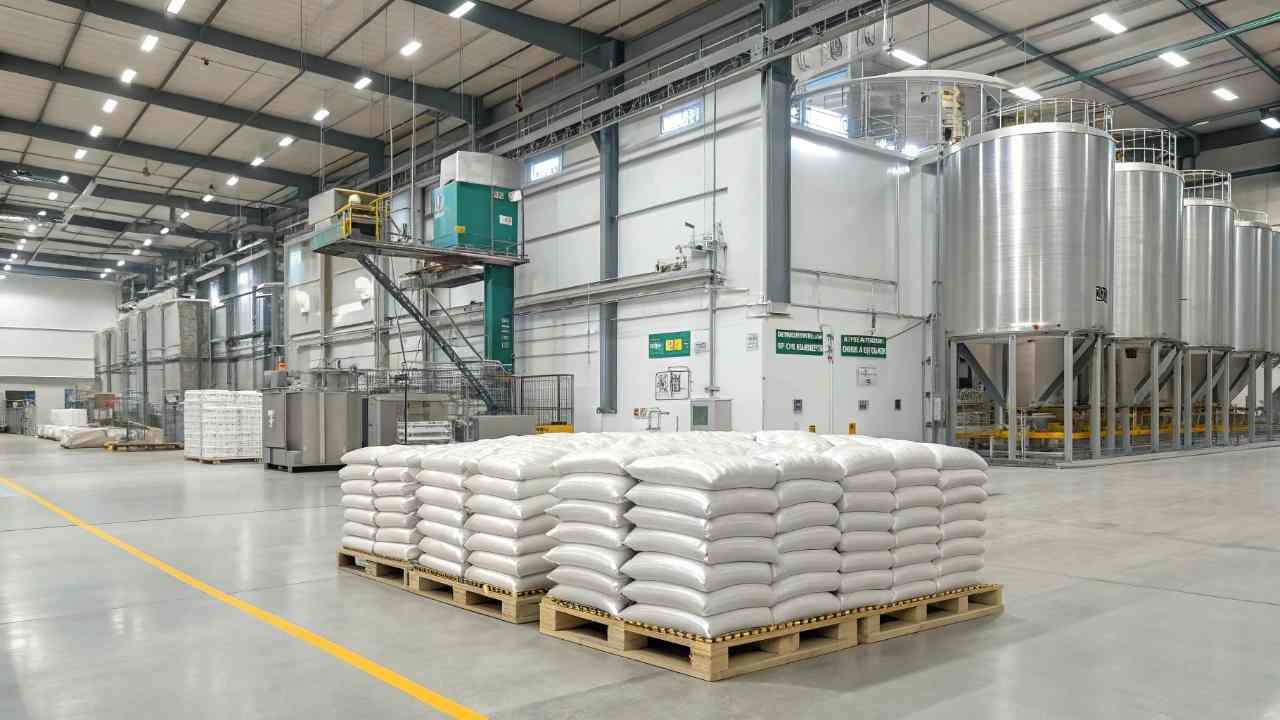
The primary advantage of Chinese Vitamin B series manufacturers lies in their unmatched industrial scale. China currently controls approximately eighty percent of the global output for B-complex vitamins, including essential grades like Vitamin B1, B2, B3, B5, B6, and B12. This dominant market position is supported by massive, highly automated production hubs located in Zhejiang, Hebei, and Hubei provinces. These factories can process thousands of tons of material monthly, achieving immense economies of scale1 that smaller regional blenders or Western chemical plants cannot match.
Furthermore, Chinese manufacturers benefit from fully integrated domestic supply chains. The chemical intermediates and precursors required for synthesis, such as picoline2 for Vitamin B3 or specific acids for Vitamin B5, are sourced locally within China. This localized raw material integration shields Chinese factories from international intermediate shortages, ensuring consistent production schedules even during global trade disruptions. Sourcing managers choose Chinese suppliers because they can guarantee large-volume allocations and scale up production rapidly to prevent global shortages. Sourcing partners like FINETECH work directly with these integrated giants, helping B2B buyers secure guaranteed volume allocations even during tight market cycles.
| Manufacturer Advantage | Operational Mechanism | Sourcing Benefit | Target Procurement Risk |
|---|---|---|---|
| Economies of Scale | Large-capacity, automated plants | Lowers the base unit cost | High manufacturing overheads |
| Precursor Integration | Localized raw material sourcing | Ensures consistent production | Upstream intermediate shortages |
| Advanced Technology | Combined synthesis & fermentation | High active-isomer yields | Substandard biological potency |
| Volume Flexibility | Rapid production scaling | Guaranteed large-scale supply | Sudden global market deficits |
How Competitive Are Chinese Vitamin B Series Prices?
High raw material costs from Western suppliers squeeze your product profit margins and limit retail pricing flexibility. Overspending on ingredients drains capital. Sourcing from Chinese suppliers reduces material costs.
Chinese Vitamin B series prices are highly competitive due to lower domestic manufacturing overheads, optimized logistics infrastructure, localized precursor chemical sourcing, and intense domestic competition among large-scale manufacturers, which helps maintain stable, cost-effective wholesale rates.
Dive Deeper into Cost Structures and Market Dynamics
Analyzing the cost structure of Chinese vitamin manufacturing reveals several pricing advantages. First, Chinese factories benefit from lower utility and infrastructure costs. The massive scale of these plants allows them to spread fixed costs across huge output volumes, driving down the unit cost of each kilogram of Vitamin B produced. Second, localized precursor chemical integration eliminates international freight costs and import duties on starting raw materials. This cost avoidance directly lowers the base export price of the finished vitamin products.
Third, intense domestic competition among major Chinese manufacturers, such as Brother Enterprises and CSPC Pharmaceutical, prevents excessive price hikes. These companies continuously optimize their synthesis and fermentation lines to offer highly competitive pricing to secure global market share. This competitive environment keeps wholesale prices stable compared to European alternatives. Sourcing partners like FINETECH help international B2B buyers navigate this competitive landscape. They compare prices across multiple certified factories, negotiate bulk discounts, and offer low MOQs. This support allows buyers to purchase at the most favorable market rates without committing to excessively large order sizes.
| Pricing Factor | Chinese Manufacturer Profile | Western Competitor Profile | Impact on Landed Cost |
|---|---|---|---|
| Precursor Cost | Localized, low-cost supply | Imported, subject to tariffs | Lower base export price |
| Factory Overheads | Low energy and infrastructure | High utility and compliance costs | High margins at lower price points |
| Shipping Logistics | Mature port networks (Ningbo/Shanghai) | Complex land-and-sea routes | Reduced international freight fees |
| Domestic Market | High competition keeps margins thin | Consolidated, premium margins | Stable wholesale pricing |
How Do Chinese Suppliers Maintain Product Quality?
Buying low-cost ingredients without verifying quality systems leads to receiving oxidized chemical batches or failing regulatory purity tests. Compromising on quality ruins formulations. Selecting certified suppliers protects standards.
Chinese suppliers maintain product quality by utilizing fully automated synthesis and fermentation lines, operating in-house laboratories equipped with advanced HPLC and GC instruments, and adhering strictly to international standards like FSSC 22000, ISO, USP, and EP.
Dive Deeper into Quality Systems and Laboratory Controls
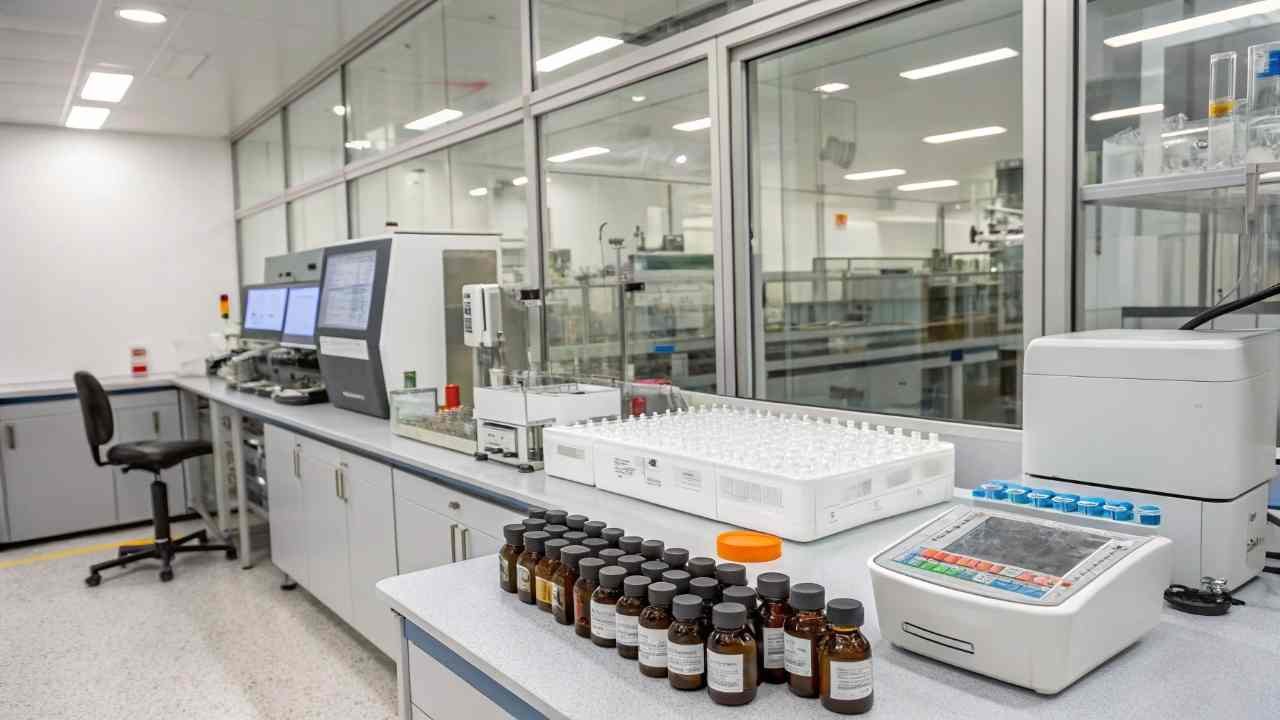
Modern Chinese vitamin factories utilize advanced technology and strict quality systems that match global standards. The era of low-tech chemical blending has been replaced by highly automated, closed-loop synthesis and fermentation lines. These automated systems utilize precise sensors to monitor critical processing variables, such as temperature, pressure, and pH levels, with high precision. This strict control ensures that every batch matches the exact chemical specifications required by international pharmacopeias like USP3 and EP.
Furthermore, major Chinese suppliers operate in-house analytical laboratories equipped with modern testing instruments, including High-Performance Liquid Chromatography (HPLC), Gas Chromatography (GC), and Inductively Coupled Plasma Mass Spectrometry (ICP-MS4). These instruments test every production batch for active assay concentration, residual solvents, and heavy metal limits. To guarantee compliance, plants maintain certifications such as FSSC 22000 for food safety and GMP or FAMI-QS for animal feed. Sourcing teams like FINETECH audit these factories in person, reviewing batch logs and testing laboratory calibration records. This strict oversight ensures that B2B buyers receive highly stable, top-quality Vitamin B ingredients that clear import inspections smoothly.
| Quality Control Area | Applied Standard/Equipment | Sourcing Significance | Audit Verification Action |
|---|---|---|---|
| Purity Assay | HPLC chromatogram analysis | Verifies exact active potency | Review raw peak resolution logs |
| Solvent Residues | Gas Chromatography (GC) | Detects trace volatile chemicals | Confirm levels are below ppm limits |
| Trace Heavy Metals | ICP-MS spectrometry | Guarantees food safety compliance | Inspect trace element analysis sheets |
| Food Safety GMP | FSSC 22000 / ISO 22000 | Proves standardized plant safety | Check active database registry codes |
What Packaging Options Are Available for Vitamin B Series Exports?
Weak, non-barrier packaging allows moisture and oxygen to degrade sensitive vitamins during long sea voyages, ruining raw materials. Substandard storage ruins investments. Selecting high-barrier packaging preserves quality.
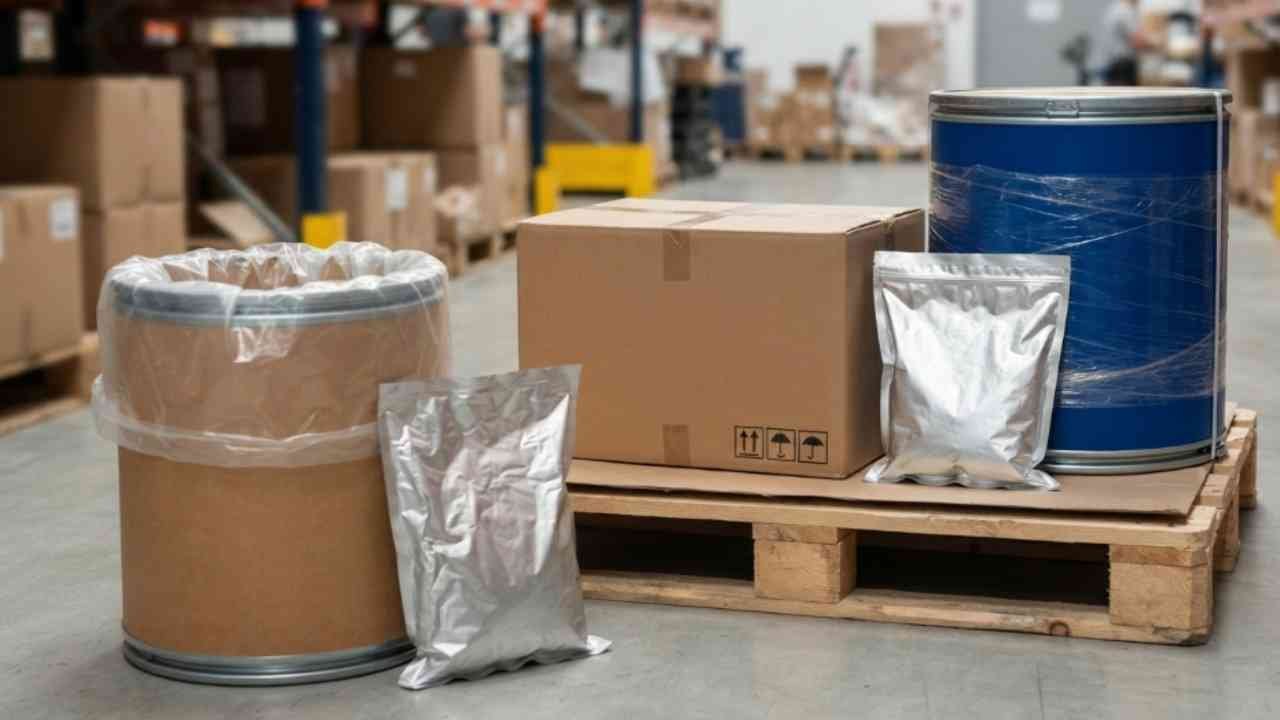
Packaging options for Chinese Vitamin B series exports include vacuum-sealed aluminum foil bags for powders, double food-grade polyethylene inner liners, nitrogen-flushed steel or fiber drums, and customized moisture-resistant boxes to prevent oxidation and moisture absorption.
Dive Deeper into High-Barrier Packaging Technology
The packaging of the Vitamin B series must act as an absolute barrier to environmental factors like light, oxygen, and moisture. Because several B-vitamins are highly hygroscopic or light-sensitive, standard paper bags or thin plastic containers are insufficient for international maritime transport. To solve this issue, Chinese exporters utilize advanced multi-layer packaging systems. For powder formulations, such as Thiamine Hydrochloride (B1) or Folic Acid (B9), the raw material is packed in double food-grade polyethylene inner bags, which are then placed inside a vacuum-sealed aluminum foil outer bag.
This foil layer provides an absolute barrier to water vapor and UV light, preventing photolytic degradation and powder caking. These bags are finally secured inside heavy-duty fiber drums or corrugated boxes to prevent mechanical damage during transit. For liquid or oil-soluble formulations, such as D-Panthenol (B5), nitrogen-flushed steel drums are used. The nitrogen displacement process reduces the oxygen content inside the drum to below two percent, halting oxidative rancidity. Sourcing partners like FINETECH inspect these packaging setups prior to container loading, ensuring that the moisture-resistant seals remain intact for safe delivery to international ports.
| Packaging Medium | Material Composition | Primary Protection | Best Applied Vitamin Form |
|---|---|---|---|
| Aluminum Foil Bags | Laminated aluminum & polymer | Absolute moisture & UV light barrier | Highly hygroscopic powders (B1, B5) |
| Fiber Drums | Heavy-duty pressed cardboard | Mechanical strength & shock protection | Bulk powder bulk shipments |
| Nitrogen Drums | Coated steel with nitrogen gas | Oxygen displacement & leak-proofing | Liquid and oil-soluble grades |
| Inner Polyethylene | Double food-grade PE liners | Secondary humidity protection | All food and feed-grade vitamins |
How Can Buyers Select a Reliable Vitamin B Series Supplier in China?
Choosing the wrong partner in China can result in receiving off-spec materials or experiencing delayed customs clearances. Poor supplier checks damage business plans. Applying strict evaluation steps minimizes buying risks.
Buyers can select a reliable Vitamin B series supplier in China by checking their active international safety certifications, requesting representative batch samples for third-party lab testing, conducting on-site factory audits, and partnering with experienced local sourcing experts like FINETECH.
Dive Deeper into Supplier Selection Frameworks
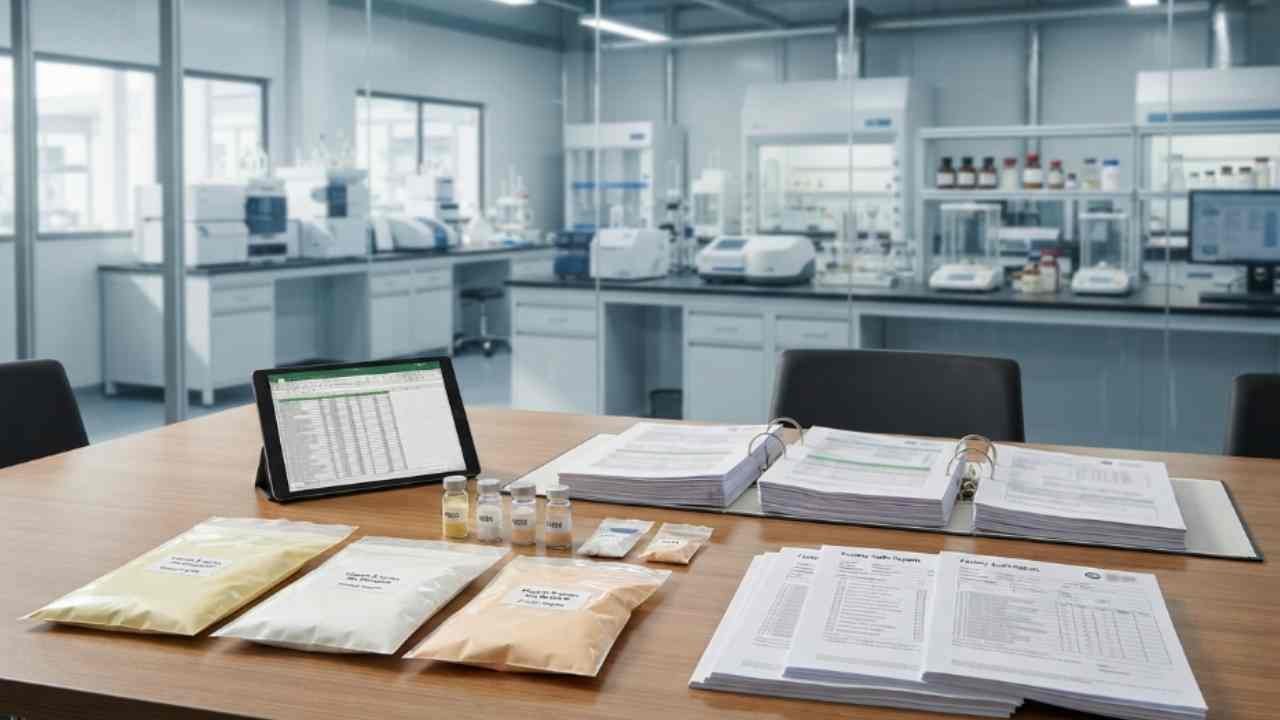
Selecting a trustworthy Chinese manufacturer requires a systematic evaluation process that goes beyond comparing basic price quotations. First, buyers must verify the supplier's regulatory compliance. A reliable factory must hold active certifications such as FSSC 22000, ISO, Halal, or Kosher, depending on the target market. Buyers should request these certificate registration numbers and verify their validity on official databases. Second, requesting representative batch samples for testing at an independent laboratory like SGS5 or Eurofins is essential to confirm actual active assays and safety indicators.
Third, conducting in-person, on-site audits of the plant's production cleanrooms and laboratory facilities is highly recommended. These audits confirm that the factory operates under strict GMP standards. Sourcing partners like FINETECH simplify this complex verification process for international importers. They visit partner factories in person, inspect laboratory testing logs, oversee production runs, and organize third-party pre-shipment quality checks. Working with a dedicated sourcing team minimizes the risks of receiving off-spec batches, secures competitive pricing with low MOQs, and ensures that all shipping documentation is prepared perfectly for smooth import clearance at the destination port.
| Verification Method | Audit Checkpoint | Target Sourcing Risk | Strategic Benefit |
|---|---|---|---|
| Certificate Audit | Verify ISO/FSSC registration numbers | Unregistered, low-grade factories | Guarantees compliance with food laws |
| Third-Party Testing | HPLC purity assay, heavy metals | Inaccurate factory lab reports | Provides unbiased, certified purity data |
| On-Site Inspection | Audit cleanroom and laboratory logs | Hidden physical contamination | Confirms factory matches global GMPs |
| Sourcing Partners | Work with experts like FINETECH | Administrative and logistics errors | Streamlines factory selection and delivery |
Conclusion
Sourcing Vitamin B from China offers unmatched scale, competitive pricing, and certified quality. Partnering with a reliable sourcing team keeps your international import pipeline consistent, safe, and cost-effective.
-
Investopedia – Standard economic resource detailing the definition, internal and external mechanics, and operational cost advantages associated with achieving economies of scale in large-scale manufacturing. ↩
-
PubMed Central (PMC) – Scientific review detailing the industrial synthesis, catalytic oxidation, and historical development of using picoline precursors to manufacture niacin and niacinamide (Vitamin B3). ↩
-
United States Pharmacopeia (USP) – Official standards database defining monographs, purity benchmarks, testing guidelines, and raw material quality specifications for vitamins and dietary supplements. ↩
-
Agilent Technologies – Overview of Inductively Coupled Plasma Mass Spectrometry (ICP-MS) principles, trace element sensitivity capabilities, and standard applications in chemical and food safety testing. ↩
-
SGS – Global testing, inspection, and verification group describing their specialized laboratory testing capabilities for food safety, chemical trace analysis, and regulatory compliance. ↩