
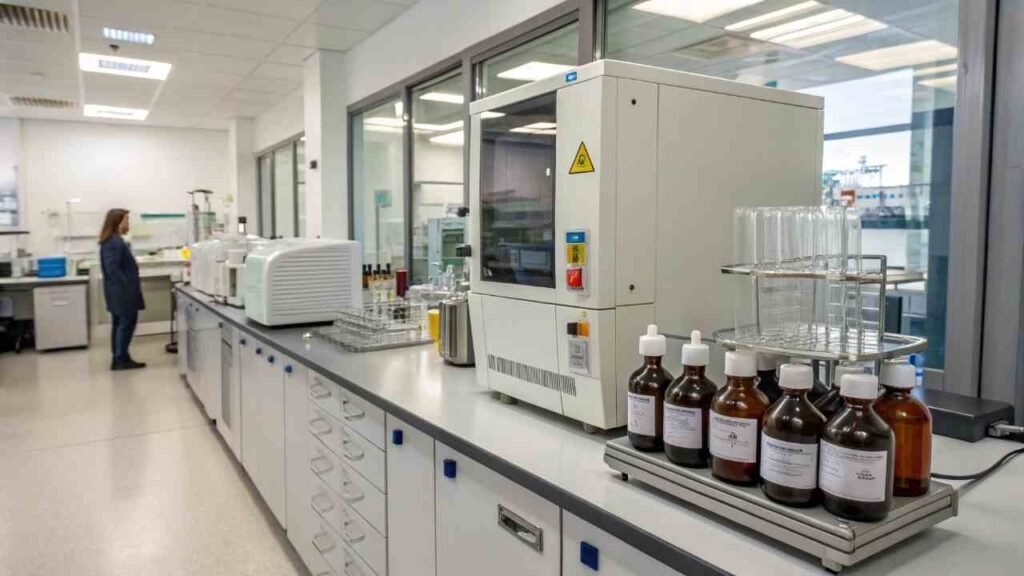
Delivering contaminated or degraded raw materials can ruin product formulations, trigger customs holds, and damage brand reputations. Risking raw material quality compromises manufacturing outputs. Strict quality control ensures safety.
Quality in Vitamin C and ascorbate manufacturing is controlled through strict adherence to USP/EP standards, advanced laboratory testing including HPLC and ICP-MS, closed-loop automated fermentation, and third-party pre-shipment inspections to verify purity and prevent degradation.
Maintaining high chemical purity and physical stability is essential to protect manufacturing outputs and secure regulatory approvals. Industrial buyers must use systematic quality evaluation strategies when importing bulk ingredients. Sourcing partners like FINETECH simplify factory checks, oversee production runs, and manage quality directly in China to guarantee bulk deliveries. This guide details the essential quality control systems in Vitamin C manufacturing.
What Quality Standards Apply to Vitamin C Series & Ascorbates?
Sourcing chemical ingredients without defining clear quality specifications leads to receiving off-spec batches that fail entry inspections. Unclear standards increase compliance risks. Verifying global pharmacopoeias protects shipments.
The quality standards for the Vitamin C series and ascorbates are defined by major global pharmacopoeias, including the United States Pharmacopeia (USP), European Pharmacopoeia (EP), and the Food Chemicals Codex (FCC) for food-grade applications.

Dive Deeper into Pharmacopoeia and Food Codex Specifications
To trade Vitamin C and ascorbates internationally, manufacturers must comply with established chemical monographs. These specifications are compiled in global reference manuals like the United States Pharmacopeia1 (USP), European Pharmacopoeia (EP), British Pharmacopoeia (BP), and the Chinese Pharmacopoeia (ChP). For food and beverage fortification, the Food Chemicals Codex2 (FCC) serves as the primary standard. These pharmacopoeias outline the mandatory chemical limits that the raw material must meet. For example, standard L-ascorbic acid must contain an active assay of ninety-nine percent to one hundred point five percent on a dry basis to be certified.
Additionally, the standards regulate physical indicators, including specific optical rotation3 and loss on drying. Specific optical rotation measures the purity of the L-isomer, ensuring the product has full biological activity. Loss on drying restricts the residual moisture content to below zero point four percent, which is critical to prevent powder caking during storage. Sourcing managers must specify which pharmacopoeia standard is required on their purchase agreements. Sourcing partners like FINETECH verify these requirements by cross-referencing factory testing records with target import regulations, ensuring that the imported batches clear local customs smoothly.
| Quality Standard | Main Industry Application | Core Parameter Tested | Mandatory Threshold Limit |
|---|---|---|---|
| USP Monographs | Pharmaceutical & Supplements | Active chemical assay | 99.0% to 100.5% |
| EP / BP Monographs | European Pharma and Foods | Specific optical rotation | +20.5° to +21.5° |
| FCC Standards | Food and Beverage Additives | Heavy metals (Lead) | Max 2 parts per million (ppm) |
| ChP Monographs | Chinese Market Distribution | Residual moisture | Max 0.4% loss on drying |
How Is the Purity of Vitamin C Series & Ascorbates Tested?
Relying on visual checks or basic chemical titration can miss trace heavy metals or residual solvents in raw ingredients. Weak testing compromises safety. Implementing advanced analytical testing guarantees purity.
The purity of Vitamin C series and ascorbates is tested using High-Performance Liquid Chromatography (HPLC) for assays, Inductively Coupled Plasma Mass Spectrometry (ICP-MS) for trace heavy metals, and Gas Chromatography (GC) for residual organic solvents.
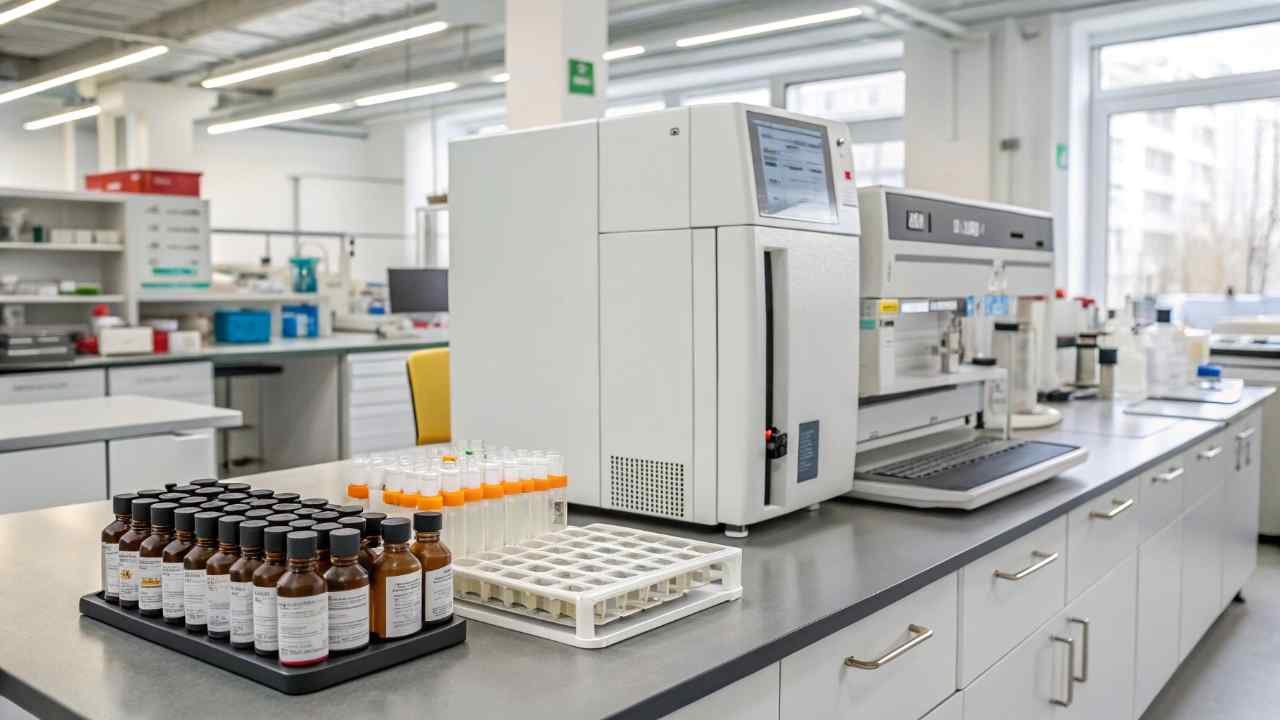
Dive Deeper into Analytical Laboratory Methods
Modern chemical analysis utilizes sophisticated laboratory instruments to confirm the quality of Vitamin C and ascorbates. titration methods are no longer sufficient for international trade. High-Performance Liquid Chromatography4 (HPLC) is the standard method used to determine the exact active assay concentration. This chromatographic technique separates the ascorbic acid molecules from any manufacturing impurities, allowing chemists to calculate the precise percentage of the active compound.
Furthermore, raw material safety is verified using Inductively Coupled Plasma Mass Spectrometry (ICP-MS). This highly sensitive instrument detects trace heavy metals, such as lead, arsenic, mercury, and cadmium, down to parts-per-billion levels, ensuring compliance with strict food safety laws. Gas Chromatography (GC) is utilized to test for residual solvents, verifying that any organic alcohols used in the purification steps have been completely evaporated. Automatic polarimeters are also employed to measure optical rotation, confirming the chiral purity of the L-ascorbic acid isomer. Sourcing teams like FINETECH audit these analytical processes at Chinese factories. They review laboratory calibration logs and raw chromatograms to ensure that the supplier's Certificates of Analysis (COAs) are completely accurate and reliable.
| Analytical Instrument | Analytical Target Tested | Sourcing Significance | Audit Action |
|---|---|---|---|
| HPLC Chromatography | Exact active assay percentage | Confirms active raw potency | Review chromatogram integration peaks |
| ICP-MS Spectrometry | Trace heavy metals (Pb, As) | Guarantees toxicological safety | Verify calibration standards logs |
| Gas Chromatography | Residual extraction solvents | Protects food safety compliance | Check volatile organic compound curves |
| Polarimeter | Specific optical rotation | Confirms active biological isomer | Check optical cell temperature controls |
What Are the Common Quality Risks for Vitamin C Series & Ascorbates?
High humidity, poor warehouse ventilation, and metal contact can degrade sensitive ascorbic acid into a brown, inactive powder during transit. Ignoring transit hazards ruins cargo. Managing common quality risks protects stocks.
Common quality risks for Vitamin C and ascorbates include oxidative browning, moisture absorption leading to powder caking, contamination from heavy metal catalysts, and uneven particle size distribution that causes blending separation in formulations.
Dive Deeper into Degradation and Contamination Hazards
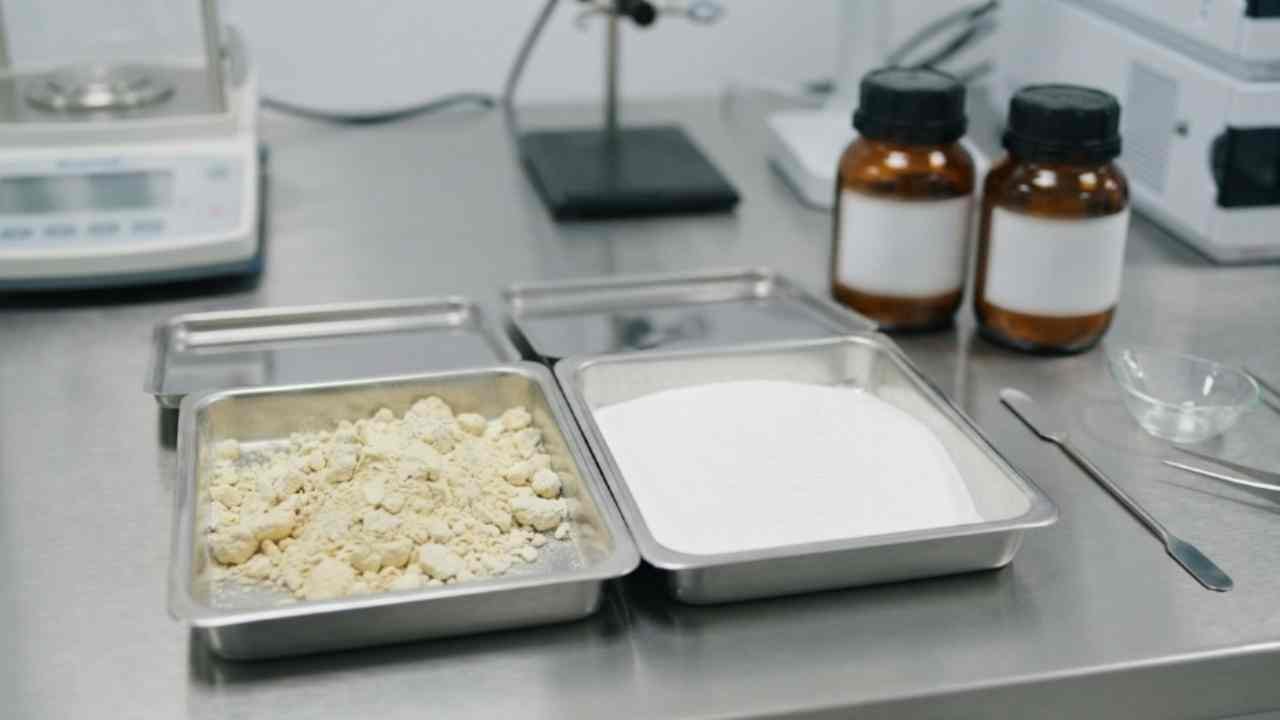
Understanding quality risks is crucial to preventing manufacturing defects and inventory losses. The most common risk is oxidative degradation, also known as browning. L-ascorbic acid is a powerful reducing agent, making it highly sensitive to oxygen, light, and heat. Under damp or warm conditions, it degrades into dehydroascorbic acid, which then converts into inactive diketogulonic acid and oxalic acid. This reaction turns the brilliant white powder yellow or brown, making it unusable for cosmetic or food formulations.
Another physical risk is powder caking. Since Vitamin C and ascorbates can be hygroscopic, exposure to humid air causes particles to clump, making the material difficult to mix. Furthermore, heavy metal contamination remains a chemical risk. The fermentation process uses mineral catalysts that must be completely filtered out. Sourcing managers must also monitor particle size distribution, as inconsistent particle sizes cause separation in dry-mix formulas. Sourcing partners like FINETECH manage these risks by inspecting the factory's packaging and storage areas. They ensure that the material is vacuum-packed in aluminum foil bags with double polyethylene liners to shield the powder from environmental stress during ocean transit.
| Quality Defect | Primary Root Cause | Formulation Hazard | Preventive Action |
|---|---|---|---|
| Oxidative Browning | Exposure to air, light, and heat | Visual discoloration, potency loss | Vacuum-pack in aluminum foil bags |
| Powder Caking | High humidity during storage | Poor flowability, clumping | Keep warehouse humidity below 60% |
| Metal Contamination | Incomplete filtration in plant | Failed import customs checks | Run ICP-MS checks on every batch |
| Size Inconsistency | Poor grinding and sieving | Inconsistent blending yields | Specify mesh size on purchase contract |
Which Certifications Should Vitamin C Series & Ascorbates Suppliers Have?
Sourcing ingredients from uncertified facilities can lead to severe regulatory fines and delayed clearances at international borders. Unvetted suppliers increase compliance risks. Verifying international certifications secures markets.
Reliable Vitamin C and ascorbate suppliers must hold international certifications including FSSC 22000 or ISO 22000 for food safety, GMP for pharmaceutical compliance, CEP for European imports, and Kosher and Halal for dietary compliance.

Dive Deeper into International Compliance Standards
International certifications act as a standardized verification of a manufacturer's safety and operational systems. For food and beverage applications, the supplier must hold active FSSC 22000 or ISO 22000 certificates. These frameworks prove that the facility follows strict Hazard Analysis and Critical Control Point5 (HACCP) protocols, minimizing physical, biological, and chemical hazards. For pharmaceutical and dietary supplement formulations, Good Manufacturing Practice (GMP) certification is mandatory to ensure batch-to-batch consistency and trace raw material logs.
For European imports, obtaining a Certificate of Suitability (CEP) from the European Directorate for the Quality of Medicines is highly recommended. A CEP confirms that the factory's material fully complies with European Pharmacopoeia monographs, simplifying import registrations. For specialized markets, suppliers should also hold Kosher and Halal certificates to meet dietary laws. Sourcing managers must request these certificates and verify their validity against official databases. Sourcing partners like FINETECH simplify this verification process by conducting thorough on-site audits of Chinese factories. They verify facility certificates, inspect cleanroom packing areas, and check laboratory logs to ensure that B2B buyers purchase materials only from fully compliant, reliable suppliers.
| Certification | Issued Auditing Body | Market Importance | Verification Check |
|---|---|---|---|
| FSSC 22000 | Food Safety Certification | Guarantees standardized food safety | Check active database registry status |
| GMP Certificate | National Drug Administration | Mandated for pharmaceutical use | Review cleanroom environmental logs |
| CEP Certificate | EDQM (Europe) | Simplifies EU import registrations | Verify active EDQM database entries |
| Halal / Kosher | Islamic / Jewish Authorities | Required for dietary compliance | Confirm certificate expiration dates |
How Can Buyers Verify Product Quality Before Purchase?
Relying on generic paper documents can lead to receiving off-spec ingredient batches that fail local import inspections. Blind buying causes manufacturing losses. Applying pre-shipment quality verification avoids risks.
Buyers can verify product quality before purchase by requesting batch-specific COAs, requesting pre-shipment representative samples for third-party lab testing at SGS or Eurofins, conducting factory audits, and partnering with experienced local sourcing experts.

Dive Deeper into Quality Verification Protocols
Verifying product quality before shipping is the most effective way to prevent costly customs rejections and production downtime. Sourcing managers must establish a multi-step verification protocol. First, buyers must request a batch-specific Certificate of Analysis (COA) from the manufacturer. This document must display the actual test results for purity, optical rotation, heavy metals, and moisture, rather than generic range values. Second, requesting a pre-shipment sample from the exact production batch is crucial. This sample must be sent to an independent, accredited laboratory like SGS or Eurofins for third-party analysis.
This independent analysis confirms that the factory's internal test results are completely accurate. Third, buyers should conduct on-site factory audits of the cleanroom packaging facilities and laboratory testing logs. Sourcing partners like FINETECH simplify this complex process for international B2B buyers. They visit Chinese factories in person, inspect cleanrooms, verify instrument calibration records, and organize pre-shipment quality checks. Partnering with a dedicated sourcing team allows buyers to purchase high-quality Vitamin C and ascorbates with low MOQs, protecting businesses from receiving off-spec batches and securing stable, long-term procurement pipelines.
| Verification Phase | Checkpoint | Target Quality Risk | Strategic Sourcing Benefit |
|---|---|---|---|
| COA Review | Verify batch-specific test results | False or generic paperwork | Confirms initial batch specification |
| Third-Party Testing | SGS/Eurofins analytical checks | Hidden chemical impurities | Provides independent, certified purity data |
| On-Site Audit | Inspect cleanrooms and QA logs | Facility contamination, poor GMP | Verifies actual factory safety operations |
| Sourcing Experts | Partner with local agents | Sourcing and administrative errors | Streamlines verification and logistics |
Conclusion
Strict quality control in Vitamin C manufacturing requires pharmacopoeia compliance, independent testing, and certified suppliers. Partnering with a dedicated sourcing team ensures consistent, safe, and highly cost-effective bulk imports.
-
United States Pharmacopeia (USP) – Official scientific organization establishing compendial quality, purity, and identity standards for medicines, dietary supplements, and food ingredients globally. ↩
-
Food Chemicals Codex (FCC) – Official portal providing international standards and reference monographs to verify the identity, quality, and purity of food-grade ingredients. ↩
-
Anton Paar Wiki – Analytical guide detailing the physical principles of polarimetry, optical activity, and the measurement of specific optical rotation of chiral molecules. ↩
-
Shimadzu Scientific Instruments – Technical overview presenting the separation mechanisms, core components, and general principles of High-Performance Liquid Chromatography (HPLC) systems. ↩
-
U.S. Food and Drug Administration (FDA) – Regulatory guidance outlining the seven core principles of Hazard Analysis and Critical Control Point (HACCP) systems for food safety management. ↩