
Selecting unvetted suppliers leads to receiving oxidized chemical batches or facing border customs rejections. Sourcing without systematic checks ruins budgets. Using a strict verification plan ensures safe deliveries.
Importers can source high-quality Vitamin E series products by selecting the correct chemical grade, verifying manufacturer certifications, requesting independent pre-shipment laboratory testing, securing necessary non-GMO and health documents, and partnering with experienced local sourcing experts.
Successful chemical procurement depends on meticulous verification and clear quality parameters. International buyers must implement standardized quality checks to prevent logistics delays and inactive material shipments. Sourcing partners like FINETECH simplify factory checks, oversee production, and manage quality directly in China to secure bulk deliveries. This guide explains how to source high-quality Vitamin E series products.
What Should Buyers Check Before Purchasing Vitamin E Series?
Purchasing the wrong vitamin specification can lead to formulation instability and failed active potency tests during storage. Incompatible ingredients waste capital. Verifying exact chemical parameters prevents formulation errors.
Before purchasing, buyers must check the desired source (natural d-alpha or synthetic dl-alpha), chemical form (free tocopherol or stabilized acetate ester), active potency concentration, and carrier excipients (such as starch or gelatin to meet vegan rules).

Dive Deeper into Technical Specifications and Grades
Purchasing chemical raw materials requires a complete understanding of technical specifications before signing any purchase contract. Importers should never place an order based solely on price. First, the buyer must confirm the chemical form that matches their manufacturing system. Natural Vitamin E, d-alpha-tocopherol, offers high biological activity but carries a premium price. Synthetic Vitamin E, dl-alpha-tocopherol, is a cost-effective alternative for bulk applications like animal feed.
Second, the chemical stability form must be checked. Free tocopherols are highly prone to oxidation when exposed to light, heat, and air. This oxidation turns the oil dark/brown and lowers its potency. To mitigate this risk, buyers should specify esterified forms, such as tocopheryl acetate, which are highly stable during storage and only convert to active tocopherol inside the body. Third, the carrier material for powder forms must be evaluated. Standard powder beadlets often utilize bovine gelatin1 as the protective matrix, which is unsuitable for vegetarian or Halal-certified products. For these markets, buyers must specify starch-based, allergen-free, cold-water-soluble (CWS) powders. Sourcing partners like FINETECH help buyers map these technical parameters, ensuring that the selected raw materials match the exact requirements of their manufacturing lines.
| Technical Parameter | Sourcing Option | Target Application | Why It Matters |
|---|---|---|---|
| Source Origin | Natural (d-alpha) vs. Synthetic (dl-alpha) | Premium vs. Bulk formulations | Dictates biological activity & cost |
| Chemical State | Free Tocopherol vs. Tocopheryl Acetate | Topical cosmetics vs. Dry food blends | Influences oxidation and shelf life |
| Physical Form | Liquid Oil vs. Dry Powder Beadlet | Liquid capsules vs. Premix blending | Determines production line compatibility |
| Excipient Carrier | Bovine Gelatin vs. Modified Starch | Standard vs. Vegan/Halal products | Satisfies dietary and retail regulations |
How Can You Evaluate a Reliable Vitamin E Series Supplier?
Partnering with unverified manufacturers can result in sudden supply halts and failed regulatory inspections. Unvetted factory risks disrupt operations. Implementing a thorough supplier evaluation plan protects imports.
You can evaluate a reliable Vitamin E supplier by verifying active international safety certifications (FSSC 22000, GMP, FAMI-QS), auditing their raw material sourcing pipelines, checking local environmental compliance logs, and reviewing their export history.
Dive Deeper into Factory Compliance and Supply Chain Audits
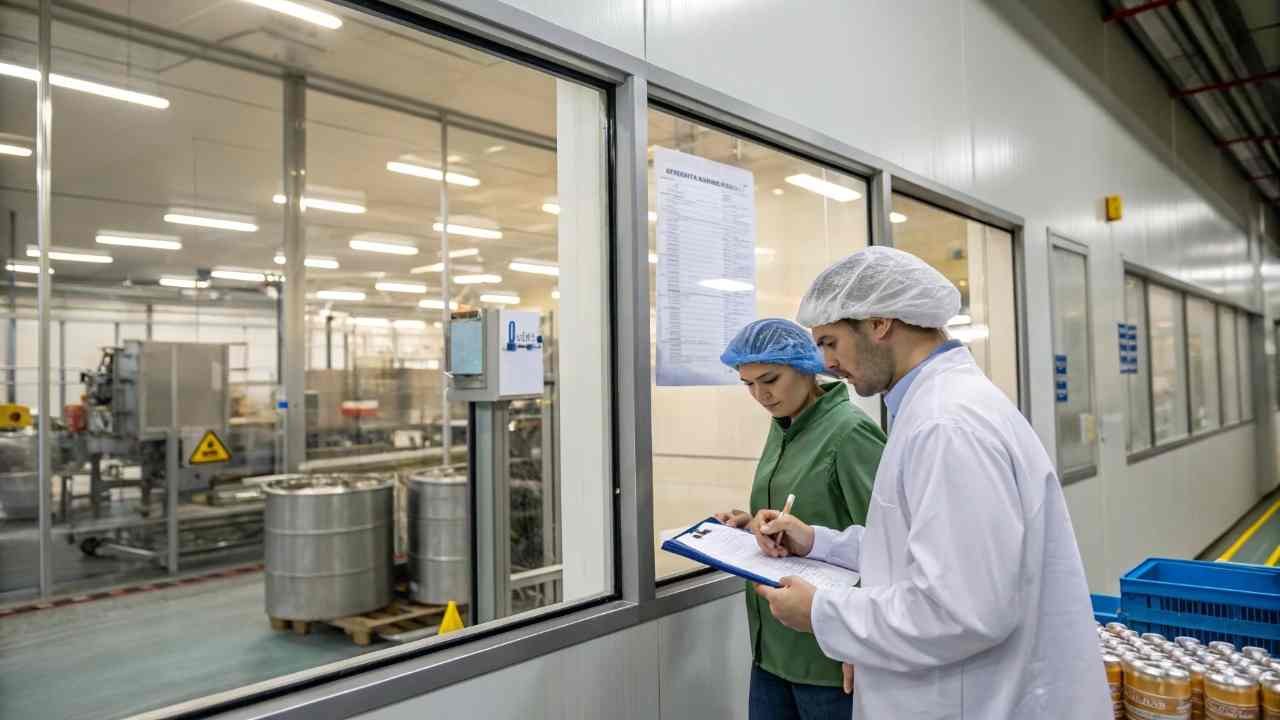
Evaluating the credentials of a chemical manufacturer is a critical step in mitigating purchasing risks. Sourcing managers must request copies of active international safety certifications. For food-grade applications, the plant should hold FSSC 220002 or ISO 22000. For pharmaceutical use, a GMP certificate or European CEP is required, while animal feed applications require FAMI-QS compliance. Buyers must check the certification registration numbers on official database registries to confirm they are active and valid.
Furthermore, tracing the raw material supply chain of the factory is necessary. For natural Vitamin E, the supplier must verify the source of their vegetable oil deodorizer distillates (VODD). For synthetic Vitamin E, the availability of petrochemical precursors like trimethylhydroquinone (TMHQ) must be confirmed. Buyers must also inspect the factory's environmental waste treatment facilities. Because chemical synthesis and refining release industrial wastewater, plants that do not meet local emission standards face sudden closures during government audits. Sourcing teams like FINETECH manage these verifications directly. They conduct on-site factory audits in China, check cleanroom sanitation logs, and verify emission compliance, helping buyers select highly reliable, compliant manufacturing partners.
| Certification Standard | Regulatory Target | Sourcing Significance | Audit Action |
|---|---|---|---|
| FSSC 22000 / ISO 22000 | Human Food Safety | Confirms plant sanitation | Validate registration on official registry |
| FAMI-QS | Animal Feed Safety | Mandatory for feed export | Verify feed safety logging books |
| GMP / CEP | Pharmaceutical Grade | Proves active drug quality | Review active GMP clearance certificates |
| Environmental Permit | Wastewater Emissions | Prevents sudden shutdowns | Inspect regional emission audit history |
What Documents Are Required for Vitamin E Series Import?
Missing critical shipping documents can freeze your cargo at the border, causing expensive port storage fees and delayed manufacturing. Incomplete documentation stalls clearances. Verifying import documents avoids delays.
Importing Vitamin E requires a Certificate of Analysis (COA) specifying HPLC isomer ratios, Bill of Lading, Commercial Invoice, Packing List, Certificate of Origin, and non-GMO/IP certificates, which are essential for soy-derived natural forms.

Dive Deeper into Import Paperwork and Certification Compliance
Securing complete and accurate shipping documentation is essential to clear international customs smoothly. The most critical document is the Certificate of Analysis3 (COA) for the specific shipping batch. The COA must show the exact active tocopherol concentration (such as d-alpha or dl-alpha assays), heavy metal levels (including lead, arsenic, and mercury), microbiological limits, and residual solvent concentrations. These parameters must match the limits defined by international pharmacopoeias like USP, EP, or FCC.
Additionally, because natural Vitamin E is derived from soybean oil deodorizer distillates, it faces strict GMO controls, particularly in the European Union. Importers require valid Non-GMO Project Verified or Identity Preservation4 (IP) certificates to satisfy clean-label standards. Sourcing managers must also verify that the package labels, packing list, and commercial invoice use matching batch numbers to prevent customs disputes. Sourcing partners like FINETECH oversee the document preparation process in China. They review each shipping draft before the vessel departs, ensuring that all regulatory certificates are correct and preventing expensive customs delays at destination ports.
| Document Name | Primary Sourcing Purpose | Critical Information to Verify | Risk of Missing Document |
|---|---|---|---|
| Certificate of Analysis | Proves chemical quality compliance | Active assay, heavy metals, batch # | Product rejection, poor potency |
| Non-GMO IP Certificate | Meets clean-label food laws | Traces soy oil to certified crops | Customs border clearance rejection |
| Bill of Lading (B/L) | Confirms transfer of cargo title | Container number, shipping port | Cargo release blocks at destination |
| MSDS / SDS | Outlines safe handling procedures | Chemical classification, exposure risk | Port loading and warehouse delays |
How Can Buyers Reduce Quality Risks in Vitamin E Series Trade?
Accepting bulk shipments without testing the chemical purity can result in processing low-potency ingredients and failing final stability tests. Unvetted inventory ruins quality. Implementing independent batch testing manages buying risks.
Buyers can reduce quality risks by requesting pre-shipment samples for third-party testing (SGS or Eurofins), specifying temperature-controlled refrigerated containers (reefers) during sea transit, and inspecting the physical container loading process.

Dive Deeper into Quality Testing and Temperature-Controlled Logistics
Reducing quality risks in chemical sourcing requires a proactive and standardized testing protocol. Buyers should never accept the manufacturer's self-issued COA as the sole proof of quality. To ensure compliance, professional importers request a pre-shipment sample (PSS) drawn from the actual cargo batch. This sample should be sent to an independent, accredited laboratory, such as SGS or Eurofins, to verify the active tocopherol concentration and heavy metal limits before the bulk cargo leaves the factory.
Second, buyers must address logistics risks. Because Vitamin E is highly sensitive to heat and oxygen, standard dry containers can experience thermal buildup during maritime transit, melting protective carriers and causing rapid oxidation. Importers should specify temperature-controlled refrigerated containers, or reefers5, to maintain a consistent temperature under fifteen degrees Celsius throughout the voyage. Sourcing partners like FINETECH manage these protective logistics directly. They inspect the physical loading process at Chinese ports, confirm container temperatures, check seal numbers, and coordinate with shipping lines to use direct transit routes, helping buyers reduce quality degradation risks.
| Quality Risk Area | Preventive Action | Sourcing Significance | Expected Outcome |
|---|---|---|---|
| Potency Variance | Request pre-shipment sample (PSS) | Verifies actual isomer ratios | Prevents importing weak batches |
| Thermal Degradation | Specify 15°C refrigerated reefers | Avoids carrier melting & rancidity | Protects active assay during transit |
| Oxygen Exposure | Check vacuum-sealed foil seals | Blocks moisture and ambient air | Extends product shelf life |
| Loading Damage | Oversee container port packing | Prevents physical drum leakage | Eliminates shipping container spills |
What Makes a Stable Long-Term Vitamin E Series Supplier?
Working with suppliers who disappear during supply shortages can leave your factory with unexpected stockouts and expensive production stops. Unreliable suppliers cause operational chaos. Selecting committed partners stabilizes growth.
A stable long-term supplier offers transparent communication on market trends, maintains consistent raw material pricing, provides flexible payment terms and low MOQs, and actively coordinates logistics to ensure timely delivery.

Dive Deeper into Strategic Partnerships and Sourcing Operations
Selecting a long-term supply partner is essential to building a secure, cost-effective import pipeline. A reliable supplier does not just take orders; they provide active support throughout the entire purchasing cycle. First, transparency is critical. The supplier must share regular market intelligence, warning buyers of upcoming factory maintenance shutdowns, environmental audits, or raw material shortages. This information allows buyers to purchase safety stocks before prices rise.
Second, operational flexibility is highly valuable. Reliable partners offer low Minimum Order Quantities (MOQs) and custom packaging options, reducing inventory holding costs for B2B buyers. Sourcing partners like FINETECH provide this complete support. They streamline factory selection, oversee cleanroom production, guarantee chemical quality, secure competitive pricing, and arrange direct logistics. Whether shipping to the Middle East, Southeast Asia, or Europe, they manage the entire import process from factory gate to destination port. This comprehensive on-the-ground support minimizes buying risks, allows importers to focus on their core sales operations, and ensures a highly stable, cost-effective raw material supply chain.
| Partner Characteristic | Technical Sourcing Support | Operational Value | Sourcing Outcome |
|---|---|---|---|
| Market Transparency | Regular updates on factory status | Enables strategic buying timing | Protects budgets from spikes |
| Supply Flexibility | Customized packaging & low MOQs | Reduces warehouse storage costs | Optimizes working capital |
| Integrated Logistics | Direct port loading and document checks | Eliminates border customs delays | Ensures on-time cargo delivery |
| Direct Auditing | In-person cleanroom checks | Guarantees consistent quality | Delivers compliant chemical batches |
Conclusion
Sourcing reliable Vitamin E requires verifying factory certificates, securing non-GMO documents, independent testing, and temperature-controlled shipping. Partnering with a dedicated sourcing team ensures consistent import pipelines.
-
Wiley Online Library (Comprehensive Reviews in Food Science and Food Safety) – Scientific review examining extraction methodologies, rheological properties, functional stability, and dietary/religious compliance pathways for bovine-based gelatin. ↩
-
Foundation FSSC – Official scheme overview explaining FSSC 22000, detailing how it aligns food safety management with global ISO standards and GFSI auditing requirements. ↩
-
ECA Academy (gmp-compliance.org) – Industry guide analyzing the regulatory and quality requirements for Certificates of Analysis (CoAs) under European Union Good Manufacturing Practices (EU GMP) Part I and II. ↩
-
USDA Agricultural Marketing Service – Program page detailing the federal Identity Preservation (IP) Audit Program, which verifies a company’s identification, segregation, and traceability systems for unique, value-added products. ↩
-
Container xChange – Industry logistics resource explaining the operational mechanics, temperature-controlled parameters, and global shipping applications of refrigerated containers (reefers) . ↩