

Delivering low-potency or contaminated raw materials risks formulation failures and expensive product recalls. Inadequate testing compromises brand trust. Implementing rigorous quality control ensures compliant bulk shipments.
Quality control for Vitamin H relies on HPLC analysis for isomer quantification, optical rotation testing to verify stereospecific D-Biotin purity, strict coefficient of variation checks for mixing uniformity, and gas chromatography to detect residual organic solvents.
Successful commercial operations require absolute chemical purity and exact dosing accuracy before bulk raw materials leave the manufacturing plant. Technical buyers must evaluate strict testing protocols to prevent the importation of off-spec batches. Sourcing partners like FINETECH simplify factory checks, verify production compliance, and secure competitive pricing directly in China to guarantee bulk deliveries. This guide explains how to control and verify Vitamin H series quality.
How Is Potency Verified in Vitamin H Series?
Accepting untested vitamin shipments can lead to processing low-potency raw materials and failing final active active assay checks. Unverified chemical purity threatens brand reputation. Verifying potency with advanced testing secures quality.
Potency is verified using High-Performance Liquid Chromatography (HPLC) to measure the exact active D-Biotin concentration, alongside optical rotation testing with a polarimeter to ensure the stereospecific active D-isomer is present rather than inactive L-isomers.
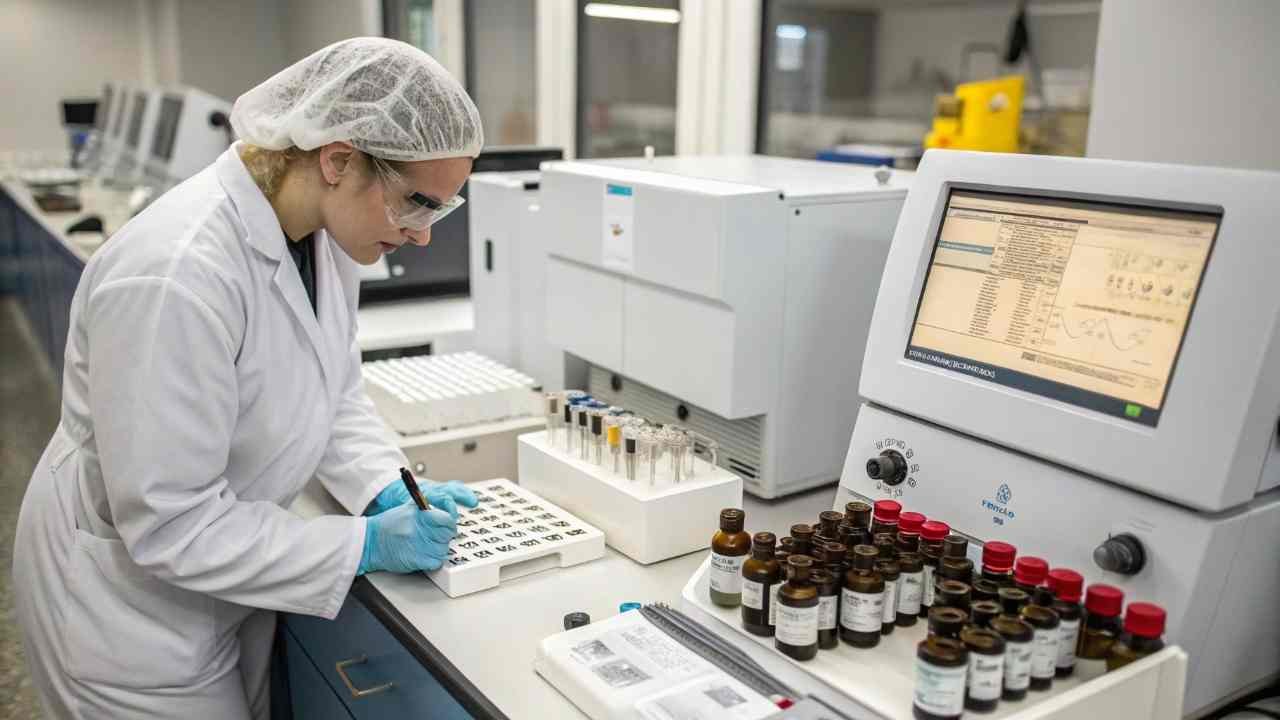
Dive Deeper into Chromatography and Optical Rotation
Verifying the exact potency of Vitamin H is a highly demanding process due to its stereochemical complexity. The primary method used by quality control laboratories is High-Performance Liquid Chromatography (HPLC). Chemists prepare a sample of the raw material, dissolve it, and inject it into a pressurized chromatographic system. The system separates individual chemical components, allowing the software to measure the peak area of the active D-Biotin. By comparing these chromatography peaks against certified international reference standards, the laboratory calculates the exact concentration percentage of the batch.
However, HPLC alone cannot distinguish between the active D-Biotin isomer and its inactive mirror-image counterparts, such as L-biotin or racemic mixtures. To solve this problem, factories must perform optical rotation1 testing using a specialized polarimeter. When polarized light passes through a dissolved sample of D-Biotin, the molecules rotate the light in a specific direction. The angle of this rotation must fall within a strict, narrow range defined by international pharmacopoeias like the USP or EP. Any deviations in this value indicate chemical contamination or the presence of inactive stereoisomers. Sourcing partners like FINETECH review these chromatography charts and polarimeter logs during factory audits, helping international buyers confirm that the active ingredients match strict technical specifications.
| Test Method | Target Analytical Value | Laboratory Equipment | Quality Control Threshold |
|---|---|---|---|
| Active Assay | Percent of D-Biotin concentration | HPLC chromatography system | Typically 98.0% to 101.0% |
| Stereospecificity | Optical rotation degree | High-precision polarimeter | Specific positive rotation range |
| Moisture Check | Total residual water weight | Karl Fischer titrator | Typically below 1.0% maximum |
| Acidity Level | Dissolved pH value | Digital pH meter | Within standard monograph limits |
Why Is Uniform Mixing Important for Vitamin H Series?
Utilizing poorly mixed vitamin powders in final formulations causes dangerous dosing variations and inconsistent nutritional performance. Uneven ingredient distribution compromises safety. Implementing uniform mixing solves this issue.
Uniform mixing is critical because Biotin is extremely potent, requiring microgram-level dosing. Any uneven distribution in diluted premixes (1% or 2%) results in failed active potency assays and inconsistent nutritional performance in final products.
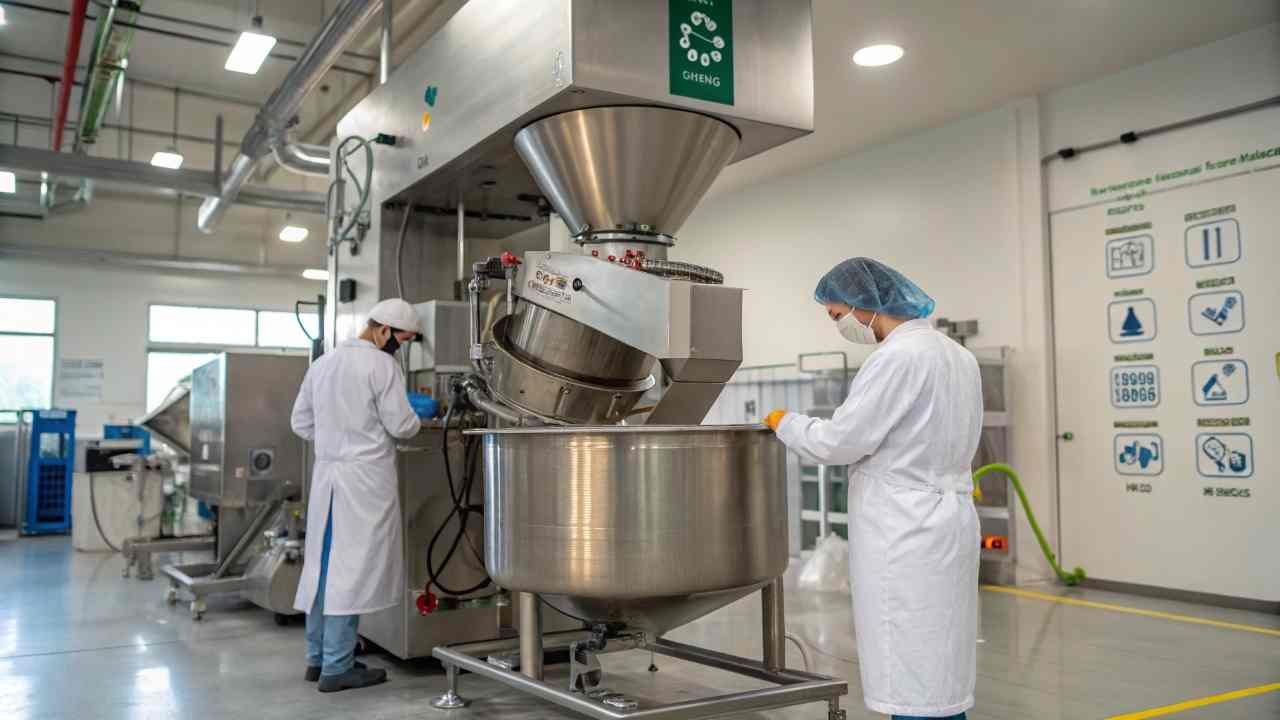
Dive Deeper into Homogeneity and Dilution Technologies
The extremely high biological activity of Vitamin H makes mixing uniformity a major challenge in industrial manufacturing. Because the daily intake requirement for humans and animals is measured in micrograms, direct blending of pure Biotin is nearly impossible for standard mixing lines. To solve this dosing challenge, manufacturers dilute pure crystalline Biotin into a one percent or two percent premix powder. Achieving absolute homogeneity during this dilution process is critical because even a minor localized concentration fluctuation can lead to finished products being severely under-dosed or over-dosed.
To ensure uniform mixing, factories utilize advanced equipment, such as industrial ribbon blenders, twin-shaft paddle mixers, or fluidized bed granulators. These machines physically disperse the micro-sized active D-Biotin particles evenly throughout a carrier matrix, such as starch, maltodextrin, or calcium carbonate. Quality control teams validate this mixing process using a statistical metric called the Coefficient of Variation (CV)2. They extract multiple random samples from different areas of the mixing chamber and test each sample for active potency. A compliant mixing cycle must achieve a CV of less than five percent. Sourcing partners like FINETECH inspect these mixing validation records, ensuring that buyers receive highly uniform, stable premixes that perform consistently in their final production lines.
| Mixing Grade | Target Dilution Potency | Typical Carrier Material | Mixing Validation Metric |
|---|---|---|---|
| Food-Grade 1% | 1.0% active D-Biotin | Corn starch or maltodextrin | CV less than 5.0% required |
| Feed-Grade 2% | 2.0% active D-Biotin | Calcium carbonate / Silica | CV less than 5.0% required |
| Cosmetic Blends | 0.1% to 1.0% dilution | Pure silica or cosmetic oil | Low micro-particle clumping |
| Pure Crystals | 98.0%+ concentration | None (no dilution) | Absolute chemical purity |
What Quality Risks Are Common in Vitamin H Series Manufacturing?
Overlooking manufacturing risks can result in importing contaminated chemical batches and facing expensive customs rejections. Uncontrolled quality variables threaten operations. Identifying specific risks prevents logistics failures.
Common quality risks include residual organic solvents (like toluene or methanol) left over from synthesis, heavy metal contamination from catalysts, the formation of inactive stereoisomers, and powder caking caused by excessive carrier moisture.
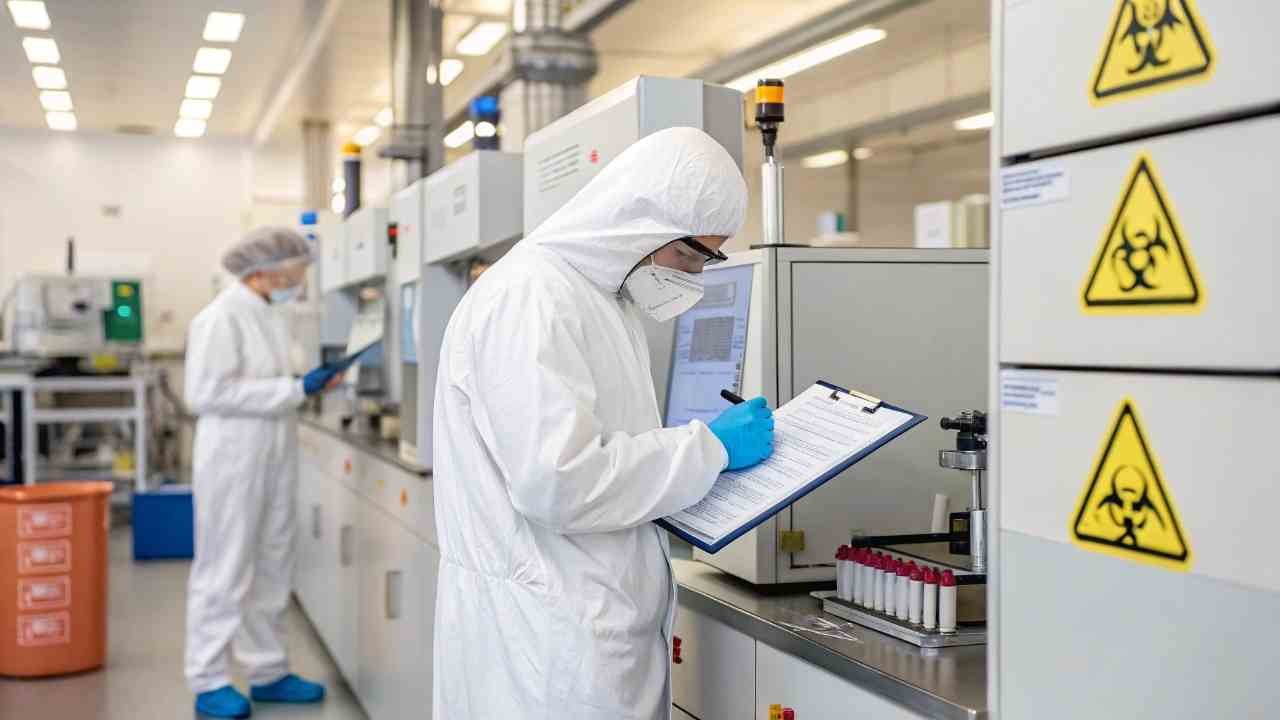
Dive Deeper into Chemical Contaminants and Solvent Limits
The multi-step chemical synthesis of Vitamin H introduces several critical quality risks that must be managed by the manufacturer. The first major risk is residual organic solvents3. The synthesis of D-Biotin requires organic solvents, such as toluene, methanol, dimethylformamide (DMF), or acetone, during the crystallization stages. If the vacuum drying and evaporation processes are incomplete, these volatile compounds remain trapped in the crystalline structure. Quality control laboratories must run Gas Chromatography (GC) to ensure residual solvents remain well below the strict safety limits defined by international pharmacopoeias.
The second risk is contamination from heavy metals, such as lead, arsenic, cadmium, and mercury. These elements can enter the batch through low-grade chemical catalysts or raw starting materials. To prevent this, factories must run Inductively Coupled Plasma Mass Spectrometry (ICP-MS) tests on every batch. Finally, environmental humidity poses a major risk during the packaging of diluted powders. If the carrier excipients absorb too much moisture, the powder can experience severe caking, causing blockages in industrial hoppers. Sourcing partners like FINETECH inspect these drying logs and GC charts in China, helping international buyers prevent importing contaminated or physically damaged shipments.
| Identified Risk Area | Core Contaminant | Laboratory Test Method | Regulatory Safety Limit |
|---|---|---|---|
| Volatile Solvents | Toluene, methanol, DMF | Gas Chromatography (GC) | Below strict ppm safety limits |
| Trace Metals | Lead, arsenic, cadmium | ICP-MS spectrometry check | Below strict ppb safety limits |
| Stereoisomers | L-biotin, inactive isomers | Optical rotation / HPLC | Only active D-Biotin isomer |
| Physical Caking | Excessive environmental water | Loss on drying / moisture | Typically below 1.0% maximum |
Which International Standards Apply to Vitamin H Series?
Sourcing vitamins that lack proper international regulatory credentials can lead to immediate border seizures and failed retail compliance checks. Uncertified shipments halt trade. Verifying standard certificates ensures clearance.
Vitamin H series must comply with pharmaceutical monographs (USP, EP, JP), food safety standards (FSSC 22000, FCC, Kosher, Halal), and agricultural standards (FAMI-QS) to guarantee regulatory compliance in different export markets.

Dive Deeper into Global Regulatory Compliance Frameworks
Exporting and importing high-potency Vitamin H requires compliance with strict regional and global regulatory standards. Because Biotin is used across human food, animal feed, cosmetics, and pharmaceuticals, different quality standards apply depending on the target market. For pharmaceutical-grade applications, the raw material must satisfy the latest monographs of the United States Pharmacopeia (USP), European Pharmacopoeia (EP), or Japanese Pharmacopoeia (JP). These monographs define exact laboratory standards for optical rotation, active concentration, heavy metals, and residual solvents.
For human nutrition and food fortification, manufacturing plants must hold active food safety certifications, such as FSSC 22000 or ISO 22000, and follow the Food Chemicals Codex (FCC)4 guidelines. Certified Kosher and Halal audits are also mandatory to access retail supplement markets. If the raw material is intended for animal feed, the factory must hold FAMI-QS certification, which guarantees feed safety throughout the agricultural supply chain. Sourcing partners like FINETECH simplify this complex compliance process for international B2B buyers. They verify active certificate registration numbers on official databases, ensuring that all imported batches satisfy the required standards and clear regional customs borders without delays.
| Standard Category | Certificate or Monograph | Primary Target Market | Export Significance |
|---|---|---|---|
| Pharmaceutical | USP / EP / JP monographs | Active pharmaceuticals | Proves chemical purity and safety |
| Human Nutrition | FSSC 22000 / FCC | Fortified food & gummies | Confirms strict plant hygiene rules |
| Animal Feed | FAMI-QS standard | Swine and poultry premixes | Mandatory for clearing EU feed customs |
| Dietary Rules | Kosher & Halal audits | Retail dietary supplements | Expands consumer market access |
How Can Buyers Verify the Quality of Vitamin H Series Before Purchase?
Relying on self-issued factory data sheets can lead to receiving off-spec ingredients and facing expensive final product failures. Unvetted sourcing wastes resources. Implementing independent verification secures quality.
Buyers can verify Vitamin H quality by requesting representative pre-shipment samples from sealed bulk batches, conducting independent testing at accredited third-party laboratories (SGS or Eurofins), and performing on-site factory audits.

Dive Deeper into Pre-Shipment Sample Testing and Inspections
Building a secure chemical supply chain requires a proactive verification strategy that goes beyond basic paper documentation. Sourcing managers should never accept the manufacturer's self-issued Certificate of Analysis (COA) as the final proof of quality. To prevent potency loss, buyers must request a pre-shipment sample (PSS)5 drawn directly from the sealed bulk cargo. This sample should be sent to an independent, accredited laboratory, such as SGS or Eurofins, to verify the active tocopherol or biotin concentration using standardized chromatography methods.
During pre-shipment inspections, inspectors check that the package labels, batch numbers, and manufacturing dates match the shipping invoice and packing list. They also examine the vacuum-sealed aluminum foil seals on the drums, ensuring no ambient moisture or air has entered during storage. Sourcing partners like FINETECH manage these technical audits directly in China, organizing pre-shipment inspections and third-party laboratory tests. This hands-on oversight guarantees that international buyers receive premium, highly stable Vitamin H shipments that perform consistently in their final production lines.
| Sourcing Verification Step | Laboratory Test Method | Technical Objective | Expected Quality Outcome |
|---|---|---|---|
| Potency Verification | HPLC active assay test | Measures exact active concentration | Confirms raw material potency |
| Residual Solvents | Gas Chromatography (GC) | Measures trapped organic chemicals | Prevents toxic chemical imports |
| Heavy Metals | ICP-MS spectrometry check | Detects lead, arsenic, and mercury | Ensures safety compliance |
| Independent Auditing | Use partners like FINETECH | Checks cleanrooms and seals | Eliminates factory shipping errors |
Conclusion
Controlling Vitamin H quality requires HPLC potency testing, optical rotation checks, uniform mixing validation, and residual solvent testing. Partnering with a dedicated sourcing team ensures reliable, high-quality bulk imports.
-
PubMed – Analytical overview of polarimetric screening methods used to identify the specific optical rotation of chiral solutes. ↩
-
PubMed – Peer-reviewed study analyzing how mixing uniformity and the coefficient of variation (CV) of feed homogeneity directly affect animal development and growth consistency. ↩
-
European Medicines Agency (EMA) – Scientific guidelines on the ICH Q3C (R9) standard, recommending safe exposure limits and hazard classifications for residual organic solvents in active substances. ↩
-
United States Pharmacopeia (USP) – Informational hub for food safety and integrity standards, explaining how the Food Chemicals Codex (FCC) outlines quality benchmarks for dietary ingredients. ↩
-
SGS – Professional overview of final random inspection and pre-shipment inspection procedures, explaining how bulk cargo sampling is performed to verify physical and chemical specifications before export. ↩