Unpredicted raw material shortages and changing regulatory customs rules cause sudden import delays and costly budget overruns. Ignoring trade variables threatens supply chain stability. Analyzing global supply shifts solves this.
The global Vitamin K2 supply market is evolving with production concentrated in East Asia (China, South Korea) and Europe, driven by advanced bacterial fermentation technologies, a shift toward non-soy allergen-free feedstocks, and protective microencapsulation to prevent degradation in mineral blends.
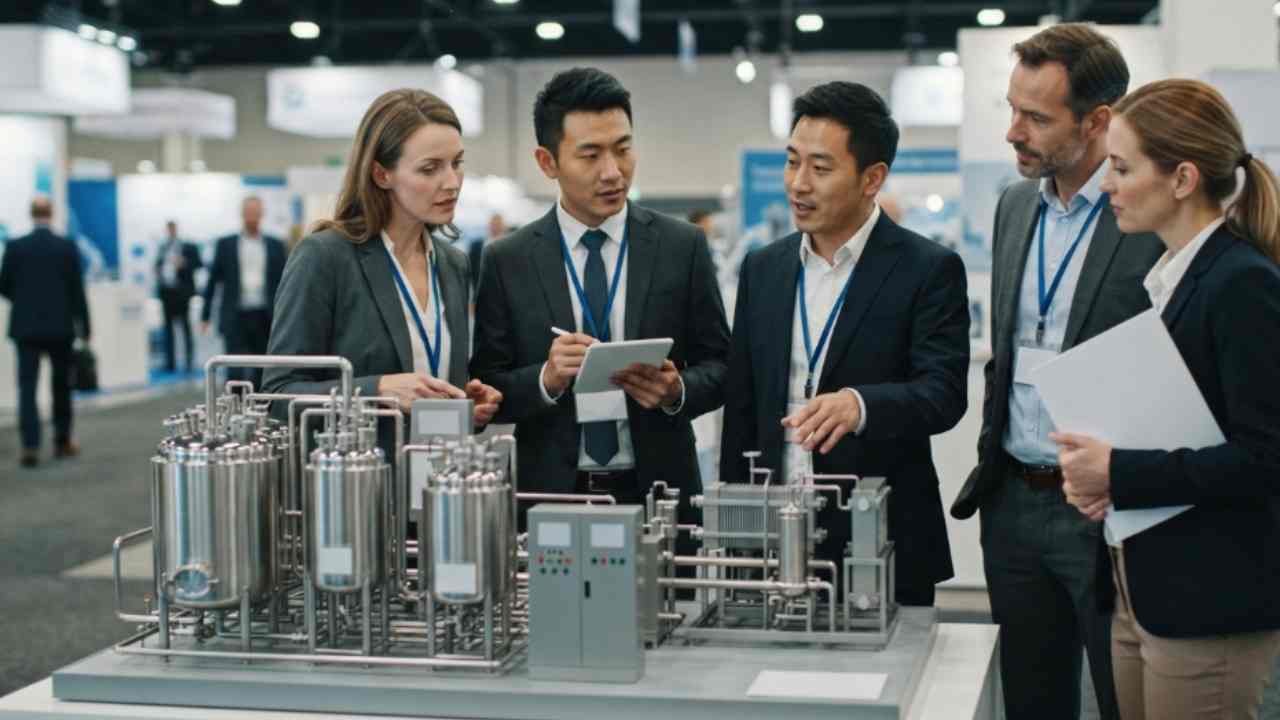
Maintaining a stable production line requires deep integration with verified international ingredient suppliers. Professional procurement managers must track geographical hubs, technological breakthroughs, and transportation risks to optimize logistics. Sourcing partners like FINETECH simplify factory checks, verify production compliance, and secure competitive pricing directly in China to guarantee bulk deliveries. This guide analyzes how the global Vitamin K2 supply market is evolving.
Which Countries Lead the Production of Vitamin K2, Oil & Powder?
Relying on a single unvetted manufacturing region can leave your company exposed to sudden logistics blocks and localized factory shutdowns. Concentrated sourcing increases supply chain vulnerability. Diversifying across leading global production hubs secures volume.
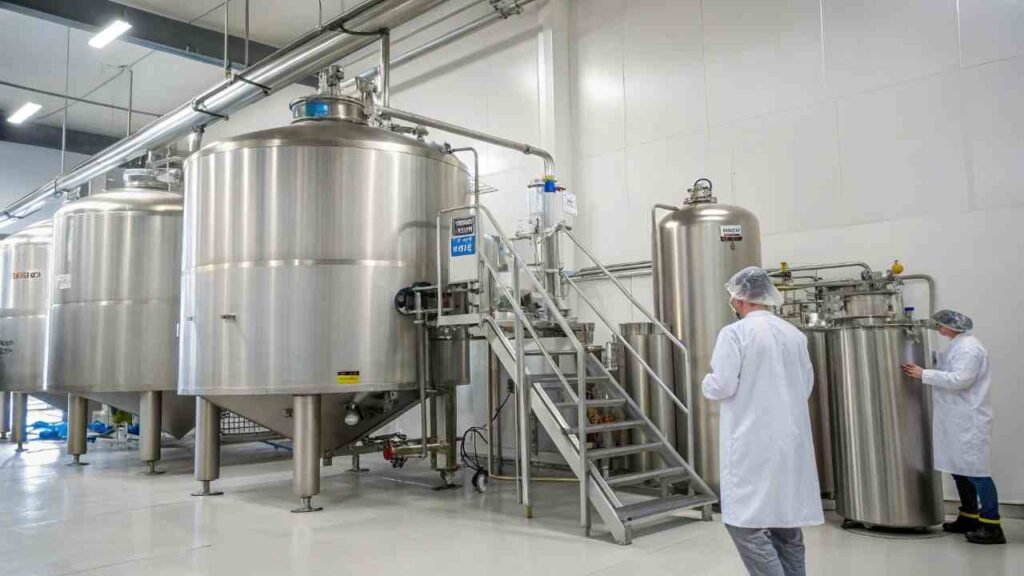
Europe (Norway, Italy, Poland) leads the premium, clinically backed Vitamin K2 segment, while East Asia (China, South Korea, Japan) dominates high-volume, cost-effective commercial production using advanced regional fermentation systems.
Dive Deeper into Regional Hubs and Market Consolidation
The global manufacturing landscape for the Vitamin K2 series is characterized by regional specialization and strict technological requirements. The production is concentrated within a few specialized biotechnology hubs across Europe and East Asia. Europe has historically led the premium segment, with countries like Norway, Italy, and Poland housing pioneer biotech companies. Notable global manufacturers include Kappa Bioscience (Norway, owned by Balchem), Gnosis by Lesaffre (Italy/France), and Pharmaquinone (Poland). These companies focus on high-purity Menaquinone-7 (MK-7) using advanced fermentation and synthetic pathways to supply mature dietary supplement markets.
Simultaneously, East Asia has emerged as a high-volume manufacturing powerhouse. China, South Korea, and Japan leverage their deep historical expertise in traditional food fermentation, such as Japanese natto1, to scale up industrial bioreactors. Major Asian producers like GF Fermentech (South Korea), Sungen Bioscience (China), and Richen Nutritional Technology (China) operate massive automated plants. These manufacturers produce both cost-effective natural fermented oils and spray-dried powders. This geographic split requires importers to choose their sourcing locations carefully. While Asian manufacturers offer significant cost advantages and scalable output, European suppliers provide strong clinical validation and clean-label traceability. Sourcing partners like FINETECH bridge this gap by auditing Asian cleanrooms to ensure compliance with global regulatory standards.
| Sourcing Region | Primary Production Grade | Key Regional Advantage | Supply Chain Risk |
|---|---|---|---|
| Europe | Premium USP/EP MK-7 | Strong clinical data and clean-label | Higher base raw material costs |
| China | Bulk fermented oils & powders | Massive scalable output and low costs | Complex environmental compliance |
| South Korea | Highly refined fermented K2 | Advanced biotech and clean extraction | Evolving tariff and import codes |
| Japan | Natto-derived natural K2 | Established long-term product trust | Higher export pricing structures |
How Does Fermentation Technology Affect Vitamin K2, Oil & Powder Supply?
Using cheap, unrefined chemical synthesis methods can result in final product contamination with toxic residues. Substandard extraction compromises active consumer safety. Advanced bacterial fermentation guarantees clean-label purity.
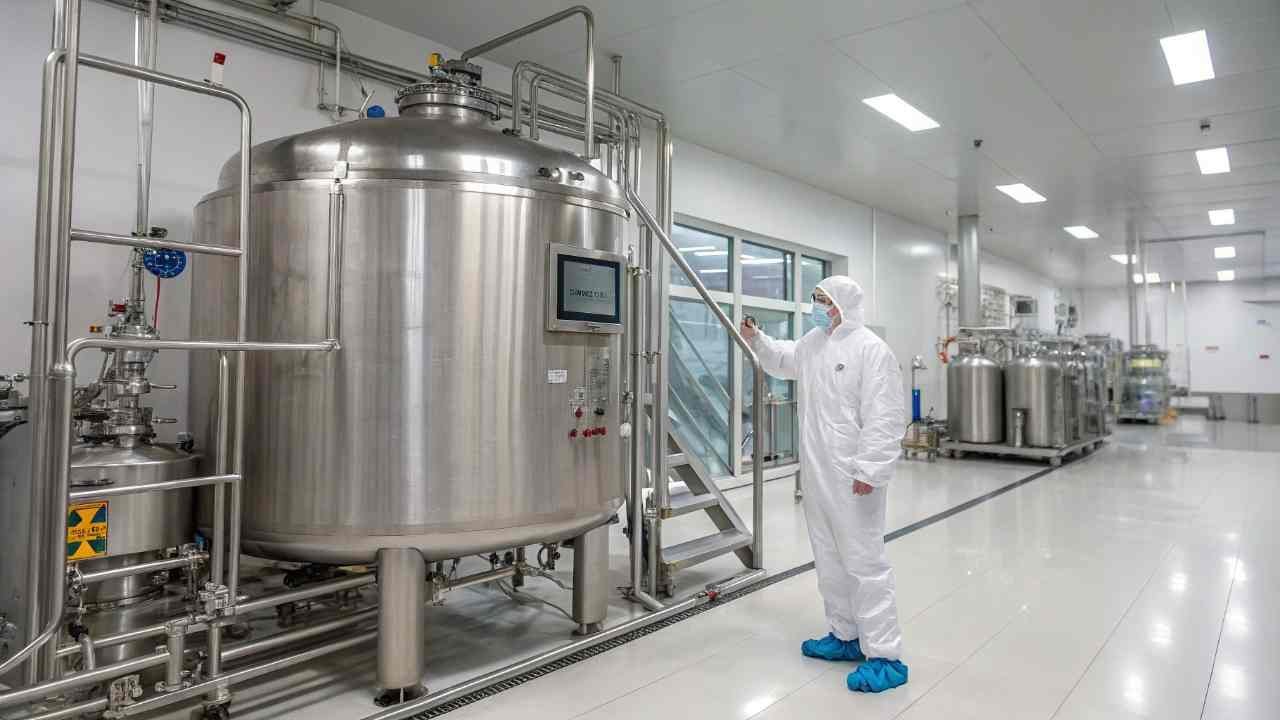
Modern fermentation technology stabilizes Vitamin K2 supply by optimizing fed-batch bioreactors and strain selection to increase active yields, combined with supercritical carbon dioxide (CO2) extraction to isolate pure, solvent-free all-trans MK-7.
Dive Deeper into Bioreactor Optimization and CO2 Extraction
Industrial fermentation technology is the foundation of natural Vitamin K2 (Menaquinone-7) supply. Natural MK-7 is synthesized during the growth cycle of the bacterium Bacillus subtilis var. natto. In modern manufacturing facilities, this biological synthesis occurs in large-scale fed-batch bioreactors. To maximize output, factories implement advanced biotechnology techniques, including pH-stat fed-batch fermentation and genetic strain selection. Utilizing mutagenic optimization, such as low-energy ion beam implantation, allows researchers to cultivate highly active bacterial strains. This medium engineering dramatically reduces fermentation cycle times while significantly boosting active MK-7 yields in the broth.
After fermentation, the purification stage is critical to isolate the active molecule from the bacterial slurry. Premium manufacturers use supercritical carbon dioxide (CO2) extraction2 rather than cheap chemical solvents. Supercritical CO2 behaves as a solvent under high pressure, separating pure D-Menaquinone from impurities without leaving trace chemical residues. This clean extraction method eliminates the need for harsh solvents like hexane or acetone. The result is a high-purity, all-trans isomer powder that complies with European and North American clean-label food laws. Sourcing partners like FINETECH inspect these extraction logs and solvent chromatography data, helping buyers verify that the selected factory uses modern, solvent-free fermentation and purification processes.
| Fermentation Stage | Technology Utilized | Primary Sourcing Purpose | Quality Control Benefit |
|---|---|---|---|
| Strain Selection | Mutagenic and genetic selection | Cultivates high-yield bacteria | Reduces batch fermentation times |
| Broth Growth | pH-stat fed-batch bioreactors | Stabilizes large-scale cultures | Guarantees consistent MK-7 concentrations |
| Purification | Supercritical CO2 extraction | Separates active crystals from broth | Eliminates residual hexane and acetone |
| Assay Check | HPLC chromatography testing | Measures active all-trans isomer | Ensures compliance with USP standards |
What Raw Materials Are Used to Produce Vitamin K2, Oil & Powder?
Formulating vitamins with common allergens can limit your retail target market and trigger expensive compliance warnings on labels. Undisclosed allergens damage brand trust. Sourcing allergen-free raw feedstocks secures clean labels.
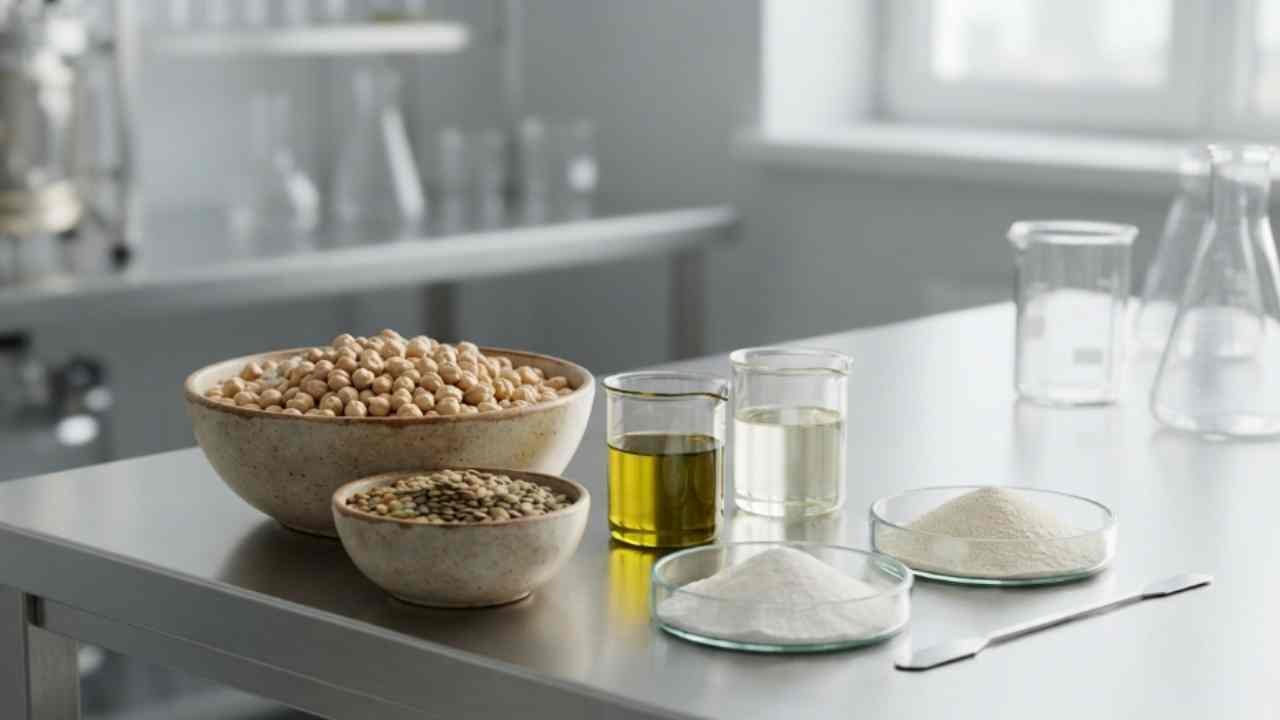
Vitamin K2 production utilizes non-soy legume substrates like chickpeas or lentils for fermentation, vegetable carriers like olive or MCT oil for liquid formats, and starch or maltodextrin excipients to encapsulate dry powders.
Dive Deeper into Non-Allergenic Carriers and Oil Bases
The raw materials used to produce Vitamin K2 define its allergen profile, solubility, and final physical format. The initial fermentation substrate is the nutrient source for the bacterial strain. Traditionally, soybean meal or soybean protein extracts are used as the primary fermentation feedstocks. However, because soy is a major allergen, modern premium manufacturers have transitioned to allergen-free substrates, such as chickpeas, lentils, or sunflower seeds. Fermenting these non-soy legumes allows suppliers to produce non-GMO, clean-label Vitamin K2 that satisfies strict Western dietary standards.
Once the active MK-7 is extracted, it must be formulated into stable commercial oils or powders using carrier materials. For Vitamin K2 oil, the hydrophobic crystals are dissolved in high-grade vegetable carriers. Typical carriers include extra virgin olive oil or Medium Chain Triglyceride (MCT) oil3, which are standardized to concentrations like one thousand or two thousand parts per million (ppm). For Vitamin K2 powders, the active oil is encapsulated inside carbohydrate carriers like corn starch, maltodextrin, or microcrystalline cellulose to create free-flowing, spray-dried beadlets. Sourcing partners like FINETECH help buyers verify these raw carrier materials, ensuring that the selected excipients align with their target formulation needs and regional vegan, Halal, or Kosher certification requirements.
| Ingredient Layer | Material Sourcing Option | Target Formulation Role | Clean-Label Significance |
|---|---|---|---|
| Fermentation Base | Chickpeas, lentils, or non-GMO soy | Primary nutrient substrate | Determines non-allergenic properties |
| Bacterial Strain | Bacillus subtilis (natto) | Synthesizes the active MK-7 | Standardized, non-GMO biological origin |
| Oil Carrier | Olive oil or MCT coconut oil | Stabilizes hydrophobic crystals | Provides liquid carrier options |
| Powder Carrier | Modified corn starch / maltodextrin | Encapsulates active particles | Free-flowing, vegan-friendly powder |
What Supply Risks Should Buyers Consider for Vitamin K2, Oil & Powder?
Accepting unshielded vitamin powders in multi-ingredient blends can result in rapid chemical decay and failed product potency tests. Unprotected formulations lose active values. Evaluating molecular stability mitigates shelf life risks.
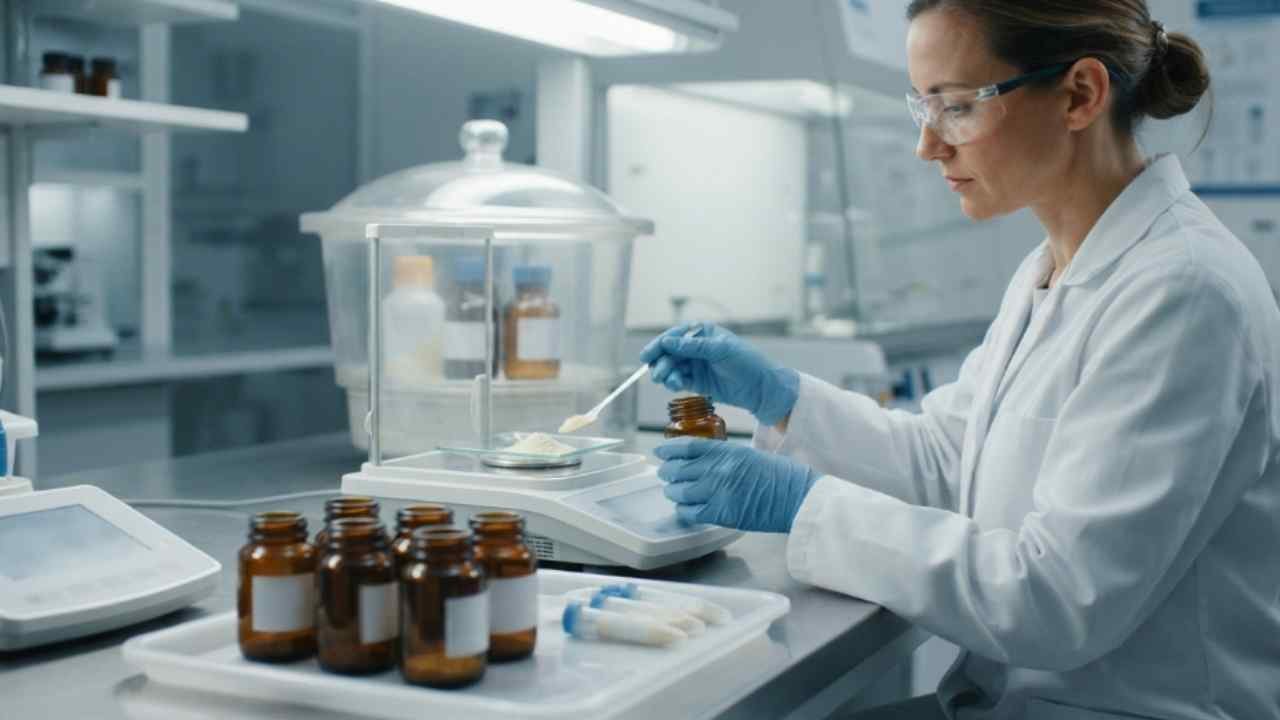
Major supply risks include isomer degradation into inactive cis-forms when exposed to heat and light, and extreme molecular instability when unshielded K2 is directly mixed with basic minerals like calcium or magnesium.
Dive Deeper into Isomer Degradation and Mineral Instability
Importers sourcing Vitamin K2 face several technical and logistics risks that can degrade product quality. The primary quality risk is isomer degradation. The biologically active form of Vitamin K2 is the all-trans stereoisomer4, while cis-isomers are biologically inactive. During low-grade synthesis, incomplete purification, or prolonged exposure to heat and ultraviolet light, all-trans MK-7 can convert into inactive cis-isomers. This conversion results in a severe drop in active potency, leading to finished supplements failing to meet their label claims.
Another major risk occurs when Vitamin K2 is formulated in multi-ingredient blends. Raw MK-7 is highly sensitive to alkaline environments5. When directly blended with basic minerals, such as calcium carbonate or magnesium oxide, the unshielded K2 molecule degrades rapidly in the bottle, sometimes losing up to eighty percent of its potency within a few months. To mitigate this risk, buyers must specify microencapsulated or double-coated powders that physically shield the active crystals from basic mineral particles. Sourcing partners like FINETECH help buyers manage these procurement risks by organizing pre-shipment laboratory testing (HPLC/GC) and temperature-controlled reefer shipping, ensuring that the imported powder retains its active all-trans purity throughout transport.
| Quality Risk Area | Primary Root Cause | Technical Sourcing Impact | Preventive Action |
|---|---|---|---|
| Isomer Decay | Exposure to light, UV, and heat | Formation of inactive cis-isomers | Demand light-blocking aluminum packaging |
| Mineral Clashing | Direct contact with alkaline minerals | Rapid molecular degradation in bottle | Specify double-coated microencapsulation |
| Solvent Residues | Incomplete chemical evaporation | Traces of toxic hexane or acetone | Request gas chromatography purity charts |
| Soy Allergens | Soy-derived fermentation bases | Restricted access to premium markets | Choose chickpea-derived Vitamin K2 |
How Can Importers Secure a Stable Supply of Vitamin K2, Oil & Powder?
Relying on a single chemical factory can leave your operations vulnerable to sudden production halts during local environmental audits. Unsecured supply lines interrupt manufacturing schedules. Implementing multi-origin sourcing safeguards imports.
Importers can secure a stable supply by implementing a multi-origin purchasing plan, requiring independent third-party laboratory HPLC validation of all-trans isomers, specifying microencapsulated grades for mineral blends, and utilizing experienced local sourcing partners.

Dive Deeper into Auditing and Multi-Origin Sourcing Plans
Securing a stable, cost-effective supply of Vitamin K2 requires a systematic purchasing strategy that addresses market volatility and quality risks. Buyers should avoid relying on a single factory. Instead, they must establish a multi-origin sourcing plan, qualifying both high-volume Asian manufacturers for cost efficiency and specialized European plants for clinical verification. This dual-sourcing model ensures that if a factory experiences localized power rationing, precursor shortages, or environmental shutdowns, a qualified backup supplier is ready to fulfill the volume requirements.
Additionally, buyers must establish strict pre-shipment sample (PSS) testing protocols. Every batch must be analyzed at an independent, third-party laboratory using standardized HPLC methods to verify the all-trans isomer percentage and ensure the absence of solvent residues. For mineral blend formulations, buyers must specify microencapsulated grades to secure finished product shelf life. Sourcing partners like FINETECH manage this entire verification process directly in China and South Korea. They conduct on-site cleanroom audits, verify active certifications (FSSC 22000, Kosher, Halal), and supervise container loading. This hands-on oversight allows importers to secure fresh, highly stable Vitamin K2 shipments while reducing inventory holding costs and customs delays.
| Sourcing Security Step | Technical Sourcing Requirement | Main Operational Benefit | Sourcing Implementation Action |
|---|---|---|---|
| Multi-Sourcing Model | Approve backup regional factories | Prevents shutdown-related halts | Qualify alternate Asian and EU suppliers |
| Purity Verification | Third-party HPLC isomer checks | Guarantees active all-trans ratio | Request pre-shipment testing before loading |
| Formula Protection | Specify microencapsulated beadlets | Avoids mineral degradation in bottle | Select double-coated powder formats |
| Sourcing Experts | Work with agents like FINETECH | Handles factory audits & logistics | Consolidate purchases with local specialists |
Conclusion
Sourcing stable Vitamin K2 requires tracking regional production hubs, optimizing fermentation variables, choosing allergen-free carriers, and managing formulation risks. On-the-ground sourcing partners ensure consistent, compliant bulk imports.
-
Harvard T.H. Chan School of Public Health – Detailed guide on dietary Vitamin K food sources, identifying Japanese natto as the richest fermented food source for long-chain menaquinones. ↩
-
ScienceDirect – Comprehensive engineering reference explaining the system components, green chemistry advantages, and residue-free extraction mechanics of Supercritical Fluid Extraction. ↩
-
Cleveland Clinic – Informational article on the metabolic pathways, rapid energy conversion, and physical properties of Medium-Chain Triglyceride (MCT) oil, discussing its use as a highly stable nutrient carrier. ↩
-
MDPI Molecules – Peer-reviewed study analyzing the chromatographic separation and degradation kinetics of Menaquinone-7, highlighting the importance of the active all-trans stereoisomer structure over inactive cis impurities in supplement formulations. ↩
-
PubMed Central (PMC) – Peer-reviewed research investigating the formulation stability of commercial menaquinone-7 (MK-7) in the presence of basic/alkaline excipients like calcium carbonate and magnesium oxide. ↩