
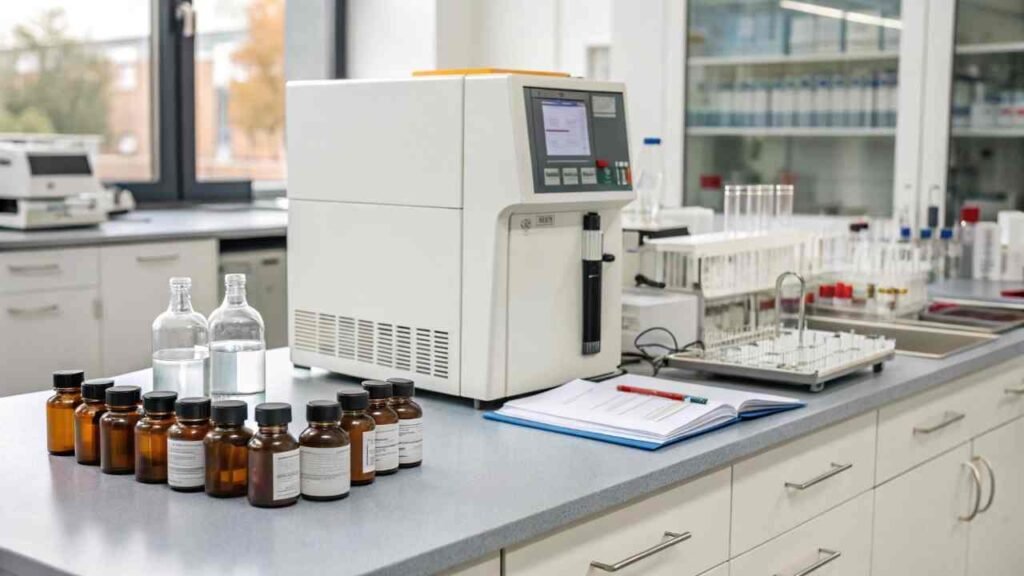
Importing unstable or low-purity vitamins results in failed finished batches, regulatory fines, and damaged consumer trust. Unmonitored materials harm business growth. Establishing structured evaluation practices ensures compliance.
Vitamin K2 quality is evaluated using USP and EP monograph standards, HPLC testing to verify active all-trans isomer ratios, accelerated stability chambers to predict shelf life, and strict independent third-party laboratory audits before shipment.
Successful commercial operations require verifying ingredient purity and chemical stability before bulk cargo leaves the manufacturing plant. Sourcing managers must adopt rigorous testing protocols to prevent the importation of off-spec batches. Sourcing partners like FINETECH simplify factory checks, oversee cleanrooms, and manage quality directly in China to secure bulk deliveries. This guide explains how to evaluate Vitamin K2 quality.
Which Quality Standards Apply to Vitamin K2, Oil & Powder?
Sourcing raw materials without verifying standard monographs leads to regional customs rejection and failed formulation compliance. Unaligned specifications block imports. Adhering to international monographs guarantees entry.
Quality standards are governed by the United States Pharmacopeia (USP), European Pharmacopoeia (EP), and Food Chemicals Codex (FCC) monographs, which define strict limits for active Menaquinone-7 (MK-7) content, heavy metals, and microbiological counts.
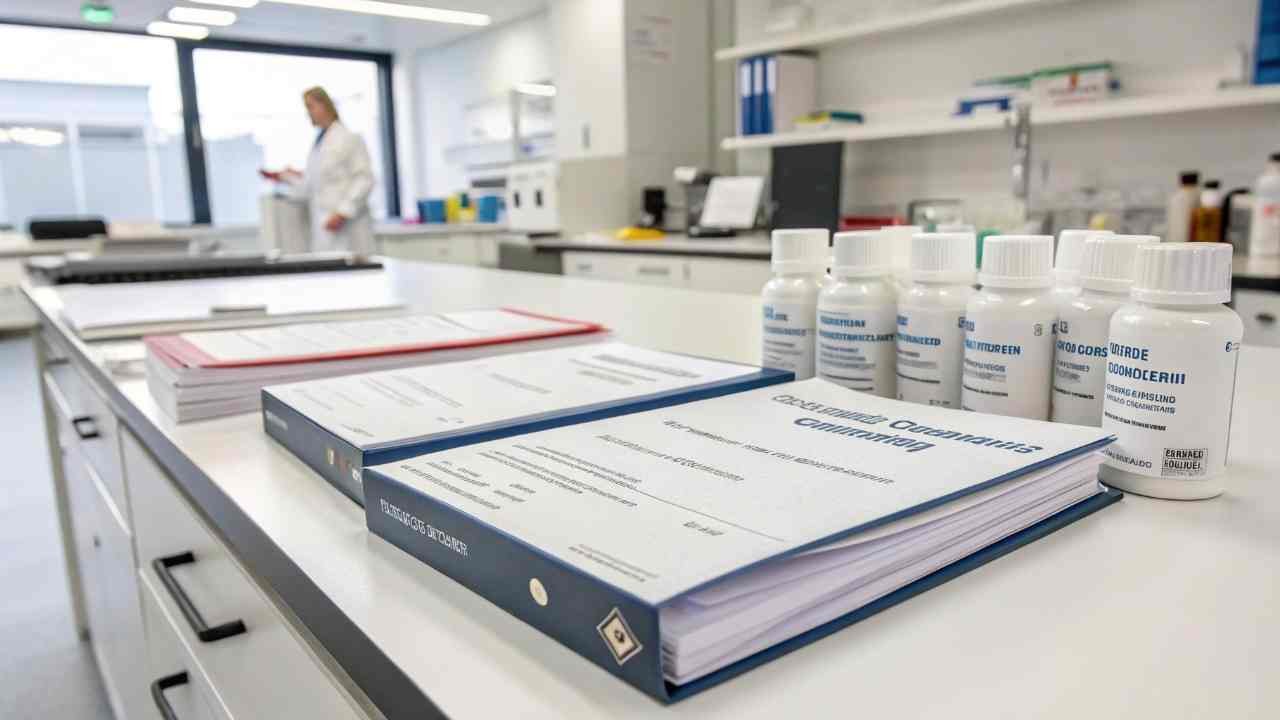
Dive Deeper into Pharmacopoeia Monographs and Specifications
Evaluating raw Vitamin K2 requires aligning with international regulatory frameworks to ensure consumer safety and product efficacy. The primary reference standards are set by the United States Pharmacopeia (USP) and the European Pharmacopoeia (EP). These monographs establish the legal identity, strength, and quality parameters of Menaquinone-7 (MK-7). For instance, the USP monograph specifies that the active ingredient must contain a minimum percentage of the active "all-trans" isomer while limiting the presence of inactive "cis" stereoisomers.
In addition to active assay limits, pharmacopoeia standards define maximum thresholds for contaminants. Sourcing managers must verify that the raw powder or oil complies with Food Chemicals Codex (FCC) guidelines when used in human food fortification. These regulations restrict heavy metals, including lead, arsenic, cadmium, and mercury, to extremely low parts-per-million (ppm) levels. Microbiological safety is also highly regulated, requiring total plate counts to remain below specified limits with zero tolerance for pathogens like Salmonella or Escherichia coli. Sourcing partners like FINETECH assist international B2B buyers by reviewing factory specifications against current USP and EP databases, ensuring that every bulk import complies with regional safety laws.
| Quality Standard | Governing Authority | Primary Focus Area | Sourcing Significance |
|---|---|---|---|
| USP Monograph | United States Pharmacopeia | MK-7 active isomer purity | Essential for US supplement market |
| EP Standards | European Directorate | Chemical identity and limits | Mandatory for European imports |
| FCC Guidelines | Food Chemicals Codex | Food-grade safety limits | Required for fortified food drinks |
| GB Standards | Chinese National Board | Domestic production quality | Base criteria for Chinese exporters |
How Is the Purity of Vitamin K2, Oil & Powder Tested?
Accepting cheap ingredients without verifying active purities can lead to processing low-potency batches and failing final laboratory assay tests. Untested shipments waste capital. Using advanced chromatography secures potency.
Purity is tested using High-Performance Liquid Chromatography (HPLC) to separate and quantify active all-trans MK-7 from cis isomers, Gas Chromatography (GC) for residual organic solvents, and ICP-MS for heavy metal detection.

Dive Deeper into Chromatographic Separation and Isomer Ratios
Accurately testing the purity of Vitamin K2 requires specialized instrumentation capable of detecting molecular stereoisomers. The primary method utilized by quality control laboratories is High-Performance Liquid Chromatography (HPLC). Because the biologically active "all-trans" MK-7 has the same molecular weight as the inactive "cis" isomer, basic testing cannot distinguish between them. HPLC systems use specialized chiral or reverse-phase chromatographic columns to separate these isomers based on their physical shape. This separation allows chemists to calculate the precise percentage of active all-trans MK-7, which should typically exceed ninety-five or ninety-eight percent.
Beyond active assays, purity testing must identify manufacturing residues. Because chemical synthesis or bacterial fermentation involves organic reagents, laboratories use Gas Chromatography1 (GC) equipped with headspace samplers to test for residual solvents like hexane, acetone, or ethanol. Additionally, Inductively Coupled Plasma Mass Spectrometry (ICP-MS) is utilized to measure trace heavy metals down to parts-per-billion (ppb) sensitivities. Sourcing partners like FINETECH verify these analytical steps directly in China. They request HPLC chromatograms and GC solvent reports for every manufactured batch, confirming that the chemical purity matches the values declared on the Certificate of Analysis (COA).
| Testing Method | Target Analytical Compound | Equipment Utilized | Acceptable Quality Target |
|---|---|---|---|
| Isomer Separation | Active all-trans MK-7 ratio | HPLC system | Typically 95% to 98% minimum |
| Solvent Residuals | Hexane, acetone, ethanol | Gas Chromatography (GC) | Below pharmacopoeia ppm limits |
| Heavy Metals | Lead, arsenic, mercury | ICP-MS spectrometer | Below strict safety ppb limits |
| Active Concentration | Total menaquinone assay | Quantitative HPLC | Matches label specification |
Why Is Stability Testing Important for Vitamin K2, Oil & Powder?
Mixing unprotected vitamin formats with active minerals results in rapid potency loss and costly product recalls during warehouse storage. Unstable formulations degrade quickly. Implementing stability testing prevents losses.
Stability testing is vital because Vitamin K2 is highly sensitive to light, heat, and alkaline mineral environments. Testing confirms how well the raw material resists degradation over time, guaranteeing that the finished product meets its shelf-life claim.
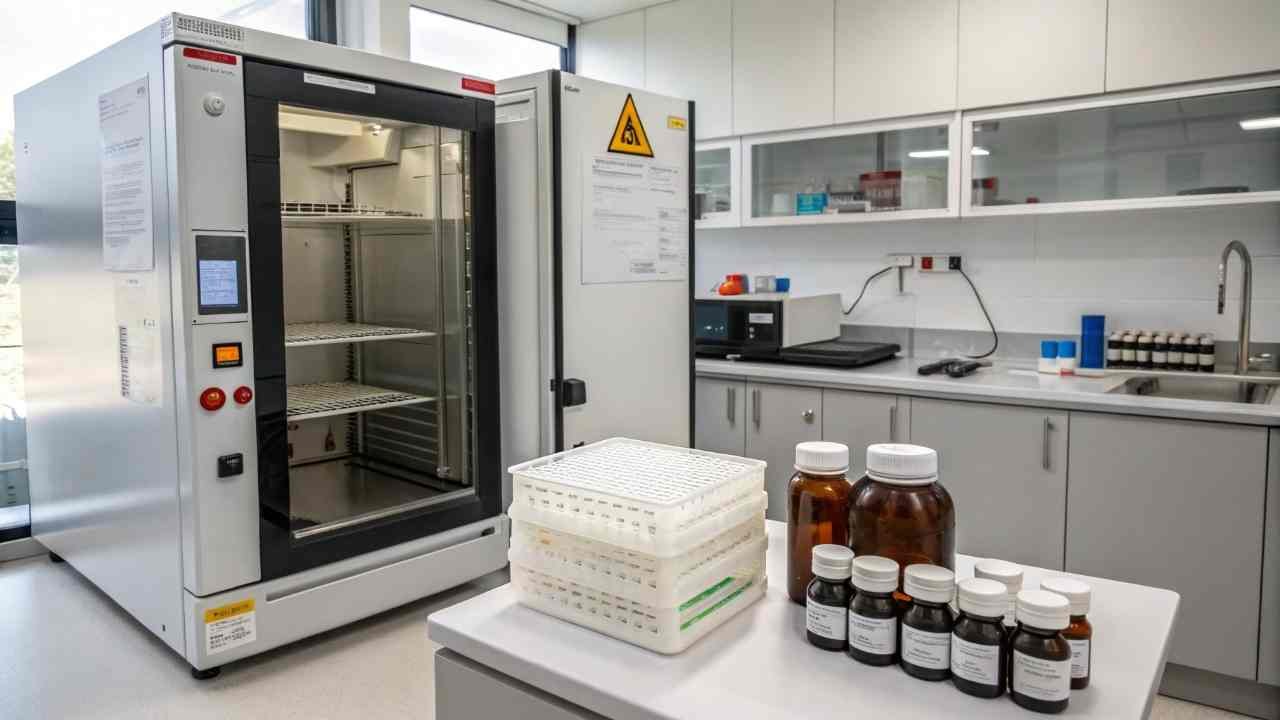
Dive Deeper into Accelerated Chambers and Mineral Blends
Understanding the stability profile of raw materials is essential to prevent premature active degradation in commercial formulations. Vitamin K2, particularly Menaquinone-7, is chemically sensitive. The molecule contains a reactive quinone ring with a long unsaturated side chain that is easily broken down by ultraviolet light, heat, and oxygen. To measure this vulnerability, manufacturers perform accelerated stability testing2. This process places the vitamin oil or powder inside specialized environmental chambers held at elevated conditions, typically forty degrees Celsius and seventy-five percent relative humidity, to simulate two years of ambient aging over six months.
Stability testing becomes even more critical when formulating multi-ingredient products. When raw, unprotected Vitamin K2 is directly mixed with basic mineral powders like calcium carbonate or magnesium oxide, the alkaline environment accelerates K2 degradation, often destroying up to eighty percent of the active content within a few months. Testing verifies if microencapsulated or double-coated powders successfully shield the active K2 crystals from these alkaline particles. Sourcing partners like FINETECH help buyers navigate these stability challenges by reviewing stability logs and offering microencapsulated grades from China, ensuring that the selected raw materials maintain their active potency throughout their expected shelf life.
| Stability Test Type | Environmental Conditions | Testing Duration | Technical Sourcing Purpose |
|---|---|---|---|
| Accelerated Stability | 40°C / 75% Relative Humidity | 6 months | Simulates long-term aging quickly |
| Real-Time Stability | 25°C / 60% Relative Humidity | 24 to 36 months | Confirms exact ambient shelf life |
| Mineral Compatibility | Mixed with Calcium/Magnesium | 3 to 6 months | Verifies microencapsulation protection |
| Photostability | Direct exposure to UV light | 1 to 2 weeks | Measures light-induced degradation |
Which Certifications Should Vitamin K2, Oil & Powder Suppliers Have?
Shipping bulk vitamins without proper safety certifications can result in immediate customs seizures and expensive border clearances. Incomplete documentation halts logistics. Verifying active global certificates avoids export blocks.
Reliable suppliers must hold food-safety certifications (FSSC 22000, ISO 22000), dietary supplement compliance (GMP), religious requirements (Kosher, Halal), and non-GMO identity preservation (IP) certificates for soy or chickpea fermentation substrates.

Dive Deeper into Global Food Safety and Dietary Registrations
Navigating the regulatory landscape of international trade requires thorough document verification before shipping raw materials. Because Vitamin K2 is used in human food, infant formula, and dietary supplements, importing plants must satisfy strict regulatory standards depending on their target market. For food and dietary supplements, manufacturing facilities must hold active FSSC 22000 or ISO 22000 food safety certificates. These systems prove that the factory operates under strict Hazard Analysis Critical Control Point (HACCP3) principles to prevent contamination.
Additionally, because natural Vitamin K2 is produced through bacterial fermentation of soy or chickpea substrates, buyers must verify GMO status. Importers in Europe and North America require valid Non-GMO Project Verified4 or Identity Preservation (IP) certificates to clear regional customs and satisfy clean-label standards. Religious certifications, including Kosher and Halal, are also necessary to access global retail markets. For pharmaceutical-grade applications, the supplier must possess valid GMP (Good Manufacturing Practice) certificates. Sourcing partners like FINETECH simplify this complex vetting process. They verify active registration numbers on official certification databases, ensuring that all imported batches satisfy regional compliance rules and clear customs without delay.
| Certification Standard | Auditing Authority | Primary Target Market | Export Significance |
|---|---|---|---|
| FSSC 22000 | Food Safety Board | Human Food & Supplements | Confirms standardized plant sanitation |
| GMP Certification | Regional Drug Agency | Dietary Supplements | Proves consistent batch manufacturing |
| Non-GMO IP | Independent Registries | Clean-Label Retailers | Traces substrate to non-GMO crops |
| Kosher / Halal | Certified Rabbinates | Global Religious Markets | Required for religious dietary sales |
How Can Buyers Verify the Quality of Vitamin K2, Oil & Powder?
Relying on a manufacturer's self-issued data sheet can lead to receiving weak active ingredients and failing final stability tests. Unvetted sourcing wastes capital. Implementing independent batch verification secures quality.
Buyers can verify quality by requesting representative pre-shipment samples for testing in independent accredited laboratories, checking acid and peroxide values for oil freshness, and utilizing on-the-ground agents to inspect container seals.

Dive Deeper into Pre-Shipment Sampling and Third-Party Audits
Building a secure chemical supply chain requires a proactive verification strategy that extends beyond basic paper documentation. Sourcing managers should never accept the factory's self-issued Certificate of Analysis (COA) as the final proof of quality. To prevent importing off-spec batches, buyers must request a representative pre-shipment sample (PSS) drawn directly from the sealed bulk cargo. This sample should be sent to an independent, accredited laboratory, such as SGS or Eurofins, to verify the active all-trans isomer concentration using standardized USP or EP chromatography methods.
For liquid oil formats, buyers must test the acid value and peroxide value5. These chemical indicators measure the current state of oxidation and rancidity, ensuring the carrier oil is fresh and free from degradation. For dry powders, testing the loss on drying (LOD) confirms that moisture levels remain below specified limits to prevent microbial growth. Sourcing partners like FINETECH manage these technical audits directly in China. They organize independent laboratory testing, check physical container seals, and supervise the loading process, helping B2B buyers receive premium, highly stable Vitamin K2 shipments while reducing inventory holding costs and customs delays.
| Verification Step | Target Laboratory Test | Analytical Objective | Expected Quality Outcome |
|---|---|---|---|
| Pre-Shipment Sample | Chiral HPLC chromatography | Verifies active all-trans ratio | Prevents importing weak batches |
| Oil Freshness Test | Acid and peroxide titration | Measures oxidation state of oil | Avoids rancid or degraded carrier bases |
| Powder Moisture Check | Loss on drying (LOD) test | Measures residual moisture weight | Prevents microbial growth in powder |
| On-Site Inspection | Partner audit like FINETECH | Checks container seals & drums | Eliminates shipping contamination |
Conclusion
Evaluating Vitamin K2 quality requires adhering to USP/EP standards, verifying all-trans isomer purity via HPLC, conducting stability tests, checking supplier certifications, and organizing independent pre-shipment audits.
-
Agilent Technologies – Technical resource overview of gas chromatography (GC) systems, outlining how volatile organic residues are separated, identified, and quantified in laboratory testing. ↩
-
European Medicines Agency (EMA) – Harmonized scientific guideline (ICH Q1A R2) detailing the standards, protocols, and climatic chambers required for accelerated stability testing of active substances and products. ↩
-
U.S. Food and Drug Administration (FDA) – Comprehensive guide detailing the seven key principles and application guidelines of Hazard Analysis Critical Control Point (HACCP) systems for maintaining food safety. ↩
-
Non-GMO Project – Official website of the verification program, establishing non-GMO standard compliance, clean-label supply chain verification, and third-party auditing requirements. ↩
-
ScienceDirect – Scientific topic summary on peroxide value, illustrating the chemical principles of lipid oxidation and how titrimetric methods measure primary oxidation levels in dietary oils. ↩