

Selecting an incompatible physical form of Vitamin K2 leads to manufacturing errors, phase separation, and rapid product degradation. Inappropriate chemical formats waste resources. Evaluating application parameters secures production.
Vitamin K2 oil and powder differ in active concentrations, carrier excipients, and dispersion properties. Oils are optimized for lipid-based softgels and drops, while encapsulated powders are required for dry blending, compressible tablets, and water-dispersible functional beverages.
Successfully manufacturing fortified products requires selecting the exact chemical and physical format of raw ingredients. Sourcing teams must analyze processing parameters to prevent production downtime and inventory losses. Sourcing partners like FINETECH simplify factory checks, verify production compliance, and secure competitive pricing directly in China to guarantee bulk deliveries. This guide explains how Vitamin K2 oil and powder differ in industrial applications.
What Are the Main Differences Between Vitamin K2 Oil & Powder?
Confounding physical formats of active vitamins leads to blending failures and inaccurate dosage distribution across batch runs. Overlooking physical traits ruins batch consistency. Comparing core material traits prevents errors.
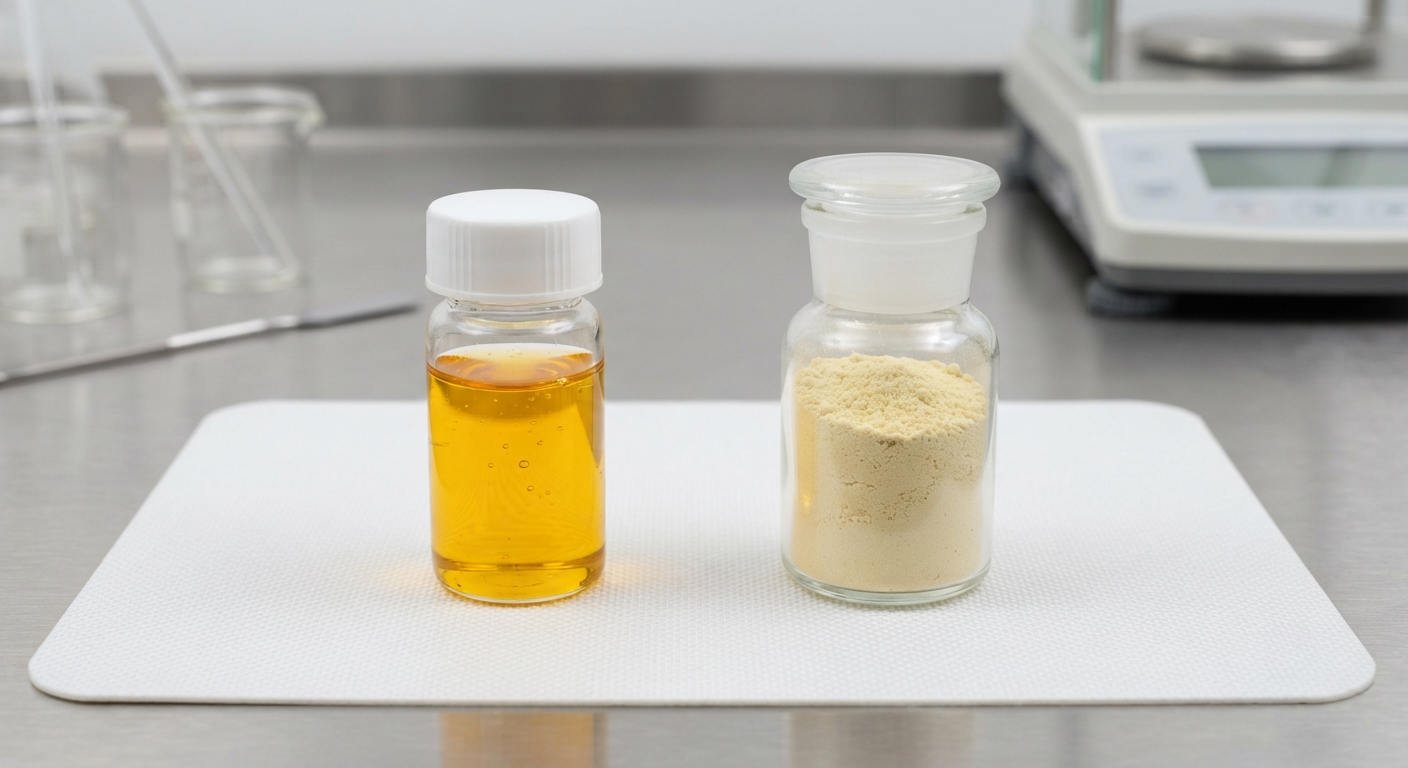
The main differences lie in physical state, carrier matrices, and solubility. Vitamin K2 oil is a fat-soluble liquid dissolved in vegetable carriers like MCT. Vitamin K2 powder is a solid, spray-dried particulate supported by starch, dextrin, or mineral carriers.
Dive Deeper into Carrier Matrices and Physical Characteristics
Evaluating the technical differences between the oil and powder formats of Vitamin K2 is essential to ensure process compatibility. Vitamin K2, chemically known as Menaquinone-7 (MK-7), is naturally hydrophobic and fat-soluble. In its oil form, pure MK-7 crystals are dissolved in high-grade carrier oils. Typical bases include Medium Chain Triglyceride (MCT) oil, organic extra virgin olive oil, or sunflower oil. These liquid formats are usually standardized to concentrations ranging from one thousand parts per million (0.1% concentration) to fifteen thousand parts per million (1.5% concentration).
In contrast, Vitamin K2 powder is a solid particulate form. It is manufactured by taking the active oil and binding or encapsulating it with solid carrier excipients. Common carriers include maltodextrin, microcrystalline cellulose, gum arabic, or modified starch. The active concentration of powder is highly flexible, ranging from one thousand parts per million to ten thousand parts per million (1% active concentration). While the oil format requires liquid dosing pumps and closed-vessel mixing to prevent oxidation, the powder format is formulated for dry ribbon blenders, gravimetric powder feeders, and tablet presses1. Sourcing partners like FINETECH help buyers map these physical parameters, ensuring the selected form matches the raw material handling systems in their plants.
| Physical Form | Standard Concentration | Primary Carrier Material | Dispersion Properties | Handling Equipment |
|---|---|---|---|---|
| Vitamin K2 Oil | 1,000 to 15,000 ppm | MCT or olive oil | Fully lipid-soluble | Liquid dosing pumps |
| Vitamin K2 Powder | 1,000 to 10,000 ppm | Maltodextrin or starch | Dispersion depends on carrier | Dry powder blenders |
Which Vitamin K2, Oil & Powder Form Is Better for Dietary Supplements?
Choosing an incorrect raw ingredient format can result in capsule leaking, poor tablet hardness, and uneven active ingredient distribution. Mismatched supplement formats waste capital. Matching dosage forms optimizes manufacturing.
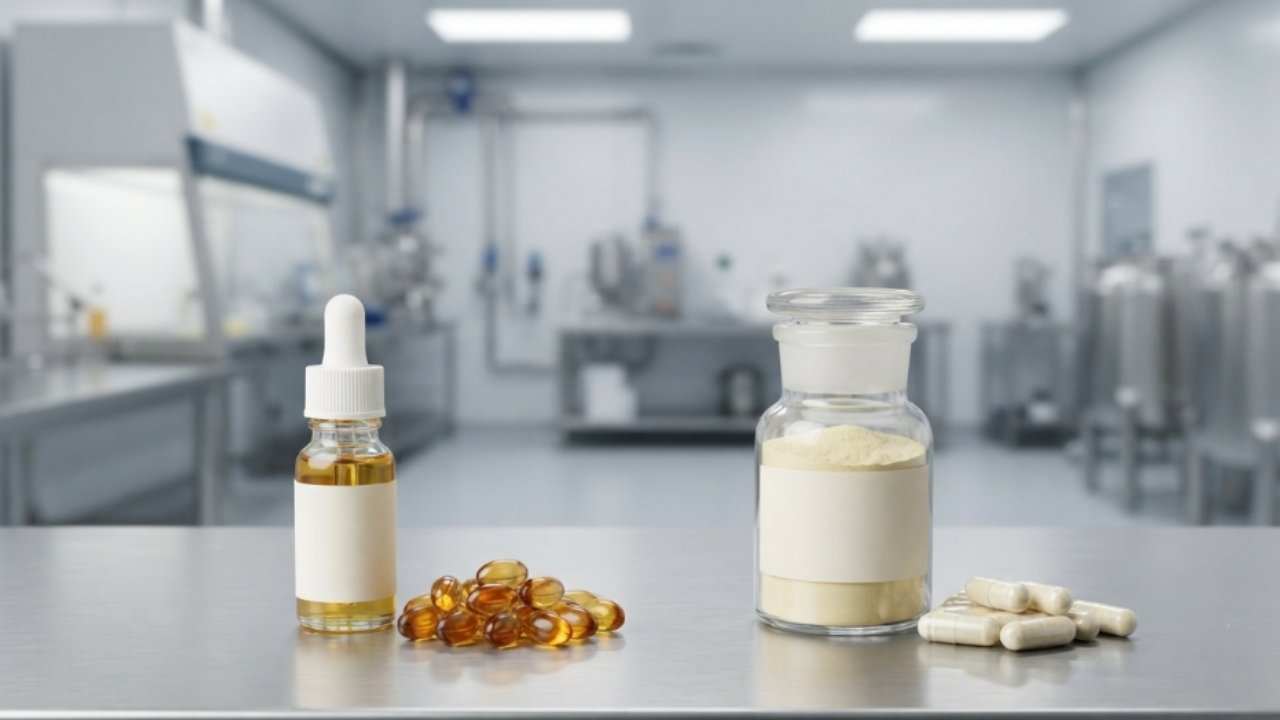
Liquid oil is superior for oil-based softgels and dietary drops due to direct solubility. Encapsulated powder is better for two-piece hard capsules, tablets, and powdered premixes because it ensures homogenous blending with other dry raw materials.
Dive Deeper into Solid and Liquid Supplement Manufacturing
The selection of the ideal Vitamin K2 format for dietary supplements depends entirely on the targeted finished dosage form. For liquid-filled softgels and sublingual oil drops, Vitamin K2 oil is the logical choice. The oil easily dissolves into lipid matrices, such as omega-3 fish oils or vegetable seed oils, without requiring complex dissolution steps. This direct solubility simplifies the softgel encapsulation2 process and ensures that the lipophilic active ingredient remains completely homogenous during large-scale manufacturing runs.
Conversely, solid dosage forms like compressed tablets, hard gelatin capsules, and chewable gummies require the powder format. Standard tablets require compressible powders with highly uniform particle size distributions to prevent active ingredient segregation during high-speed compression. Furthermore, if the supplement formulation contains alkaline minerals like calcium or magnesium, manufacturers must specify microencapsulated or double-coated Vitamin K2 powders. This protective coating prevents the active MK-7 molecule from reacting with basic minerals, which would otherwise lead to rapid active degradation inside the bottle. Sourcing partners like FINETECH assist supplement brands by evaluating these formulation requirements in China, ensuring that imported batches align with the exact physical demands of supplement manufacturing facilities.
| Dosage Form | Preferred K2 Format | Required Technical Grade | Manufacturing Key Focus | Sourcing Recommendation |
|---|---|---|---|---|
| Softgels & Drops | Liquid K2 Oil | Active MK-7 in MCT oil | Precise liquid pump dosing | Choose clear, low-viscosity oils |
| Hard Capsules | Standard K2 Powder | 1,000 to 2,000 ppm powder | Homogenous dry blending | Select fine particle sizes |
| Tablets & Blends | Coated K2 Powder | Microencapsulated beadlets | Compressibility and stability | Specify mineral-stable grades |
Which Vitamin K2, Oil & Powder Form Is Preferred for Functional Foods?
Adding poorly soluble nutrients to beverages and dry food mixes causes unappealing oil separation, chalky textures, and phase sedimentation. Incompatible food ingredients ruin products. Selecting dispersible formats protects taste.
Water-dispersible powders are preferred for dairy formulations, milk powders, and sports nutrition drinks because they disperse evenly in liquids. Oils are preferred for fat-rich spreads, margarine, cooking oils, and lipid-based dairy products.

Dive Deeper into Food Fortification and Emulsification
Fortifying functional foods with Vitamin K2 requires matching the physical properties of the active ingredient with the water or fat content of the food matrix. For water-based beverages, protein shakes, and dry infant formulas, manufacturers prefer cold-water-dispersible (CWS) powders. Standard hydrophobic oil cannot disperse in water, leading to unsightly phase separation and oil droplets floating on the surface of the drink. CWS powders utilize emulsified carriers like starch or gum acacia3 to encapsulate the hydrophobic MK-7, allowing it to dissolve or suspend evenly in cold liquids without altering the texture or taste.
For lipid-based functional foods4, Vitamin K2 oil is the standard. Products such as margarines, buttery spreads, cooking oils, and fat-enriched dairy items like cheese or whole milk yogurts are ideal matrices for fat-soluble oil drops. The active oil integrates into the lipid phase of these foods during processing, maintaining stability without requiring emulsifiers. Sourcing managers must carefully evaluate these food application parameters during the raw material purchasing stage. Sourcing partners like FINETECH manage this evaluation process, coordinating with food-grade factories in China to supply customized CWS powders or standardized carrier oils that meet global food-safety and allergen regulations.
| Functional Food Matrix | Optimal K2 Format | Key Technical Property | Process Benefit |
|---|---|---|---|
| Protein & Milk Powders | CWS Powder | Cold-water dispersibility | Dissolves instantly without clumps |
| Margarine & Spreads | Standard K2 Oil | Fat-soluble liquid state | Blends easily into lipid base |
| Beverages & Juices | Emulsified Powder | Micellar encapsulation | Prevents surface oil separation |
| Baked Goods & Bars | Coated Powder | Thermal heat resistance | Withstands baking oven temperatures |
How Does Product Form Affect Stability and Shelf Life?
Exposing sensitive active molecules to atmospheric oxidation and light during storage leads to a rapid drop in active potency and rancid odors. Unprotected formats decay quickly. Analyzing encapsulation benefits preserves quality.
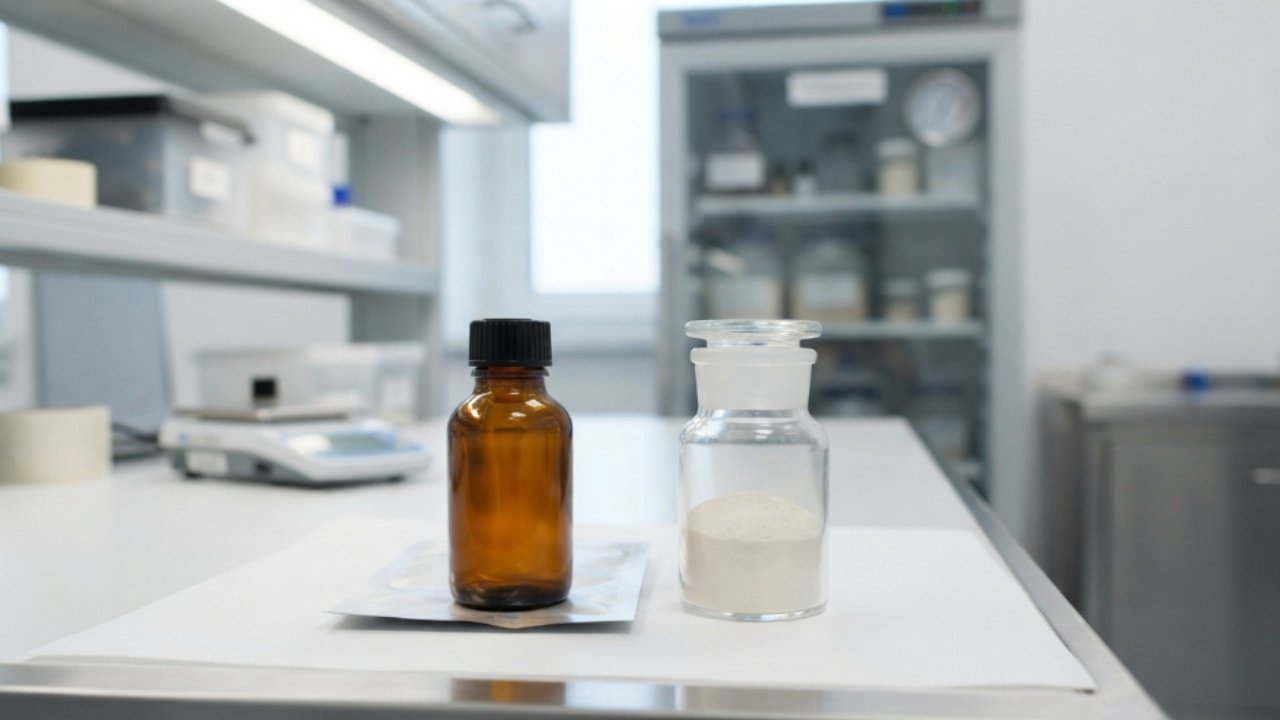
Product form directly dictates shelf life. Liquid oils are stable in sealed, nitrogen-flushed containers but highly sensitive to light and air. Microencapsulated powders provide the highest stability by physically shielding the active molecule from heat, oxygen, and reactive minerals.
Dive Deeper into Microencapsulation and Active Degradation
The shelf life and chemical stability of raw Vitamin K2 are heavily influenced by its physical format and protective matrix. In its free oil form, the long-chain Menaquinone-7 molecule is highly sensitive to external environmental factors. Exposure to ultraviolet light, high temperatures, or atmospheric oxygen triggers auto-oxidation, breaking down the chemical bonds of the active "all-trans" isomer and turning it into inactive "cis" configurations. To maintain potency, K2 oil must be stored in dark amber glass or aluminum containers under a protective nitrogen gas flush, which limits its practical handling in standard open-air factories.
Microencapsulated powder solves these stability challenges. The active oil is enclosed inside a microscopic polymer shell, usually consisting of starch, dextrin, or gelatin. This protective barrier acts as a physical shield against oxygen, light, and heat, allowing the powder to remain stable during spray-drying5 and subsequent long-term warehouse storage. Most importantly, this coating prevents direct contact with alkaline minerals, which would otherwise cause rapid active degradation. Sourcing partners like FINETECH help buyers select the correct stabilization technology, auditing factory logs in China to ensure that microencapsulated powders possess the correct shell thickness and density to guarantee maximum shelf life.
| Physical Format | Primary Degradation Risk | Stability Level | Shelf-Life Expectation | Packaging Requirement |
|---|---|---|---|---|
| Standard K2 Oil | Light and oxygen exposure | Moderate | 12 to 18 months | Nitrogen-flushed amber drums |
| Standard K2 Powder | Ambient moisture and air | Moderate | 18 to 24 months | Sealed foil bags with desiccant |
| Microencapsulated | Alkaline mineral contact | Excellent | 24 to 36 months | Multilayer protective liners |
How Can Buyers Choose Between Vitamin K2 Oil & Powder?
Sourcing the incorrect raw format can lead to severe processing complications and extensive manufacturing downtime in your production plant. Incompatible formats increase overhead. Implementing a selection checklist secures purchasing.
Buyers can choose the correct format by analyzing their final product state (solid versus liquid), evaluating manufacturing machinery (dry blenders versus liquid pumps), assessing mineral compatibility, and verifying transport storage temperatures.
Dive Deeper into Procurement Checklists and Factory Auditing
Making the correct purchasing decision between Vitamin K2 oil and powder requires a systematic evaluation of your manufacturing facility and product objectives. First, procurement managers must analyze the physical state of the final formulation. If the product is a tablet, dry blend, or hard capsule, powder is mandatory. If the product is an oil drop, liquid softgel, or lipid-rich food, oil is preferred. Second, buyers must audit their plant's material handling machinery. Liquid dosing systems require high-precision volumetric pumps and stainless-steel mixing tanks, while dry powders require ribbon blenders, dust-extraction systems, and gravimetric feeders.
Third, mineral compatibility must be assessed. Any dry formulation containing calcium, magnesium, or iron requires microencapsulated powder to prevent rapid active degradation. Finally, logistics and storage conditions must be considered, as oils are more sensitive to temperature extremes during ocean shipping than stabilized powders. Sourcing partners like FINETECH simplify this decision-making process for international B2B buyers. They manage on-site technical audits, verify active certifications (FSSC 22000, Kosher, Halal), and coordinate pre-shipment testing in China, ensuring that buyers receive the exact technical grade required to protect their final product formulations and margins.
| Sourcing Evaluation Step | Technical Factor to Analyze | Target Process Option | Sourcing Outcome |
|---|---|---|---|
| Dosage Compatibility | Final product physical state | Oil for softgels, powder for tablets | Optimizes active bioavailability |
| Equipment Audit | Plant machinery capabilities | Volumetric pumps vs dry mixers | Prevents blending bottlenecks |
| Stability Screening | Presence of alkaline minerals | Double-coated microencapsulation | Secures active product shelf life |
| Logistics Analysis | Transit route and temperatures | Temperature-controlled reefers | Eliminates transportation damage |
Conclusion
Choosing between Vitamin K2 oil and powder depends on final formulation requirements, plant equipment, mineral compatibility, and stability parameters. Dedicated sourcing partners ensure correct, high-quality bulk deliveries.
-
Pharmaceutical Online – Technical report on detecting powder flowability challenges and ensuring consistency during solid dosage compression. ↩
-
MDPI – Scientific study examining the mechanical and chemical development, cross-linking, and dissolution challenges of soft gelatin capsules. ↩
-
ScienceDirect – Comprehensive topic page compiling research on the chemical structure, emulsifying capabilities, and industrial microencapsulation applications of gum arabic. ↩
-
Food Ingredients First – Market trend report detailing the evolving landscape of functional foods, including shifts toward emotional wellness and specialized nutritional additions. ↩
-
Frontiers – Scientific review detailing microencapsulation techniques (such as spray-drying) used to coat sensitive nutrients, evaluating wall materials, encapsulation efficiency, and sensory analysis. ↩