

Selecting incompatible GABA grades ruins beverage clarity, induces severe taste defects, and disrupts high-speed dry powder blending machinery. Unvetted raw materials compromise food production.
Food manufacturers selecting GABA must evaluate liquid-clarity specifications, select optimal crystal particle sizes to prevent static clumping, analyze cold-water dissolution speeds, verify active purity levels to avoid savory off-flavors, and demand comprehensive regulatory documentation.
Successfully manufacturing high-quality health supplements and functional foods requires a disciplined approach to checking raw amino acid quality parameters. Sourcing managers must examine physical and chemical properties to protect their formulations from processing failures and flavor defects. Sourcing partners like FINETECH simplify factory checks, verify production compliance, and secure competitive pricing directly in China to guarantee bulk deliveries. This guide explains what food manufacturers should consider when selecting Gamma-aminobutyric acid (GABA).
Which Gamma-aminobutyric acid (GABA) Specification Is Best for Beverage Applications?
Formulating functional drinks with unpurified GABA residues introduces unwanted savory, umami flavors and causes liquid turbidity in clear beverages. Poor grade selection limits market appeal.
The best GABA specification for beverage applications is a natural, fermentation-derived powder with an active assay above ninety-nine percent, near-zero residual glutamic acid, and rapid cold-water dissolution.
Dive Deeper into Liquid Clarity and Sensory Profile Compatibility
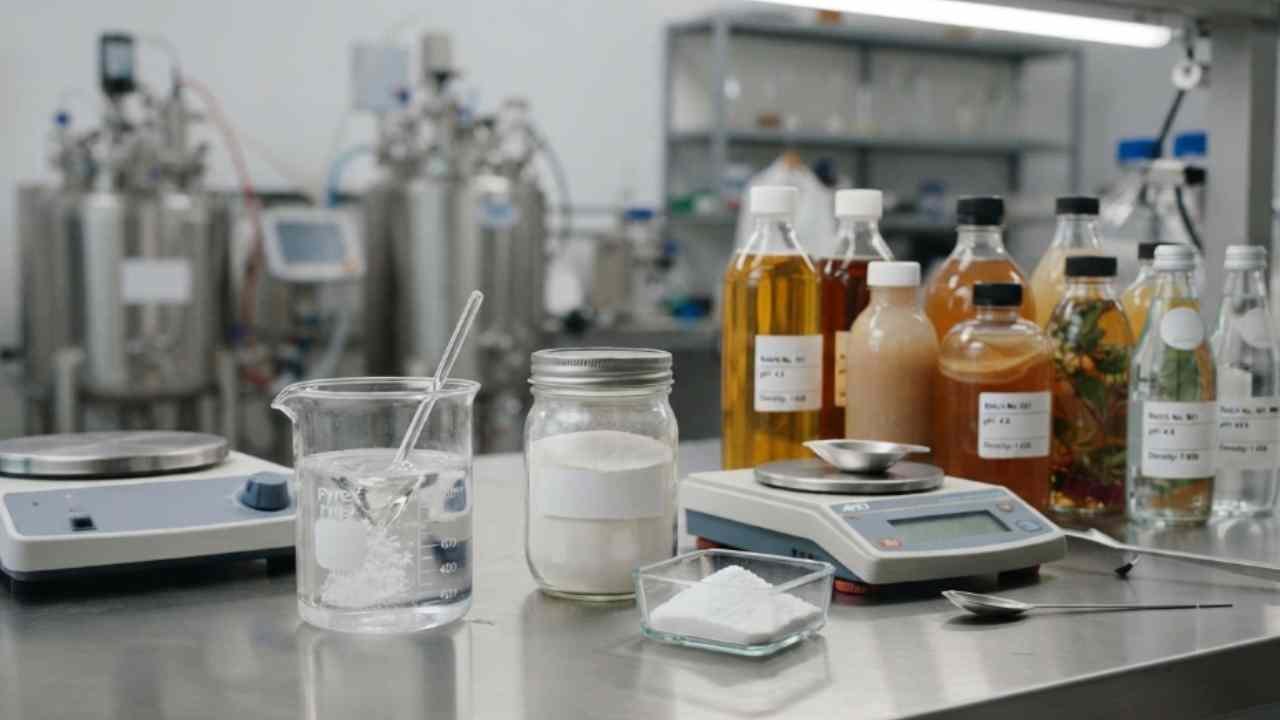
When selecting Gamma-aminobutyric acid (GABA) for functional beverage formulations—such as ready-to-drink (RTD)1 calming waters, wellness shots, or relaxation teas—manufacturers must focus on liquid clarity and flavor profile compatibility. The baseline requirement for any liquid application is that the ingredient must dissolve completely to form a transparent, sediment-free solution. Standard grade or unrefined GABA can cause turbidity or cloudiness, which is highly undesirable in clear beverage products. Additionally, because GABA is synthesized from monosodium glutamate (MSG) or L-glutamic acid during microbial fermentation, buyers must specify an active assay of ninety-nine percent or higher to ensure that residual, unreacted MSG is kept below 0.1%.
Even minor traces of residual MSG can introduce a distinct savory, umami flavor profile that ruins the taste of sweet, fruity, or botanical-themed functional drinks. Furthermore, the selected specification should be derived through natural fermentation (using lactic acid bacteria2 strains) rather than chemical synthesis, as natural GABA satisfies clean-label requirements and exhibits superior solubility in aqueous systems. Sourcing partners like FINETECH assist beverage brands by auditing raw material purity profiles in China, verifying that the supplied GABA is free from off-flavors and dissolves completely clear in water.
| Formulation Parameter | Optimal Beverage Specification | Technical Importance | Sourcing Risk Vetted |
|---|---|---|---|
| Active GABA Assay | Minimum 99.0% on dried basis | Maximizes nutritional potency | Avoids active dosage failures |
| Residual Glutamate | Maximum 0.1% (or undetected) | Eliminates savory, umami taste | Protects target flavor profile |
| Aqueous Clarity | Clear, sediment-free solution | Maintains product appearance | Prevents customer complaints |
| Production Origin | Lactic acid fermentation | Natural bio-based compliance | Avoids synthetic residue bans |
How Does Particle Size Affect Gamma-aminobutyric acid (GABA) Processing Performance?
Blending fine active powders without calibrating mesh sizes causes static electricity buildup, severe dust clouds, and uneven ingredient distribution in packaging lines. Unoptimized particle sizes halt processing.
Particle size dictates processing performance because fine micro-milled powders dissolve quickly but carry static charges that cause clumping, while coarser crystals flow easily through automated filling machinery.
Dive Deeper into Mesh Size Calibration and Static Charge Mitigation
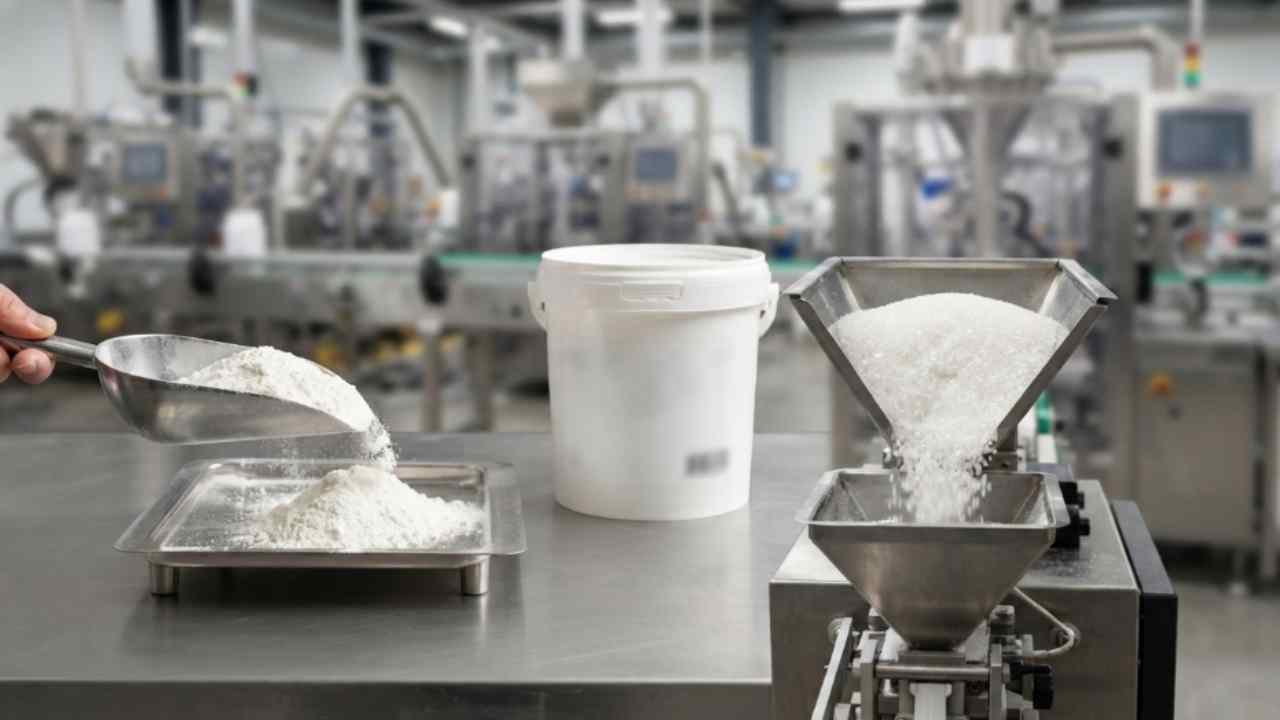
The physical particle size distribution3 of GABA is a critical parameter that directly influences its behavior during mechanical handling, dry blending, and high-speed packaging. In dry food manufacturing, such as the production of powdered pre-workout mixes, meal replacements, or instant tea blends, GABA is blended with other vitamins, minerals, and flavorings. If the manufacturer selects an ultra-fine, micro-milled GABA powder (such as eighty to one hundred mesh), the small particle size will support rapid dissolution in the consumer's shaker bottle. However, this fine powder is highly prone to developing static electrical charges during mechanical blending.
This static behavior causes the powder to cling to packaging machinery and hopper walls, resulting in weight variations, slow processing speeds, and excessive dust in the cleanroom. Conversely, coarser crystals (such as forty to sixty mesh) flow easily through automated filling machinery and generate minimal dust. However, these larger crystals dissolve much more slowly in cold liquids, which can lead to grittiness in the final beverage. Manufacturers must evaluate these processing trade-offs and select a calibrated particle size that balances blending4 flowability with consumer dissolution speeds. Sourcing partners like FINETECH manage these technical requirements by arranging customized sieve and mesh analysis checks at Chinese factories, ensuring the supplied powder matches the processing machinery.
| Mesh Size Class | Physical Particle Size | Processing Advantage | Manufacturing Disadvantage |
|---|---|---|---|
| Coarse Crystals | 40 to 60 mesh (larger) | Free-flowing, minimal static | Slower cold-water dissolution |
| Medium Granules | 60 to 80 mesh (standard) | Balanced flow and solubility | Moderate dust in high-speed lines |
| Micro-milled Powder | 80 to 120 mesh (fine) | Rapid dissolution speed | High static charge, clumping risk |
| Ultra-fine Powder | Above 120 mesh (very fine) | Dissolves almost instantly | Severe dusting, requires air vacuum |
What Solubility Factors Should Manufacturers Evaluate for Gamma-aminobutyric acid (GABA)?
Adding poorly soluble amino compounds to instant powdered drink mixes causes grittiness, slow dissolution, and consumer complaints. Incomplete blending ruins beverage texture. Calibrating solubility limits optimizes formulas.
Manufacturers must evaluate critical solubility factors including cold-water dissolution rates, maximum concentration limits before saturation, solution turbidity under varied pH levels, and compatibility with other active minerals.
Dive Deeper into Dissolution Speeds and Saturation Thresholds
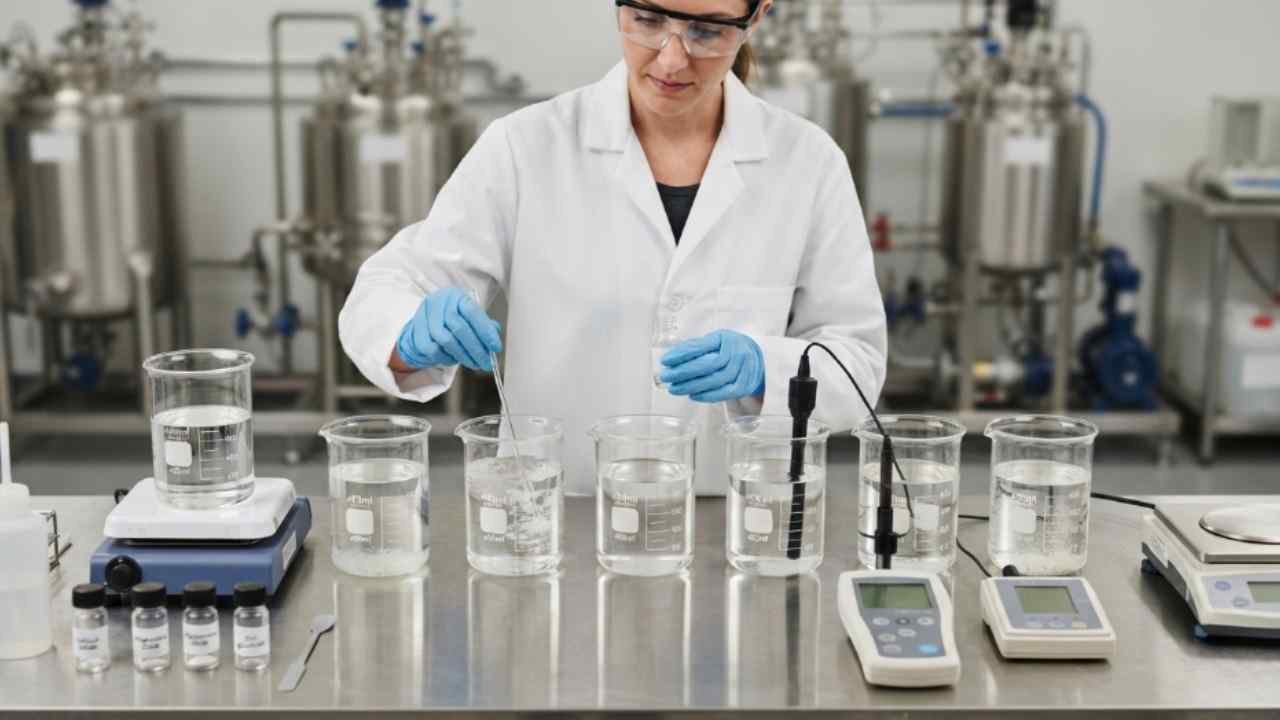
To ensure a seamless consumer experience, food and beverage manufacturers must evaluate several key solubility factors when selecting GABA for their product lines. Although GABA is highly soluble in water under standard conditions, its dissolution speed is heavily influenced by water temperature, solution pH, and the presence of other dissolved minerals. In cold-water applications—such as instant relaxation drink mixes—standard crystals may dissolve too slowly, leading to customer complaints about undissolved sediment at the bottom of the glass.
Additionally, manufacturers must establish the saturation threshold of their formulation. If a liquid wellness shot contains a highly concentrated blend of active ingredients, adding a high dosage of GABA may exceed the solution's saturation limit, causing the compound to recrystallize and precipitate during storage. The solution's pH must also be monitored, as GABA is most stable in a slightly acidic environment (pH 4.0 to 5.5). Deviations from this range can affect both the solubility and the chemical stability of the molecule over its shelf life. Sourcing partners like FINETECH support food scientists by coordinating solubility and compatibility trials directly with experienced laboratory technicians in China, verifying that the raw material performs consistently under varied beverage processing conditions.
| Solubility Metric | Technical Sourcing Target | Lab Evaluation Method | Formulating Consequence |
|---|---|---|---|
| Dissolution Speed | Under 30 seconds in cold water | Visual dissolution tracking | Prevents grit in shaker cups |
| Saturation Limit | Up to 130 grams per liter | Gravimetric saturation analysis | Prevents bottle recrystallization |
| pH Stability Range | Stable between pH 4.0 and 5.5 | Accelerated shelf pH tests | Protects chemical molecule |
| Turbidity Level | Below 1.0 NTU (highly clear) | Nephelometric turbidity check | Ensures transparent water drinks |
How Can Different Purity Levels Influence Product Formulation?
Utilizing low-purity active ingredients introduces residual monosodium glutamate, causing unexpected savory tastes in sweet chocolate or fruit-flavored food formulas. Unpurified lots ruin sensory profiles.
Different purity levels heavily influence formulation because low-purity batches contain residual unreacted glutamic acid that alters product flavor and increases hygroscopic storage moisture, whereas high-purity GABA protects sensory profiles.

Dive Deeper into Active Payload Yields and Flavor Masking Challenges
The purity level of Gamma-aminobutyric acid (GABA) is a primary factor that determines both the raw material's cost and its performance in functional food formulations. High-purity natural GABA (ninety-nine percent or higher) ensures a maximum active payload per unit weight, meaning formulators do not need to over-dose the ingredient to meet label claims. More importantly, high-purity GABA is virtually odorless and neutral in taste, which simplifies flavor masking. This allows product developers to achieve a clean, appealing taste profile using standard sweeteners and natural flavorings.
In contrast, lower-purity grades (such as ninety-five percent) are less expensive but contain significant impurities, including residual proteins, moisture, and unreacted glutamic acid from the fermentation broth. These impurities can introduce a strong, yeast-like odor and a bitter or savory aftertaste that is extremely difficult to mask, particularly in delicate food applications like white chocolates, functional bars, or milk-based shakes. Additionally, lower-purity GABA is highly hygroscopic, absorbing ambient moisture during storage, which leads to powder caking, chemical degradation, and a shortened product shelf life. Sourcing partners like FINETECH protect buyers from these quality failures by reviewing factory HPLC data and sourcing only premium, highly purified GABA lots.
| Purity Level | Common Contaminant | Sensory Defect Caused | Shelf Stability Impact |
|---|---|---|---|
| 99% (Premium) | Negligible trace minerals | Virtually neutral, odor-free | Excellent, low hygroscopic caking |
| 98% (Standard) | Trace unreacted glutamic acid | Mild bitter or dry aftertaste | Moderate, requires moisture check |
| 95% (Low Grade) | Elevated monosodium glutamate | Strong savory, yeast-like taste | Poor, high caking, short shelf life |
| 90% (Feed Grade) | High biological biomass | Unpleasant organic ammonia odor | Very poor, clumps within weeks |
What Technical Support Should Buyers Expect from a Gamma-aminobutyric acid (GABA) Supplier?
Sourcing raw biochemical ingredients without obtaining comprehensive stability data and natural isotopic validation reports exposes imports to heavy regulatory delays. Missing technical support stalls supply.
Buyers should expect technical support including Carbon-14 isotopic analysis to verify bio-based origin, accelerated stability testing logs under varying humidity, customized formulation guidance, and complete regulatory paperwork.

Dive Deeper into Carbon-14 Isotopic Audits and Accelerated Stability Data
When purchasing bulk GABA, food manufacturers should expect comprehensive technical support and documentation from their raw material supplier to ensure regulatory compliance and product safety. A reliable supplier must provide more than a basic Certificate of Analysis (COA). Because of the strict global regulations surrounding natural food claims, suppliers must provide Carbon-14 isotopic analysis reports to prove that the GABA is entirely bio-based and produced via natural fermentation rather than synthetic petrochemical routes.
Furthermore, buyers should demand detailed accelerated stability data, which logs the physical and chemical behavior of the GABA under elevated temperatures and relative humidity over several months. This stability data is essential for predicting the shelf life of the finished food product. Suppliers should also offer formulation guidance, including recommended pH buffering ranges and compatible flavor-masking techniques. Sourcing partners like FINETECH provide this essential technical representation in China. They directly audit manufacturing facilities, verify the validity of ISO and FSSC 220005 certifications, and coordinate pre-shipment composite sampling and testing, helping international buyers secure a highly reliable, cost-effective, and fully compliant supply of GABA.
| Technical Support Area | Required Document / Service | Business Value Vetted | Sourcing Outcome |
|---|---|---|---|
| Isotopic Verification | Carbon-14 lab test report | Confirms 100% bio-based origin | Secures clean-label claims |
| Shelf Stability Logs | Accelerated humidity test data | Predicts product expiration limits | Prevents warehouse inventory losses |
| Formulation Aid | Custom pH buffering advice | Protects molecule from decay | Accelerates new product development |
| On-Site Representation | Partner with firms like FINETECH | Direct physical factory audits | Guarantees consistent quality batches |
Conclusion
Selecting the right GABA requires matching clear liquid solubility to beverage applications, calibrating crystal particle sizes for processing machinery, verifying active purity to prevent taste defects, and partnering with technical suppliers that provide isotopic audits.
-
A comprehensive, practical guide from RapidCPG exploring what it takes to formulate, manufacture, scale, and establish the shelf life of ready-to-drink (RTD) functional beverages. ↩
-
A technical reference guide by food ingredients supplier Bell Chem detailing how lactic acid bacteria (LAB) drive the biological fermentation process and influence the physical properties of food systems. ↩
-
A practical industry guide by Atlas AgroFood explaining mesh size definitions, standardized sieve metrics, and how particle size distribution impacts dissolution speed and handling in food powders. ↩
-
A comprehensive, practitioner-focused handbook on PowderTechnology info discussing the industrial principles, equipment selection, and troubleshooting of powder mixing and blending. ↩
-
An industry-focused compliance guide by SafetyCulture explaining the requirements, benefits, and step-by-step audit process for earning the FSSC 22000 food safety system certification. ↩