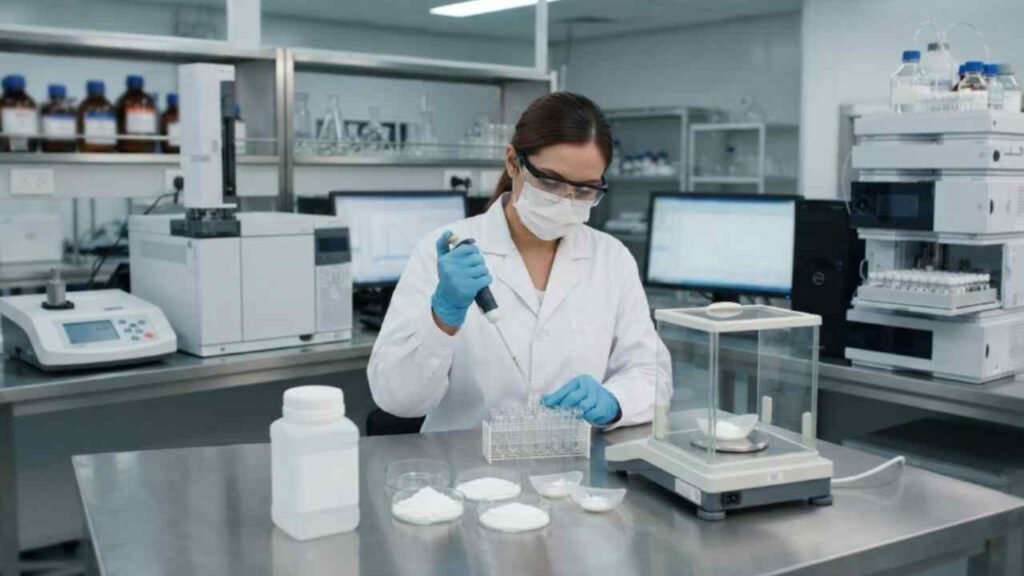
Importing unverified N-Acetyl-L-Cysteine leads to severe oxidation decay, chemical odor defects, and failed heavy metal regulatory audits. Unchecked quality compromises product efficacy. Strict vetting secures stable formulations.
Verifying N-Acetyl-L-Cysteine quality requires checking USP/EP compliance, validating specific optical rotation, monitoring oxidative degradation into di-NAC, testing for residual solvents via gas chromatography, and securing pharmaceutical-grade GMP and Drug Master File documentation.
Successfully manufacturing high-quality health supplements and pharmaceutical preparations requires a disciplined approach to evaluating raw material purity. Sourcing managers must look beyond baseline pricing to verify that their active ingredients meet strict chemical and physical specifications. Sourcing partners like FINETECH simplify factory checks, verify production compliance, and secure competitive pricing directly in China to guarantee bulk deliveries. This guide explains how buyers can verify the quality of N-Acetyl-L-Cysteine (NAC).
What Critical Quality Indicators Should Buyers Check for N-Acetyl-L-Cysteine (NAC)?
Sourcing raw NAC without tracking enantiomeric configurations and active sulfhydryl assays risks formulating inactive, degraded batches. Vague quality markers fail regulatory checks. Verifying physical benchmarks protects product potency.
Critical quality indicators for N-Acetyl-L-Cysteine include a high active assay of ninety-eight to one hundred two percent, specific optical rotation ranges, low loss on drying, and a characteristic mild sulfurous odor.
Dive Deeper into Sulfhydryl Content, Optical Rotation, and Acid-Base Titration
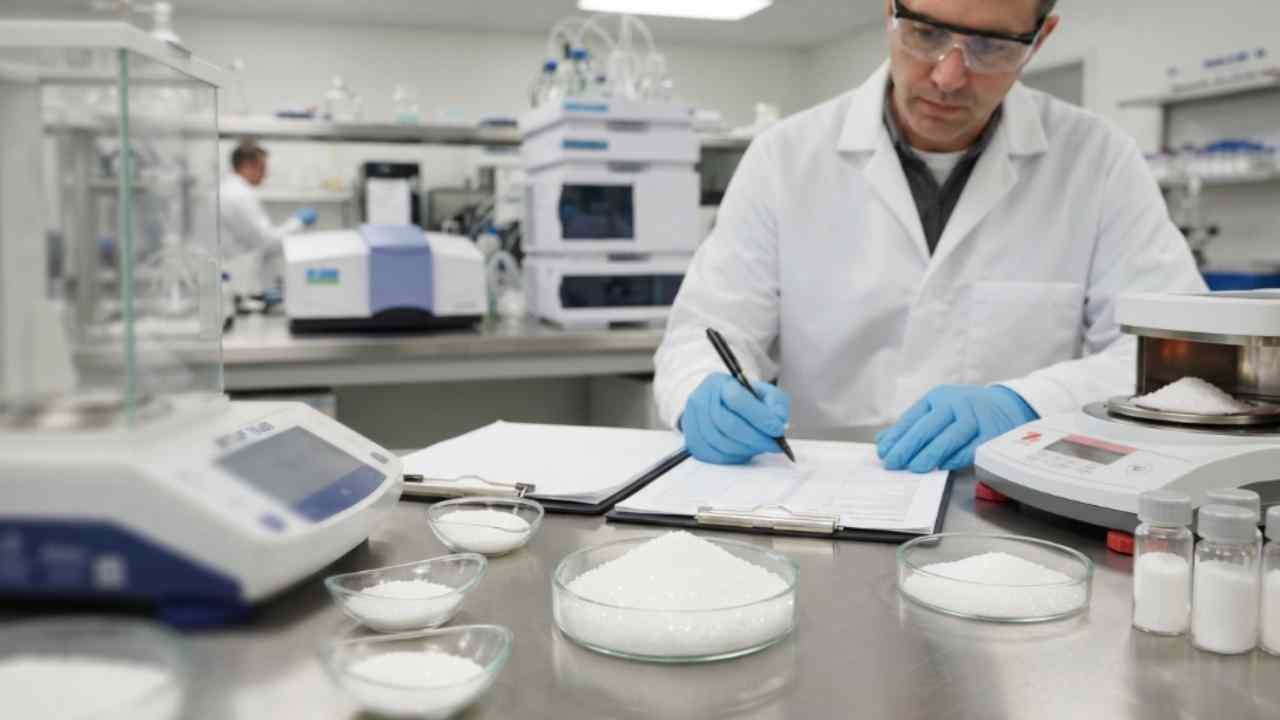
To evaluate the quality of N-Acetyl-L-Cysteine (NAC) effectively, buyers must first familiarize themselves with the critical physical and chemical benchmarks established in major pharmacopoeia monographs, such as the United States Pharmacopeia (USP)1 and European Pharmacopoeia (EP). The most fundamental quality indicator is the active assay, which must measure between 98.0% and 102.0% on a dried basis. Because NAC is an acetylated derivative of the amino acid L-cysteine, verifying its chiral purity is essential to ensure that the biologically active L-enantiomer has not racemized into the inactive D-isomer. This is verified by testing the specific optical rotation2 using a polarimeter, which must fall strictly within the range of plus twenty-one point zero degrees to plus twenty-seven point zero degrees in an aqueous solution.
Physically, premium NAC must appear as a white, crystalline powder with a characteristic, slight sulfurous odor due to its active sulfhydryl (thiol) group. An excessively strong, putrid odor can indicate advanced chemical degradation or contamination with free L-cysteine. Additionally, the pH of a 1 in 100 aqueous solution must measure between 2.0 and 2.8, reflecting its acidic acetylated structure. Sourcing partners like FINETECH assist buyers by evaluating these physical and chemical parameters directly in China, ensuring that the supplied material complies fully with the designated pharmacopoeia standards.
| Quality Parameter | USP Standard Limit | Technical Significance | Sourcing Importance |
|---|---|---|---|
| Active Assay | 98.0% to 102.0% | Measures overall chemical purity | Prevents dosage formulation failures |
| Specific Rotation | +21.0° to +27.0° | Verifies active L-isomer presence | Identifies inactive D-isomer racemization |
| pH (1 in 100 solution) | 2.0 to 2.8 | Confirms correct acidic structure | Ensures compatibility with liquid bases |
| Loss on Drying | Maximum 0.5% | Measures volatile moisture levels | Prevents powder caking during storage |
How Is the Purity of N-Acetyl-L-Cysteine (NAC) Verified by Laboratory Testing?
Relying on basic visual inspections cannot detect trace related-substance impurities or active assay declines in bulk containers. Subjective assessments invite quality failures. Analytical testing provides objective proof.
NAC purity is verified through High-Performance Liquid Chromatography for organic impurities, iodometric titration to quantify active sulfhydryl groups, and Infrared Spectroscopy for precise molecular fingerprint matching.

Dive Deeper into High-Performance Liquid Chromatography and Iodometric Titration
Verifying the exact purity and chemical composition of N-Acetyl-L-Cysteine (NAC) requires advanced, instrument-based analytical laboratory testing. High-Performance Liquid Chromatography (HPLC)3 is the primary method used to detect and quantify organic impurities and related substances. In a typical HPLC purity assay, the chromatographic peaks of the sample are compared against a certified reference standard. This allows chemists to detect trace amounts of unreacted L-cysteine or processing byproducts, ensuring that the total related substances do not exceed 0.5% of the total mass.
In addition to HPLC, iodometric titration is frequently employed as an established analytical technique to measure the concentration of active sulfhydryl (-SH) groups. During titration, iodine reacts quantitatively with the free thiol groups of the NAC molecule. A decrease in the expected titration volume indicates that some of the thiol groups have oxidized, pointing to compromised raw material quality. Furthermore, Fourier Transform Infrared Spectroscopy (FTIR) is utilized for molecular identification, matching the sample's infrared spectrum against a standard USP curve to confirm chemical identity. Sourcing partners like FINETECH ensure that raw material shipments undergo these rigorous laboratory verifications in China, reviewing raw chromatograms and titration data to guarantee that only high-purity lots are approved for export.
| Analytical Test | Target Parameter | Laboratory Equipment | Expected Standard Result |
|---|---|---|---|
| HPLC Purity Assay | Total related substances | Liquid chromatograph | Maximum 0.5% total impurities |
| Iodometric Titration | Active sulfhydryl (-SH) groups | Automatic titrator | Matches theoretical thiol content |
| Molecular ID | Infrared molecular matching | FTIR spectrophotometer | Matches certified USP reference curve |
| Residue on Ignition | Mineral and ash contamination | Muffle furnace | Maximum 0.1% sulfated ash |
Why Is Oxidation Stability Important for N-Acetyl-L-Cysteine (NAC)?
Exposing vulnerable thiol compounds to ambient oxygen and moisture during packaging triggers rapid degradation into inactive dimers. Unprotected exposure ruins formulation potency. Hermetic oxygen barriers secure active life.
Oxidation stability is critical because NAC’s active sulfhydryl group easily oxidizes into inactive N,N-diacetyl-L-cystine, reducing its biological efficacy as a glutathione precursor and causing sensory issues.
Dive Deeper into Sulfhydryl Oxidation and Dimerization to Di-NAC
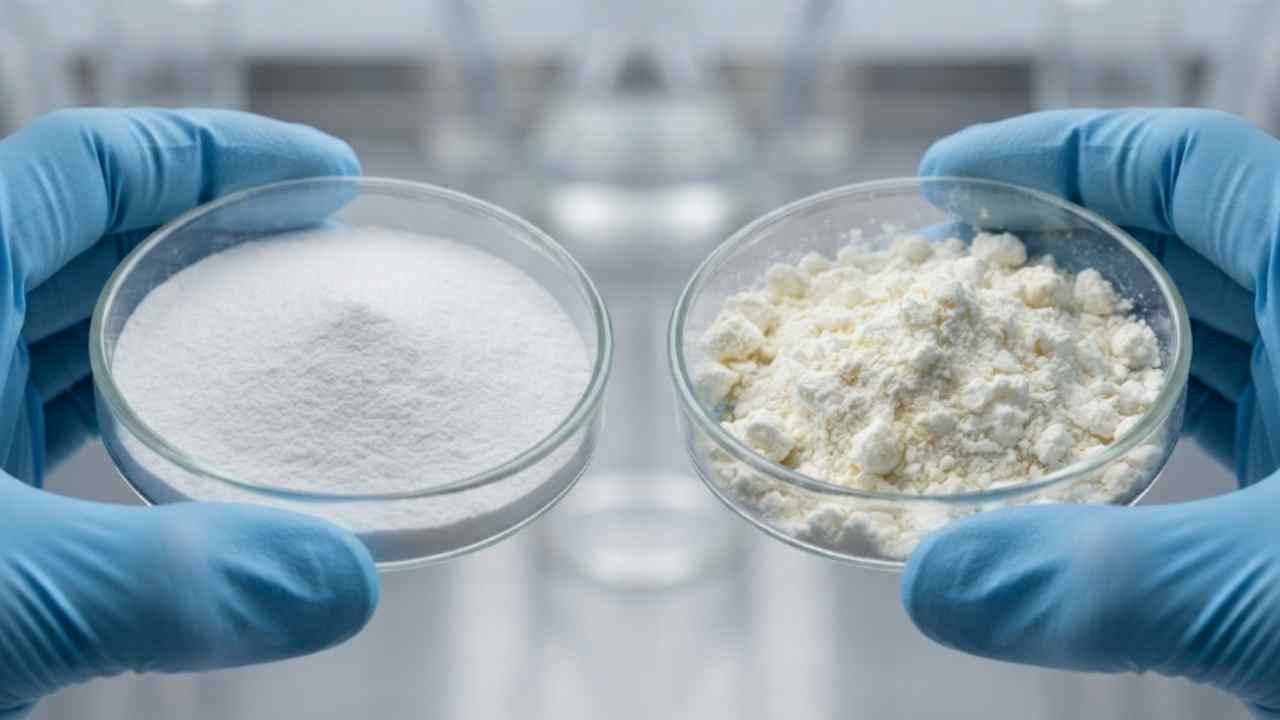
The molecular stability of N-Acetyl-L-Cysteine (NAC) is heavily dependent on protecting its free sulfhydryl (thiol) group from oxidation. The primary biological value of NAC lies in its ability to serve as a direct precursor for the synthesis of intracellular glutathione4, which acts as a powerful antioxidant in the human body. This therapeutic activity is entirely dependent on the free thiol group. However, when exposed to oxygen, humidity, or high temperatures, two NAC molecules readily undergo oxidative dimerization, binding together to form N,N-diacetyl-L-cystine (commonly referred to as di-NAC).
Because di-NAC lacks the active, free sulfhydryl group, it is biologically inactive for glutathione synthesis, making the degraded material ineffective for sports nutrition or pharmaceutical applications. This oxidative reaction also releases a strong, unpleasant hydrogen sulfide gas, causing severe sensory defects in finished capsules or tablets. To maintain oxidation stability, manufacturers must package the crystalline powder under an inert nitrogen atmosphere (nitrogen flushing) and utilize high-barrier, hermetically sealed aluminum foil bags with active desiccant packs. Sourcing partners like FINETECH assist buyers by auditing the packaging lines at Chinese facilities, ensuring that the nitrogen purging processes are executed correctly to prevent oxidation during maritime transit and warehousing.
| Stability Threat | Chemical Reaction | Downstream Product Impact | Preventive Sourcing Action |
|---|---|---|---|
| Oxygen Exposure | Thiol oxidation to di-NAC | Loss of glutathione precursor power | Require active nitrogen flushing |
| High Humidity | Moisture-induced degradation | Severe caking, odor development | Use thick double-layer PE linings |
| Heat Exposure | Speeds chemical oxidation | Shortened product shelf life | Utilize climate-controlled shipping |
| Metal Ions | Catalyzes oxidative pathways | Accelerated chemical decay | Enforce low heavy metal thresholds |
How Can Buyers Evaluate Residual Solvents and Heavy Metals in N-Acetyl-L-Cysteine (NAC)?
Overlooking industrial solvent residues and toxic trace minerals in raw bulk imports invites severe safety non-compliance penalties. Unvetted chemical byproducts jeopardize consumer health. Strict chromatography safeguards safety.
Residual solvents are evaluated using Gas Chromatography-Headspace systems per USP guidelines, while heavy metal contaminants like lead and arsenic are quantified using Inductively Coupled Plasma Mass Spectrometry.
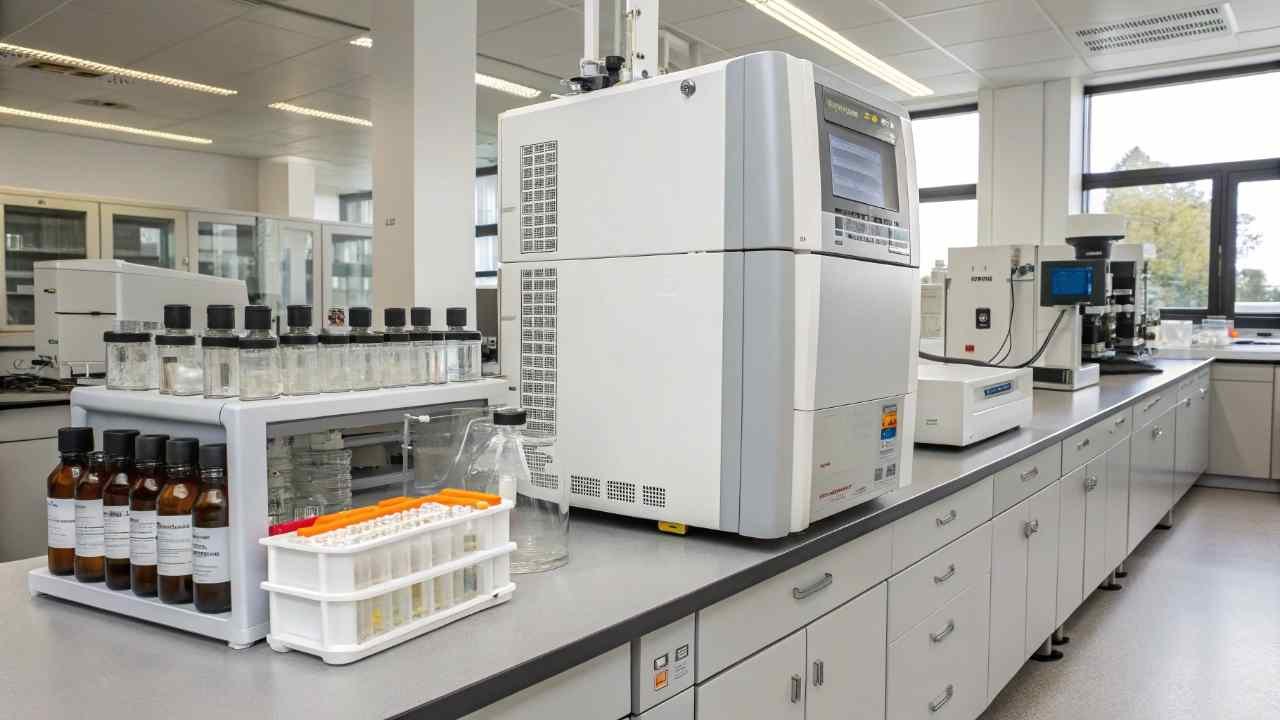
Dive Deeper into Gas Chromatography-Headspace and ICP-MS Screenings
To ensure complete consumer safety and satisfy global health authority guidelines, buyers must conduct a detailed evaluation of potential chemical impurities, specifically residual solvents and heavy metals, within bulk NAC shipments. During the commercial crystallization and purification of NAC, various organic solvents—such as methanol, ethanol, or ethyl acetate—may be utilized. To verify that these industrial processing chemicals have been safely evaporated, laboratories utilize Gas Chromatography with Headspace sampling (GC-HS) and Flame Ionization Detection (FID) per USP <467>5 guidelines. Residual solvents must remain strictly below the limits set for Class 2 and Class 3 solvents (for instance, methanol under 3000 ppm and ethanol under 5000 ppm).
Equally critical is the screening for heavy metal contaminants. Because raw amino acids can absorb trace minerals from agricultural soils or manufacturing equipment, buyers must monitor lead, arsenic, cadmium, and mercury levels. Inductively Coupled Plasma Mass Spectrometry (ICP-MS) is the standard method used to detect these toxic elements down to parts-per-billion levels. Importers should enforce strict limits, keeping lead below 0.5 ppm and arsenic below 1.5 ppm. Sourcing partners like FINETECH manage these safety risks by coordinating independent GC-HS and ICP-MS testing in China, ensuring that the chemical purity of the cargo meets all safety specifications.
| Impurity Category | Target Chemical Parameter | Standard Safety Limit | Analytical Method |
|---|---|---|---|
| Class 2 Solvents | Methanol / Ethyl acetate | Maximum 3000 ppm | GC-HS gas chromatography |
| Class 3 Solvents | Ethanol | Maximum 5000 ppm | GC-HS gas chromatography |
| Heavy Metals | Lead (Pb) | Maximum 0.5 ppm | ICP-MS mass spectrometry |
| Toxic Minerals | Arsenic (As) | Maximum 1.5 ppm | ICP-MS mass spectrometry |
Which Quality Documents Should Suppliers Provide for N-Acetyl-L-Cysteine (NAC)?
Procuring active nutraceutical ingredients without acquiring verified manufacturing safety dossiers results in immediate custom clearance delays. Missing paperwork halts logistics. Vetted regulatory documents protect import lines.
Suppliers must provide comprehensive quality documents including a batch-specific COA matching USP monographs, active pharmaceutical GMP certificates, Drug Master Files, and certified non-GMO allergen-free declarations.

Dive Deeper into Drug Master Files, GMP Certifications, and USP Compliance
Securing a reliable, compliant supply of N-Acetyl-L-Cysteine (NAC) requires collecting and verifying a comprehensive set of quality and regulatory documents from the manufacturing facility before placing bulk orders. The most fundamental document is a batch-specific Certificate of Analysis (COA) confirming that the material complies fully with current USP or EP monographs. However, because NAC is widely formulated into both dietary supplements and pharmaceutical preparations, buyers must also demand active Good Manufacturing Practice (GMP) certifications from the manufacturing plant.
For premium or pharmaceutical applications, the supplier should provide an active Drug Master File (DMF) registration number, allowing regulatory agencies to review the factory's proprietary synthesis and purification processes directly. Furthermore, because raw agricultural ingredients are used in the upstream synthesis, suppliers must provide valid Non-GMO statements, BSE/TSE-free declarations, and allergen-free statements. Sourcing partners like FINETECH simplify this document verification process. Based in China, they directly audit facilities, verify the validity of DMF and GMP certifications, and cross-reference analytical test reports with actual factory batch records, protecting international buyers from regulatory non-compliance and ensuring smooth custom clearance at destination ports.
| Document Type | Crucial Parameter Vetted | Technical Standard | Regulatory Value |
|---|---|---|---|
| Certificate of Analysis | Assay, moisture, heavy metals | Meets USP / EP monograph | Confirms physical cargo quality |
| GMP Certificate | Production hygiene & control | Pharmaceutical/Food GMP | Ensures clean processing pathways |
| Drug Master File (DMF) | Synthesis and purification logs | Active registration number | Required for clinical registrations |
| Non-GMO Declaration | Raw material agricultural origin | Certified plant-derived | Satisfies modern clean-label demands |
Conclusion
Verifying the quality of N-Acetyl-L-Cysteine requires checking active assays and specific rotations, running HPLC and titration purity tests, protecting the thiol groups from oxidation, auditing residual solvents and heavy metals, and collecting active DMF and GMP documents.
-
USP's official resource page outlining the quality guidelines, monograph standards, and third-party verification procedures for dietary supplements and herbal ingredients. ↩
-
An educational guide by Anton Paar explaining the physical principles of polarimetry, optical activity, and specific rotation for evaluating chiral purity. ↩
-
Waters' foundational Beginner's Guide to Liquid Chromatography detailing how HPLC works, separation mechanisms, and system components for quantitative chemical assays. ↩
-
The official brand portal for Setria® Glutathione, offering comprehensive scientific insights into glutathione's roles in antioxidant defense, cellular health, and detoxification. ↩
-
The official Frequently Asked Questions database by the United States Pharmacopeia (USP) addressing compliance, procedures, and safety parameters for General Chapter <467> Residual Solvents. ↩