

Selecting incompatible NAC specifications ruins tableting flowability, accelerates oxidative decay inside storage drums, and triggers severe customer complaints due to bad odors. Unvetted purchasing wastes capital.
Selecting the right NAC specification requires matching purity grades with specific food or clinical applications, calibrating crystal particle mesh sizes to prevent processing static, optimizing packaging container choices, comparing key technical monographs, and utilizing technical trading partners.
Successfully manufacturing premium dietary supplements and clinical preparations requires a disciplined approach to selecting active ingredient specifications. Sourcing managers must look beyond standard pricing to verify that their raw materials match their specific production machinery and shelf-life requirements. Sourcing partners like FINETECH simplify factory checks, verify production compliance, and secure competitive pricing directly in China to guarantee bulk deliveries. This guide explains how buyers can select the right N-Acetyl-L-Cysteine (NAC) specification.
What Purity Level Is Suitable for Different N-Acetyl-L-Cysteine (NAC) Applications?
Formulating dietary supplements with unrefined chemical grades risks heavy metal contamination and failed regulatory audits. Vague purity boundaries threaten brand trust. Precise grading protects product stability.
Purity levels dictate application compatibility, where standard USP-grade NAC above ninety-nine percent assay is ideal for dietary supplement capsules, while ultra-pure API-grade is required for sterile clinical formulations.

Dive Deeper into Supplement-Grade USP Monographic Standards and Pharmaceutical APIs
Selecting the appropriate purity level of N-Acetyl-L-Cysteine (NAC) is the most critical decision a procurement manager must make, as it directly determines the product's regulatory compliance, safety, and manufacturing costs. For the dietary supplement1, wellness, and sports nutrition sectors, standard USP-grade NAC is the industry benchmark. This specification requires an active chemical assay of 98.0% to 102.0% on a dried basis, with total related organic impurities kept strictly below 0.5%. Supplement-grade material is optimized for dry formulation formats, such as hard vegetable or gelatin capsules, compressed tablets, and dry drink mixes, offering a cost-effective solution without compromising quality.
In contrast, pharmaceutical-grade NAC—or Active Pharmaceutical Ingredient (API) grade—is required for clinical applications, including liquid inhalation therapies, sterile ophthalmic drops, and intravenous injections. Pharmaceutical-grade NAC demands an active assay of ninety-nine point five percent or higher, with related substances like N,N-diacetyl-L-cystine (di-NAC) restricted to below 0.2% to ensure maximum safety. Additionally, these high-tier batches must undergo rigorous pyrogen and endotoxin testing2 to guarantee they are completely sterile. Sourcing partners like FINETECH simplify this selection process by auditing Chinese manufacturing plants, verifying that the selected purity grade matches the specific regulatory requirements of the buyer's target application.
| Product Grade | Active NAC Assay | Critical Impurity Limit | Primary Target Application |
|---|---|---|---|
| Supplement Grade | 98.0% to 102.0% | Related substances < 0.5% | Dietary capsules, dry tableting |
| Food & Beverage | Minimum 99.0% | Heavy metals < 5.0 ppm | Dry sports recovery mixes |
| Pharmaceutical API | Minimum 99.5% | Related substances < 0.2% | Mucolytic syrups, clinical tablets |
| Sterile Clinical | Minimum 99.8% | Endotoxin-free, pyrogen-free | Sterile ophthalmic drops, injections |
How Does Particle Size Affect N-Acetyl-L-Cysteine (NAC) Processing?
Blending fine micro-milled powders without adjusting for static charge causes severe machine dusting and uneven ingredient dosing in packaging hoppers. Outdated sizing halts high-speed lines.
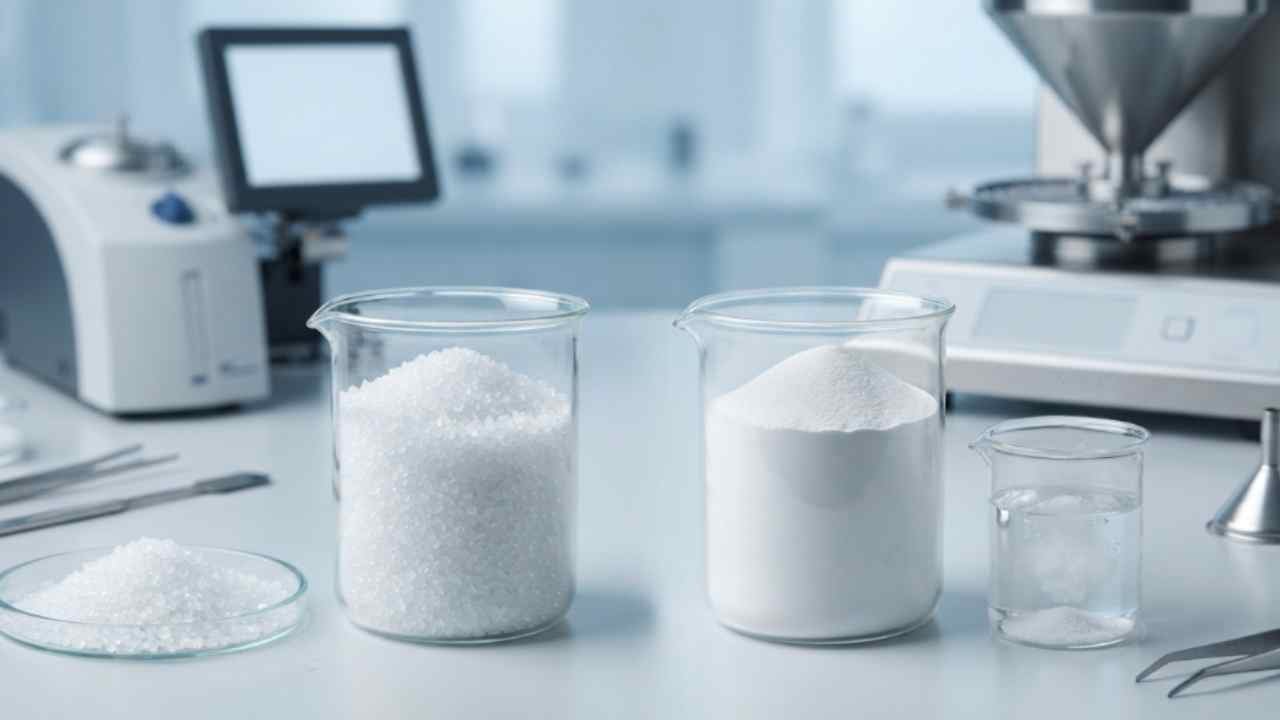
Particle size heavily affects processing because standard forty-to-eighty mesh crystals offer excellent flowability for capsule-filling, whereas eighty-to-one-hundred mesh micro-milled powders dissolve quickly but carry higher oxidation risks.
Dive Deeper into Flowability Coefficients, Dusting, and Surface Area Oxidation
The physical particle size distribution of NAC is a major parameter that dictates how the powder behaves during automated blending, capsule filling, and tableting. Standard crystalline NAC is typically supplied in a forty-to-eighty mesh size range. These larger, well-defined crystals exhibit an excellent flowability coefficient and a high bulk density. This physical profile is highly preferred for high-speed capsule-filling and tablet-pressing machinery, as it allows the powder to flow smoothly through feeding hoppers without clumping, minimizing weight variations in the final capsules.
On the other hand, micro-milled or fine NAC powder (typically eighty to one hundred twenty mesh) is engineered for rapid dissolution. This fine grind is ideal for instant sachet drink mixes and effervescent tablet3 formulations, where the consumer expects the powder to dissolve quickly in cold liquids. However, micro-milled powder presents significant processing challenges; the increased surface area makes the powder highly hygroscopic and highly susceptible to rapid oxidation when exposed to air. Fine powders also develop strong static electrical charges during mechanical blending, causing dusting issues in cleanrooms. Sourcing partners like FINETECH manage these mechanical requirements by arranging customized particle-size and sieve analyses at Chinese factories, ensuring the supplied powder matches the buyer's machinery.
| Particle Size Class | Physical Mesh Size | Processing Advantage | Manufacturing Disadvantage |
|---|---|---|---|
| Standard Crystals | 40 to 80 mesh (standard) | High flowability, low static | Slower cold-water dissolution |
| Medium Granules | 60 to 80 mesh | Balanced flow and solubility | Moderate dust in high-speed lines |
| Micro-milled Powder | 80 to 120 mesh (fine) | Rapid dissolution speed | High static charge, clumping risk |
| Ultra-fine Powder | Above 120 mesh (very fine) | Dissolves almost instantly | Severe dusting, oxidation risk |
Which Packaging Size Is Best for Bulk N-Acetyl-L-Cysteine (NAC) Purchases?
Sourcing highly sensitive thiol compounds in oversized bulk packaging leads to catastrophic moisture exposure and rapid oxidation during warehouse handling. Inadequate storage containers ruin cargo.
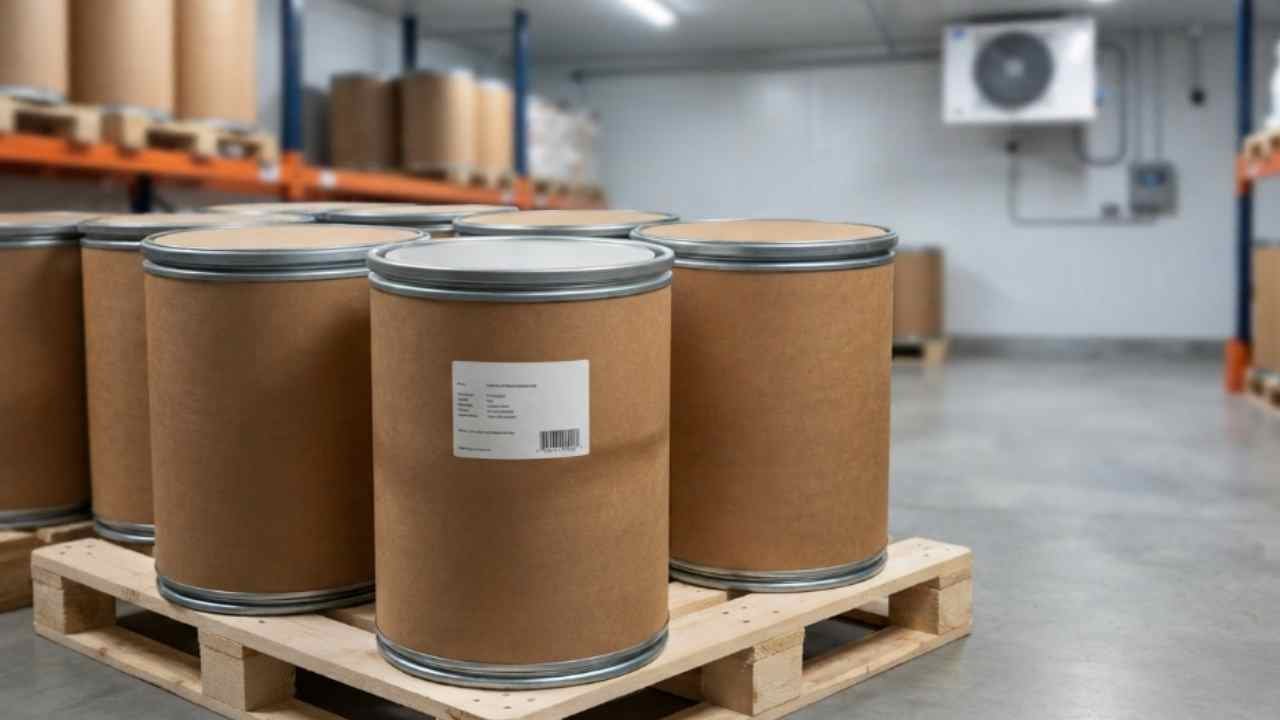
The best packaging size for bulk NAC purchases is the standard twenty-five-kilogram fiber drum with nitrogen-purged double PE bags, which prevents atmospheric exposure during partial warehouse utilization.
Dive Deeper into Standard Fiber Drums, Inner Polyethylene Liners, and Lab Samples
Determining the optimal packaging size for bulk NAC purchases is essential to protect the highly sensitive, sulfur-containing compound from moisture-induced degradation and atmospheric oxidation. Unlike chemically stable amino acids, bulk NAC cannot be safely stored in oversized packaging configurations, such as one-metric-ton (1 MT) jumbo bags. Once an oversized bag is opened in a warehouse, the entire remaining contents are exposed to ambient humidity and oxygen, initiating rapid degradation and creating a strong, unpleasant sulfur odor.
Therefore, the industry-standard packaging size for bulk commercial purchases is the twenty-five-kilogram fiber drum. This package size is highly practical because it matches standard warehouse pallet sizes and is easy for operators to handle. Inside the fiber drum, the NAC must be sealed within a primary double-layer, food-grade polyethylene bag that has been purged with nitrogen and hermetically heat-sealed. For laboratory testing, formulation R&D, or specialized clinical compounding, buyers should request smaller, customized packaging sizes—such as one-kilogram or five-kilogram aluminum foil bags. These smaller pouches prevent the need to open large commercial drums for testing. Sourcing partners like FINETECH assist buyers by conducting pre-shipment packaging audits, ensuring that the double PE bags are hermetically sealed and nitrogen-flushed.
| Sourcing Volume Tier | Best Packaging Choice | Primary Technical Advantage | Sourcing Recommendation |
|---|---|---|---|
| Standard Bulk | 25 kg fiber drum | Pallet compatibility, solid protection | Standard supplement formulation |
| R&D / Trial Batches | 5 kg aluminum foil bag | Prevents drum open-air exposure | Pilot formulation batches |
| Pharmacy Compounding | 1 kg aluminum sachet | Absolute moisture & UV shield | Small batch compounding |
| Industrial Scale | Multiple 25 kg drums | Sectioned quality control steps | Large volume contract runs |
What Technical Specifications Should Buyers Compare Before Ordering?
Ordering raw amino acids without comparing residual organic solvents and specific optical rotations invites severe border customs holding actions. Unchecked specifications increase regulatory risks.
Buyers must compare key technical specifications before ordering, including active assay ranges, specific optical rotation configurations, maximum loss on drying limits, related substances limits, and heavy metals.

Dive Deeper into Related Substances, Loss on Drying, and Optical Rotation
Before placing a bulk purchase order for NAC, procurement managers must conduct a detailed comparison of key chemical and physical specifications to verify compliance and quality. The most critical parameters to compare on the Certificate of Analysis (COA) are the active assay range (98.0% to 102.0% on a dried basis) and the specific optical rotation (+21.0° to +27.0°). The specific optical rotation is vital as it confirms the presence of the active L-enantiomer, proving that the product has not been adulterated with the inactive D-isomer.
Furthermore, buyers must compare the maximum limits for loss on drying, which measures the volatile moisture content of the powder. Under USP guidelines, loss on drying must remain below 0.5% to prevent hygroscopic caking. Related substances, specifically the dimer N,N-diacetyl-L-cystine (di-NAC), must be kept below 0.5% for dietary supplements. Heavy metal limits4 must also be compared, ensuring lead is below 0.5 ppm, arsenic is below 1.5 ppm, and mercury is below 0.1 ppm. Sourcing partners like FINETECH simplify this comparison by reviewing technical sheets and organizing independent pre-shipment laboratory testing in China, ensuring that the chemical purity of the cargo meets all safety specifications.
| Technical Parameter | Standard USP Target | Technical Purpose | Quality Risk Vetted |
|---|---|---|---|
| Active Assay | 98.0% to 102.0% | Overall chemical potency | Prevents under-dosed supplement lines |
| Specific Rotation | +21.0° to +27.0° | Confirms L-isomer configuration | Identifies inactive racemic mixtures |
| Loss on Drying | Maximum 0.5% | Measures free moisture content | Prevents physical clumping and caking |
| Related Substances | Maximum 0.5% | Limits di-NAC oxidative decay | Ensures biological therapeutic power |
How Can Trading Companies Help Buyers Select the Right N-Acetyl-L-Cysteine (NAC)?
Navigating complex biochemical manufacturers directly often results in communication barriers, documentation errors, and delayed cargo validation. Unassisted sourcing increases supply chain stress.
Specialized trading companies assist buyers by matching formulation goals with the correct mesh size, auditing factory quality systems, verifying DMF and COA documents, and consolidating multi-item container logistics.

Dive Deeper into Manufacturing Audits, Document Verification, and Consolidated Logistics
Navigating the technical complexities of selecting and importing the correct NAC specification can be a challenging process for international buyers. Working with a specialized chemical trading company can significantly simplify procurement. Many direct manufacturing facilities operate as high-volume chemical plants and do not provide the detailed formulation advice, customized packaging, or small-batch logistics required by medium-sized food and supplement brands. A professional trading partner bridges this gap by providing technical expertise, customized logistics, and rigorous quality oversight directly in the manufacturing country.
A specialized trading company helps buyers by matching specific formulation requirements with the ideal physical mesh size and purity grade of NAC. Additionally, trading partners manage document compliance, ensuring that all Certificates of Analysis match target USP or EP monographs and verifying that the supplier holds active Good Manufacturing Practice (GMP) certifications and a valid Drug Master File (DMF)5. Sourcing partners like FINETECH provide this essential support on the ground in China. They directly manage factory communications, verify active certifications, coordinate pre-shipment composite testing, and organize consolidated container shipments, ensuring that every cargo of NAC complies with the buyer's quality requirements.
| Sourcing Service | Technical Sourcing Action | Sourcing Operational Benefit | Sourcing Safety Outcome |
|---|---|---|---|
| Technical Matching | Recommends standard vs. fine mesh | Matches powder to filling machine | Prevents packaging line delays |
| Document Vetting | Audits COAs, DMFs, and GMPs | Satisfies strict importing standard | Avoids customs port hold-ups |
| Factory Audits | Runs physical cleanroom checks | Verifies quality control systems | Eliminates off-spec contamination |
| Mixed Logistics | Consolidates cargo in containers | Lowers international shipping cost | Optimizes procurement budgets |
Conclusion
Selecting the correct N-Acetyl-L-Cysteine specification requires matching purity grades to specific clinical or dietary applications, choosing the optimal mesh size for production machinery, securing twenty-five-kilogram drums, comparing optical rotation values, and utilizing specialized trading companies to manage factory compliance.
-
FDA's official regulatory portal for dietary supplements, detailing safety oversight, compliance programs, and industry guidelines. ↩
-
FDA's official industry guidance document, 'Pyrogen and Endotoxins Testing: Questions and Answers,' clarifying safety expectations, compendial standards, and regulatory compliance requirements. ↩
-
A practical manufacturing guide from Nutritional Outlook detailing the formulation parameters, humidity control requirements, and nutrient delivery characteristics of effervescent tablets. ↩
-
An industry testing overview from SGS explaining analytical ICP-MS methodologies and regulatory compliance standards for checking heavy metals in food and ingredients. ↩
-
FDA's official information portal outlining the administrative and submission requirements for Drug Master Files (DMFs) used to support pharmaceutical ingredients. ↩