

Formulating sulfur-containing active compounds without controlling odor release leads to severe consumer rejection, rapid capsule degradation, and unpalatable supplement lines. Unmanaged sensory properties ruin market viability.
Controlling N-Acetyl-L-Cysteine odor requires understanding its sulfhydryl chemistry, implementing advanced microencapsulation and flavor-masking technologies, utilizing specialized oxygen-barrier and active carbon packaging, verifying chemical moisture boundaries, and securing fresh nitrogen-flushed bulk shipments.
Successfully manufacturing high-quality health supplements and pharmaceutical preparations requires a disciplined approach to managing active ingredient sensory profiles. Sourcing managers must examine physical handling variables and chemical oxidation kinetics to protect their formulations from active potency losses and sensory defects. Sourcing partners like FINETECH simplify factory checks, verify production compliance, and secure competitive pricing directly in China to guarantee bulk deliveries. This guide explains how manufacturers can control the odor of N-Acetyl-L-Cysteine (NAC).
Why Does N-Acetyl-L-Cysteine (NAC) Have a Sulfur Odor?
Formulating thiol-based active ingredients without understanding their underlying molecular chemistry results in unexpected rotten-egg odor emissions and immediate consumer rejection. Unmanaged chemical properties ruin flavor profiles.
NAC possesses a distinct sulfur odor because its molecular structure contains a highly reactive sulfhydryl group that naturally volatilizes into trace hydrogen sulfide gas upon exposure to air and moisture.
Dive Deeper into Free Thiol Groups and Hydrogen Sulfide Volatilization
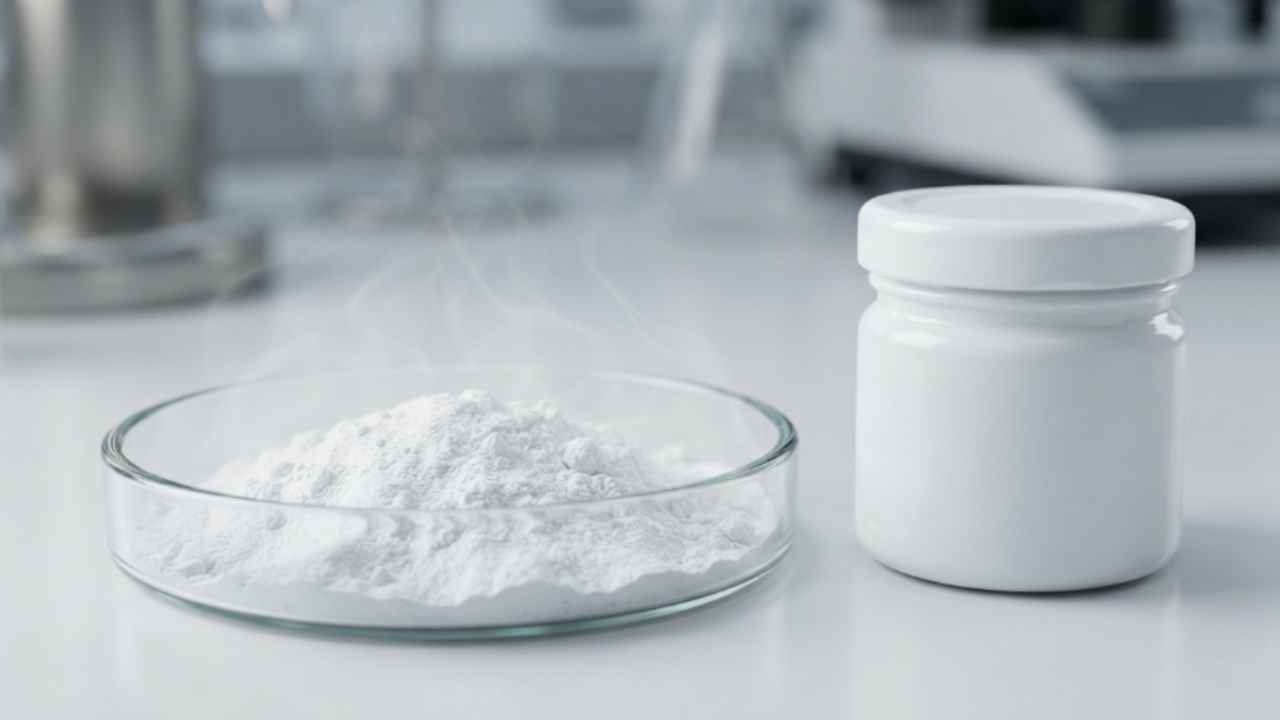
To manage the distinct sensory profile of N-Acetyl-L-Cysteine (NAC), manufacturers must first understand the fundamental biochemical mechanisms behind its odor. The molecular structure of NAC contains a free sulfhydryl (thiol, -SH) group attached to its acetylated L-cysteine backbone. This sulfhydryl group is the active functional group responsible for NAC’s powerful biological benefits, specifically its ability to act as a direct rate-limiting precursor for intracellular glutathione synthesis. However, this free thiol group is chemically highly reactive. When exposed to ambient oxygen, heat, or humidity, the sulfur atom naturally undergoes localized cleavage or oxidation, releasing minute quantities of volatile hydrogen sulfide1 ($H_2S$) gas.
Even in parts-per-billion concentrations, hydrogen sulfide gas produces a strong, unpleasant odor reminiscent of rotten eggs. This volatilization is accelerated in the presence of moisture, which acts as a solvent that increases molecular mobility, or when the material is subjected to temperatures above twenty-five degrees Celsius. Sourcing partners like FINETECH assist buyers by evaluating these chemical characteristics at Chinese manufacturing plants, ensuring that the raw material is produced and processed under optimal conditions to minimize premature hydrogen sulfide gas release before packaging.
| Chemical Component | Molecular Group | Primary Reaction | Sensory Outcome |
|---|---|---|---|
| Active Thiol Group | Free sulfhydryl (-SH) | Interacts with oxygen/water | Releases trace gas molecules |
| Volatile Gas | Hydrogen Sulfide ($H_2S$) | Volatilizes at room temperature | Strong rotten-egg off-odor |
| Oxidized Dimer | N,N-diacetyl-L-cystine | Formed by two oxidized thiols | Chemically inactive, odorless |
| Acidic Backbone | Acetylated L-cysteine | Low pH in aqueous solution | Sour, acidic sharp taste profile |
How Can Manufacturers Reduce Odor During Product Development?
Utilizing raw active powders in open formulation lines exposes the sensitive thiol groups to rapid oxidation and heavy odor release. Open air compounding ruins sensory appeal.
Manufacturers reduce odor during development by utilizing microencapsulated NAC, formulating with HPMC capsule shells, applying enteric tablet coatings, and blending acidulants with strong fruit or mint flavoring systems.

Dive Deeper into Microencapsulation Barriers and Acidic Flavor Masking
Reducing the unpleasant sulfur odor of N-Acetyl-L-Cysteine (NAC) during finished product development requires a combination of physical barriers and advanced flavor chemistry. The most effective technological solution is microencapsulation, where individual NAC crystal particles are coated with a thin, food-grade barrier layer composed of ethylcellulose, lipids, or vegetable waxes. This micro-layer prevents the active thiol groups from interacting with moisture and air during dry blending and protects the consumer's taste buds, releasing the active ingredient only after it reaches the stomach.
In addition to encapsulation, supplement manufacturers physically contain the odor by utilizing hard vegetable hydroxypropyl methylcellulose (HPMC) or gelatin capsule shells, which act as gas-trapping barriers inside consumer packaging. For chewable tablets or dry powder drink mixes, where direct oral contact is necessary, developers employ complex flavor-masking systems. Because NAC has a natural pH of 2.0 to 2.8, blending it with organic acidulants2 (such as citric or malic acid) helps align the sensory bite with familiar sour fruit flavors, like green apple, citrus, or raspberry, while strong peppermint oils can mask residual sulfur aromas. Sourcing partners like FINETECH assist developers by sourcing premium, pre-formulated, or microencapsulated NAC specifications directly from certified Chinese suppliers.
| Processing Tool | Mechanical Formulation Action | Stabilizing Benefit | expected Sourcing Target |
|---|---|---|---|
| Microencapsulation | Coats crystals in a lipid barrier | Locks in volatile sulfur odors | High flowability, low static |
| HPMC Capsule Shell | Encases powder in HPMC shell | Acts as a physical gas barrier | Low moisture capsule grade |
| Acidic Masking | Blends with citric or malic acid | Aligns pH sour flavor profiles | Food-grade FCC standard |
| Essential Oils | Peppermint / Wintergreen oils | Masks residual sulfur aromas | High purity flavoring grades |
Which Packaging Methods Help Minimize Odor Transfer?
Packaging aromatic sulfurous supplements in standard thin plastic bottles allows intense odor permeation and ruins shelf-appeal. Porous packaging designs fail. Specialized barrier systems trap odors.
Effective packaging methods include hermetically sealed aluminum foil blister packs, thick double polyethylene linings, active nitrogen-gas flushing, and placing active carbon or silica gel odor-absorbing canisters within bottles.
Dive Deeper into PVDC Blister Packing, Nitrogen Purges, and Active Carbon Canisters
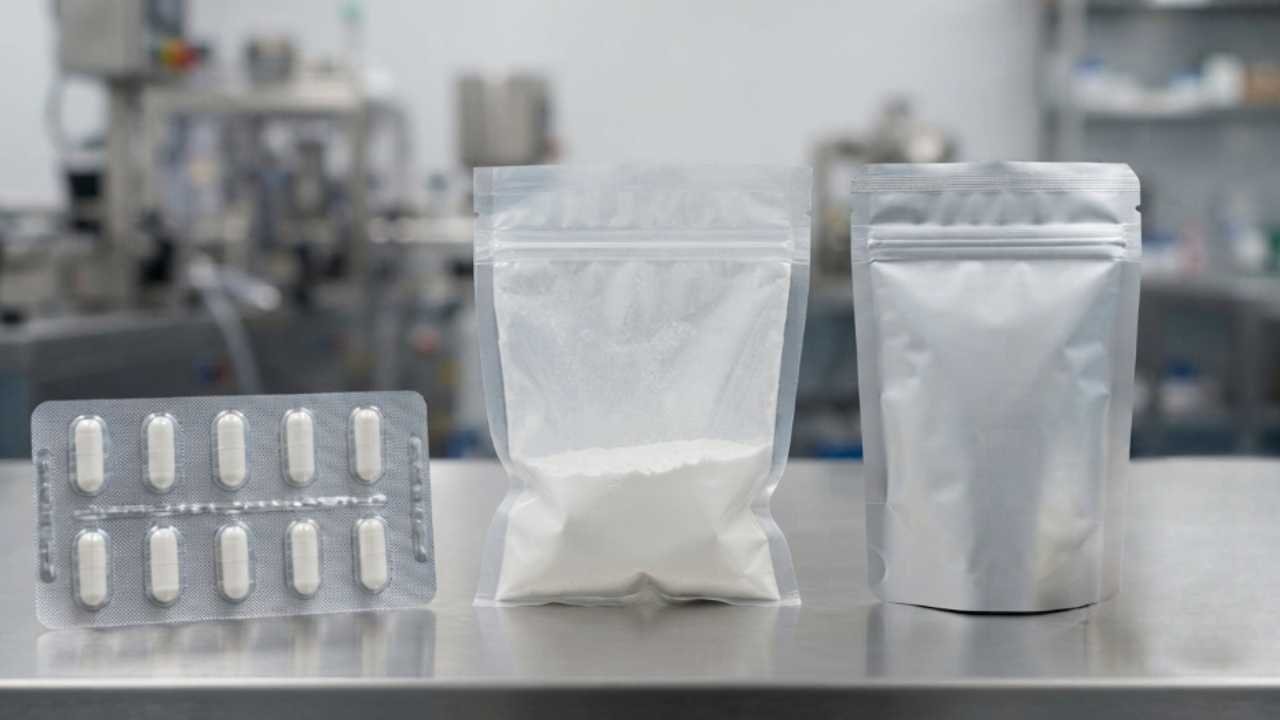
Minimizing the transmission of sulfur odors from finished supplement containers to the retail shelf is essential for maintaining consumer satisfaction and brand integrity. Standard high-density polyethylene (HDPE) or polyethylene terephthalate (PET) plastic bottles are slightly porous to gas molecules over long shelf lives, allowing volatile hydrogen sulfide gas to slowly escape and accumulate inside retail carton boxes. To prevent this odor transfer, packaging engineers utilize high-barrier materials, such as thermoformed blister packs coated with polyvinylidene chloride (PVDC) or cold-form aluminum-aluminum blisters, which provide an absolute gas barrier.
For bottled products, manufacturers can reduce odor build-up inside the container by utilizing active packaging3 technologies. This includes placing active carbon or molecular sieve canisters alongside standard silica gel desiccants inside the bottle. Active carbon is highly porous and effectively adsorbs volatile sulfur molecules, keeping the air inside the bottle odorless when the consumer opens the lid. During bulk raw material packaging, suppliers must implement active nitrogen-gas flushing before heat-sealing the inner double-layer polyethylene bags, displacing oxygen to halt the degradation pathways. Sourcing partners like FINETECH audit these packaging setups at Chinese manufacturing sites, ensuring that heat seals are airtight and nitrogen purges are executed effectively.
| Packaging Tier | Recommended Material | Technical Protective Role | Quality Sourcing Verification |
|---|---|---|---|
| Bulk Inner | Double-layer food-grade PE | Blocks moisture vapor transmission | Check heat-seal weld thickness |
| Finished Blister | PVDC-coated PVC blister | Absolute gas and oxygen barrier | Verify blister pocket seal |
| Bottle Additive | Active carbon canister | Adsorbs volatile sulfur gas | Confirm active carbon presence |
| Bulk Outer | High-density fiber drum | Protects bags from mechanical cuts | Inspect outer drum structure |
Does Odor Affect the Quality of N-Acetyl-L-Cysteine (NAC)?
Relying strictly on olfactory checks to determine active assay purity can lead to misidentifying normal sulfur characteristics as chemical degradation. Subjective checks compromise accuracy. Analytical parameters verify real stability.
While a baseline sulfur odor is characteristic of fresh NAC, an excessively putrid smell indicates advanced moisture-driven degradation, unreacted impurities, or active thiol conversion into inactive di-NAC.
Dive Deeper into Related Substances, Moisture Levels, and Olfactory Testing
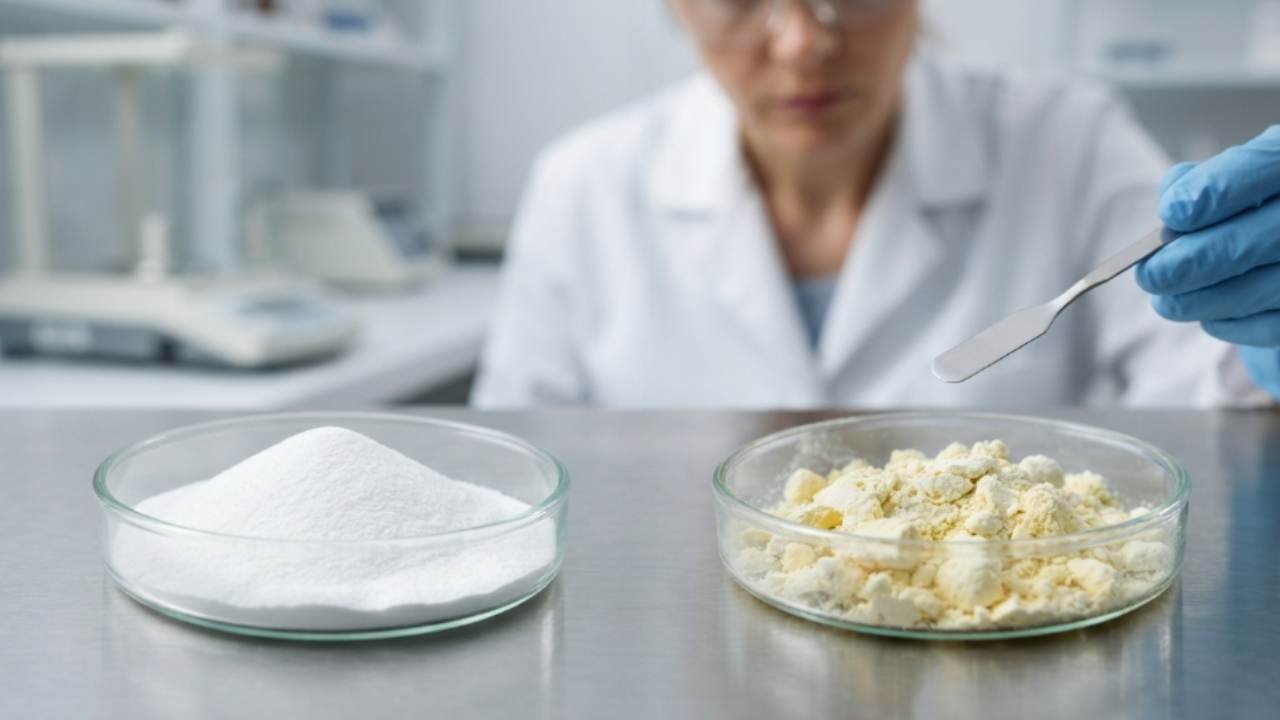
A common misconception in supplement procurement is that any detectable sulfur odor in an N-Acetyl-L-Cysteine (NAC) shipment indicates a compromised or degraded product. In reality, a baseline, mild sulfur aroma is a natural, characteristic property of fresh, high-purity NAC due to the presence of its active free sulfhydryl group. However, a highly pungent, overpowering, or putrid smell usually indicates that the material has been exposed to moisture or heat, triggering advanced chemical degradation.
During this degradation, active NAC molecules oxidize and dimerize into N,N-diacetyl-L-cystine (di-NAC). While di-NAC itself is odorless because it lacks a free thiol group, the chemical process of oxidation releases hydrogen sulfide gas. Therefore, an intense odor is a strong indicator of low active assay purity and high related-substance impurities. Buyers must evaluate the batch Certificate of Analysis, verifying that the loss on drying remains below 0.5% and total related substances are below 0.5% as per USP guidelines4. Sourcing partners like FINETECH help buyers distinguish between normal chemical profiles and active degradation by arranging independent HPLC and moisture testing in China, ensuring that only fresh, compliant batches are shipped.
| Olfactory Indicator | Physical Chemical Status | Technical Impurity Risk | Sourcing Recommendation |
|---|---|---|---|
| Mild Sulfurous Smell | High purity fresh active NAC | Normal characteristic thiol | Approve shipment for packaging |
| Overpowering Putrid Odor | Advanced moisture degradation | High di-NAC dimer impurities | Request third-party HPLC re-test |
| Yeast-like / Organic Odor | Unpurified fermentation biomass | Elevated heavy metals or proteins | Reject batch, re-audit plant |
| Complete Odorless State | Oxidized or adulterated compound | No active free thiol groups | Run iodometric titration assay |
What Should Buyers Know About Odor Management When Purchasing N-Acetyl-L-Cysteine (NAC)?
Sourcing aged, unverified bulk drums from trading brokers increases the risk of receiving highly oxidized, putrid cargo. Transactional spot buys increase risks. On-the-ground validation secures freshness.
When purchasing, buyers must evaluate critical monographic specifications like low loss on drying, demand nitrogen-purged drum seals, verify storage climate histories, and utilize local sourcing inspectors.

Dive Deeper into Loss on Drying Limits, Inert Gas Purging, and Sourcing Audits
For international procurement managers, managing the odor of bulk N-Acetyl-L-Cysteine (NAC) requires establishing strict quality agreements5 and clear raw material specifications with the manufacturer. When negotiating purchasing contracts, buyers must demand that the loss on drying (moisture content) of the crystalline powder remain strictly below 0.5% on the Certificate of Analysis. Low moisture is the single most effective barrier against premature hydrogen sulfide volatilization during transit and warehousing.
Additionally, the quality agreement should mandate that all bulk twenty-five-kilogram fiber drums be lined with heavy-duty, double-layer polyethylene bags that are actively purged with inert nitrogen gas before hermetic heat-sealing. This nitrogen flush removes any atmospheric oxygen that would otherwise drive oxidation and odor generation during shipping. Partnering with a dedicated local sourcing representative is critical for enforcing these standards. Sourcing partners like FINETECH provide this essential representation in China. They physically audit manufacturing facilities, inspect the integrity of drum seals, evaluate factory batch-to-batch consistency records, and coordinate pre-shipment composite sampling, helping international buyers secure a reliable, fresh, high-purity, and low-odor supply of NAC.
| Sourcing Agreement | Operational Sourcing Step | Downstream Sensory Benefit | Sourcing Safety Outcome |
|---|---|---|---|
| Moisture Limits | Keep loss on drying below 0.5% | Prevents premature sulfur gas release | High active assay preservation |
| Nitrogen Purging | Require nitrogen gas flushing | Displaces oxidation-promoting oxygen | Stops di-NAC related substances |
| Climate Contracts | Store constantly below 25°C | Minimizes thermal degradation kinetics | Predictable material shelf life |
| Local Representation | Partner with firms like FINETECH | Physical on-site quality checking | Verifies drum seal airtightness |
Conclusion
Controlling N-Acetyl-L-Cysteine odor requires understanding its natural sulfhydryl properties, applying microencapsulation and flavor-masking technologies, utilizing active carbon or PVDC blister packaging, monitoring related-substance impurities, and executing quality agreements for nitrogen-flushed bulk shipments.
-
This OSHA guide provides safety resources and an overview on the occupational hazards and detection protocols of hydrogen sulfide gas. ↩
-
This Food & Beverage Insider article discusses the strategic role of organic acidulants as formulators' tools for taste modulation and flavor enhancement. ↩
-
This Plastics Today article details recent technological advancements and growth trends in active packaging to control head-space environments and minimize ingredient degradation. ↩
-
This United States Pharmacopeia portal details official quality standards and reference guidelines for dietary supplements and herbal medicines. ↩
-
This official FDA guidance outlines industry expectations and best practices for establishing manufacturing quality agreements in contract manufacturing. ↩