
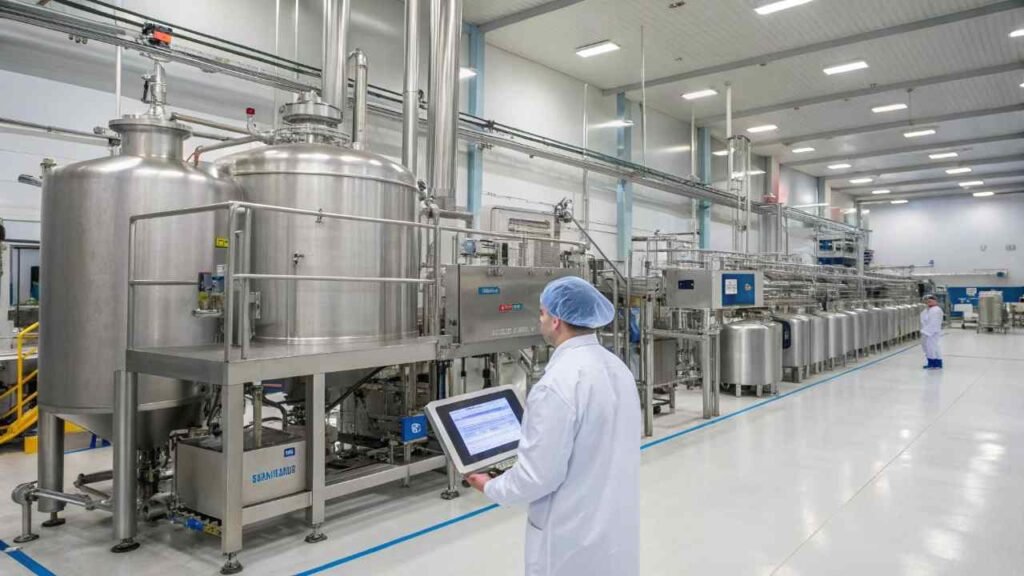
Sourcing raw amino acids without analyzing chemical synthesis routes, quality controls, and plant reliability leads to heavy contamination, batch-to-batch physical inconsistency, and unexpected supply chain disruptions.
Manufacturing food-grade taurine relies on chemical synthesis via the ethylene oxide or monoethanolamine pathway to guarantee vegan origin, controlled crystallization, strict heavy metal screening, in-process analytical assays, and automated environmental processing.
Successfully manufacturing premium functional foods and dietary supplements requires a disciplined approach to evaluating raw material origins. Sourcing managers must examine physical processing stages and chemical manufacturing controls to protect their formulations from active potency losses and trace impurities. Sourcing partners like FINETECH simplify factory checks, verify production compliance, and secure competitive pricing directly in China to guarantee bulk deliveries. This guide explains how food-grade taurine is manufactured for food applications.
Why Is Chemical Synthesis the Main Manufacturing Method for Taurine?
Extracting raw amino acids from natural animal tissues results in astronomical production costs and non-vegan designations. Traditional extraction fails today's clean-label needs.
Chemical synthesis is the main manufacturing method for taurine because it provides a highly scalable, cost-effective production model that guarantees a completely vegan and allergen-free product for global food fortification.
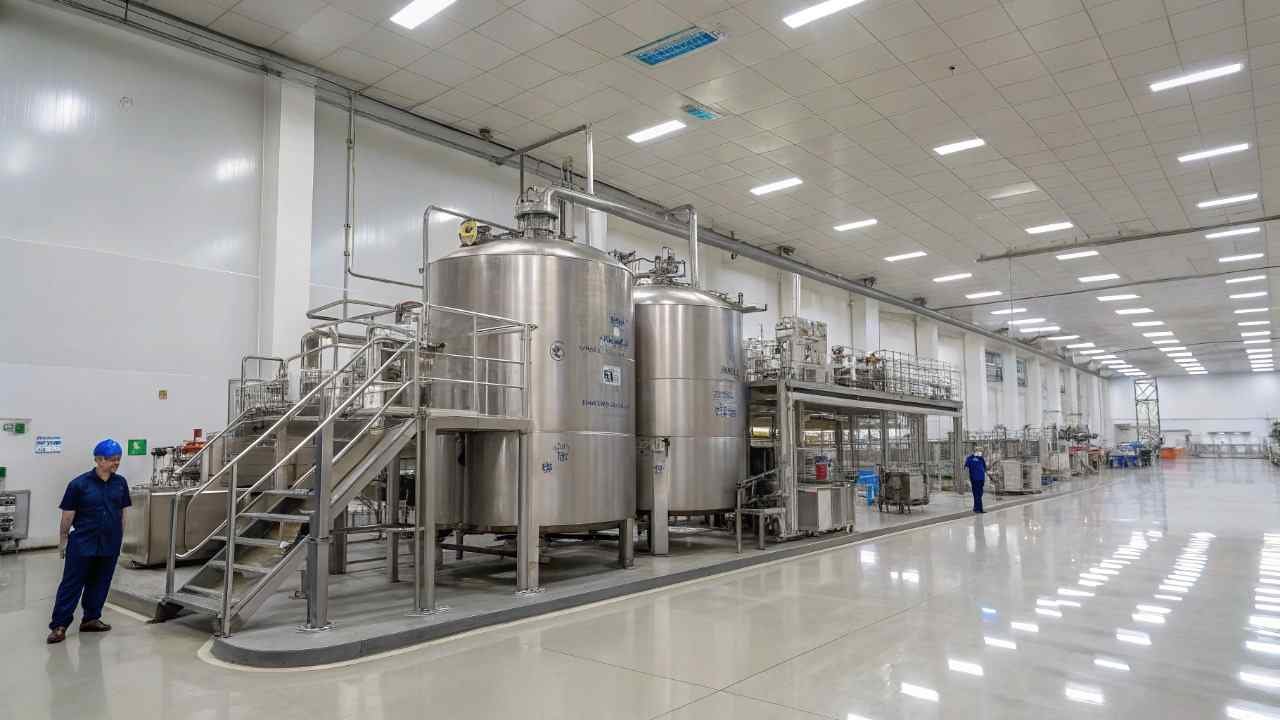
Dive Deeper into Ethylene Oxide Scale, Vegan Guarantees, and Animal Extraction Inefficiencies
While taurine is a naturally occurring organic compound abundant in animal tissues—especially in marine invertebrates and red meats—extracting it from natural sources1 is completely unviable for large-scale commercial food applications. Animal extraction is an inefficient and highly expensive process that yields low concentrations of active compound while generating massive amounts of organic waste. Additionally, animal-derived taurine carries significant risks of transmitting biological pathogens, heavy metals, and allergen cross-contamination, which disqualifies it from highly regulated food sectors such as infant nutrition.
To meet the global demand of approximately 160,000 tons annually, chemical synthesis serves as the primary manufacturing method. Chemical synthesis utilizes widely available petrochemical precursors to produce highly pure, concentrated taurine at a fraction of the cost of natural extraction. More importantly, synthesized taurine is guaranteed to be 100% vegan and free from animal-derived materials, which is a mandatory clean-label requirement for energy drinks, infant formula, and vegetarian pet foods. Sourcing partners like FINETECH streamline this supply chain by verifying the synthetic origin of raw materials at Chinese factories, securing the documentation necessary to satisfy global non-animal declarations.
| Sourcing Method | Base Raw Material | Scale of Production | Vegan Status | Quality Risk Level |
|---|---|---|---|---|
| Animal Extraction | Marine invertebrates / meat | Highly restricted | Non-vegan | High pathogen/allergen risk |
| Chemical Synthesis | Ethylene oxide / bisulfite | Extremely scalable | 100% Vegan | Low; highly controlled |
| Biosynthesis | Microbial fermentation | Experimental stage | 100% Vegan | High batch-to-batch variation |
How Is Food Grade Taurine Quality Controlled During Production?
Allowing trace heavy metal catalysts or processing intermediates to bypass crystallization steps invites severe regulatory failures during importing. Unmonitored production lines yield contaminated bulk drums.
Quality control during taurine production involves strict in-process checks, high-performance liquid chromatography testing, automated heavy metal adsorption, and final magnetic metal detection prior to packaging.
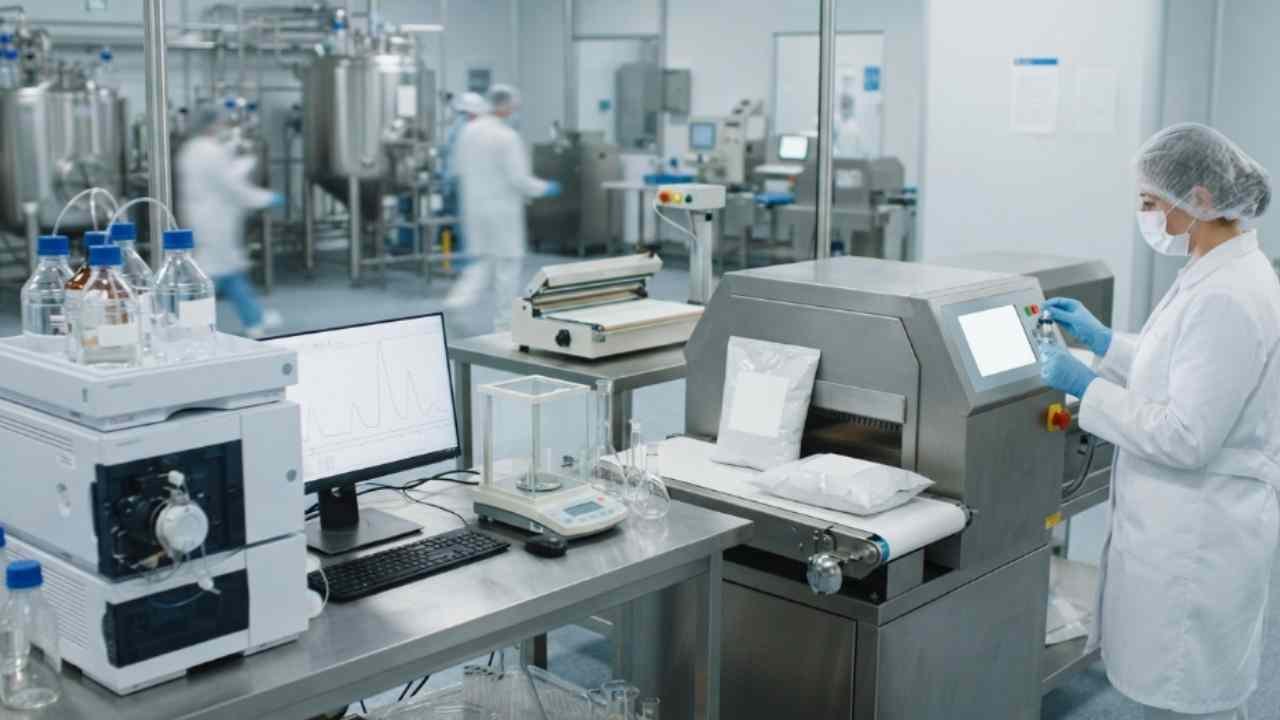
Dive Deeper into Crystallization Filtration, ICP-MS Screenings, and Magnetic Separation
Securing food-grade quality during the industrial manufacture of taurine requires a multi-layered quality control system integrated directly into the production line. Quality control begins with rigorous testing of incoming raw chemical feedstocks, ensuring that precursors like ethylene oxide and sodium bisulfite are free from external contaminants. During the chemical reaction, in-process analytical checks—including gas chromatography and high-performance liquid chromatography (HPLC)2—are performed continuously to monitor reaction completeness and identify any trace reaction intermediates.
Once the crude taurine is synthesized, it must undergo extensive purification steps, including multiple cycles of crystallization, filtration, and washing. These steps are critical to remove residual sodium sulfate, chlorides, and ammonium salts. To guarantee compliance with international food safety standards, the purified crystals are subjected to Inductively Coupled Plasma Mass Spectrometry (ICP-MS) to confirm that heavy metal levels like lead, arsenic, and mercury remain well below 1 ppm. Prior to final packaging in twenty-five-kilogram fiber drums, the dried crystals pass through high-sensitivity inline magnetic separators and metal detectors to eliminate any potential metallic particulates. Sourcing partners like FINETECH assist buyers by evaluating these factory quality control records, ensuring that every batch meets the exact USP or FCC specifications required for food applications.
| QC Processing Phase | Quality Control Action | Analytical Equipment Used | Downstream Safety Value |
|---|---|---|---|
| In-Process Checks | Monitors reaction completeness | HPLC / Gas Chromatography | Prevents residual raw reactants |
| Crystallization | Removes chemical byproducts | Vacuum filter / Centrifuge | Reduces sodium sulfate residues |
| Heavy Metals Screen | Analyzes trace mineral catalysts | ICP-MS mass spectrometer | Verifies lead, arsenic < 1 ppm |
| Final Packaging | Detects mechanical metal shards | High-intensity magnetic loop | Eliminates physical particulate |
How Does Manufacturing Technology Affect Taurine Quality?
Operating outdated manual chemical plants leads to severe fluctuations in purity assays and batch-to-batch crystal size. Inadequate technology compromises physical uniformity.
Advanced manufacturing technology, such as automated Distributed Control Systems, directly improves taurine quality by maintaining precise reaction temperatures, reducing processing impurities, and controlling crystal mesh consistency.

Dive Deeper into Distributed Control Systems, Impurity Reductions, and Sieve Uniformity
The level of manufacturing technology employed by a taurine producer plays a direct role in determining the quality, purity, and physical performance of the final raw material. Leading chemical plants utilize advanced, fully automated Distributed Control Systems (DCS)3 to manage the entire synthesis pathway. This highly computerized system monitors and adjusts key reaction parameters, such as pH, liquid flow rates, pressure, and thermal inputs, in real time. By eliminating human error from the chemical compounding phase, automated technology ensures that every production run achieves an identical chemical assay.
In contrast, plants utilizing legacy semi-automated or manual processing equipment often suffer from significant batch-to-batch variations. This can result in elevated levels of related substances, such as ditaurine or sodium isethionate residues, which can degrade the overall purity assay of the powder. Further, advanced crystallization technology allows factories to control cooling kinetics with extreme precision. This produces highly uniform, needle-like crystals that resist crushing and caking during transport. Sourcing partners like FINETECH help buyers identify and qualify highly automated, technologically advanced manufacturers in China, ensuring that the imported taurine exhibits superior chemical stability and physical flowability.
| Manufacturing Tech | Operational Control | Chemical Quality Impact | Physical Property Outcome |
|---|---|---|---|
| Automated DCS | Real-time pH & temperature control | High assay, low impurities | Identical batch-to-batch purity |
| Controlled Cooling | Precise thermal ramp curves | Uniform needle-like crystals | High flowability, low caking |
| Manual Systems | Subject to operator variation | Higher related substances | Irregular crystals, prone to dust |
| Advanced Recovery | Closed-loop ammonia recycle | Low residual ammonium salts | Clean taste, zero off-odors |
How Does the Manufacturing Process Affect Taurine Quality and Consistency?
Rushing the crystallization phase or using poor acidification techniques leads to elevated sodium sulfate residues and severe caking. Uncontrolled process variables ruin powder consistency.
The manufacturing process, specifically the cooling crystallization and acidification steps, determines physical taurine consistency, preventing the formation of fragile particles that cake easily during bulk transport.
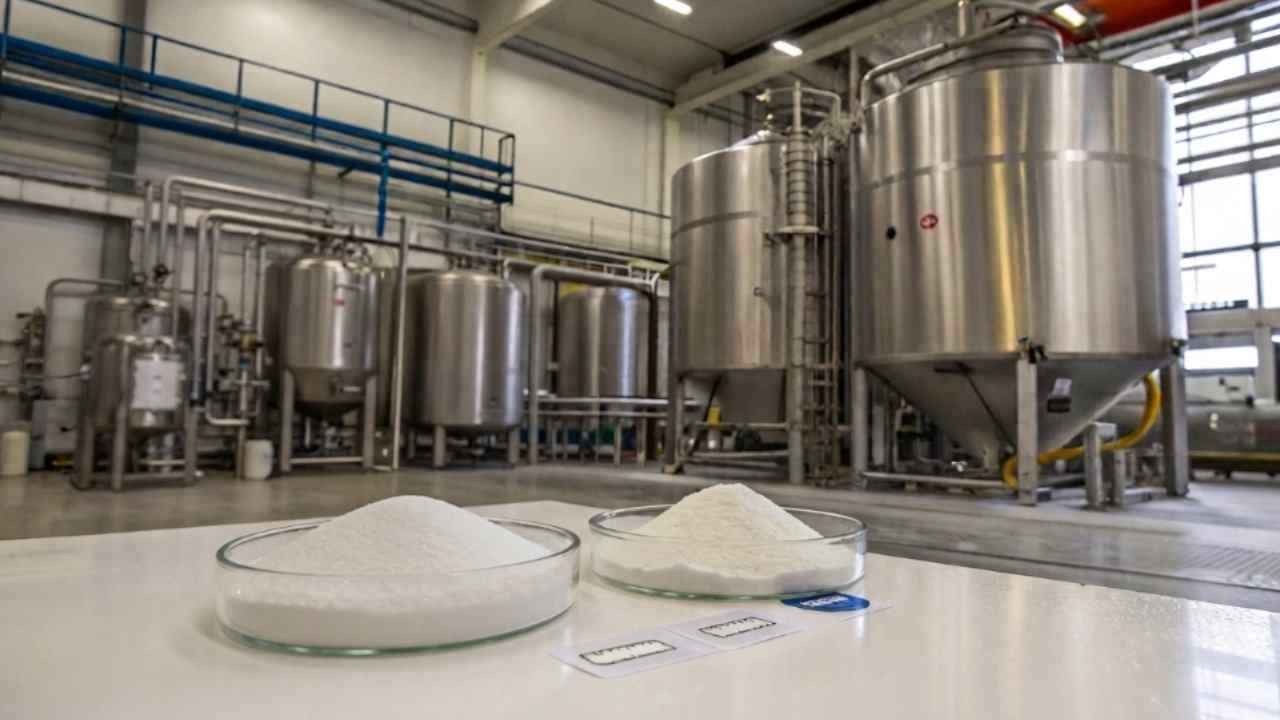
Dive Deeper into Ethylene Oxide Ammonolysis, Acidification, and Sieve Cooling Rates
The step-by-step chemical manufacturing process of food-grade taurine is a complex sequence of chemical conversions and physical transformations that directly determines the final product's consistency. In the industry-preferred ethylene oxide (EO) method4, ethylene oxide is first reacted with an aqueous solution of sodium bisulfite to form sodium isethionate. This intermediate is then subjected to ammonolysis by reacting it with excess liquid ammonia under high pressure and temperature to yield sodium taurinate. The final chemical step involves acidification, where sulfuric acid or sulfur dioxide gas is introduced to neutralize the sodium taurinate, resulting in free taurine and a sodium sulfate byproduct.
The manner in which the manufacturer manages this acidification and subsequent cooling crystallization is critical. If the cooling rate is too rapid, the taurine precipitates as highly fragile, irregular micro-crystals that generate excessive dust and cake quickly under storage pressure. Slow, controlled cooling rates are required to promote the growth of robust, needle-like crystals (typically forty to eighty mesh) that exhibit high bulk density and superior flowability. Sourcing partners like FINETECH audit these physical process parameters at Chinese plants, ensuring that the manufacturer maintains stable process conditions to deliver highly consistent physical batches.
| Manufacturing Step | Chemical Action Taken | Crucial Process Variable | Downstream Quality Effect |
|---|---|---|---|
| Isethionate Synthesis | Ethylene oxide + bisulfite | Raw reactant feed ratio | Prevents unreacted EO residues |
| Ammonolysis | High-pressure reaction with $NH_3$ | Temperature and pressure limits | Ensures high conversion yield |
| Acidification | Neutralization to free taurine | pH adjustment speed | Controls initial crystal seeding |
| Crystallization | Slow, managed cooling | Temperature decline rate | Forms sturdy 40-80 mesh crystals |
What Factors Help Ensure Reliable Taurine Production?
Relying on unvetted chemical factories that ignore municipal environmental audits leads to sudden government shutdowns and broken cargo contracts. Unsecured raw materials cause delays.
Ensuring reliable taurine production requires vertical integration of raw chemical feedstocks, stable municipal power grids, strict environmental compliance systems, and professional on-the-ground supplier audits.
Dive Deeper into Precursor Integration, Environmental Audits, and Quality Redundancies
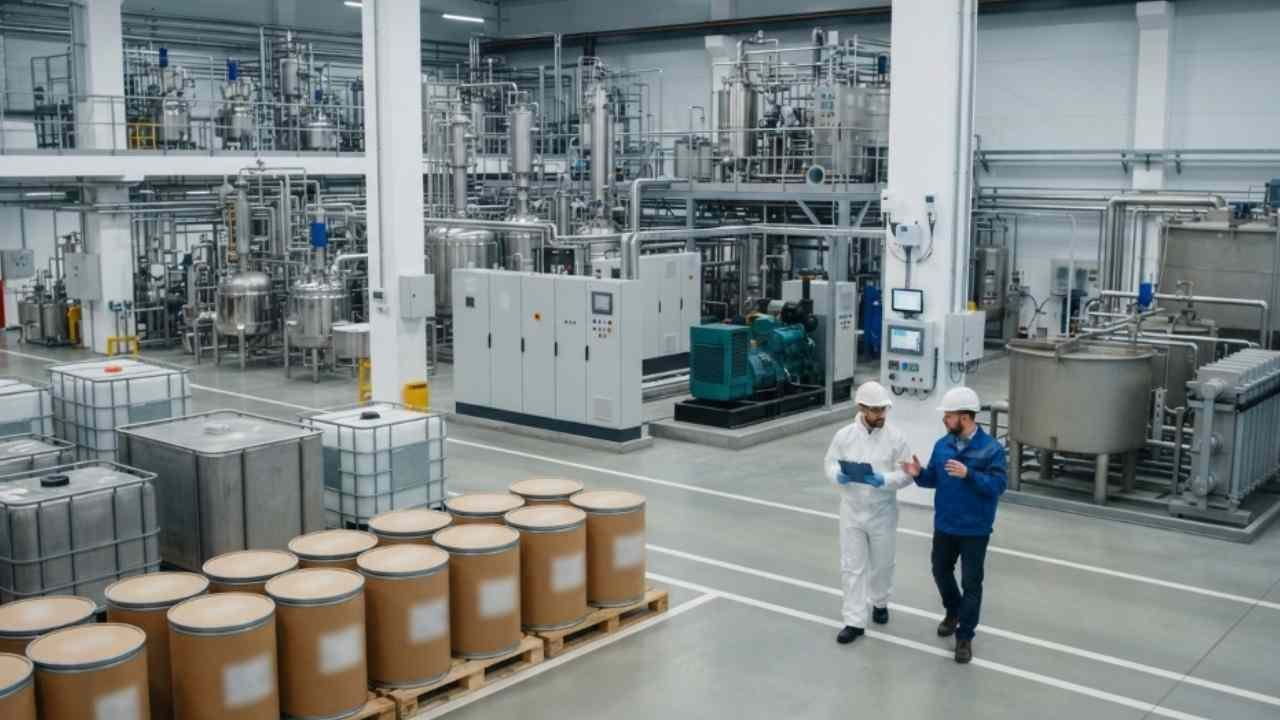
Ensuring a reliable and continuous production of food-grade taurine requires a combination of raw material security, environmental compliance5, and robust quality management systems. Because the manufacturing process relies heavily on volatile petrochemical inputs like ethylene oxide and ammonia, vertically integrated manufacturers—who produce their own starting chemical precursors—enjoy a significant advantage in supply reliability, remaining insulated from external raw material shortages.
Additionally, stable municipal power grids and steam supplies are essential, as the crystallization and drying phases are highly energy-intensive and cannot tolerate sudden power disruptions. Environmental compliance is another critical factor. Because taurine synthesis produces highly saline wastewater, factories must operate advanced waste-treatment plants that comply with strict municipal environmental audits to avoid sudden government-mandated production halts. Finally, implementing quality redundancies, such as maintaining dual production lines, ensures that routine maintenance does not disrupt shipping schedules. Sourcing partners like FINETECH help international brands mitigate these supply risks by auditing the financial, environmental, and operational health of Chinese manufacturers, securing a highly reliable and consistent supply chain for their functional beverage and dietary supplement formulations.
| Supply Chain Factor | Plant Integration Standard | Operational Risk Vetted | Sourcing Security Outcome |
|---|---|---|---|
| Precursor Integration | Self-manufactured chemical feed | Raw material supply shortages | Stable bulk shipping schedules |
| Energy Infrastructure | Dual-source electricity/steam | Crystallization heat failure | Consistent crystal size output |
| Waste Treatment | On-site high-saline water system | Municipal environmental audits | Prevents government closures |
| Quality Redundancy | Dual automated production lines | Plant maintenance shutdowns | Consistent cargo availability |
Conclusion
Manufacturing food-grade taurine requires utilizing scalable chemical synthesis, enforcing strict multi-cycle crystallization and ICP-MS quality controls, employing automated Distributed Control Systems, managing precise cooling rates, and securing vertically integrated precursors.
-
This News-Medical article discusses why industrial taurine is synthesized chemically, comparing its production efficiency and yield to unviable natural animal-tissue extraction. ↩
-
This Scion Instruments guide outlines the role of liquid and gas chromatography in food analysis, detailing methods for testing raw materials, additives, and contaminants. ↩
-
This Yokogawa overview explains the system architecture, process loop advantages, and role of Distributed Control Systems (DCS) in chemical plants and batch-processing facilities. ↩
-
This Google Patent documentation presents the chemical steps of the cyclic ethylene oxide (EO) synthesis pathway, tracing how sodium isethionate is converted to taurine. ↩
-
This REACH24H regulatory brief explains the legal implications of China's newly adopted Ecological and Environmental Code, detailing its impact on chemical manufacturing compliance. ↩