
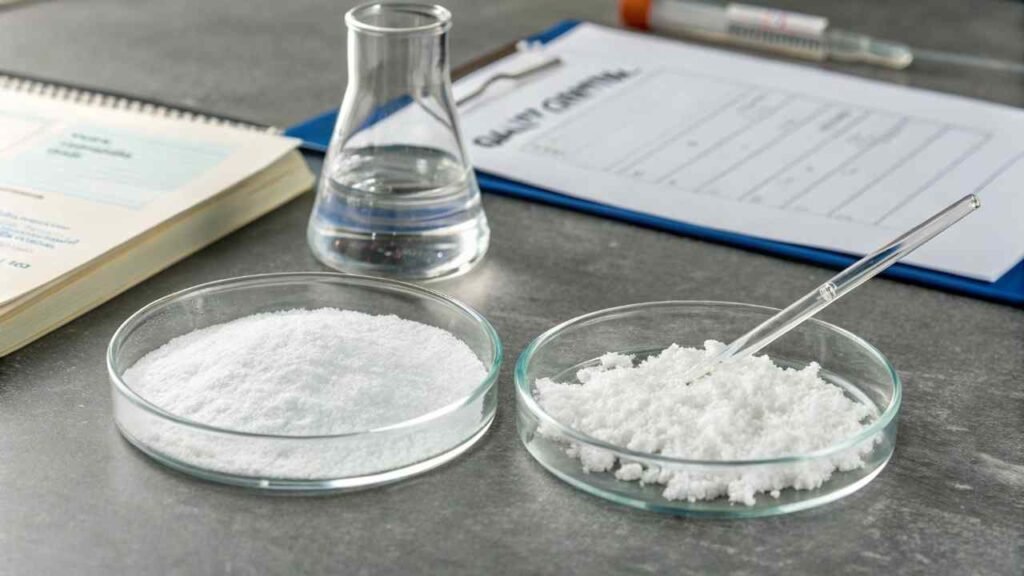
Sourcing incorrect betaine forms leads to failed product stability, extreme acidity complaints, moisture-induced capsule degradation, and costly production line shutdowns. Strategic formulation choices secure product viability.
Choosing between betaine anhydrous and betaine HCl requires analyzing their distinct molecular structures, comparing target food and digestive applications, evaluating their solubility and processing flowability under factory humidity, and selecting certified monographic grades.
Successfully manufacturing premium-grade dietary supplements, functional foods, and animal feed requires a disciplined approach to evaluating raw material options. Sourcing managers must examine physical handling properties and chemical stability profiles to protect their formulations from active potency losses and mechanical processing failures. Sourcing partners like FINETECH simplify factory checks, verify production compliance, and secure competitive pricing directly in China to guarantee bulk deliveries. This guide explains how buyers can choose between betaine anhydrous and betaine HCl.
What Is the Difference Between Betaine Anhydrous and Betaine HCl?
Blending chemically acidic salts into standard nutritional powders causes immediate formula degradation and severe taste defects. Understanding molecular properties prevents compounding errors.
The primary difference is molecular structure; betaine anhydrous is a neutral, highly hygroscopic zwitterion, whereas betaine HCl is an acidic salt bound to hydrochloric acid with a very low pH.
Dive Deeper into Zwitterionic Anhydrous Molecules and Acidic Hydrochloride Salts
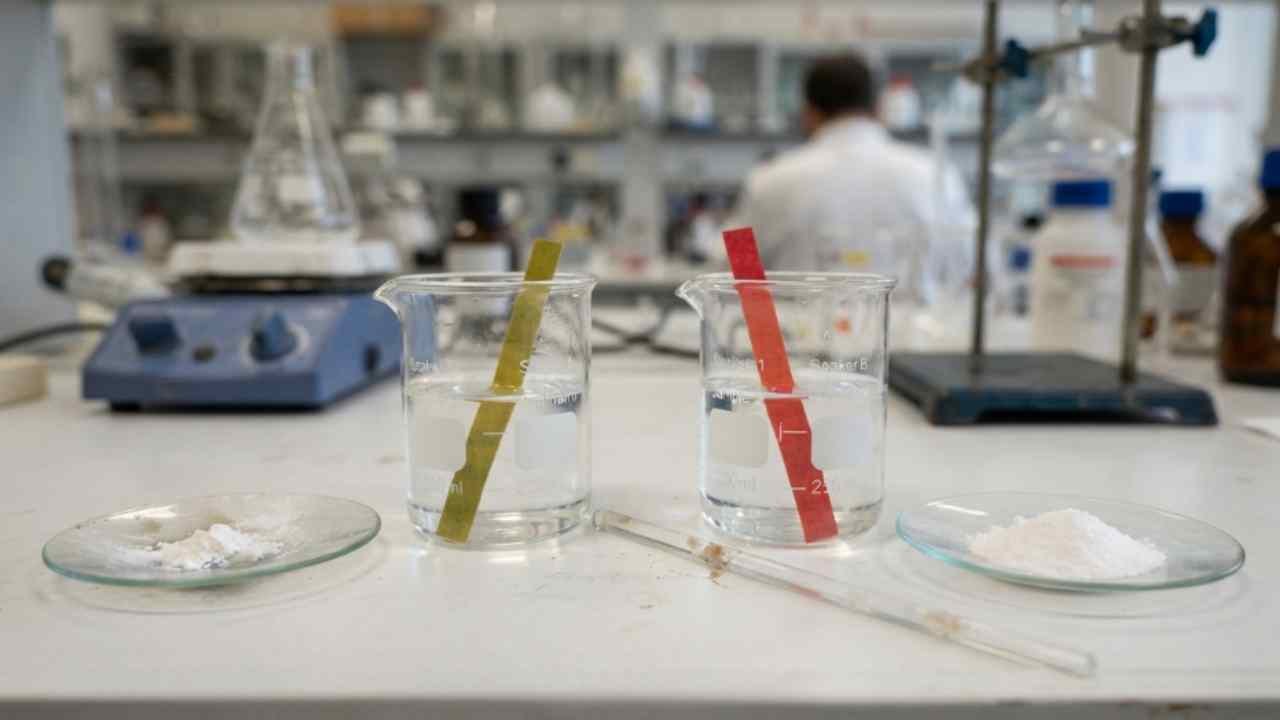
To make an informed procurement decision, buyers must first understand the fundamental chemical and physical differences between betaine anhydrous1 and betaine hydrochloride (HCl). Betaine anhydrous, chemically known as trimethylglycine (TMG), is a naturally occurring zwitterion—a neutral molecule possessing both a positive quaternary ammonium group and a negative carboxylate group. Because it lacks any bound acid components, a solution of betaine anhydrous exhibits a relatively neutral pH, typically ranging between 5.0 and 7.0. TMG operates biologically as a powerful methyl donor and cellular osmolyte, making it highly effective for cardiovascular health, liver protection, and athletic performance enhancement.
In contrast, betaine hydrochloride2 is a synthetic salt formed by chemically bonding the betaine molecule with hydrochloric acid. This chemical structure ($C5H{11}NO_2 \cdot HCl$) changes its physical properties, resulting in an extremely acidic solution with a pH of approximately 1.5 to 2.5. This high acidity means betaine HCl does not function as a general-purpose nutritional fortifier; instead, it is utilized as a targeted digestive aid designed to release hydrochloric acid in the stomach to support protein digestion. Sourcing partners like FINETECH assist buyers by evaluating these chemical profiles, ensuring that the molecular structure matches the exact therapeutic or nutritional goals of the formulation.
| Technical Parameter | Betaine Anhydrous (TMG) | Betaine Hydrochloride (Betaine HCl) | Sourcing / Formulation Significance |
|---|---|---|---|
| Chemical Structure | Neutral zwitterion molecule | Hydrochloride acid salt | Determines pH and solubility properties |
| Aqueous pH Value | Relatively neutral (pH 5.0 to 7.0) | Extremely acidic (pH 1.5 to 2.5) | Dictates taste and digestive safety |
| Primary Function | Osmolyte and methyl donor | Stomach acidifier (digestive aid) | Determines finished product category |
| Synthesis Method | Derived from sugar beet or chloroacetic | Reacting free betaine with HCl acid | Affects manufacturing cost structure |
Which Betaine Form Is Better for Food Applications?
Formulating liquid sports drinks or meal replacements with highly acidic amino compounds causes throat burning and severe taste rejections. Matching the chemical form to consumer tolerance ensures palatability.
Betaine anhydrous is superior for functional foods, sports beverages, and standard supplements due to its neutral pH, while betaine HCl is restricted to targeted digestive health capsules.
Dive Deeper into Neutral Sports Beverages, Pre-Workouts, and Digestive Health Capsules
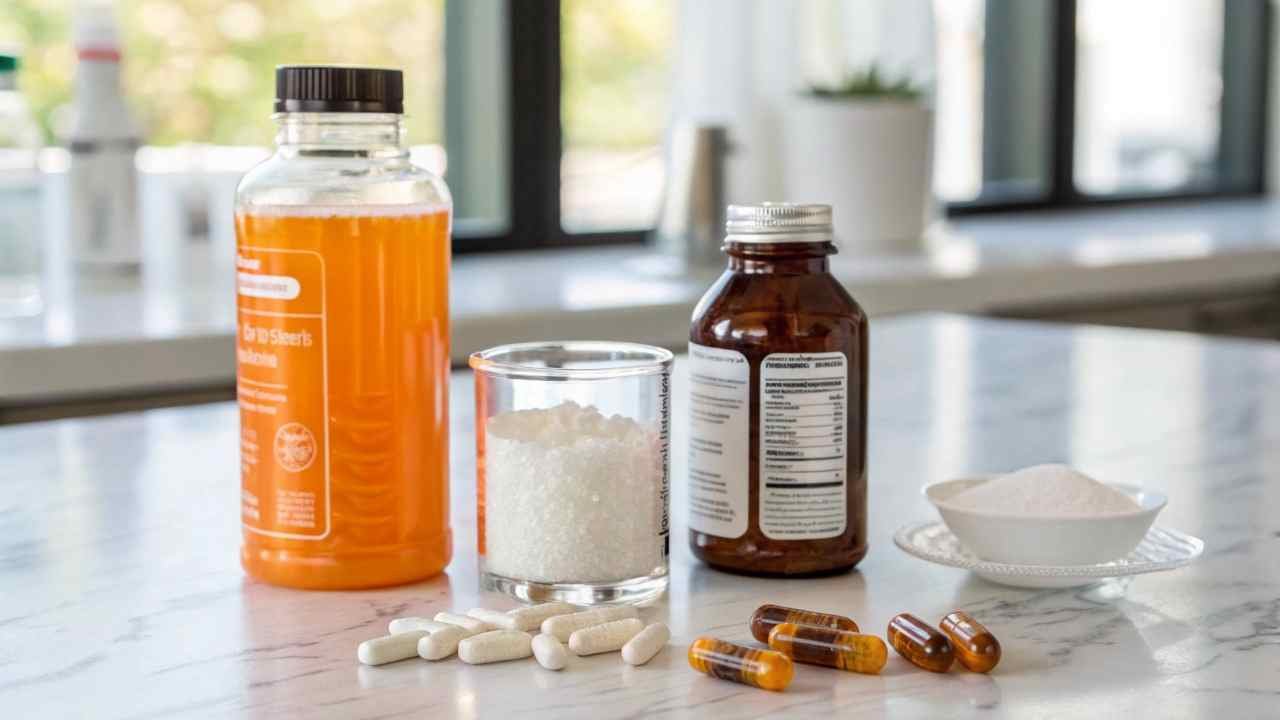
The physiological differences between betaine anhydrous and betaine HCl dictate their suitability for different food and beverage applications. For functional foods, ready-to-drink beverages, pre-workout powder mixes, and standard dietary supplements, betaine anhydrous is the only appropriate choice. Its neutral pH and mild, slightly sweet taste profile allow it to blend seamlessly into complex flavor systems, such as fruit-flavored sports drinks or vanilla protein shakes, without altering the sensory properties or causing gastrointestinal discomfort.
Conversely, betaine HCl is entirely unsuitable for standard food applications or liquid beverage products. If dissolved in a beverage, its extreme acidity would produce an unpalatably sour, metallic taste and could cause severe irritation to the consumer's mouth, esophagus, and stomach lining. Therefore, the use of betaine HCl is strictly restricted to solid dietary supplement formats—such as hard-shell capsules or tablets—that are specifically formulated to support stomach acid production in individuals with hypochlorhydria3. Sourcing partners like FINETECH guide buyers through these application-specific restrictions, ensuring that food manufacturers procure high-purity, food-grade betaine anhydrous that complies with international food safety standards, while digestive health brands receive premium, stabilized betaine HCl.
| Food Application | Recommended Betaine Form | Primary Sensory Reason | Formulation Outcome |
|---|---|---|---|
| Sports Recovery Drinks | Betaine Anhydrous | Mild, neutral flavor profile | Blends with fruit flavors |
| Pre-Workout Powders | Betaine Anhydrous | Does not react with alkaline bases | Maintains stable shelf storage |
| Digestive Supplements | Betaine Hydrochloride | Releases HCl acid in the stomach | Encapsulated to prevent burn |
| Meal Replacements | Betaine Anhydrous | Neutral pH, highly palatable | Enhances total nutritional value |
How Do Solubility and Processing Performance Compare in Betaine Products?
Compounding highly hygroscopic active powders in standard blending environments leads to rapid machinery jamming, product clumping, and packaging line shutdowns. Controlled physical metrics secure flowability.
While both forms exhibit high water solubility, betaine anhydrous is extremely hygroscopic and prone to caking, whereas betaine HCl is highly stable and easier to process in tableting lines.
Dive Deeper into Hygroscopic Caking, Tablet Compressing, and Acidic Capsule Degradation
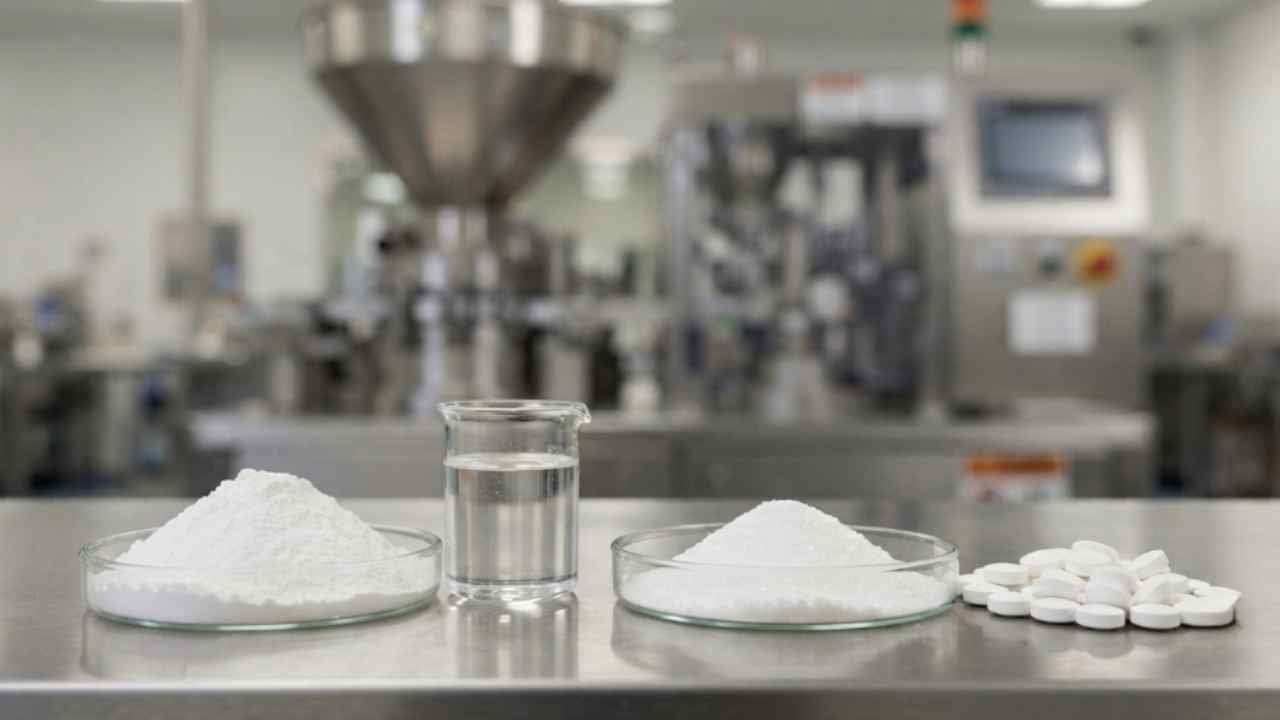
From a manufacturing and processing perspective, betaine anhydrous and betaine HCl behave very differently on high-speed automated production lines. While both compounds exhibit excellent solubility in water, their hygroscopic properties are completely opposite. Betaine anhydrous is extraordinarily hygroscopic, meaning it rapidly absorbs moisture from the surrounding air. In standard manufacturing cleanrooms with relative humidity above forty percent, anhydrous powder quickly clumps, cakes, and sticks to the surfaces of ribbon blenders and capsule-filling machines, causing severe mechanical jams and weight-uniformity failures. To prevent this, manufacturers must run dehumidified production lines and pack the raw material in tightly sealed, moisture-barrier packaging.
On the other hand, betaine HCl is much less hygroscopic and far more physically stable in ambient air. This low moisture sensitivity makes betaine HCl much easier to handle, dry blend, and compress into tablets without the risk of immediate caking. However, its high acidity presents a chemical processing hazard; if blended with alkaline compounds like calcium carbonate or sodium bicarbonate, betaine HCl will react in the presence of trace moisture, releasing carbon dioxide gas and causing container swelling. Sourcing partners like FINETECH analyze these physical processing characteristics, helping buyers select the ideal granulation and particle size to optimize production efficiency.
| Processing Parameter | Betaine Anhydrous (TMG) | Betaine Hydrochloride (Betaine HCl) | Sourcing Quality Requirement |
|---|---|---|---|
| Aqueous Solubility | Highly soluble in water | Highly soluble in water | Quick dissolution in liquid lines |
| Hygroscopicity Level | Extremely high (moisture-sensitive) | Low moisture sensitivity | Requires barrier vacuum packing |
| Tableting Compressing | Prone to clumping, sticky | High compressibility, stable | Sieve analysis to match binders |
| Ingredient Stability | Highly compatible with neutrals | Reacts with alkaline carbonates | Requires separate dry blending |
Why Does Grade Selection Matter in Betaine Purchasing?
Utilizing cheap feed-grade compounds in human dietary supplements risks introducing residual chemical solvents and foul-smelling trace amines. Strict grade verification secures consumer safety and brand trust.
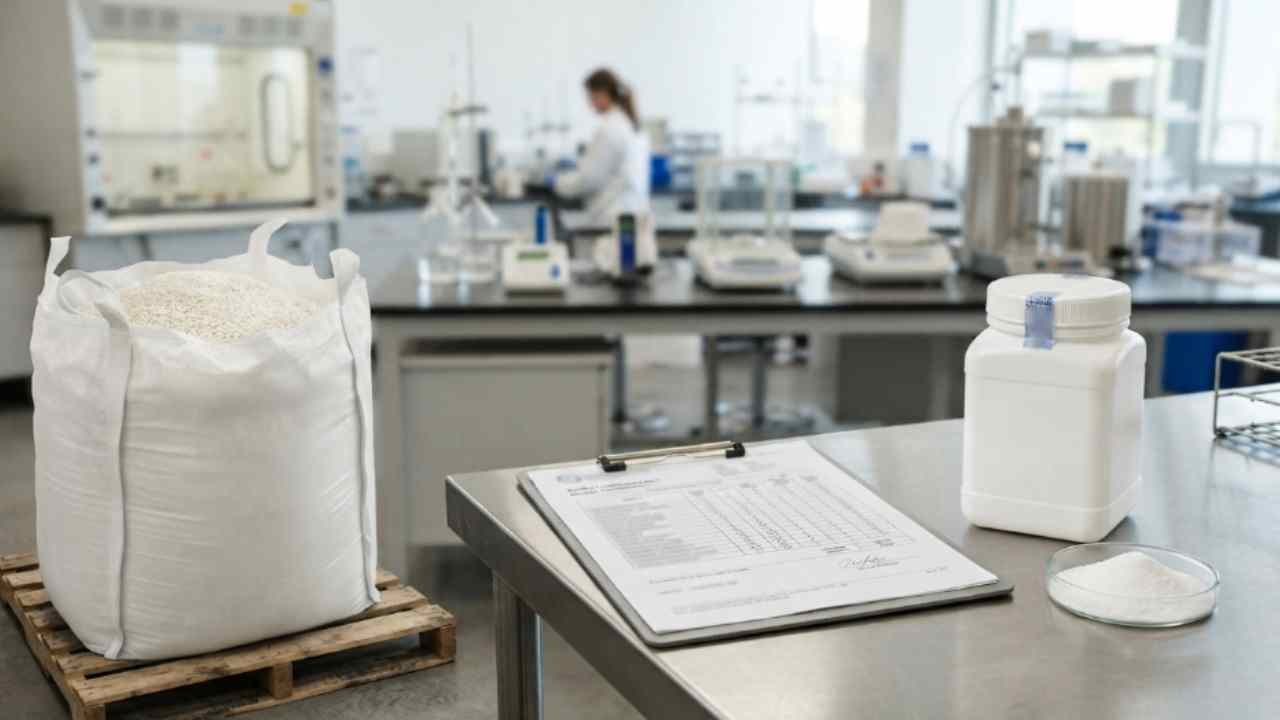
Grade selection dictates product safety, as feed-grade betaine allows higher limits of residual trimethylamine and chloroacetic acid, whereas food and pharmaceutical grades enforce strict USP purity monographs.
Dive Deeper into USP Monographic Standards, Trimethylamine Limits, and Feed-Grade Risks
Selecting the correct grade of betaine is critical for ensuring compliance with international food regulations and protecting consumer safety. Sourcing managers must distinguish between low-cost feed-grade betaine and premium, food- or pharmaceutical-grade materials. Feed-grade betaine, widely used in aquaculture and poultry feed to improve weight gain and prevent dehydration, is produced with loose quality controls. It often contains higher levels of heavy metals and residual processing intermediates, specifically chloroacetic acid and trimethylamine (TMA). The presence of trace TMA in feed-grade batches results in a strong, highly unpleasant fishy odor, making it completely unsuitable for human consumption.
For human applications, buyers must insist on food-grade betaine anhydrous or betaine HCl that complies with recognized monographic standards, such as the United States Pharmacopeia (USP)4 or Food Chemicals Codex (FCC). These high-tier grades enforce strict purity assays above ninety-nine percent, limit residual TMA to parts-per-million levels to ensure a completely odorless powder, and maintain heavy metal contaminants well below safe thresholds. Sourcing partners like FINETECH assist buyers by auditing Chinese manufacturing plants, reviewing independent batch certificates, and verifying that the supplied grade meets all strict USP/FCC requirements, protecting brands from regulatory custom holds or product recalls.
| Betaine Quality Grade | Primary Purity Standard | Trimethylamine Limit | Primary Sourcing Application |
|---|---|---|---|
| USP / Food Grade | Min 99.0% (anhydrous basis) | Below 10 ppm (odorless) | Human supplements, functional foods |
| Cosmetic Grade | Min 99.0% (pure zwitterion) | Low odor, low skin-irritant | Skincare, surfactant formulations |
| Pharmaceutical Grade | Min 99.5% (monograph API) | Below 5 ppm (sterile purity) | Medical gastric acidification |
| Feed Grade | Min 96.0% (crude purity) | Higher limits (fishy odor) | Poultry feed, aquaculture osmolyte |
How Can Trading Companies Help Buyers Choose the Right Betaine Form?
Navigating complex biochemical physical properties and factory compliance certificates without localized assistance increases the risk of receiving caked cargo. Expert third-party guidance secures procurement budgets.
Specialized trading companies assist buyers by matching application needs to the correct betaine format, auditing factory synthesis lines, verifying USP/EP compliance, and organizing moisture-controlled shipping logistics.
Dive Deeper into Mesh Size Calibration, Factory Auditing, and Climate-Controlled Shipping
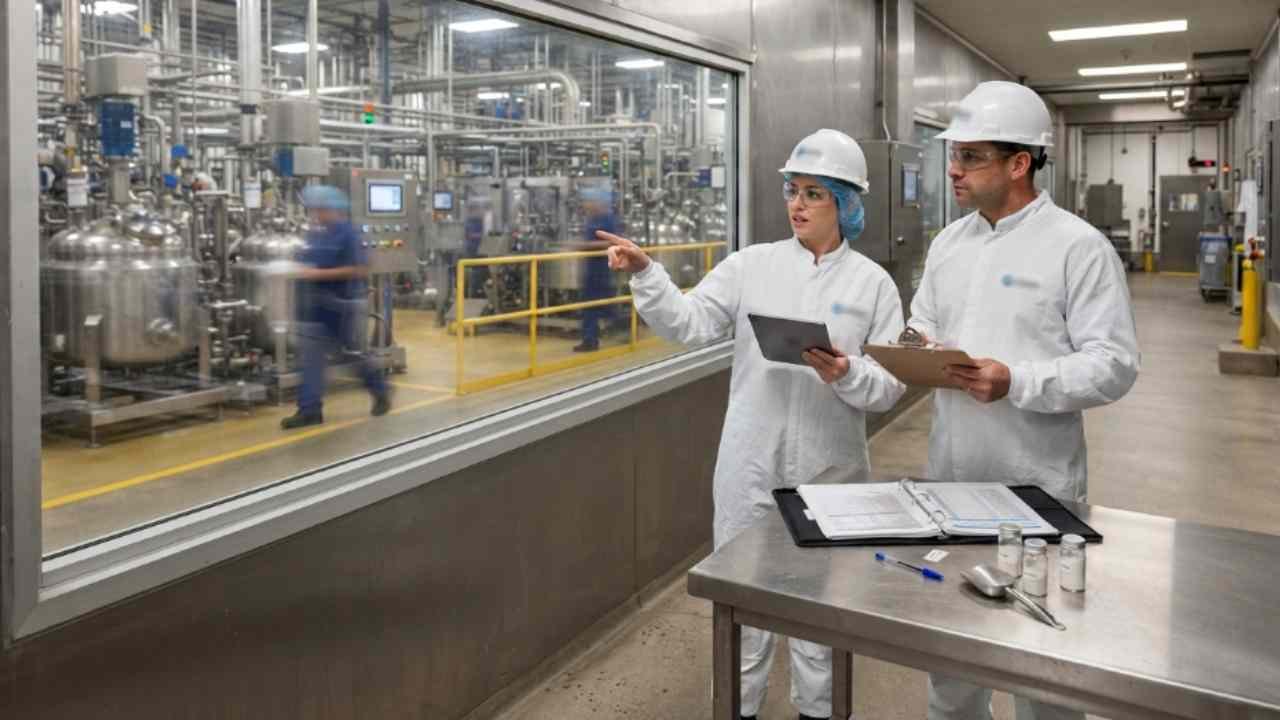
Navigating the physical, chemical, and regulatory differences between betaine anhydrous and betaine HCl can be a complex process for international procurement teams. Working with a specialized sourcing and trading company can provide essential support. Direct biochemical manufacturing plants often operate as high-volume industrial facilities and do not provide the detailed formulation consulting, custom particle-size milling, or mixed-cargo logistics required by medium-sized supplement and food brands. A professional trading partner bridges this operational gap by acting as a technical liaison between the buyer and the factory.
A technical trading company helps buyers by matching specific formulation requirements with the ideal physical format—such as standard crystalline needles, fine micro-milled powder, or direct-compression granules. Additionally, trading partners manage compliance documentation, ensuring that the selected supplier holds active FSSC 22000, Kosher, and Halal certifications and a valid European REACH registration5. Sourcing partners like FINETECH provide this essential representation directly on the ground in China. They physically audit manufacturing plants, coordinate pre-shipment laboratory testing to verify low-odor and low-moisture specifications, and organize climate-controlled, moisture-protected logistics to ensure that the bulk betaine arrives at the destination port in a pristine, free-flowing condition.
| Trading Sourcing Support | Physical Action in China | Sourcing Value | Operational Safety Outcome |
|---|---|---|---|
| Format Calibration | Mill and sift mesh parameters | Matches specific blending lines | Prevents gravitational separation |
| Compliance Vetting | Review FSSC 22000 / ISO files | Guarantees clean-label compliance | Ensures smooth customs clearance |
| Moisture Auditing | Verify drum seal integrity | Prevents hygroscopic caking | Arrives in free-flowing condition |
| Logistics Management | Climate-controlled consolidation | Lowers shipping cost per kg | Optimizes total procurement budgets |
Conclusion
Choosing between betaine anhydrous and betaine HCl requires evaluating neutral TMG sports beverage formulations against acidic gastric capsule preparations, monitoring hygroscopic caking during high-humidity dry blending, selecting USP-compliant grades, and utilizing on-the-ground technical sourcing support.
-
This WebMD clinical reference guide details the uses, physiological mechanisms, dosing, and safety considerations of betaine anhydrous in dietary supplements. ↩
-
This WebMD overview outlines the pharmacological actions, precautions, and therapeutic indications of betaine hydrochloride for digestive support. ↩
-
This Healthline medical guide defines hypochlorhydria (low stomach acid), detailing its symptoms, diagnostics, and management through clinical treatments and supplementation. ↩
-
This official United States Pharmacopeia (USP) portal outlines the features, contents, and standards of the Dietary Supplements Compendium (DSC) used to verify safety and quality. ↩
-
This official European Union business guide explains REACH registration regulations, tonnage thresholds, and compliance guidelines for importing chemicals into the EEA. ↩