Formulating functional beverages without managing betaine's molecular stability, ingredient compatibilities, and trace amine odor thresholds results in off-flavors, physical sedimentation, and product failures.
Betaine enhances functional beverages by promoting cellular hydration and physical performance, exhibiting high thermal stability in ready-to-drink systems, pairing synergistically with electrolytes and creatine, and dissolving easily under optimized plant processing conditions.
Successfully manufacturing high-quality health beverages and performance drinks requires a disciplined approach to evaluating raw material properties. Sourcing managers must analyze physical dissolving profiles and chemical stability parameters to protect their formulations from active potency losses and off-flavor defects. Sourcing partners like FINETECH simplify factory checks, verify production compliance, and secure competitive pricing directly in China to guarantee bulk deliveries. This guide explains how betaine is used in functional beverage formulation.
Why Is Betaine Used in Functional Drinks?
Neglecting intracellular hydration mechanisms when designing performance drinks limits product efficacy and consumer satisfaction. Sports drink formulas require osmolytes to optimize hydration.
Betaine is used in functional drinks because it acts as an organic osmolyte that maintains cellular hydration under physical stress, improves muscle power output, and supports healthy homocysteine metabolism.
Dive Deeper into Osmolytic Hydration, Power Output, and Homocysteine Regulation
The incorporation of betaine—specifically betaine anhydrous—into functional beverages has gained significant momentum in the global sports nutrition and wellness industries. The primary physiological driver behind this trend is betaine’s function as a powerful organic osmolyte1. In human biology, osmolytes are critical molecules that help cells maintain fluid balance and volume under osmotic stress, such as extreme physical exertion or dehydration. When athletes consume a betaine-fortified beverage, the compound enters the cells, drawing in water molecules to prevent cellular shrinkage, reduce thermal strain, and optimize muscle tissue hydration.
Beyond hydration, betaine is highly valued for its ability to enhance physical performance. Scientific research demonstrates that daily supplementation supports muscle power output, improves overall strength, and increases training volume. It acts as an essential methyl donor, participating in the methionine-homocysteine cycle to reduce toxic homocysteine2 levels, which supports cardiovascular and liver health. These combined physiological benefits make betaine an ideal functional ingredient for pre-workout drink mixes, intra-workout recovery beverages, and daily health wellness shots. Sourcing partners like FINETECH help beverage brands capitalize on this demand by sourcing premium, food-grade betaine directly from audited Chinese manufacturers, ensuring maximum purity and physiological activity.
| Physical Benefit | Physiological Mechanism | Targeted Drink Category | Sourcing Requirement |
|---|---|---|---|
| Cellular Hydration | Regulates intracellular water volume | Electrolyte sports drinks | High purity food-grade |
| Muscle Power | Enhances force and rate of contraction | Pre-workout powder mixes | Free-flowing standard crystals |
| Cardio Support | Lowers toxic homocysteine levels | Daily heart wellness shots | USP monographic compliance |
| Liver Health | Acts as active methyl donor | Post-workout recovery mixes | Certified Non-GMO origin |
How Does Betaine Perform in Ready-to-Drink Formulas?
Formulating liquid ready-to-drink beverages with sub-standard active compounds leads to fishy off-odors and consumer rejection over time. Unchecked trace volatile amines degrade liquid product quality.
In ready-to-drink formulas, betaine performs exceptionally well due to its neutral taste and high physical stability, provided manufacturers utilize low-trimethylamine specifications to prevent fishy off-odors during storage.
Dive Deeper into Amine Odor Controls, Liquid Shelf-Life, and Neutral Sweetness Profiles
Developing ready-to-drink (RTD) functional beverage formulations requires ingredients that remain physically and chemically stable in liquid environments over extended shelf lives. Betaine anhydrous is exceptionally well-suited for RTD applications because of its high physical solubility and clean sensory profile. At typical beverage formulation levels (usually 1.5 to 2.5 grams per serving), high-purity betaine exhibits a neutral to slightly sweet taste, blending seamlessly into complex beverage flavor matrices without requiring heavy masking agents or artificial sweeteners.
However, formulating betaine in a liquid medium presents a specific sensory challenge that manufacturers must actively manage: the risk of amine-induced off-odors. Synthesized betaine can contain trace residual amounts of trimethylamine (TMA), a volatile compound with an intense, unpleasant fishy odor. In dry powder blends, this odor is often barely detectable, but when dissolved in a water-based RTD beverage and stored in warm warehouse environments, even parts-per-billion levels of TMA can volatilize, ruining the product's aroma. To prevent this, beverage manufacturers must specify and source ultra-pure, low-TMA food-grade betaine. Sourcing partners like FINETECH resolve this issue by auditing manufacturing facilities in China, reviewing headspace gas chromatography3 test reports, and ensuring that only odorless, premium-grade betaine is approved for RTD beverage lines.
| Formulation Parameter | Liquid RTD Behavior | Potential Quality Risk | Sourcing Protection Step |
|---|---|---|---|
| Flavor Profile | Neutral to slightly sweet | Minor metallic aftertaste | Use natural fruit flavor maskers |
| Aroma Quality | Odorless in water | Fishy smell from residual amines | Limit TMA below 10 ppm |
| Physical Solution | Completely clear, no sediment | Visible settling at bottom | Verify complete initial dissolving |
| Acidic Stability | Remains stable below pH 3.0 | Chemical active decay | Choose zwitterionic anhydrous |
Which Ingredients Work Well with Betaine in Beverage Systems?
Combining active performance ingredients without analyzing molecular synergy leads to flat, uninspiring formulations. Basic single-ingredient lines lose retail appeal. Coordinated nutrient pairings maximize functional impact.
Betaine pairs highly effectively in beverage systems with electrolytes for synergistic cellular hydration, creatine for muscle volume expansion, and caffeine and B-complex vitamins for metabolic energy.
Dive Deeper into Electrolyte Synergies, Creatine Cell Volumization, and Energy Cofactors
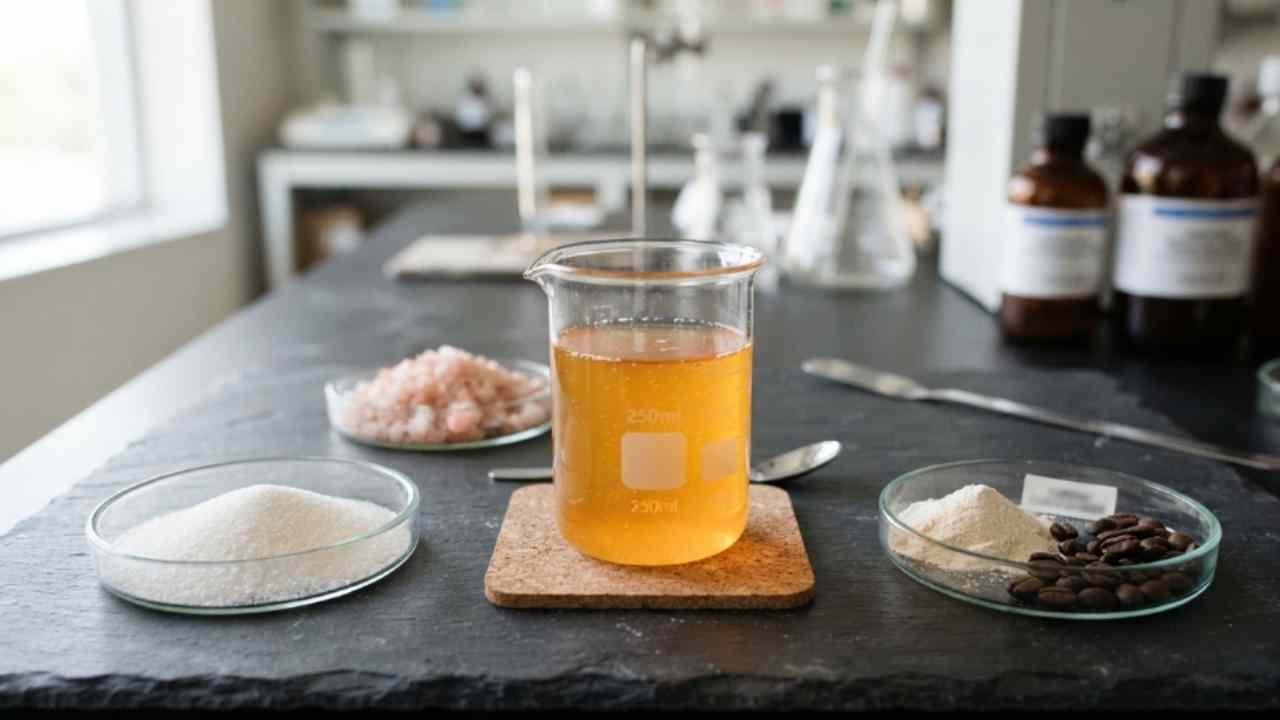
To maximize the market appeal and physiological efficacy of a functional beverage, product developers rarely formulate betaine as a single active ingredient. Instead, they pair it with compatible, synergistic nutrients that enhance its hydration and performance-boosting properties. One of the most effective combinations is blending betaine with essential electrolytes, such as sodium, potassium, and magnesium. While electrolytes replenish the ionic salts lost through sweat, betaine acts as the intracellular osmolyte that pulls water back into the muscle cells, creating a synergistic dual-hydration system that prevents cramping and sustains cellular energy.
In the sports performance sector, pairing betaine with creatine anhydrous or monohydrate represents a highly popular formulation strategy. Both ingredients work together to maximize cell volumization and intracellular hydration, boosting muscular power and recovery rates. Additionally, betaine is chemically compatible with standard energy drink ingredients, including anhydrous caffeine, taurine, L-carnitine, and B-complex vitamins, as it does not undergo chemical interactions that degrade these sensitive nutrients in aqueous solutions. Sourcing partners like FINETECH support beverage brands by managing the procurement of these compatible ingredients, sourcing premium vitamins, minerals, and amino acids directly from certified Chinese manufacturers to streamline the supply chain.
| Compatible Partner | Synergistic Mechanism | Finished Product Benefit | Sourcing Parameter |
|---|---|---|---|
| Electrolytes (Na, K) | Balances fluid partition | Synergistic cellular hydration | Food-grade FCC standard |
| Creatine Monohydrate | Expands cellular volume | Synergistic muscle power | Highly soluble fine mesh |
| Caffeine Anhydrous | Boosts central nervous system | Metabolic alertness and energy | Low-odor synthetic crystals |
| L-Carnitine L-Tartrate | Supports lipid metabolism | High-end physical recovery | USP monographic compliance |
What Processing Conditions Can Affect Betaine Stability?
Exposing sensitive liquid formulations to high-heat processing risks severe product browning and active degradation. Standard processing methods ruin ingredient integrity. High-stability osmolytes resist thermal breakdown.
Betaine is highly resilient, maintaining complete molecular stability under high-heat pasteurization, resisting Maillard browning reactions with reducing sugars, and remaining stable across a wide pH spectrum.
Dive Deeper into Pasteurization Resilience, Maillard Resistance, and pH Compatibility
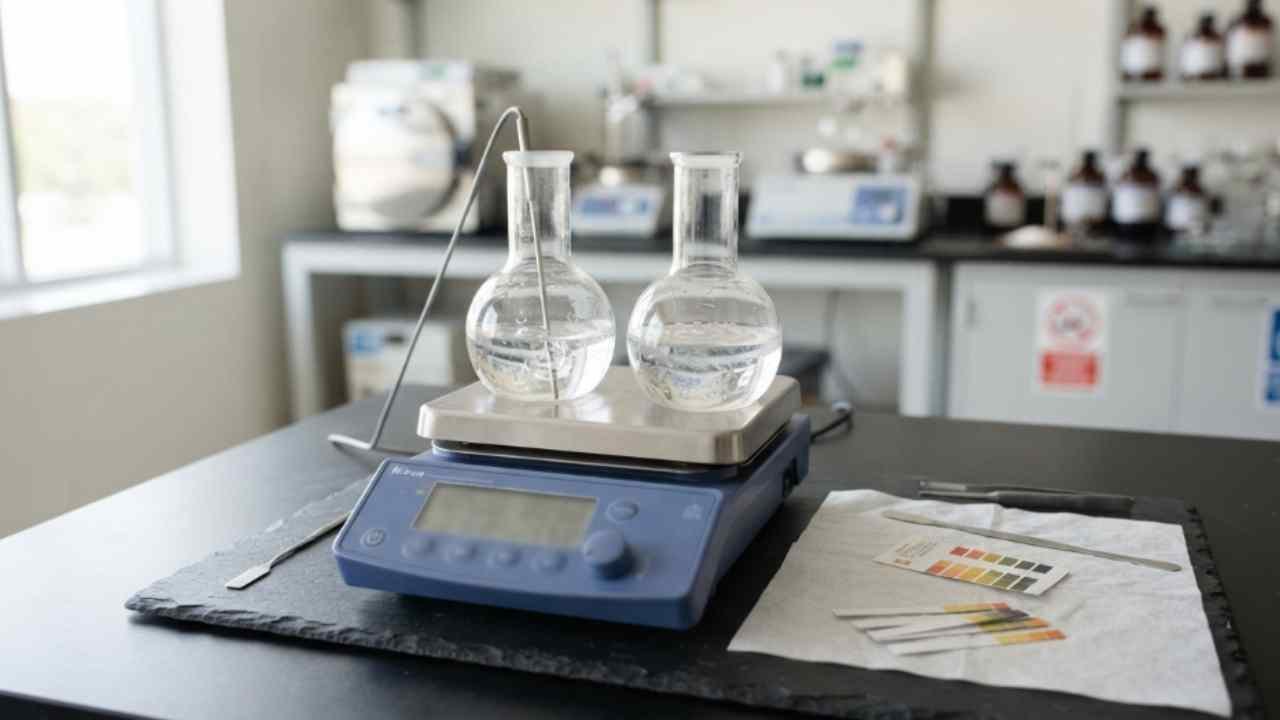
In beverage manufacturing, ingredients must be able to withstand harsh thermal processing and highly acidic environments without losing potency or causing quality defects. Betaine anhydrous exhibits exceptional stability, making it one of the most resilient active ingredients available to beverage formulators. During commercial processing, ready-to-drink beverages undergo thermal pasteurization—such as High-Temperature Short-Time (HTST) pasteurization or Ultra-High Temperature (UHT) sterilization4—to eliminate microbial contaminants. While standard proteins and some vitamins degrade under these extreme temperatures, betaine’s zwitterionic structure remains completely intact, experiencing zero molecular breakdown.
Another major benefit of formulating with betaine is its complete resistance to the Maillard browning reaction. Unlike standard amino acids, betaine lacks a primary carboxyl group, meaning it cannot react with reducing sugars like glucose or fructose under high heat. This allows manufacturers to hot-fill or retort sugar-sweetened beverages containing betaine without risking off-color developments, caramelized off-odors, or active potency loss. Furthermore, betaine is highly stable across a wide pH range, maintaining its active structure in highly acidic energy drinks (pH 2.5 to 3.5) as well as neutral recovery drinks. Sourcing partners like FINETECH verify these processing tolerances by auditing factory test batches, helping buyers secure stable raw materials that perform reliably on high-temperature processing lines.
| Processing stress | Manufacturing Parameter | Betaine Chemical Stability | Formulation Adjustment |
|---|---|---|---|
| HTST Pasteurization | 72°C to 75°C for 15 seconds | High; completely stable | None; retains active structure |
| UHT Sterilization | 135°C to 140°C for 4 seconds | High; completely stable | None; zero molecular breakdown |
| Acidic Retorting | pH below 3.0 under pressure | High; completely stable | None; ideal for low-pH cans |
| Sugar-Heat Blend | High heat + reducing sugars | High; zero browning | None; bypasses Maillard reaction |
How Can Manufacturers Improve Betaine Solubility in Drinks?
Dissolving coarse active crystals in cold-filled liquid lines without proper shear parameters results in slow processing times and clogged filter nozzles. Unoptimized mixing limits throughput.
Manufacturers improve betaine solubility in functional beverages by utilizing warm-water pre-mix slips, implementing high-shear mechanical agitation, and optimizing crystalline particle-mesh sizes for rapid industrial dissolution.
Dive Deeper into Dissolution Kinetics, High-Shear Mixing, and Pre-Mix Slurry Systems
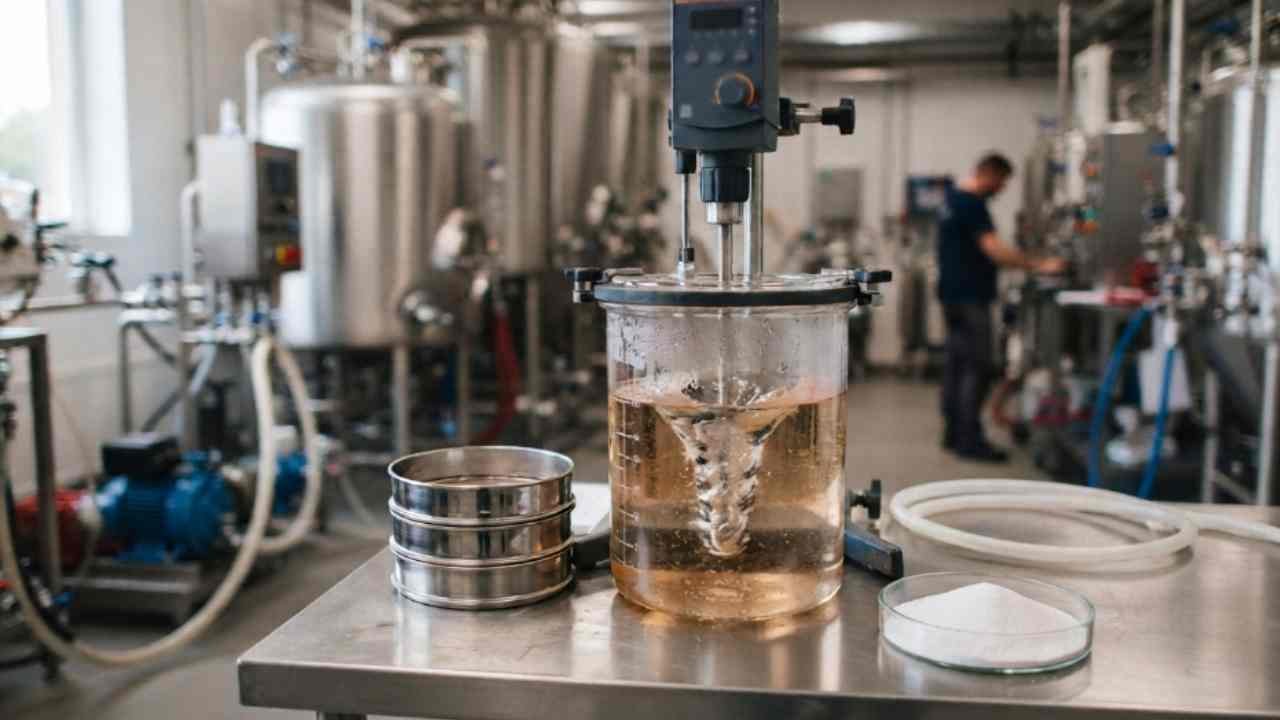
While betaine anhydrous is highly soluble in water, dissolving up to 160 grams per 100 milliliters at room temperature (20°C), achieving rapid and complete dissolution during large-scale beverage manufacturing requires optimizing processing conditions. In high-volume manufacturing, simply dumping coarse betaine crystals into a cold-water blending tank can result in slow dissolution kinetics. This slow dissolving process can lead to un-dissolved crystal sedimentation at the bottom of the tank, which can cause dosing variations in the bottling line and clog inline filtration screens.
To improve dissolution speed and streamline plant throughput, processing engineers should implement high-shear mechanical mixers5 or continuous agitation systems that break down the crystal clusters. Additionally, preparing a warm-water pre-mix slurry (at 40°C to 50°C) is a highly effective way to dissolve bulk betaine quickly before introducing it into the main cold liquid line. This pre-mix technique is particularly valuable for high-speed automated bottling lines where processing downtime must be minimized. Sourcing partners like FINETECH manage these physical handling requirements by coordinating with Chinese factories to provide customized mesh sizes, ensuring that the supplied betaine crystals dissolve rapidly and uniformly under the buyer's specific manufacturing plant setup.
| Agitation Parameter | Mixing Temperature | Dissolution Kinetic Speed | Manufacturing Recommendation |
|---|---|---|---|
| Static Cold Soak | 15°C to 20°C | Slower, sedimentation risk | Avoid in continuous liquid lines |
| Standard Propeller | 20°C to 25°C | Moderate dissolution | Suitable for small batch runs |
| High-Shear Agitation | 20°C to 25°C | Rapid dissolution | Ideal for high-speed filling lines |
| Warm-Water Slurry | 40°C to 50°C | Instant dissolution | Pre-mix before cold line blending |
Conclusion
Formulating with betaine requires utilizing its osmolytic cellular hydration properties, sourcing low-trimethylamine specifications to prevent fishy off-odors, pairing it with synergistic electrolytes or creatine, exploiting its pasteurization resilience, and optimizing plant dissolution kinetics.
-
This Examine.com clinical reference guide details the physiological roles, ergogenic benefits, and water-regulating mechanism of betaine as a cellular osmolyte. ↩
-
This Nutritional Outlook trade article reviews how methyl donors and B vitamins effectively regulate and lower elevated homocysteine levels to mitigate vascular and cognitive risks. ↩
-
This LCGC International guide analyzes the fundamentals, thermodynamics, and methodologies of static headspace extraction in gas chromatography (GC) for volatile components. ↩
-
This U.S. Dairy industry portal explains how ultra-high temperature (UHT) pasteurization works, including its effects on dairy components and ambient shelf life stability. ↩
-
This process guide from Silverson Machines demonstrates how high-shear mixing heads accelerate the disintegration and dissolution of bulk solids into liquid mediums. ↩