
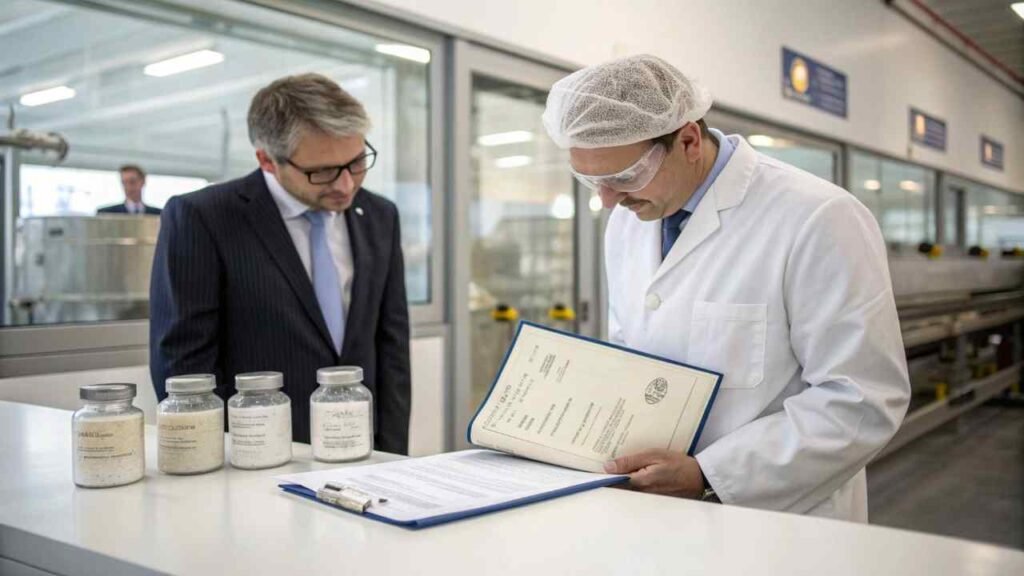
Sourcing bulk benfotiamine without auditing supplier experience, verifying physical facility systems, and establishing strong service lines leads to contaminated shipments, customs rejections, and severe caking losses.
Selecting a reliable benfotiamine supplier requires checking synthesis experience to ensure active purity, auditing facility certifications and testing laboratories, assessing communication and customized service capabilities, identifying structural differences between global manufacturers, and cultivating long-term partnerships to guarantee supply and price stability.
Successfully manufacturing premium dietary supplements and specialized metabolic nutrients requires a disciplined approach to selecting raw material suppliers. Sourcing managers must analyze physical processing behaviors and chemical compliance parameters to protect their formulations from active delivery disruptions and batch-to-batch quality inconsistencies. Sourcing partners like FINETECH simplify factory checks, verify production compliance, and secure competitive pricing directly in China to guarantee bulk deliveries. This guide explains how buyers can choose a reliable benfotiamine supplier.
What Experience Should Buyers Look for in a Benfotiamin Supplier?
Partnering with unvetted chemical startups results in volatile active yields and high organic byproduct contamination. Proven manufacturing history protects raw material purity and bioavailability.
Buyers should look for suppliers with a proven history in lipophilic thiamine synthesis, specifically demonstrating technical mastery over the phosphorylation and S-benzoylation reaction kinetics required to suppress residual organic contaminants.

Dive Deeper into S-Benzoylation Mastery, Impurity Suppression, and Crystallization Controls
Sourcing benfotiamine1—the highly bioavailable, lipid-soluble derivative of thiamine (vitamin B1)—demands a highly selective approach when evaluating potential suppliers. Because benfotiamine is synthesized through a sophisticated multi-step organic reaction, the supplier’s experience in thiamine chemistry is a vital quality differentiator. The synthesis requires phosphorylating thiamine hydrochloride, followed by a precise ring-opening and benzoylation reaction using benzoyl chloride under strict alkaline conditions. If a manufacturer lacks extensive experience, slight fluctuations in pH, pressure, or temperature during this S-benzoylation phase will result in incomplete conversion.
This inexperience leads to elevated levels of residual unreacted thiamine monophosphate, free benzoic acid, and toxic organic solvents like pyridine, which is commonly used as a reaction medium. Furthermore, seasoned suppliers possess advanced crystallization technologies. They understand how to control the polymorphic structure and cooling rates of the crystals to minimize the hygroscopic nature2 of the compound. This structural control is critical for preventing the powder from absorbing moisture and caking during sea transit or long-term warehousing. Sourcing partners like FINETECH help buyers evaluate supplier experience by reviewing historical batch purity records and chemical yield performance, ensuring that only highly competent, experienced factories are selected.
| Technical Synthesis Stage | Experience Requirement | Quality Risk of Inexperience | Sourcing Safety Standard |
|---|---|---|---|
| S-Benzoylation Cyclization | Automated pH & thermal controls | Unreacted thiamine residues | Active assay 98.0% to 102.0% |
| Recrystallization Steps | Controlled cooling rate | Drift in polymorphic structure | Loss on drying below 1.0% |
| Organic Solvent Extraction | Closed-loop solvent extraction | Elevated residual pyridine | Solvents within strict ICH limits |
| Physical Sieve Milling | Calibrated sorting screens | Gravitational powder caking | Custom particle size analysis |
How Can Importers Verify the Reliability of Benfotiamin Manufacturers?
Accepting basic supplier claims without independent technical validation exposes brands to contaminated, non-compliant compounds. Multi-layered audit protocols protect supply chains from regulatory failures.
Importers verify manufacturer reliability by checking FSSC 22000 and GMP certificates, reviewing USP/EP monographic COAs, auditing HPLC testing facilities, and organizing pre-shipment third-party laboratory samplings.
Dive Deeper into GMP Cleanroom Audits, Chromatography Verification, and Third-Party Lab Testing
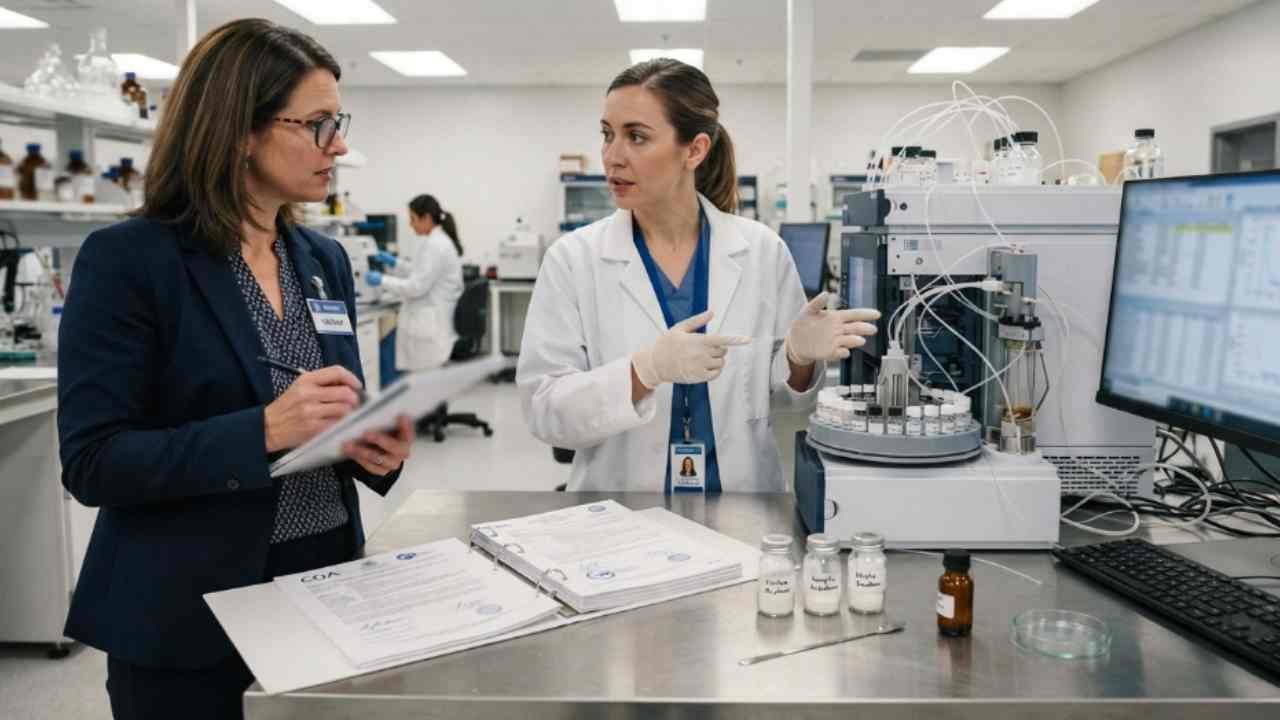
Verifying the reliability of a benfotiamine manufacturer requires a structured, multi-layered audit process that extends beyond reviewing basic digital documents. Importers must first confirm that the manufacturer’s facility operates under strict Good Manufacturing Practices (GMP) and holds active internationally recognized food safety and quality certifications, such as FSSC 220003, ISO 9001, and ISO 22000. A reliable manufacturer must also operate a state-of-the-art, in-house quality control laboratory equipped with High-Performance Liquid Chromatography (HPLC) for active assay testing and Gas Chromatography-Mass Spectrometry (GC-MS) to monitor residual solvent thresholds.
To verify this reliability, importers should request batch-specific Certificates of Analysis (COAs) and cross-reference the listed results against USP or European Pharmacopoeia (EP) monographs. More importantly, buyers should organize physical on-the-ground cleanroom audits. Verifying that the drying, milling, and packaging processes occur in Class 100,000 cleanrooms is essential for preventing microbial or physical contamination. Sourcing partners like FINETECH protect international buyers by conducting these critical physical plant audits in China, checking testing equipment calibrations, inspecting batch logs, and coordinating pre-shipment sampling and testing4 through independent, accredited laboratories like SGS or Eurofins to guarantee total compliance.
| Audit Category | Verification Step | Critical Inspection Focus | Sourcing Safety Outcome |
|---|---|---|---|
| Facility Sanitation | GMP cleanroom audit | Class 100,000 packing rooms | Prevents batch contamination |
| Testing Capability | Review QC laboratory equipment | Active HPLC & GC-MS setups | Confirms accurate assay data |
| Chemical Monographs | Check USP/EP compliant COA | Residual solvents and purity | Ensures regulatory entry clearance |
| Batch Verification | Independent lab testing | Run pre-shipment sampling | Bypasses biased in-house results |
Why Are Supplier Communication and Service Important for Benfotiamin Purchasing?
Working with unresponsive suppliers during supply-chain bottlenecks leads to delayed shipments and production halts. Transparent and proactive communication secures manufacturing schedules.
Proactive communication and service are critical to address the hygroscopic nature of benfotiamine, coordinate custom mesh sizing specifications, and manage transit logistics under humid weather conditions.

Dive Deeper into Humidity Logistics, Custom Mesh Specifications, and Precursor Alerts
In the specialty nutrient and active pharmaceutical ingredient markets, the quality of supplier communication and customer service is often just as important as the physical chemical specifications. Because benfotiamine is highly hygroscopic, clear and proactive communication is essential for protecting the material from humidity-related damage. A professional supplier must coordinate closely with the buyer regarding batch production dates and local weather conditions during container loading, ensuring that the crystalline powder is packed under low-humidity cleanroom conditions and sealed immediately in vacuum bags.
Furthermore, clear communication channels are vital for managing customized physical specifications. Depending on whether the buyer is formulating hard-shell capsules, compressed tablets, or powdered drink mixes, they will require different mesh sizes and flowability characteristics. A customer-service-oriented supplier must be willing to calibrate their milling and sifting equipment to meet these specific physical requirements. Proactive communication is also critical during global supply chain disruptions; if raw thiamine or energy shortages occur in China, an open supplier will provide early alerts, allowing the buyer to adjust their inventory strategies. Sourcing partners like FINETECH act as a technical liaison, bridging communication barriers and ensuring that all technical specifications and shipping schedules are flawlessly executed.
| Communication Factor | Supplier Requirement | Sourcing Problem Solved | Logistics Advantage |
|---|---|---|---|
| Humidity Coordination | Coordinates vacuum packing schedules | Prevents moisture absorption | Arrives in free-flowing condition |
| Custom Sieve Milling | Calibrates mesh sorting screens | Matches specific filling machine | Reduces factory processing jams |
| Precursor Shortage Alert | Gives early thiamine market updates | Avoids surprise contract defaults | Builds inventory buffers in time |
| Technical Translation | Clear chemical specifications | Bypasses linguistic misunderstandings | Secures accurate batch standards |
What Are the Key Differences Between Benfotiamin Suppliers?
Comparing raw material quotes strictly on price overlooks structural differences in manufacturing integration, causing future raw material shortages. Distinguishing supplier structures ensures stable procurement.
The key differences lie in vertical integration with thiamine precursors, focus on pharmaceutical-grade versus supplement-grade, and geographical manufacturing hubs that separate mass Chinese exporters from Indian API refiners.

Dive Deeper into Vertically Integrated Plants, Regional Tariffs, and API vs. Supplement Grades
Evaluating the global supply market reveals several fundamental differences between benfotiamine suppliers, which buyers must analyze to optimize their procurement. The primary differentiator is the supplier's level of vertical integration. Vertically integrated manufacturers produce their own thiamine or raw chemical precursors, which shields them from localized feedstock shortages and allows them to maintain stable, low-cost pricing. In contrast, processing-only facilities purchase crude thiamine and focus solely on the benzoylation refining stages, which makes them more vulnerable to upstream price volatility.
Another key difference is the target market grade. Some suppliers focus strictly on pharmaceutical-grade APIs, maintaining active Drug Master Files (DMFs)5 and complying with rigorous clinical validation standards. Others produce supplement-grade benfotiamine, which is more cost-effective but may have slightly higher thresholds for trace, non-toxic impurities. Finally, geographical differences exist between Chinese mass-exporters, who offer unbeatable scale and cost-efficiency, and Indian API refiners, who specialize in complex regulatory documentation for Western pharmaceutical markets. Sourcing partners like FINETECH help buyers navigate these supplier differences by aligning the buyer's formulation needs and budget with the appropriate manufacturer class, securing the most stable and cost-optimized supply stream.
| Supplier Parameter | Vertically Integrated Plant | Processing-Only Refinery | Sourcing Value |
|---|---|---|---|
| Precursor Control | Manufactures thiamine directly | Purchases crude thiamine | Highly insulated from market shocks |
| Pricing Stability | Low, stable baseline costs | Volatile spot-dependent pricing | Ideal for annual volume contracts |
| Customization Rate | Low (Mass production lines) | High (Flexible batch adjustments) | Accommodates custom mesh sizing |
| Document Packages | Active DMF and GMP files | Standard food safety ISO files | Essential for clinical formulas |
How Can Long-Term Cooperation Improve Benfotiamin Supply Stability?
Relying on spot-market transactions during global precursor shortages leaves buyers vulnerable to extreme pricing surges and volume cuts. Deep strategic cooperation ensures consistent material pipelines.
Long-term cooperation improves supply stability by locking in fixed off-season pricing, securing priority volume allocations during feedstock crises, and allowing custom physical crystallization adjustments.

Dive Deeper into Volume Price Hedging, Allocation Protection, and Tailored Polymorphic Crystallization
Establishing a structured, long-term cooperative relationship with a reliable benfotiamine manufacturer provides significant operational and financial benefits for global buyers. A primary advantage of long-term cooperation is protection against market price volatility. The chemical raw material market is highly seasonal, with prices often spiking during summer factory maintenance shutdowns and winter environmental emission caps in China. Locking in an annual supply contract with fixed off-season pricing allows buyers to stabilize their raw material costing throughout the year.
Furthermore, during periods of global feedstock shortages—such as thiamine or caustic potash bottlenecks—manufacturers naturally prioritize their long-term strategic partners, ensuring consistent volume allocations while spot-market speculators face severe supply cuts. Over time, a close partnership also allows the manufacturer’s engineering team to customize the physical crystallization process specifically for the buyer's unique production machinery, adjusting the particle size and reducing the compound's hygroscopicity to prevent caking in the buyer's warehouse. Sourcing partners like FINETECH facilitate these long-term alliances. By representing buyers directly in China, they manage annual volume negotiations, physically monitor factory inventories, and verify that high quality standards are consistently maintained, protecting the buyer's specialty nutrient supply chain.
| Strategic Advantage | Long-Term Contract Action | Operational Saving | Procurement Security |
|---|---|---|---|
| Annual Price Hedging | Fixed-rate long-term contract | Stable raw material costing | Bypasses summer pricing spikes |
| Priority Allocation | Strategic customer ranking | Uninterrupted warehouse stock | Bypasses precursor shortages |
| Custom Engineering | Tailored crystallization parameters | Reduced processing caking | Matches custom cleanroom lines |
| Ground Representation | Sourcing agency direct checks | Zero administration overhead | Continuous FSSC batch compliance |
Conclusion
Selecting a reliable benfotiamine supplier requires checking synthesis experience to control S-benzoylation pH and temperature kinetics, verifying FSSC 22000 cleanrooms and HPLC laboratory equipment reliability, coordinating moisture-proof packing communication, identifying differences in vertical factory integration, and establishing long-term, price-hedging procurement contracts.
-
This ACS study on Organic Process Research & Development delivers process engineering insights into the large-scale synthesis of benfotiamine, detailing thiamine chemistry, phosphorylation, and critical S-benzoylation reaction parameters. ↩
-
This Michigan State University (CRIS) article explains how moisture absorption triggers liquid and crystal bridges in crystalline food structures, outlining the biochemical role of anti-caking agents. ↩
-
This is the official certification scheme portal for FSSC 22000, detailing international food safety management system requirements, technical prerequisite programs, and additional scheme criteria. ↩
-
This SGS service profile outlines the protocols, visual inspection criteria, and safety checks involved in global pre-shipment inspections of bulk raw materials. ↩
-
This official US FDA portal provides comprehensive administrative resources, templates, submitting protocols, and regulatory guidances regarding Drug Master Files (DMFs). ↩