
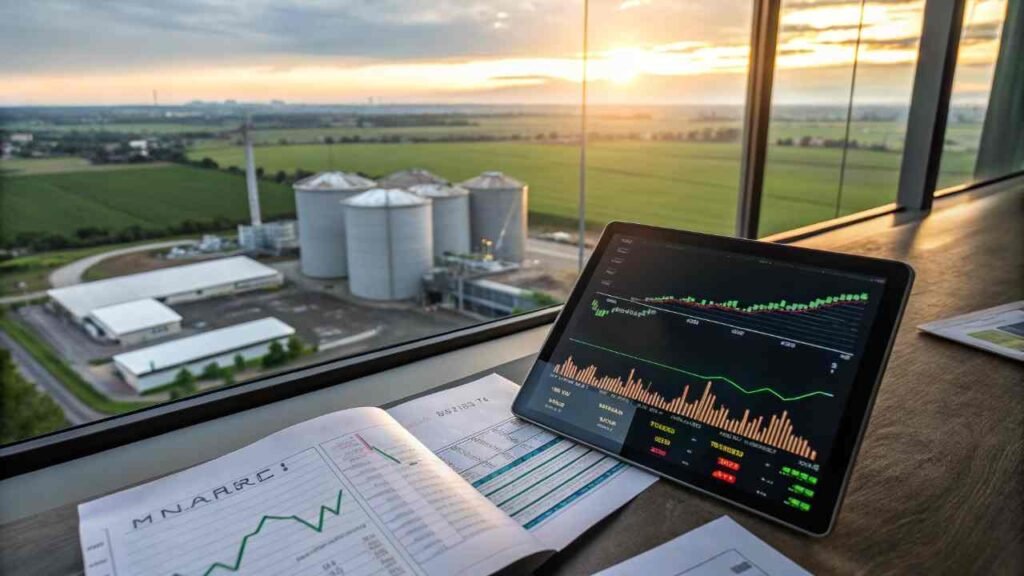
Unstable Stevia prices destroy your budget planning. This financial uncertainty stops your business from scaling up. I reveal the market facts that help you manage these sudden price shifts effectively.
Yes, Stevia price fluctuations significantly affect global bulk buyers. Prices change due to harvest cycles in China, energy costs in extraction, and the shift from Reb A to Reb M demand. Buyers manage this by using long-term contracts and monitoring the Chinese planting seasons.
I manage factory selection and oversee production for my B2B clients at FINETECH. I want to share the technical facts about Stevia pricing so you can protect your capital and your business growth.
What drives seasonal price changes in Stevia raw materials?
Buying Stevia at the wrong time wastes thousands of dollars. You lose your edge when raw material costs spike unexpectedly. I explain the agricultural cycle that controls these market prices.
Stevia prices are driven by the annual harvest in China, usually between September and October. High rainfall or drought during the growing season directly affects leaf yield. Prices are lowest during the harvest peak and rise as leaf stocks decrease throughout the year.
The Agricultural Foundation of Stevia Pricing
I see that many buyers treat Stevia like a synthetic chemical. This is a mistake. Stevia is a crop. In China, provinces like Anhui and Gansu are the main growing zones. The "Leaf Season" begins with planting in the spring. The harvest happens once a year in the autumn. I monitor the weather in these regions closely. If there is too much rain in August, the glycoside1 content in the leaves drops. This means the factory needs more leaves to make one kilogram of powder. This lower yield2 drives the price up instantly. I act as your strategic partner to track these weather patterns.
Market price is usually lowest right after the harvest in October. This is because the supply of fresh leaves is at its maximum. Factories want to process the leaves quickly to free up cash. As the year goes on, the inventory of dry leaves in the warehouses goes down. By the next summer, supply is tight. I see prices rise by 10% or 15% during this "Off-Season." I suggest my clients buy their bulk stock in the fourth quarter. This timing saves you money compared to buying in June or July. I also watch the "Alternative Crop" risk. If the price of corn or other crops is high, farmers might plant less Stevia next year. This reduces the total supply and raises the long-term price floor.
Seasonal Pricing Calendar
| Month Range | Market Stage | Price Level | FINETECH's Advice |
|---|---|---|---|
| Jan - March | Mid-Season | Stable / Rising | Buy for Q2 needs |
| April - June | Low Stock | High | Avoid large spot buys |
| July - August | Pre-Harvest Gap | Highest | Use safety stock only |
| Sept - Oct | Harvest Peak | Lowest | Lock annual contracts |
| Nov - Dec | Stock Building | Stable | Best for bulk loading |
How does Reb A and Reb M purity level affect Stevia pricing?
Paying for the wrong purity level wastes your production budget. Low-quality extracts ruin your flavor profile. I show you the technical link between glycoside purity and your total invoice.
Reb A (Rebaudioside A) is the standard high-volume extract and is cheaper. Reb M is rarer and requires advanced enzymatic conversion, making it significantly more expensive. Higher purity levels (e.g., 98% vs 95%) carry price premiums due to increased processing and lower yields.

Processing Costs and Glycoside Rarity
I see that the "purity gap" is a major cost driver. Rebaudioside A (Reb A) makes up a large part of the Stevia leaf. It is easy to extract using water and ethanol. This makes Reb A 95% or 97% the most cost-effective choice for most wholesalers. But as you move from 95% to 99% purity, the price jumps. This is because the factory must use more recrystallization3 steps. Each step loses some product. I act as your technical gatekeeper to verify if you really need 99%. For many beverage applications, 97% is enough. Paying for that extra 2% purity is often a waste of money.
Rebaudioside M (Reb M) is a different story. It tastes much better than Reb A but it is very rare in the leaf. To make Reb M at a price you can afford, factories use "Enzymatic Conversion." This is a high-tech process. It requires expensive enzymes and patented technology. This is why Reb M can be three or four times more expensive than Reb A. I help my clients in Europe and the Middle East decide which one to buy. If your product has a high sugar-replacement goal, you need the quality of Reb M. If you are only replacing 30% of the sugar, Reb A is better for your margin. I monitor the production capacity of Reb M in China to find the best entry price for you.
Purity vs. Price Index
| Stevia Grade | Purity Level | Relative Price | Best Application |
|---|---|---|---|
| Stevia RA60 | 60% Reb A | Low | Basic food/industrial |
| Stevia RA95 | 95% Reb A | Moderate | Standard soft drinks |
| Stevia RA98 | 98% Reb A | High | Premium beverages |
| Stevia RD | High RD | Very High | Specialty blending |
| Stevia RM | High Reb M | Extreme | 100% sugar replacement |
| Stevia SG95 | 95% Total | Low | Budget-friendly wholesale |
Why do global supply-demand shifts impact Stevia market prices?
Sudden spikes in global demand leave you without stock. This shortage forces you to buy at high spot-market prices. I analyze the global movements that change your local costs.
Global shifts impact prices when major beverage companies switch to natural sweeteners. New sugar taxes in regions like Southeast Asia or the Middle East create sudden demand surges. Conversely, over-planting in China can lead to a temporary supply surplus and lower prices.

The Influence of Mega-Buyers and Health Trends
I see that "Big Soda" moves the whole market. When a company like Coke or Pepsi changes a recipe for a global brand, they buy thousands of tons of Stevia. This can drain the global supply in weeks. I monitor these big moves for my B2B partners. If a major player starts buying, the price for small and medium wholesalers will go up. I act as your strategic office to secure your volume before the market gets too tight. Global demand is also driven by health laws. Many countries in my export regions, like the UAE and Saudi Arabia, have high sugar taxes. This forces local manufacturers to switch to Stevia.
When many countries pass these laws at the same time, demand spikes. I see this happening in Southeast Asia right now. Countries like Indonesia and Vietnam are growing fast. Their food factories need more natural sweeteners every month. But the supply side is mostly in China. If the Chinese leaf harvest is normal but global demand grows by 20%, prices must rise. I also watch the "Supply Surplus" side. Sometimes, the high price of the previous year makes every farmer in China plant Stevia. This leads to an oversupply the next year. I help you spot these patterns so you can buy more when the market is oversupplied. This is how you win in the wholesale trade.
| Demand Driver | Price Effect | Region Impact | FINETECH's Forecast |
|---|---|---|---|
| New Sugar Taxes | Rising | Middle East / SE Asia | Long-term growth |
| Clean Label Trend | Rising | Europe / Russia | Steady increase |
| Over-Planting | Falling | China (Source) | Short-term drop |
| Big Brand Switch | Sharp Spike | Global | Sudden volatility |
| Energy Costs | Rising | Global (Extraction) | Affects processing cost |
| Logistics Issues | Rising | Export Markets | Higher landed cost |
How can buyers secure stable long-term Stevia pricing contracts?
Price volatility makes it impossible to quote your customers accurately. This risk kills your distribution business. I share the technical strategies I use to lock in stable yearly pricing.
Buyers secure stable pricing by signing annual volume contracts during the Chinese harvest season (October). Utilizing "Fixed-Volume, Fixed-Price" agreements or tiered pricing models protects you from spot market jumps. Partnering with integrated wholesalers like FINETECH ensures priority stock and cost stability.

Locking in Costs with Volume Agreements
I see that "Spot Buying" is a gamble. If you buy only when you need it, you will eventually pay the highest price. I help my long-term clients sign "Frame Agreements." We commit to a total volume for the year, for example, 5 tons. We then agree on a fixed price based on the harvest data in October. I manage the "Call-Off" schedule. This means we ship one pallet or one container every month at that same price. This gives you "Price Certainty." You can tell your customers exactly what the price will be for the next 12 months. This is how you build a loyal distribution network.
Tiered pricing is another technical tool. If you are not sure of your exact volume, we can set price steps. If you buy more, the price drops. This rewards your growth. I act as your negotiator with the factories in China. I use my Brand Name, FINETECH, to get better terms because I manage orders for many clients. I also use Sinosure4 to offer better payment terms like O/A (Open Account). This helps your cash flow while keeping the price locked. I check the contract clauses for "Force Majeure5." I want to ensure the factory cannot cancel your price just because the market went up. A good contract is a technical shield for your profit margins.
Contract Strategy Comparison
| Contract Type | Price Security | Volume Flex | FINETECH's Recommendation |
|---|---|---|---|
| Spot Purchase | Low | High | Only for trial orders |
| Annual Fixed | High | Low | Best for big wholesalers |
| Tiered Pricing | Moderate | High | Best for growing traders |
| Formula Based | Moderate | Moderate | Linked to leaf prices |
| Quarterly Lock | Moderate | Moderate | Good for volatile years |
| Pre-paid Volume | Very High | Low | Get the absolute lowest price |
Which global regions have the strongest influence on Stevia pricing trends?
Ignoring regional market shifts leaves you blind to future price changes. This data gap leads to poor buying decisions. I identify the power players that move the global pricing needle.
China has the strongest influence as the global production hub (80% of supply). Demand trends in North America and Europe set quality standards. However, emerging markets like the Middle East and Southeast Asia are now driving high-volume demand and affecting regional stock levels.

The Dominance of China and Global Regulatory Shifts
I see that China is the "Price Maker." Everything starts there. If the Chinese government changes the environmental rules for chemical plants, the cost of extraction goes up. I visit the production hubs in China to see these changes first. If I see a factory closing for an audit, I tell my clients to buy now. China also controls the "Leaf Market." No other country has the scale to compete with Chinese farmers yet. This means the USD to CNY exchange rate also affects your price. I act as your eyes on the Chinese economy. When the CNY is weak, I help you buy more for your dollars.
Europe and North America influence the price through "Quality Demands." They want Non-GMO, Organic, and high-purity Reb M. These strict rules force factories to invest in better machines. This raises the "Base Price" for everyone. But I also see new influence from the Middle East. Countries like Saudi Arabia and the UAE are moving away from oil and toward manufacturing. They are building huge food factories. Their demand for bulk food additives is rising fast. This regional demand can take supply away from Europe or Russia. I manage the logistics to ensure my clients in Southeast Asia and the Middle East get their fair share of the global stock. Regional balance is key to understanding global trends.
| Region | Role in Market | Impact on Price | Key Factor |
|---|---|---|---|
| China | Primary Producer | Extreme (Supply) | Harvest / Energy cost |
| Europe | Standard Setter | Moderate (Quality) | Regulation / Certs |
| Middle East | Growing Buyer | Rising (Demand) | Sugar taxes / Food plants |
| SE Asia | High Volume | Moderate (Demand) | Population / Beverages |
| USA | Innovation Leader | Moderate (Spec) | New glycoside trends |
| Russia | Steady Buyer | Low (Volume) | Logistics / Trade routes |
Conclusion
Stevia price fluctuations are a technical challenge that you can manage through seasonal planning and long-term contracts. I help you navigate these shifts at FINETECH to keep your procurement stable.
-
ScienceDirect – Scientific deep-dive into steviol glycosides, the sweet compounds found in the leaves, and their biological properties. ↩
-
Investopedia – Explaining the financial and agricultural concept of yield, focusing on how output efficiency impacts market pricing. ↩
-
ThoughtCo – A chemistry guide providing a clear definition and procedural overview of recrystallization for purifying substances. ↩
-
Sinosure Official – Details on the China Export & Credit Insurance Corporation and its role in securing international trade payments. ↩
-
Cornell Law School (Wex) – A legal dictionary resource explaining the definition and application of force majeure in commercial contracts. ↩